Call or Text 727-513-9780
  • Shopping Cart Shopping Cart
    0Shopping Cart
Pure Tested Peptides | America's most trusted Peptides for sale online
  • Peptides for sale
    • Oral Peptides for sale
      • Peptide Capsules for sale
      • BPC 157 Capsules 1000mcg
      • SLU-PP-332 Capsules | 1000 mcg
      • 5-Amino-1MQ 50mg Capsules
      • Tesofensine 500mcg
    • All Peptides for sale
    • Peptide Sprays
      • BPC 157 Nasal Spray Kit
      • BPC-157 TB500 Nasal Spray Kit
      • Semax Nasal Spray 10mg
      • Selank – Nasal Spray Kit – 10mg
      • Epithalon 50MG Nasal Spray Kit
      • Ipamorelin 10mg Nasal Spray
      • Klow Nasal Spray (BPC-157 + TB-500 + GHK-Cu + KPV) | 80mg
      • Hulk Nasal Spray Tesa / Ipa Blend 6/3 MG
      • Klow Nasal Spray
      • NAD + 500 mg Nasal Spray
      • PT-141 Nasal Spray Kit
    • GHRH Peptides
      • Ipa Peptides
      • CJC-1295 Peptides
        • CJC-1295 with DAC 5 mg
        • CJC-1295 without DAC 5 mg
        • CJC-1295 Ipa 10mg
      • Tesa Peptides
        • Tesa Peptide
        • Tesa 20 mg
    • GHK-Cu Peptides
      • All GHK-Cu Peptides
      • GHK-Cu 100mg
      • KLOW Peptide Blend – Buy KLOW blend online
    • BPC Peptides
      • All BPC Peptides
      • BPC-157
      • BPC-157 TB-500
      • BPC 157 capsules 1000mcg
    • SLU-PP-332 Peptides
      • All SLU-PP-332 Peptides
      • SLU-PP-332 5mg
    • GLP3 Peptides
      • GLP3-R
      • GLP3-R CAG 10mg
      • GLP3-R 20mg
    • PT-141 Peptides
      • PT-141 Peptides for sale
      • PT-141 10mg
      • PT-141 Nasal Spray
    • CAG Peptides
      • Lipo-C Peptide Blend
      • CAG 5mg
      • CAG 10mg
    • MOTS-C Peptides
      • MOTS-C Peptides for sale
      • MOTS-c peptide
      • MOTS-c 10mg *6 pack*
    • 5 Amino 1MQ Peptides
      • 5 Amino 1MQ Peptides for sale
      • 5-Amino-1MQ 50mg Capsules
      • 5-Amino-1MQ 5mg
    • Epithalon Peptides
      • Epithalon Peptides for sale
      • Epithalon 10mg
      • Epithalon 50mg
  • Shop
    • GLPs
      • 5-Amino-1MQ 50mg Capsules
      • 5-Amino-1MQ 5mg
      • GLP3-Reta
      • L-Carnitine 500mg/ml
      • Tesofensine 500mcg
      • SLU-PP-332 5mg
      • MOTS-c 10mg *6 pack*
    • Epithalon & BPC Peptides
      • Epithalon 10mg
      • Epithalon 50mg
      • BPC-157
      • BPC 157 capsules 1000mcg
      • BPC-157 TB-500
      • BPC-157 TB500 Nasal Spray Kit
      • BPC 157 Nasal Spray Kit
    • BPC TB-500 & NAD+ Peptides
      • NAD+ 500 mg
      • KLOW Peptide Blend – Buy KLOW blend online
      • GLOW Peptide Blend
      • TB 500 5mg
      • BPC 157 capsules 1000mcg – Supplement
      • BPC 157 Nasal Spray Kit
      • BPC-157
      • BPC-157 TB500 Nasal Spray Kit
      • BPC-157 TB-500
      • BPC 157 capsules 1000mcg
    • LL-37 Peptide
      • LL-37 10 mg
    • MOTS-C & Selank
      • MOTS-c peptide
      • Selank 10mg
    • GHK Peptides
      • GHK-Cu 100mg
      • GLOW Peptide Blend
      • KLOW Peptide Blend – Buy KLOW blend online
  • COAs
  • Wholesale
    • Wholesale Peptides for sale
  • PTP FAQ
  • Affiliates
    • Selank Peptide: Advanced Pharmacological Mechanisms Underlying Its Anxiolytic and Nootropic Effects in Research
      • 5-Amino-1MQ Peptide: Detailed Mechanisms of NNMT Inhibition and Its Impact on Cellular Metabolism Research
        • MOTS-C Peptide: Unraveling Its Role in Mitochondrial Dynamics and Energy Metabolism Research
          • Epithalon Peptide and Telomerase Regulation: Investigating Its Impact on Cellular Senescence and Lifespan Research Models
            • GLP2-T vs GLP2 Tirz Peptide: Understanding the Naming, Mechanistic Nuances, and Research Implications for Gut Health
      • Peptides and Polypeptides in Modern Pharmacology: What Research on Metoprolol, Prednisone, and Amlodipine Reveals
        • Polypeptide Peptides vs NSAIDs: What Naproxen and Diclofenac Teach Tissue-Repair Researchers About BPC‑157 and TB‑500
          • Peptides and Polypeptides in Endocrine Pharmacology: How GLP-1, GLP-2, and GLP-3 Retatrutide Differ From Classic Drugs Like Prednisone and Amlodipine
          • 5‑Amino‑1MQ Peptide and NNMT Inhibition: How It Compares With Statins Like Atorvastatin in Adipose and Lipid Metabolism Research
      • Enclomiphene, Estrogen Receptor Signaling, and Luteinizing Phase Biology: What Hormone Researchers Should Measure
        • Mesenchymal Stem Cells, BPC‑157, and GHK‑Cu: How Tissue Repair Peptides Compare With Classic NSAIDs Like Naproxen in Injury Models
          • Peptide Calculator Use Cases Beyond Growth Hormone: Working Through GLP‑3 Retatrutide, MOTS‑c, and BPC‑157 Research Dosing
        • Polypeptide Peptides in Endocrine and Metabolic Pharmacology: Lessons From Amlodipine, Prednisone, and Metoprolol
        • Peptides Calculator for Advanced Blends: Worked Examples for Tesamorelin, CJC‑1295, and Ipamorelin Stacks
          • Peptides and Polypeptides in Human Physiology: How Molecular Size Shapes Research Applications
            • Selank Peptide: Advanced Pharmacological Mechanisms Underlying Its Anxiolytic and Nootropic Effects in Research
          • 5-Amino-1MQ Peptide: Detailed Mechanisms of NNMT Inhibition and Its Impact on Cellular Metabolism Research
            • MOTS-C Peptide: Unraveling Its Role in Mitochondrial Dynamics and Energy Metabolism Research
              • Epithalon Peptide and Telomerase Regulation: Investigating Its Impact on Cellular Senescence and Lifespan Research Models
                • GLP2-T vs GLP2 Tirz Peptide: Understanding the Naming, Mechanistic Nuances, and Research Implications for Gut Health
                  • Peptides and Polypeptides in Endocrine Pharmacology: How GLP-1, GLP-2, and GLP-3 Retatrutide Differ From Classic Drugs Like Prednisone and Amlodipine
                    • Polypeptide Peptides vs NSAIDs: What Naproxen and Diclofenac Teach Tissue-Repair Researchers About BPC‑157 and TB‑500
                      • Peptides and Polypeptides in Modern Pharmacology: What Research on Metoprolol, Prednisone, and Amlodipine Reveals
                        • 5‑Amino‑1MQ Peptide and NNMT Inhibition: How It Compares With Statins Like Atorvastatin in Adipose and Lipid Metabolism Research
                        • Enclomiphene, Estrogen Receptor Signaling, and Luteinizing Phase Biology: What Hormone Researchers Should Measure
                        • Mesenchymal Stem Cells, BPC‑157, and GHK‑Cu: How Tissue Repair Peptides Compare With Classic NSAIDs Like Naproxen in Injury Models
                        • Peptide Calculator Use Cases Beyond Growth Hormone: Working Through GLP‑3 Retatrutide, MOTS‑c, and BPC‑157 Research Dosing
                        • Polypeptide Peptides in Endocrine and Metabolic Pharmacology: Lessons From Amlodipine, Prednisone, and Metoprolol
                        • Peptides Calculator for Advanced Blends: Worked Examples for Tesamorelin, CJC‑1295, and Ipamorelin Stacks
                        • Peptides and Polypeptides in Human Physiology: How Molecular Size Shapes Research Applications
                        • Selank Peptide: Advanced Pharmacological Mechanisms Underlying Its Anxiolytic and Nootropic Effects in Research
                        • MOTS-C Peptide: Unraveling Its Role in Mitochondrial Dynamics and Energy Metabolism Research
                        • Peptides and Polypeptides in Modern Pharmacology: What Research on Metoprolol, Prednisone, and Amlodipine Reveals
                        • Peptides and Polypeptides in Endocrine Pharmacology: How GLP-1, GLP-2, and GLP-3 Retatrutide Differ From Classic Drugs Like Prednisone and Amlodipine
                        • 5-Amino-1MQ Peptide: Detailed Mechanisms of NNMT Inhibition and Its Impact on Cellular Metabolism Research
                        • Mesenchymal Stem Cells, BPC‑157, and GHK‑Cu: How Tissue Repair Peptides Compare With Classic NSAIDs Like Naproxen in Injury Models
                        • Peptide Calculator Use Cases Beyond Growth Hormone: Working Through GLP‑3 Retatrutide, MOTS‑c, and BPC‑157 Research Dosing
                        • GLP2-T vs GLP2 Tirz Peptide: Understanding the Naming, Mechanistic Nuances, and Research Implications for Gut Health
                        • Polypeptide Peptides in Endocrine and Metabolic Pharmacology: Lessons From Amlodipine, Prednisone, and Metoprolol
                        • Polypeptide Peptides vs NSAIDs: What Naproxen and Diclofenac Teach Tissue-Repair Researchers About BPC‑157 and TB‑500
                        • Peptides and Polypeptides in Human Physiology: How Molecular Size Shapes Research Applications
                        • Peptides Calculator for Advanced Blends: Worked Examples for Tesamorelin, CJC‑1295, and Ipamorelin Stacks
                        • 5‑Amino‑1MQ Peptide and NNMT Inhibition: How It Compares With Statins Like Atorvastatin in Adipose and Lipid Metabolism Research
                        • Enclomiphene, Estrogen Receptor Signaling, and Luteinizing Phase Biology: What Hormone Researchers Should Measure
                        • Epithalon Peptide and Telomerase Regulation: Investigating Its Impact on Cellular Senescence and Lifespan Research Models
                        • Best research protocol Klow blend
                        • best time to take BPC-157
                        • best time to take DSIP (Delta Sleep Inducing Peptide)
                        • best time to take CJC-1295
                        • best time to take AOD-9604
                        • best time to take Follistatin 344
                        • best time to take Ipamorelin
                        • best time to take MK-677 (Ibutamoren)
                        • best time to take Ligandrol (LGD-4033) — research compound
                        • best time to take Ostarine (MK-2866) — research compound
                        • best time to take GHK-CU
                        • best time to take TB-500
                        • best time to take MOTS-c
                        • best time to take Semax
                        • best time to take RAD-140 (Testolone) — research compound
                        • best time to take Thymosin Alpha-1
                        • best time to take PEG-MGF
                        • Biolife Plasma, Octapharma Plasma, and Research Peptides: How Plasma Donation Labs Differ From Peptide Suppliers
                        • best time to take YK-11 — research compound
                        • best time to take PT-141 (Bremelanotide)
                        • Best research protocol Klow blend
                        • 5-Amino-1MQ and MOTS-C Synergy: Metabolic Signaling, Mitochondria, and Research Design
                        • BPC-157 and TB-500: Investigating Their Combined Effects on Angiogenesis and Cellular Migration in Tissue Repair Models
                        • BPC-157 Peptide: Gut Barrier Function, Inflammation, and Tissue-Recovery Research
                        • 5‑Amino‑1MQ and MOTS‑c Synergy in Metabolic Research: Designing NNMT and Mitochondrial Biogenesis Stacks
                        • CJC-1295 with DAC vs. Without DAC: Half-Life, Release Kinetics, and Research Implications
                        • CJC‑1295 with DAC vs. Without DAC: Expanding on Half‑Life Differences Using Tesamorelin and Ipamorelin Blend Case Studies
                        • Collagen Biology and Copper‑Binding Peptides: How GHK‑Cu, Glow Blend, and Klow Blend Interact with Skin and Connective Tissue
                        • Collagen Biology and Regenerative Peptides: How GHK‑Cu, Glow Blend, and Klow Blend Affect Extracellular Matrix Research
                    • DNA, Telomeres, and Longevity Peptides: Positioning Epithalon and MOTS‑c in Genetic Aging Research
                      • Enclomiphene Citrate: serm Mechanism, Testosterone Research, and Stack Compatibility
                        • Enclomiphene vs Enclomiphene Citrate: Formulation, Bioavailability, and Research Distinctions
                        • Epithalon Peptide Research: Telomerase Activation, Aging, and Pineal Gland Function
                        • Estrogen Receptor Signaling and Enclomiphene: How Selective Modulators Compare with Classic Polypeptide Hormones
                        • GHK-Cu Peptide: Advanced Mechanisms in Extracellular Matrix Remodeling and Wound Healing Research
                        • GHK-Cu Peptide: Collagen Synthesis, Wound Repair, and Skin-Barrier Research Models
                        • GLP-1 vs GLP-3 vs GLP-2: Peptide Classification and Research Applications
                        • GLP-2 Peptide Research Guide: Gut Barrier Function, Nutrient Absorption, and Intestinal Recovery Models
                        • GLP-3 Retatrutide vs. GLP-1 Drugs: What Triple-Agonist Biology Changes in Research Models
                        • Ipamorelin and Tesamorelin Combination: Synergistic GH Secretagogue Research and Dosing Protocols
                        • GLP2 Tirz Peptide: What It Is, Why the Name Exists, and How Researchers Should Interpret It
                        • Klow Blend Peptide Nasal Spray: What the Formulation Is Trying to Do in Cognitive Research
                        • Mitochondria, NNMT Inhibition, and Peptide Modulators: Where MOTS‑c and 5‑Amino‑1MQ Fit in Cellular Energy Research
                        • MOTS-c Peptide: Mitochondrial Function, Energy Metabolism, and What Researchers Measure
                        • MOTS-c vs. 5-Amino-1MQ: Which Metabolic Research Questions Each Compound Actually Answers
                        • Nasal Spray Peptides: Bioavailability, Administration, and Semax/Selank Research Applications
                        • PT-141 Peptide Research: Mechanism of Action and Melanocortin Receptor Signaling
                        • Retatrutide for Research: Mechanism, Structure, and GLP-1/GLP-3 Dual Action
                        • Retatrutide for Obesity and Type 2 Diabetes: What the Latest Trial Data Suggest
                        • Tesofensine Peptide Research: Mechanism, Appetite Suppression, and Neuropeptide Y Pathways
  • Contact
    • Contact Customer Service
    • Text Customer Support
  • About US
  • Shop all peptides
  • Affiliate Program
    • Affiliate Signup
  • Login / Register Login / Register Page Link Login / Register Page Link
  • Click to open the search input field Click to open the search input field Search
  • Menu Menu

Tag Archive for: dosing protocols

Ipamorelin and Tesamorelin Combination: Synergistic GH Secretagogue Research and Dosing Protocols

Ipamorelin and Tesamorelin Combination: Synergistic GH Secretagogue Research and Dosing Protocols

July 24, 2026/0 Comments/by Pure Tested

Growth hormone secretion declines by roughly 14% per decade after age 30, a physiological reality that has driven sustained scientific interest in peptide-based GH secretagogues. Among the most studied pairing in preclinical and translational research is the Ipamorelin and Tesamorelin Combination: Synergistic GH Secretagogue Research and Dosing Protocols framework, which exploits two distinct receptor pathways to amplify pulsatile GH output in ways that neither compound achieves alone.
Isometric scientific illustration in bright daylight palette showing two distinct molecular pathway diagrams side by side —

Key Takeaways

  • Tesamorelin acts as a GHRH analog; ipamorelin acts as a ghrelin receptor agonist, together they engage complementary pathways.
  • Dual-pathway stimulation produces additive or potentially synergistic GH pulses compared to single-agent protocols.
  • Tesamorelin holds FDA-approved status for HIV-associated lipodystrophy; ipamorelin and the combination remain unapproved for any indication.
  • Dosing protocols in research settings are weight-independent, time-sensitive, and typically administered subcutaneously at night.
  • Researchers designing peptide stacks should treat this combination as an investigational model requiring rigorous experimental controls.

Individual Mechanisms: Two Pathways, One Goal

Understanding why the Ipamorelin and Tesamorelin Combination generates research interest begins with their separate mechanisms.

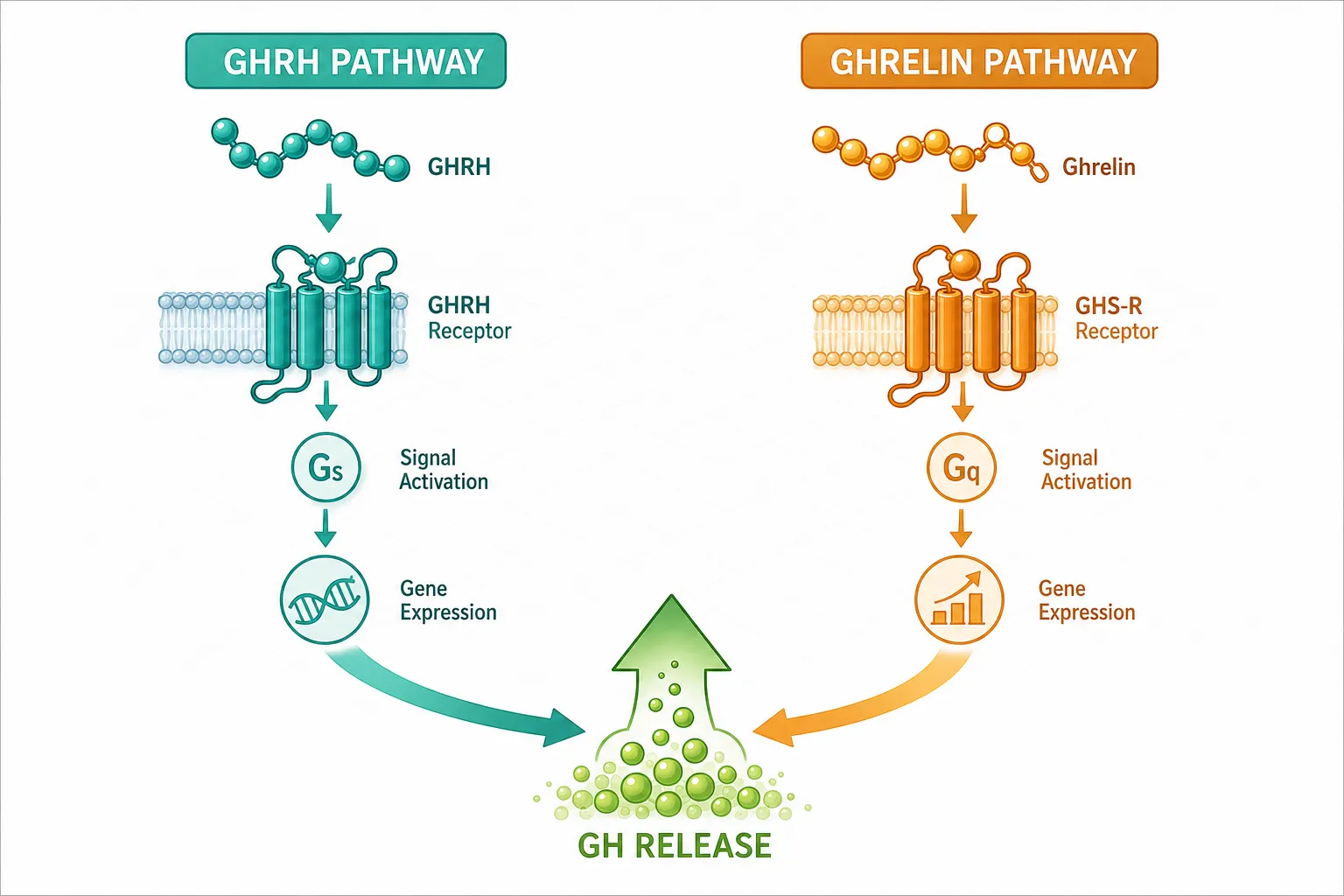
Tesamorelin is a stabilized analog of endogenous growth hormone-releasing hormone (GHRH). It binds GHRH receptors on somatotroph cells in the anterior pituitary, directly stimulating GH synthesis and secretion. Because it mirrors the body's own GHRH signal, the resulting GH pulse follows a physiologically normal pattern. Researchers studying tesa benefits note its well-characterized pharmacokinetic profile and the clinical data supporting its lipid-mobilization effects.

Ipamorelin belongs to a different class entirely. It is a selective ghrelin receptor (GHS-R1a) agonist, a pentapeptide that triggers GH release through the ghrelin pathway without meaningfully elevating cortisol or prolactin. This selectivity is a key research advantage. For a deeper look at how ipamorelin fits within broader GH secretagogue stacks, the CJC-1295 plus Ipamorelin research overview provides useful context.

"Two keys, two locks, one door", the GHRH pathway and the ghrelin pathway converge on the same somatotroph cell, and activating both simultaneously produces a GH pulse that exceeds what either key unlocks alone.

Why Dual-Pathway Activation Matters

The pituitary integrates signals from both GHRH and ghrelin receptors. When both are occupied concurrently:

  • Intracellular cAMP (via GHRH-R) and intracellular calcium (via GHS-R1a) rise together.
  • The two second-messenger cascades have a documented additive interaction at the somatotroph level.
  • The resulting GH pulse is larger and may be more sustained than single-receptor stimulation.

This is the mechanistic foundation for the synergistic GH secretagogue concept that makes the combination worth investigating.

Research Findings on the Ipamorelin and Tesamorelin Combination
Research Findings on the Ipamorelin and Tesamorelin Combination

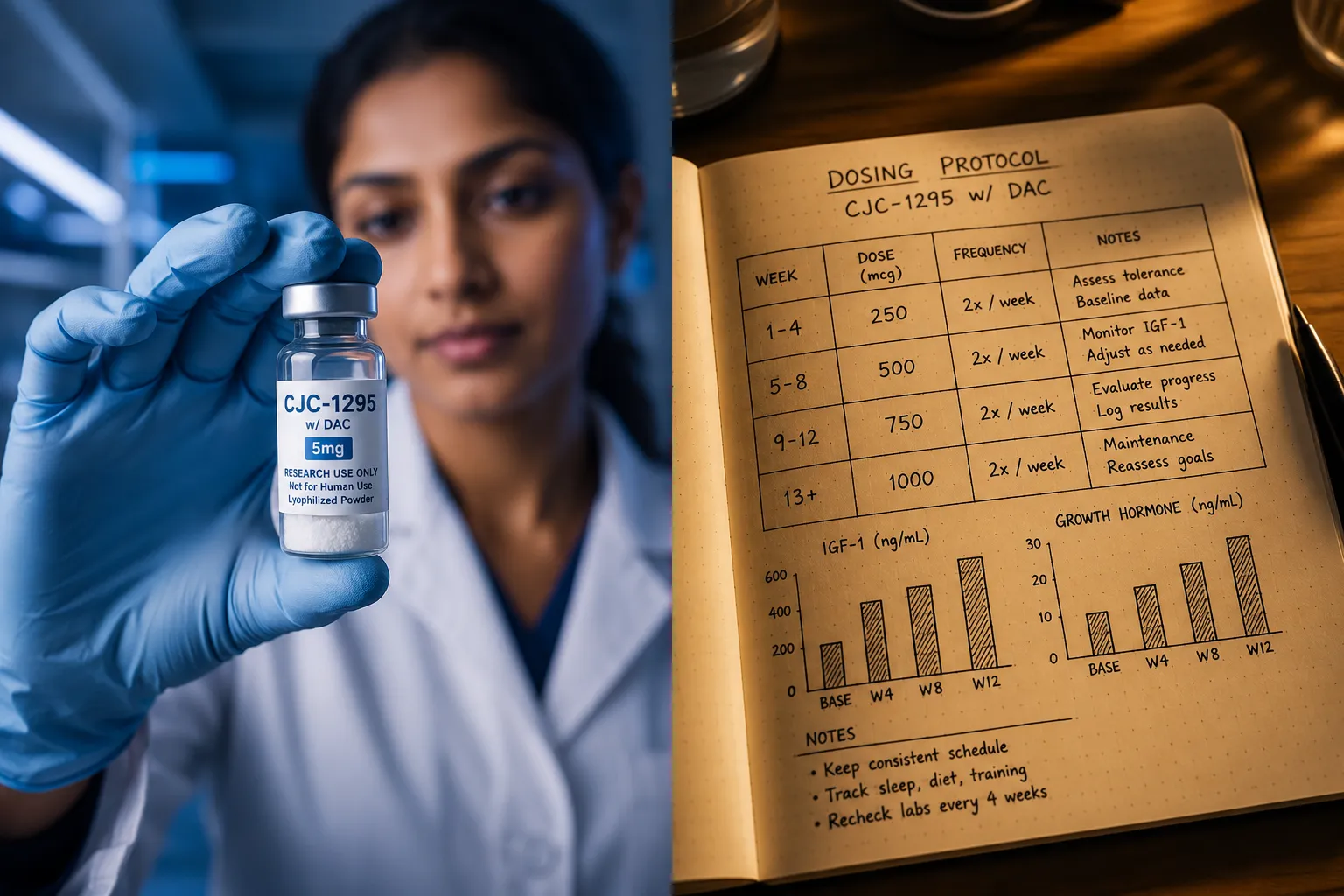
Preclinical data consistently show that GHRH analogs and ghrelin-pathway agonists produce greater GH output when co-administered than when used separately. Tesamorelin's clinical track record, it is FDA-approved for reducing visceral adiposity in HIV-associated lipodystrophy, provides a validated pharmacological anchor. Ipamorelin's selectivity profile makes it a preferred ghrelin agonist in research designs that require minimal off-target hormonal noise.

Researchers comparing secretagogue classes should also review Tesamorelin vs. Sermorelin to understand how tesa's modified structure confers greater plasma stability than first-generation GHRH analogs.

Key observations from the literature on combined GH secretagogue protocols include:

Parameter Single GHRH Analog Single Ghrelin Agonist Combined Protocol
GH Pulse Amplitude Moderate Moderate Higher (additive/synergistic)
Cortisol Elevation Minimal Minimal Minimal
Prolactin Elevation Minimal Minimal Minimal
IGF-1 Upregulation Moderate Moderate Greater

Important regulatory note: Tesamorelin is FDA-approved only as monotherapy for a specific indication. Ipamorelin carries no regulatory approval. The combination is not approved by any regulatory authority and is appropriate only for controlled research settings.

For researchers exploring multi-peptide formulations, the Tesamorelin, CJC-1295, and Ipamorelin 12mg blend represents a pre-formulated research option that adds a DAC-modified GHRH analog to the stack.

Dosing Protocols for Synergistic GH Secretagogue Research
Dosing Protocols for Synergistic GH Secretagogue Research

Designing a rigorous protocol around the Ipamorelin and Tesamorelin Combination: Synergistic GH Secretagogue Research and Dosing Protocols model requires attention to timing, dose selection, and experimental controls.

Timing Principles

GH is secreted in pulses, with the largest pulse occurring shortly after sleep onset. Research protocols typically align administration with this natural rhythm:

  • Preferred window: 30-60 minutes before sleep
  • Administration route: Subcutaneous injection (standard for both peptides)
  • Fasting state: A 2-hour fast before dosing reduces somatostatin tone and improves GH pulse amplitude

Commonly Referenced Research Doses

These figures appear in the preclinical and translational research literature and are provided for scientific reference only:

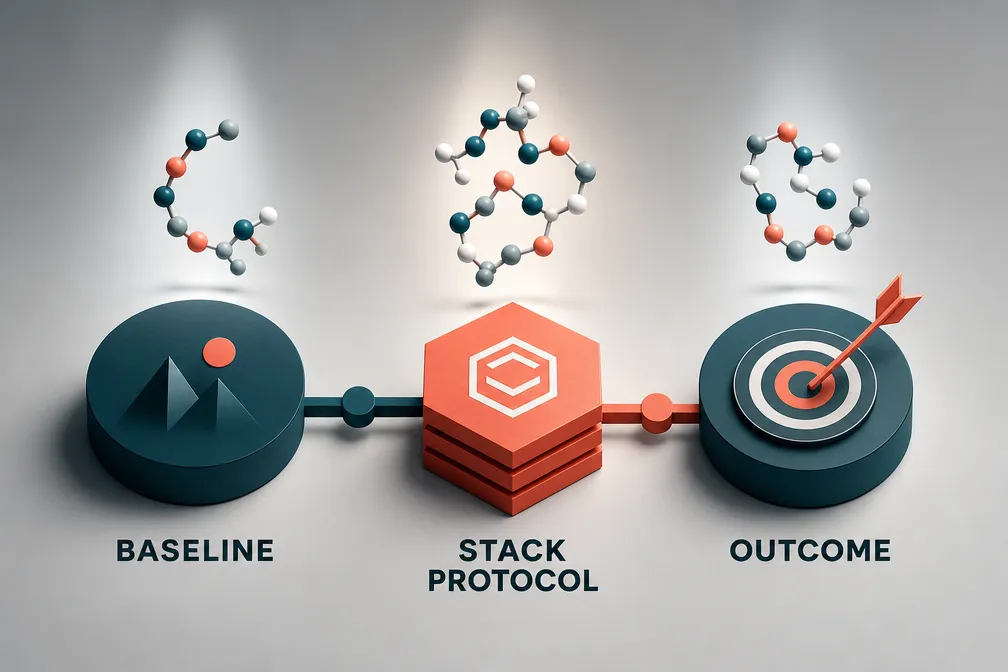
  • Tesamorelin: 1-2 mg per administration
  • Ipamorelin: 200-300 mcg per administration
  • Frequency: Once daily (evening) or twice daily (morning and evening) depending on study design

Researchers seeking dose-calculation guidance can consult the Tesamorelin dosage calculator for reference modeling.

Protocol Design Considerations

  • Cycling: Most research designs run 8-12 week active phases followed by 4-week washout periods to prevent receptor desensitization.
  • Controls: Include single-agent arms (tesa alone, ipamorelin alone) to quantify the additive contribution.
  • Biomarkers: Track serum IGF-1, fasting GH pulse amplitude, and body composition metrics as primary endpoints.
  • Safety monitoring: Assess fasting glucose and insulin sensitivity at baseline and at 4-week intervals given GH's known effects on glucose metabolism.

For researchers interested in how this combination compares within broader secretagogue stacks, the Sermorelin, Ipamorelin, and CJC-1295 combination overview offers comparative mechanistic context. Additionally, the safety considerations for combining Tesamorelin with CJC and Ipamorelin addresses common protocol safety questions.

Conclusion

The Ipamorelin and Tesamorelin Combination: Synergistic GH Secretagogue Research and Dosing Protocols framework offers a mechanistically coherent strategy for amplifying pulsatile GH secretion in research models. By simultaneously engaging the GHRH receptor pathway through tesa and the ghrelin receptor pathway through ipamorelin, researchers can generate GH pulses that exceed single-agent outputs while maintaining a favorable hormonal selectivity profile.

Actionable next steps for researchers:

  1. Review the regulatory landscape, tesa's FDA-approved monotherapy status sets a pharmacological benchmark; the combination remains strictly investigational.
  2. Design protocols with single-agent control arms to isolate the synergistic contribution.
  3. Align dosing with natural GH pulse timing (evening administration, fasted state).
  4. Monitor IGF-1, glucose metabolism, and body composition as primary experimental endpoints.
  5. Plan 8-12 week active cycles with structured washout periods to preserve receptor sensitivity.

Rigorous experimental design, not anecdotal stacking, is what transforms a mechanistically promising combination into reproducible, publishable science.

https://www.puretestedpeptides.com/wp-content/uploads/2026/07/ipamorelin-and-tesa-combination-synergistic-gh-secretagogue-research-and.webp 672 1008 Pure Tested https://www.puretestedpeptides.com/wp-content/uploads/2026/01/buy-peptides-online.jpg Pure Tested2026-07-24 13:09:592026-07-27 13:32:06Ipamorelin and Tesamorelin Combination: Synergistic GH Secretagogue Research and Dosing Protocols
×

Helpful Links

  • My account
  • Cart
  • Checkout
  • Refund and Returns Policy
  • Privacy Policy
  • SMS Privacy Policy
  • Login
  • My Account
  • Logout

USA Made Lab Tested Peptides

All products are sold for research, laboratory, or analytical purposes only, and are not for human consumption


Pure Tested Peptides is a chemical supplier. Pure Tested Peptides is not a compounding / chemical compounding facility as defined under 503A of the Federal Food, Drug, and Cosmetic act. Pure Tested Peptides is not an outsourcing facility as defined under 503B of the Federal Food, Drug, and Cosmetic act.

The statements made within this website have not been evaluated by the US Food and Drug Administration. The products we offer are not intended to diagnose, treat, cure or prevent any disease.

Human/Animal Consumption Prohibited. Laboratory/In-Vitro Experimental Use Only

Scroll to top Scroll to top Scroll to top