Adenosine Triphosphate and Mitochondrial Peptides: How MOTS-c and 5-Amino-1MQ Influence ATP Production in Research Models
Every cell in the body runs on a single molecular currency, adenosine triphosphate (ATP). When that currency becomes scarce, cellular function deteriorates rapidly. The emerging science of mitochondrial peptides now offers researchers a new lens for understanding how ATP production can be modulated at the molecular level, and two compounds sit at the center of that conversation: MOTS-c and 5-Amino-1MQ. The study of adenosine triphosphate and mitochondrial peptides, specifically how MOTS-c and 5-Amino-1MQ influence ATP production in research models, has accelerated considerably in 2026, with the first interventional human trials now recruiting.
Key Takeaways
- ATP is the primary energy currency of cells, produced mainly within mitochondrial inner membranes via oxidative phosphorylation.
- MOTS-c is a mitochondria-encoded peptide that modulates the AMP/ATP ratio and activates AMPK, indirectly protecting ATP reserves under metabolic stress.
- 5-Amino-1MQ inhibits NNMT, raising intracellular NAD+ levels and supporting mitochondrial electron transport chain efficiency.
- Both compounds influence overlapping metabolic pathways, including NAD+ metabolism and AMPK signaling, making them complementary subjects in energy research.
- The evidence base for both compounds remains primarily preclinical, though human data for MOTS-c is growing rapidly.
ATP Fundamentals: Why Mitochondrial Output Matters
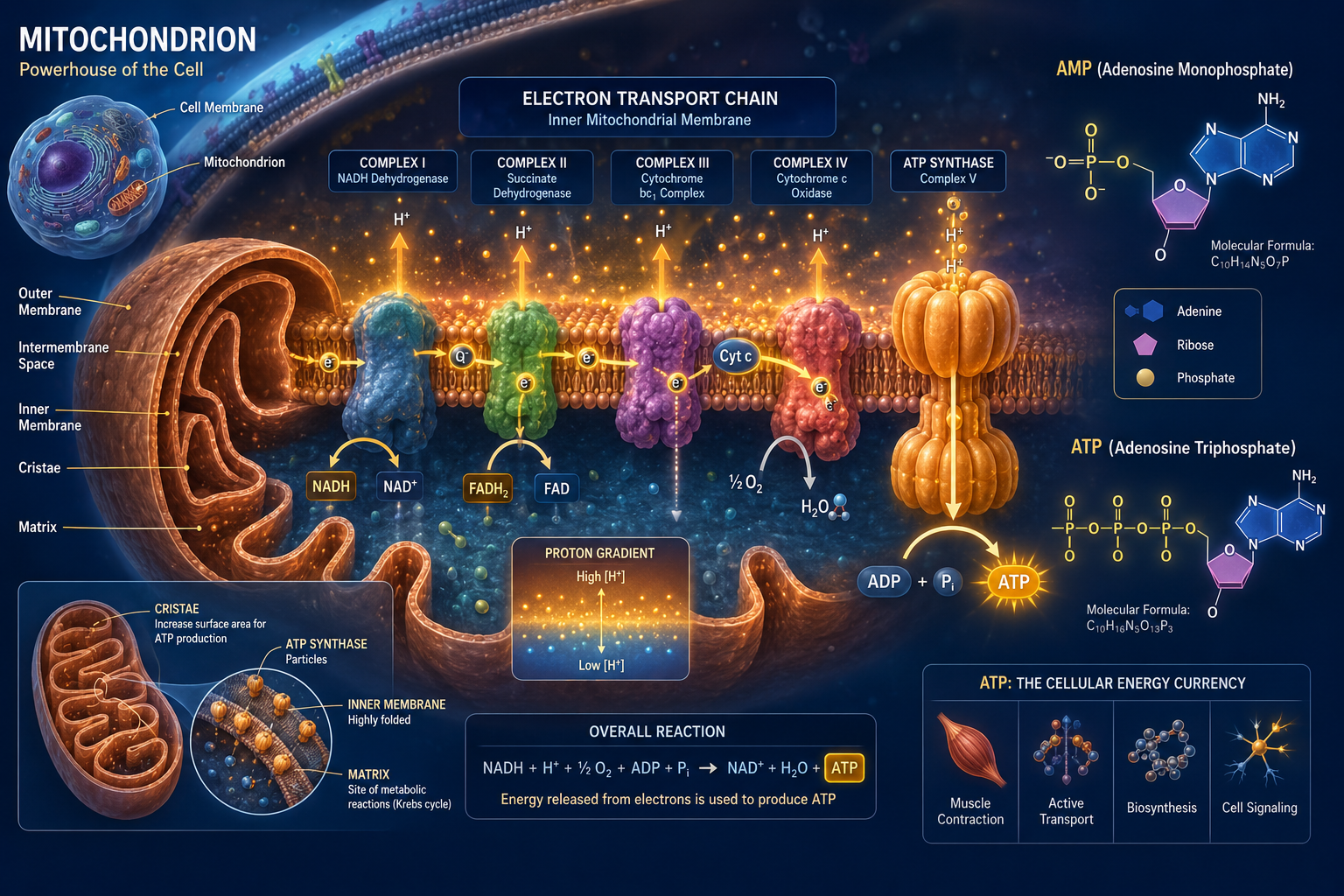
Adenosine triphosphate is synthesized primarily through oxidative phosphorylation, a process driven by the electron transport chain (ETC) embedded in the inner mitochondrial membrane. Each glucose molecule, when fully oxidized, yields approximately 30-32 ATP molecules, the majority generated at the ATP synthase complex (Complex V).
Several factors limit this output in aging or diseased tissue:
- Declining NAD+ availability, which slows ETC electron flow
- Mitochondrial membrane damage, reducing proton gradient efficiency
- Excess ATP hydrolysis under stress conditions, depleting reserves faster than they can be replenished
- Impaired mitophagy, allowing dysfunctional mitochondria to accumulate
Understanding these bottlenecks is essential context for evaluating how peptides like MOTS-c and 5-Amino-1MQ interact with ATP metabolism. Researchers exploring related mitochondrial compounds such as SS-31 and its mitochondrial research themes will recognize many of the same upstream mechanisms at work.
How MOTS-c and 5-Amino-1MQ Influence ATP Production in Research Models
MOTS-c: A Mitochondria-Encoded Metabolic Regulator
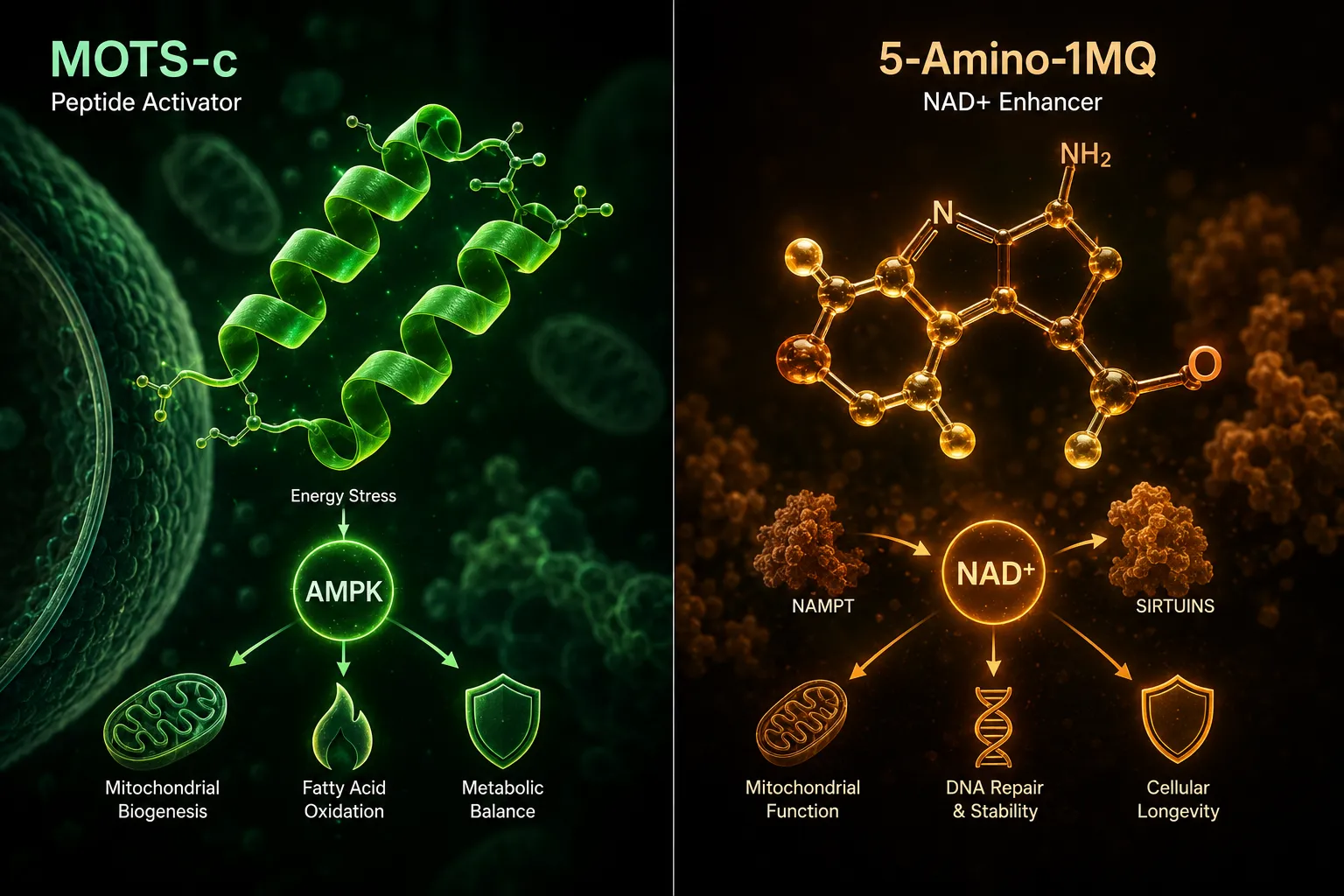
MOTS-c (Mitochondrial Open Reading Frame of the 12S rRNA type-c) is a 16-amino-acid peptide encoded directly within mitochondrial DNA, a distinction that makes it biologically unique. Rather than directly synthesizing ATP, MOTS-c acts as a metabolic stress sensor that modulates the AMP-to-ATP ratio and activates AMP-activated protein kinase (AMPK).
Key findings from preclinical and early human research include:
| Observation | Model Type |
|---|---|
| Acute exercise sharply elevates MOTS-c in muscle and circulation | Human subjects |
| MOTS-c reduces ATP hydrolysis during anoxic stress | Cellular/animal models |
| AMPK activation improves glucose uptake and fatty acid oxidation | Animal models |
| MOTS-c preserves mitochondrial membrane integrity under oxidative load | Preclinical |
By slowing ATP hydrolysis rather than boosting raw production, MOTS-c effectively conserves the ATP pool when cellular demand outpaces supply. This mechanism is especially relevant in hypoxic or ischemic conditions studied in research settings.
Researchers interested in exploring MOTS-c peptide research will find it pairs conceptually with other mitochondria-targeted compounds. For a broader comparative view, the MOTS-c and elamipretide research overview provides useful context on how these agents differ mechanistically.
5-Amino-1MQ: NAD+ Elevation and ETC Support
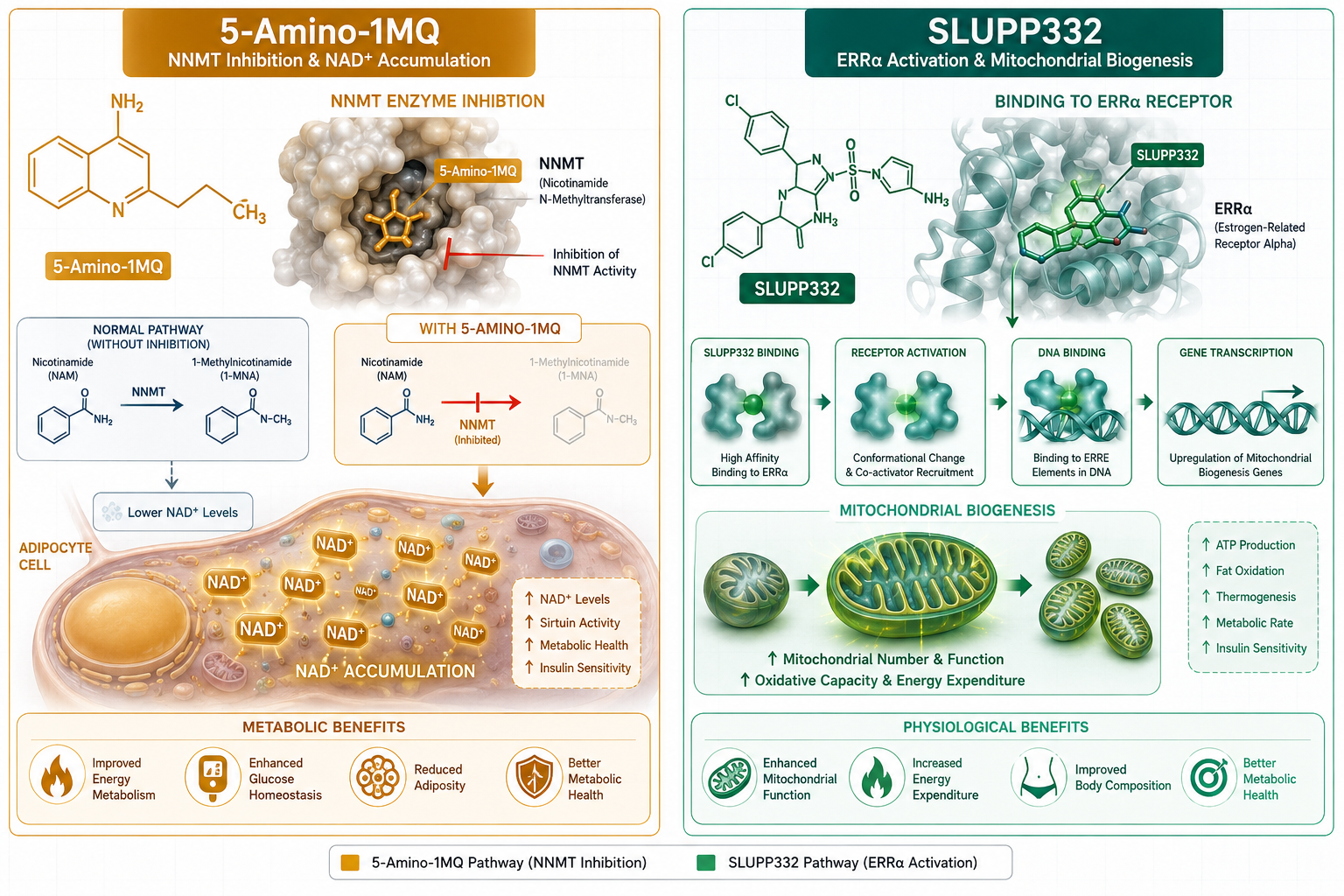
5-Amino-1MQ (5-amino-1-methylquinolinium) takes a fundamentally different approach. It is a small-molecule inhibitor of nicotinamide N-methyltransferase (NNMT), an enzyme that consumes S-adenosylmethionine and depletes the methyl donor pool needed for NAD+ biosynthesis.
By blocking NNMT, 5-Amino-1MQ:
- Raises intracellular NAD+ concentrations
- Supports sirtuin (SIRT1/SIRT3) activity, which regulates mitochondrial biogenesis
- Enhances electron flow through Complexes I and III of the ETC
- Reduces adipogenesis in preclinical obesity models, indirectly improving metabolic efficiency
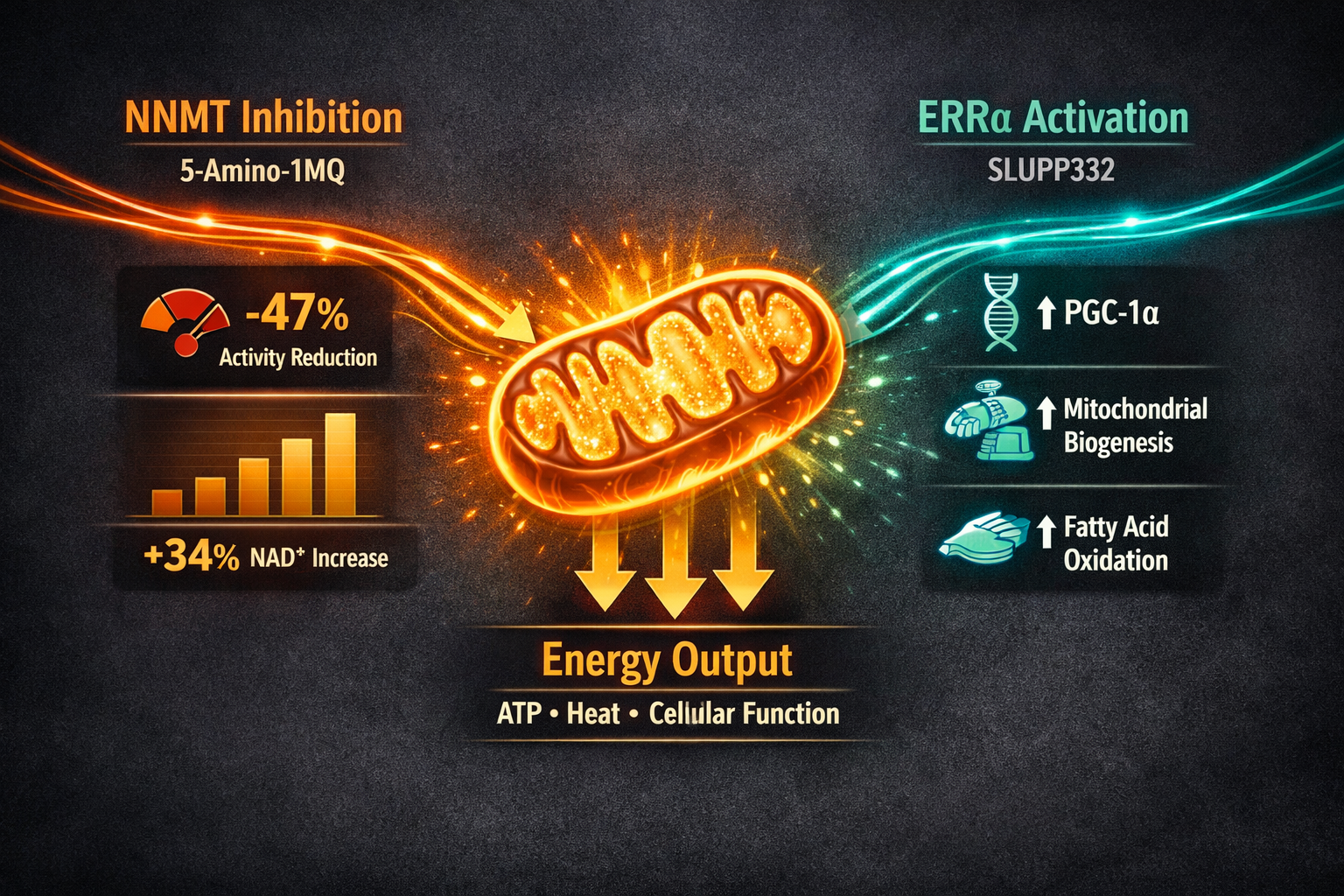
The downstream result in research models is improved mitochondrial respiratory capacity and greater ATP output per unit of substrate. Because NAD+ is consumed at multiple points in the ETC, even modest increases in its availability can meaningfully shift ATP yield.
"NAD+ is not merely a cofactor, it is a rate-limiting variable in mitochondrial energy production, and compounds that restore its availability represent a high-leverage intervention point in metabolic research."
Overlapping Pathways and Downstream Signaling
The significance of studying adenosine triphosphate and mitochondrial peptides, how MOTS-c and 5-Amino-1MQ influence ATP production in research models, becomes clearest when their pathways are examined together.
Both compounds converge on AMPK and sirtuin signaling:
- MOTS-c activates AMPK via AMP/ATP ratio changes
- Elevated NAD+ from 5-Amino-1MQ activates SIRT1, which can also stimulate AMPK indirectly
This convergence suggests potential synergistic effects in research models, though direct combination studies remain limited as of 2026. Researchers studying mitochondrial dynamics may also find value in reviewing SS-31 mitochondrial dynamics research, which addresses cristae remodeling, a structural factor that influences ETC efficiency upstream of both MOTS-c and 5-Amino-1MQ targets.
Additional peptides with metabolic relevance, such as those explored in epithalon peptide research, demonstrate that mitochondrial health intersects with broader cellular aging pathways, reinforcing the value of a systems-level research approach.

The 2026 Research Landscape
The field has matured considerably. Key developments include:
- First interventional human MOTS-c trials now actively recruiting as of 2026
- Growing body of human exercise data showing MOTS-c responds dynamically to metabolic demand
- Increased interest in 5-Amino-1MQ as a metabolic adjunct in obesity and insulin resistance models
- Expanded understanding of how NAD+ precursor availability limits or enables peptide-driven ATP gains
Researchers sourcing compounds for preclinical work should prioritize purity and documentation. Resources such as quality peptides for research and verified peptides for sale help ensure experimental reproducibility.
Conclusion
The intersection of adenosine triphosphate and mitochondrial peptides, specifically how MOTS-c and 5-Amino-1MQ influence ATP production in research models, represents one of the most actionable frontiers in cellular bioenergetics research today. MOTS-c protects ATP reserves by moderating hydrolysis and activating AMPK, while 5-Amino-1MQ raises NAD+ availability to directly support electron transport chain throughput. Together, they illuminate distinct but complementary levers for improving mitochondrial energy output.
Actionable next steps for researchers:
- Review current preclinical literature on MOTS-c's AMP/ATP modulation before designing in vitro protocols
- Establish baseline NAD+ measurements in model systems before introducing 5-Amino-1MQ to accurately assess ETC changes
- Consider AMPK pathway readouts as shared endpoints when studying both compounds
- Monitor 2026 clinical trial registries for emerging human MOTS-c data that may inform translational research design
- Source research-grade compounds from verified suppliers with documented purity testing to ensure data integrity