

5-Amino-1MQ and MOTS-c Synergy: How Mitochondrial Peptides Target Adiposity and Insulin Resistance in Experimental Models
Metabolic dysfunction now affects more than one billion people worldwide, yet the molecular machinery driving fat accumulation and insulin resistance remains only partially mapped. Two research compounds, 5-Amino-1MQ and MOTS-c, are drawing serious attention in 2026 precisely because they appear to converge on that machinery from complementary angles. The study of 5-Amino-1MQ and MOTS-c synergy: how mitochondrial peptides target adiposity and insulin resistance in experimental models offers a mechanistic lens that goes well beyond conventional metabolic research.
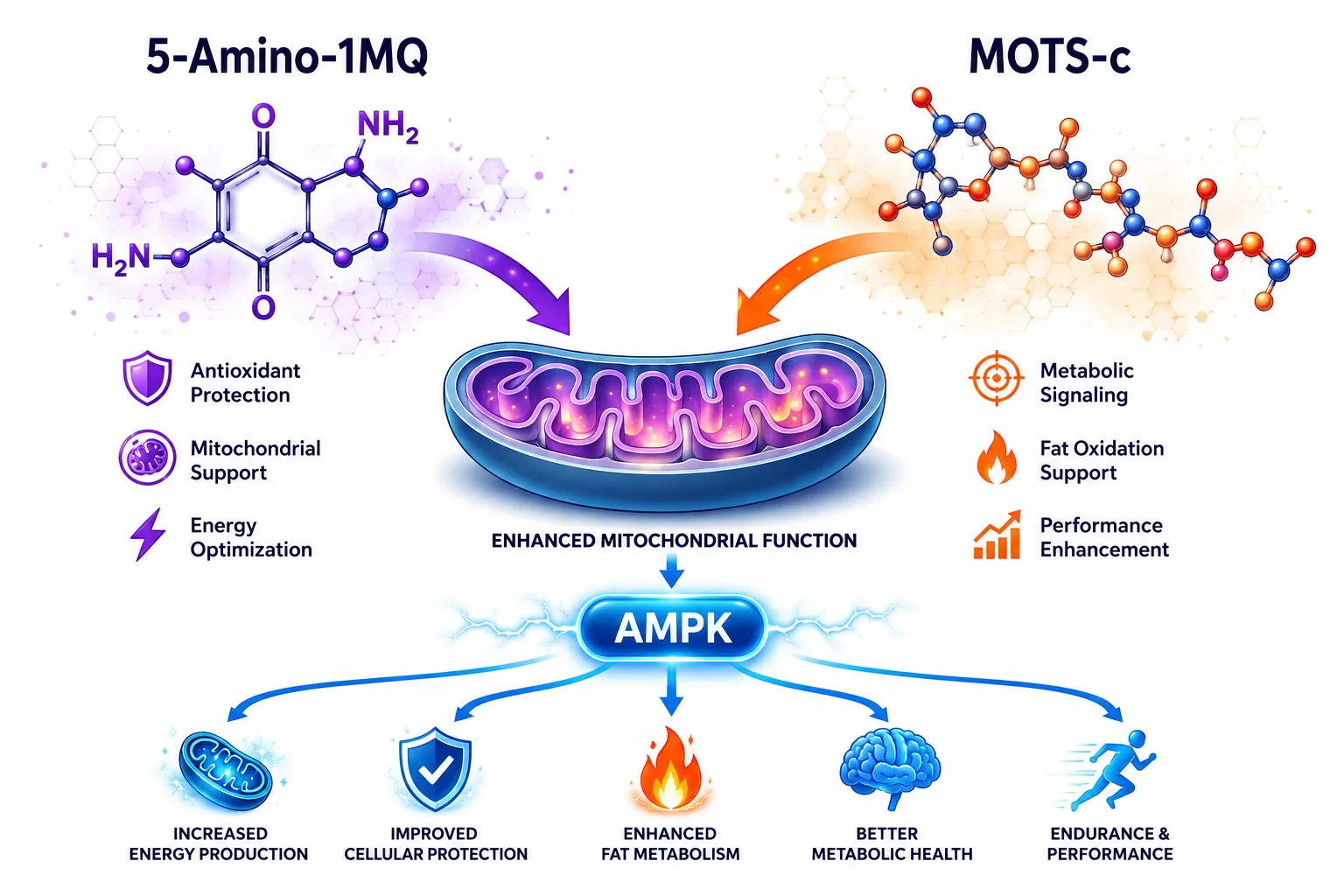
Key Takeaways
- 5-Amino-1MQ inhibits NNMT, reducing fat cell formation and improving energy expenditure in preclinical models.
- MOTS-c is a mitochondria-derived peptide that activates AMPK and improves insulin sensitivity in animal studies.
- Both compounds influence overlapping metabolic pathways, suggesting additive or synergistic effects when combined.
- Preclinical data support their combined use as a research framework for studying adiposity and glucose regulation.
- Neither compound is approved for human therapeutic use; all findings are restricted to experimental research contexts.
What Are 5-Amino-1MQ and MOTS-c?
5-Amino-1MQ: An NNMT Inhibitor
5-Amino-1MQ (5-amino-1-methylquinolinium) is a small-molecule inhibitor of nicotinamide N-methyltransferase (NNMT). NNMT is an enzyme highly expressed in white adipose tissue. When overactive, it drains the NAD+ precursor pool and suppresses cellular energy expenditure.
By blocking NNMT, 5-Amino-1MQ:
- Raises intracellular SAM (S-adenosylmethionine) levels
- Increases NAD+ availability
- Reduces adipogenesis (new fat cell formation)
- Enhances resting metabolic rate in diet-induced obesity mouse models
A landmark study by Neelakantan et al. (2019) demonstrated that NNMT inhibition with a structurally related compound reduced fat mass and improved metabolic markers without altering food intake in obese mice, a finding that positioned NNMT inhibitors as promising anti-obesity research tools.
MOTS-c: A Mitochondrial Microprotein
MOTS-c (mitochondrial open reading frame of the 12S rRNA-c) is a 16-amino acid peptide encoded within mitochondrial DNA. It is not a synthetic invention, it is naturally produced in human tissue and declines with age and metabolic stress.
MOTS-c primarily works by:
- Activating AMPK (AMP-activated protein kinase), the master energy sensor
- Improving skeletal muscle glucose uptake
- Reducing hepatic lipid accumulation
- Modulating the folate cycle and methionine metabolism
Research published by Lee et al. (2015) showed that MOTS-c administration improved insulin sensitivity and reduced obesity in high-fat diet mouse models. Subsequent studies confirmed its role as an exercise-mimetic signal, released during physical exertion to coordinate systemic metabolic adaptation.
For researchers exploring related mitochondrial peptide interactions, the MOTS-c and elamipretide research overview provides useful comparative context. Similarly, SS-31 mitochondrial dynamics research illustrates how mitochondria-targeted compounds share overlapping mechanisms.
Mechanistic Overlap: Where the Pathways Converge
Understanding 5-Amino-1MQ and MOTS-c synergy in targeting adiposity and insulin resistance requires mapping where their pathways intersect.
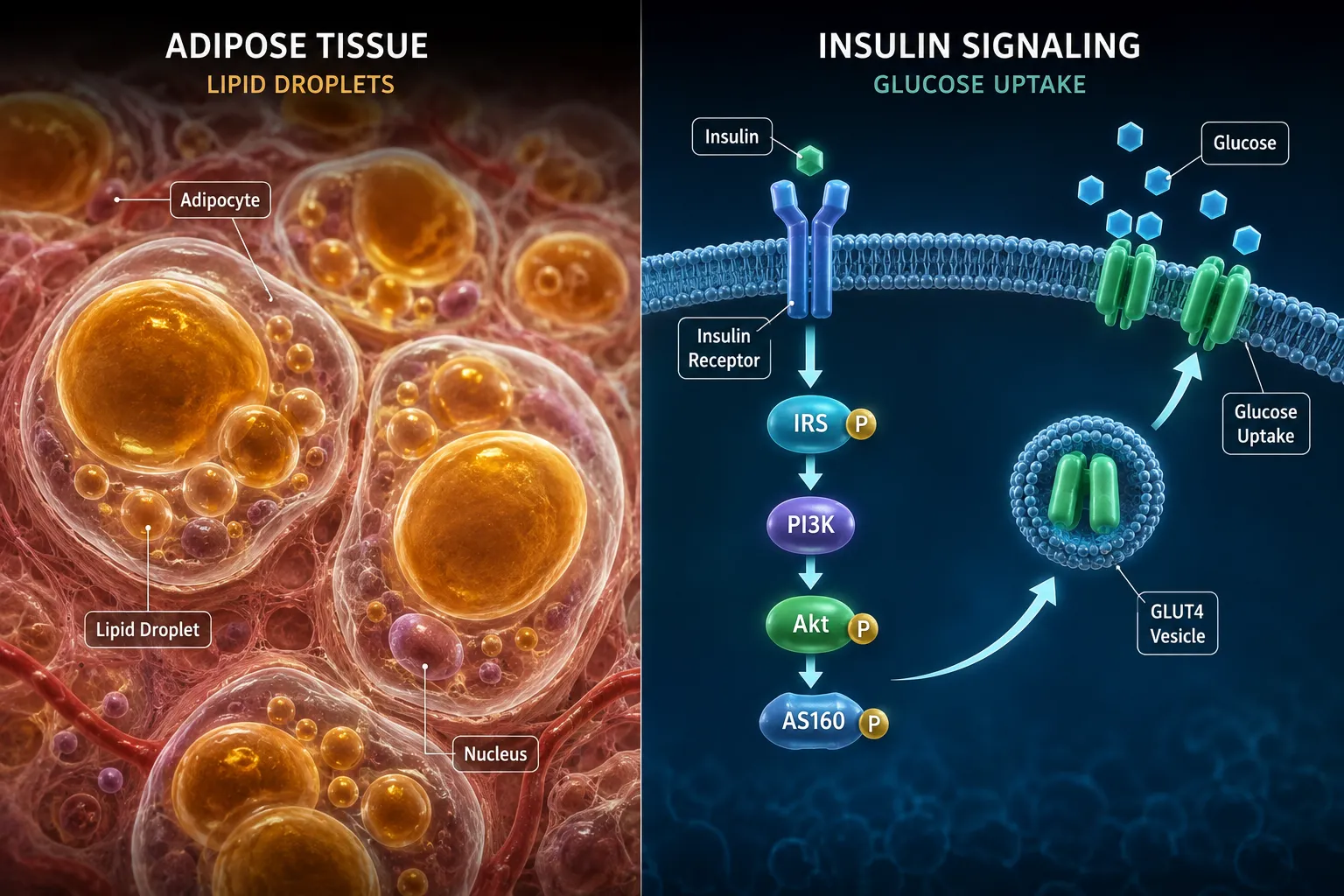
AMPK as the Central Node
Both compounds ultimately elevate AMPK activity, though through different upstream routes:
| Compound | Primary Target | Route to AMPK Activation |
|---|---|---|
| 5-Amino-1MQ | NNMT enzyme | Raises NAD+, activates SIRT1/AMPK axis |
| MOTS-c | Mitochondrial signaling | Direct AMPK phosphorylation in muscle |
Elevated AMPK suppresses lipogenesis, promotes fatty acid oxidation, and enhances GLUT4 translocation, the glucose transporter responsible for insulin-stimulated glucose uptake in muscle.
NAD+ and Methionine Cycle Crosstalk
5-Amino-1MQ increases SAM availability by reducing NNMT-driven methylation drain. MOTS-c independently modulates the folate-methionine cycle. In combination, preclinical logic suggests they may produce a more sustained elevation of metabolic cofactors than either agent alone.
"Compounds that converge on AMPK and NAD+ metabolism from distinct upstream nodes represent a rational basis for combination research designs in metabolic disease models."
Adipogenesis Suppression
5-Amino-1MQ directly reduces the differentiation of preadipocytes into mature fat cells. MOTS-c reduces lipid accumulation in liver and muscle. Together, they may address both peripheral fat storage and ectopic lipid deposition, two distinct but interrelated drivers of insulin resistance.
Researchers interested in peptide combinations targeting metabolic pathways may also find value in reviewing the synergy of LL-37 and SS-31 as a model for how mechanistically distinct peptides can complement each other.
Experimental Evidence and Research Design Considerations
Preclinical Findings
In diet-induced obesity (DIO) mouse models, NNMT inhibitors have consistently reduced:
- Adipose tissue mass by 15-30% over 4-8 week protocols
- Fasting insulin levels
- Hepatic triglyceride content
MOTS-c administration in similar DIO models has shown:
- Improved glucose tolerance test (GTT) results within 2 weeks
- Reduced HOMA-IR scores (a measure of insulin resistance)
- Increased mitochondrial biogenesis markers in skeletal muscle
Combination Research Design Notes
When designing experiments to study 5-Amino-1MQ and MOTS-c synergy in experimental models targeting adiposity and insulin resistance, researchers typically consider:
- Dose sequencing, whether to co-administer or stagger dosing
- Tissue-specific readouts, adipose, liver, and skeletal muscle panels
- Biomarker selection, AMPK phosphorylation, NAD+/NADH ratio, GLUT4 expression
- Model selection, DIO vs. genetic obesity models (e.g., db/db mice)
Researchers exploring growth hormone secretagogue combinations for metabolic endpoints may also reference tesa peptide benefits and AOD-9604 research method notes for comparative fat-loss mechanism data.
For broader metabolic peptide context, GLP-1 peptide research and GLP-3 retratrutide research represent parallel pathways targeting adiposity through incretin mechanisms.

Conclusion
The mechanistic case for studying 5-Amino-1MQ and MOTS-c synergy, how mitochondrial peptides target adiposity and insulin resistance in experimental models, is grounded in converging biology. Both compounds act on AMPK, NAD+ metabolism, and lipid regulation through distinct but complementary upstream routes. Preclinical data from independent studies on each agent are promising, and the rationale for combination protocols is scientifically coherent.
Actionable next steps for researchers:
- Review published NNMT inhibitor and MOTS-c literature to establish baseline biomarker panels before designing combination studies.
- Select DIO mouse models with well-characterized insulin resistance phenotypes for maximum translational relevance.
- Include tissue-specific mitochondrial function assays (e.g., oxygen consumption rate) alongside standard metabolic endpoints.
- Consult current IRB and institutional guidelines, neither compound has regulatory approval for human use.
As metabolic research tools, 5-Amino-1MQ and MOTS-c represent a compelling frontier for understanding how the mitochondria-adipose axis can be modulated at the molecular level.