Call or Text 727-513-9780
  • Shopping Cart Shopping Cart
    0Shopping Cart
Pure Tested Peptides | America's most trusted Peptides for sale online
  • Peptides for sale
    • Oral Peptides for sale
      • Peptide Capsules for sale
      • BPC 157 Capsules 1000mcg
      • SLU-PP-332 Capsules | 1000 mcg
      • 5-Amino-1MQ 50mg Capsules
      • Tesofensine 500mcg
    • All Peptides for sale
    • Peptide Sprays
      • BPC 157 Nasal Spray Kit
      • BPC-157 TB500 Nasal Spray Kit
      • Semax Nasal Spray 10mg
      • Selank – Nasal Spray Kit – 10mg
      • Epithalon 50MG Nasal Spray Kit
      • Ipamorelin 10mg Nasal Spray
      • Klow Nasal Spray (BPC-157 + TB-500 + GHK-Cu + KPV) | 80mg
      • Hulk Nasal Spray Tesa / Ipa Blend 6/3 MG
      • Klow Nasal Spray
      • NAD + 500 mg Nasal Spray
      • PT-141 Nasal Spray Kit
    • GHRH Peptides
      • Ipa Peptides
      • CJC-1295 Peptides
        • CJC-1295 with DAC 5 mg
        • CJC-1295 without DAC 5 mg
        • CJC-1295 Ipa 10mg
      • Tesa Peptides
        • Tesa Peptide
        • Tesa 20 mg
    • GHK-Cu Peptides
      • All GHK-Cu Peptides
      • GHK-Cu 100mg
      • KLOW Peptide Blend – Buy KLOW blend online
    • BPC Peptides
      • All BPC Peptides
      • BPC-157
      • BPC-157 TB-500
      • BPC 157 capsules 1000mcg
    • SLU-PP-332 Peptides
      • All SLU-PP-332 Peptides
      • SLU-PP-332 5mg
    • GLP3 Peptides
    • PT-141 Peptides
      • PT-141 Peptides for sale
      • PT-141 10mg
      • PT-141 Nasal Spray
    • CAG Peptides
      • Lipo-C Peptide Blend
      • CAG 5mg
      • CAG 10mg
    • MOTS-C Peptides
      • MOTS-C Peptides for sale
      • MOTS-c peptide
      • MOTS-c 10mg *6 pack*
    • 5 Amino 1MQ Peptides
      • 5 Amino 1MQ Peptides for sale
      • 5-Amino-1MQ 50mg Capsules
      • 5-Amino-1MQ 5mg
    • Epithalon Peptides
      • Epithalon Peptides for sale
      • Epithalon 10mg
      • Epithalon 50mg
  • Shop
    • GLPs
      • 5-Amino-1MQ 50mg Capsules
      • 5-Amino-1MQ 5mg
      • L-Carnitine 500mg/ml
      • Tesofensine 500mcg
      • SLU-PP-332 5mg
      • MOTS-c 10mg *6 pack*
    • Epithalon & BPC Peptides
      • Epithalon 10mg
      • Epithalon 50mg
      • BPC-157
      • BPC 157 capsules 1000mcg
      • BPC-157 TB-500
      • BPC-157 TB500 Nasal Spray Kit
      • BPC 157 Nasal Spray Kit
    • BPC TB-500 & NAD+ Peptides
      • NAD+ 500 mg
      • KLOW Peptide Blend – Buy KLOW blend online
      • GLOW Peptide Blend
      • TB 500 5mg
      • BPC 157 capsules 1000mcg – Supplement
      • BPC 157 Nasal Spray Kit
      • BPC-157
      • BPC-157 TB500 Nasal Spray Kit
      • BPC-157 TB-500
      • BPC 157 capsules 1000mcg
    • LL-37 Peptide
      • LL-37 10 mg
    • MOTS-C & Selank
      • MOTS-c peptide
      • Selank 10mg
    • GHK Peptides
      • GHK-Cu 100mg
      • GLOW Peptide Blend
      • KLOW Peptide Blend – Buy KLOW blend online
  • COAs
  • Wholesale
    • Wholesale Peptides for sale
  • PTP FAQ
  • Affiliates
    • Selank Peptide: Advanced Pharmacological Mechanisms Underlying Its Anxiolytic and Nootropic Effects in Research
      • 5-Amino-1MQ Peptide: Detailed Mechanisms of NNMT Inhibition and Its Impact on Cellular Metabolism Research
        • MOTS-C Peptide: Unraveling Its Role in Mitochondrial Dynamics and Energy Metabolism Research
          • Epithalon Peptide and Telomerase Regulation: Investigating Its Impact on Cellular Senescence and Lifespan Research Models
            • GLP2-T vs GLP2 Tirz Peptide: Understanding the Naming, Mechanistic Nuances, and Research Implications for Gut Health
      • Peptides and Polypeptides in Modern Pharmacology: What Research on Metoprolol, Prednisone, and Amlodipine Reveals
        • Polypeptide Peptides vs NSAIDs: What Naproxen and Diclofenac Teach Tissue-Repair Researchers About BPC‑157 and TB‑500
          • Peptides and Polypeptides in Endocrine Pharmacology: How GLP-1, GLP-2, and GLP-3 Retatrutide Differ From Classic Drugs Like Prednisone and Amlodipine
          • 5‑Amino‑1MQ Peptide and NNMT Inhibition: How It Compares With Statins Like Atorvastatin in Adipose and Lipid Metabolism Research
      • Enclomiphene, Estrogen Receptor Signaling, and Luteinizing Phase Biology: What Hormone Researchers Should Measure
        • Mesenchymal Stem Cells, BPC‑157, and GHK‑Cu: How Tissue Repair Peptides Compare With Classic NSAIDs Like Naproxen in Injury Models
          • Peptide Calculator Use Cases Beyond Growth Hormone: Working Through GLP‑3 Retatrutide, MOTS‑c, and BPC‑157 Research Dosing
        • Polypeptide Peptides in Endocrine and Metabolic Pharmacology: Lessons From Amlodipine, Prednisone, and Metoprolol
        • Peptides Calculator for Advanced Blends: Worked Examples for Tesamorelin, CJC‑1295, and Ipamorelin Stacks
          • Peptides and Polypeptides in Human Physiology: How Molecular Size Shapes Research Applications
            • Selank Peptide: Advanced Pharmacological Mechanisms Underlying Its Anxiolytic and Nootropic Effects in Research
          • 5-Amino-1MQ Peptide: Detailed Mechanisms of NNMT Inhibition and Its Impact on Cellular Metabolism Research
            • MOTS-C Peptide: Unraveling Its Role in Mitochondrial Dynamics and Energy Metabolism Research
              • Epithalon Peptide and Telomerase Regulation: Investigating Its Impact on Cellular Senescence and Lifespan Research Models
                • GLP2-T vs GLP2 Tirz Peptide: Understanding the Naming, Mechanistic Nuances, and Research Implications for Gut Health
                  • Peptides and Polypeptides in Endocrine Pharmacology: How GLP-1, GLP-2, and GLP-3 Retatrutide Differ From Classic Drugs Like Prednisone and Amlodipine
                    • Polypeptide Peptides vs NSAIDs: What Naproxen and Diclofenac Teach Tissue-Repair Researchers About BPC‑157 and TB‑500
                      • Peptides and Polypeptides in Modern Pharmacology: What Research on Metoprolol, Prednisone, and Amlodipine Reveals
                        • 5‑Amino‑1MQ Peptide and NNMT Inhibition: How It Compares With Statins Like Atorvastatin in Adipose and Lipid Metabolism Research
                        • Enclomiphene, Estrogen Receptor Signaling, and Luteinizing Phase Biology: What Hormone Researchers Should Measure
                        • Mesenchymal Stem Cells, BPC‑157, and GHK‑Cu: How Tissue Repair Peptides Compare With Classic NSAIDs Like Naproxen in Injury Models
                        • Peptide Calculator Use Cases Beyond Growth Hormone: Working Through GLP‑3 Retatrutide, MOTS‑c, and BPC‑157 Research Dosing
                        • Polypeptide Peptides in Endocrine and Metabolic Pharmacology: Lessons From Amlodipine, Prednisone, and Metoprolol
                        • Peptides Calculator for Advanced Blends: Worked Examples for Tesamorelin, CJC‑1295, and Ipamorelin Stacks
                        • Peptides and Polypeptides in Human Physiology: How Molecular Size Shapes Research Applications
                        • Selank Peptide: Advanced Pharmacological Mechanisms Underlying Its Anxiolytic and Nootropic Effects in Research
                        • MOTS-C Peptide: Unraveling Its Role in Mitochondrial Dynamics and Energy Metabolism Research
                        • Peptides and Polypeptides in Modern Pharmacology: What Research on Metoprolol, Prednisone, and Amlodipine Reveals
                        • Peptides and Polypeptides in Endocrine Pharmacology: How GLP-1, GLP-2, and GLP-3 Retatrutide Differ From Classic Drugs Like Prednisone and Amlodipine
                        • 5-Amino-1MQ Peptide: Detailed Mechanisms of NNMT Inhibition and Its Impact on Cellular Metabolism Research
                        • Mesenchymal Stem Cells, BPC‑157, and GHK‑Cu: How Tissue Repair Peptides Compare With Classic NSAIDs Like Naproxen in Injury Models
                        • Peptide Calculator Use Cases Beyond Growth Hormone: Working Through GLP‑3 Retatrutide, MOTS‑c, and BPC‑157 Research Dosing
                        • GLP2-T vs GLP2 Tirz Peptide: Understanding the Naming, Mechanistic Nuances, and Research Implications for Gut Health
                        • Polypeptide Peptides in Endocrine and Metabolic Pharmacology: Lessons From Amlodipine, Prednisone, and Metoprolol
                        • Polypeptide Peptides vs NSAIDs: What Naproxen and Diclofenac Teach Tissue-Repair Researchers About BPC‑157 and TB‑500
                        • Peptides and Polypeptides in Human Physiology: How Molecular Size Shapes Research Applications
                        • Peptides Calculator for Advanced Blends: Worked Examples for Tesamorelin, CJC‑1295, and Ipamorelin Stacks
                        • 5‑Amino‑1MQ Peptide and NNMT Inhibition: How It Compares With Statins Like Atorvastatin in Adipose and Lipid Metabolism Research
                        • Enclomiphene, Estrogen Receptor Signaling, and Luteinizing Phase Biology: What Hormone Researchers Should Measure
                        • Epithalon Peptide and Telomerase Regulation: Investigating Its Impact on Cellular Senescence and Lifespan Research Models
                        • Best research protocol Klow blend
                        • best time to take BPC-157
                        • best time to take DSIP (Delta Sleep Inducing Peptide)
                        • best time to take CJC-1295
                        • best time to take AOD-9604
                        • best time to take Follistatin 344
                        • best time to take Ipamorelin
                        • best time to take MK-677 (Ibutamoren)
                        • best time to take Ligandrol (LGD-4033) — research compound
                        • best time to take Ostarine (MK-2866) — research compound
                        • best time to take GHK-CU
                        • best time to take TB-500
                        • best time to take MOTS-c
                        • best time to take Semax
                        • best time to take RAD-140 (Testolone) — research compound
                        • best time to take Thymosin Alpha-1
                        • best time to take PEG-MGF
                        • Biolife Plasma, Octapharma Plasma, and Research Peptides: How Plasma Donation Labs Differ From Peptide Suppliers
                        • best time to take YK-11 — research compound
                        • best time to take PT-141 (Bremelanotide)
                        • Best research protocol Klow blend
                        • 5-Amino-1MQ and MOTS-C Synergy: Metabolic Signaling, Mitochondria, and Research Design
                        • BPC-157 and TB-500: Investigating Their Combined Effects on Angiogenesis and Cellular Migration in Tissue Repair Models
                        • BPC-157 Peptide: Gut Barrier Function, Inflammation, and Tissue-Recovery Research
                        • 5‑Amino‑1MQ and MOTS‑c Synergy in Metabolic Research: Designing NNMT and Mitochondrial Biogenesis Stacks
                        • CJC-1295 with DAC vs. Without DAC: Half-Life, Release Kinetics, and Research Implications
                        • CJC‑1295 with DAC vs. Without DAC: Expanding on Half‑Life Differences Using Tesamorelin and Ipamorelin Blend Case Studies
                        • Collagen Biology and Copper‑Binding Peptides: How GHK‑Cu, Glow Blend, and Klow Blend Interact with Skin and Connective Tissue
                        • Collagen Biology and Regenerative Peptides: How GHK‑Cu, Glow Blend, and Klow Blend Affect Extracellular Matrix Research
                    • DNA, Telomeres, and Longevity Peptides: Positioning Epithalon and MOTS‑c in Genetic Aging Research
                      • Enclomiphene Citrate: serm Mechanism, Testosterone Research, and Stack Compatibility
                        • Enclomiphene vs Enclomiphene Citrate: Formulation, Bioavailability, and Research Distinctions
                        • Epithalon Peptide Research: Telomerase Activation, Aging, and Pineal Gland Function
                        • Estrogen Receptor Signaling and Enclomiphene: How Selective Modulators Compare with Classic Polypeptide Hormones
                        • GHK-Cu Peptide: Advanced Mechanisms in Extracellular Matrix Remodeling and Wound Healing Research
                        • GHK-Cu Peptide: Collagen Synthesis, Wound Repair, and Skin-Barrier Research Models
                        • GLP-1 vs GLP-3 vs GLP-2: Peptide Classification and Research Applications
                        • GLP-2 Peptide Research Guide: Gut Barrier Function, Nutrient Absorption, and Intestinal Recovery Models
                        • GLP-3 Retatrutide vs. GLP-1 Drugs: What Triple-Agonist Biology Changes in Research Models
                        • Ipamorelin and Tesamorelin Combination: Synergistic GH Secretagogue Research and Dosing Protocols
                        • GLP2 Tirz Peptide: What It Is, Why the Name Exists, and How Researchers Should Interpret It
                        • Klow Blend Peptide Nasal Spray: What the Formulation Is Trying to Do in Cognitive Research
                        • Mitochondria, NNMT Inhibition, and Peptide Modulators: Where MOTS‑c and 5‑Amino‑1MQ Fit in Cellular Energy Research
                        • MOTS-c Peptide: Mitochondrial Function, Energy Metabolism, and What Researchers Measure
                        • MOTS-c vs. 5-Amino-1MQ: Which Metabolic Research Questions Each Compound Actually Answers
                        • Nasal Spray Peptides: Bioavailability, Administration, and Semax/Selank Research Applications
                        • PT-141 Peptide Research: Mechanism of Action and Melanocortin Receptor Signaling
                        • Retatrutide for Research: Mechanism, Structure, and GLP-1/GLP-3 Dual Action
                        • Retatrutide for Obesity and Type 2 Diabetes: What the Latest Trial Data Suggest
                        • Tesofensine Peptide Research: Mechanism, Appetite Suppression, and Neuropeptide Y Pathways
  • Contact
    • Contact Customer Service
    • Text Customer Support
  • About US
  • Shop all peptides
  • Affiliate Program
    • Affiliate Signup
  • Login / Register Login / Register Page Link Login / Register Page Link
  • Click to open the search input field Click to open the search input field Search
  • Menu Menu

Tag Archive for: fat loss research

The Role of 5-Amino-1MQ Peptide in Adipose Tissue Metabolism and Fat Loss Research

The Role of 5-Amino-1MQ Peptide in Adipose Tissue Metabolism and Fat Loss Research

July 16, 2026/0 Comments/by Pure Tested

Obesity research took a notable turn in 2014 when scientists identified nicotinamide N-methyltransferase (NNMT) as a viable metabolic target, and the small molecule 5-Amino-1MQ emerged as a precise tool to inhibit it. The role of 5-Amino-1MQ peptide in adipose tissue metabolism and fat loss research has since attracted growing attention, particularly among researchers exploring how enzyme-level interventions can reshape energy balance without altering food intake.

Key Takeaways

  • 5-Amino-1MQ inhibits NNMT, an enzyme overexpressed in the fat tissue of obese subjects, raising intracellular NAD+ levels.
  • Preclinical studies in obese mouse models show significant reductions in body weight and fat mass alongside improved insulin sensitivity.
  • The compound is orally bioavailable, setting it apart from many injectable peptide-based research candidates.
  • No completed human clinical trials exist as of 2026; all efficacy data remain preclinical.
  • Research interest centers on combination protocols and metabolic adaptation scenarios, especially in subjects with lower body fat percentages.
Key Takeaways

How 5-Amino-1MQ Targets Adipose Tissue at the Molecular Level

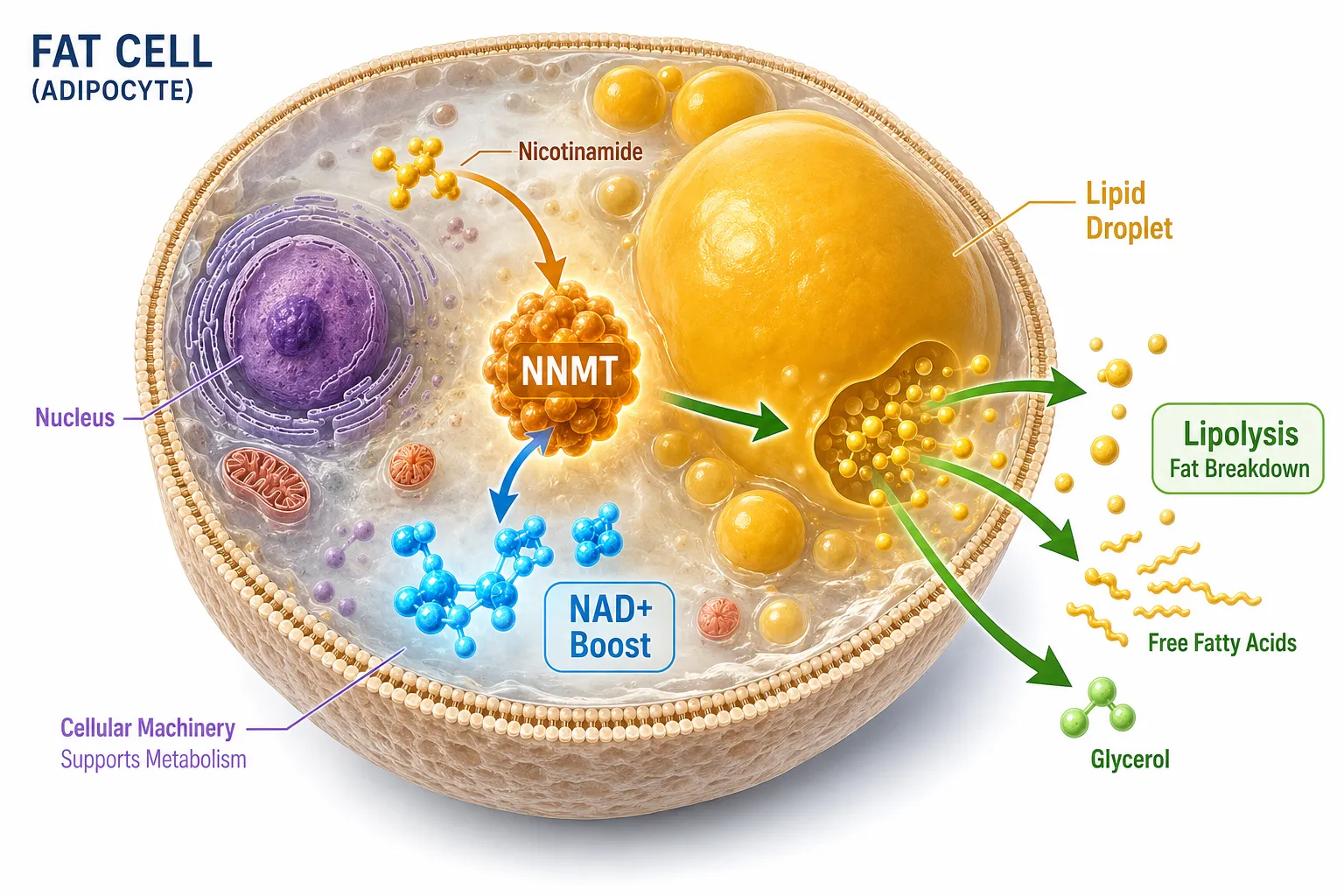
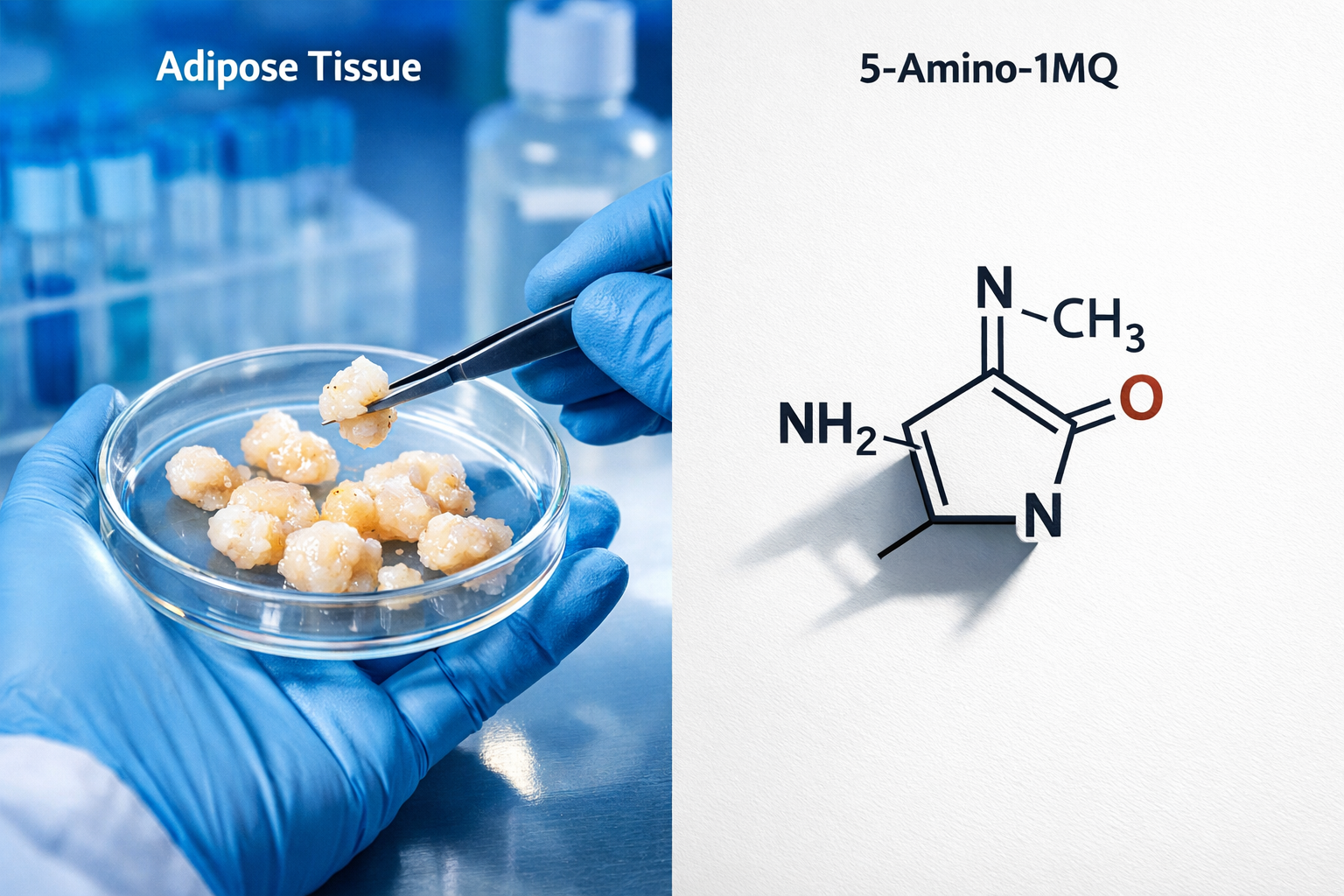
Understanding the role of 5-Amino-1MQ peptide in adipose tissue metabolism and fat loss research begins with the enzyme it inhibits: NNMT. This enzyme is overexpressed in the adipose tissue of obese individuals and catalyzes the methylation of nicotinamide, effectively consuming NAD+ precursors and S-adenosylmethionine (SAM).

When 5-Amino-1MQ blocks NNMT activity, two key outcomes follow:

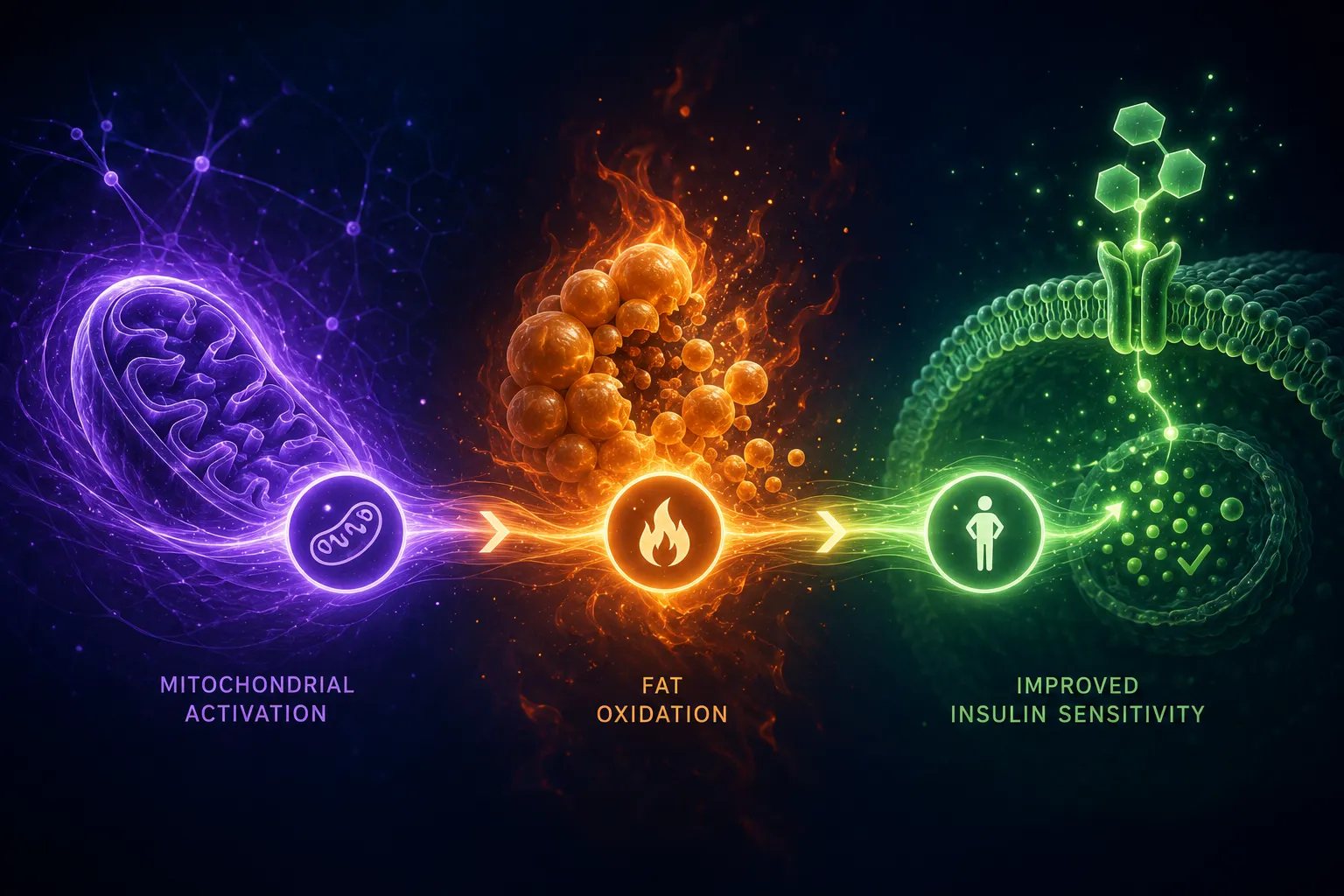
  • Elevated intracellular NAD+, supports mitochondrial function and drives enhanced fat oxidation.
  • Preserved SAM pools, maintains methylation capacity within adipocytes, supporting healthy gene expression patterns linked to lean metabolic states.

The downstream effect is a shift in adipocyte behavior: cells become more metabolically active, lipolysis increases, and adipocyte size decreases. This mechanism is distinct from appetite suppression or thermogenic stimulation, making it a complementary candidate in multi-pathway metabolic research protocols.

Key molecular targets of 5-Amino-1MQ:

Target Effect
NNMT enzyme Inhibited, reducing NAD+ depletion
Intracellular NAD+ Elevated, boosting mitochondrial activity
SAM pools Preserved, supporting epigenetic regulation
Adipocyte size Reduced via enhanced lipolysis

Researchers studying NAD+ and its scientific evidence base will recognize this pathway as central to several longevity and metabolic interventions currently under investigation.

How 5-Amino-1MQ Targets Adipose Tissue at the Molecular Level

Preclinical Findings and the Research Landscape in 2026

The strongest evidence for the role of 5-Amino-1MQ peptide in adipose tissue metabolism and fat loss research comes from diet-induced obese mouse models. In these studies, subjects administered 5-Amino-1MQ showed:

  • Significant reductions in body weight and fat mass
  • No measurable change in food intake, indicating the effect is metabolic rather than appetite-driven
  • Improved insulin sensitivity and glucose tolerance

This profile positions 5-Amino-1MQ as particularly relevant to researchers studying metabolic adaptation, the plateau phase where prolonged caloric restriction reduces metabolic rate. The compound appears most effective in subjects with lower body fat percentages (roughly 6-8%), while its utility in higher-adiposity states remains less defined.

"The absence of appetite suppression in preclinical models makes 5-Amino-1MQ a mechanistically unique candidate for combination fat-loss protocols."

A notable practical advantage: unlike many research peptides requiring injection, 5-Amino-1MQ demonstrates oral bioavailability. This characteristic broadens its potential application in study designs and aligns it with compounds like those explored in oral BPC-157 research.

Researchers building combination protocols may also find value in comparing 5-Amino-1MQ's metabolic action against growth hormone-releasing peptides. Studies on tesa's effects on visceral fat and ipamorelin's GH-releasing profile offer complementary mechanistic angles. Similarly, MOTS-c's mitochondrial activation pathway shares conceptual overlap with the NAD+-elevating effects of 5-Amino-1MQ.

Preclinical Findings and the Research Landscape in 2026

Safety Considerations, Regulatory Status, and Combination Protocol Design

As of 2026, 5-Amino-1MQ carries no FDA approval for any indication and has not been evaluated in completed human clinical trials. Its safety profile in humans is therefore not established. Researchers and clinicians should treat all current data as strictly preclinical.

Anecdotal reports from research communities describe enhanced energy levels and support for fat loss during caloric deficits, but these accounts lack clinical validation and should not substitute for controlled study data.

For researchers designing combination protocols, relevant considerations include:

  1. Metabolic context, 5-Amino-1MQ may be best studied in subjects already in a caloric deficit or experiencing metabolic adaptation.
  2. Complementary agents, pairing with GLP-1 receptor agonist research compounds or mitochondrial activators may produce synergistic metabolic effects. The GLP-1 dual receptor agonism research breakdown provides useful context here.
  3. Monitoring parameters, insulin sensitivity markers, NAD+ metabolite levels, and adipokine panels are logical endpoints given the compound's mechanism.
  4. Oral delivery design, the bioavailability profile allows for oral dosing studies, which simplifies certain research designs compared to injectable peptide protocols.

Researchers exploring adipotide and targeted fat tissue research will find 5-Amino-1MQ's NNMT-inhibition mechanism a distinct and non-overlapping approach worth investigating in parallel.


Conclusion

The role of 5-Amino-1MQ peptide in adipose tissue metabolism and fat loss research represents one of the more mechanistically specific avenues in current metabolic science. By targeting NNMT directly within adipose tissue, the compound elevates NAD+ and SAM availability, reduces adipocyte size, and improves insulin sensitivity, all without altering food intake in preclinical models.

Actionable next steps for researchers in 2026:

  • Review the 2018 preclinical NNMT inhibition literature as the foundational evidence base before designing any study protocol.
  • Consider 5-Amino-1MQ within combination frameworks alongside mitochondrial activators or GH-releasing peptides to explore additive metabolic effects.
  • Prioritize human safety profiling as the critical gap in the current evidence base.
  • Monitor regulatory developments, as the compound's oral bioavailability makes it a strong candidate for eventual clinical translation once safety data emerge.

The compound's unique mechanism, oral delivery advantage, and preclinical efficacy make it a compelling subject for continued investigation, provided researchers maintain rigorous standards and acknowledge the current limits of available evidence.


https://www.puretestedpeptides.com/wp-content/uploads/2026/07/the-role-of-5-amino-1mq-peptide-in-adipose-tissue-metabolism-and-fat-loss-resear.webp 1024 1536 Pure Tested https://www.puretestedpeptides.com/wp-content/uploads/2026/01/buy-peptides-online.jpg Pure Tested2026-07-16 13:39:162026-11-13 20:05:53The Role of 5-Amino-1MQ Peptide in Adipose Tissue Metabolism and Fat Loss Research
MOTS-C vs 5-Amino-1MQ: Mitochondrial Signaling vs NNMT Inhibition in Fat-Loss Research

MOTS-C vs 5-Amino-1MQ: Mitochondrial Signaling vs NNMT Inhibition in Fat-Loss Research

June 2, 2026/0 Comments/by Pure Tested

}

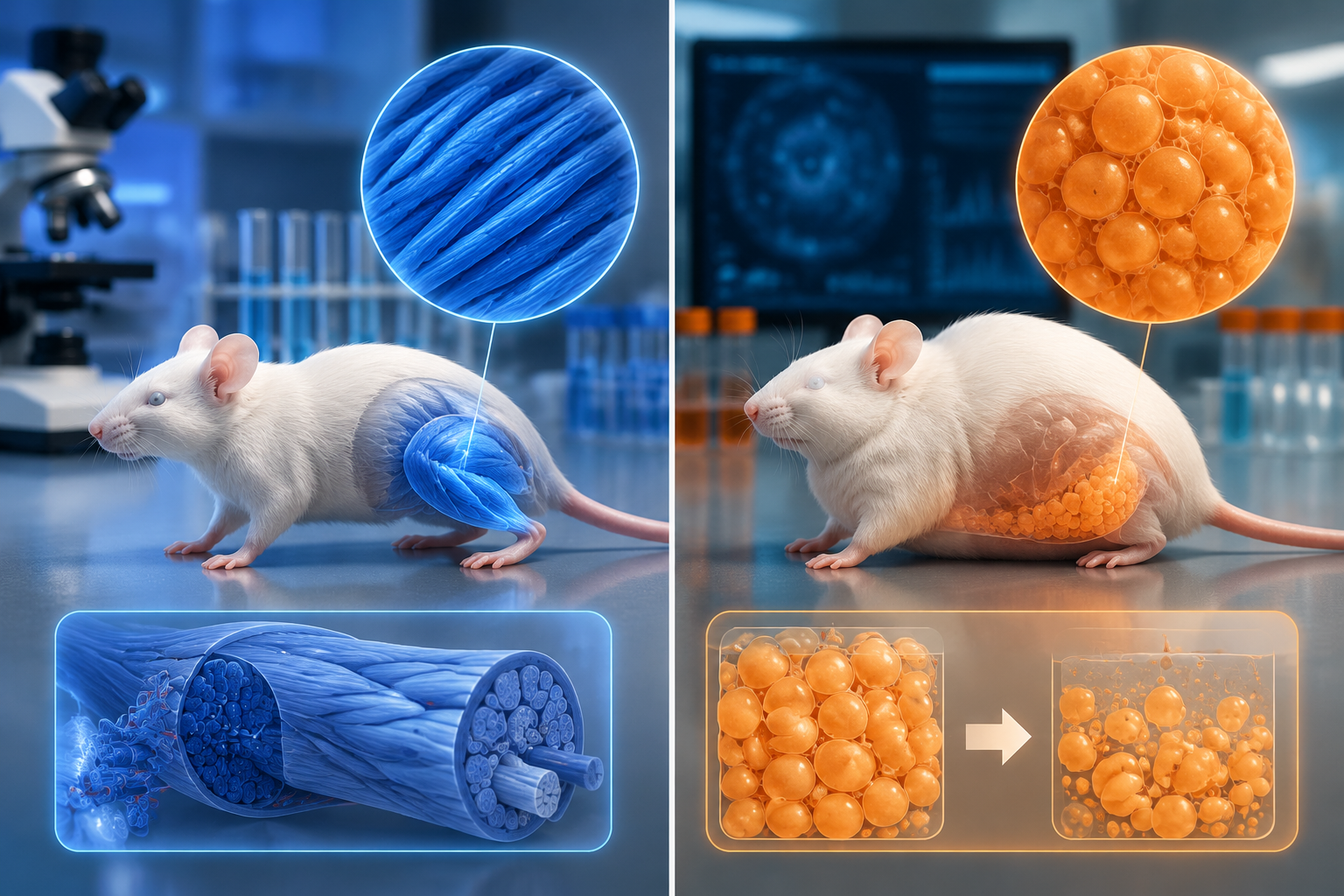
Professional () hero image depicting a split-screen scientific visualization: left side shows a glowing blue mitochondrion

Obesity-related metabolic dysfunction now affects more than one billion people globally, yet the biological levers researchers use to study fat loss are remarkably different from one compound to the next. Two molecules generating serious scientific interest in 2026 — MOTS-C and 5-Amino-1MQ — work through entirely separate mechanisms, making a direct comparison both useful and necessary for anyone designing a metabolic research protocol.

This article provides a clean side-by-side look at MOTS-C vs 5-Amino-1MQ: Mitochondrial Signaling vs NNMT Inhibition in Fat-Loss Research, covering how each compound works, what preclinical evidence shows, and how researchers approach their use.

Key Takeaways

  • MOTS-C is a mitochondrial-derived peptide that activates AMPK and improves insulin sensitivity; 5-Amino-1MQ is a small-molecule enzyme inhibitor that raises cellular NAD+ levels.
  • Both compounds remain research-only and are not FDA-approved for human therapeutic use.
  • MOTS-C has early-phase clinical trials underway; 5-Amino-1MQ is still in the preclinical stage.
  • Administration routes differ: MOTS-C is typically injected subcutaneously, while 5-Amino-1MQ is taken orally.
  • Choosing between them depends on the biological pathway a researcher wants to target — mitochondrial signaling or enzyme inhibition.

How Each Compound Works

How Each Compound Works

MOTS-C: A Signal From the Mitochondria

MOTS-C is a 16-amino-acid peptide encoded in the mitochondrial genome. Unlike most peptides, it originates inside the mitochondria and travels to the cell nucleus, where it regulates gene expression tied to metabolism and proteostasis. Its primary action involves activating AMP-activated protein kinase (AMPK), a central energy-sensing enzyme that promotes glucose uptake, fatty acid oxidation, and improved insulin sensitivity.

Because MOTS-C is mitochondria-derived, it functions as a genuine intracellular messenger — a type of "mitokine" — linking energy status directly to metabolic output. Researchers studying MOTS-C mitochondrial dynamics have noted its capacity to regulate skeletal muscle metabolism and support adaptation under metabolic stress conditions.

5-Amino-1MQ: Blocking the Fat-Storage Enzyme

5-Amino-1MQ takes a completely different approach. It is a small-molecule inhibitor of nicotinamide N-methyltransferase (NNMT), an enzyme that is overexpressed in the adipose tissue of obese individuals. NNMT consumes SAM (S-adenosylmethionine) and depletes cellular NAD+ precursors, effectively slowing metabolism and encouraging fat storage.

By blocking NNMT, 5-Amino-1MQ allows NAD+ levels to rise. Higher NAD+ activates sirtuins and other energy-expenditure pathways, shifting cellular behavior away from fat accumulation. This makes it a pharmacological tool for studying how enzyme inhibition can reprogram metabolic set points.


Preclinical Evidence and Research Findings

Preclinical Evidence and Research Findings

In the context of MOTS-C vs 5-Amino-1MQ: Mitochondrial Signaling vs NNMT Inhibition in Fat-Loss Research, the preclinical data for each compound tells a distinct story.

What Animal Studies Show

Feature MOTS-C 5-Amino-1MQ
Primary target AMPK / nuclear gene expression NNMT enzyme
Key metabolic effect Insulin sensitivity, muscle metabolism NAD+ elevation, fat reduction
Animal model outcomes Improved physical performance, metabolic regulation Fat loss, improved muscle stem-cell function
Human trials Early-phase clinical trials underway No RCTs conducted yet
Regulatory status Research compound Research compound

MOTS-C animal studies have shown improvements in physical performance across multiple age groups, with notable effects on skeletal muscle adaptation. Researchers exploring MOTS-C and SLU-PP332 combinations have examined whether stacking exercise-mimetic compounds amplifies these metabolic benefits.

5-Amino-1MQ demonstrated measurable fat loss and improved muscle stem-cell function in obese rodent models. However, no human randomized controlled trials have been completed, placing it firmly in the preclinical category.

For researchers interested in broader metabolic modulation research lines, both compounds represent distinct entry points into fat-loss biology.


Dosage, Administration, and Safety Considerations

Dosage, Administration, and Safety Considerations

Understanding the practical side of MOTS-C vs 5-Amino-1MQ: Mitochondrial Signaling vs NNMT Inhibition in Fat-Loss Research requires looking at how each compound is handled in research settings.

Research Dosing Protocols

MOTS-C is administered subcutaneously, typically at doses of 5–10 mg given two to three times per week. Its peptide structure requires injection to preserve bioavailability.

5-Amino-1MQ is taken orally at doses ranging from 50–150 mg daily in research contexts. Its small-molecule structure allows it to survive the digestive process, making oral delivery practical.

Neither compound has an established comprehensive safety profile due to the limited scope of human trials conducted to date.

Researchers comparing these agents alongside other metabolic peptides — such as those reviewed in longevity peptide research — should note that combining multiple metabolic modulators requires careful experimental design.

Those evaluating adjacent research tools, including Tesamorelin for fat-loss protocols or GLP-1 incretin research themes, will find that each compound targets a different node in the metabolic network.


Conclusion

The comparison of MOTS-C vs 5-Amino-1MQ: Mitochondrial Signaling vs NNMT Inhibition in Fat-Loss Research reveals two compounds that are complementary in concept but distinct in mechanism. MOTS-C targets mitochondrial-to-nuclear signaling through AMPK activation, while 5-Amino-1MQ removes an enzymatic brake on NAD+ metabolism.

Actionable next steps for researchers:

  • Define the biological pathway of interest before selecting a compound — mitochondrial signaling or enzyme inhibition.
  • Review current early-phase trial data for MOTS-C before designing human-adjacent protocols.
  • Treat 5-Amino-1MQ as a purely preclinical tool until RCT data becomes available.
  • Consider whether multi-pathway approaches, such as those explored in peptide blend research, could address multiple metabolic targets simultaneously.
  • Source research compounds only from suppliers providing verified purity documentation.

Both compounds are research tools, not therapeutic agents. Rigorous experimental design, appropriate controls, and attention to evolving regulatory guidance remain essential for any serious investigation into metabolic fat-loss biology.


https://www.puretestedpeptides.com/wp-content/uploads/2026/06/MOTS-C-vs-5-Amino-1MQ-Mitochondrial-Signaling-vs-NNMT-Inhibition-in-Fat-Loss-Research.png 1024 1536 Pure Tested https://www.puretestedpeptides.com/wp-content/uploads/2026/01/buy-peptides-online.jpg Pure Tested2026-06-02 22:09:332026-07-20 15:04:15MOTS-C vs 5-Amino-1MQ: Mitochondrial Signaling vs NNMT Inhibition in Fat-Loss Research

GLP1-T – Incretin Signaling & Energy Balance Research Themes

October 26, 2025/by admin

GLP1-T – Incretin Signaling & Energy Balance Research Themes

Target keywords: GLP1-T research, GLP-1 analogue metabolism research

This page provides an informational summary of published research themes related to GLP1-T—including signals relevant to muscle gain, fat loss, longevity, and metabolism—reported in preclinical contexts and model systems. View the GLP1-T product page on PureTestedPeptides.com.

Published Research Themes on GLP1-T

  • Study contexts: in vitro assays, ex vivo preparations, and animal models reported in the literature.
  • Common endpoints: molecular pathway activation, biomarker changes, tissue-level observations, and assay readouts.
  • Scope: This page summarizes themes without implying outcomes in humans.

Muscle Gain & Body Composition Signals (Preclinical/Model Systems)

Across preclinical reports, investigators have described signals consistent with muscle-related pathways (e.g., GH/IGF axis, mitochondrial efficiency, or matrix/tissue remodeling) depending on study design. These descriptions are model-specific and should not be generalized to clinical use.

FL & Metabolic Signaling (Preclinical/Model Systems)

Model-system studies sometimes explore energy balance and lipid metabolism pathways (e.g., incretin signaling, mitochondrial oxidative capacity, or activity-related peptide signaling). Any observations are context-bound to the specific models employed.

Longevity & Cellular Health Markers (Preclinical/Model Systems)

Some publications evaluate cellular stress responses, redox balance, and markers frequently discussed in the longevity research community. These findings are mechanistic and exploratory rather than clinical guidance.

Analytical Verification & Handling Notes

Researchers commonly report identity and purity verification using HPLC and mass spectrometry prior to experimentation, alongside careful handling (temperature, light, solvent, and sterility controls). For a broader catalog, see all peptides for sale.

Important Research-Only Notice

For laboratory research use only. Not for human consumption. No medical, dosing, or therapeutic guidance is provided. Information below summarizes published research themes (in vitro, ex vivo, and/or animal models) and is intended for qualified researchers.

Product page: View the GLP1-T product page.

https://www.puretestedpeptides.com/wp-content/uploads/2026/01/buy-peptides-online.jpg 0 0 admin https://www.puretestedpeptides.com/wp-content/uploads/2026/01/buy-peptides-online.jpg admin2025-10-26 09:00:002026-11-22 02:13:11GLP1-T – Incretin Signaling & Energy Balance Research Themes

BPC-157 (10mg Vial) – Research Themes: Muscle, Tissue, Metabolism

October 26, 2025/by admin

bpc 157 for saleBPC-157 (10mg Vial) – Research Themes: Muscle, Tissue, Metabolism


This page provides an informational summary of published research themes related to BPC-157 (10mg Vial)—including signals relevant to muscle gain, fat loss, longevity, and metabolism—reported in preclinical contexts and model systems. View the BPC-157 (10mg Vial) product page on PureTestedPeptides.com.

Published Research Themes on BPC-157 (10mg Vial)

  • Study contexts: in vitro assays, ex vivo preparations, and animal models reported in the literature.
  • Common endpoints: molecular pathway activation, biomarker changes, tissue-level observations, and assay readouts.
  • Scope: This page summarizes themes without implying outcomes in humans.

Muscle Gain & Body Composition Signals (Preclinical/Model Systems)

Across preclinical reports, investigators have described signals consistent with muscle-related pathways (e.g., GH/IGF axis, mitochondrial efficiency, or matrix/tissue remodeling) depending on study design. These descriptions are model-specific and should not be generalized to clinical use.

FL & Metabolic Signaling (Preclinical/Model Systems)

Model-system studies sometimes explore energy balance and lipid metabolism pathways (e.g., incretin signaling, mitochondrial oxidative capacity, or activity-related peptide signaling). Any observations are context-bound to the specific models employed.

Longevity & Cellular Health Markers (Preclinical/Model Systems)

Some publications evaluate cellular stress responses, redox balance, and markers frequently discussed in the longevity research community. These findings are mechanistic and exploratory rather than clinical guidance.

Analytical Verification & Handling Notes

Researchers commonly report identity and purity verification using HPLC and mass spectrometry prior to experimentation, alongside careful handling (temperature, light, solvent, and sterility controls). For a broader catalog, see all peptides for sale.

Important Research-Only Notice

For laboratory research use only. Not for human consumption. No medical, dosing, or therapeutic guidance is provided. Information below summarizes published research themes (in vitro, ex vivo, and/or animal models) and is intended for qualified researchers.

Product page: View the BPC-157 (10mg Vial) product page.

https://www.puretestedpeptides.com/wp-content/uploads/2026/01/buy-peptides-online.jpg 0 0 admin https://www.puretestedpeptides.com/wp-content/uploads/2026/01/buy-peptides-online.jpg admin2025-10-26 09:00:002025-10-29 19:06:22BPC-157 (10mg Vial) – Research Themes: Muscle, Tissue, Metabolism

SLU-PP-332 – Metabolic Modulation Research Themes

October 26, 2025/by admin

SLU-PP-332 – Metabolic Modulation Research Themes

Target keywords: SLU-PP-332 research, metabolic modulation peptide

This page provides an informational summary of published research themes related to SLU-PP-332—including signals relevant to muscle gain, fat loss, longevity, and metabolism—reported in preclinical contexts and model systems. View the SLU-PP-332 product page on PureTestedPeptides.com.

Published Research Themes on SLU-PP-332

  • Study contexts: in vitro assays, ex vivo preparations, and animal models reported in the literature.
  • Common endpoints: molecular pathway activation, biomarker changes, tissue-level observations, and assay readouts.
  • Scope: This page summarizes themes without implying outcomes in humans.

Muscle Gain & Body Composition Signals (Preclinical/Model Systems)

Across preclinical reports, investigators have described signals consistent with muscle-related pathways (e.g., GH/IGF axis, mitochondrial efficiency, or matrix/tissue remodeling) depending on study design. These descriptions are model-specific and should not be generalized to clinical use.

FL & Metabolic Signaling (Preclinical/Model Systems)

Model-system studies sometimes explore energy balance and lipid metabolism pathways (e.g., incretin signaling, mitochondrial oxidative capacity, or activity-related peptide signaling). Any observations are context-bound to the specific models employed.

Longevity & Cellular Health Markers (Preclinical/Model Systems)

Some publications evaluate cellular stress responses, redox balance, and markers frequently discussed in the longevity research community. These findings are mechanistic and exploratory rather than clinical guidance.

Analytical Verification & Handling Notes

Researchers commonly report identity and purity verification using HPLC and mass spectrometry prior to experimentation, alongside careful handling (temperature, light, solvent, and sterility controls). For a broader catalog, see all peptides for sale.

Important Research-Only Notice

For laboratory research use only. Not for human consumption. No medical, dosing, or therapeutic guidance is provided. Information below summarizes published research themes (in vitro, ex vivo, and/or animal models) and is intended for qualified researchers.

Product page: View the SLU-PP-332 product page.

https://www.puretestedpeptides.com/wp-content/uploads/2026/01/buy-peptides-online.jpg 0 0 admin https://www.puretestedpeptides.com/wp-content/uploads/2026/01/buy-peptides-online.jpg admin2025-10-26 09:00:002026-11-22 02:13:11SLU-PP-332 – Metabolic Modulation Research Themes

BPC-157 Capsules (60 Count) – Research Themes: Stability & Metabolism

October 26, 2025/by admin

BPC-157 Capsules (60 Count) – Research Themes: Stability & Metabolism

BPC 157 capsules research, BPC157q oral research, BPC 157 longevity

This page provides an informational summary of published research themes related to BPC-157 Capsules (60 Count)—including signals relevant to muscle gain, fat loss, longevity, and metabolism—reported in preclinical contexts and model systems. View the BPC-157 Capsules (60 Count) product page on PureTestedPeptides.com.

Published Research Themes on BPC-157 Capsules (60 Count)

  • Study contexts: in vitro assays, ex vivo preparations, and animal models reported in the literature.
  • Common endpoints: molecular pathway activation, biomarker changes, tissue-level observations, and assay readouts.
  • Scope: This page summarizes themes without implying outcomes in humans.

Muscle Gain & Body Composition Signals (Preclinical/Model Systems)

Across preclinical reports, investigators have described signals consistent with muscle-related pathways (e.g., GH/IGF axis, mitochondrial efficiency, or matrix/tissue remodeling) depending on study design. These descriptions are model-specific and should not be generalized to clinical use.

FL & Metabolic Signaling (Preclinical/Model Systems)

Model-system studies sometimes explore energy balance and lipid metabolism pathways (e.g., incretin signaling, mitochondrial oxidative capacity, or activity-related peptide signaling). Any observations are context-bound to the specific models employed.

Longevity & Cellular Health Markers (Preclinical/Model Systems)

Some publications evaluate cellular stress responses, redox balance, and markers frequently discussed in the longevity research community. These findings are mechanistic and exploratory rather than clinical guidance.

Analytical Verification & Handling Notes

Researchers commonly report identity and purity verification using HPLC and mass spectrometry prior to experimentation, alongside careful handling (temperature, light, solvent, and sterility controls). For a broader catalog, see all peptides for sale.

Important Research-Only Notice

For laboratory research use only. Not for human consumption. No medical, dosing, or therapeutic guidance is provided. Information below summarizes published research themes (in vitro, ex vivo, and/or animal models) and is intended for qualified researchers.

Product page: View the BPC-157 Capsules (60 Count) product page.

https://www.puretestedpeptides.com/wp-content/uploads/2026/01/buy-peptides-online.jpg 0 0 admin https://www.puretestedpeptides.com/wp-content/uploads/2026/01/buy-peptides-online.jpg admin2025-10-26 09:00:002025-10-29 19:09:11BPC-157 Capsules (60 Count) – Research Themes: Stability & Metabolism

NAD+ – Cellular Energetics & Longevity Research Themes

October 26, 2025/by admin

NAD+ – Cellular Energetics & Longevity Research Themes

Target keywords: NAD+ research, cellular energetics longevity

This page provides an informational summary of published research themes related to NAD+—including signals relevant to muscle gain, fat loss, longevity, and metabolism—reported in preclinical contexts and model systems. View the NAD+ product page on PureTestedPeptides.com.

Published Research Themes on NAD+

  • Study contexts: in vitro assays, ex vivo preparations, and animal models reported in the literature.
  • Common endpoints: molecular pathway activation, biomarker changes, tissue-level observations, and assay readouts.
  • Scope: This page summarizes themes without implying outcomes in humans.

Muscle Gain & Body Composition Signals (Preclinical/Model Systems)

Across preclinical reports, investigators have described signals consistent with muscle-related pathways (e.g., GH/IGF axis, mitochondrial efficiency, or matrix/tissue remodeling) depending on study design. These descriptions are model-specific and should not be generalized to clinical use.

FL & Metabolic Signaling (Preclinical/Model Systems)

Model-system studies sometimes explore energy balance and lipid metabolism pathways (e.g., incretin signaling, mitochondrial oxidative capacity, or activity-related peptide signaling). Any observations are context-bound to the specific models employed.

Longevity & Cellular Health Markers (Preclinical/Model Systems)

Some publications evaluate cellular stress responses, redox balance, and markers frequently discussed in the longevity research community. These findings are mechanistic and exploratory rather than clinical guidance.

Analytical Verification & Handling Notes

Researchers commonly report identity and purity verification using HPLC and mass spectrometry prior to experimentation, alongside careful handling (temperature, light, solvent, and sterility controls). For a broader catalog, see all peptides for sale.

Important Research-Only Notice

For laboratory research use only. Not for human consumption. No medical, dosing, or therapeutic guidance is provided. Information below summarizes published research themes (in vitro, ex vivo, and/or animal models) and is intended for qualified researchers.

Product page: View the NAD+ product page.

https://www.puretestedpeptides.com/wp-content/uploads/2026/01/buy-peptides-online.jpg 0 0 admin https://www.puretestedpeptides.com/wp-content/uploads/2026/01/buy-peptides-online.jpg admin2025-10-26 09:00:002026-11-22 02:13:12NAD+ – Cellular Energetics & Longevity Research Themes

KLOW Blend (BPC-157 + TB-500 + KPV + GHK-Cu) – Multi-Pathway Research

October 26, 2025/by admin

KLOW Blend (BPC-157 + TB-500 + KPV + GHK-Cu) – Multi-Pathway Research

Target keywords: KLOW blend research, BPC-157 TB-500 KPV GHK-Cu, multi-target peptide research

This page provides an informational summary of published research themes related to KLOW Blend (BPC-157 + TB-500 + KPV + GHK-Cu)—including signals relevant to muscle gain, fat loss, longevity, and metabolism—reported in preclinical contexts and model systems. View the KLOW Blend (BPC-157 + TB-500 + KPV + GHK-Cu) product page on PureTestedPeptides.com.

Published Research Themes on KLOW Blend (BPC-157 + TB-500 + KPV + GHK-Cu)

  • Study contexts: in vitro assays, ex vivo preparations, and animal models reported in the literature.
  • Common endpoints: molecular pathway activation, biomarker changes, tissue-level observations, and assay readouts.
  • Scope: This page summarizes themes without implying outcomes in humans.

Muscle Gain & Body Composition Signals (Preclinical/Model Systems)

Across preclinical reports, investigators have described signals consistent with muscle-related pathways (e.g., GH/IGF axis, mitochondrial efficiency, or matrix/tissue remodeling) depending on study design. These descriptions are model-specific and should not be generalized to clinical use.

FL & Metabolic Signaling (Preclinical/Model Systems)

Model-system studies sometimes explore energy balance and lipid metabolism pathways (e.g., incretin signaling, mitochondrial oxidative capacity, or activity-related peptide signaling). Any observations are context-bound to the specific models employed.

Longevity & Cellular Health Markers (Preclinical/Model Systems)

Some publications evaluate cellular stress responses, redox balance, and markers frequently discussed in the longevity research community. These findings are mechanistic and exploratory rather than clinical guidance.

Analytical Verification & Handling Notes

Researchers commonly report identity and purity verification using HPLC and mass spectrometry prior to experimentation, alongside careful handling (temperature, light, solvent, and sterility controls). For a broader catalog, see all peptides for sale.

Important Research-Only Notice

For laboratory research use only. Not for human consumption. No medical, dosing, or therapeutic guidance is provided. Information below summarizes published research themes (in vitro, ex vivo, and/or animal models) and is intended for qualified researchers.

Product page: View the KLOW Blend (BPC-157 + TB-500 + KPV + GHK-Cu) product page.

https://www.puretestedpeptides.com/wp-content/uploads/2026/01/buy-peptides-online.jpg 0 0 admin https://www.puretestedpeptides.com/wp-content/uploads/2026/01/buy-peptides-online.jpg admin2025-10-26 09:00:002025-10-26 09:00:00KLOW Blend (BPC-157 + TB-500 + KPV + GHK-Cu) – Multi-Pathway Research

TB-500 (Thymosin Beta-4 Fragment) – Muscle & Recovery Research Themes

October 26, 2025/by admin

TB-500 (Thymosin Beta-4 Fragment) – Muscle & Recovery Research Themes

Target keywords: TB-500 research, thymosin beta-4 fragment muscle research

This page provides an informational summary of published research themes related to TB-500 (Thymosin Beta-4 Fragment)—including signals relevant to muscle gain, fat loss, longevity, and metabolism—reported in preclinical contexts and model systems. View the TB-500 (Thymosin Beta-4 Fragment) product page on PureTestedPeptides.com.

Published Research Themes on TB-500 (Thymosin Beta-4 Fragment)

  • Study contexts: in vitro assays, ex vivo preparations, and animal models reported in the literature.
  • Common endpoints: molecular pathway activation, biomarker changes, tissue-level observations, and assay readouts.
  • Scope: This page summarizes themes without implying outcomes in humans.

Muscle Gain & Body Composition Signals (Preclinical/Model Systems)

Across preclinical reports, investigators have described signals consistent with muscle-related pathways (e.g., GH/IGF axis, mitochondrial efficiency, or matrix/tissue remodeling) depending on study design. These descriptions are model-specific and should not be generalized to clinical use.

FL & Metabolic Signaling (Preclinical/Model Systems)

Model-system studies sometimes explore energy balance and lipid metabolism pathways (e.g., incretin signaling, mitochondrial oxidative capacity, or activity-related peptide signaling). Any observations are context-bound to the specific models employed.

Longevity & Cellular Health Markers (Preclinical/Model Systems)

Some publications evaluate cellular stress responses, redox balance, and markers frequently discussed in the longevity research community. These findings are mechanistic and exploratory rather than clinical guidance.

Analytical Verification & Handling Notes

Researchers commonly report identity and purity verification using HPLC and mass spectrometry prior to experimentation, alongside careful handling (temperature, light, solvent, and sterility controls). For a broader catalog, see all peptides for sale.

Important Research-Only Notice

For laboratory research use only. Not for human consumption. No medical, dosing, or therapeutic guidance is provided. Information below summarizes published research themes (in vitro, ex vivo, and/or animal models) and is intended for qualified researchers.

Product page: View the TB-500 (Thymosin Beta-4 Fragment) product page.

https://www.puretestedpeptides.com/wp-content/uploads/2026/01/buy-peptides-online.jpg 0 0 admin https://www.puretestedpeptides.com/wp-content/uploads/2026/01/buy-peptides-online.jpg admin2025-10-26 09:00:002026-11-22 02:13:13TB-500 (Thymosin Beta-4 Fragment) – Muscle & Recovery Research Themes

GLOW Blend – Skin & Longevity-Oriented Research Themes

October 26, 2025/by admin

GLOW Blend – Skin & Longevity-Oriented Research Themes

Target keywords: glow peptide blend for sale, GLOW peptide longevity research

This page provides an informational summary of published research themes related to GLOW Blend—including signals relevant to muscle gain, fat loss, longevity, and metabolism—reported in preclinical contexts and model systems. View the GLOW Blend product page on PureTestedPeptides.com.

Published Research Themes on GLOW Blend

  • Study contexts: in vitro assays, ex vivo preparations, and animal models reported in the literature.
  • Common endpoints: molecular pathway activation, biomarker changes, tissue-level observations, and assay readouts.
  • Scope: This page summarizes themes without implying outcomes in humans.

Muscle Gain & Body Composition Signals (Preclinical/Model Systems)

Across preclinical reports, investigators have described signals consistent with muscle-related pathways (e.g., GH/IGF axis, mitochondrial efficiency, or matrix/tissue remodeling) depending on study design. These descriptions are model-specific and should not be generalized to clinical use.

FL & Metabolic Signaling (Preclinical/Model Systems)

Model-system studies sometimes explore energy balance and lipid metabolism pathways (e.g., incretin signaling, mitochondrial oxidative capacity, or activity-related peptide signaling). Any observations are context-bound to the specific models employed.

Longevity & Cellular Health Markers (Preclinical/Model Systems)

Some publications evaluate cellular stress responses, redox balance, and markers frequently discussed in the longevity research community. These findings are mechanistic and exploratory rather than clinical guidance.

Analytical Verification & Handling Notes

Researchers commonly report identity and purity verification using HPLC and mass spectrometry prior to experimentation, alongside careful handling (temperature, light, solvent, and sterility controls). For a broader catalog, see all peptides for sale.

Important Research-Only Notice

For laboratory research use only. Not for human consumption. No medical, dosing, or therapeutic guidance is provided. Information below summarizes published research themes (in vitro, ex vivo, and/or animal models) and is intended for qualified researchers.

Product page: View the GLOW Blend product page.

https://www.puretestedpeptides.com/wp-content/uploads/2026/01/buy-peptides-online.jpg 0 0 admin https://www.puretestedpeptides.com/wp-content/uploads/2026/01/buy-peptides-online.jpg admin2025-10-26 09:00:002025-10-26 09:00:00GLOW Blend – Skin & Longevity-Oriented Research Themes
Page 1 of 3123
×

Helpful Links

  • My account
  • Cart
  • Checkout
  • Refund and Returns Policy
  • Privacy Policy
  • SMS Privacy Policy
  • Login
  • My Account
  • Logout
  • About
  • Contact
  • COA / Lab Testing
  • Shipping Policy
  • Terms and Conditions
  • Research Use Disclaimer

USA Made Lab Tested Peptides

All products are sold for research, laboratory, or analytical purposes only, and are not for human consumption


Pure Tested Peptides is a chemical supplier. Pure Tested Peptides is not a compounding / chemical compounding facility as defined under 503A of the Federal Food, Drug, and Cosmetic act. Pure Tested Peptides is not an outsourcing facility as defined under 503B of the Federal Food, Drug, and Cosmetic act.

The statements made within this website have not been evaluated by the US Food and Drug Administration. The products we offer are not intended to diagnose, treat, cure or prevent any disease.

Human/Animal Consumption Prohibited. Laboratory/In-Vitro Experimental Use Only

Scroll to top Scroll to top Scroll to top