

PT-141 Research Applications Beyond Mechanism: What Studies Measure in Sexual Function Models
Sexual dysfunction affects roughly 40% of women and 30% of men at some point in their lives, yet the research tools used to study it vary widely depending on species, sex, and the specific dimension of function being assessed. PT-141 research applications beyond mechanism, that is, the endpoint frameworks, dosing logic, and translational models that investigators actually use, reveal a sophisticated, multi-layered approach that goes far deeper than receptor binding diagrams. Understanding what studies measure, and why, is essential for anyone interpreting the published data on this peptide.
Key Takeaways
- PT-141 (bremelanotide) clinical trials in women use co-primary endpoints: the FSFI desire domain and the FSDS-DAO distress scale, plus sexually satisfying events per month as a behavioral outcome.
- Male studies combine objective erectile rigidity metrics (RigiScan) with subjective IIEF domain scores, capturing both physiologic and psychological dimensions.
- Preclinical female rodent models measure appetitive behaviors, solicitations, hops, and darts, rather than reflexive lordosis, to isolate the motivational component of desire.
- Long-term 52-week extension studies track the same psychometric endpoints used in pivotal trials, confirming sustained improvements without new safety signals.
- Central neurochemical markers, including c-Fos immunoreactivity in hypothalamic regions and dopamine release in the medial preoptic area, serve as mechanistic outcome measures in CNS-focused preclinical models.
Clinical Endpoints in Women: What the Pivotal Trials Actually Measured
The most consequential PT-141 research applications beyond mechanism emerged from the HSDD clinical program in women, where investigators needed endpoints that could satisfy regulators and reflect genuine patient benefit simultaneously.
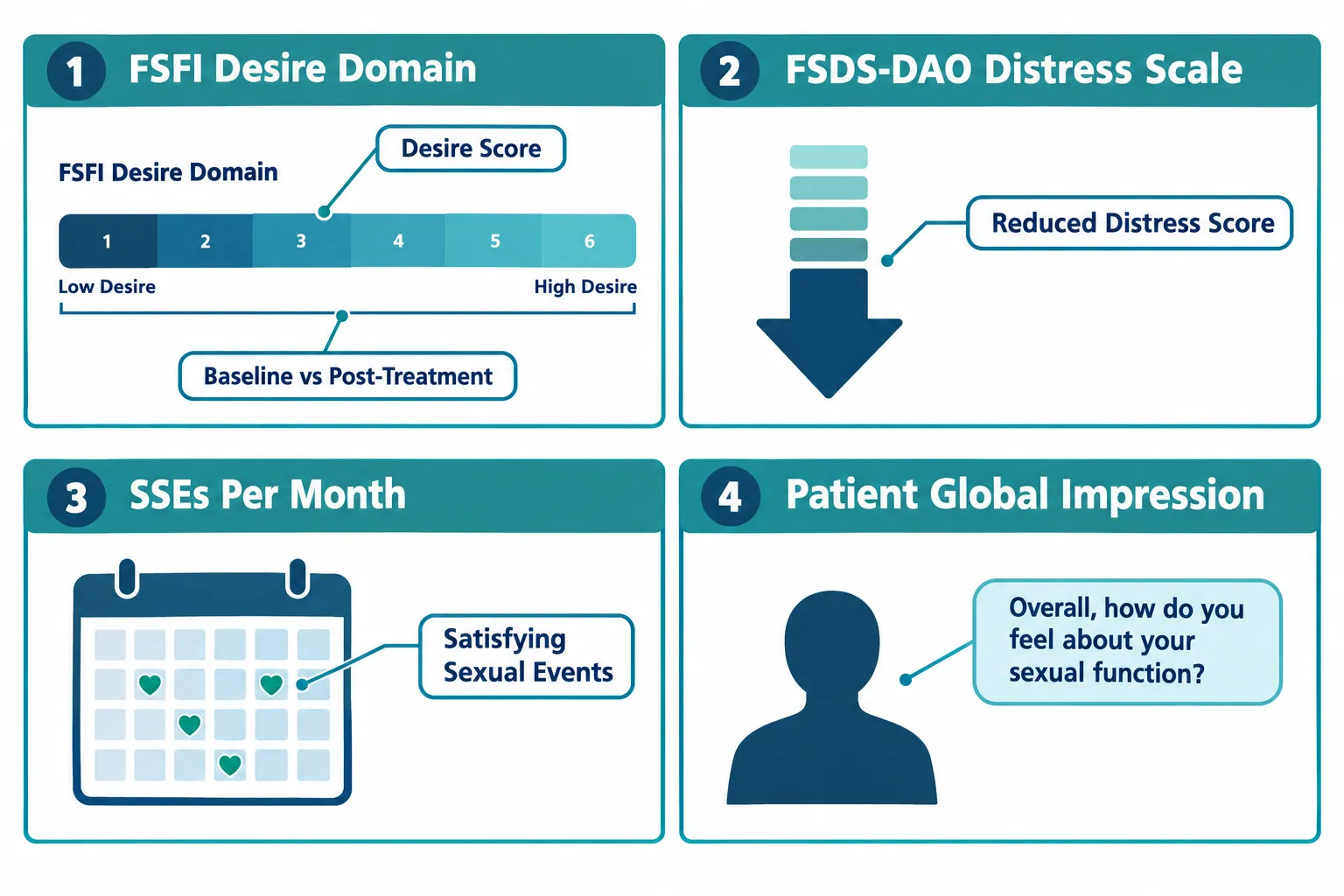
The pivotal phase 3 trials used two co-primary endpoints. The first was the FSFI desire domain (FSFI-D), a validated subscale of the Female Sexual Function Index that quantifies the frequency and level of sexual desire over a four-week recall period. The second was the Female Sexual Distress Scale, Desire/Arousal/Orgasm (FSDS-DAO), which captures how much distress a woman experiences because of low desire, a dimension that pure physiologic measures miss entirely.
Alongside these scales, trials tracked sexually satisfying events (SSEs) per month, recorded through the Female Sexual Encounter Profile, Revised. An SSE was defined by whether the participant herself rated the encounter as satisfying, making this a patient-centered behavioral count rather than a clinician-imposed performance threshold.
The integrated phase 3 data showed mean increases of approximately +0.7 vs +0.2 SSEs per month for bremelanotide versus placebo, FSFI total score improvements of +3.6 vs +1.9, and FSDS-DAO total score reductions of -11.1 vs -6.8. Regulatory reviewers accepted these modest but statistically significant differences as clinically meaningful, establishing an important precedent: even small shifts in validated desire and distress scales carry weight in sexual function research.
"Even modest score changes in desire domains are treated as clinically relevant in regulatory decisions, a principle that shapes how all subsequent PT-141 studies are designed."
Male Models and Preclinical Behavioral Frameworks
PT-141 research applications beyond mechanism look quite different when the model shifts to men or to animal studies, because the endpoints must match the biology being interrogated.
Measuring Erectile Function in Men
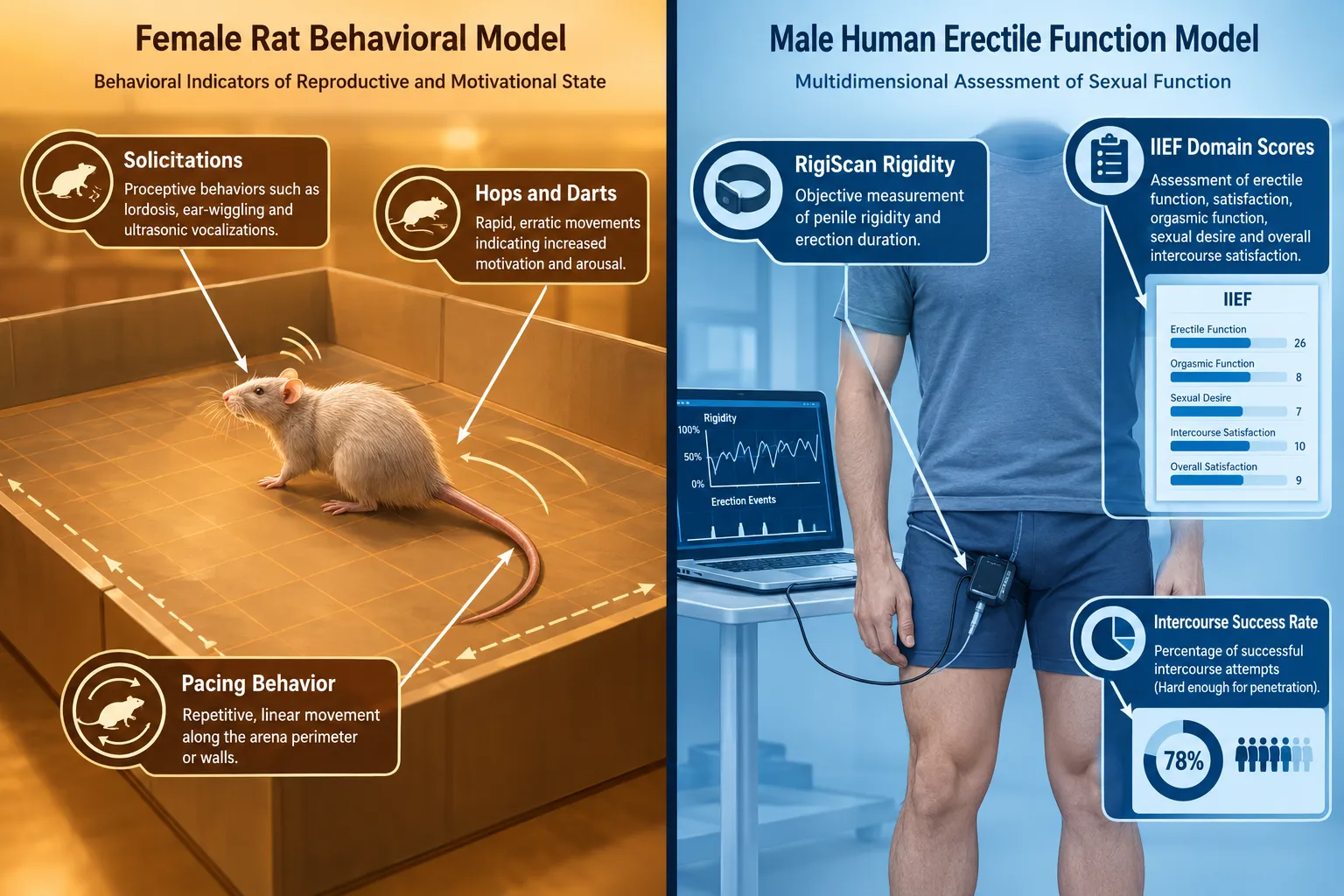
Early male studies relied on RigiScan, a device that records penile rigidity and tumescence continuously, providing objective, time-stamped data on erectile response. These objective measures were paired with International Index of Erectile Function (IIEF) domain scores, which capture self-reported erectile function, orgasmic function, sexual desire, intercourse satisfaction, and overall satisfaction across five domains.
A particularly important finding from intranasal PT-141 studies in men was dose-dependent increases in erectile responses even among sildenafil non-responders. This result mattered because it suggested a central mechanism rather than a purely vascular one, and it was the objective rigidity data from RigiScan, not subjective reports alone, that made that argument credible. Safety endpoints in these models focused on transient blood-pressure elevations and flushing, both of which informed later dosing decisions.
For context on how peptide pharmacokinetics influence dosing logic across research compounds, the CJC-1295 with and without DAC mechanism and pharmacokinetic comparison offers a useful parallel framework.
Preclinical Female Rodent Models
In female rat models, researchers operationalize sexual desire through appetitive and proceptive behaviors, specifically solicitations, hops, and darts toward a male partner. These are distinct from lordosis, which is a reflexive copulatory posture and measures receptivity rather than motivation.
When bremelanotide was administered subcutaneously or directly into the medial preoptic area (mPOA), it dramatically increased solicitations and hops/darts without altering pacing behavior or lordosis. This selective enhancement of motivational behaviors, rather than reflexive ones, provided the animal-model evidence that PT-141 acts on desire rather than performance mechanics.
Studies in female Syrian hamsters extended this framework by measuring proceptive behaviors and paced mating patterns under different hormone priming conditions. Bremelanotide increased solicitation frequency under both high (estradiol plus progesterone) and low (estradiol alone) priming, reinforcing that behavioral solicitation frequency is a robust translational proxy for sexual motivation across species.
Research into how peptides interact with endocrine receptor biology provides useful comparative context for understanding why hormone priming conditions matter in these animal models.
Long-Term Studies, CNS Markers, and Translational Limitations
The third tier of PT-141 research applications beyond mechanism involves 52-week extension studies and CNS-focused neurochemical models, both of which push beyond short-term efficacy data.
52-Week Extension Studies
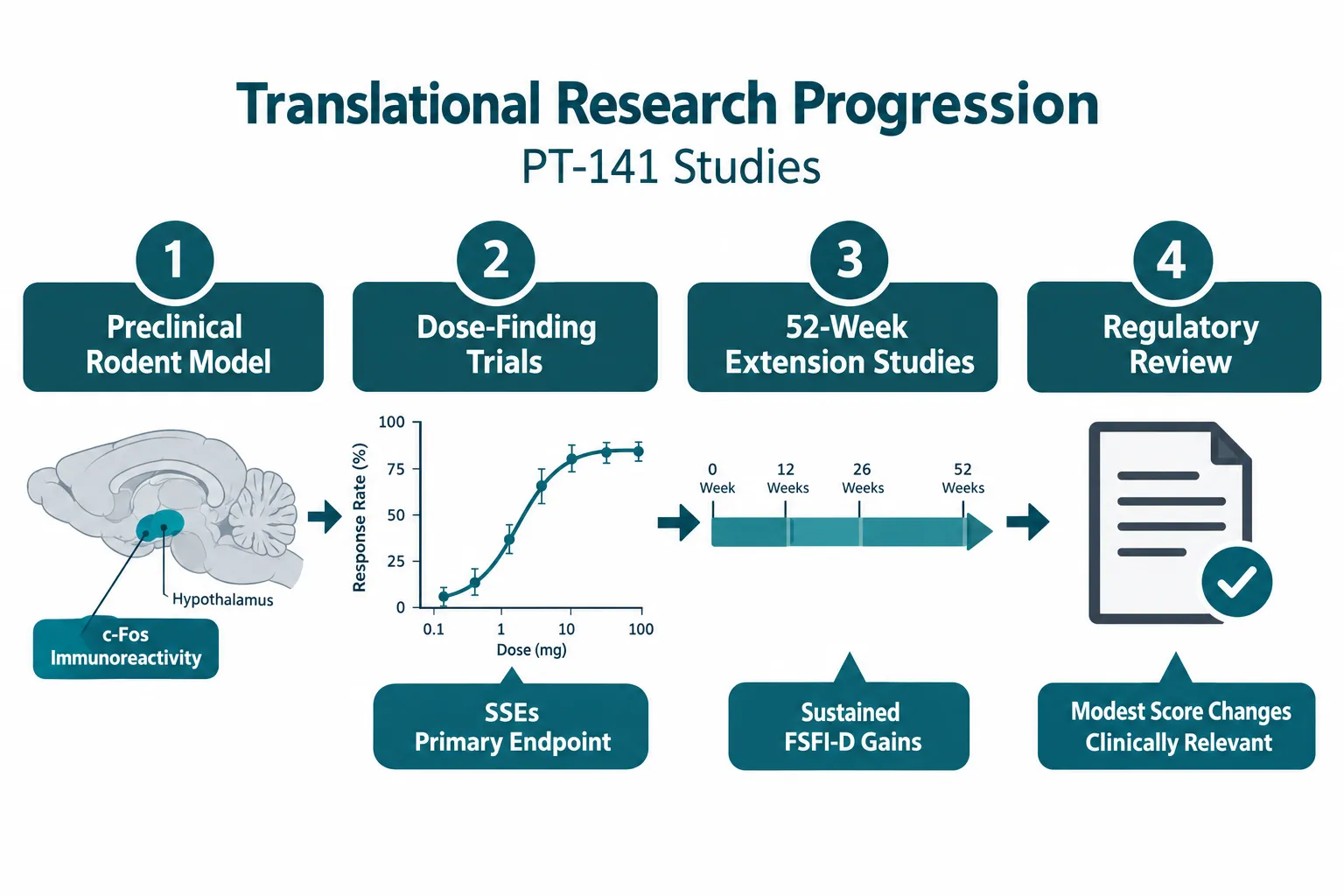
Long-term open-label extension studies tracked the same FSFI desire scores and FSDS-DAO distress measures used in pivotal trials, supplemented by patient global impression instruments. The key finding was that improvements in low sexual desire and associated distress persisted throughout the full 52-week period without new safety signals.
Cardiovascular monitoring remained a priority throughout these studies, with blood pressure tracked at each assessment point. The sustained efficacy data, combined with a stable safety profile, established that intermittent use of PT-141 over a year does not appear to produce tolerance erosion in the psychometric endpoints that matter most to regulators and patients.
Central Neurochemical Outcome Measures
CNS-focused preclinical models use c-Fos immunoreactivity in hypothalamic and limbic structures as an immediate-early gene marker of neuronal activation. Systemic administration of PT-141 increases c-Fos expression in regions directly implicated in sexual motivation, providing cellular-level evidence that the peptide's effects are centrally mediated.
Complementing this, dopamine release in the medial preoptic area is measured as a neurochemical outcome, reinforcing the motivational rather than peripheral-vascular interpretation of the compound's action. These markers are not clinical endpoints, they cannot be measured in humans without invasive procedures, but they form the mechanistic bridge between animal solicitation data and human desire scale scores.
As of 2026, no new large phase 3 trials have been reported. Research attention has shifted toward interpreting the clinical significance of modest score changes, exploring combination regimens, and examining potential off-label applications, all evaluated within the established endpoint structures that the pivotal trials defined. Researchers interested in related peptide compounds and their research frameworks can explore MT-2 research peptide resources for comparative melanocortin pathway context.
The consistency of endpoint selection across studies, solicitation behaviors in rodents, FSFI-D and FSDS-DAO in women, IIEF and RigiScan in men, reflects a deliberate translational strategy. Each layer of the model is designed to capture motivation and desire, not just performance, which is what distinguishes PT-141's research framework from earlier erectile-dysfunction compound studies.
Conclusion
PT-141 research applications beyond mechanism rest on a carefully constructed hierarchy of endpoints: preclinical behavioral measures of sexual motivation, objective erectile metrics in men, and validated psychometric scales in women. The consistent finding across these models is that PT-141 functions as a pro-desire agent, with study designs deliberately built to detect changes in motivation, distress, and satisfying encounters rather than purely physiologic performance outcomes.
Actionable next steps for researchers and informed readers:
- When evaluating PT-141 study data, examine which specific endpoints were used, FSFI-D and FSDS-DAO are the gold standard for female desire research, while IIEF and RigiScan data are required for male models.
- Treat preclinical solicitation behavior data as motivational proxies, not direct analogs to human desire; the translational gap is real and acknowledged in the literature.
- For long-term efficacy claims, look for 52-week extension data with sustained psychometric improvements, not just short-term phase 2 dose-finding results.
- Recognize that modest score changes on validated scales carry regulatory weight in this therapeutic area, statistical significance alone does not define clinical relevance.
Understanding the endpoint logic behind PT-141 studies makes it possible to read the literature critically, assess translational claims accurately, and situate this compound within the broader landscape of peptide-based sexual function research in 2026.