Famotidine, Omeprazole, and GLP-2 Research: Choosing Acid-Suppression Controls for Intestinal Models
Gastric acid suppression is rarely the variable of interest in GLP-2 research, yet it may be quietly shaping every epithelial readout an experiment produces. When researchers combine acid-suppressive drugs with GLP-2 analogs in intestinal models, they add a second antisecretory layer on top of a peptide that already reduces gastric acid output on its own. The result is a compound intervention that can obscure whether observed mucosal changes stem from GLP-2 signaling, altered luminal pH, or both. Navigating famotidine, omeprazole, and GLP-2 research, and choosing the right acid-suppression controls for intestinal models, demands a clear understanding of how each agent works, when each is appropriate, and what confounders each introduces.
Key Takeaways
- GLP-2 itself reduces gastric acid secretion, meaning any added acid-suppressive drug layers a second antisecretory mechanism onto the model.
- Famotidine (H2 blocker) produces partial, titratable acid suppression, making it a more controlled background agent in GLP-2 intestinal experiments.
- Omeprazole (PPI) achieves near-complete suppression of stimulated acid, which can alter luminal pH, microbiota composition, and mucosal adaptation beyond the target variable.
- No published consensus guideline currently defines the optimal acid-suppression control for GLP-2 intestinal models, this remains an active research gap in 2026.
- Reporting luminal pH, motility metrics, and epithelial proliferation data alongside the acid-suppression regimen is essential for reproducible, interpretable results.
GLP-2 Biology and Its Built-In Acid-Suppressive Effects
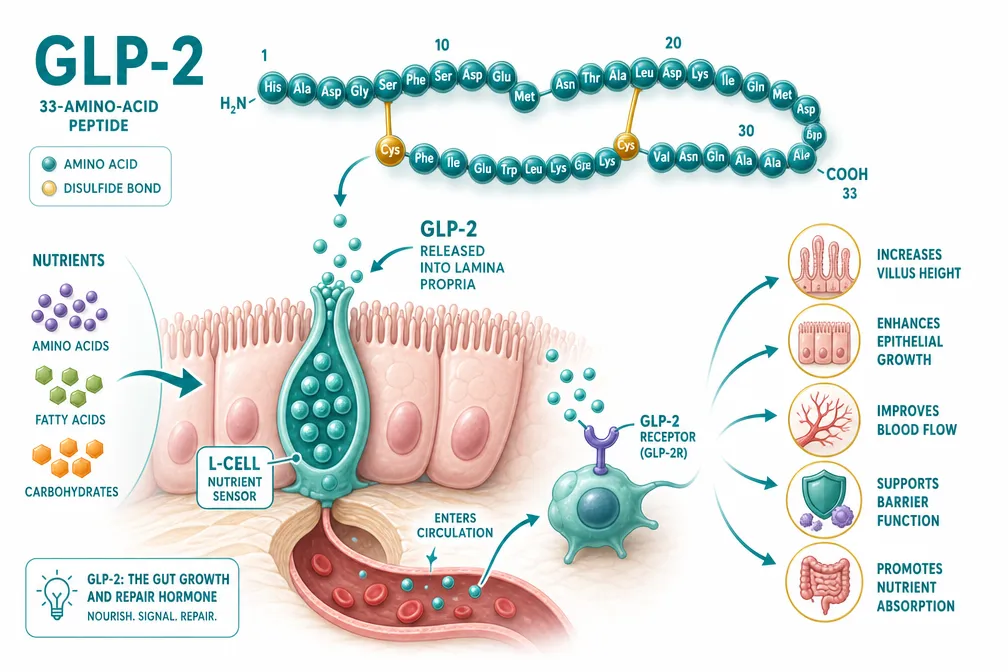
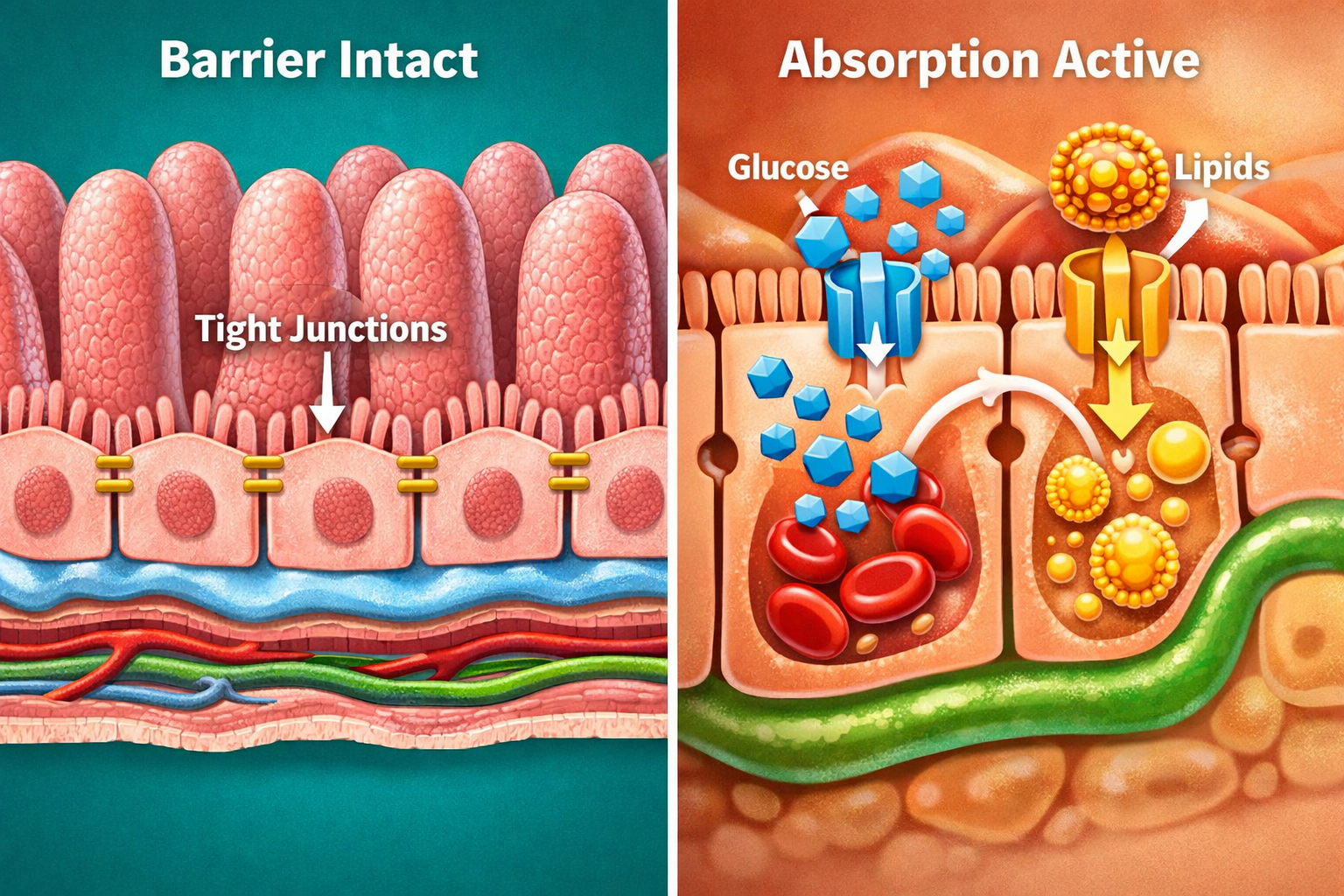
GLP-2 is an intestinotrophic hormone secreted by L-cells of the distal gut. Its core pharmacodynamic profile includes stimulation of intestinal epithelial proliferation, expansion of intestinal stem cells, increased villus height, enhanced nutrient and fluid absorption, and strengthened tight-junction integrity. Critically for experimental design, GLP-2 also slows gastrointestinal motility, increases mesenteric blood flow, and, most relevant here, reduces gastric acid secretion.
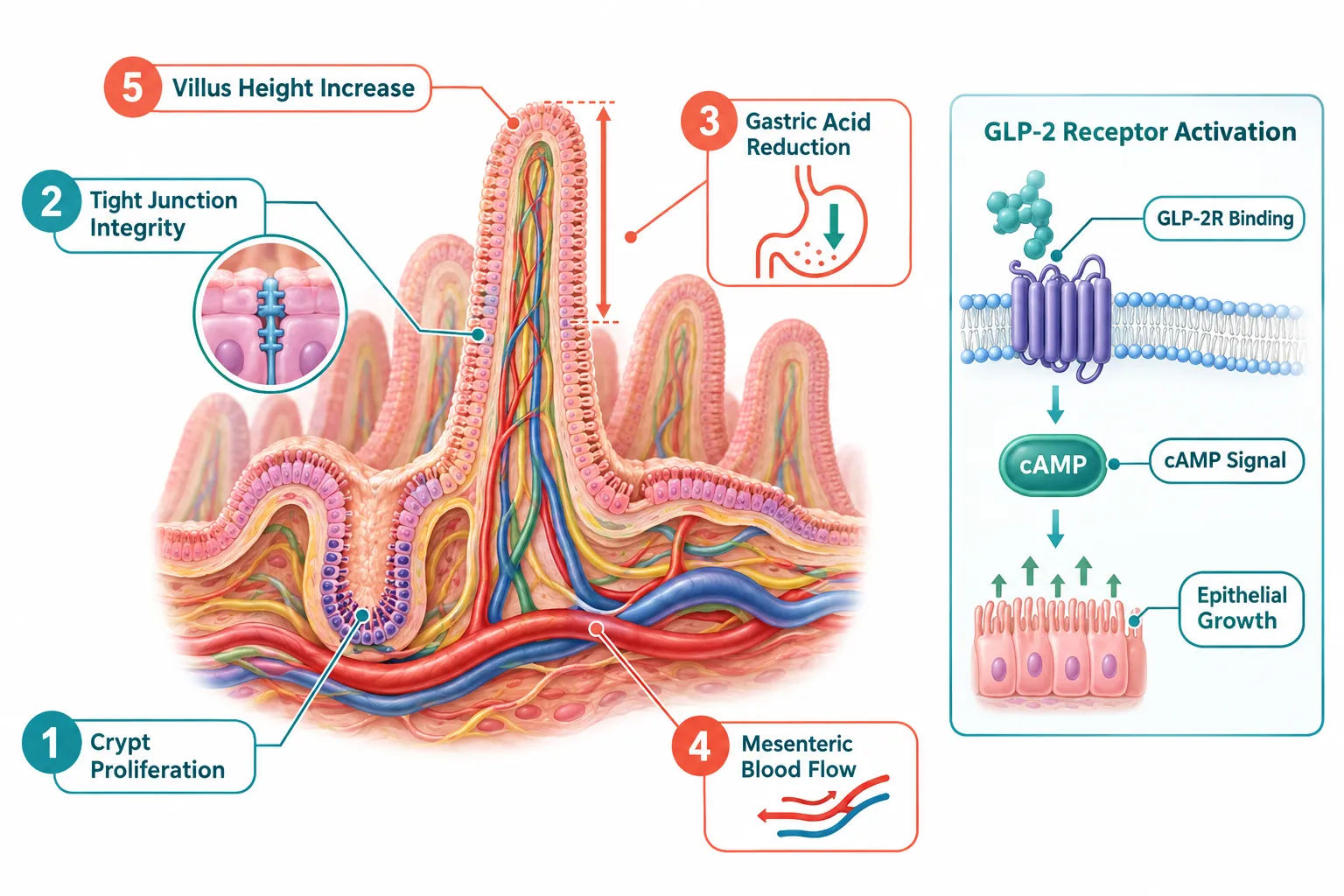
This built-in antisecretory effect means that any intestinal model already treated with a GLP-2 analog is operating under modified luminal pH conditions before a single dose of famotidine or omeprazole is introduced. GLP-2 analogs such as teduglutide, developed for short-bowel syndrome and Crohn's disease, drive mucosal growth and barrier repair primarily through receptor-mediated epithelial signaling rather than through direct acid suppression. Still, the incidental acid-lowering effect is real and measurable.
Researchers exploring GLP-2's role in gut permeability, NLRP3 inflammasome inhibition, or lipopolysaccharide translocation must account for this baseline shift. For those interested in broader peptide mechanisms, the Peptides 101 for Research-Use Only Buyers resource provides useful context on how structurally distinct peptides engage different receptor systems.
Famotidine vs. Omeprazole: Mechanism, Timing, and pH Profile
The choice between famotidine and omeprazole as a control agent is not simply a matter of potency. It involves timing, reversibility, pH ceiling, and downstream effects on the intestinal environment.
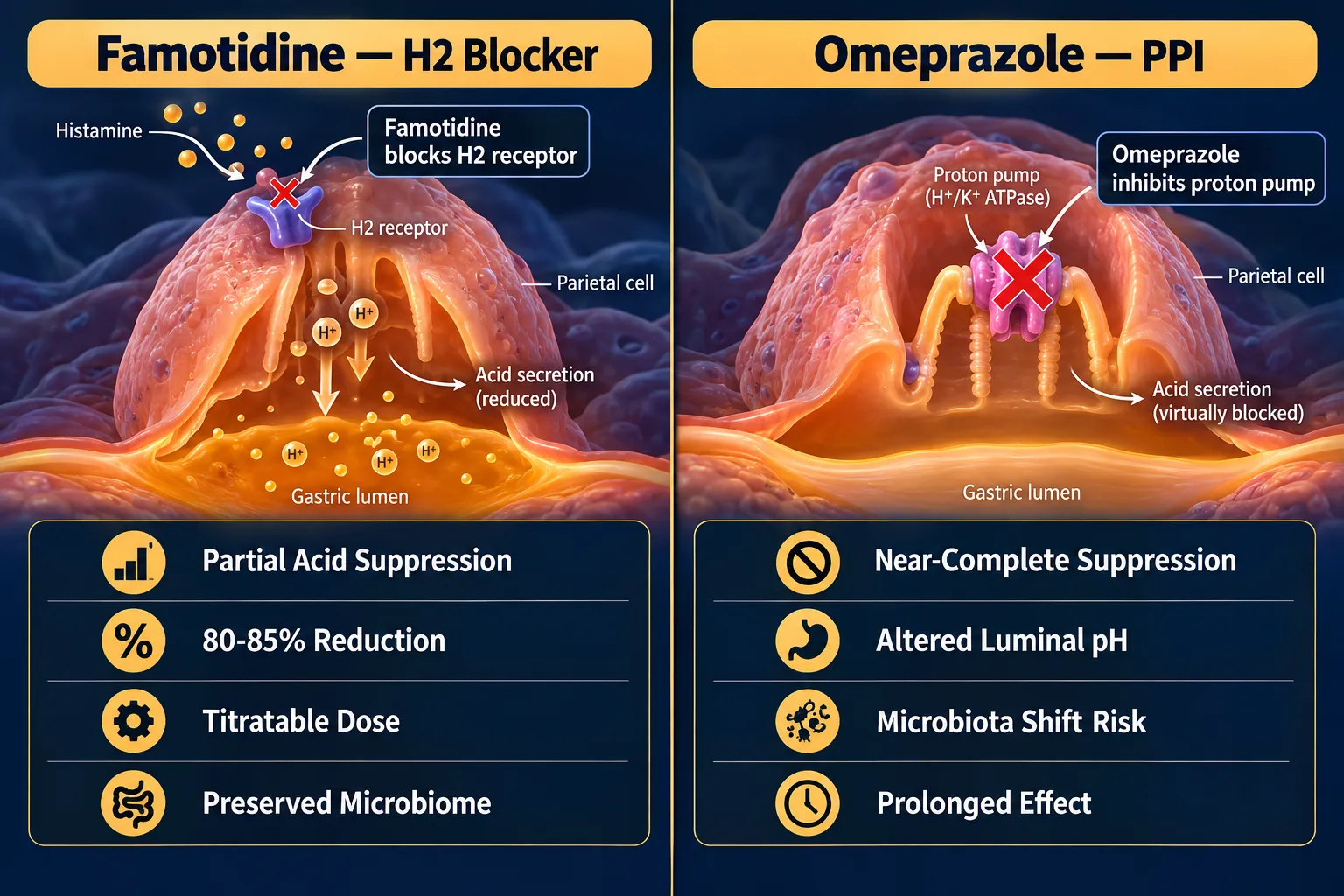
Famotidine is a competitive histamine H2-receptor antagonist. It inhibits basal and nocturnal gastric acid secretion and reduces gastric volume, acidity, and pepsin content, including secretion triggered by food, caffeine, insulin, and pentagastrin. Crucially, famotidine does not completely abolish acid production. It reduces stimulated output by roughly 80-85%, leaving a residual acid environment that more closely approximates physiological conditions. This partial suppression is titratable and relatively predictable, which is a significant advantage when the goal is to isolate GLP-2-driven epithelial effects.
Omeprazole, a proton-pump inhibitor (PPI), irreversibly blocks the H+/K+-ATPase enzyme on parietal cells. It can nearly abolish stimulated acid secretion, driving intragastric pH substantially higher than famotidine achieves. This more profound suppression introduces several confounders in GLP-2 intestinal models:
- Luminal pH shift: Near-achlorhydric conditions alter protein digestion, nutrient solubility, and drug absorption kinetics.
- Microbiota composition: Sustained high gastric pH permits bacterial overgrowth in the proximal gut, modifying the microbial environment that GLP-2's barrier-protective effects are being measured against.
- Mucosal adaptation: Prolonged PPI use can independently stimulate enterochromaffin-like cell hyperplasia and alter mucosal architecture, adding trophic noise to GLP-2 proliferation readouts.
- Timing mismatch: Because omeprazole requires active proton-pump cycling for full effect, its onset and offset kinetics differ meaningfully from the more immediate H2-blockade of famotidine, complicating washout periods in crossover designs.
For researchers also working with related GLP-class peptides, the GLP-3 peptide explained simply page offers accessible background on receptor-level distinctions across the GLP family.
Applying Famotidine, Omeprazole, and GLP-2 Research Principles to Intestinal Model Design
Translating these mechanistic differences into practical experimental decisions requires matching the acid-suppression agent to the specific endpoint being measured. The table below outlines how each agent performs across key experimental variables.
| Variable | Famotidine (H2 Blocker) | Omeprazole (PPI) |
|---|---|---|
| Acid suppression depth | Partial (~80-85%) | Near-complete |
| Onset/offset | Rapid, reversible | Delayed, irreversible (pump-cycle dependent) |
| Microbiota impact | Minimal at standard doses | Risk of proximal bacterial overgrowth |
| Trophic mucosal effects | Not reported | Possible enterochromaffin-like cell effects |
| Interaction with GLP-2 acid suppression | Additive but controlled | Layered suppression, harder to deconvolute |
| Best suited for | Isolating GLP-2 epithelial proliferation and barrier effects | Models explicitly studying profound acid reduction |
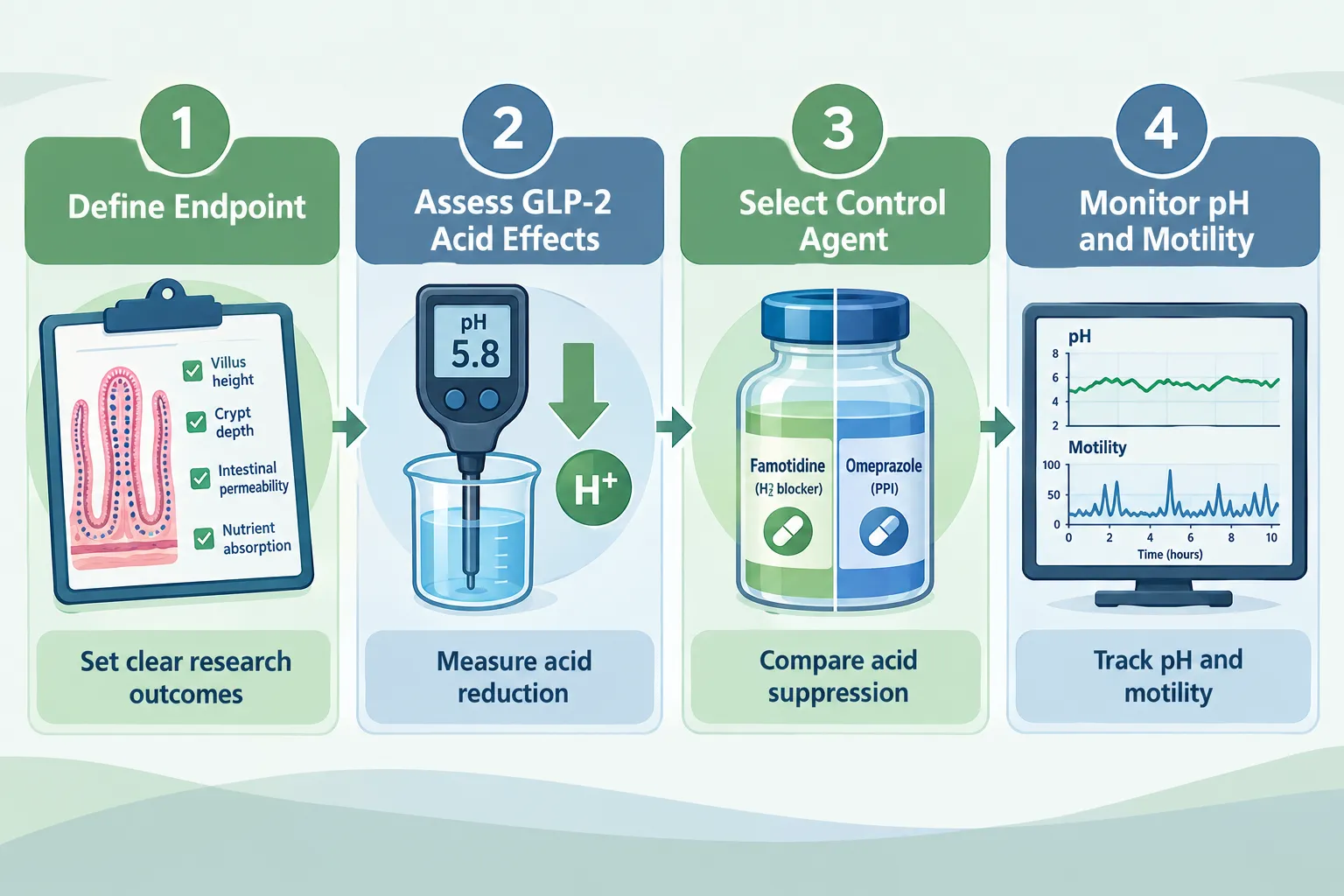
Practical Protocol Recommendations
When designing a GLP-2 intestinal model that requires an acid-suppression control in 2026, the following steps reflect current best practice based on available mechanistic evidence:
- Define the primary endpoint first. If the goal is to measure GLP-2-driven villus height, crypt proliferation, or tight-junction protein expression, choose the agent that introduces the fewest independent mucosal variables, which points to famotidine.
- Monitor luminal pH throughout. Because GLP-2 already shifts gastric acid output, baseline pH should be established before any acid-suppressive agent is added. Continuous or interval pH monitoring allows researchers to distinguish GLP-2-mediated acid changes from drug-mediated ones.
- Report motility data alongside acid-suppression regimen. GLP-2 slows gut transit; famotidine and omeprazole can independently alter motility. Reporting both variables together is essential for reproducibility.
- Reserve omeprazole for acid-focused designs. If the research question specifically involves near-achlorhydric conditions, for example, studying how profound pH elevation modifies GLP-2 receptor expression, omeprazole is appropriate. In all other GLP-2 intestinal models, its additional confounders outweigh its benefits.
- Account for renal function in dosing. Both famotidine and omeprazole require dose adjustment in animal models with renal impairment, and famotidine in particular has well-characterized renal clearance kinetics that affect systemic exposure.
Researchers working with GLP-class peptide blends may also find value in reviewing the GLP-3 Retatrutide buy online USA page for compound sourcing context, and the Peptides and Polypeptides in Endocrine Pharmacology article for broader receptor biology background.
The Current Research Gap
As of 2026, no published consensus statement or experimental guideline specifically addresses optimal acid-suppression control selection for GLP-2 intestinal organoid or animal models. Available literature provides authoritative descriptions of GLP-2 physiology and famotidine's pharmacodynamic profile, but the comparative control-selection question remains open. This gap is practically significant: without standardized control protocols, cross-study comparisons of GLP-2 epithelial effects are complicated by uncontrolled variation in luminal pH, microbiota composition, and motility.
For researchers interested in related intestinal peptide research, the BPC-157 and TB-500 blend category and the Glp3-Reta-Cag 10mg product page offer additional compound context relevant to gut-repair research models.
Conclusion
Choosing between famotidine and omeprazole as acid-suppression controls in GLP-2 intestinal models is not a trivial methodological footnote, it directly shapes the interpretability of every epithelial readout the experiment produces. Because GLP-2 already reduces gastric acid secretion as part of its core pharmacodynamic profile, adding a second antisecretory agent creates a compounded intervention. Famotidine's partial, titratable H2-receptor blockade introduces fewer independent variables and is better suited to experiments where GLP-2-driven mucosal growth and barrier function are the primary endpoints. Omeprazole's near-complete proton-pump inhibition is appropriate only when profound acid reduction is itself the experimental variable.
Actionable next steps for researchers:
- Establish luminal pH baselines before introducing any acid-suppressive agent in GLP-2 models.
- Default to famotidine as the background control unless the study design explicitly requires near-achlorhydric conditions.
- Report acid-suppression regimen, luminal pH, and motility data together in every publication to enable meaningful cross-study comparison.
- Advocate for field-wide consensus guidelines on acid-suppression control selection in GLP-2 intestinal research, this gap is addressable and worth closing.