

GLP-3 Retatrutide vs. GLP2-T in Research: Metabolic Signaling Compared With Intestinal Epithelial Models
Fewer than two decades separate the approval of the first GLP-2 analogue for short bowel syndrome and the emergence of a triple receptor agonist that some researchers are already calling the most potent pharmacologic weight-loss agent ever studied. These two compound classes share a naming convention that implies kinship, yet they address entirely different biological questions. Understanding the distinction between GLP-3 Retatrutide vs. GLP2-T in Research: Metabolic Signaling Compared With Intestinal Epithelial Models is not just a matter of terminology — it shapes which experimental models researchers choose, which readouts they measure, and how results should be interpreted.
Key Takeaways
- The informal label "GLP-3" does not describe a recognized hormone; it is a colloquial term applied to retatrutide, a triple GLP-1/GIP/glucagon receptor agonist.
- Retatrutide targets systemic metabolic signaling across the pancreas, adipose tissue, liver, and central nervous system.
- GLP2-T (teduglutide) acts primarily through gut-localized GLP-2 receptors to support intestinal epithelial structure and barrier function.
- These compounds require different preclinical and clinical model systems, and their readouts do not overlap.
- Terminology precision matters: conflating these agents can lead to misaligned experimental design and misinterpretation of data.
Clarifying the "GLP-3" Label: What Retatrutide Actually Is
The phrase "GLP-3" circulates widely in media and consumer-facing content, but it does not correspond to a recognized incretin hormone or established drug class. Retatrutide — formally designated LY3437943 — is an investigational, once-weekly synthetic peptide engineered on a GIP backbone and conjugated to a C20 fatty di-acid moiety. That conjugation enables albumin binding, which extends the molecule's half-life and supports weekly dosing.
What makes retatrutide structurally and pharmacologically distinct is its simultaneous agonism at three receptors: the GLP-1 receptor, the GIP receptor, and the glucagon receptor. This triple agonism is not accidental. The molecule was designed through structure-based engineering to optimize activity at all three targets, creating a compound that simultaneously enhances insulin secretion, suppresses appetite through central pathways, and increases energy expenditure via glucagon-driven thermogenesis.
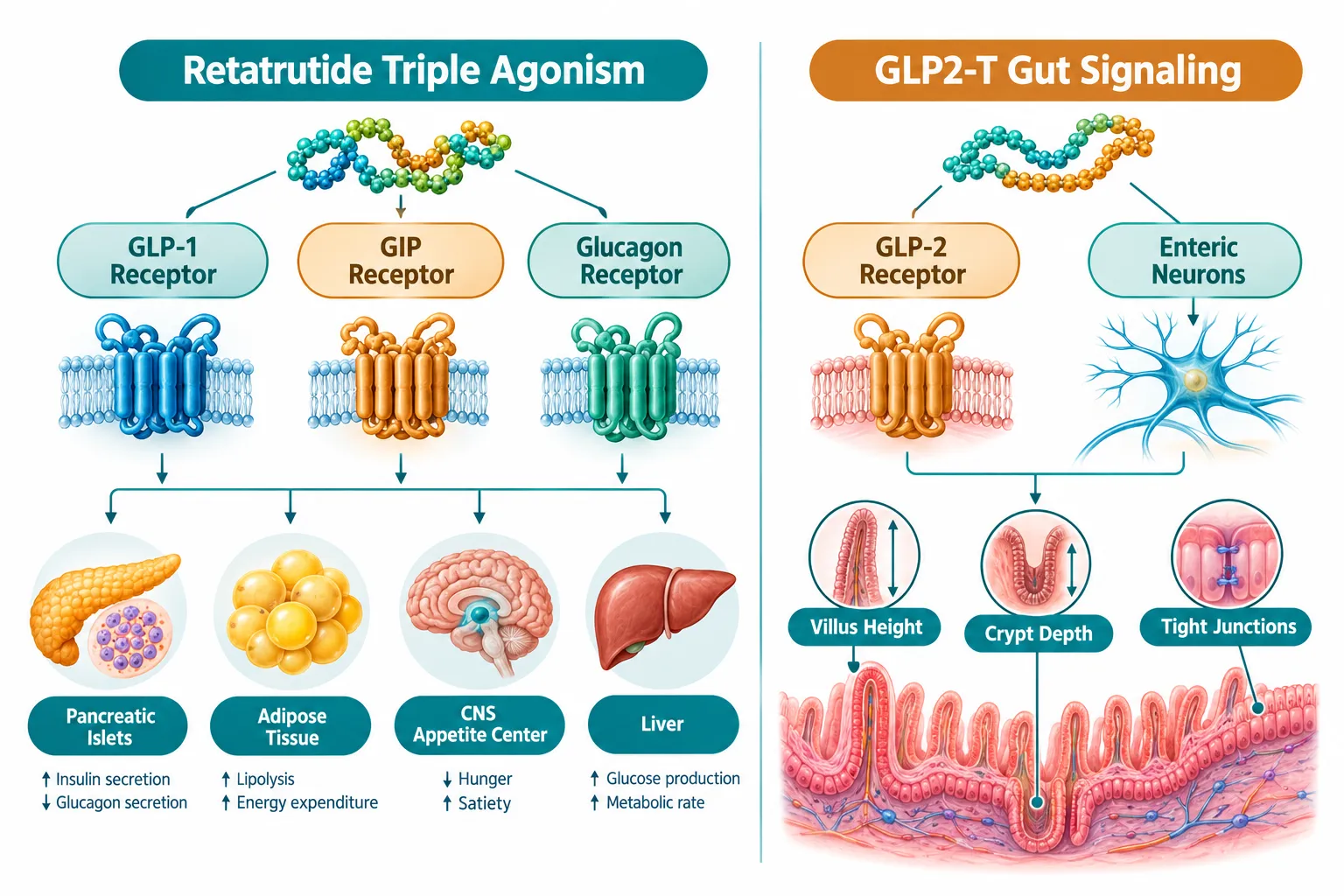
For researchers exploring polypeptide peptides in cardiometabolic models, this triple mechanism positions retatrutide as a fundamentally systemic agent. Its receptor targets are distributed across pancreatic islets, adipose tissue, the liver, and the central nervous system — not concentrated in the intestinal epithelium.
Phase 2 clinical data published in the New England Journal of Medicine reported mean weight loss of up to 24.2% after 48 weeks in people with obesity without diabetes, and 16.9% after 36 weeks in those with type 2 diabetes. Emerging phase 3 data as of 2026 suggest average weight loss approaching 28% of baseline body weight. Gastrointestinal symptoms — nausea, diarrhea, vomiting — represent the most common adverse events, a profile broadly comparable to existing GLP-1 receptor agonists.
"Retatrutide's receptor targets span the pancreas, fat tissue, liver, and brain — not the intestinal epithelium."
Researchers sourcing material for preclinical work can review available GLP-3 Reta 10mg and Reta 20mg formats to understand dosing specifications relevant to experimental protocols.
GLP2-T: A Gut-Targeted Epithelial Biology Tool
GLP-2 and its primary clinical analogue teduglutide (GLP2-T) were developed to address a fundamentally different biological problem: intestinal structural failure. Foundational preclinical work established that GLP-2 analogues consistently enhanced mucosal growth, nutrient absorption, and functional recovery in animal models of gut epithelial injury. That work formed the scientific basis for teduglutide's approval in short bowel syndrome.
At the mechanistic level, GLP2-T acts through GLP-2 receptors located on enteric neurons and subepithelial cells. Downstream trophic signaling expands villus height and crypt depth, supporting absorptive surface area. Critically, GLP-2 signaling also helps maintain tight-junction integrity.
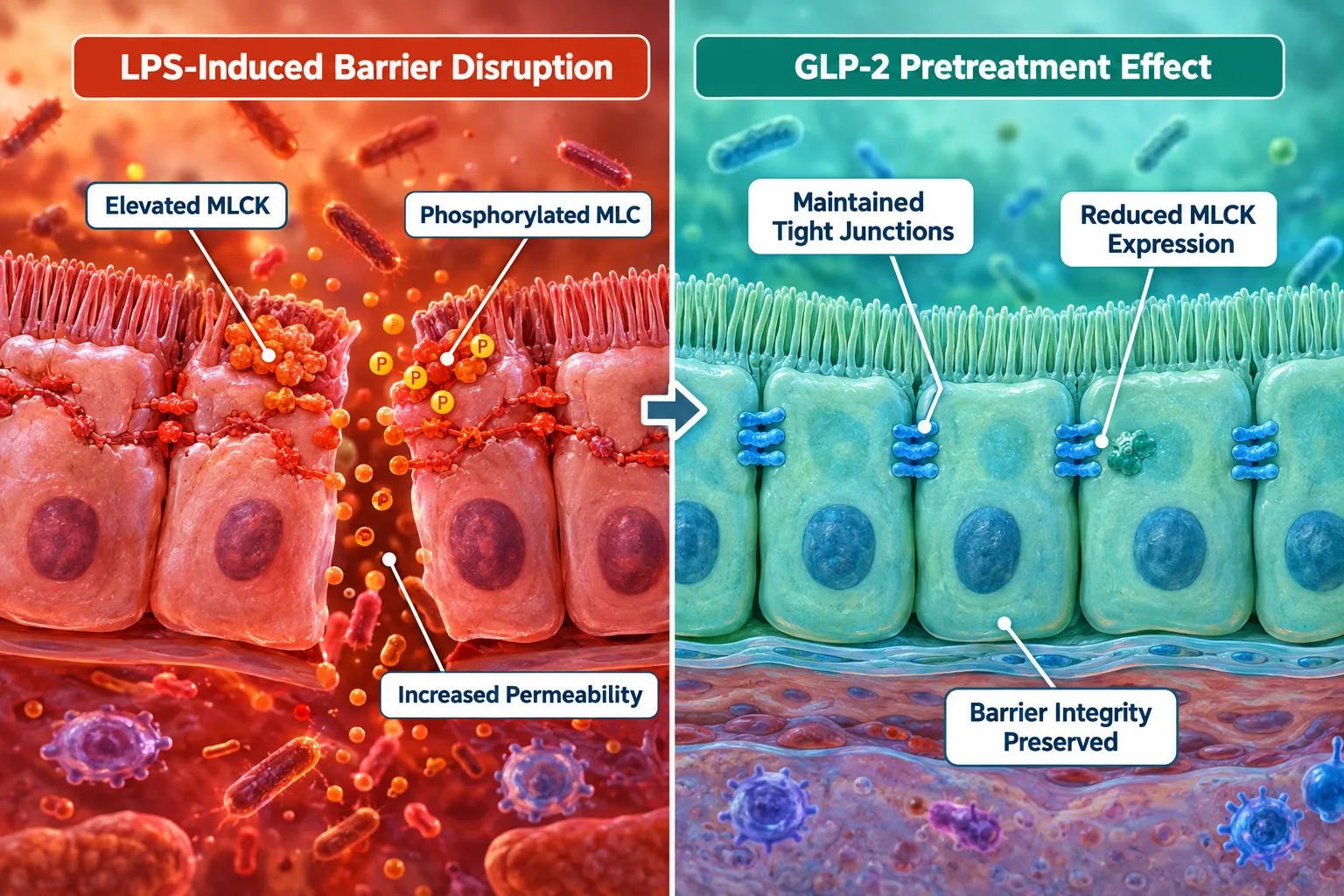
A well-characterized intestinal epithelial barrier study using piglet models and IPEC-J2 monolayer cultures demonstrated that GLP-2 pretreatment dose-dependently prevented lipopolysaccharide-induced increases in myosin light-chain kinase (MLCK) expression and phosphorylated myosin light chain (pMLC) across the duodenum, jejunum, and ileum. These findings point to a direct role for GLP-2 signaling in attenuating mucosal barrier injury at the cellular level.
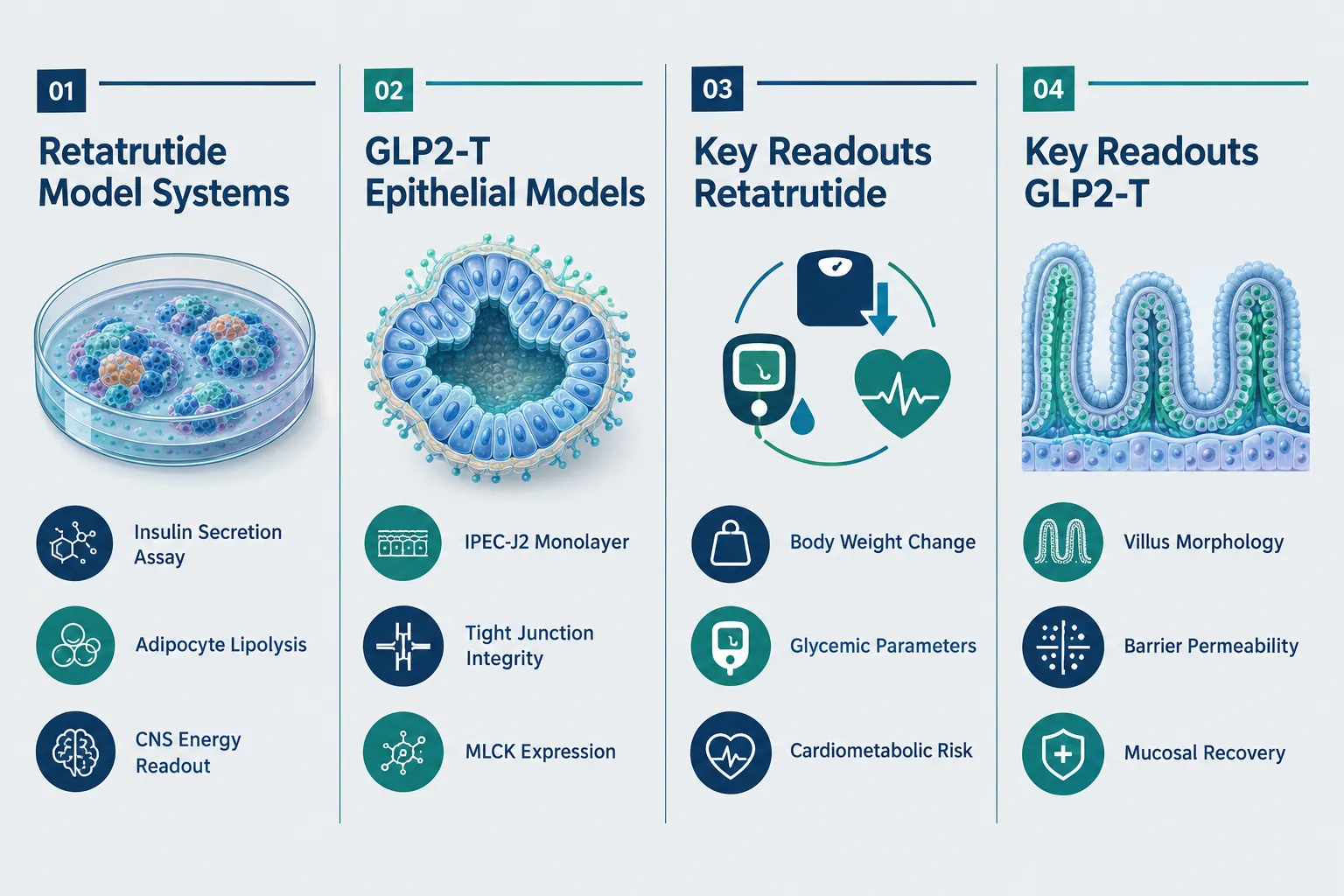
Relevant model systems for GLP2-T research include:
- IPEC-J2 intestinal epithelial monolayer cultures
- Piglet or rodent intestinal injury models
- Organoid-based villus morphology assays
- Transepithelial electrical resistance (TEER) measurements for barrier permeability
Key readouts center on villus height, crypt depth, tight-junction protein expression, MLCK activity, and barrier permeability — none of which are primary endpoints in retatrutide trials.
Comparing Model Selection and Readouts Across Both Research Contexts
The core distinction in GLP-3 Retatrutide vs. GLP2-T in Research: Metabolic Signaling Compared With Intestinal Epithelial Models lies in experimental design. Choosing the wrong model for either compound produces data that cannot be meaningfully interpreted.
| Feature | Retatrutide (GLP-3) | GLP2-T (Teduglutide) |
|---|---|---|
| Receptor targets | GLP-1R, GIPR, GcgR | GLP-2R (enteric/subepithelial) |
| Primary tissue focus | Pancreas, adipose, CNS, liver | Intestinal epithelium |
| Preferred preclinical models | Islet cell assays, adipocyte cultures, in vivo obesity models | IPEC-J2 monolayers, piglet gut injury, organoids |
| Primary research readouts | Body weight, glycemia, lipid profiles | Villus height, tight-junction integrity, TEER |
| Regulatory status (2026) | Investigational (Phase 3) | Approved (short bowel syndrome) |
For retatrutide, the Eli Lilly phase 3 program covers obesity with comorbidities, type 2 diabetes, knee osteoarthritis pain, obstructive sleep apnea, chronic low back pain, cardiovascular outcomes, renal outcomes, and metabolic dysfunction-associated steatotic liver disease. None of these endpoints involve direct measurement of intestinal epithelial morphology.
Safety profiles also diverge. Retatrutide's adverse-event landscape is dominated by gastrointestinal symptoms tied to its GLP-1 component. GLP-2 analogues carry distinct concerns: fluid retention, intestinal mucosal hyperplasia, and potential neoplastic risk in susceptible patients. These differences drive continued research into epithelial signaling specificity and long-term histological effects for GLP2-T, while retatrutide's ongoing trials focus on cardiovascular and renal safety endpoints.
Researchers interested in broader peptide signaling contexts, including mitochondrial and renal biology, may find relevant background in SS-31 kidney health research and SS-31 mitochondrial research themes, which illustrate how mechanistic specificity shapes model selection across peptide classes.
For those specifically sourcing retatrutide analogs for research, the GLP-3 Reta CAG 10mg and GLP-3 Reta 20mg product pages provide specification details relevant to experimental planning.
Conclusion
The comparison of GLP-3 Retatrutide vs. GLP2-T in Research: Metabolic Signaling Compared With Intestinal Epithelial Models ultimately clarifies that these are not competing agents — they are tools designed for different scientific questions. Retatrutide is a systemic triple agonist built for cardiometabolic research, with clinical endpoints centered on body weight, glycemia, and organ-level outcomes. GLP2-T is a gut-targeted trophic agent built for epithelial biology, with readouts rooted in mucosal structure and barrier function.
Actionable steps for researchers:
- Confirm receptor target distribution before selecting a model system; systemic metabolic signaling requires different assays than epithelial barrier biology.
- Avoid applying the informal "GLP-3" label in formal research contexts — use the compound name retatrutide and specify its triple agonist mechanism.
- Match readouts to mechanism: use TEER, MLCK, and villus morphology for GLP2-T work; use glycemic, lipolytic, and weight-related endpoints for retatrutide studies.
- Monitor phase 3 data releases for retatrutide, as cardiovascular and renal safety data will significantly shape future research directions.
- Recognize that teduglutide's approved status versus retatrutide's investigational status reflects different stages of translational development, not relative importance.
Precision in terminology and model selection is not bureaucratic caution — it is the foundation of reproducible, meaningful peptide research.