Call or Text 727-513-9780
  • Shopping Cart Shopping Cart
    0Shopping Cart
Pure Tested Peptides | America's most trusted Peptides for sale online
  • Peptides for sale
    • Oral Peptides for sale
      • Peptide Capsules for sale
      • BPC 157 Capsules 1000mcg
      • SLU-PP-332 Capsules | 1000 mcg
      • 5-Amino-1MQ 50mg Capsules
      • Tesofensine 500mcg
    • All Peptides for sale
    • Peptide Sprays
      • BPC 157 Nasal Spray Kit
      • BPC-157 TB500 Nasal Spray Kit
      • Semax Nasal Spray 10mg
      • Selank – Nasal Spray Kit – 10mg
      • Epithalon 50MG Nasal Spray Kit
      • Ipamorelin 10mg Nasal Spray
      • Klow Nasal Spray (BPC-157 + TB-500 + GHK-Cu + KPV) | 80mg
      • Hulk Nasal Spray Tesa / Ipa Blend 6/3 MG
      • Klow Nasal Spray
      • NAD + 500 mg Nasal Spray
      • PT-141 Nasal Spray Kit
    • GHRH Peptides
      • Ipa Peptides
      • CJC-1295 Peptides
        • CJC-1295 with DAC 5 mg
        • CJC-1295 without DAC 5 mg
        • CJC-1295 Ipa 10mg
      • Tesa Peptides
        • Tesa Peptide
        • Tesa 20 mg
    • GHK-Cu Peptides
      • All GHK-Cu Peptides
      • GHK-Cu 100mg
      • KLOW Peptide Blend – Buy KLOW blend online
    • BPC Peptides
      • All BPC Peptides
      • BPC-157
      • BPC-157 TB-500
      • BPC 157 capsules 1000mcg
    • SLU-PP-332 Peptides
      • All SLU-PP-332 Peptides
      • SLU-PP-332 5mg
    • GLP3 Peptides
    • PT-141 Peptides
      • PT-141 Peptides for sale
      • PT-141 10mg
      • PT-141 Nasal Spray
    • CAG Peptides
      • Lipo-C Peptide Blend
      • CAG 5mg
      • CAG 10mg
    • MOTS-C Peptides
      • MOTS-C Peptides for sale
      • MOTS-c peptide
      • MOTS-c 10mg *6 pack*
    • 5 Amino 1MQ Peptides
      • 5 Amino 1MQ Peptides for sale
      • 5-Amino-1MQ 50mg Capsules
      • 5-Amino-1MQ 5mg
    • Epithalon Peptides
      • Epithalon Peptides for sale
      • Epithalon 10mg
      • Epithalon 50mg
  • Shop
    • GLPs
      • 5-Amino-1MQ 50mg Capsules
      • 5-Amino-1MQ 5mg
      • L-Carnitine 500mg/ml
      • Tesofensine 500mcg
      • SLU-PP-332 5mg
      • MOTS-c 10mg *6 pack*
    • Epithalon & BPC Peptides
      • Epithalon 10mg
      • Epithalon 50mg
      • BPC-157
      • BPC 157 capsules 1000mcg
      • BPC-157 TB-500
      • BPC-157 TB500 Nasal Spray Kit
      • BPC 157 Nasal Spray Kit
    • BPC TB-500 & NAD+ Peptides
      • NAD+ 500 mg
      • KLOW Peptide Blend – Buy KLOW blend online
      • GLOW Peptide Blend
      • TB 500 5mg
      • BPC 157 capsules 1000mcg – Supplement
      • BPC 157 Nasal Spray Kit
      • BPC-157
      • BPC-157 TB500 Nasal Spray Kit
      • BPC-157 TB-500
      • BPC 157 capsules 1000mcg
    • LL-37 Peptide
      • LL-37 10 mg
    • MOTS-C & Selank
      • MOTS-c peptide
      • Selank 10mg
    • GHK Peptides
      • GHK-Cu 100mg
      • GLOW Peptide Blend
      • KLOW Peptide Blend – Buy KLOW blend online
  • COAs
  • Wholesale
    • Wholesale Peptides for sale
  • PTP FAQ
  • Affiliates
    • Selank Peptide: Advanced Pharmacological Mechanisms Underlying Its Anxiolytic and Nootropic Effects in Research
      • 5-Amino-1MQ Peptide: Detailed Mechanisms of NNMT Inhibition and Its Impact on Cellular Metabolism Research
        • MOTS-C Peptide: Unraveling Its Role in Mitochondrial Dynamics and Energy Metabolism Research
          • Epithalon Peptide and Telomerase Regulation: Investigating Its Impact on Cellular Senescence and Lifespan Research Models
            • GLP2-T vs GLP2 Tirz Peptide: Understanding the Naming, Mechanistic Nuances, and Research Implications for Gut Health
      • Peptides and Polypeptides in Modern Pharmacology: What Research on Metoprolol, Prednisone, and Amlodipine Reveals
        • Polypeptide Peptides vs NSAIDs: What Naproxen and Diclofenac Teach Tissue-Repair Researchers About BPC‑157 and TB‑500
          • Peptides and Polypeptides in Endocrine Pharmacology: How GLP-1, GLP-2, and GLP-3 Retatrutide Differ From Classic Drugs Like Prednisone and Amlodipine
          • 5‑Amino‑1MQ Peptide and NNMT Inhibition: How It Compares With Statins Like Atorvastatin in Adipose and Lipid Metabolism Research
      • Enclomiphene, Estrogen Receptor Signaling, and Luteinizing Phase Biology: What Hormone Researchers Should Measure
        • Mesenchymal Stem Cells, BPC‑157, and GHK‑Cu: How Tissue Repair Peptides Compare With Classic NSAIDs Like Naproxen in Injury Models
          • Peptide Calculator Use Cases Beyond Growth Hormone: Working Through GLP‑3 Retatrutide, MOTS‑c, and BPC‑157 Research Dosing
        • Polypeptide Peptides in Endocrine and Metabolic Pharmacology: Lessons From Amlodipine, Prednisone, and Metoprolol
        • Peptides Calculator for Advanced Blends: Worked Examples for Tesamorelin, CJC‑1295, and Ipamorelin Stacks
          • Peptides and Polypeptides in Human Physiology: How Molecular Size Shapes Research Applications
            • Selank Peptide: Advanced Pharmacological Mechanisms Underlying Its Anxiolytic and Nootropic Effects in Research
          • 5-Amino-1MQ Peptide: Detailed Mechanisms of NNMT Inhibition and Its Impact on Cellular Metabolism Research
            • MOTS-C Peptide: Unraveling Its Role in Mitochondrial Dynamics and Energy Metabolism Research
              • Epithalon Peptide and Telomerase Regulation: Investigating Its Impact on Cellular Senescence and Lifespan Research Models
                • GLP2-T vs GLP2 Tirz Peptide: Understanding the Naming, Mechanistic Nuances, and Research Implications for Gut Health
                  • Peptides and Polypeptides in Endocrine Pharmacology: How GLP-1, GLP-2, and GLP-3 Retatrutide Differ From Classic Drugs Like Prednisone and Amlodipine
                    • Polypeptide Peptides vs NSAIDs: What Naproxen and Diclofenac Teach Tissue-Repair Researchers About BPC‑157 and TB‑500
                      • Peptides and Polypeptides in Modern Pharmacology: What Research on Metoprolol, Prednisone, and Amlodipine Reveals
                        • 5‑Amino‑1MQ Peptide and NNMT Inhibition: How It Compares With Statins Like Atorvastatin in Adipose and Lipid Metabolism Research
                        • Enclomiphene, Estrogen Receptor Signaling, and Luteinizing Phase Biology: What Hormone Researchers Should Measure
                        • Mesenchymal Stem Cells, BPC‑157, and GHK‑Cu: How Tissue Repair Peptides Compare With Classic NSAIDs Like Naproxen in Injury Models
                        • Peptide Calculator Use Cases Beyond Growth Hormone: Working Through GLP‑3 Retatrutide, MOTS‑c, and BPC‑157 Research Dosing
                        • Polypeptide Peptides in Endocrine and Metabolic Pharmacology: Lessons From Amlodipine, Prednisone, and Metoprolol
                        • Peptides Calculator for Advanced Blends: Worked Examples for Tesamorelin, CJC‑1295, and Ipamorelin Stacks
                        • Peptides and Polypeptides in Human Physiology: How Molecular Size Shapes Research Applications
                        • Selank Peptide: Advanced Pharmacological Mechanisms Underlying Its Anxiolytic and Nootropic Effects in Research
                        • MOTS-C Peptide: Unraveling Its Role in Mitochondrial Dynamics and Energy Metabolism Research
                        • Peptides and Polypeptides in Modern Pharmacology: What Research on Metoprolol, Prednisone, and Amlodipine Reveals
                        • Peptides and Polypeptides in Endocrine Pharmacology: How GLP-1, GLP-2, and GLP-3 Retatrutide Differ From Classic Drugs Like Prednisone and Amlodipine
                        • 5-Amino-1MQ Peptide: Detailed Mechanisms of NNMT Inhibition and Its Impact on Cellular Metabolism Research
                        • Mesenchymal Stem Cells, BPC‑157, and GHK‑Cu: How Tissue Repair Peptides Compare With Classic NSAIDs Like Naproxen in Injury Models
                        • Peptide Calculator Use Cases Beyond Growth Hormone: Working Through GLP‑3 Retatrutide, MOTS‑c, and BPC‑157 Research Dosing
                        • GLP2-T vs GLP2 Tirz Peptide: Understanding the Naming, Mechanistic Nuances, and Research Implications for Gut Health
                        • Polypeptide Peptides in Endocrine and Metabolic Pharmacology: Lessons From Amlodipine, Prednisone, and Metoprolol
                        • Polypeptide Peptides vs NSAIDs: What Naproxen and Diclofenac Teach Tissue-Repair Researchers About BPC‑157 and TB‑500
                        • Peptides and Polypeptides in Human Physiology: How Molecular Size Shapes Research Applications
                        • Peptides Calculator for Advanced Blends: Worked Examples for Tesamorelin, CJC‑1295, and Ipamorelin Stacks
                        • 5‑Amino‑1MQ Peptide and NNMT Inhibition: How It Compares With Statins Like Atorvastatin in Adipose and Lipid Metabolism Research
                        • Enclomiphene, Estrogen Receptor Signaling, and Luteinizing Phase Biology: What Hormone Researchers Should Measure
                        • Epithalon Peptide and Telomerase Regulation: Investigating Its Impact on Cellular Senescence and Lifespan Research Models
                        • Best research protocol Klow blend
                        • best time to take BPC-157
                        • best time to take DSIP (Delta Sleep Inducing Peptide)
                        • best time to take CJC-1295
                        • best time to take AOD-9604
                        • best time to take Follistatin 344
                        • best time to take Ipamorelin
                        • best time to take MK-677 (Ibutamoren)
                        • best time to take Ligandrol (LGD-4033) — research compound
                        • best time to take Ostarine (MK-2866) — research compound
                        • best time to take GHK-CU
                        • best time to take TB-500
                        • best time to take MOTS-c
                        • best time to take Semax
                        • best time to take RAD-140 (Testolone) — research compound
                        • best time to take Thymosin Alpha-1
                        • best time to take PEG-MGF
                        • Biolife Plasma, Octapharma Plasma, and Research Peptides: How Plasma Donation Labs Differ From Peptide Suppliers
                        • best time to take YK-11 — research compound
                        • best time to take PT-141 (Bremelanotide)
                        • Best research protocol Klow blend
                        • 5-Amino-1MQ and MOTS-C Synergy: Metabolic Signaling, Mitochondria, and Research Design
                        • BPC-157 and TB-500: Investigating Their Combined Effects on Angiogenesis and Cellular Migration in Tissue Repair Models
                        • BPC-157 Peptide: Gut Barrier Function, Inflammation, and Tissue-Recovery Research
                        • 5‑Amino‑1MQ and MOTS‑c Synergy in Metabolic Research: Designing NNMT and Mitochondrial Biogenesis Stacks
                        • CJC-1295 with DAC vs. Without DAC: Half-Life, Release Kinetics, and Research Implications
                        • CJC‑1295 with DAC vs. Without DAC: Expanding on Half‑Life Differences Using Tesamorelin and Ipamorelin Blend Case Studies
                        • Collagen Biology and Copper‑Binding Peptides: How GHK‑Cu, Glow Blend, and Klow Blend Interact with Skin and Connective Tissue
                        • Collagen Biology and Regenerative Peptides: How GHK‑Cu, Glow Blend, and Klow Blend Affect Extracellular Matrix Research
                    • DNA, Telomeres, and Longevity Peptides: Positioning Epithalon and MOTS‑c in Genetic Aging Research
                      • Enclomiphene Citrate: serm Mechanism, Testosterone Research, and Stack Compatibility
                        • Enclomiphene vs Enclomiphene Citrate: Formulation, Bioavailability, and Research Distinctions
                        • Epithalon Peptide Research: Telomerase Activation, Aging, and Pineal Gland Function
                        • Estrogen Receptor Signaling and Enclomiphene: How Selective Modulators Compare with Classic Polypeptide Hormones
                        • GHK-Cu Peptide: Advanced Mechanisms in Extracellular Matrix Remodeling and Wound Healing Research
                        • GHK-Cu Peptide: Collagen Synthesis, Wound Repair, and Skin-Barrier Research Models
                        • GLP-1 vs GLP-3 vs GLP-2: Peptide Classification and Research Applications
                        • GLP-2 Peptide Research Guide: Gut Barrier Function, Nutrient Absorption, and Intestinal Recovery Models
                        • GLP-3 Retatrutide vs. GLP-1 Drugs: What Triple-Agonist Biology Changes in Research Models
                        • Ipamorelin and Tesamorelin Combination: Synergistic GH Secretagogue Research and Dosing Protocols
                        • GLP2 Tirz Peptide: What It Is, Why the Name Exists, and How Researchers Should Interpret It
                        • Klow Blend Peptide Nasal Spray: What the Formulation Is Trying to Do in Cognitive Research
                        • Mitochondria, NNMT Inhibition, and Peptide Modulators: Where MOTS‑c and 5‑Amino‑1MQ Fit in Cellular Energy Research
                        • MOTS-c Peptide: Mitochondrial Function, Energy Metabolism, and What Researchers Measure
                        • MOTS-c vs. 5-Amino-1MQ: Which Metabolic Research Questions Each Compound Actually Answers
                        • Nasal Spray Peptides: Bioavailability, Administration, and Semax/Selank Research Applications
                        • PT-141 Peptide Research: Mechanism of Action and Melanocortin Receptor Signaling
                        • Retatrutide for Research: Mechanism, Structure, and GLP-1/GLP-3 Dual Action
                        • Retatrutide for Obesity and Type 2 Diabetes: What the Latest Trial Data Suggest
                        • Tesofensine Peptide Research: Mechanism, Appetite Suppression, and Neuropeptide Y Pathways
  • Contact
    • Contact Customer Service
    • Text Customer Support
  • About US
  • Shop all peptides
  • Affiliate Program
    • Affiliate Signup
  • Login / Register Login / Register Page Link Login / Register Page Link
  • Click to open the search input field Click to open the search input field Search
  • Menu Menu

Tag Archive for: hematology research

How to Read Hemoglobin, Hematocrit, and MCHC Results in Peptide Research Studies

How to Read Hemoglobin, Hematocrit, and MCHC Results in Peptide Research Studies

October 3, 2026/0 Comments/in Uncategorized/by

A single out-of-range CBC value can derail an entire peptide research protocol, yet most of those flags are artifacts, not true biological signals. Knowing how to read hemoglobin, hematocrit, and MCHC results in peptide research studies is therefore one of the most practical skills a researcher can develop. These three indices are tightly interconnected, and misreading one in isolation leads to faulty conclusions about safety and efficacy.

Key Takeaways

  • Hemoglobin (Hb), hematocrit (Hct), and MCHC are mathematically linked; changes in one almost always shift the others.
  • MCHC is primarily a quality-control flag, a value above 36 g/dL often signals a laboratory artifact rather than a true physiological change.
  • Hct thresholds (typically above 54% in males or 48% in females) serve as intervention triggers in peptide research monitoring protocols.
  • No single index should be interpreted in isolation; always cross-reference with MCV, RDW, and reticulocyte count.
  • Monitoring cadence matters: baseline, four-week, and twelve-week CBC panels are the current consensus practice for most peptide study designs.

Understanding the Three Core Red-Cell Indices
Understanding the Three Core Red-Cell Indices

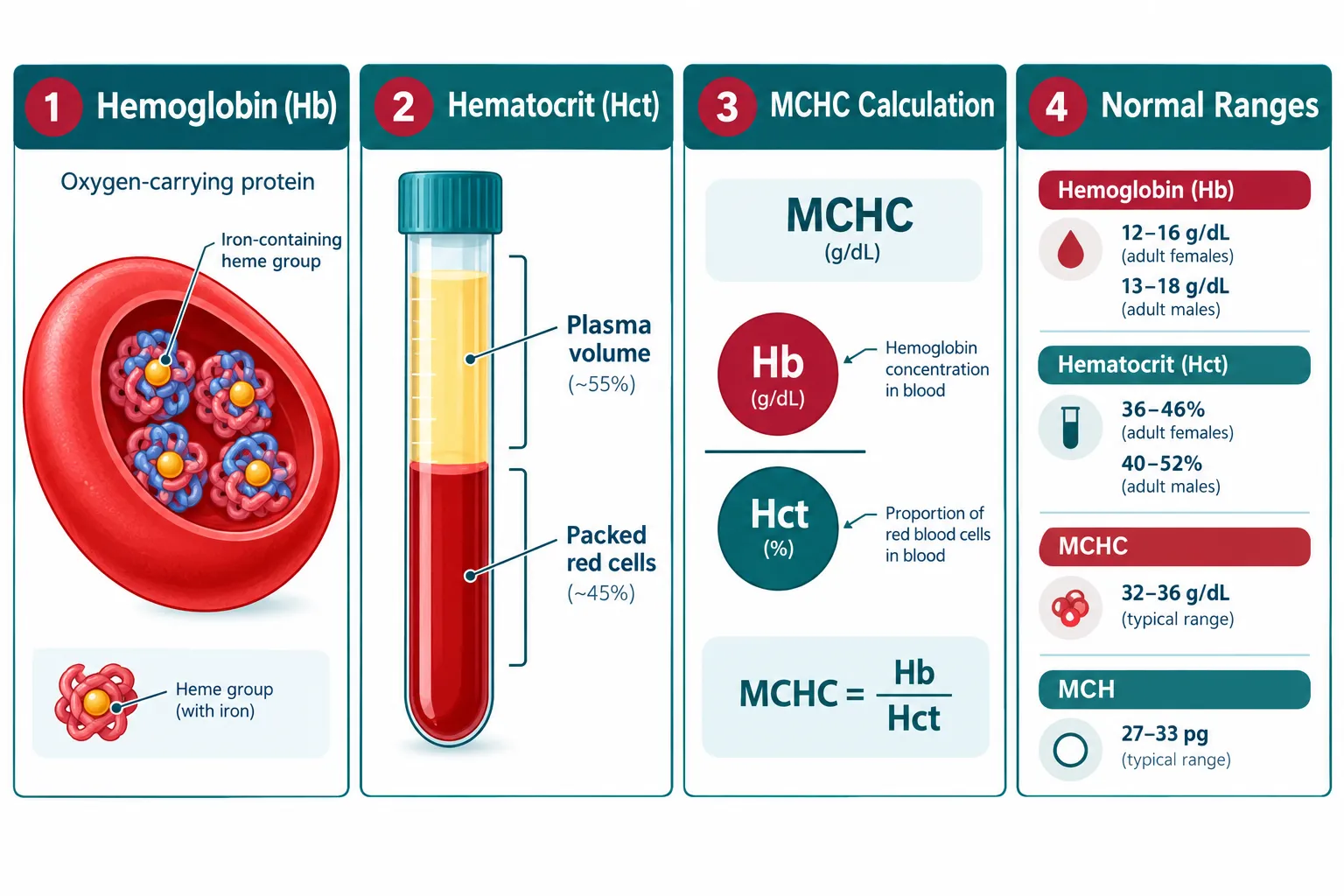
Hemoglobin (Hb) is the iron-containing protein inside red blood cells that carries oxygen. It is measured in grams per deciliter (g/dL). Standard reference ranges are approximately 13.5-17.5 g/dL for adult males and 12.0-15.5 g/dL for adult females, though laboratory-specific ranges vary slightly.

Hematocrit (Hct) expresses the proportion of whole blood occupied by red blood cells, reported as a percentage. Normal values run roughly 41-53% for males and 36-46% for females. Because Hct is essentially three times the Hb value in healthy subjects, a large discrepancy between the two is itself a diagnostic clue.

MCHC (Mean Corpuscular Hemoglobin Concentration) measures the average concentration of hemoglobin within a given volume of packed red cells. It is calculated as:

MCHC (g/dL) = (Hb / Hct) x 100

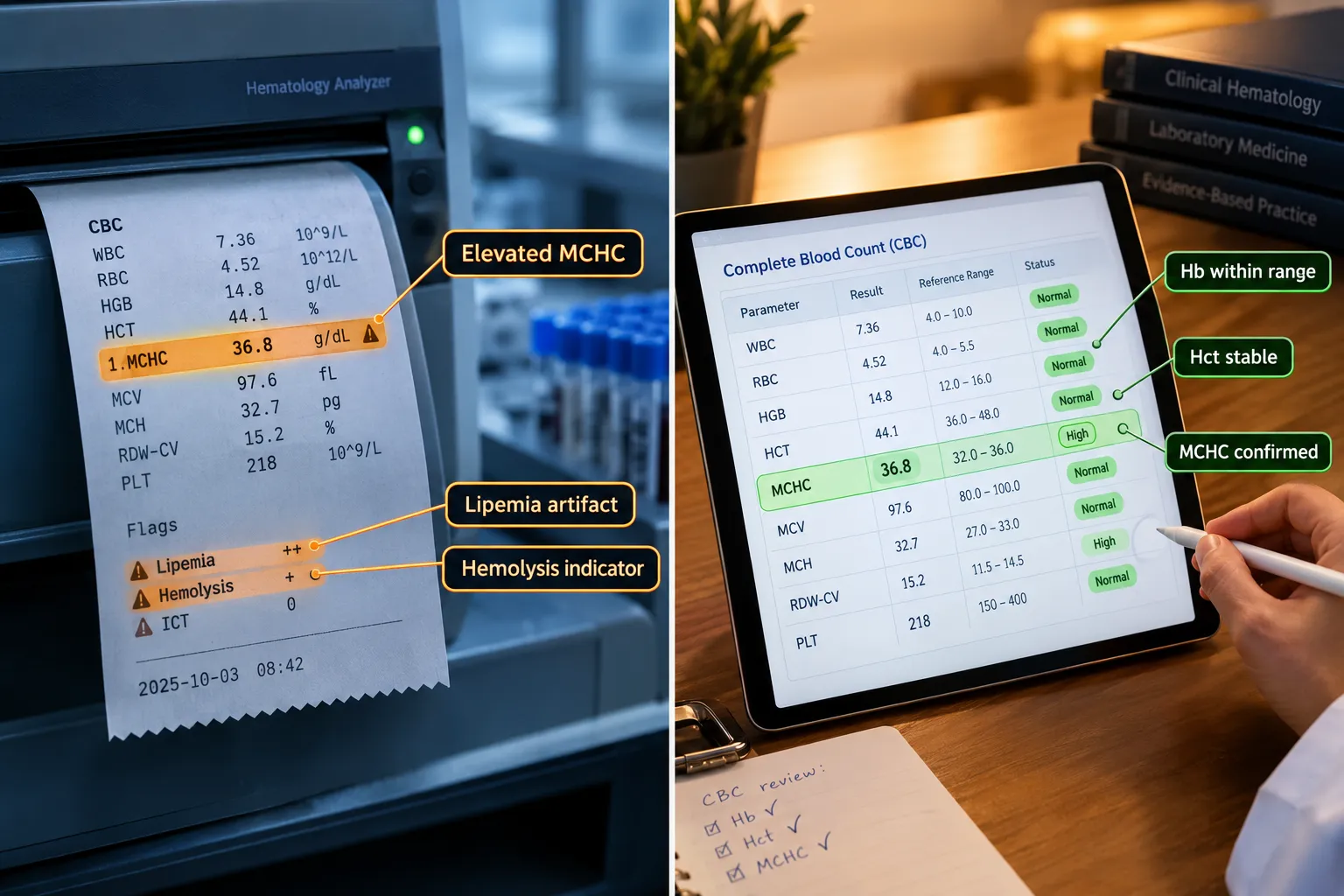
Normal MCHC falls between 32 and 36 g/dL. Because hemoglobin physically cannot exceed its solubility limit inside a red cell, a result above 36-37 g/dL almost always indicates a pre-analytical error, lipemia, hemolysis, or a cold agglutinin, rather than a genuine finding.

Why These Three Indices Are Inseparable

The mathematical relationship among Hb, Hct, and MCHC means they must be read as a set. If Hb rises due to hemoconcentration during a peptide protocol, Hct will rise proportionally and MCHC will remain stable. If MCHC spikes while Hb and Hct stay flat, the sample is almost certainly compromised.


A Practical Workflow for Reading CBC Results in Peptide Studies
A Practical Workflow for Reading CBC Results in Peptide Studies

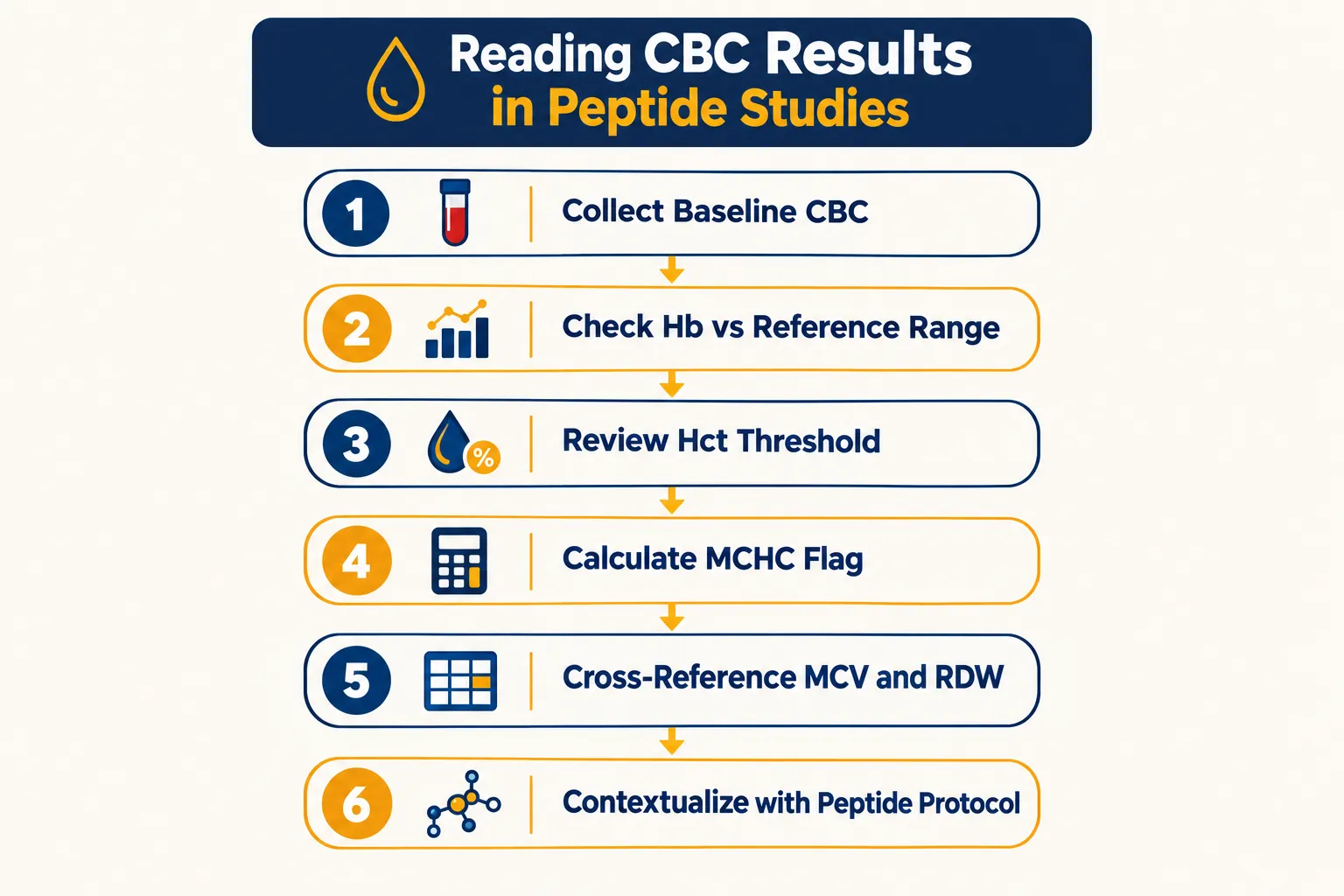
Researchers working with compounds such as SS-31 peptide or Ipamorelin peptide for sale formulations routinely collect complete blood counts (CBCs) to monitor hematological safety. The following six-step workflow reflects 2026 consensus practice.

Step 1, Establish a true baseline. Collect a CBC before any compound is introduced. A single pre-study value is insufficient; two baseline draws separated by at least one week reduce intra-individual variability noise.

Step 2, Evaluate Hb against sex-specific reference ranges. Flag values more than 1.5 g/dL above the upper reference limit. In peptide studies involving erythropoietic compounds, rising Hb is the earliest signal of red-cell mass expansion.

Step 3, Apply Hct thresholds as intervention triggers. Current guidance treats Hct above 54% (males) or 48% (females) as a threshold requiring protocol pause and clinical review. These numbers align with cardiovascular risk data from polycythemia research.

Step 4, Use MCHC as a quality-control gate, not a primary endpoint. Before interpreting any MCHC shift, confirm sample integrity. An MCHC above 36.5 g/dL should trigger a repeat draw before any protocol decision is made.

Step 5, Cross-reference MCV and RDW. Mean corpuscular volume (MCV) and red-cell distribution width (RDW) add context. A rising Hb with normal MCV and low RDW suggests true erythrocytosis. A rising Hb with low MCV and high RDW points toward iron-deficiency compensation, a very different finding.

Step 6, Contextualize within the peptide protocol timeline. Some compounds, including those explored in SS-31 mitochondrial research, affect cellular energy metabolism in ways that may indirectly influence reticulocyte production. Timing the CBC draw relative to dosing schedule matters.

Monitoring Cadence

Timepoint Recommended Panel
Baseline (pre-study) Full CBC with differential, iron studies
Week 4 CBC with differential
Week 12 Full CBC, iron studies, reticulocyte count
Any symptom event Immediate CBC plus MCHC quality check

Avoiding Overinterpretation: MCHC as a Quality-Control Flag
Avoiding Overinterpretation: MCHC as a Quality-Control Flag

The most common error in reading hemoglobin, hematocrit, and MCHC results in peptide research studies is treating every flagged value as a true biological event. MCHC is the index most vulnerable to this mistake.

Common pre-analytical artifacts that falsely elevate MCHC:

  • Lipemia (high triglycerides interfere with spectrophotometric Hb measurement)
  • In-vitro hemolysis from rough sample handling
  • Cold agglutinins causing red-cell clumping
  • Delayed sample processing beyond four hours

When sourcing compounds from a best peptide supplier for structured trials, researchers should also document sample collection procedures as rigorously as they document dosing. A poorly handled blood draw produces data that looks like a hematological crisis but is simply a laboratory error.

Low MCHC (hypochromia, below 32 g/dL) is more likely to be genuine. It points toward iron deficiency, thalassemia trait, or chronic disease anemia, all of which can confound peptide study endpoints and must be resolved before attributing changes to the compound under investigation.

Researchers exploring compounds such as those detailed in SS-31 mechanism and research should note that mitochondrial-targeted peptides may influence oxidative stress markers that interact with red-cell membrane integrity, making clean sample handling even more critical.

The Integration Principle

No single CBC index is a standalone decision-maker. Hb confirms oxygen-carrying capacity. Hct confirms red-cell mass. MCHC confirms data quality. Together, they form a three-point verification system. Researchers working with wholesale peptides across multi-subject trials should build this three-point check into their standard operating procedures.


Conclusion

Reading hemoglobin, hematocrit, and MCHC results in peptide research studies requires a systematic, index-by-index approach rather than a reflexive response to any single out-of-range flag. The practical next steps are clear:

  1. Set sex-specific baselines before any protocol begins, using two draws to reduce variability.
  2. Apply the Hct threshold rule (54%/48%) as the primary intervention trigger, not MCHC alone.
  3. Treat elevated MCHC as a quality-control alert first, repeat the draw before drawing any biological conclusion.
  4. Always cross-reference MCV, RDW, and reticulocyte count to distinguish true erythrocytosis from iron-deficiency compensation.
  5. Document sample handling procedures with the same rigor applied to dosing logs.

Researchers who build this workflow into their CBC review process will produce cleaner data, avoid false protocol pauses, and generate findings that hold up to scrutiny. As peptide research continues to mature in 2026, standardized hematological monitoring will increasingly separate rigorous studies from anecdotal reports.

https://www.puretestedpeptides.com/wp-content/uploads/2026/10/how-to-read-hemoglobin-hematocrit-and-mchc-results-in-peptide-research-studies.webp 1024 1536 https://www.puretestedpeptides.com/wp-content/uploads/2026/01/buy-peptides-online.jpg 2026-10-03 13:04:472026-10-03 13:04:47How to Read Hemoglobin, Hematocrit, and MCHC Results in Peptide Research Studies
×

Helpful Links

  • My account
  • Cart
  • Checkout
  • Refund and Returns Policy
  • Privacy Policy
  • SMS Privacy Policy
  • Login
  • My Account
  • Logout

USA Made Lab Tested Peptides

All products are sold for research, laboratory, or analytical purposes only, and are not for human consumption


Pure Tested Peptides is a chemical supplier. Pure Tested Peptides is not a compounding / chemical compounding facility as defined under 503A of the Federal Food, Drug, and Cosmetic act. Pure Tested Peptides is not an outsourcing facility as defined under 503B of the Federal Food, Drug, and Cosmetic act.

The statements made within this website have not been evaluated by the US Food and Drug Administration. The products we offer are not intended to diagnose, treat, cure or prevent any disease.

Human/Animal Consumption Prohibited. Laboratory/In-Vitro Experimental Use Only

Scroll to top Scroll to top Scroll to top