

Hemoglobin, LDL Cholesterol, and Blood Pressure in Peptide Studies: Building a Cardiometabolic Monitoring Panel
Across incretin analogue trials, systolic blood pressure drops of 2-5 mmHg and glycated hemoglobin reductions of 0.7-1.5 percentage points have been recorded consistently, yet many researchers still track these endpoints in isolation rather than as a coordinated panel. Building a structured approach to hemoglobin, LDL cholesterol, and blood pressure in peptide studies is not just good laboratory hygiene; it is the difference between detecting a meaningful cardiometabolic signal and missing it entirely.
Key Takeaways
- HbA1c, LDL-C, and systolic blood pressure form the core triad for monitoring cardiometabolic effects in GLP-class and metabolic-peptide research.
- Effect sizes are modest but reproducible: roughly -0.25% HbA1c, -0.17 mmol/L LDL-C, and -4 mmHg systolic BP per meta-analytic estimates.
- Timing matters, baseline, week 4, week 12, and week 26 assessments capture the full trajectory of peptide-driven changes.
- Composite indices (e.g., Hemoglobin-Myeloid Index) outperform single markers for cardiometabolic risk sensitivity.
- Confounders such as diet, hydration status, and concurrent medications must be controlled before attributing changes to the peptide under study.
Why These Three Markers Define Cardiometabolic Risk in Peptide Research
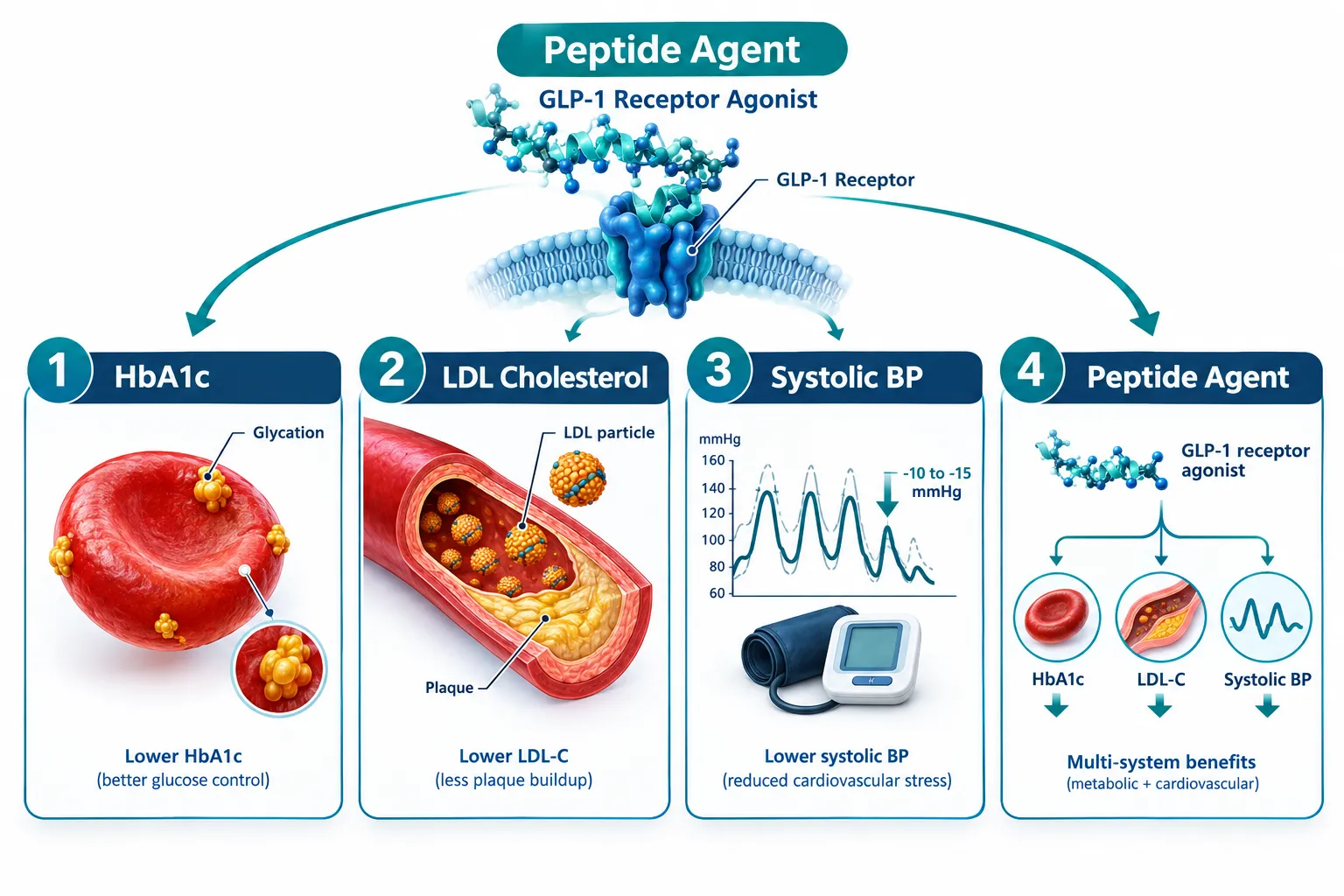
Researchers studying GLP-1 receptor agonists, GH secretagogues, and other metabolic peptides need a consistent framework for interpreting laboratory data. The three markers, glycated hemoglobin (HbA1c), low-density lipoprotein cholesterol (LDL-C), and blood pressure (BP), were not chosen arbitrarily. Each reflects a distinct but interconnected pathway that peptide agents are known to modulate.
HbA1c captures average glycemic exposure over roughly 90 days, making it ideal for tracking slow-moving metabolic shifts. LDL-C reflects atherogenic lipid burden, which GLP-1 receptor agonists reduce modestly but reproducibly across overweight, type 2 diabetes, and chronic kidney disease populations. Systolic blood pressure responds to natriuretic and vasodilatory effects that several peptide classes trigger, with reductions averaging approximately 4 mmHg in well-controlled trials.
Together, these three endpoints mirror what commercial cardiometabolic panels, including those combining apolipoprotein B, small dense LDL-C, and insulin resistance scores, already treat as mandatory. Researchers exploring GLP-3 peptide formulations or GLP-1 peptides will find that aligning their monitoring to this triad makes cross-study comparisons far more tractable.
"A monitoring panel is only as strong as the consistency of its collection windows. Sporadic lab draws produce noise, not signal."
The Role of Composite Indices
Single-marker tracking has a well-documented sensitivity ceiling. The Hemoglobin-Myeloid Index (HMI), a composite of hemoglobin and leukocyte counts, has shown greater discriminatory power for cardiometabolic risk than hemoglobin alone. This finding supports building multi-parameter panels rather than relying on any one biomarker, a principle directly applicable to peptide study design.
Structuring a Monitoring Panel: Timing, Confounders, and Collection Windows
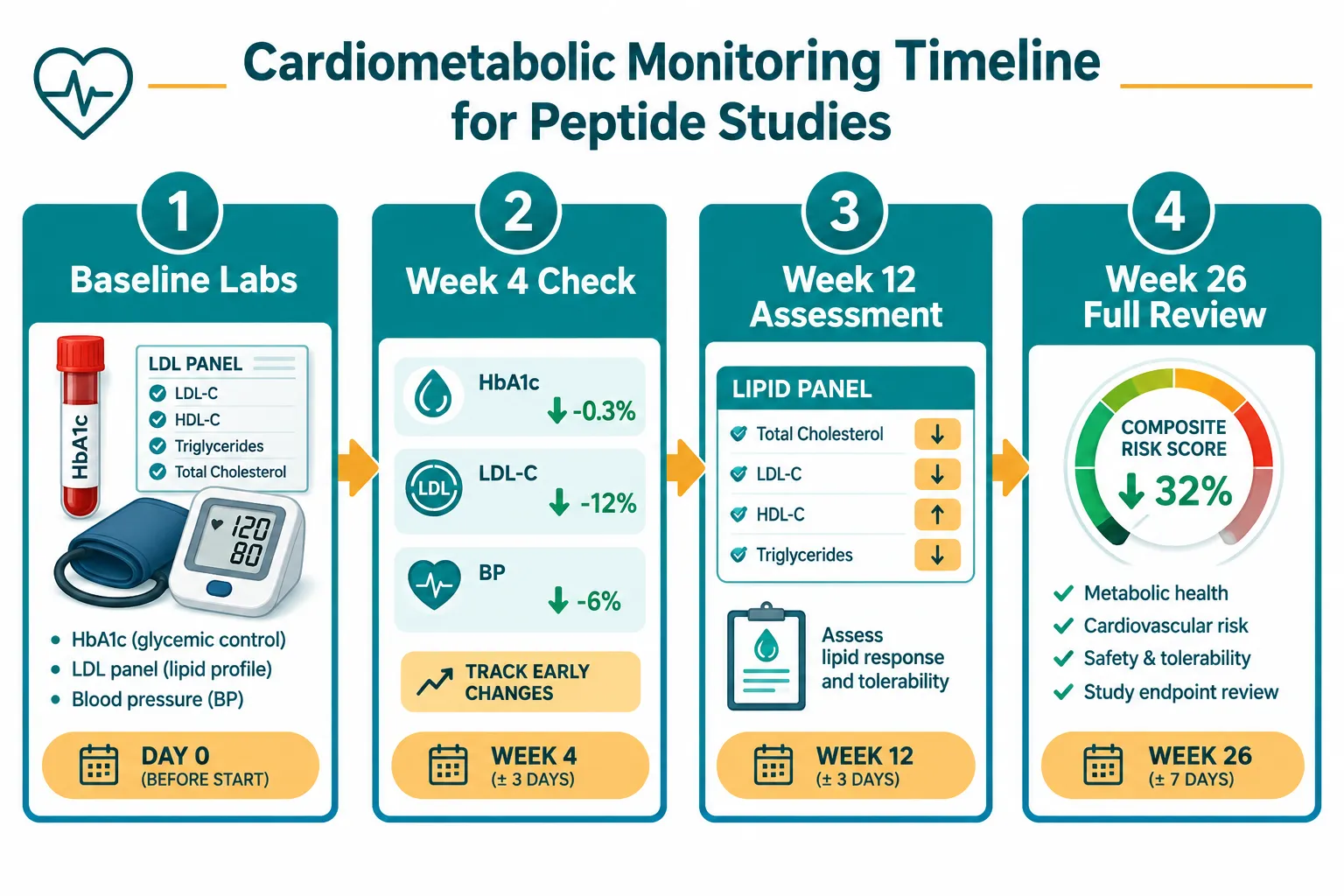
A well-designed cardiometabolic monitoring panel for peptide studies requires more than choosing the right markers. Timing and confounder control are equally critical.
Recommended Assessment Windows
| Timepoint | Primary Markers | Secondary Markers |
|---|---|---|
| Baseline (Day 0) | HbA1c, LDL-C, Systolic BP | HDL-C, triglycerides, fasting glucose |
| Week 4 | Systolic BP, fasting glucose | Body weight, heart rate |
| Week 12 | HbA1c, LDL-C, Systolic BP | Triglycerides, HDL-C |
| Week 26+ | Full panel + apolipoprotein B | hs-CRP, lipoprotein(a) |
HbA1c requires at least 8-12 weeks of exposure before a meaningful change is detectable, making early draws useful only for baseline anchoring. Blood pressure, by contrast, can shift within weeks, as demonstrated in orforglipron trials where a mean systolic reduction of approximately 4.3 mmHg was observed alongside HbA1c reductions approaching 1.36%.
Key Confounders to Control
Failing to account for confounders is the most common reason peptide-related cardiometabolic signals are misinterpreted.
- Dietary changes: Caloric restriction independently lowers LDL-C and BP; weight loss attributable to the peptide must be separated from intentional dieting.
- Hydration status: Dehydration elevates hemoglobin concentration artificially, inflating apparent HbA1c values.
- Concurrent medications: Statins, antihypertensives, and metformin each affect one or more panel markers directly.
- Assay standardization: Inconsistent laboratory methods between draws introduce measurement noise. Reviewing reference standards for peptide benchmarks helps researchers apply the same rigor to biomarker assays.
- Time of day for BP: Circadian variation in systolic BP can exceed 10 mmHg; standardized morning measurements are essential.
For GH secretagogue research, including studies involving MOTS-c peptide, insulin sensitivity and triglyceride levels should be added to the secondary panel, as GH-axis activation has distinct lipid and glucose effects compared to GLP-class agents.
Applying the Panel Across GLP-Class, GH-Secretagogue, and Metabolic-Peptide Experiments
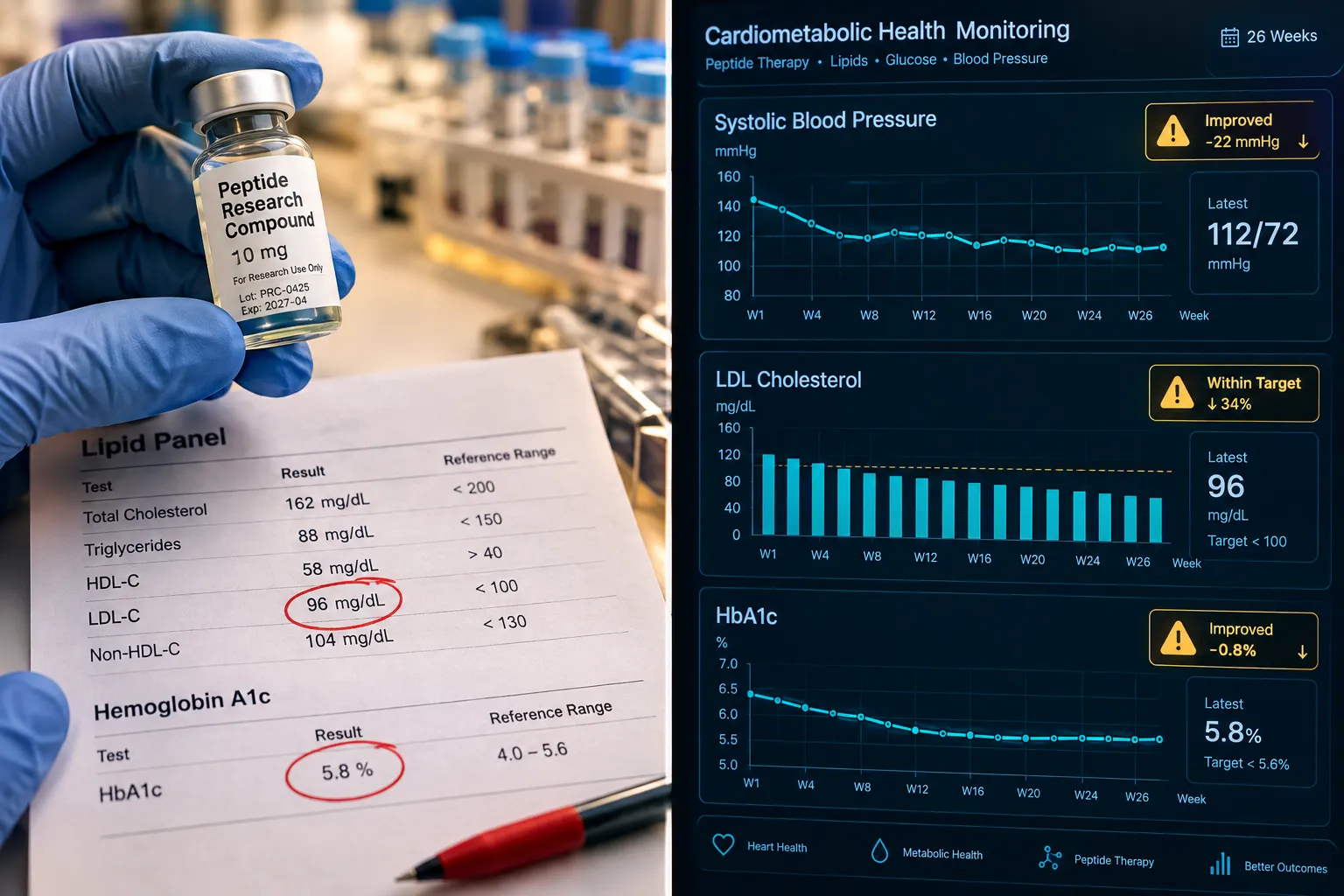
The core triad of hemoglobin, LDL cholesterol, and blood pressure in peptide studies applies broadly, but the expected effect profile varies by peptide class.
GLP-Class Peptides
Network meta-analyses in type 2 diabetes with chronic kidney disease place semaglutide and liraglutide at the top of probability rankings for LDL-C reduction (SUCRA 100%) and HbA1c improvement. The long-term SELECT trial confirmed that semaglutide 2.4 mg reduces total cholesterol, LDL-C, and triglycerides while raising HDL-C over roughly 40 months, even in patients without type 2 diabetes. Researchers using GLP-3R peptide formulations should establish whether their compound shares this lipid-modulating profile by anchoring measurements to the same triad.
GH-Secretagogue and Mitochondria-Targeted Peptides
Peptides that act on the GH axis or mitochondrial pathways, such as those reviewed in SS-31 research peptide considerations, have distinct cardiovascular signatures. SS-31 targets mitochondrial cardiolipin and may influence cardiac efficiency without directly lowering LDL-C. For these agents, blood pressure and hemoglobin remain relevant endpoints, but the lipid panel should be expanded to include triglycerides and HDL-C to capture the full metabolic picture.
Natriuretic and Cardiac Peptides
BNP and NT-proBNP are increasingly used alongside HbA1c, LDL-C, and BP in comprehensive panels for patients on cardiometabolic peptide therapies. This reflects a broader trend: researchers and clinicians are converging on integrated panels that treat metabolic and cardiac biomarkers as complementary rather than separate. Understanding how peptides interface with endocrine pharmacology is essential context for interpreting these expanded panels correctly.
For a foundational overview of peptide classes and their mechanisms, the Peptides 101 research-use guide provides useful structural context before designing a monitoring protocol.
Conclusion
Building a cardiometabolic monitoring panel around hemoglobin, LDL cholesterol, and blood pressure in peptide studies is not optional for rigorous research, it is the baseline standard. The actionable steps are straightforward:
- Set a baseline before any peptide exposure using HbA1c, fasting LDL-C, and standardized morning systolic BP.
- Schedule follow-up draws at weeks 4, 12, and 26, matching the biological half-life of each marker to the collection window.
- Document and control confounders, diet, medications, hydration, and assay methods, before attributing any change to the peptide.
- Expand the panel with apolipoprotein B, hs-CRP, and triglycerides when the peptide class warrants it.
- Use composite indices such as HMI where single-marker sensitivity is insufficient.
Researchers who apply this framework consistently will produce data that is both internally valid and comparable across studies, the foundation of any meaningful contribution to the cardiometabolic peptide literature in 2026.