Call or Text 727-513-9780
  • Shopping Cart Shopping Cart
    0Shopping Cart
Pure Tested Peptides | America's most trusted Peptides for sale online
  • Peptides for sale
    • Oral Peptides for sale
      • Peptide Capsules for sale
      • BPC 157 Capsules 1000mcg
      • SLU-PP-332 Capsules | 1000 mcg
      • 5-Amino-1MQ 50mg Capsules
      • Tesofensine 500mcg
    • All Peptides for sale
    • Peptide Sprays
      • BPC 157 Nasal Spray Kit
      • BPC-157 TB500 Nasal Spray Kit
      • Semax Nasal Spray 10mg
      • Selank – Nasal Spray Kit – 10mg
      • Epithalon 50MG Nasal Spray Kit
      • Ipamorelin 10mg Nasal Spray
      • Klow Nasal Spray (BPC-157 + TB-500 + GHK-Cu + KPV) | 80mg
      • Hulk Nasal Spray Tesa / Ipa Blend 6/3 MG
      • Klow Nasal Spray
      • NAD + 500 mg Nasal Spray
      • PT-141 Nasal Spray Kit
    • GHRH Peptides
      • Ipa Peptides
      • CJC-1295 Peptides
        • CJC-1295 with DAC 5 mg
        • CJC-1295 without DAC 5 mg
        • CJC-1295 Ipa 10mg
      • Tesa Peptides
        • Tesa Peptide
        • Tesa 20 mg
    • GHK-Cu Peptides
      • All GHK-Cu Peptides
      • GHK-Cu 100mg
      • KLOW Peptide Blend – Buy KLOW blend online
    • BPC Peptides
      • All BPC Peptides
      • BPC-157
      • BPC-157 TB-500
      • BPC 157 capsules 1000mcg
    • SLU-PP-332 Peptides
      • All SLU-PP-332 Peptides
      • SLU-PP-332 5mg
    • GLP3 Peptides
      • GLP3-R
      • GLP3-R CAG 10mg
      • GLP3-R 20mg
    • PT-141 Peptides
      • PT-141 Peptides for sale
      • PT-141 10mg
      • PT-141 Nasal Spray
    • CAG Peptides
      • Lipo-C Peptide Blend
      • CAG 5mg
      • CAG 10mg
    • MOTS-C Peptides
      • MOTS-C Peptides for sale
      • MOTS-c peptide
      • MOTS-c 10mg *6 pack*
    • 5 Amino 1MQ Peptides
      • 5 Amino 1MQ Peptides for sale
      • 5-Amino-1MQ 50mg Capsules
      • 5-Amino-1MQ 5mg
    • Epithalon Peptides
      • Epithalon Peptides for sale
      • Epithalon 10mg
      • Epithalon 50mg
  • Shop
    • GLPs
      • 5-Amino-1MQ 50mg Capsules
      • 5-Amino-1MQ 5mg
      • GLP3-Reta
      • L-Carnitine 500mg/ml
      • Tesofensine 500mcg
      • SLU-PP-332 5mg
      • MOTS-c 10mg *6 pack*
    • Epithalon & BPC Peptides
      • Epithalon 10mg
      • Epithalon 50mg
      • BPC-157
      • BPC 157 capsules 1000mcg
      • BPC-157 TB-500
      • BPC-157 TB500 Nasal Spray Kit
      • BPC 157 Nasal Spray Kit
    • BPC TB-500 & NAD+ Peptides
      • NAD+ 500 mg
      • KLOW Peptide Blend – Buy KLOW blend online
      • GLOW Peptide Blend
      • TB 500 5mg
      • BPC 157 capsules 1000mcg – Supplement
      • BPC 157 Nasal Spray Kit
      • BPC-157
      • BPC-157 TB500 Nasal Spray Kit
      • BPC-157 TB-500
      • BPC 157 capsules 1000mcg
    • LL-37 Peptide
      • LL-37 10 mg
    • MOTS-C & Selank
      • MOTS-c peptide
      • Selank 10mg
    • GHK Peptides
      • GHK-Cu 100mg
      • GLOW Peptide Blend
      • KLOW Peptide Blend – Buy KLOW blend online
  • COAs
  • Wholesale
    • Wholesale Peptides for sale
  • PTP FAQ
  • Affiliates
    • Selank Peptide: Advanced Pharmacological Mechanisms Underlying Its Anxiolytic and Nootropic Effects in Research
      • 5-Amino-1MQ Peptide: Detailed Mechanisms of NNMT Inhibition and Its Impact on Cellular Metabolism Research
        • MOTS-C Peptide: Unraveling Its Role in Mitochondrial Dynamics and Energy Metabolism Research
          • Epithalon Peptide and Telomerase Regulation: Investigating Its Impact on Cellular Senescence and Lifespan Research Models
            • GLP2-T vs GLP2 Tirz Peptide: Understanding the Naming, Mechanistic Nuances, and Research Implications for Gut Health
      • Peptides and Polypeptides in Modern Pharmacology: What Research on Metoprolol, Prednisone, and Amlodipine Reveals
        • Polypeptide Peptides vs NSAIDs: What Naproxen and Diclofenac Teach Tissue-Repair Researchers About BPC‑157 and TB‑500
          • Peptides and Polypeptides in Endocrine Pharmacology: How GLP-1, GLP-2, and GLP-3 Retatrutide Differ From Classic Drugs Like Prednisone and Amlodipine
          • 5‑Amino‑1MQ Peptide and NNMT Inhibition: How It Compares With Statins Like Atorvastatin in Adipose and Lipid Metabolism Research
      • Enclomiphene, Estrogen Receptor Signaling, and Luteinizing Phase Biology: What Hormone Researchers Should Measure
        • Mesenchymal Stem Cells, BPC‑157, and GHK‑Cu: How Tissue Repair Peptides Compare With Classic NSAIDs Like Naproxen in Injury Models
          • Peptide Calculator Use Cases Beyond Growth Hormone: Working Through GLP‑3 Retatrutide, MOTS‑c, and BPC‑157 Research Dosing
        • Polypeptide Peptides in Endocrine and Metabolic Pharmacology: Lessons From Amlodipine, Prednisone, and Metoprolol
        • Peptides Calculator for Advanced Blends: Worked Examples for Tesamorelin, CJC‑1295, and Ipamorelin Stacks
          • Peptides and Polypeptides in Human Physiology: How Molecular Size Shapes Research Applications
            • Selank Peptide: Advanced Pharmacological Mechanisms Underlying Its Anxiolytic and Nootropic Effects in Research
          • 5-Amino-1MQ Peptide: Detailed Mechanisms of NNMT Inhibition and Its Impact on Cellular Metabolism Research
            • MOTS-C Peptide: Unraveling Its Role in Mitochondrial Dynamics and Energy Metabolism Research
              • Epithalon Peptide and Telomerase Regulation: Investigating Its Impact on Cellular Senescence and Lifespan Research Models
                • GLP2-T vs GLP2 Tirz Peptide: Understanding the Naming, Mechanistic Nuances, and Research Implications for Gut Health
                  • Peptides and Polypeptides in Endocrine Pharmacology: How GLP-1, GLP-2, and GLP-3 Retatrutide Differ From Classic Drugs Like Prednisone and Amlodipine
                    • Polypeptide Peptides vs NSAIDs: What Naproxen and Diclofenac Teach Tissue-Repair Researchers About BPC‑157 and TB‑500
                      • Peptides and Polypeptides in Modern Pharmacology: What Research on Metoprolol, Prednisone, and Amlodipine Reveals
                        • 5‑Amino‑1MQ Peptide and NNMT Inhibition: How It Compares With Statins Like Atorvastatin in Adipose and Lipid Metabolism Research
                        • Enclomiphene, Estrogen Receptor Signaling, and Luteinizing Phase Biology: What Hormone Researchers Should Measure
                        • Mesenchymal Stem Cells, BPC‑157, and GHK‑Cu: How Tissue Repair Peptides Compare With Classic NSAIDs Like Naproxen in Injury Models
                        • Peptide Calculator Use Cases Beyond Growth Hormone: Working Through GLP‑3 Retatrutide, MOTS‑c, and BPC‑157 Research Dosing
                        • Polypeptide Peptides in Endocrine and Metabolic Pharmacology: Lessons From Amlodipine, Prednisone, and Metoprolol
                        • Peptides Calculator for Advanced Blends: Worked Examples for Tesamorelin, CJC‑1295, and Ipamorelin Stacks
                        • Peptides and Polypeptides in Human Physiology: How Molecular Size Shapes Research Applications
                        • Selank Peptide: Advanced Pharmacological Mechanisms Underlying Its Anxiolytic and Nootropic Effects in Research
                        • MOTS-C Peptide: Unraveling Its Role in Mitochondrial Dynamics and Energy Metabolism Research
                        • Peptides and Polypeptides in Modern Pharmacology: What Research on Metoprolol, Prednisone, and Amlodipine Reveals
                        • Peptides and Polypeptides in Endocrine Pharmacology: How GLP-1, GLP-2, and GLP-3 Retatrutide Differ From Classic Drugs Like Prednisone and Amlodipine
                        • 5-Amino-1MQ Peptide: Detailed Mechanisms of NNMT Inhibition and Its Impact on Cellular Metabolism Research
                        • Mesenchymal Stem Cells, BPC‑157, and GHK‑Cu: How Tissue Repair Peptides Compare With Classic NSAIDs Like Naproxen in Injury Models
                        • Peptide Calculator Use Cases Beyond Growth Hormone: Working Through GLP‑3 Retatrutide, MOTS‑c, and BPC‑157 Research Dosing
                        • GLP2-T vs GLP2 Tirz Peptide: Understanding the Naming, Mechanistic Nuances, and Research Implications for Gut Health
                        • Polypeptide Peptides in Endocrine and Metabolic Pharmacology: Lessons From Amlodipine, Prednisone, and Metoprolol
                        • Polypeptide Peptides vs NSAIDs: What Naproxen and Diclofenac Teach Tissue-Repair Researchers About BPC‑157 and TB‑500
                        • Peptides and Polypeptides in Human Physiology: How Molecular Size Shapes Research Applications
                        • Peptides Calculator for Advanced Blends: Worked Examples for Tesamorelin, CJC‑1295, and Ipamorelin Stacks
                        • 5‑Amino‑1MQ Peptide and NNMT Inhibition: How It Compares With Statins Like Atorvastatin in Adipose and Lipid Metabolism Research
                        • Enclomiphene, Estrogen Receptor Signaling, and Luteinizing Phase Biology: What Hormone Researchers Should Measure
                        • Epithalon Peptide and Telomerase Regulation: Investigating Its Impact on Cellular Senescence and Lifespan Research Models
                        • Best research protocol Klow blend
                        • best time to take BPC-157
                        • best time to take DSIP (Delta Sleep Inducing Peptide)
                        • best time to take CJC-1295
                        • best time to take AOD-9604
                        • best time to take Follistatin 344
                        • best time to take Ipamorelin
                        • best time to take MK-677 (Ibutamoren)
                        • best time to take Ligandrol (LGD-4033) — research compound
                        • best time to take Ostarine (MK-2866) — research compound
                        • best time to take GHK-CU
                        • best time to take TB-500
                        • best time to take MOTS-c
                        • best time to take Semax
                        • best time to take RAD-140 (Testolone) — research compound
                        • best time to take Thymosin Alpha-1
                        • best time to take PEG-MGF
                        • Biolife Plasma, Octapharma Plasma, and Research Peptides: How Plasma Donation Labs Differ From Peptide Suppliers
                        • best time to take YK-11 — research compound
                        • best time to take PT-141 (Bremelanotide)
                        • Best research protocol Klow blend
                        • 5-Amino-1MQ and MOTS-C Synergy: Metabolic Signaling, Mitochondria, and Research Design
                        • BPC-157 and TB-500: Investigating Their Combined Effects on Angiogenesis and Cellular Migration in Tissue Repair Models
                        • BPC-157 Peptide: Gut Barrier Function, Inflammation, and Tissue-Recovery Research
                        • 5‑Amino‑1MQ and MOTS‑c Synergy in Metabolic Research: Designing NNMT and Mitochondrial Biogenesis Stacks
                        • CJC-1295 with DAC vs. Without DAC: Half-Life, Release Kinetics, and Research Implications
                        • CJC‑1295 with DAC vs. Without DAC: Expanding on Half‑Life Differences Using Tesamorelin and Ipamorelin Blend Case Studies
                        • Collagen Biology and Copper‑Binding Peptides: How GHK‑Cu, Glow Blend, and Klow Blend Interact with Skin and Connective Tissue
                        • Collagen Biology and Regenerative Peptides: How GHK‑Cu, Glow Blend, and Klow Blend Affect Extracellular Matrix Research
                    • DNA, Telomeres, and Longevity Peptides: Positioning Epithalon and MOTS‑c in Genetic Aging Research
                      • Enclomiphene Citrate: serm Mechanism, Testosterone Research, and Stack Compatibility
                        • Enclomiphene vs Enclomiphene Citrate: Formulation, Bioavailability, and Research Distinctions
                        • Epithalon Peptide Research: Telomerase Activation, Aging, and Pineal Gland Function
                        • Estrogen Receptor Signaling and Enclomiphene: How Selective Modulators Compare with Classic Polypeptide Hormones
                        • GHK-Cu Peptide: Advanced Mechanisms in Extracellular Matrix Remodeling and Wound Healing Research
                        • GHK-Cu Peptide: Collagen Synthesis, Wound Repair, and Skin-Barrier Research Models
                        • GLP-1 vs GLP-3 vs GLP-2: Peptide Classification and Research Applications
                        • GLP-2 Peptide Research Guide: Gut Barrier Function, Nutrient Absorption, and Intestinal Recovery Models
                        • GLP-3 Retatrutide vs. GLP-1 Drugs: What Triple-Agonist Biology Changes in Research Models
                        • Ipamorelin and Tesamorelin Combination: Synergistic GH Secretagogue Research and Dosing Protocols
                        • GLP2 Tirz Peptide: What It Is, Why the Name Exists, and How Researchers Should Interpret It
                        • Klow Blend Peptide Nasal Spray: What the Formulation Is Trying to Do in Cognitive Research
                        • Mitochondria, NNMT Inhibition, and Peptide Modulators: Where MOTS‑c and 5‑Amino‑1MQ Fit in Cellular Energy Research
                        • MOTS-c Peptide: Mitochondrial Function, Energy Metabolism, and What Researchers Measure
                        • MOTS-c vs. 5-Amino-1MQ: Which Metabolic Research Questions Each Compound Actually Answers
                        • Nasal Spray Peptides: Bioavailability, Administration, and Semax/Selank Research Applications
                        • PT-141 Peptide Research: Mechanism of Action and Melanocortin Receptor Signaling
                        • Retatrutide for Research: Mechanism, Structure, and GLP-1/GLP-3 Dual Action
                        • Retatrutide for Obesity and Type 2 Diabetes: What the Latest Trial Data Suggest
                        • Tesofensine Peptide Research: Mechanism, Appetite Suppression, and Neuropeptide Y Pathways
  • Contact
    • Contact Customer Service
    • Text Customer Support
  • About US
  • Shop all peptides
  • Affiliate Program
    • Affiliate Signup
  • Login / Register Login / Register Page Link Login / Register Page Link
  • Click to open the search input field Click to open the search input field Search
  • Menu Menu

Tag Archive for: hs-crp inflammation

Peptides vs Classic Heart Drugs: How GLP-3 Retatrutide and GLP-2-T Compare With Atorvastatin in Cardiometabolic Research Models

Peptides vs Classic Heart Drugs: How GLP-3 Retatrutide and GLP-2-T Compare With Atorvastatin in Cardiometabolic Research Models

September 3, 2026/0 Comments/in Uncategorized/by

Cardiovascular disease remains the leading cause of death globally, yet the pharmacological toolkit has barely changed in three decades. Atorvastatin, introduced in 1996, still anchors most lipid-lowering protocols worldwide. Against that backdrop, the question driving cardiometabolic researchers in 2026 is pointed: can next-generation peptide agents like retatrutide redefine what "heart-protective" means in preclinical and clinical research models? The comparison of peptides vs classic heart drugs, specifically how GLP-3 retatrutide and GLP-2-T compare with atorvastatin in cardiometabolic research models, is now one of the most actively discussed topics in metabolic medicine.

Key Takeaways

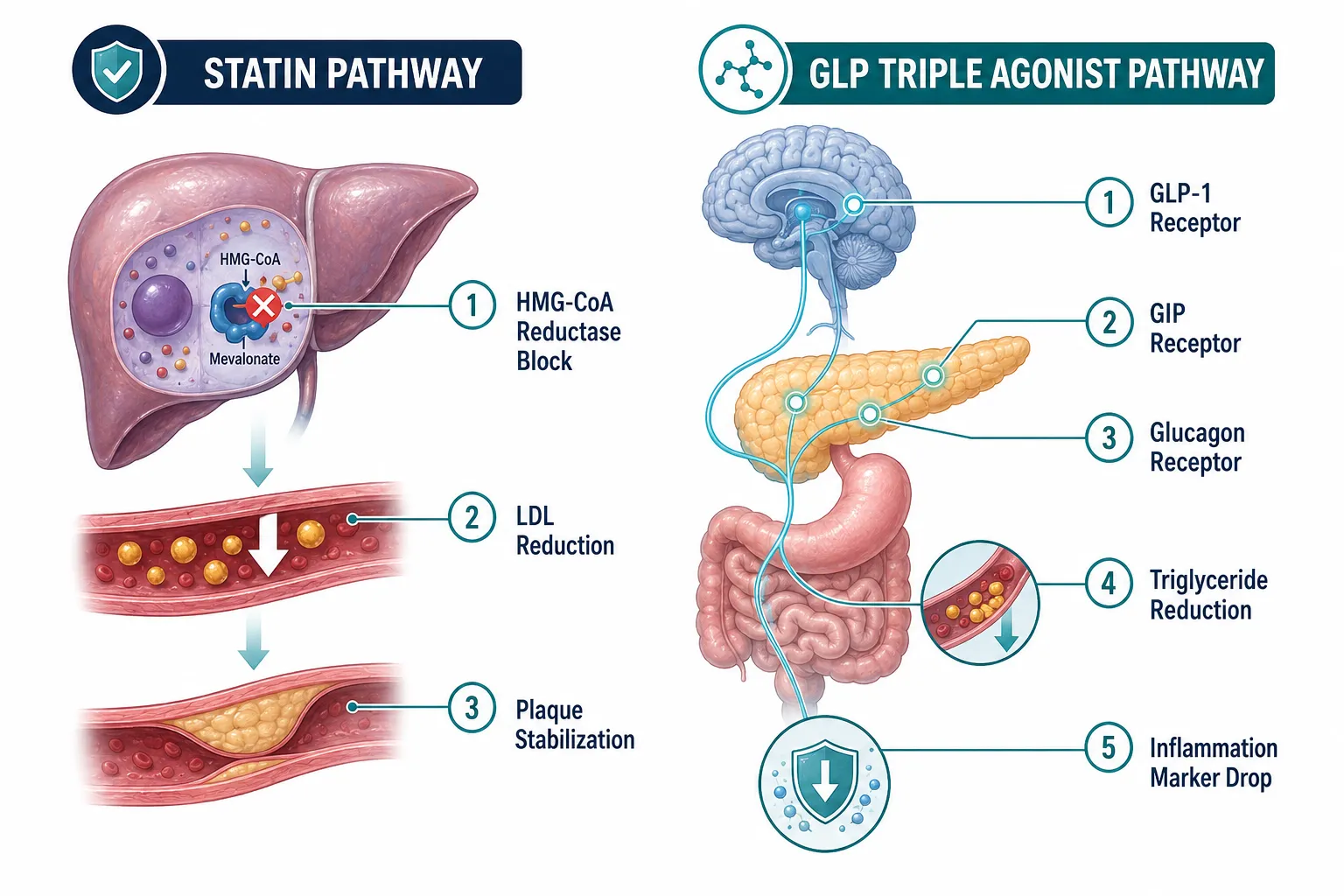
  • Atorvastatin targets a single enzymatic pathway (HMG-CoA reductase) to lower LDL; retatrutide acts across GLP-1, GIP, and glucagon receptors simultaneously.
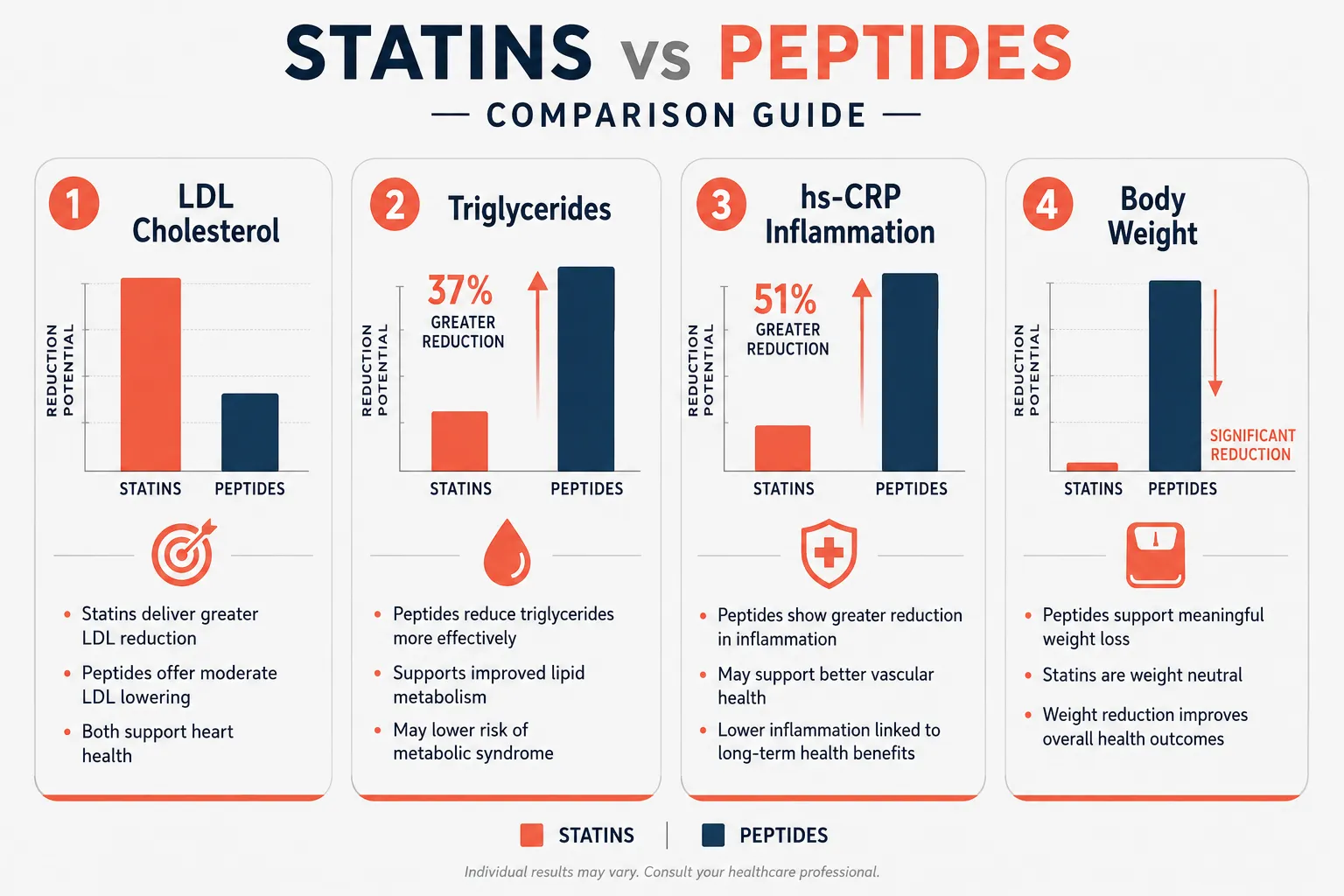
  • In phase 3 research models, retatrutide produced a 37% drop in triglycerides, a 51% reduction in hs-CRP, and a 17% fall in non-HDL cholesterol over 80 weeks.
  • No published head-to-head trial directly compares retatrutide or GLP-2-T with atorvastatin in atherosclerotic outcome models as of 2026.
  • The large TRIUMPH-OUTCOMES cardiovascular outcomes trial is underway and will provide harder endpoint data over approximately 248 weeks.
  • Researchers studying synergistic metabolic effects are increasingly interested in whether peptide-statin combinations could outperform either agent alone.

How Atorvastatin Works: The Classic Statin Mechanism

Atorvastatin belongs to the statin class of drugs, which function by inhibiting HMG-CoA reductase, the rate-limiting enzyme in hepatic cholesterol synthesis. By blocking this enzyme, the liver upregulates LDL receptor expression, pulling more LDL particles from circulation. The result is a well-documented 35-55% reduction in LDL cholesterol, modest triglyceride lowering, and modest HDL elevation.
How Atorvastatin Works: The Classic Statin Mechanism

Statins also carry pleiotropic effects, anti-inflammatory, antioxidant, and endothelial-stabilizing properties, that appear to extend cardiovascular protection beyond simple LDL reduction. However, the mechanism remains fundamentally narrow: one enzyme, one primary lipid target. This single-pathway approach is highly effective for LDL management but leaves other cardiometabolic risk factors, visceral adiposity, systemic inflammation, hyperglycemia, elevated triglycerides, largely unaddressed.

"Statins changed cardiology. But they were never designed to manage obesity, insulin resistance, or the full inflammatory burden that drives modern cardiovascular risk."

Retatrutide and GLP-2-T: Multi-Receptor Peptide Mechanisms in Research Models

Retatrutide is a triple agonist that simultaneously activates GLP-1 (glucagon-like peptide-1), GIP (glucose-dependent insulinotropic polypeptide), and glucagon receptors. This multi-receptor engagement produces a cascade of cardiometabolic effects that no single classic drug replicates. Researchers exploring systemic peptide research have noted that this breadth of action is what separates the newer peptide class from statins mechanistically.

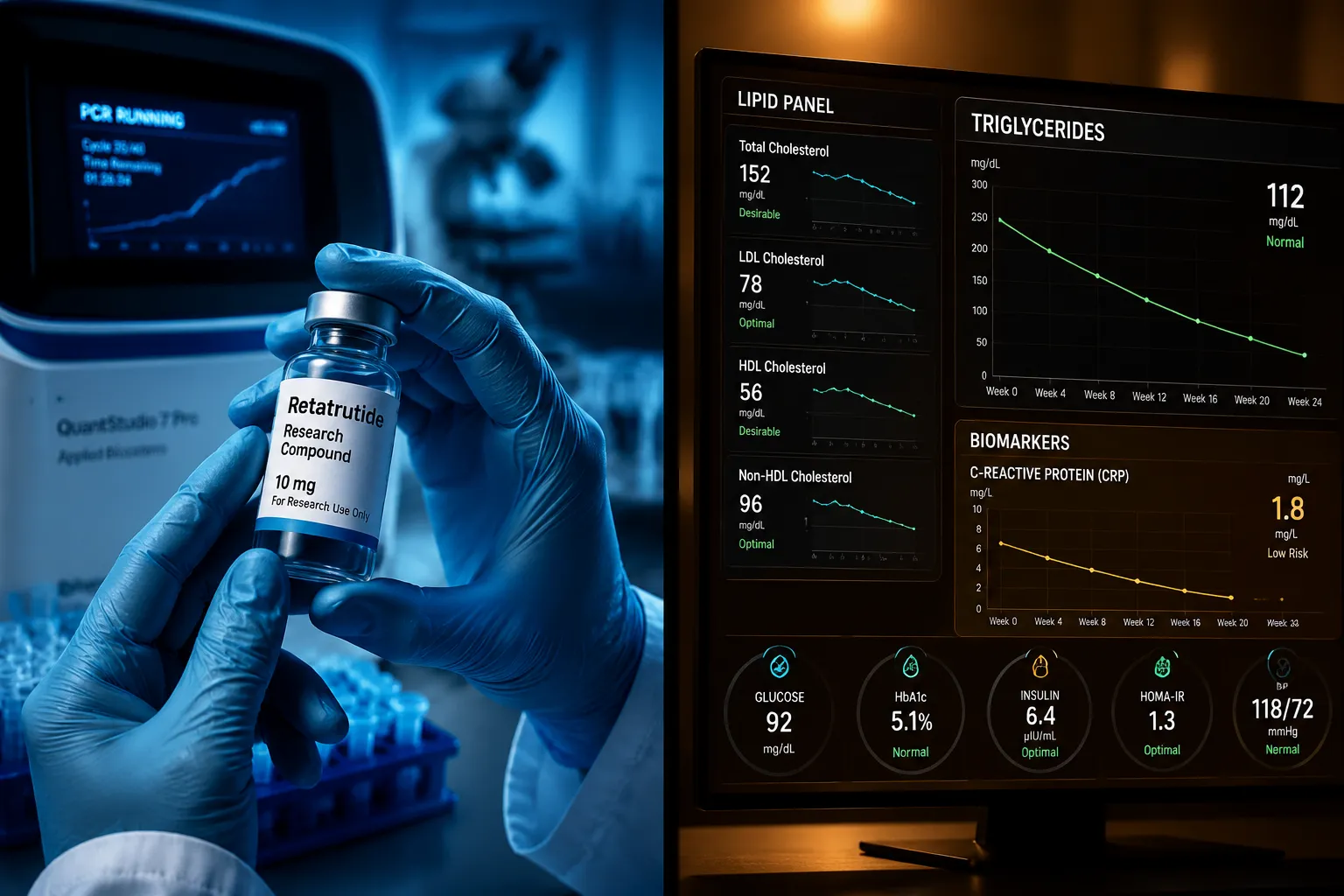
In phase 3 TRIUMPH-3 obesity research data reported in mid-2026, weekly retatrutide 12 mg over 80 weeks produced:

Cardiometabolic Marker Change Observed
Triglycerides -37%
Non-HDL cholesterol -17%
Systolic blood pressure -9.3 mmHg
Waist circumference -19 cm
hs-CRP (inflammation) -51%

A 2025 review of triple-agonist therapies noted LDL reductions of approximately 12-22% and total cholesterol reductions of 15-18%, alongside an estimated 82% reduction in hepatic steatosis. These lipid improvements exceeded those seen with dulaglutide 1.5 mg in certain comparisons.

GLP-2-T is a less-characterized agent in cardiometabolic literature. Current published reviews and trial registries through September 2026 do not describe a well-validated "GLP-2-T" compound with dedicated cardiovascular outcome data. Researchers working with therapeutic peptides should note this distinction: retatrutide has a robust and growing evidence base, while GLP-2-T remains at an earlier characterization stage in published cardiometabolic models.
Retatrutide and GLP-2-T: Multi-Receptor Peptide Mechanisms in Research Models

Peptides vs Classic Heart Drugs: Direct Comparison in Cardiometabolic Research Models

When examining peptides vs classic heart drugs, specifically how GLP-3 retatrutide and GLP-2-T compare with atorvastatin in cardiometabolic research models, one critical fact stands out: no published head-to-head clinical or preclinical trial directly compares retatrutide with atorvastatin on atherosclerotic or cardiovascular outcome endpoints as of 2026.

What the evidence does allow is a mechanistic and biomarker-level comparison:

  • LDL reduction: Atorvastatin leads clearly, with 35-55% reductions vs retatrutide's 12-22%. For LDL-specific endpoints, statins remain the benchmark.
  • Triglycerides: Retatrutide's 35-40% reduction rivals or exceeds what statins typically achieve (15-30% in most models).
  • Systemic inflammation (hs-CRP): Retatrutide's 51% hs-CRP reduction is striking. Statins produce modest hs-CRP reductions, typically 15-25%.
  • Body weight and adiposity: Retatrutide produces substantial weight loss; statins have no meaningful effect on body weight.
  • Hepatic steatosis: Retatrutide's estimated 82% reduction in hepatic fat has no statin equivalent.

Those interested in semaglutide vs retatrutide comparisons will find that retatrutide's multi-receptor profile produces broader cardiometabolic shifts than earlier GLP-1 mono-agonists as well.

The large TRIUMPH-OUTCOMES trial (NCT06383390) is currently underway, designed to assess time to first major cardiovascular composite endpoint, including nonfatal myocardial infarction, nonfatal stroke, cardiovascular death, and heart-failure hospitalization, over approximately 248 weeks. Commentaries on TRIUMPH-3 data acknowledge that while cardiovascular risk markers trend favorably, the trial was not statistically powered for hard outcome endpoints, and observed event counts were lower than anticipated.

Safety considerations also differ. Statins carry well-known risks of myopathy and hepatotoxicity at higher doses. Retatrutide, like other incretin-based agents, can elevate heart rate, and recent work has examined inotropic effects in isolated human atrial tissue, finding increased contractile force without a clear proarrhythmic signal at this stage. Researchers working on stress pathway research and cardiac tissue models will find this an active area of investigation.
Peptides vs Classic Heart Drugs: Direct Comparison in Cardiometabolic Research Models

Those designing research protocols involving metabolic peptides may also find value in reviewing tesa research as a parallel example of a peptide with documented visceral fat and lipid effects in clinical models.

Conclusion

The comparison of peptides vs classic heart drugs, examining how GLP-3 retatrutide and GLP-2-T compare with atorvastatin in cardiometabolic research models, reveals a clear pattern: these are complementary rather than competing mechanisms. Atorvastatin remains superior for LDL reduction through a proven, targeted enzymatic block. Retatrutide, by contrast, addresses the broader cardiometabolic risk cluster, triglycerides, inflammation, visceral fat, hepatic steatosis, and blood pressure, through simultaneous multi-receptor engagement.

Actionable next steps for researchers in 2026:

  1. Monitor TRIUMPH-OUTCOMES trial results as they emerge over the next several years for hard cardiovascular endpoint data on retatrutide.
  2. Design combination model studies that pair statin-class LDL lowering with peptide-mediated inflammatory and adiposity endpoints to assess additive or synergistic effects.
  3. Treat GLP-2-T as a hypothesis-stage comparator until dedicated cardiometabolic outcome data appears in peer-reviewed literature.
  4. Ensure any peptide compounds used in research meet rigorous purity standards, resources on third party peptide testing provide useful guidance on verification protocols.
  5. Explore single peptide vs stack research designs to understand whether multi-agonist peptides offer advantages over sequential or combined classic drug regimens.

The next chapter in cardiometabolic research will likely not be about choosing between peptides and classic drugs, it will be about understanding precisely how each fits within an integrated, multi-target approach to cardiovascular risk reduction.

https://www.puretestedpeptides.com/wp-content/uploads/2026/09/peptides-vs-classic-heart-drugs-how-glp-3-retatrutide-and-glp-2-t-compare-with-a.webp 1024 1536 https://www.puretestedpeptides.com/wp-content/uploads/2026/01/buy-peptides-online.jpg 2026-09-03 13:05:252026-09-03 13:05:25Peptides vs Classic Heart Drugs: How GLP-3 Retatrutide and GLP-2-T Compare With Atorvastatin in Cardiometabolic Research Models
×

Helpful Links

  • My account
  • Cart
  • Checkout
  • Refund and Returns Policy
  • Privacy Policy
  • SMS Privacy Policy
  • Login
  • My Account
  • Logout

USA Made Lab Tested Peptides

All products are sold for research, laboratory, or analytical purposes only, and are not for human consumption


Pure Tested Peptides is a chemical supplier. Pure Tested Peptides is not a compounding / chemical compounding facility as defined under 503A of the Federal Food, Drug, and Cosmetic act. Pure Tested Peptides is not an outsourcing facility as defined under 503B of the Federal Food, Drug, and Cosmetic act.

The statements made within this website have not been evaluated by the US Food and Drug Administration. The products we offer are not intended to diagnose, treat, cure or prevent any disease.

Human/Animal Consumption Prohibited. Laboratory/In-Vitro Experimental Use Only

Scroll to top Scroll to top Scroll to top