Call or Text 727-513-9780
  • Shopping Cart Shopping Cart
    0Shopping Cart
Pure Tested Peptides | America's most trusted Peptides for sale online
  • Peptides for sale
    • Oral Peptides for sale
      • Peptide Capsules for sale
      • BPC 157 Capsules 1000mcg
      • SLU-PP-332 Capsules | 1000 mcg
      • 5-Amino-1MQ 50mg Capsules
      • Tesofensine 500mcg
    • All Peptides for sale
    • Peptide Sprays
      • BPC 157 Nasal Spray Kit
      • BPC-157 TB500 Nasal Spray Kit
      • Semax Nasal Spray 10mg
      • Selank – Nasal Spray Kit – 10mg
      • Epithalon 50MG Nasal Spray Kit
      • Ipamorelin 10mg Nasal Spray
      • Klow Nasal Spray (BPC-157 + TB-500 + GHK-Cu + KPV) | 80mg
      • Hulk Nasal Spray Tesa / Ipa Blend 6/3 MG
      • Klow Nasal Spray
      • NAD + 500 mg Nasal Spray
      • PT-141 Nasal Spray Kit
    • GHRH Peptides
      • Ipa Peptides
      • CJC-1295 Peptides
        • CJC-1295 with DAC 5 mg
        • CJC-1295 without DAC 5 mg
        • CJC-1295 Ipa 10mg
      • Tesa Peptides
        • Tesa Peptide
        • Tesa 20 mg
    • GHK-Cu Peptides
      • All GHK-Cu Peptides
      • GHK-Cu 100mg
      • KLOW Peptide Blend – Buy KLOW blend online
    • BPC Peptides
      • All BPC Peptides
      • BPC-157
      • BPC-157 TB-500
      • BPC 157 capsules 1000mcg
    • SLU-PP-332 Peptides
      • All SLU-PP-332 Peptides
      • SLU-PP-332 5mg
    • GLP3 Peptides
      • GLP3-R
      • GLP3-R CAG 10mg
      • GLP3-R 20mg
    • PT-141 Peptides
      • PT-141 Peptides for sale
      • PT-141 10mg
      • PT-141 Nasal Spray
    • CAG Peptides
      • Lipo-C Peptide Blend
      • CAG 5mg
      • CAG 10mg
    • MOTS-C Peptides
      • MOTS-C Peptides for sale
      • MOTS-c peptide
      • MOTS-c 10mg *6 pack*
    • 5 Amino 1MQ Peptides
      • 5 Amino 1MQ Peptides for sale
      • 5-Amino-1MQ 50mg Capsules
      • 5-Amino-1MQ 5mg
    • Epithalon Peptides
      • Epithalon Peptides for sale
      • Epithalon 10mg
      • Epithalon 50mg
  • Shop
    • GLPs
      • 5-Amino-1MQ 50mg Capsules
      • 5-Amino-1MQ 5mg
      • GLP3-Reta
      • L-Carnitine 500mg/ml
      • Tesofensine 500mcg
      • SLU-PP-332 5mg
      • MOTS-c 10mg *6 pack*
    • Epithalon & BPC Peptides
      • Epithalon 10mg
      • Epithalon 50mg
      • BPC-157
      • BPC 157 capsules 1000mcg
      • BPC-157 TB-500
      • BPC-157 TB500 Nasal Spray Kit
      • BPC 157 Nasal Spray Kit
    • BPC TB-500 & NAD+ Peptides
      • NAD+ 500 mg
      • KLOW Peptide Blend – Buy KLOW blend online
      • GLOW Peptide Blend
      • TB 500 5mg
      • BPC 157 capsules 1000mcg – Supplement
      • BPC 157 Nasal Spray Kit
      • BPC-157
      • BPC-157 TB500 Nasal Spray Kit
      • BPC-157 TB-500
      • BPC 157 capsules 1000mcg
    • LL-37 Peptide
      • LL-37 10 mg
    • MOTS-C & Selank
      • MOTS-c peptide
      • Selank 10mg
    • GHK Peptides
      • GHK-Cu 100mg
      • GLOW Peptide Blend
      • KLOW Peptide Blend – Buy KLOW blend online
  • COAs
  • Wholesale
    • Wholesale Peptides for sale
  • PTP FAQ
  • Affiliates
    • Selank Peptide: Advanced Pharmacological Mechanisms Underlying Its Anxiolytic and Nootropic Effects in Research
      • 5-Amino-1MQ Peptide: Detailed Mechanisms of NNMT Inhibition and Its Impact on Cellular Metabolism Research
        • MOTS-C Peptide: Unraveling Its Role in Mitochondrial Dynamics and Energy Metabolism Research
          • Epithalon Peptide and Telomerase Regulation: Investigating Its Impact on Cellular Senescence and Lifespan Research Models
            • GLP2-T vs GLP2 Tirz Peptide: Understanding the Naming, Mechanistic Nuances, and Research Implications for Gut Health
      • Peptides and Polypeptides in Modern Pharmacology: What Research on Metoprolol, Prednisone, and Amlodipine Reveals
        • Polypeptide Peptides vs NSAIDs: What Naproxen and Diclofenac Teach Tissue-Repair Researchers About BPC‑157 and TB‑500
          • Peptides and Polypeptides in Endocrine Pharmacology: How GLP-1, GLP-2, and GLP-3 Retatrutide Differ From Classic Drugs Like Prednisone and Amlodipine
          • 5‑Amino‑1MQ Peptide and NNMT Inhibition: How It Compares With Statins Like Atorvastatin in Adipose and Lipid Metabolism Research
      • Enclomiphene, Estrogen Receptor Signaling, and Luteinizing Phase Biology: What Hormone Researchers Should Measure
        • Mesenchymal Stem Cells, BPC‑157, and GHK‑Cu: How Tissue Repair Peptides Compare With Classic NSAIDs Like Naproxen in Injury Models
          • Peptide Calculator Use Cases Beyond Growth Hormone: Working Through GLP‑3 Retatrutide, MOTS‑c, and BPC‑157 Research Dosing
        • Polypeptide Peptides in Endocrine and Metabolic Pharmacology: Lessons From Amlodipine, Prednisone, and Metoprolol
        • Peptides Calculator for Advanced Blends: Worked Examples for Tesamorelin, CJC‑1295, and Ipamorelin Stacks
          • Peptides and Polypeptides in Human Physiology: How Molecular Size Shapes Research Applications
            • Selank Peptide: Advanced Pharmacological Mechanisms Underlying Its Anxiolytic and Nootropic Effects in Research
          • 5-Amino-1MQ Peptide: Detailed Mechanisms of NNMT Inhibition and Its Impact on Cellular Metabolism Research
            • MOTS-C Peptide: Unraveling Its Role in Mitochondrial Dynamics and Energy Metabolism Research
              • Epithalon Peptide and Telomerase Regulation: Investigating Its Impact on Cellular Senescence and Lifespan Research Models
                • GLP2-T vs GLP2 Tirz Peptide: Understanding the Naming, Mechanistic Nuances, and Research Implications for Gut Health
                  • Peptides and Polypeptides in Endocrine Pharmacology: How GLP-1, GLP-2, and GLP-3 Retatrutide Differ From Classic Drugs Like Prednisone and Amlodipine
                    • Polypeptide Peptides vs NSAIDs: What Naproxen and Diclofenac Teach Tissue-Repair Researchers About BPC‑157 and TB‑500
                      • Peptides and Polypeptides in Modern Pharmacology: What Research on Metoprolol, Prednisone, and Amlodipine Reveals
                        • 5‑Amino‑1MQ Peptide and NNMT Inhibition: How It Compares With Statins Like Atorvastatin in Adipose and Lipid Metabolism Research
                        • Enclomiphene, Estrogen Receptor Signaling, and Luteinizing Phase Biology: What Hormone Researchers Should Measure
                        • Mesenchymal Stem Cells, BPC‑157, and GHK‑Cu: How Tissue Repair Peptides Compare With Classic NSAIDs Like Naproxen in Injury Models
                        • Peptide Calculator Use Cases Beyond Growth Hormone: Working Through GLP‑3 Retatrutide, MOTS‑c, and BPC‑157 Research Dosing
                        • Polypeptide Peptides in Endocrine and Metabolic Pharmacology: Lessons From Amlodipine, Prednisone, and Metoprolol
                        • Peptides Calculator for Advanced Blends: Worked Examples for Tesamorelin, CJC‑1295, and Ipamorelin Stacks
                        • Peptides and Polypeptides in Human Physiology: How Molecular Size Shapes Research Applications
                        • Selank Peptide: Advanced Pharmacological Mechanisms Underlying Its Anxiolytic and Nootropic Effects in Research
                        • MOTS-C Peptide: Unraveling Its Role in Mitochondrial Dynamics and Energy Metabolism Research
                        • Peptides and Polypeptides in Modern Pharmacology: What Research on Metoprolol, Prednisone, and Amlodipine Reveals
                        • Peptides and Polypeptides in Endocrine Pharmacology: How GLP-1, GLP-2, and GLP-3 Retatrutide Differ From Classic Drugs Like Prednisone and Amlodipine
                        • 5-Amino-1MQ Peptide: Detailed Mechanisms of NNMT Inhibition and Its Impact on Cellular Metabolism Research
                        • Mesenchymal Stem Cells, BPC‑157, and GHK‑Cu: How Tissue Repair Peptides Compare With Classic NSAIDs Like Naproxen in Injury Models
                        • Peptide Calculator Use Cases Beyond Growth Hormone: Working Through GLP‑3 Retatrutide, MOTS‑c, and BPC‑157 Research Dosing
                        • GLP2-T vs GLP2 Tirz Peptide: Understanding the Naming, Mechanistic Nuances, and Research Implications for Gut Health
                        • Polypeptide Peptides in Endocrine and Metabolic Pharmacology: Lessons From Amlodipine, Prednisone, and Metoprolol
                        • Polypeptide Peptides vs NSAIDs: What Naproxen and Diclofenac Teach Tissue-Repair Researchers About BPC‑157 and TB‑500
                        • Peptides and Polypeptides in Human Physiology: How Molecular Size Shapes Research Applications
                        • Peptides Calculator for Advanced Blends: Worked Examples for Tesamorelin, CJC‑1295, and Ipamorelin Stacks
                        • 5‑Amino‑1MQ Peptide and NNMT Inhibition: How It Compares With Statins Like Atorvastatin in Adipose and Lipid Metabolism Research
                        • Enclomiphene, Estrogen Receptor Signaling, and Luteinizing Phase Biology: What Hormone Researchers Should Measure
                        • Epithalon Peptide and Telomerase Regulation: Investigating Its Impact on Cellular Senescence and Lifespan Research Models
                        • Best research protocol Klow blend
                        • best time to take BPC-157
                        • best time to take DSIP (Delta Sleep Inducing Peptide)
                        • best time to take CJC-1295
                        • best time to take AOD-9604
                        • best time to take Follistatin 344
                        • best time to take Ipamorelin
                        • best time to take MK-677 (Ibutamoren)
                        • best time to take Ligandrol (LGD-4033) — research compound
                        • best time to take Ostarine (MK-2866) — research compound
                        • best time to take GHK-CU
                        • best time to take TB-500
                        • best time to take MOTS-c
                        • best time to take Semax
                        • best time to take RAD-140 (Testolone) — research compound
                        • best time to take Thymosin Alpha-1
                        • best time to take PEG-MGF
                        • Biolife Plasma, Octapharma Plasma, and Research Peptides: How Plasma Donation Labs Differ From Peptide Suppliers
                        • best time to take YK-11 — research compound
                        • best time to take PT-141 (Bremelanotide)
                        • Best research protocol Klow blend
                        • 5-Amino-1MQ and MOTS-C Synergy: Metabolic Signaling, Mitochondria, and Research Design
                        • BPC-157 and TB-500: Investigating Their Combined Effects on Angiogenesis and Cellular Migration in Tissue Repair Models
                        • BPC-157 Peptide: Gut Barrier Function, Inflammation, and Tissue-Recovery Research
                        • 5‑Amino‑1MQ and MOTS‑c Synergy in Metabolic Research: Designing NNMT and Mitochondrial Biogenesis Stacks
                        • CJC-1295 with DAC vs. Without DAC: Half-Life, Release Kinetics, and Research Implications
                        • CJC‑1295 with DAC vs. Without DAC: Expanding on Half‑Life Differences Using Tesamorelin and Ipamorelin Blend Case Studies
                        • Collagen Biology and Copper‑Binding Peptides: How GHK‑Cu, Glow Blend, and Klow Blend Interact with Skin and Connective Tissue
                        • Collagen Biology and Regenerative Peptides: How GHK‑Cu, Glow Blend, and Klow Blend Affect Extracellular Matrix Research
                    • DNA, Telomeres, and Longevity Peptides: Positioning Epithalon and MOTS‑c in Genetic Aging Research
                      • Enclomiphene Citrate: serm Mechanism, Testosterone Research, and Stack Compatibility
                        • Enclomiphene vs Enclomiphene Citrate: Formulation, Bioavailability, and Research Distinctions
                        • Epithalon Peptide Research: Telomerase Activation, Aging, and Pineal Gland Function
                        • Estrogen Receptor Signaling and Enclomiphene: How Selective Modulators Compare with Classic Polypeptide Hormones
                        • GHK-Cu Peptide: Advanced Mechanisms in Extracellular Matrix Remodeling and Wound Healing Research
                        • GHK-Cu Peptide: Collagen Synthesis, Wound Repair, and Skin-Barrier Research Models
                        • GLP-1 vs GLP-3 vs GLP-2: Peptide Classification and Research Applications
                        • GLP-2 Peptide Research Guide: Gut Barrier Function, Nutrient Absorption, and Intestinal Recovery Models
                        • GLP-3 Retatrutide vs. GLP-1 Drugs: What Triple-Agonist Biology Changes in Research Models
                        • Ipamorelin and Tesamorelin Combination: Synergistic GH Secretagogue Research and Dosing Protocols
                        • GLP2 Tirz Peptide: What It Is, Why the Name Exists, and How Researchers Should Interpret It
                        • Klow Blend Peptide Nasal Spray: What the Formulation Is Trying to Do in Cognitive Research
                        • Mitochondria, NNMT Inhibition, and Peptide Modulators: Where MOTS‑c and 5‑Amino‑1MQ Fit in Cellular Energy Research
                        • MOTS-c Peptide: Mitochondrial Function, Energy Metabolism, and What Researchers Measure
                        • MOTS-c vs. 5-Amino-1MQ: Which Metabolic Research Questions Each Compound Actually Answers
                        • Nasal Spray Peptides: Bioavailability, Administration, and Semax/Selank Research Applications
                        • PT-141 Peptide Research: Mechanism of Action and Melanocortin Receptor Signaling
                        • Retatrutide for Research: Mechanism, Structure, and GLP-1/GLP-3 Dual Action
                        • Retatrutide for Obesity and Type 2 Diabetes: What the Latest Trial Data Suggest
                        • Tesofensine Peptide Research: Mechanism, Appetite Suppression, and Neuropeptide Y Pathways
  • Contact
    • Contact Customer Service
    • Text Customer Support
  • About US
  • Shop all peptides
  • Affiliate Program
    • Affiliate Signup
  • Login / Register Login / Register Page Link Login / Register Page Link
  • Click to open the search input field Click to open the search input field Search
  • Menu Menu

Tag Archive for: hypothalamic-pituitary-gonadal axis

Peptides and Polypeptides in Endocrine Pharmacology: How Enclomiphene Interfaces With Estrogen Receptor Biology

Peptides and Polypeptides in Endocrine Pharmacology: How Enclomiphene Interfaces With Estrogen Receptor Biology

August 1, 2026/0 Comments/in Uncategorized/by

Fewer than 10% of clinicians who prescribe selective estrogen receptor modulators can accurately define the structural difference between a peptide hormone and a small-molecule serm, yet that distinction determines how each drug class reshapes the endocrine axis. Peptides and polypeptides in endocrine pharmacology represent one of the most mechanistically rich areas of modern pharmacology, and understanding where non-peptide agents like enclomiphene fit within that landscape is essential for anyone conducting or interpreting research in this field.

Key Takeaways

  • Peptide and polypeptide hormones act on cell-surface receptors through second-messenger cascades, while enclomiphene binds directly inside the nucleus at estrogen receptors.
  • Enclomiphene works as an estrogen receptor antagonist at the hypothalamus, disrupting negative feedback and increasing endogenous LH and FSH secretion.
  • The hypothalamic-pituitary-gonadal (HPG) axis is the shared regulatory highway for both peptide-based and small-molecule endocrine modulators.
  • Purity and characterization of research compounds, whether peptide or small molecule, directly affect the reliability of mechanistic data.
  • Combining knowledge of peptide receptor biology with serm pharmacology produces a more complete picture of hormonal signaling networks.

The Structural Divide: Peptide Hormones Versus Small-Molecule Modulators

To appreciate how enclomiphene interfaces with estrogen receptor biology, it helps to first anchor the broader category of peptides and polypeptides in endocrine pharmacology.

Peptide hormones are chains of amino acids. Short chains of 2-50 residues are typically called peptides; longer chains become polypeptides and, eventually, proteins. Examples include gonadotropin-releasing hormone (GnRH), luteinizing hormone (LH), follicle-stimulating hormone (FSH), and growth hormone-releasing hormone (GHRH). These molecules are too large and too hydrophilic to cross the cell membrane, so they bind to surface receptors and trigger intracellular signaling cascades, most commonly through cyclic AMP or phospholipase C pathways.

Research into peptide modulators spans a wide range of targets. For instance, BPC-157 and TB-500 peptide research explores tissue-signaling mechanisms that share conceptual overlap with endocrine feedback loops. Similarly, GLP-1 peptide sourcing and research illustrates how incretin-class peptides modulate metabolic signaling through surface-receptor mechanisms, a useful structural contrast to nuclear receptor pharmacology.

Small-molecule agents like enclomiphene are chemically synthesized, low-molecular-weight compounds. They are lipophilic enough to diffuse across cell membranes and interact directly with intracellular receptors, in this case, the estrogen receptor (ER), a nuclear receptor superfamily member.

"The key pharmacological divide is not potency, it is receptor location. Peptide hormones knock on the cell's front door; small-molecule serms walk straight into the nucleus."
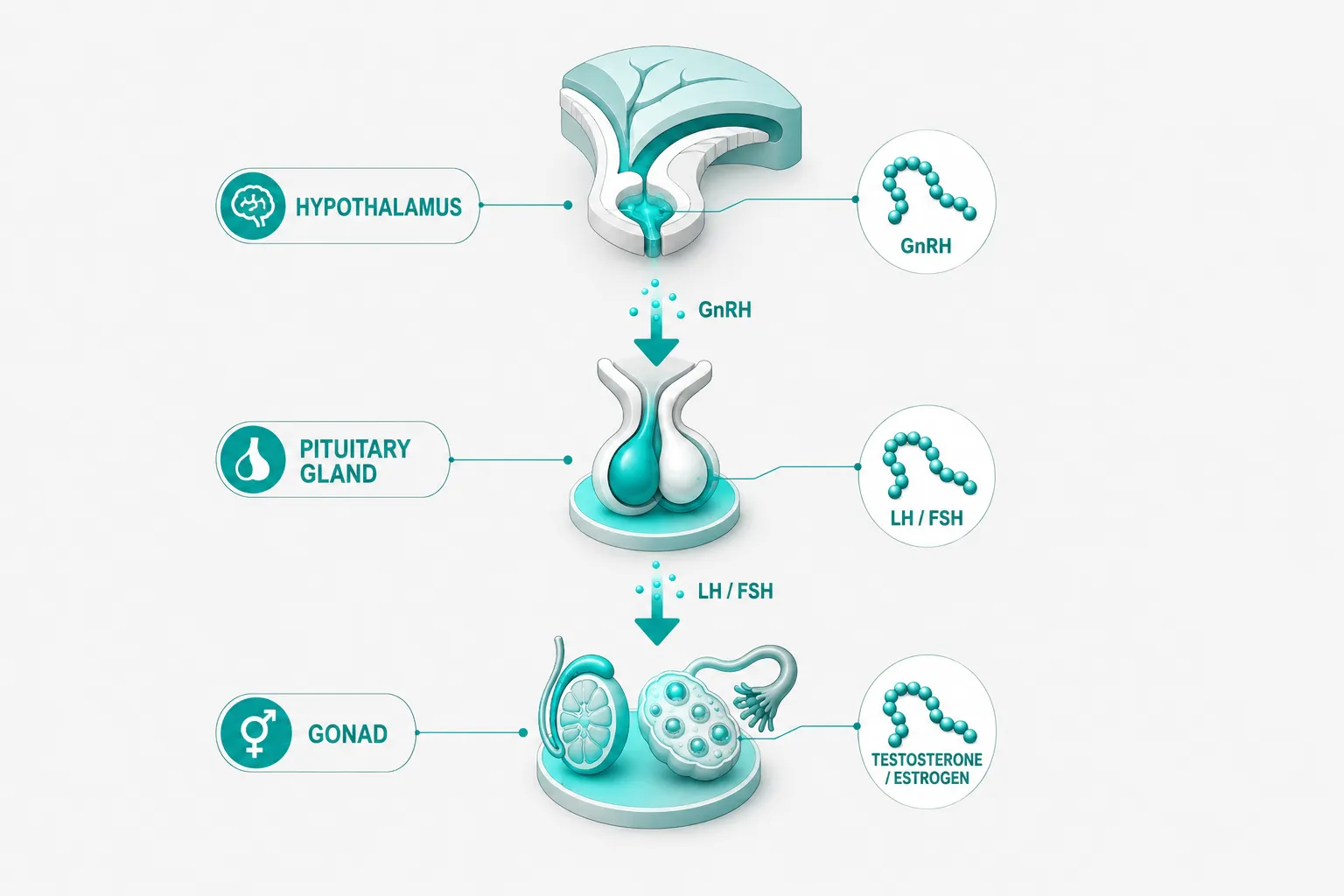
The Structural Divide: Peptide Hormones Versus Small-Molecule Modulators

How Enclomiphene Interfaces With Estrogen Receptor Biology Within the HPG Axis

The hypothalamic-pituitary-gonadal (HPG) axis is the shared regulatory highway where both peptide hormones and small-molecule modulators exert their effects.

Under normal physiology, circulating estradiol binds to estrogen receptors in hypothalamic neurons and pituitary gonadotrophs. This binding suppresses GnRH pulse frequency and reduces LH and FSH secretion, a classic negative-feedback loop mediated by a steroid hormone acting on nuclear receptors.

Enclomiphene, the trans-isomer of clomiphene citrate, competitively occupies estrogen receptors at these same hypothalamic and pituitary sites. Because it acts as a selective estrogen receptor antagonist in these tissues, it blocks estradiol's inhibitory signal. The hypothalamus interprets this blockade as low circulating estrogen, responds by increasing GnRH pulse amplitude, and the pituitary responds with elevated LH and FSH output.

The downstream result is stimulation of endogenous gonadal steroidogenesis, a fundamentally different mechanism from direct peptide hormone replacement. Compare this to tesa, a synthetic GHRH analog that binds surface receptors on pituitary somatotrophs to stimulate growth hormone release. Both agents ultimately raise a downstream hormone, but through entirely different receptor classes and cellular compartments.

Tissue-Selective Receptor Modulation

Enclomiphene's selectivity is tissue-dependent. In the hypothalamus and pituitary, it behaves as an antagonist. In other tissues, such as bone, estrogenic agonist activity may be partially preserved. This tissue selectivity is what defines the broader serm class and distinguishes these agents from pure estrogen blockers.

Feature Peptide Hormones Enclomiphene (serm)
Receptor location Cell surface Nuclear (intracellular)
Mechanism Second-messenger cascade Direct DNA transcription modulation
Tissue selectivity Determined by receptor subtype Determined by co-activator expression
Route of action Extracellular binding Intracellular ligand-binding domain

Peptides and Polypeptides in Endocrine Pharmacology: Research Sourcing and Compound Integrity

Peptides and Polypeptides in Endocrine Pharmacology: Research Sourcing and Compound Integrity
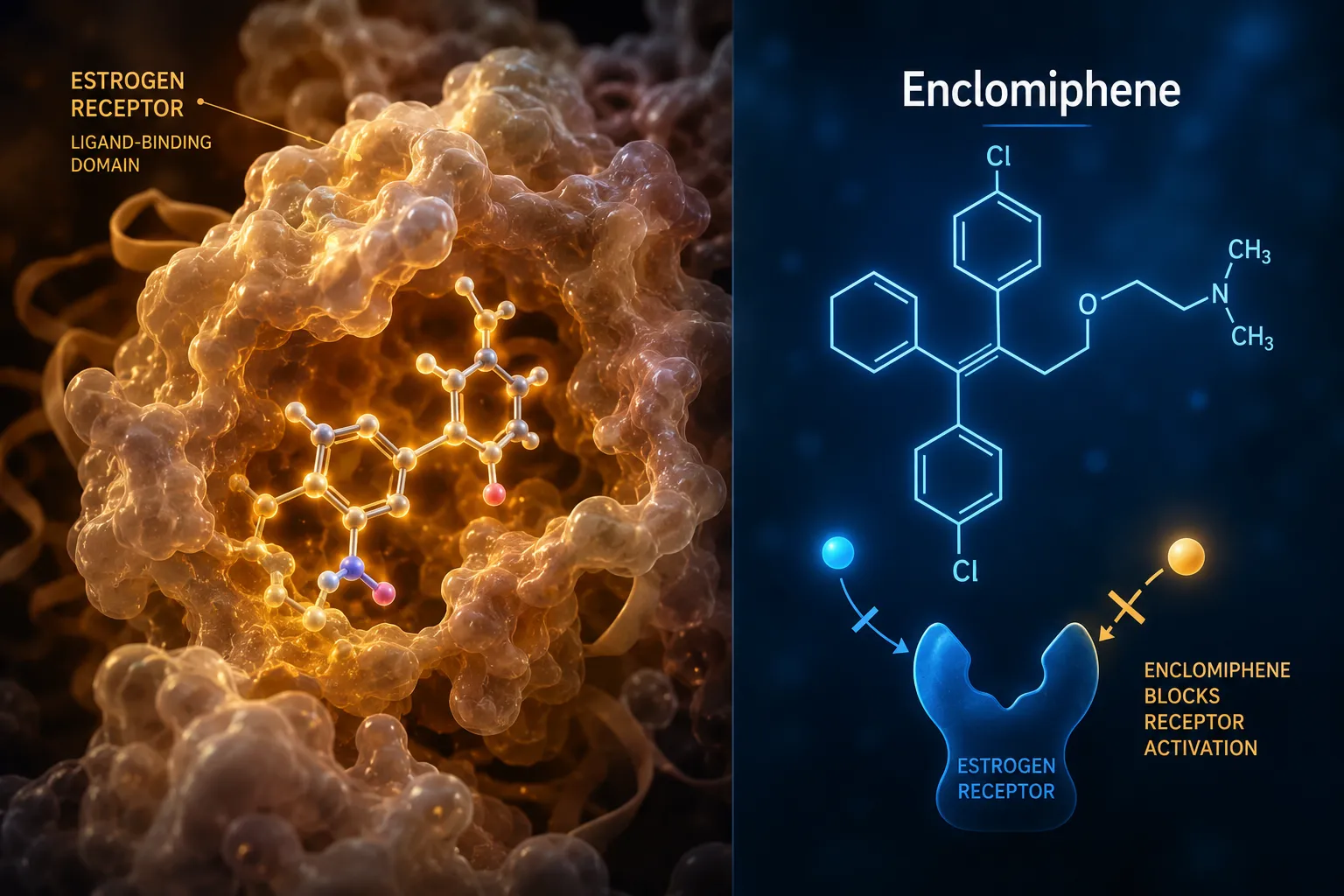
Peptides and Polypeptides in Endocrine Pharmacology: Research Sourcing and Compound Integrity

For researchers working across both peptide and small-molecule endocrine pharmacology, compound purity is a non-negotiable variable. Mechanistic studies that use impure or mischaracterized compounds produce data that cannot be replicated or translated.

This principle applies equally to peptide-based endocrine research tools. The GHK-Cu copper peptide research and sourcing guide addresses quality benchmarks relevant to any peptide used in signaling research. Likewise, the BPC-157 core documentation and first research guide outlines documentation standards that set a useful precedent for characterizing any endocrine research compound.

When sourcing peptides for studies that sit adjacent to serm pharmacology research, for example, examining GnRH analog interactions or LH pulse dynamics, researchers benefit from working with lab-tested peptides that carry third-party certificates of analysis. The same rigor should be applied to any small-molecule comparator used in parallel assays.

Three sourcing standards that apply across compound classes:

  1. Certificate of Analysis (CoA), confirms identity and purity by HPLC and mass spectrometry
  2. Sterility testing, essential for any in vivo research application
  3. Stability data, particularly relevant for peptides, which degrade faster than most small molecules under improper storage conditions

For researchers exploring the growth hormone-releasing axis alongside HPG axis modulators, resources on GHRP-2 versus sermorelin provide useful mechanistic context on how peptide secretagogues differ from receptor-level modulators like enclomiphene.

Conclusion

Peptides and polypeptides in endocrine pharmacology and small-molecule agents like enclomiphene occupy different receptor compartments, but they converge on the same hormonal axes. Enclomiphene's antagonism at hypothalamic and pituitary estrogen receptors reshapes the HPG axis through nuclear receptor biology, a mechanism that is structurally and functionally distinct from the surface-receptor signaling used by GnRH, LH, FSH, and synthetic peptide analogs.

Actionable next steps for researchers:

  • Map the receptor class (surface vs. nuclear) of every agent used in an endocrine study before designing assays.
  • Source all peptide and small-molecule research compounds with documented CoA, sterility, and stability data.
  • When studying HPG axis dynamics, consider how serm-mediated changes in gonadotropin output interact with any co-administered peptide modulators.
  • Review mechanistic literature on tissue-selective ER modulation to contextualize enclomiphene's differential effects across target tissues.

Understanding the structural and mechanistic divide between peptide hormones and nuclear receptor modulators is not academic trivia, it is the foundation of reproducible, translatable endocrine pharmacology research.

https://www.puretestedpeptides.com/wp-content/uploads/2026/08/peptides-and-polypeptides-in-endocrine-pharmacology-how-enclomiphene-interfaces.webp 1024 1536 https://www.puretestedpeptides.com/wp-content/uploads/2026/01/buy-peptides-online.jpg 2026-08-01 13:04:512026-08-01 13:04:51Peptides and Polypeptides in Endocrine Pharmacology: How Enclomiphene Interfaces With Estrogen Receptor Biology

Tag Archive for: hypothalamic-pituitary-gonadal axis

Enclomiphene in Hormone Research: LH, FSH, and Estrogen Receptor Signaling Explained

June 24, 2026/0 Comments/by Pure Tested

Cover Image

Fewer than 5% of men with secondary hypogonadism are offered a treatment that simultaneously restores testosterone and preserves fertility — yet that is precisely the receptor-level mechanism that makes enclomiphene a compelling tool in endocrine research. Understanding enclomiphene in hormone research: LH, FSH, and estrogen receptor signaling explained at the pathway level is essential for any researcher working with the hypothalamic-pituitary-gonadal (HPG) axis.

Key Takeaways

  • Enclomiphene blocks estrogen receptors in the hypothalamus, disrupting negative feedback and driving upstream gonadotropin release.
  • The resulting surge in LH and FSH stimulates endogenous testosterone production without suppressing spermatogenesis.
  • Unlike traditional testosterone replacement therapy (TRT), enclomiphene preserves the integrity of the HPG axis.
  • Research comparisons with clomiphene show similar hormonal responses, but enclomiphene avoids the estrogenic effects of its isomer zuclomiphene.
  • Standard research dosing ranges from 12.5 to 25 mg per day, with observable hormonal changes typically appearing within 2 to 4 weeks.

The Receptor-Level Pathway: How Enclomiphene Signals the HPG Axis

HPG axis diagram showing GnRH, LH, FSH hormone signaling

Enclomiphene is the trans-isomer of clomiphene citrate, a selective estrogen receptor modulator (serm). Its primary research value lies in its targeted antagonism at hypothalamic estrogen receptors.

Here is how the pathway works, step by step:

Step Location Event
1 Hypothalamus Enclomiphene binds estrogen receptors, blocking negative feedback
2 Hypothalamus GnRH secretion increases in response
3 Anterior pituitary Elevated GnRH stimulates LH and FSH release
4 Testes LH drives Leydig cells to produce testosterone; FSH supports Sertoli cells and spermatogenesis

Under normal physiology, circulating estradiol signals the hypothalamus to reduce GnRH output — a classic negative feedback loop. Enclomiphene occupies those estrogen receptors without activating them, effectively silencing the "slow down" signal. The hypothalamus interprets this as an estrogen-deficient state and increases GnRH pulse frequency.

"The compound does not add testosterone from an external source — it instructs the body's own axis to produce more."

This distinction is critical for researchers studying fertility preservation. Unlike exogenous TRT, which suppresses LH and FSH and can halt spermatogenesis, enclomiphene amplifies the upstream signals that drive both testosterone synthesis and sperm production simultaneously.

Researchers exploring related peptide-based endocrine tools may also find value in reviewing GLP-1 peptide research concepts and sourcing notes for comparative hormonal pathway context.


Enclomiphene vs. Clomiphene: What the Signaling Data Shows

Enclomiphene and clomiphene vials with hormone comparison bar graph

A key question in enclomiphene in hormone research: LH, FSH, and estrogen receptor signaling studies is how the compound compares to its racemic parent, clomiphene citrate.

Clomiphene contains two isomers: enclomiphene (trans) and zuclomiphene (cis). Zuclomiphene carries estrogenic activity, meaning it can partially activate the same receptors it occupies. This creates a mixed signal that complicates hormonal interpretation in research settings.

Enclomiphene's advantages in research protocols:

  • Purely antiestrogenic at the hypothalamus — no partial agonist activity
  • Cleaner LH and FSH response curves
  • Reduced risk of estrogen-related confounders in study data

Research published in endocrinology literature confirms that enclomiphene and clomiphene produce statistically similar increases in testosterone, estradiol, FSH, and LH from baseline in men with hypogonadism. However, enclomiphene's cleaner receptor profile makes it a more precise tool for isolating HPG axis responses.

Metabolism occurs primarily in the liver. Biological half-life is approximately 5 to 7 days, though the active compound has a shorter plasma half-life of roughly 10 to 15 hours. Approximately 42% is excreted via feces and 8% through urine — relevant data for researchers designing washout periods.

For researchers also studying growth hormone secretagogues alongside serm-based protocols, the tesa peptide benefits overview provides useful comparative endocrine context.


Research Applications, Dosing Parameters, and Safety Profile

Molecular fertility research illustration with testosterone structure

Understanding enclomiphene in hormone research: LH, FSH, and estrogen receptor signaling explained requires attention to both dosing parameters and the compound's tolerability profile.

Standard research dosing parameters:

  • Dose range: 12.5 to 25 mg per day (oral)
  • Onset of hormonal response: 2 to 4 weeks
  • Half-life (plasma): approximately 10 to 15 hours
  • Primary route of elimination: hepatic metabolism, fecal excretion

Enclomiphene is generally well-tolerated in research subjects. Reported adverse observations include headaches, nausea, and occasional visual disturbances — consistent with the broader serm class profile.

Ongoing clinical investigations are examining enclomiphene's utility in obesity-related hypogonadism, where adipose tissue aromatization creates elevated estrogen levels that suppress the HPG axis. Early data from studies dating back to foundational 1983 research on gonadotropin secretion have shaped the current understanding of how enclomiphene and zuclomiphene diverge in their receptor-level behavior.

As of 2026, enclomiphene is not FDA-approved as a standalone agent in the United States but remains accessible through compounding pharmacies for research and clinical use.

Researchers sourcing verified compounds for parallel studies may also find relevant quality benchmarks in this reference standards and peptide benchmarking resource, as well as the PT-141 peptide research context and controls guide for receptor-targeted compound comparisons. For mitochondrial pathway research running alongside HPG axis studies, SS-31 peptide research considerations offer complementary cellular-level data.


Conclusion

Enclomiphene occupies a precise and well-defined position in endocrine research: it blocks hypothalamic estrogen receptors, removes negative feedback, and triggers a coordinated upstream release of GnRH, LH, and FSH. The result is endogenous testosterone production and preserved spermatogenesis — without the HPG axis suppression associated with exogenous TRT.

Actionable next steps for researchers:

  1. Map the full HPG axis response curve using standardized LH, FSH, and testosterone assays at 2-week intervals.
  2. Design washout periods based on the 5 to 7-day biological half-life to avoid carryover effects.
  3. Use enclomiphene's pure antiestrogenic profile to isolate receptor-level signaling data without zuclomiphene confounders.
  4. Cross-reference findings with growth hormone and metabolic peptide data for a complete endocrine picture.

For researchers building rigorous, reproducible protocols, sourcing verified compounds with documented purity is non-negotiable. Explore the full peptides for sale catalog and review available certificates of analysis to ensure traceability at every stage of the research process.

https://www.puretestedpeptides.com/wp-content/uploads/2026/01/buy-peptides-online.jpg 0 0 Pure Tested https://www.puretestedpeptides.com/wp-content/uploads/2026/01/buy-peptides-online.jpg Pure Tested2026-06-24 13:20:132026-07-20 15:02:18Enclomiphene in Hormone Research: LH, FSH, and Estrogen Receptor Signaling Explained
×

Helpful Links

  • My account
  • Cart
  • Checkout
  • Refund and Returns Policy
  • Privacy Policy
  • SMS Privacy Policy
  • Login
  • My Account
  • Logout

USA Made Lab Tested Peptides

All products are sold for research, laboratory, or analytical purposes only, and are not for human consumption


Pure Tested Peptides is a chemical supplier. Pure Tested Peptides is not a compounding / chemical compounding facility as defined under 503A of the Federal Food, Drug, and Cosmetic act. Pure Tested Peptides is not an outsourcing facility as defined under 503B of the Federal Food, Drug, and Cosmetic act.

The statements made within this website have not been evaluated by the US Food and Drug Administration. The products we offer are not intended to diagnose, treat, cure or prevent any disease.

Human/Animal Consumption Prohibited. Laboratory/In-Vitro Experimental Use Only

Scroll to top Scroll to top Scroll to top