Call or Text 727-513-9780
  • Shopping Cart Shopping Cart
    0Shopping Cart
Pure Tested Peptides | America's most trusted Peptides for sale online
  • Peptides for sale
    • Oral Peptides for sale
      • Peptide Capsules for sale
      • BPC 157 Capsules 1000mcg
      • SLU-PP-332 Capsules | 1000 mcg
      • 5-Amino-1MQ 50mg Capsules
      • Tesofensine 500mcg
    • All Peptides for sale
    • Peptide Sprays
      • BPC 157 Nasal Spray Kit
      • BPC-157 TB500 Nasal Spray Kit
      • Semax Nasal Spray 10mg
      • Selank – Nasal Spray Kit – 10mg
      • Epithalon 50MG Nasal Spray Kit
      • Ipamorelin 10mg Nasal Spray
      • Klow Nasal Spray (BPC-157 + TB-500 + GHK-Cu + KPV) | 80mg
      • Hulk Nasal Spray Tesa / Ipa Blend 6/3 MG
      • Klow Nasal Spray
      • NAD + 500 mg Nasal Spray
      • PT-141 Nasal Spray Kit
    • GHRH Peptides
      • Ipa Peptides
      • CJC-1295 Peptides
        • CJC-1295 with DAC 5 mg
        • CJC-1295 without DAC 5 mg
        • CJC-1295 Ipa 10mg
      • Tesa Peptides
        • Tesa Peptide
        • Tesa 20 mg
    • GHK-Cu Peptides
      • All GHK-Cu Peptides
      • GHK-Cu 100mg
      • KLOW Peptide Blend – Buy KLOW blend online
    • BPC Peptides
      • All BPC Peptides
      • BPC-157
      • BPC-157 TB-500
      • BPC 157 capsules 1000mcg
    • SLU-PP-332 Peptides
      • All SLU-PP-332 Peptides
      • SLU-PP-332 5mg
    • GLP3 Peptides
    • PT-141 Peptides
      • PT-141 Peptides for sale
      • PT-141 10mg
      • PT-141 Nasal Spray
    • CAG Peptides
      • Lipo-C Peptide Blend
      • CAG 5mg
      • CAG 10mg
    • MOTS-C Peptides
      • MOTS-C Peptides for sale
      • MOTS-c peptide
      • MOTS-c 10mg *6 pack*
    • 5 Amino 1MQ Peptides
      • 5 Amino 1MQ Peptides for sale
      • 5-Amino-1MQ 50mg Capsules
      • 5-Amino-1MQ 5mg
    • Epithalon Peptides
      • Epithalon Peptides for sale
      • Epithalon 10mg
      • Epithalon 50mg
  • Shop
    • GLPs
      • 5-Amino-1MQ 50mg Capsules
      • 5-Amino-1MQ 5mg
      • L-Carnitine 500mg/ml
      • Tesofensine 500mcg
      • SLU-PP-332 5mg
      • MOTS-c 10mg *6 pack*
    • Epithalon & BPC Peptides
      • Epithalon 10mg
      • Epithalon 50mg
      • BPC-157
      • BPC 157 capsules 1000mcg
      • BPC-157 TB-500
      • BPC-157 TB500 Nasal Spray Kit
      • BPC 157 Nasal Spray Kit
    • BPC TB-500 & NAD+ Peptides
      • NAD+ 500 mg
      • KLOW Peptide Blend – Buy KLOW blend online
      • GLOW Peptide Blend
      • TB 500 5mg
      • BPC 157 capsules 1000mcg – Supplement
      • BPC 157 Nasal Spray Kit
      • BPC-157
      • BPC-157 TB500 Nasal Spray Kit
      • BPC-157 TB-500
      • BPC 157 capsules 1000mcg
    • LL-37 Peptide
      • LL-37 10 mg
    • MOTS-C & Selank
      • MOTS-c peptide
      • Selank 10mg
    • GHK Peptides
      • GHK-Cu 100mg
      • GLOW Peptide Blend
      • KLOW Peptide Blend – Buy KLOW blend online
  • COAs
  • Wholesale
    • Wholesale Peptides for sale
  • PTP FAQ
  • Affiliates
    • Selank Peptide: Advanced Pharmacological Mechanisms Underlying Its Anxiolytic and Nootropic Effects in Research
      • 5-Amino-1MQ Peptide: Detailed Mechanisms of NNMT Inhibition and Its Impact on Cellular Metabolism Research
        • MOTS-C Peptide: Unraveling Its Role in Mitochondrial Dynamics and Energy Metabolism Research
          • Epithalon Peptide and Telomerase Regulation: Investigating Its Impact on Cellular Senescence and Lifespan Research Models
            • GLP2-T vs GLP2 Tirz Peptide: Understanding the Naming, Mechanistic Nuances, and Research Implications for Gut Health
      • Peptides and Polypeptides in Modern Pharmacology: What Research on Metoprolol, Prednisone, and Amlodipine Reveals
        • Polypeptide Peptides vs NSAIDs: What Naproxen and Diclofenac Teach Tissue-Repair Researchers About BPC‑157 and TB‑500
          • Peptides and Polypeptides in Endocrine Pharmacology: How GLP-1, GLP-2, and GLP-3 Retatrutide Differ From Classic Drugs Like Prednisone and Amlodipine
          • 5‑Amino‑1MQ Peptide and NNMT Inhibition: How It Compares With Statins Like Atorvastatin in Adipose and Lipid Metabolism Research
      • Enclomiphene, Estrogen Receptor Signaling, and Luteinizing Phase Biology: What Hormone Researchers Should Measure
        • Mesenchymal Stem Cells, BPC‑157, and GHK‑Cu: How Tissue Repair Peptides Compare With Classic NSAIDs Like Naproxen in Injury Models
          • Peptide Calculator Use Cases Beyond Growth Hormone: Working Through GLP‑3 Retatrutide, MOTS‑c, and BPC‑157 Research Dosing
        • Polypeptide Peptides in Endocrine and Metabolic Pharmacology: Lessons From Amlodipine, Prednisone, and Metoprolol
        • Peptides Calculator for Advanced Blends: Worked Examples for Tesamorelin, CJC‑1295, and Ipamorelin Stacks
          • Peptides and Polypeptides in Human Physiology: How Molecular Size Shapes Research Applications
            • Selank Peptide: Advanced Pharmacological Mechanisms Underlying Its Anxiolytic and Nootropic Effects in Research
          • 5-Amino-1MQ Peptide: Detailed Mechanisms of NNMT Inhibition and Its Impact on Cellular Metabolism Research
            • MOTS-C Peptide: Unraveling Its Role in Mitochondrial Dynamics and Energy Metabolism Research
              • Epithalon Peptide and Telomerase Regulation: Investigating Its Impact on Cellular Senescence and Lifespan Research Models
                • GLP2-T vs GLP2 Tirz Peptide: Understanding the Naming, Mechanistic Nuances, and Research Implications for Gut Health
                  • Peptides and Polypeptides in Endocrine Pharmacology: How GLP-1, GLP-2, and GLP-3 Retatrutide Differ From Classic Drugs Like Prednisone and Amlodipine
                    • Polypeptide Peptides vs NSAIDs: What Naproxen and Diclofenac Teach Tissue-Repair Researchers About BPC‑157 and TB‑500
                      • Peptides and Polypeptides in Modern Pharmacology: What Research on Metoprolol, Prednisone, and Amlodipine Reveals
                        • 5‑Amino‑1MQ Peptide and NNMT Inhibition: How It Compares With Statins Like Atorvastatin in Adipose and Lipid Metabolism Research
                        • Enclomiphene, Estrogen Receptor Signaling, and Luteinizing Phase Biology: What Hormone Researchers Should Measure
                        • Mesenchymal Stem Cells, BPC‑157, and GHK‑Cu: How Tissue Repair Peptides Compare With Classic NSAIDs Like Naproxen in Injury Models
                        • Peptide Calculator Use Cases Beyond Growth Hormone: Working Through GLP‑3 Retatrutide, MOTS‑c, and BPC‑157 Research Dosing
                        • Polypeptide Peptides in Endocrine and Metabolic Pharmacology: Lessons From Amlodipine, Prednisone, and Metoprolol
                        • Peptides Calculator for Advanced Blends: Worked Examples for Tesamorelin, CJC‑1295, and Ipamorelin Stacks
                        • Peptides and Polypeptides in Human Physiology: How Molecular Size Shapes Research Applications
                        • Selank Peptide: Advanced Pharmacological Mechanisms Underlying Its Anxiolytic and Nootropic Effects in Research
                        • MOTS-C Peptide: Unraveling Its Role in Mitochondrial Dynamics and Energy Metabolism Research
                        • Peptides and Polypeptides in Modern Pharmacology: What Research on Metoprolol, Prednisone, and Amlodipine Reveals
                        • Peptides and Polypeptides in Endocrine Pharmacology: How GLP-1, GLP-2, and GLP-3 Retatrutide Differ From Classic Drugs Like Prednisone and Amlodipine
                        • 5-Amino-1MQ Peptide: Detailed Mechanisms of NNMT Inhibition and Its Impact on Cellular Metabolism Research
                        • Mesenchymal Stem Cells, BPC‑157, and GHK‑Cu: How Tissue Repair Peptides Compare With Classic NSAIDs Like Naproxen in Injury Models
                        • Peptide Calculator Use Cases Beyond Growth Hormone: Working Through GLP‑3 Retatrutide, MOTS‑c, and BPC‑157 Research Dosing
                        • GLP2-T vs GLP2 Tirz Peptide: Understanding the Naming, Mechanistic Nuances, and Research Implications for Gut Health
                        • Polypeptide Peptides in Endocrine and Metabolic Pharmacology: Lessons From Amlodipine, Prednisone, and Metoprolol
                        • Polypeptide Peptides vs NSAIDs: What Naproxen and Diclofenac Teach Tissue-Repair Researchers About BPC‑157 and TB‑500
                        • Peptides and Polypeptides in Human Physiology: How Molecular Size Shapes Research Applications
                        • Peptides Calculator for Advanced Blends: Worked Examples for Tesamorelin, CJC‑1295, and Ipamorelin Stacks
                        • 5‑Amino‑1MQ Peptide and NNMT Inhibition: How It Compares With Statins Like Atorvastatin in Adipose and Lipid Metabolism Research
                        • Enclomiphene, Estrogen Receptor Signaling, and Luteinizing Phase Biology: What Hormone Researchers Should Measure
                        • Epithalon Peptide and Telomerase Regulation: Investigating Its Impact on Cellular Senescence and Lifespan Research Models
                        • Best research protocol Klow blend
                        • best time to take BPC-157
                        • best time to take DSIP (Delta Sleep Inducing Peptide)
                        • best time to take CJC-1295
                        • best time to take AOD-9604
                        • best time to take Follistatin 344
                        • best time to take Ipamorelin
                        • best time to take MK-677 (Ibutamoren)
                        • best time to take Ligandrol (LGD-4033) — research compound
                        • best time to take Ostarine (MK-2866) — research compound
                        • best time to take GHK-CU
                        • best time to take TB-500
                        • best time to take MOTS-c
                        • best time to take Semax
                        • best time to take RAD-140 (Testolone) — research compound
                        • best time to take Thymosin Alpha-1
                        • best time to take PEG-MGF
                        • Biolife Plasma, Octapharma Plasma, and Research Peptides: How Plasma Donation Labs Differ From Peptide Suppliers
                        • best time to take YK-11 — research compound
                        • best time to take PT-141 (Bremelanotide)
                        • Best research protocol Klow blend
                        • 5-Amino-1MQ and MOTS-C Synergy: Metabolic Signaling, Mitochondria, and Research Design
                        • BPC-157 and TB-500: Investigating Their Combined Effects on Angiogenesis and Cellular Migration in Tissue Repair Models
                        • BPC-157 Peptide: Gut Barrier Function, Inflammation, and Tissue-Recovery Research
                        • 5‑Amino‑1MQ and MOTS‑c Synergy in Metabolic Research: Designing NNMT and Mitochondrial Biogenesis Stacks
                        • CJC-1295 with DAC vs. Without DAC: Half-Life, Release Kinetics, and Research Implications
                        • CJC‑1295 with DAC vs. Without DAC: Expanding on Half‑Life Differences Using Tesamorelin and Ipamorelin Blend Case Studies
                        • Collagen Biology and Copper‑Binding Peptides: How GHK‑Cu, Glow Blend, and Klow Blend Interact with Skin and Connective Tissue
                        • Collagen Biology and Regenerative Peptides: How GHK‑Cu, Glow Blend, and Klow Blend Affect Extracellular Matrix Research
                    • DNA, Telomeres, and Longevity Peptides: Positioning Epithalon and MOTS‑c in Genetic Aging Research
                      • Enclomiphene Citrate: serm Mechanism, Testosterone Research, and Stack Compatibility
                        • Enclomiphene vs Enclomiphene Citrate: Formulation, Bioavailability, and Research Distinctions
                        • Epithalon Peptide Research: Telomerase Activation, Aging, and Pineal Gland Function
                        • Estrogen Receptor Signaling and Enclomiphene: How Selective Modulators Compare with Classic Polypeptide Hormones
                        • GHK-Cu Peptide: Advanced Mechanisms in Extracellular Matrix Remodeling and Wound Healing Research
                        • GHK-Cu Peptide: Collagen Synthesis, Wound Repair, and Skin-Barrier Research Models
                        • GLP-1 vs GLP-3 vs GLP-2: Peptide Classification and Research Applications
                        • GLP-2 Peptide Research Guide: Gut Barrier Function, Nutrient Absorption, and Intestinal Recovery Models
                        • GLP-3 Retatrutide vs. GLP-1 Drugs: What Triple-Agonist Biology Changes in Research Models
                        • Ipamorelin and Tesamorelin Combination: Synergistic GH Secretagogue Research and Dosing Protocols
                        • GLP2 Tirz Peptide: What It Is, Why the Name Exists, and How Researchers Should Interpret It
                        • Klow Blend Peptide Nasal Spray: What the Formulation Is Trying to Do in Cognitive Research
                        • Mitochondria, NNMT Inhibition, and Peptide Modulators: Where MOTS‑c and 5‑Amino‑1MQ Fit in Cellular Energy Research
                        • MOTS-c Peptide: Mitochondrial Function, Energy Metabolism, and What Researchers Measure
                        • MOTS-c vs. 5-Amino-1MQ: Which Metabolic Research Questions Each Compound Actually Answers
                        • Nasal Spray Peptides: Bioavailability, Administration, and Semax/Selank Research Applications
                        • PT-141 Peptide Research: Mechanism of Action and Melanocortin Receptor Signaling
                        • Retatrutide for Research: Mechanism, Structure, and GLP-1/GLP-3 Dual Action
                        • Retatrutide for Obesity and Type 2 Diabetes: What the Latest Trial Data Suggest
                        • Tesofensine Peptide Research: Mechanism, Appetite Suppression, and Neuropeptide Y Pathways
  • Contact
    • Contact Customer Service
    • Text Customer Support
  • About US
  • Shop all peptides
  • Affiliate Program
    • Affiliate Signup
  • Login / Register Login / Register Page Link Login / Register Page Link
  • Click to open the search input field Click to open the search input field Search
  • Menu Menu

Tag Archive for: igf-1 sampling

CJC-1295 With DAC vs Without DAC: How Sampling Windows Change GH-Pulse and IGF-1 Research

September 30, 2026/0 Comments/in Uncategorized/by

Cover Image

Choosing the wrong blood draw schedule can make a potent growth hormone secretagogue look completely inert, or turn a modest response into a misleading peak. That single design flaw has quietly distorted more than a few preclinical datasets involving CJC-1295 With DAC vs Without DAC: How Sampling Windows Change GH-Pulse and IGF-1 Research, and understanding why requires looking past basic mechanism summaries into the practical architecture of experimental design.

Key Takeaways

  • CJC-1295 with DAC produces a sustained, "flattened" GH profile; without DAC, GH pulses are sharp and brief, each demands a different sampling strategy.
  • Using a long sampling window for the no-DAC form will miss most GH spikes; using short windows for the DAC form will misread baseline elevation as a blunted response.
  • IGF-1 is an integrated marker of multi-day GH exposure, making it more reliable for DAC studies and less informative for short-acting analog studies.
  • Washout planning is critical: DAC's extended half-life requires days-long clearance periods, while no-DAC analogs clear within hours.
  • No randomized head-to-head trial with harmonized sampling windows has yet been published, leaving interpretation gaps that experimental design choices can either widen or close.

The Core Pharmacokinetic Difference That Drives Everything

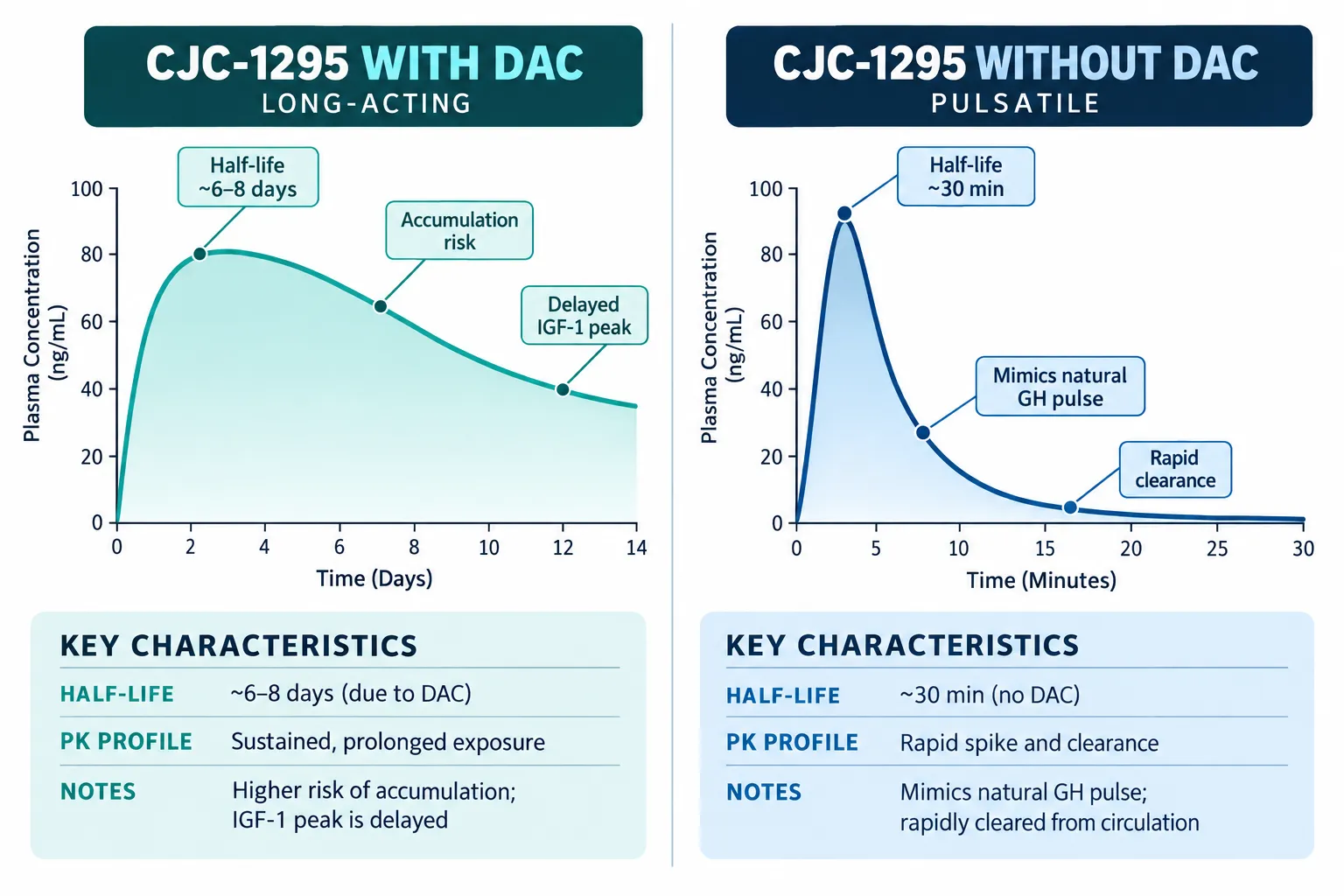
GH pulse profile comparison: DAC vs no-DAC waveforms

Before any sampling window discussion makes sense, the pharmacokinetic gap between the two forms must be clear. For a detailed breakdown of the underlying mechanisms, the CJC-1295 with and without DAC mechanism and pharmacokinetic comparison resource provides an excellent foundation.

CJC-1295 with DAC uses a Drug Affinity Complex that binds covalently to circulating albumin, extending the half-life to approximately 6 to 8 days. This creates a continuous GHRH-receptor drive. The result is not a series of discrete GH pulses but a sustained elevation of GH secretion that, when measured at any single time point, can appear modest or even flat.

CJC-1295 without DAC (also called Modified GRF 1-29 or Mod GRF 1-29) clears within 30 minutes. It triggers a sharp, high-amplitude GH spike that subsides quickly. Miss that window, and the data shows nothing.

Feature With DAC Without DAC
Half-life ~6-8 days ~30 minutes
GH profile Sustained, low-amplitude Sharp, high-amplitude pulses
IGF-1 response Gradual multi-day elevation Rapid but short-lived
Sampling risk Misread as "flat" Missed entirely
Washout needed 3-4 weeks 4-6 hours

How Sampling Windows Change GH-Pulse and IGF-1 Research Outcomes

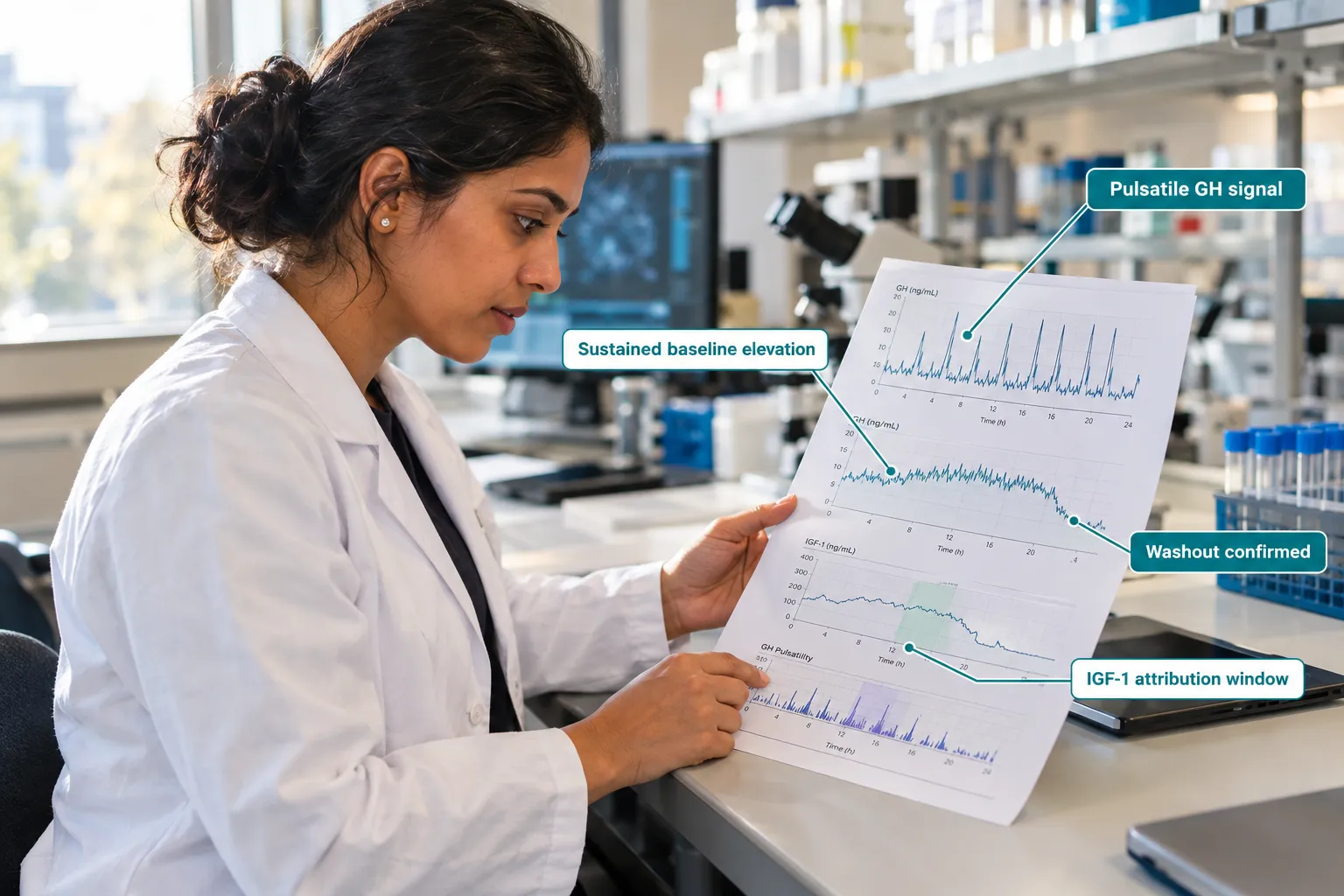
Research scientist reviewing GH sampling timeline and schedule

This is where CJC-1295 With DAC vs Without DAC: How Sampling Windows Change GH-Pulse and IGF-1 Research becomes an experimental design problem, not just a pharmacology question.

Sampling for the No-DAC Form

Because Mod GRF 1-29 produces a narrow pulse window, a single blood draw taken two hours post-administration will almost certainly land on the descending slope or the baseline. Research groups aiming to characterize pulse frequency and amplitude should use 20-minute overnight sampling intervals. This approach, originally validated in foundational GH-pulsatility studies, remains the gold standard for short-acting GHRH analogs.

Key design principles for no-DAC protocols:

  • Draw samples every 15 to 20 minutes for at least 8 hours
  • Time the administration precisely relative to the first sample
  • Avoid single-point or two-point draws, they are statistically unreliable for pulsatile endpoints
  • Use area-under-the-curve (AUC) calculations rather than peak-only readings

Sampling for the DAC Form

With the DAC variant, the opposite problem emerges. A researcher drawing blood at 30 minutes post-injection will capture an early phase that does not represent the compound's full effect. Conversely, a single draw at day 3 or day 7 may show only modest GH elevation, not because the compound is weak, but because continuous GHRH drive produces a "baseline elevation" rather than a true pulse.

"The distinction between baseline elevation and true loss of pulsatility is one of the most commonly misread findings in DAC-form research."

For DAC studies, IGF-1 is the more appropriate primary endpoint. IGF-1 integrates multi-day GH exposure and reflects cumulative secretion more accurately than any single GH draw. Teichman et al. pharmacokinetic data, which still underpins most IGF-1 expectations for this compound class, supports drawing IGF-1 at day 7 and day 14 post-administration for meaningful signal capture.

Researchers interested in combination protocols can also review the Tesamorelin, AOD9604, CJC-1295, and Ipamorelin 12mg blend and the Tesamorelin CJC-1295 Ipamorelin 12mg blend dosage resource for context on multi-peptide sampling considerations.


Designing Experiments That Avoid Sampling Bias

Step-by-step research design flow for CJC-1295 GH sampling

The absence of a published randomized head-to-head trial comparing DAC and no-DAC forms with harmonized sampling windows means researchers are currently working from indirect comparisons. That gap makes experimental design choices more consequential, not less.

Washout Planning

DAC washout requires a minimum of 3 to 4 weeks before crossover designs can begin. Residual albumin-bound compound continues to stimulate GHRH receptors long after the last administration. Failure to account for this creates carryover effects that inflate baseline IGF-1 in the second arm.

No-DAC washout is far shorter, typically 4 to 6 hours, but researchers should still confirm return to pre-study GH pulsatility patterns before beginning a new phase.

Endpoint Selection Framework

  • Primary endpoint for no-DAC: GH pulse amplitude and frequency via frequent serial sampling
  • Primary endpoint for DAC: IGF-1 at day 7 and day 14
  • Secondary endpoint for both: AUC calculations to normalize for inter-subject variability

For those studying related GHRH-receptor peptides alongside GH secretagogues, the safety considerations for combining Tesamorelin with CJC-1295 and Ipamorelin offers useful context on receptor interaction timelines.

A note on receptor down-regulation: 2026 industry analyses have raised questions about whether continuous DAC-driven stimulation leads to "GH exhaust" or receptor desensitization over extended protocols. The evidence remains speculative, but it reinforces the value of including washout periods and baseline re-checks in any multi-week design. Researchers sourcing compounds for these studies can reference the CJC-1295 IPA 10mg product page for purity and specification data.


Conclusion

The debate around CJC-1295 With DAC vs Without DAC: How Sampling Windows Change GH-Pulse and IGF-1 Research is ultimately a debate about matching measurement tools to the biology being studied. A sharp GH pulse cannot be captured with a sparse sampling schedule, and a sustained IGF-1 elevation cannot be evaluated with a single early draw.

Actionable steps for researchers in 2026:

  1. Define the endpoint first, pulse characterization or integrated IGF-1 elevation, before selecting the compound form.
  2. For no-DAC analogs, commit to 15 to 20-minute serial sampling over at least 8 hours.
  3. For DAC forms, schedule IGF-1 draws at day 7 and day 14, and build in a 3 to 4-week washout before any crossover.
  4. Distinguish "baseline elevation" from "blunted pulsatility" in the interpretation phase, they are not the same finding.
  5. Document sampling timing with the same rigor applied to dosing, timing variability is a confounding variable, not a minor procedural note.

Rigorous sampling design is not a secondary concern. It is the mechanism by which the pharmacokinetic differences between these two compound forms become visible, or invisible, in the data.

https://www.puretestedpeptides.com/wp-content/uploads/2026/01/buy-peptides-online.jpg 0 0 https://www.puretestedpeptides.com/wp-content/uploads/2026/01/buy-peptides-online.jpg 2026-09-30 13:19:042026-09-30 13:19:04CJC-1295 With DAC vs Without DAC: How Sampling Windows Change GH-Pulse and IGF-1 Research
CJC-1295 With DAC vs. Without DAC in Cell and Animal Studies: Sampling Windows, Washout, and Interpretation

CJC-1295 With DAC vs. Without DAC in Cell and Animal Studies: Sampling Windows, Washout, and Interpretation

September 25, 2026/0 Comments/in Uncategorized/by

A single amino acid modification, the Drug Affinity Complex (DAC), extends CJC-1295's plasma half-life from roughly 30 minutes to approximately six to eight days. That difference is not merely pharmacokinetic trivia. It reshapes every decision a researcher makes: when to draw blood, how long to wait before the next treatment cycle, and whether an observed IGF-1 signal belongs to the compound or to residual accumulation from a prior dose. Understanding CJC-1295 With DAC vs. Without DAC in Cell and Animal Studies: Sampling Windows, Washout, and Interpretation is therefore foundational to producing reproducible, attributable preclinical data.

Key Takeaways

  • CJC-1295 without DAC has a half-life near 30 minutes, making it ideal for studying acute, pulsatile GH release; CJC-1295 with DAC sustains elevated GH and IGF-1 for days to weeks.
  • Sampling windows must be matched to the compound's kinetic profile, mismatched timing leads to missed peaks or inflated baseline readings.
  • Washout for DAC-containing protocols requires a minimum of four to six weeks in rodent models to avoid carryover confounding.
  • IGF-1 attribution is the central interpretive challenge: sustained DAC exposure elevates tonic IGF-1, while the non-DAC form produces transient pulses that are easy to miss without frequent sampling.
  • Study design choices, dose interval, sample frequency, and washout length, differ substantially between the two forms and must be pre-specified in the protocol.

Half-Life Determines Everything Downstream

Half-Life Determines Everything Downstream

The pharmacokinetic contrast between the two forms is the logical starting point because every downstream design decision flows from it. CJC-1295 without DAC is a modified GHRH analogue that resists enzymatic cleavage long enough to reach pituitary receptors but is cleared within one to two hours in most rodent models. Its action is therefore discrete and pulse-like, closely mirroring endogenous GHRH activity.

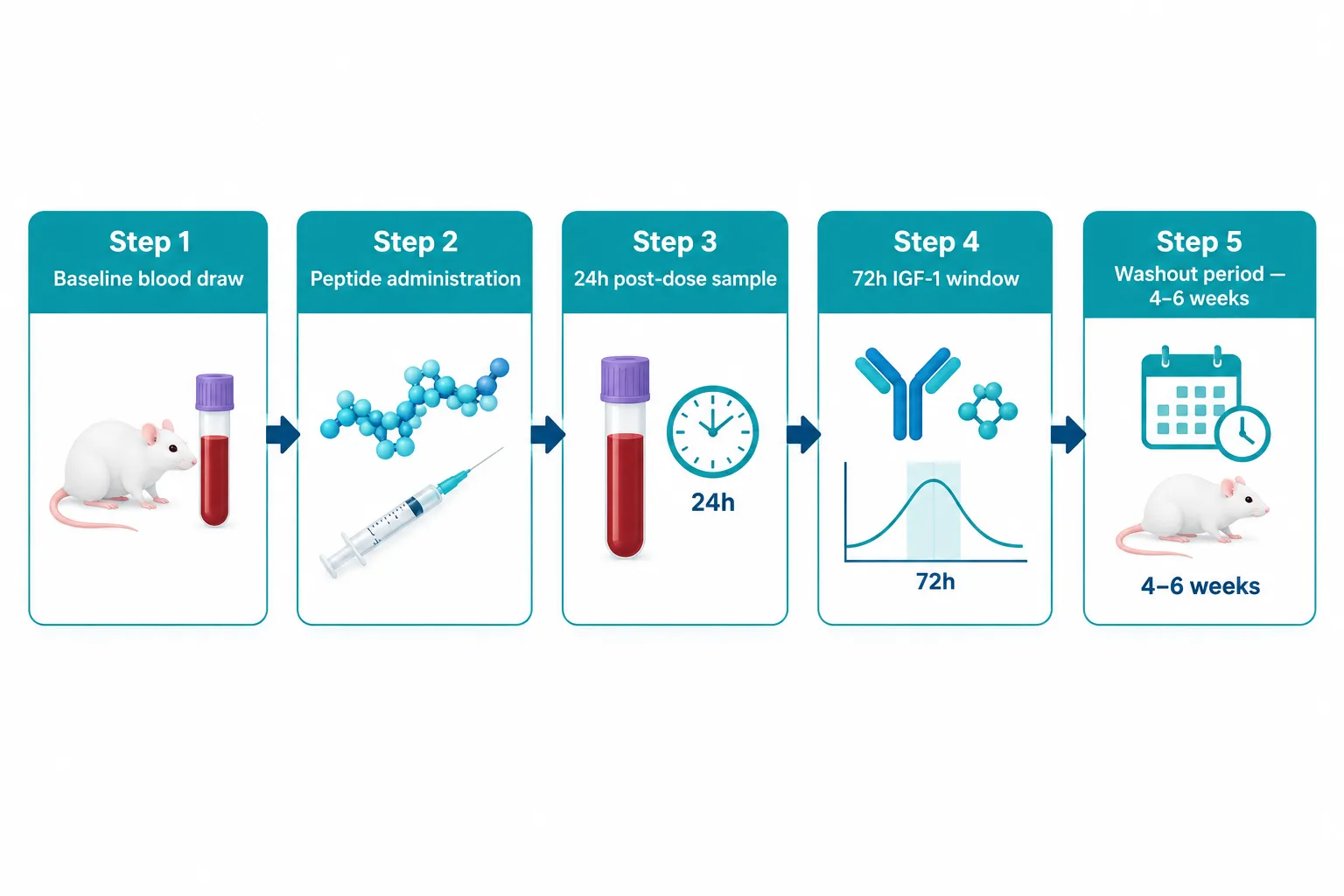
CJC-1295 with DAC covalently binds to circulating albumin through its maleimido-propionyl group. This albumin linkage creates a depot effect, releasing active peptide slowly over days. In rat models, a single subcutaneous dose produces measurable GH elevation for up to five days and elevated IGF-1 for seven to ten days. The practical consequence is that a researcher who draws a single blood sample at 24 hours post-dose will capture very different biological states depending on which form was used.

For researchers exploring multi-peptide combinations, the Tesamorelin, CJC-1295, and Ipamorelin 12mg blend illustrates how stacking long- and short-acting GHRH analogues complicates attribution further, reinforcing the need for precise kinetic mapping before interpreting outcomes.


Sampling Windows in Cell and Animal Studies: Matching Timing to Kinetics

Getting sampling windows right is where most preclinical CJC-1295 studies succeed or fail. The two forms demand fundamentally different schedules.

Without DAC: High-Frequency, Narrow Windows

Because the non-DAC form acts within minutes and clears rapidly, meaningful GH sampling must occur within 15 to 45 minutes post-administration in rodent models. A single time-point study will almost always underestimate peak GH. Recommended practice calls for serial sampling at 15, 30, 60, and 120 minutes to capture the full pulse shape. IGF-1, which responds more slowly to GH stimulation, should be sampled at 4, 8, and 24 hours to capture the downstream hepatic response.

Cell culture studies using the non-DAC form face an analogous challenge: peptide degradation in serum-containing media can reduce effective concentration within hours, so dosing intervals and media refresh schedules must be tightly controlled.

With DAC: Extended Windows, Accumulation Awareness

For the DAC form, single time-point sampling at 24 or 48 hours post-dose is more defensible, but researchers must account for accumulation across repeated doses. In a weekly dosing protocol over four weeks, plasma concentrations do not reach steady state until approximately the third dose. This means IGF-1 readings taken during weeks one and two reflect rising exposure, not steady-state biology. Comparing week-one IGF-1 to week-four IGF-1 without acknowledging this trajectory is a common interpretive error.

Recommended sampling in repeated-dose rodent studies with the DAC form:

  • Trough samples immediately before each dose (to track accumulation)
  • Peak samples 24 to 48 hours after each dose
  • IGF-1 at 72 hours post-dose, where the signal is most stable
  • A terminal bleed at least seven days after the final dose to distinguish residual compound from true washout baseline

For those working with related combination protocols, the Sermorelin, Ipamorelin, and CJC-1295 blend offers context on how multiple secretagogues interact when sampling schedules must account for overlapping kinetic profiles.


Washout Design and IGF-1 Interpretation

Washout Design and IGF-1 Interpretation

Washout is arguably the most underspecified element in published CJC-1295 animal studies. A compound with a six-to-eight-day half-life requires approximately five half-lives, roughly 30 to 40 days, to fall below 5% of peak plasma concentration. In practice, most expert guidance as of 2026 recommends a minimum four-to-six-week washout in rodent models before a crossover arm or a new treatment cycle begins.

Shorter washouts produce carryover elevation of IGF-1 that can be misattributed to a new intervention. This is particularly problematic in crossover designs where the DAC form is tested first.

Attributing GH Pulsatility vs. Sustained Elevation

The interpretive challenge is not just about timing, it is about biology. The non-DAC form preserves the pulsatile nature of GH secretion. Studies examining GH-dependent cellular processes such as lipolysis, protein synthesis, or IGF-1 receptor upregulation benefit from this pulsatility because it more closely models physiological signaling. The DAC form, by contrast, creates a tonic elevation that may saturate GH receptors and alter downstream sensitivity over time.

"Sustained GH elevation and pulsatile GH elevation are not interchangeable experimental conditions, they activate overlapping but distinct receptor dynamics."

Researchers must therefore specify in their protocols whether the biological question requires pulsatile or sustained GH exposure, and select the appropriate form accordingly. Mixing the two forms within a single study without a full washout between them produces data that cannot be cleanly attributed to either kinetic profile.

For additional context on how CJC-1295 is used alongside complementary peptides in research settings, the Tesamorelin, AOD9604, CJC-1295, and Ipamorelin 12mg blend page provides relevant formulation background. Similarly, researchers comparing secretagogue safety profiles may find the discussion on combining Tesamorelin with CJC Ipamorelin useful for contextualizing multi-compound study designs.


Practical Protocol Recommendations

Practical Protocol Recommendations

The following framework consolidates current best-practice guidance for preclinical researchers as of 2026:

Parameter Without DAC With DAC
GH sampling window 15-60 min post-dose 24-48 h post-dose
IGF-1 sampling window 4-24 h post-dose 48-72 h post-dose
Steady-state onset Single dose ~3rd dose (weekly protocol)
Minimum washout 48-72 hours 4-6 weeks
Crossover design risk Low High without full washout

For dose-ranging studies, the Tesamorelin, CJC-1295, and Ipamorelin 12mg blend dosage guide and the corresponding dose reference offer practical starting points when CJC-1295 is part of a multi-peptide protocol.

Key protocol checkpoints:

  • Pre-specify whether the study question requires pulsatile or tonic GH exposure
  • Document accumulation phase separately from steady-state phase in multi-dose designs
  • Include a satellite group for washout verification if the study uses a crossover design
  • In cell studies, refresh media at intervals matched to the peptide's degradation rate in the specific media formulation used

Conclusion

The choice between CJC-1295 with DAC and without DAC is not simply a matter of dosing convenience, it is a fundamental experimental variable that determines when to sample, how long to wait, and how to interpret every GH or IGF-1 data point the study generates. Researchers who treat the two forms as interchangeable risk producing results that are either uninterpretable or actively misleading.

Actionable next steps for preclinical researchers:

  1. Define the biological question first, pulsatile or sustained GH exposure, then select the compound form that matches it.
  2. Build sampling schedules around the compound's actual kinetic profile, not convenience time-points.
  3. Enforce a minimum four-to-six-week washout for any DAC-containing protocol before a crossover or repeat cycle.
  4. Track trough concentrations across a multi-dose DAC study to confirm when steady state is reached before drawing mechanistic conclusions.
  5. Report the form used, the sampling schedule, and the washout length explicitly in methods sections so findings can be accurately compared across studies.

Rigorous attention to these design elements is what separates publishable, reproducible CJC-1295 research from data that raises more questions than it answers.

https://www.puretestedpeptides.com/wp-content/uploads/2026/09/cjc-1295-with-dac-vs-without-dac-in-cell-and-animal-studies-sampling-windows-was.webp 1024 1536 https://www.puretestedpeptides.com/wp-content/uploads/2026/01/buy-peptides-online.jpg 2026-09-25 13:03:292026-09-25 13:03:29CJC-1295 With DAC vs. Without DAC in Cell and Animal Studies: Sampling Windows, Washout, and Interpretation
×

Helpful Links

  • My account
  • Cart
  • Checkout
  • Refund and Returns Policy
  • Privacy Policy
  • SMS Privacy Policy
  • Login
  • My Account
  • Logout

USA Made Lab Tested Peptides

All products are sold for research, laboratory, or analytical purposes only, and are not for human consumption


Pure Tested Peptides is a chemical supplier. Pure Tested Peptides is not a compounding / chemical compounding facility as defined under 503A of the Federal Food, Drug, and Cosmetic act. Pure Tested Peptides is not an outsourcing facility as defined under 503B of the Federal Food, Drug, and Cosmetic act.

The statements made within this website have not been evaluated by the US Food and Drug Administration. The products we offer are not intended to diagnose, treat, cure or prevent any disease.

Human/Animal Consumption Prohibited. Laboratory/In-Vitro Experimental Use Only

Scroll to top Scroll to top Scroll to top