

GLP-2-T and GLP2 Tirz Peptide Research: Distinguishing Epithelial Repair From Changes in Motility and Intake
Researchers designing intestinal studies in 2026 face a specific confounding problem: two peptide categories share nearly identical naming conventions but act through entirely different receptor systems. Misassigning GLP-2-T and GLP2 Tirz Peptide Research outcomes to the wrong biological pathway can invalidate an entire experimental dataset. Understanding which compound drives epithelial repair versus which one shifts motility and food intake is no longer optional, it is a foundational requirement for rigorous experimental design.
Key Takeaways
- Native GLP-2 remains the reference standard for epithelial repair, mucosal growth, and barrier integrity research.
- Commercial "GLP-2-T" materials are tirzepatide-class dual GIP/GLP-1 agonists, not GLP-2 receptor agonists.
- GLP2-TZ and Tirz compounds are research tools for motility and metabolic studies, not epithelial proliferation.
- Experimental designs must separate barrier integrity, epithelial proliferation, gastric transit, food intake, and systemic metabolic effects into distinct readout groups.
- All GLP-2-T, GLP2-TZ, and GLP2 Tirz materials remain strictly research-use only as of 2026.
What Native GLP-2 Actually Does in Intestinal Research
GLP-2 (glucagon-like peptide-2) is a 33-amino acid peptide secreted by intestinal L-cells. Its receptor, GLP-2R, is expressed on enteric neurons, subepithelial myofibroblasts, and enteroendocrine cells. When GLP-2R is activated, the downstream effects are well-characterized: increased crypt-cell proliferation, reduced enterocyte apoptosis, greater villus height, and strengthened tight-junction integrity.
These effects make native GLP-2 the reference compound for epithelial repair biology. Researchers measuring mucosal healing, barrier permeability, or intestinal adaptation use GLP-2 as the positive control precisely because its mechanism is receptor-specific and its epithelial outcomes are reproducible.
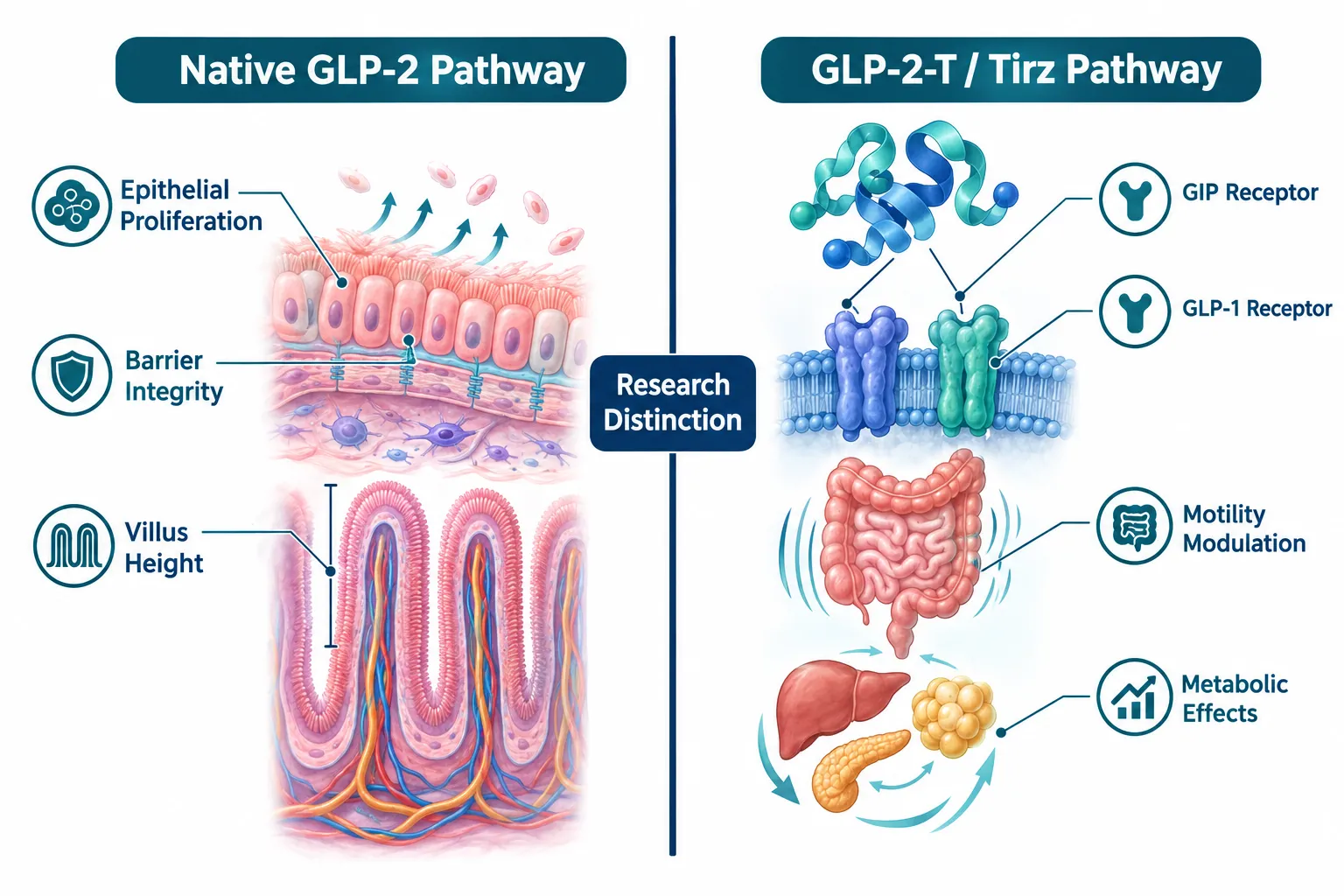
Key epithelial readouts in GLP-2 studies include:
- Villus height-to-crypt depth ratio
- Tight-junction protein expression (claudin-3, occludin)
- Crypt-cell proliferation index (Ki-67 staining)
- Intestinal permeability (lactulose/mannitol ratio)
- Enterocyte apoptosis rate
For researchers exploring related incretin biology, the GLP-1 peptide buy generational research concepts and sourcing notes resource provides useful context on how GLP-1 and GLP-2 differ in their gut-specific roles.
GLP-2-T and GLP2 Tirz Peptide Research: The Naming Confusion That Distorts Results
The commercial category labeled "GLP-2-T" does not activate the GLP-2 receptor. These materials are tirzepatide-class dual agonists targeting GIP (glucose-dependent insulinotropic polypeptide) receptors and GLP-1 receptors simultaneously. The "GLP-2" prefix in the product name refers to a research classification framework, not receptor pharmacology.
This distinction is critical. A researcher who selects a GLP-2-T compound expecting epithelial proliferation data will instead collect motility, gastric emptying, and metabolic endpoints. The experimental output will be real, but it will answer the wrong question.
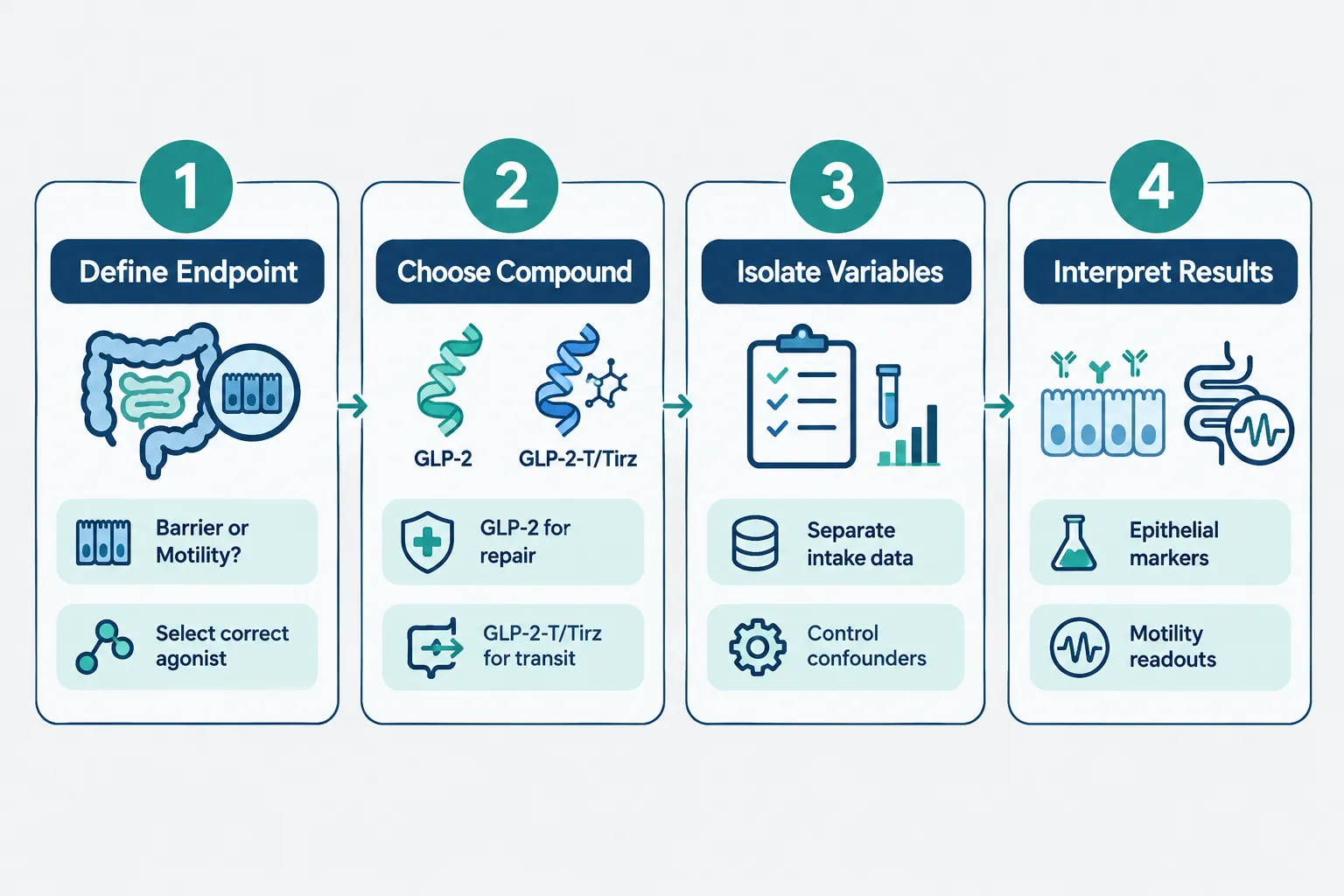
The core rule: If the research question involves mucosal healing or barrier repair, the compound must be a native GLP-2 analog. If the question involves gastric transit, intestinal motility, or energy intake regulation, GLP-2-T or GLP2 Tirz compounds are appropriate tools.
GLP2-TZ and Tirz compounds work through a "dual axis" mechanism:
| Receptor Target | Primary Research Endpoint |
|---|---|
| GIP receptor | Insulin secretion, fat metabolism |
| GLP-1 receptor | Gastric emptying, satiety signaling |
| GLP-2 receptor (NOT targeted) | Epithelial repair (not applicable here) |
The 2026 expansion of GLP-2-T catalog offerings reflects growing interest in motility and metabolic research, not a new application in epithelial biology. For a broader view of how multi-agonist peptides are categorized, the Peptides 101 for research-use only buyers: structure, mechanisms, and where GLP-3, MOTS-C, and 5-amino-1MQ fit in guide is a strong reference point.
Researchers planning studies that incorporate triple-agonist designs may also find the GLP3 for sale triple agonist research planning and catalog navigation resource relevant for understanding how GLP-2-T fits within a broader agonist framework.
Separating Confounders: Experimental Design for GLP-2-T and GLP2 Tirz Peptide Research
The most common methodological error in GLP-2-T and GLP2 Tirz Peptide Research is failing to isolate the five primary variables that can shift simultaneously when a dual agonist is administered:
- Barrier integrity (tight-junction protein levels, permeability assays)
- Epithelial proliferation (crypt-villus morphometry, mitotic index)
- Gastric and intestinal transit (bead transit time, scintigraphy)
- Food intake (caloric consumption, meal frequency)
- Systemic metabolic effects (insulin, glucose, lipid panels)
When a GLP2 Tirz compound reduces food intake, it secondarily alters nutrient exposure to the intestinal epithelium. This can produce apparent changes in villus morphology that are intake-dependent, not compound-dependent. Without a pair-fed control group, researchers cannot determine whether observed epithelial changes result from direct receptor action or from reduced luminal nutrient load.
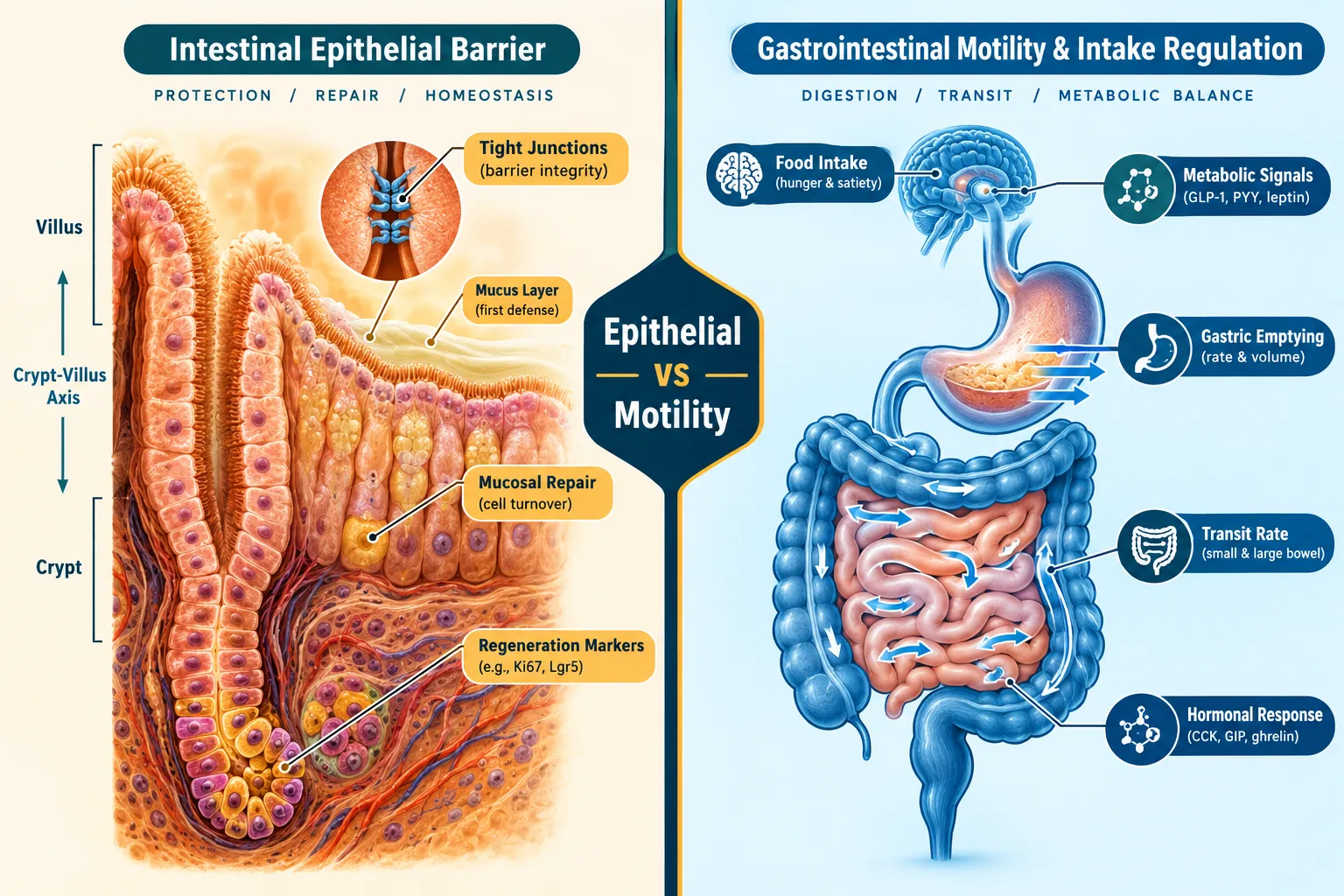
Recommended control structure for GLP-2-T motility studies:
- Ad libitum control group (vehicle only)
- GLP-2-T treatment group (ad libitum feeding)
- Pair-fed control group (matched to GLP-2-T intake)
- Native GLP-2 positive control group (epithelial repair benchmark)
This four-arm design allows researchers to attribute motility changes to direct compound action while ruling out intake-mediated epithelial artifacts. Sourcing verified reference-grade materials matters here; the Bachem and reference standards: building robust peptide benchmarks article outlines how benchmark-grade compounds strengthen experimental validity.
For researchers evaluating supplier quality before finalizing their compound selection, the peptide supplier comparisons: interpreting PeptideTech and PeptideSC guide provides practical sourcing criteria.
Speculative Outlook: Combined GLP-2 and Tirz Strategies
Looking ahead, and this represents a forward-looking prediction, not established science, some researchers are exploring whether combined GLP-2 plus Tirz protocols could address complex gut-metabolic disorders where both mucosal repair and motility dysregulation occur together. The hypothesis is that native GLP-2 could anchor epithelial restoration while a Tirz compound manages transit and intake simultaneously.
This "triple axis" framework (gut mucosa, motility, metabolism) remains speculative as of 2026. No peer-reviewed evidence yet supports combined dosing protocols in controlled research settings. Until that evidence exists, the most defensible approach is to keep the two compound classes in separate experimental arms.
Regulatory status is clear: GLP-2-T, GLP2-TZ, and GLP2 Tirz materials are strictly research-use only with no approved clinical applications as of October 2026.
Conclusion
GLP-2-T and GLP2 Tirz Peptide Research demands precise separation of biological endpoints before a single experiment is designed. Native GLP-2 owns the epithelial repair pathway. GLP-2-T and Tirz compounds belong to motility and metabolic research. Conflating the two produces data that cannot be interpreted cleanly.
Actionable next steps for research teams:
- Audit existing protocols to confirm compound-to-endpoint alignment before initiating new studies.
- Add pair-fed control arms to any GLP-2-T study measuring intestinal morphology.
- Use native GLP-2 as the positive control whenever epithelial proliferation or barrier integrity is a primary endpoint.
- Source compounds from suppliers that provide third-party purity data and reference-standard documentation.
- Treat any combined GLP-2 plus Tirz design as exploratory and hypothesis-generating only.
Rigorous confound control is what separates publishable mechanistic data from ambiguous results. Keeping the receptor pharmacology of each compound class clearly mapped to its experimental purpose is the single most important step any research team can take in 2026.