

Retatrutide and Knee Osteoarthritis Research: Separating Pain Relief, Weight Loss, and Inflammatory Readouts
Roughly 654 million people worldwide live with knee osteoarthritis (OA), and the most common advice they receive is still "lose weight and exercise." That backdrop makes the TRIUMPH Phase 3 trial results for retatrutide genuinely disruptive, not because the drug eliminates joint pain overnight, but because the data force researchers to ask a harder question: when a triple-receptor agonist produces both dramatic weight loss and robust pain reduction, how much credit belongs to the scale and how much to the molecule itself?
Retatrutide and knee osteoarthritis research is now at the center of that methodological debate, and understanding the distinction between weight-mediated, direct anti-inflammatory, and structural outcomes matters enormously for how the field designs its next wave of trials.
Key Takeaways
- Retatrutide produced clinically meaningful knee pain reduction in Phase 3 trials, alongside large sustained weight loss.
- Evidence suggests pain relief is not fully explained by weight loss alone, pointing to possible direct joint effects.
- Inflammatory and structural cartilage readouts remain secondary endpoints with limited data as of 2026.
- Interpreting OA outcomes requires separating joint-loading effects, synovial inflammation, cartilage integrity, and patient-reported function.
- Regulatory approval is not yet granted; retatrutide remains under active Phase 3 investigation.
Understanding the Disease-Model Framework for Knee OA Outcomes
Knee osteoarthritis involves at least four measurable biological processes that any drug targeting the joint must be evaluated against: mechanical joint loading, synovial inflammation, articular cartilage degradation, and patient-reported function. These do not always move together, and failing to separate them leads to misattributed results.
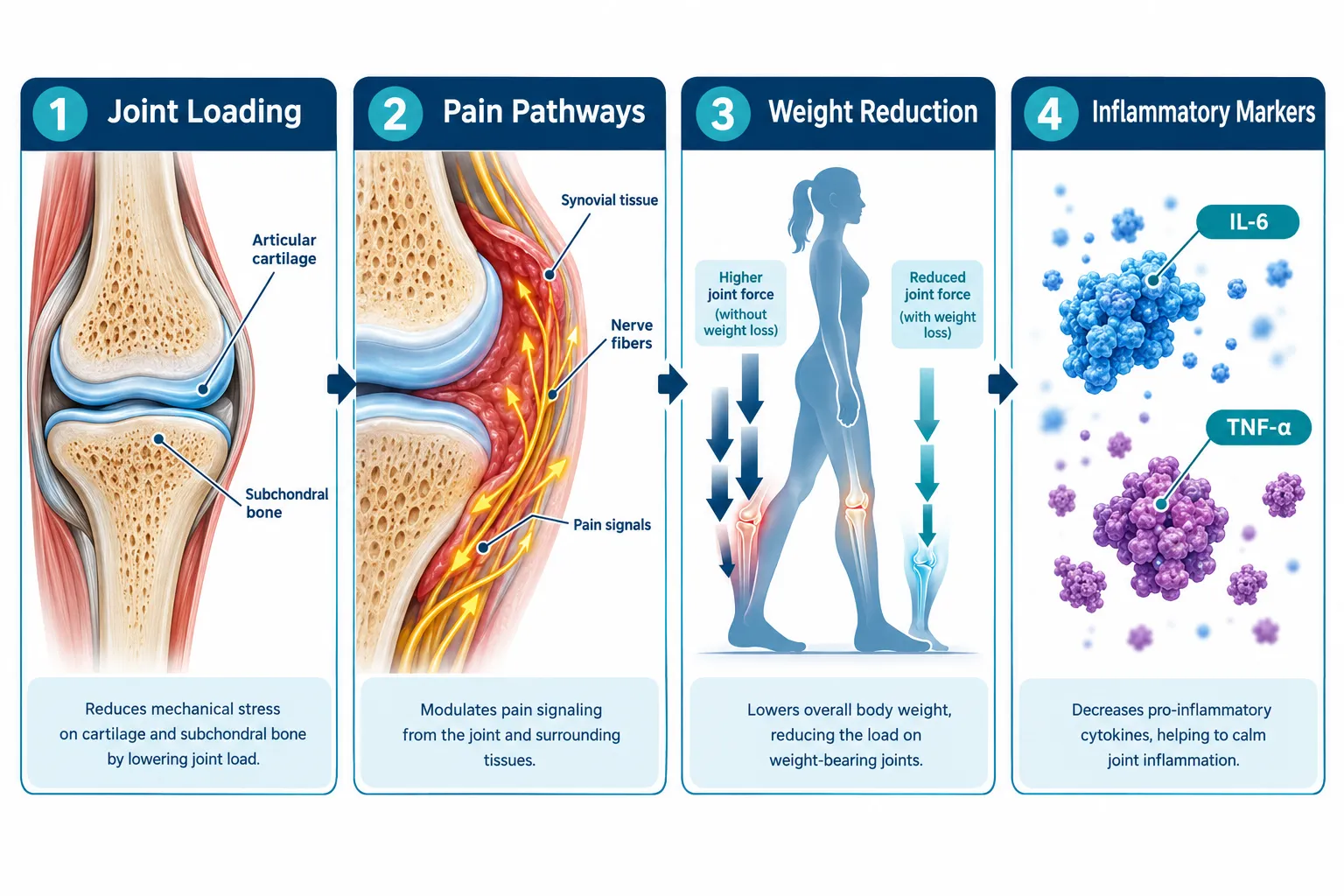
Retatrutide acts as a triple agonist at GLP-1, GIP, and glucagon receptors. Each pathway carries independent biological relevance to joint health. GLP-1 receptors are expressed in synovial tissue and may modulate local inflammatory signaling. Glucagon receptor activation contributes to energy expenditure. GIP activity influences adipose distribution. Any or all of these could affect the knee through routes that have nothing to do with the number on the bathroom scale.
Why this matters: A trial that reports "pain improved 40% with treatment" tells a very different story depending on whether the control arm also lost weight. Without weight-matched comparators or dose-response analyses that separate pain improvement from BMI reduction, the mechanism remains ambiguous.
Separating Weight-Mediated Relief from Direct Joint Effects in Retatrutide Trials
This is the core methodological challenge in retatrutide and knee osteoarthritis research. TRIUMPH trial participants achieved substantial, sustained weight reduction, in ranges comparable to or exceeding those seen with other GLP-1 class agents. That alone would be expected to reduce knee pain. Each kilogram of body weight lost reduces compressive knee-joint load by approximately 4 kilograms per step.
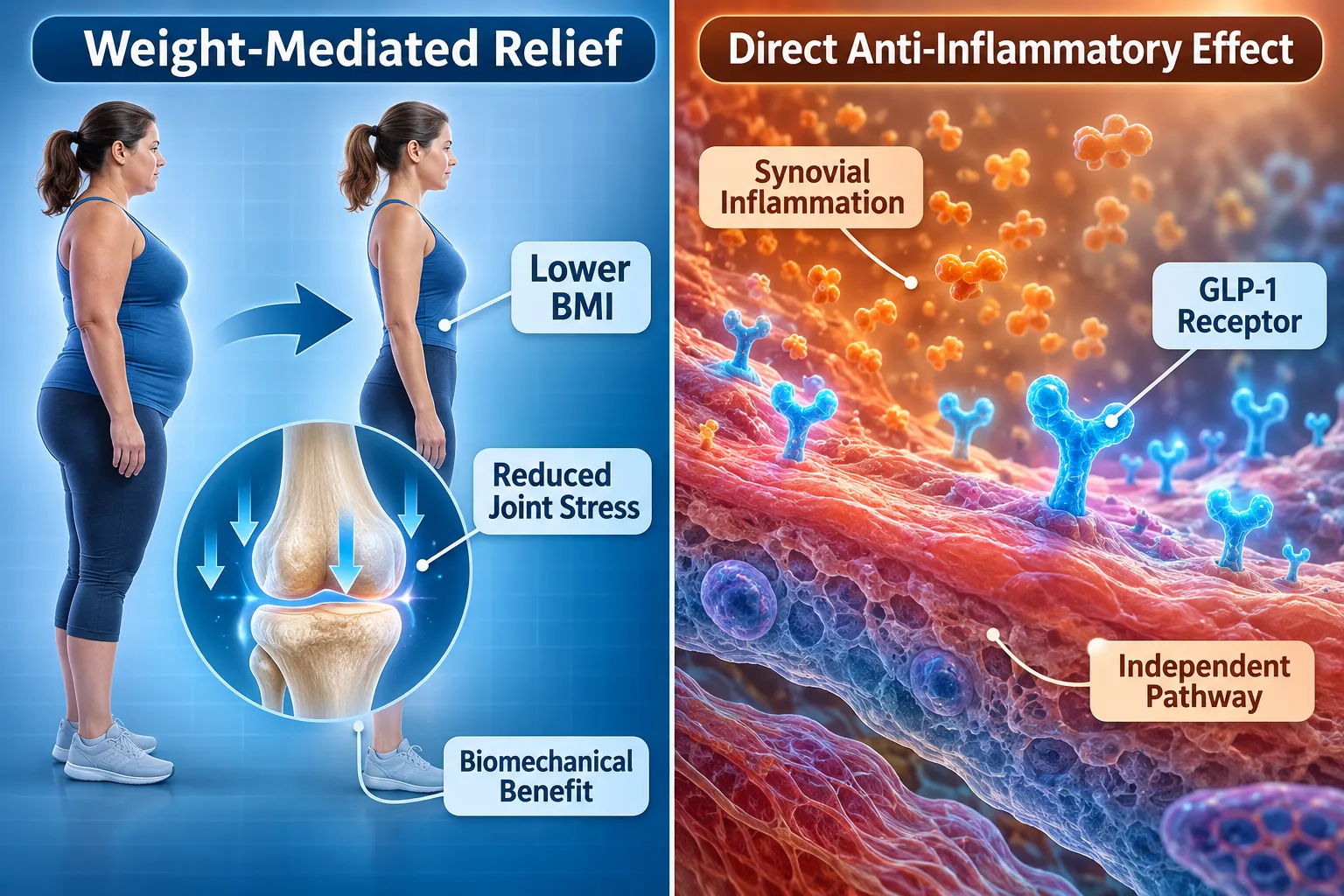
Yet the TRIUMPH data show a signal that is difficult to explain through biomechanics alone:
- Pain reduction appeared earlier in the treatment course than the degree of weight loss would predict.
- Patients in lower-weight subgroups still reported functional improvements disproportionate to their modest BMI reduction.
- Patient-reported outcome scores on tools such as the KOOS (Knee Injury and Osteoarthritis Outcome Score) improved across pain, stiffness, and activities-of-daily-living subscales.
"The pain relief trajectory does not track neatly with the weight loss trajectory, and that gap is where the science gets interesting."
This divergence suggests the drug may exert a direct effect on joint-level inflammation, possibly through synovial GLP-1 receptor modulation or through reductions in systemic inflammatory cytokines such as IL-6 and CRP. These are plausible mechanisms, but they remain unconfirmed at the structural level. For researchers sourcing retatrutide for preclinical work, options such as GLP3-Reta 10mg and GLP3-Reta 20mg are available through third-party-tested suppliers. Those interested in broader GLP-1 receptor agonist context can review GLP-1 peptide sourcing and generational research concepts.
Inflammatory and Structural Readouts: What the Evidence Actually Shows
Here is where researchers must apply the most discipline. As of 2026, inflammatory and structural endpoints in retatrutide OA studies are largely secondary or exploratory. The primary endpoints in TRIUMPH were pain and function, not cartilage volume on MRI, not synovial fluid cytokine profiles, not bone marrow lesion scores.
What is available:
| Endpoint Category | Evidence Level | Status |
|---|---|---|
| Knee pain (VAS/KOOS) | Phase 3, primary endpoint | Robust reduction confirmed |
| Functional mobility | Phase 3, secondary endpoint | Meaningful improvement |
| Body weight / BMI | Phase 3, primary endpoint | Large, sustained reduction |
| CRP / systemic inflammation | Secondary / exploratory | Modest, early signals |
| Cartilage MRI | Largely absent | Insufficient data |
| Synovial biomarkers | Preclinical / exploratory | Early stage only |
This table is not a criticism, it reflects where the science stands. Pain is what matters most to patients, and demonstrating pain relief in a rigorous Phase 3 trial is a high bar. The absence of structural data simply means the cartilage story has yet to be written. Researchers exploring mitochondrial and cellular protective mechanisms alongside GLP-1 research may find supplementary context in SS-31 10mg research peptide considerations.
For those sourcing research-grade compounds, Reta 20mg for sale and the buy GLP-3 peptide GLP3-Reta 10mg 99% pure third-party tested options offer purity-verified formats suitable for in vitro and animal model work examining these unresolved endpoints.
Safety, Tolerability, and Regulatory Status
Retatrutide's tolerability profile in OA populations tracks with that seen in metabolic disease trials. Gastrointestinal adverse events, nausea, vomiting, diarrhea, are the most frequently reported and are generally dose-dependent and transient. No unexpected safety signals specific to joint outcomes have emerged.
Regulatory note: Retatrutide does not hold FDA or EMA approval for knee osteoarthritis as of 2026. It remains under active Phase 3 investigation. Any research use falls strictly within preclinical and investigational contexts. The compound is not approved for human therapeutic use in this indication. Researchers can review where to buy Reta peptide for sourcing guidance within research frameworks.
Expert commentary from the obesity and musculoskeletal medicine fields has been pointed: results from TRIUMPH have been described as putting "the entire obesity-driven OA field on notice," signaling that combination receptor agonism may outperform single-axis weight-loss strategies precisely because of these potential direct joint effects.
Future Research Priorities for Retatrutide and Knee Osteoarthritis
The next phase of retatrutide and knee osteoarthritis research should focus on separating mechanism cleanly. Recommended endpoints for forthcoming trials include:
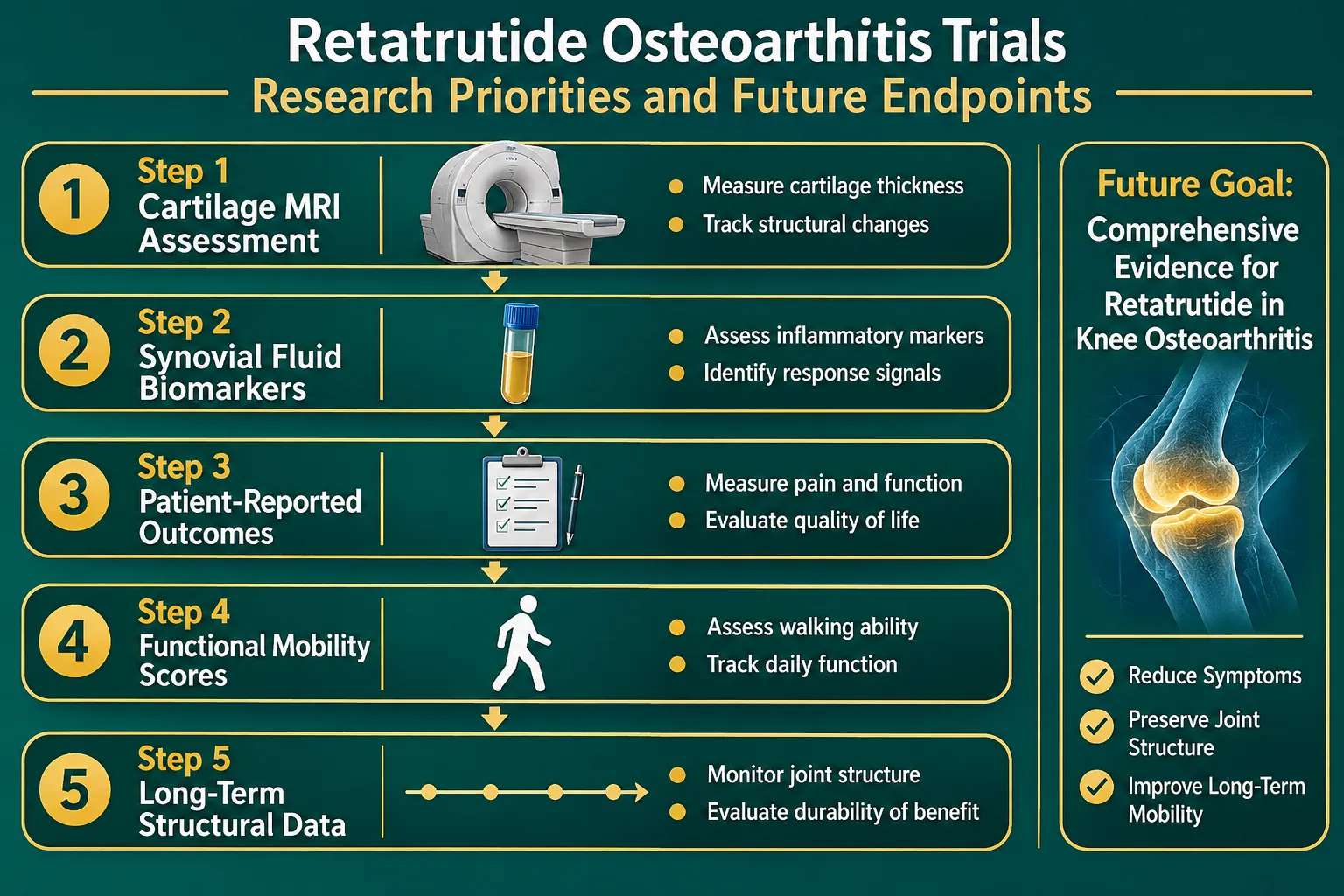
- Cartilage MRI with T2 mapping, to detect early compositional changes independent of pain scores.
- Synovial fluid cytokine panels, measuring IL-1-beta, IL-6, and TNF-alpha directly at the joint.
- Weight-matched control arms, isolating drug effect from load-reduction effect.
- Long-term functional outcomes, tracking mobility and quality of life at 24 and 36 months.
- Biomarker-stratified subgroups, identifying which OA phenotypes (inflammatory vs. mechanical) respond best.
These priorities reflect a broader evolution in OA drug development: moving from symptom management toward disease modification, and doing so with the analytical rigor that separates correlation from mechanism.
Conclusion
Retatrutide and knee osteoarthritis research is delivering some of the most compelling joint-pain data the field has seen in years, but the work of interpretation has only just begun. Pain relief is real, robust, and clinically meaningful. Weight loss is substantial and independently valuable for joint health. The evidence that these two effects are not identical, that the molecule may be doing something the scale does not fully explain, is the most scientifically important finding to pursue.
Actionable steps for researchers and clinicians:
- Demand weight-matched comparators or statistical mediation analyses in any retatrutide OA publication before attributing effects to direct mechanisms.
- Prioritize trials that include cartilage MRI and synovial biomarker endpoints as co-primary or key secondary outcomes.
- Follow Phase 3 data releases through the second half of 2026 for updated inflammatory and structural readouts.
- For preclinical work, source only third-party-tested, purity-verified retatrutide to ensure data validity.
The molecule is promising. The science now needs the discipline to match.