Call or Text 727-513-9780
  • Shopping Cart Shopping Cart
    0Shopping Cart
Pure Tested Peptides | America's most trusted Peptides for sale online
  • Peptides for sale
    • Oral Peptides for sale
      • Peptide Capsules for sale
      • BPC 157 Capsules 1000mcg
      • SLU-PP-332 Capsules | 1000 mcg
      • 5-Amino-1MQ 50mg Capsules
      • Tesofensine 500mcg
    • All Peptides for sale
    • Peptide Sprays
      • BPC 157 Nasal Spray Kit
      • BPC-157 TB500 Nasal Spray Kit
      • Semax Nasal Spray 10mg
      • Selank – Nasal Spray Kit – 10mg
      • Epithalon 50MG Nasal Spray Kit
      • Ipamorelin 10mg Nasal Spray
      • Klow Nasal Spray (BPC-157 + TB-500 + GHK-Cu + KPV) | 80mg
      • Hulk Nasal Spray Tesa / Ipa Blend 6/3 MG
      • Klow Nasal Spray
      • NAD + 500 mg Nasal Spray
      • PT-141 Nasal Spray Kit
    • GHRH Peptides
      • Ipa Peptides
      • CJC-1295 Peptides
        • CJC-1295 with DAC 5 mg
        • CJC-1295 without DAC 5 mg
        • CJC-1295 Ipa 10mg
      • Tesa Peptides
        • Tesa Peptide
        • Tesa 20 mg
    • GHK-Cu Peptides
      • All GHK-Cu Peptides
      • GHK-Cu 100mg
      • KLOW Peptide Blend – Buy KLOW blend online
    • BPC Peptides
      • All BPC Peptides
      • BPC-157
      • BPC-157 TB-500
      • BPC 157 capsules 1000mcg
    • SLU-PP-332 Peptides
      • All SLU-PP-332 Peptides
      • SLU-PP-332 5mg
    • GLP3 Peptides
    • PT-141 Peptides
      • PT-141 Peptides for sale
      • PT-141 10mg
      • PT-141 Nasal Spray
    • CAG Peptides
      • Lipo-C Peptide Blend
      • CAG 5mg
      • CAG 10mg
    • MOTS-C Peptides
      • MOTS-C Peptides for sale
      • MOTS-c peptide
      • MOTS-c 10mg *6 pack*
    • 5 Amino 1MQ Peptides
      • 5 Amino 1MQ Peptides for sale
      • 5-Amino-1MQ 50mg Capsules
      • 5-Amino-1MQ 5mg
    • Epithalon Peptides
      • Epithalon Peptides for sale
      • Epithalon 10mg
      • Epithalon 50mg
  • Shop
    • GLPs
      • 5-Amino-1MQ 50mg Capsules
      • 5-Amino-1MQ 5mg
      • L-Carnitine 500mg/ml
      • Tesofensine 500mcg
      • SLU-PP-332 5mg
      • MOTS-c 10mg *6 pack*
    • Epithalon & BPC Peptides
      • Epithalon 10mg
      • Epithalon 50mg
      • BPC-157
      • BPC 157 capsules 1000mcg
      • BPC-157 TB-500
      • BPC-157 TB500 Nasal Spray Kit
      • BPC 157 Nasal Spray Kit
    • BPC TB-500 & NAD+ Peptides
      • NAD+ 500 mg
      • KLOW Peptide Blend – Buy KLOW blend online
      • GLOW Peptide Blend
      • TB 500 5mg
      • BPC 157 capsules 1000mcg – Supplement
      • BPC 157 Nasal Spray Kit
      • BPC-157
      • BPC-157 TB500 Nasal Spray Kit
      • BPC-157 TB-500
      • BPC 157 capsules 1000mcg
    • LL-37 Peptide
      • LL-37 10 mg
    • MOTS-C & Selank
      • MOTS-c peptide
      • Selank 10mg
    • GHK Peptides
      • GHK-Cu 100mg
      • GLOW Peptide Blend
      • KLOW Peptide Blend – Buy KLOW blend online
  • COAs
  • Wholesale
    • Wholesale Peptides for sale
  • PTP FAQ
  • Affiliates
    • Selank Peptide: Advanced Pharmacological Mechanisms Underlying Its Anxiolytic and Nootropic Effects in Research
      • 5-Amino-1MQ Peptide: Detailed Mechanisms of NNMT Inhibition and Its Impact on Cellular Metabolism Research
        • MOTS-C Peptide: Unraveling Its Role in Mitochondrial Dynamics and Energy Metabolism Research
          • Epithalon Peptide and Telomerase Regulation: Investigating Its Impact on Cellular Senescence and Lifespan Research Models
            • GLP2-T vs GLP2 Tirz Peptide: Understanding the Naming, Mechanistic Nuances, and Research Implications for Gut Health
      • Peptides and Polypeptides in Modern Pharmacology: What Research on Metoprolol, Prednisone, and Amlodipine Reveals
        • Polypeptide Peptides vs NSAIDs: What Naproxen and Diclofenac Teach Tissue-Repair Researchers About BPC‑157 and TB‑500
          • Peptides and Polypeptides in Endocrine Pharmacology: How GLP-1, GLP-2, and GLP-3 Retatrutide Differ From Classic Drugs Like Prednisone and Amlodipine
          • 5‑Amino‑1MQ Peptide and NNMT Inhibition: How It Compares With Statins Like Atorvastatin in Adipose and Lipid Metabolism Research
      • Enclomiphene, Estrogen Receptor Signaling, and Luteinizing Phase Biology: What Hormone Researchers Should Measure
        • Mesenchymal Stem Cells, BPC‑157, and GHK‑Cu: How Tissue Repair Peptides Compare With Classic NSAIDs Like Naproxen in Injury Models
          • Peptide Calculator Use Cases Beyond Growth Hormone: Working Through GLP‑3 Retatrutide, MOTS‑c, and BPC‑157 Research Dosing
        • Polypeptide Peptides in Endocrine and Metabolic Pharmacology: Lessons From Amlodipine, Prednisone, and Metoprolol
        • Peptides Calculator for Advanced Blends: Worked Examples for Tesamorelin, CJC‑1295, and Ipamorelin Stacks
          • Peptides and Polypeptides in Human Physiology: How Molecular Size Shapes Research Applications
            • Selank Peptide: Advanced Pharmacological Mechanisms Underlying Its Anxiolytic and Nootropic Effects in Research
          • 5-Amino-1MQ Peptide: Detailed Mechanisms of NNMT Inhibition and Its Impact on Cellular Metabolism Research
            • MOTS-C Peptide: Unraveling Its Role in Mitochondrial Dynamics and Energy Metabolism Research
              • Epithalon Peptide and Telomerase Regulation: Investigating Its Impact on Cellular Senescence and Lifespan Research Models
                • GLP2-T vs GLP2 Tirz Peptide: Understanding the Naming, Mechanistic Nuances, and Research Implications for Gut Health
                  • Peptides and Polypeptides in Endocrine Pharmacology: How GLP-1, GLP-2, and GLP-3 Retatrutide Differ From Classic Drugs Like Prednisone and Amlodipine
                    • Polypeptide Peptides vs NSAIDs: What Naproxen and Diclofenac Teach Tissue-Repair Researchers About BPC‑157 and TB‑500
                      • Peptides and Polypeptides in Modern Pharmacology: What Research on Metoprolol, Prednisone, and Amlodipine Reveals
                        • 5‑Amino‑1MQ Peptide and NNMT Inhibition: How It Compares With Statins Like Atorvastatin in Adipose and Lipid Metabolism Research
                        • Enclomiphene, Estrogen Receptor Signaling, and Luteinizing Phase Biology: What Hormone Researchers Should Measure
                        • Mesenchymal Stem Cells, BPC‑157, and GHK‑Cu: How Tissue Repair Peptides Compare With Classic NSAIDs Like Naproxen in Injury Models
                        • Peptide Calculator Use Cases Beyond Growth Hormone: Working Through GLP‑3 Retatrutide, MOTS‑c, and BPC‑157 Research Dosing
                        • Polypeptide Peptides in Endocrine and Metabolic Pharmacology: Lessons From Amlodipine, Prednisone, and Metoprolol
                        • Peptides Calculator for Advanced Blends: Worked Examples for Tesamorelin, CJC‑1295, and Ipamorelin Stacks
                        • Peptides and Polypeptides in Human Physiology: How Molecular Size Shapes Research Applications
                        • Selank Peptide: Advanced Pharmacological Mechanisms Underlying Its Anxiolytic and Nootropic Effects in Research
                        • MOTS-C Peptide: Unraveling Its Role in Mitochondrial Dynamics and Energy Metabolism Research
                        • Peptides and Polypeptides in Modern Pharmacology: What Research on Metoprolol, Prednisone, and Amlodipine Reveals
                        • Peptides and Polypeptides in Endocrine Pharmacology: How GLP-1, GLP-2, and GLP-3 Retatrutide Differ From Classic Drugs Like Prednisone and Amlodipine
                        • 5-Amino-1MQ Peptide: Detailed Mechanisms of NNMT Inhibition and Its Impact on Cellular Metabolism Research
                        • Mesenchymal Stem Cells, BPC‑157, and GHK‑Cu: How Tissue Repair Peptides Compare With Classic NSAIDs Like Naproxen in Injury Models
                        • Peptide Calculator Use Cases Beyond Growth Hormone: Working Through GLP‑3 Retatrutide, MOTS‑c, and BPC‑157 Research Dosing
                        • GLP2-T vs GLP2 Tirz Peptide: Understanding the Naming, Mechanistic Nuances, and Research Implications for Gut Health
                        • Polypeptide Peptides in Endocrine and Metabolic Pharmacology: Lessons From Amlodipine, Prednisone, and Metoprolol
                        • Polypeptide Peptides vs NSAIDs: What Naproxen and Diclofenac Teach Tissue-Repair Researchers About BPC‑157 and TB‑500
                        • Peptides and Polypeptides in Human Physiology: How Molecular Size Shapes Research Applications
                        • Peptides Calculator for Advanced Blends: Worked Examples for Tesamorelin, CJC‑1295, and Ipamorelin Stacks
                        • 5‑Amino‑1MQ Peptide and NNMT Inhibition: How It Compares With Statins Like Atorvastatin in Adipose and Lipid Metabolism Research
                        • Enclomiphene, Estrogen Receptor Signaling, and Luteinizing Phase Biology: What Hormone Researchers Should Measure
                        • Epithalon Peptide and Telomerase Regulation: Investigating Its Impact on Cellular Senescence and Lifespan Research Models
                        • Best research protocol Klow blend
                        • best time to take BPC-157
                        • best time to take DSIP (Delta Sleep Inducing Peptide)
                        • best time to take CJC-1295
                        • best time to take AOD-9604
                        • best time to take Follistatin 344
                        • best time to take Ipamorelin
                        • best time to take MK-677 (Ibutamoren)
                        • best time to take Ligandrol (LGD-4033) — research compound
                        • best time to take Ostarine (MK-2866) — research compound
                        • best time to take GHK-CU
                        • best time to take TB-500
                        • best time to take MOTS-c
                        • best time to take Semax
                        • best time to take RAD-140 (Testolone) — research compound
                        • best time to take Thymosin Alpha-1
                        • best time to take PEG-MGF
                        • Biolife Plasma, Octapharma Plasma, and Research Peptides: How Plasma Donation Labs Differ From Peptide Suppliers
                        • best time to take YK-11 — research compound
                        • best time to take PT-141 (Bremelanotide)
                        • Best research protocol Klow blend
                        • 5-Amino-1MQ and MOTS-C Synergy: Metabolic Signaling, Mitochondria, and Research Design
                        • BPC-157 and TB-500: Investigating Their Combined Effects on Angiogenesis and Cellular Migration in Tissue Repair Models
                        • BPC-157 Peptide: Gut Barrier Function, Inflammation, and Tissue-Recovery Research
                        • 5‑Amino‑1MQ and MOTS‑c Synergy in Metabolic Research: Designing NNMT and Mitochondrial Biogenesis Stacks
                        • CJC-1295 with DAC vs. Without DAC: Half-Life, Release Kinetics, and Research Implications
                        • CJC‑1295 with DAC vs. Without DAC: Expanding on Half‑Life Differences Using Tesamorelin and Ipamorelin Blend Case Studies
                        • Collagen Biology and Copper‑Binding Peptides: How GHK‑Cu, Glow Blend, and Klow Blend Interact with Skin and Connective Tissue
                        • Collagen Biology and Regenerative Peptides: How GHK‑Cu, Glow Blend, and Klow Blend Affect Extracellular Matrix Research
                    • DNA, Telomeres, and Longevity Peptides: Positioning Epithalon and MOTS‑c in Genetic Aging Research
                      • Enclomiphene Citrate: serm Mechanism, Testosterone Research, and Stack Compatibility
                        • Enclomiphene vs Enclomiphene Citrate: Formulation, Bioavailability, and Research Distinctions
                        • Epithalon Peptide Research: Telomerase Activation, Aging, and Pineal Gland Function
                        • Estrogen Receptor Signaling and Enclomiphene: How Selective Modulators Compare with Classic Polypeptide Hormones
                        • GHK-Cu Peptide: Advanced Mechanisms in Extracellular Matrix Remodeling and Wound Healing Research
                        • GHK-Cu Peptide: Collagen Synthesis, Wound Repair, and Skin-Barrier Research Models
                        • GLP-1 vs GLP-3 vs GLP-2: Peptide Classification and Research Applications
                        • GLP-2 Peptide Research Guide: Gut Barrier Function, Nutrient Absorption, and Intestinal Recovery Models
                        • GLP-3 Retatrutide vs. GLP-1 Drugs: What Triple-Agonist Biology Changes in Research Models
                        • Ipamorelin and Tesamorelin Combination: Synergistic GH Secretagogue Research and Dosing Protocols
                        • GLP2 Tirz Peptide: What It Is, Why the Name Exists, and How Researchers Should Interpret It
                        • Klow Blend Peptide Nasal Spray: What the Formulation Is Trying to Do in Cognitive Research
                        • Mitochondria, NNMT Inhibition, and Peptide Modulators: Where MOTS‑c and 5‑Amino‑1MQ Fit in Cellular Energy Research
                        • MOTS-c Peptide: Mitochondrial Function, Energy Metabolism, and What Researchers Measure
                        • MOTS-c vs. 5-Amino-1MQ: Which Metabolic Research Questions Each Compound Actually Answers
                        • Nasal Spray Peptides: Bioavailability, Administration, and Semax/Selank Research Applications
                        • PT-141 Peptide Research: Mechanism of Action and Melanocortin Receptor Signaling
                        • Retatrutide for Research: Mechanism, Structure, and GLP-1/GLP-3 Dual Action
                        • Retatrutide for Obesity and Type 2 Diabetes: What the Latest Trial Data Suggest
                        • Tesofensine Peptide Research: Mechanism, Appetite Suppression, and Neuropeptide Y Pathways
  • Contact
    • Contact Customer Service
    • Text Customer Support
  • About US
  • Shop all peptides
  • Affiliate Program
    • Affiliate Signup
  • Login / Register Login / Register Page Link Login / Register Page Link
  • Click to open the search input field Click to open the search input field Search
  • Menu Menu

Tag Archive for: lisinopril peptide interaction

Peptide Research Samples and Common Prescription Drugs: How to Map Metoprolol, Lisinopril, Omeprazole, and Statin Confounders

Peptide Research Samples and Common Prescription Drugs: How to Map Metoprolol, Lisinopril, Omeprazole, and Statin Confounders

September 26, 2026/0 Comments/in Uncategorized/by

More than 60 percent of adults enrolled in cardiometabolic research studies take at least one of four drug classes, beta-blockers, ACE inhibitors, proton pump inhibitors, or statins, yet fewer than half of published peptide study protocols include a formal confounder mapping strategy for these agents. That gap creates reproducibility problems that surface long after data collection ends.

Mapping peptide research samples and common prescription drugs, specifically metoprolol, lisinopril, omeprazole, and statin confounders, is not a clinical pharmacology exercise reserved for late-stage trials. It is a foundational study-design task that applies equally to cell-based models, ex vivo tissue preparations, and preclinical animal work. The sections below build a practical medication-confounder matrix organized around exposure timing, physiological readouts, assay controls, and documentation.

Key Takeaways

  • Peptide compounds largely bypass CYP-mediated metabolism, so pharmacokinetic drug-drug interactions with metoprolol, lisinopril, omeprazole, and statins are minimal, but pharmacodynamic and assay-level interference is substantial.
  • A confounder matrix should address four dimensions: exposure timing, physiological endpoint overlap, chromatographic interference, and immunogenicity background.
  • LC-MS/MS assays for peptide biomarkers must include spiked interference panels containing the major metabolites of each concomitant drug class.
  • Stratifying animal cohorts or ex vivo samples by background drug exposure before analysis prevents mis-attribution of endpoint changes to the peptide under study.
  • Formal documentation of confounder mapping, including inclusion/exclusion logic and assay selectivity data, is expected by regulatory agencies reviewing INDs, NDAs, and BLAs for peptide products.

Understanding Why These Four Drug Classes Matter in Peptide Research
Understanding Why These Four Drug Classes Matter in Peptide Research

Regulatory guidance from the FDA on clinical pharmacology for peptide drug products makes a clear distinction: because peptides are typically degraded by proteolytic enzymes rather than CYP enzymes, classical pharmacokinetic drug-drug interactions with small molecules are uncommon. That conclusion, however, does not mean background medications are irrelevant. It means the risk shifts from PK to PD and to bioanalytical interference.

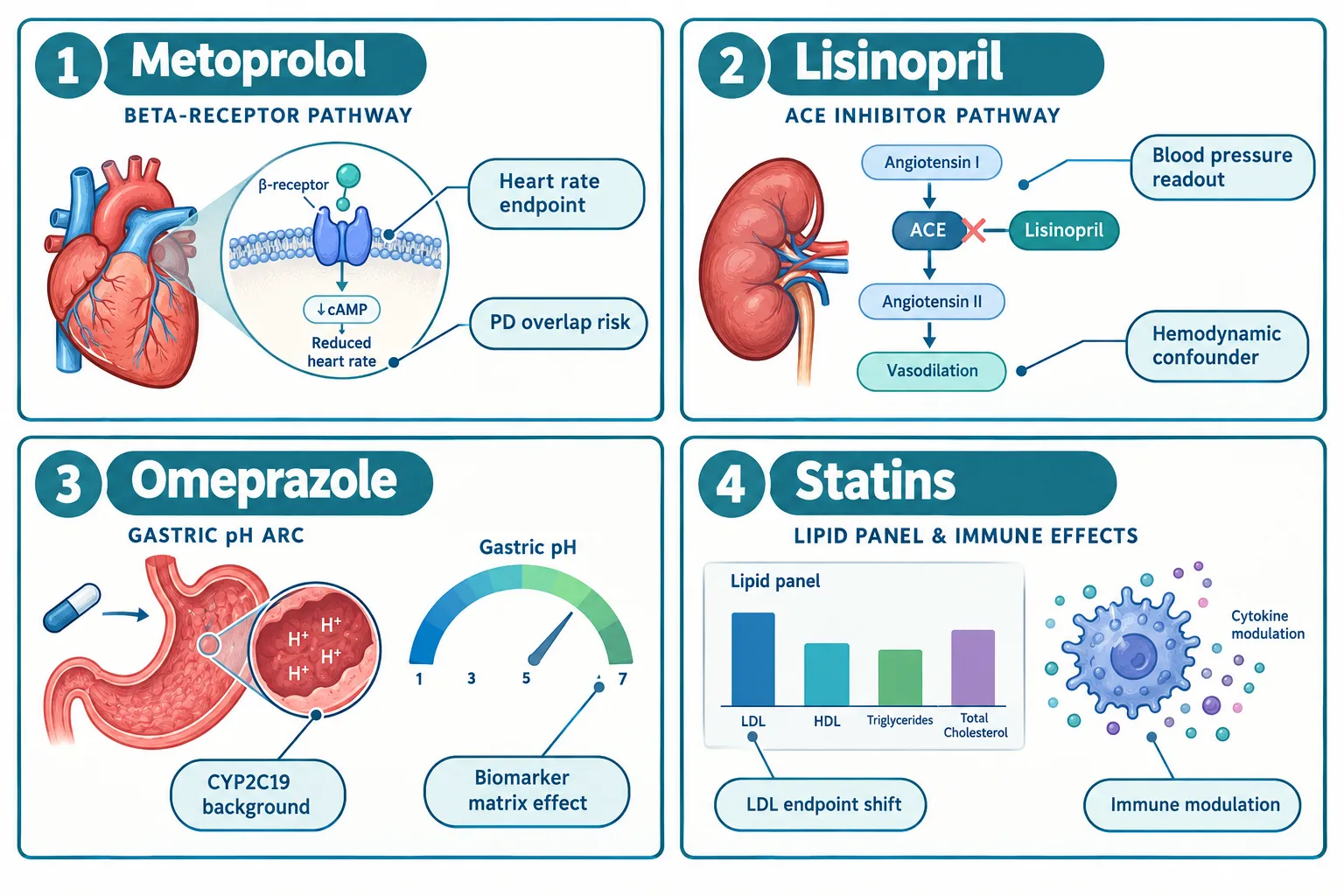
Metoprolol is a beta-1 selective adrenergic blocker. In peptide research involving cardiovascular or autonomic endpoints, heart rate, cardiac output, blood pressure variability, metoprolol directly modulates the same physiological parameters a peptide may be expected to influence. Any cohort or animal group receiving metoprolol will show attenuated heart rate responses, which can mask or amplify a peptide's apparent hemodynamic activity.

Lisinopril, an ACE inhibitor, suppresses angiotensin II generation and elevates bradykinin levels. In ex vivo vascular models or animal studies examining endothelial function, inflammatory cytokine profiles, or renal perfusion, lisinopril creates a shifted physiological baseline. Peptide-mediated vasodilation or anti-inflammatory signals measured against that background will be systematically different from peptide signals measured in drug-naive tissue.

Omeprazole is a proton pump inhibitor and a known CYP2C19 inhibitor. While the peptide itself may not be a CYP substrate, co-administered small-molecule probes or metabolic tracers used alongside a peptide study may be affected. More critically, omeprazole alters gastric and intestinal pH, which can affect oral bioavailability of companion agents and shift matrix composition in gastrointestinal tissue samples.

Statins present a dual challenge. First, they directly alter lipid panel endpoints, LDL, HDL, triglycerides, that are commonly used as efficacy biomarkers in cardiometabolic peptide research. A peptide with lipid-modulating properties cannot be fairly evaluated in a statin-treated cohort without stratification. Second, certain statins have documented immunomodulatory effects, meaning they can influence immune biomarker readouts relevant to peptide immunogenicity assessments.

For researchers exploring mitochondrial or cardiometabolic angles, resources such as the SS-31 mitochondrial research themes overview and the discussion of peptides in cardiometabolic models provide useful context on how peptide mechanisms intersect with the same pathways these drugs target.


Building the Confounder Matrix: Exposure Timing, Readouts, and Assay Controls
Building the Confounder Matrix: Exposure Timing, Readouts, and Assay Controls

A confounder matrix is a structured reference document, not a statistical model, that maps each background drug to the specific dimensions where it can distort peptide research data. The matrix should be built before sample collection begins.

Dimension 1: Exposure Timing

The timing of background drug exposure relative to peptide administration or sample collection determines whether interference is acute or chronic. The table below summarizes key timing considerations.

Drug Relevant Exposure Window Primary Timing Risk
Metoprolol Acute (1-4 hrs) and chronic Blunted heart rate response during peptide challenge
Lisinopril Chronic (days to weeks) Shifted vascular baseline at time of tissue harvest
Omeprazole Chronic (steady-state CYP2C19 inhibition) Altered matrix pH; companion probe metabolism affected
Statins Chronic (lipid and immune effects) Lipid endpoint suppression; immune biomarker shift

Dimension 2: Physiological Readout Overlap

For each peptide under study, list the primary and secondary efficacy endpoints. Then cross-reference each drug class against those endpoints. If metoprolol and the peptide both affect resting heart rate, that endpoint requires either exclusion of metoprolol-treated subjects from the primary analysis or formal stratification with sufficient statistical power in each stratum.

Key principle: An endpoint that is also a pharmacological target of a background drug cannot serve as an unconfounded primary readout without stratification or covariate adjustment.

Dimension 3: Assay Controls and Chromatographic Interference

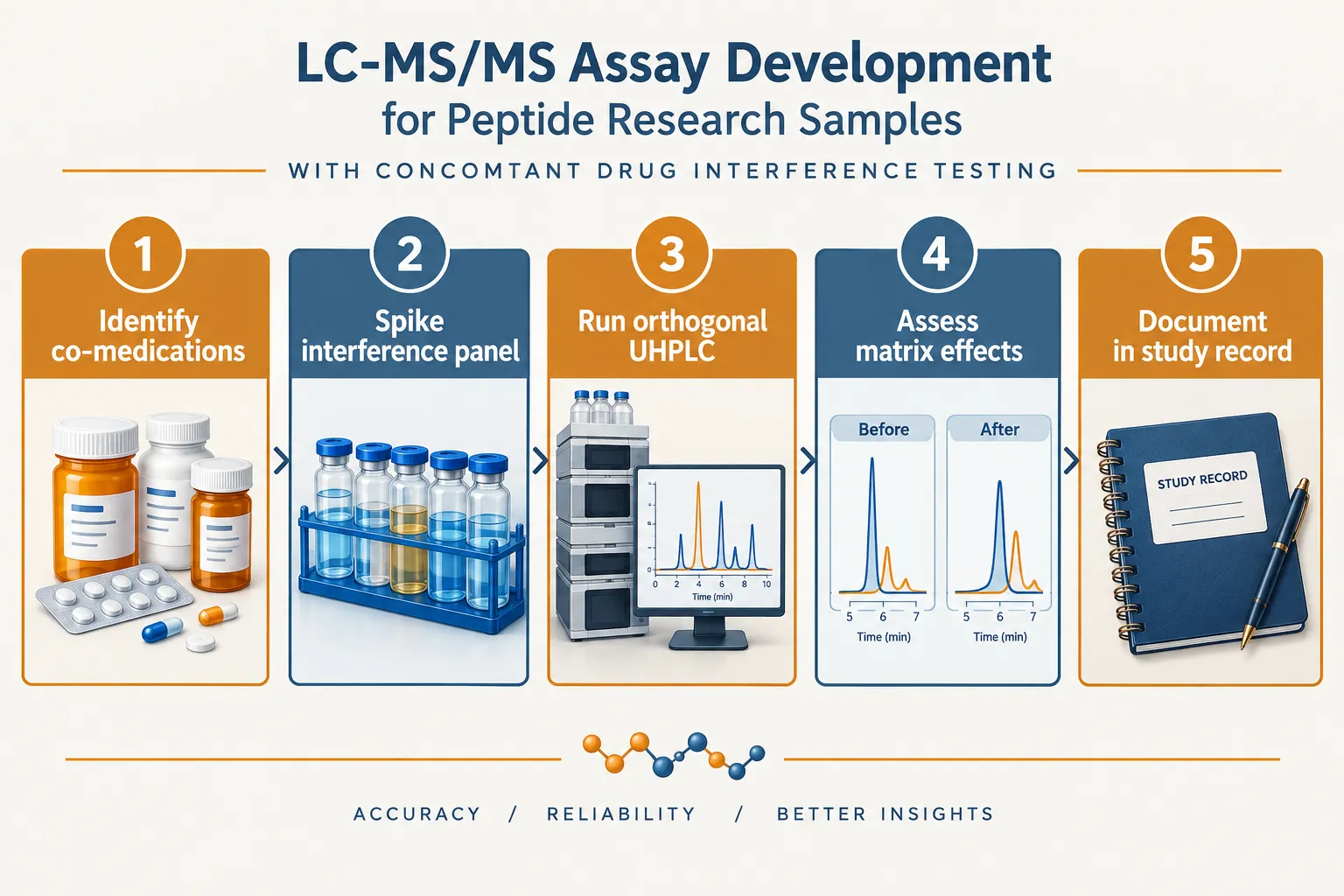
FDA bioanalytical method validation guidance for biomarkers explicitly requires sponsors to demonstrate assay selectivity and assess matrix effects across relevant patient subgroups and concomitant therapies. For LC-MS/MS workflows used to quantify peptide concentrations or peptide-related biomarkers, this means building an interference panel.

Interference panel construction steps:

  1. Obtain authenticated reference standards for the parent compound and major metabolites of metoprolol, lisinopril, omeprazole, and the relevant statin.
  2. Spike each compound individually into the biological matrix at clinically relevant concentrations.
  3. Run the spiked samples using the validated LC-MS/MS method and record retention times, peak areas, and any co-elution with peptide analyte peaks.
  4. Apply orthogonal chromatographic separation (e.g., UHPLC-HRMS/MS) to resolve any co-eluting species.
  5. Document selectivity data in the bioanalytical method validation report.

Published LC-MS assay work on cardiovascular medications has demonstrated that lisinopril and statins such as lovastatin exhibit peak tailing and matrix-dependent variability that can compromise quantification accuracy. These findings reinforce the need to include such compounds in interference testing rather than assuming they are chromatographically inert.

For researchers working with antioxidant or mitochondrially targeted peptides, the LL-37 versus SS-31 benefits comparison illustrates how different peptide classes engage distinct biological pathways, a factor that determines which background drugs are most likely to confound a given readout.

Dimension 4: Immunogenicity Background

Statins and long-term PPI use can influence immune biomarkers. FDA draft guidance on immunogenicity risk for synthetic peptides notes that impurities and background immunomodulatory agents can affect the summative immune response. When designing immunogenicity assays for a peptide program, the confounder matrix should flag statin and omeprazole exposure as variables requiring documentation in the sample metadata.


Documentation, Stratification, and Regulatory Alignment
Documentation, Stratification, and Regulatory Alignment

Mapping confounders is only useful if the map is formally embedded in study documentation. Regulatory science frameworks, including FDA product-specific guidances for generic peptide products updated in 2026, tighten expectations around impurity analysis and biological comparability, making it more important than ever to distinguish product-related signals from background medication effects in real-world samples.

Recommended documentation elements:

  • Inclusion/exclusion criteria log: Record which drug classes are permitted, restricted, or required to be stable-dose before enrollment or sample collection begins.
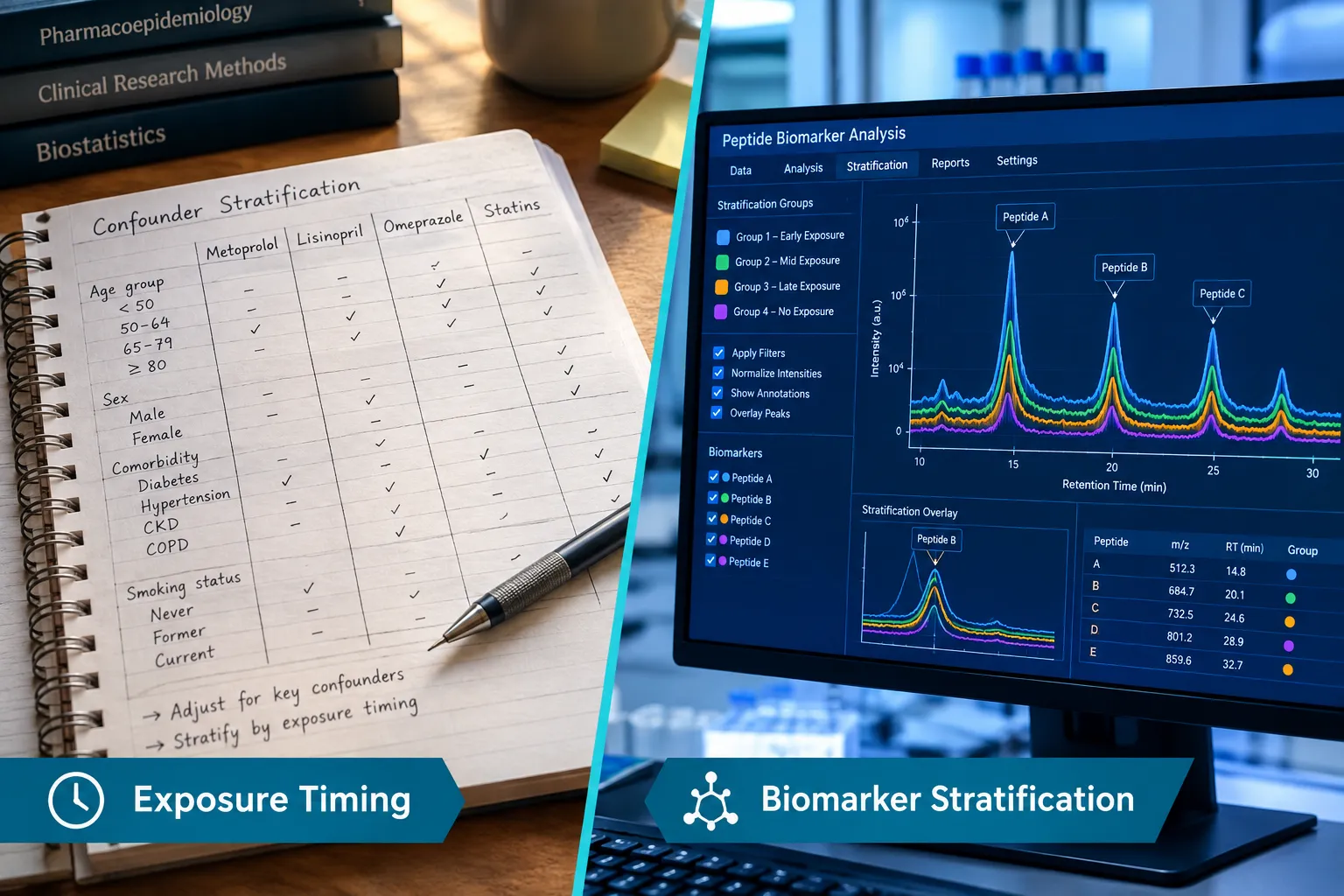
  • Stratification plan: Pre-specify strata for metoprolol use (yes/no), statin type and dose, and omeprazole use. Assign samples to strata before unblinding any endpoint data.
  • Assay selectivity appendix: Attach interference panel results to the bioanalytical method validation report. Include retention time tables and representative chromatograms for each spiked drug.
  • Biomarker qualification notes: For each lipid or cardiovascular endpoint used as a peptide efficacy biomarker, note whether statin or beta-blocker use was a pre-specified covariate in the analysis plan.

Regulatory guidance consistently positions concomitant medication mapping as part of clinical pharmacology planning rather than an afterthought. Practical recommendations from FDA workshop materials include prospectively capturing beta-blocker, ACE inhibitor, PPI, and statin use, stratifying PK/PD and biomarker analyses by these medications, and pre-screening bioanalytical methods for interference from their major metabolites.

Researchers sourcing verified peptide compounds for these studies can explore options through resources such as the best peptide website directory and the best place to buy peptide listings to ensure purity standards align with the stringent analytical requirements described above. For studies involving endocrine or receptor-level interactions, the discussion of peptides in endocrine pharmacology offers additional context on how background drug classes can shift receptor biology.


Conclusion

Mapping peptide research samples and common prescription drugs, metoprolol, lisinopril, omeprazole, and statin confounders, is a concrete, executable task that protects data integrity from the earliest stages of study design. The confounder matrix framework presented here addresses four actionable dimensions: exposure timing, physiological readout overlap, LC-MS/MS assay interference, and immunogenicity background documentation.

Actionable next steps for research teams:

  1. Before finalizing a study protocol, audit every primary and secondary endpoint against the pharmacological targets of the four drug classes covered here.
  2. Build an interference panel for all LC-MS/MS or ligand-binding assays using authenticated reference standards for each background drug and its major metabolites.
  3. Pre-specify stratification variables in the statistical analysis plan so that background drug exposure is a documented covariate, not a post-hoc explanation.
  4. Attach selectivity and matrix-effect data to the bioanalytical validation report as a dedicated confounder appendix.
  5. Review current FDA product-specific guidances and bioanalytical method validation guidance for biomarkers to ensure documentation meets the latest regulatory expectations.

Treating confounder mapping as a first-class study-design deliverable, not a footnote, is what separates reproducible peptide research from data that cannot be interpreted with confidence.

https://www.puretestedpeptides.com/wp-content/uploads/2026/09/peptide-research-samples-and-common-prescription-drugs-how-to-map-metoprolol-lis.webp 1024 1536 https://www.puretestedpeptides.com/wp-content/uploads/2026/01/buy-peptides-online.jpg 2026-09-26 13:06:382026-09-26 13:06:38Peptide Research Samples and Common Prescription Drugs: How to Map Metoprolol, Lisinopril, Omeprazole, and Statin Confounders
×

Helpful Links

  • My account
  • Cart
  • Checkout
  • Refund and Returns Policy
  • Privacy Policy
  • SMS Privacy Policy
  • Login
  • My Account
  • Logout

USA Made Lab Tested Peptides

All products are sold for research, laboratory, or analytical purposes only, and are not for human consumption


Pure Tested Peptides is a chemical supplier. Pure Tested Peptides is not a compounding / chemical compounding facility as defined under 503A of the Federal Food, Drug, and Cosmetic act. Pure Tested Peptides is not an outsourcing facility as defined under 503B of the Federal Food, Drug, and Cosmetic act.

The statements made within this website have not been evaluated by the US Food and Drug Administration. The products we offer are not intended to diagnose, treat, cure or prevent any disease.

Human/Animal Consumption Prohibited. Laboratory/In-Vitro Experimental Use Only

Scroll to top Scroll to top Scroll to top