

Enclomiphene and the Luteinizing Phase: Modeling Male Reproductive Hormone Fluctuations in Endocrine Research
Male testosterone levels in the United States have declined by roughly 1% per year since the 1980s, a trend that has pushed endocrine researchers to develop more precise tools for studying the hypothalamic-pituitary-gonadal (HPG) axis. At the center of this effort is enclomiphene, a selective estrogen receptor modulator (serm) that has become a valuable compound for modeling LH and FSH dynamics. The study of Enclomiphene and the Luteinizing Phase: Modeling Male Reproductive Hormone Fluctuations in Endocrine Research offers a structured framework for understanding how the male reproductive axis responds to pharmacological stimulation, and why that matters for comparative endocrinology.
Key Takeaways
- Enclomiphene blocks hypothalamic estrogen receptors, triggering measurable surges in LH and FSH that researchers use to map male gonadotropin dynamics.
- Research protocols now borrow "luteinizing phase" nomenclature from female reproductive biology to standardize how male hormone fluctuation windows are defined and compared.
- Study designs that track LH pulsatility before, during, and after enclomiphene administration generate reproducible hormone fluctuation models.
- Accurate compound sourcing and storage are foundational to data integrity in HPG-axis research.
- Comparative endocrinology benefits from cross-sex hormonal modeling, revealing shared regulatory mechanisms across reproductive systems.
The HPG Axis and Why the Luteinizing Phase Matters in Male Research
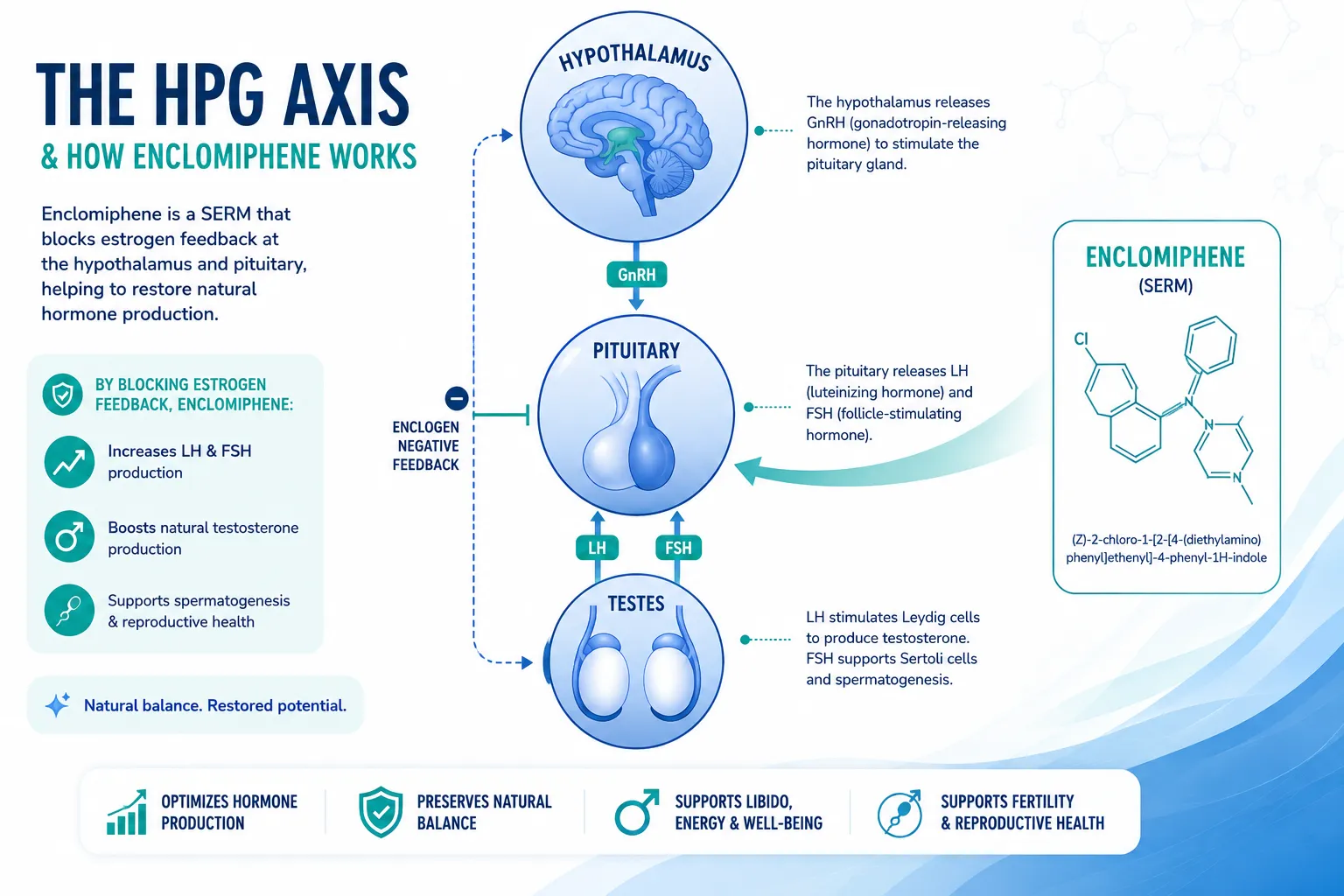
The HPG axis operates as a feedback loop. The hypothalamus releases gonadotropin-releasing hormone (GnRH) in pulses, which prompts the anterior pituitary to secrete luteinizing hormone (LH) and follicle-stimulating hormone (FSH). LH then signals the Leydig cells in the testes to produce testosterone. When testosterone rises, it feeds back to suppress GnRH and LH release, a classic negative feedback mechanism.
In female reproductive biology, the "luteinizing phase" refers to the window surrounding the LH surge that triggers ovulation. Endocrine researchers have adapted this terminology for male studies, defining a male luteinizing phase analog as the measurable period of elevated LH pulsatility following estrogen receptor blockade. This cross-sex nomenclature allows for direct comparison of gonadotropin kinetics across biological systems, strengthening the statistical power of comparative studies.
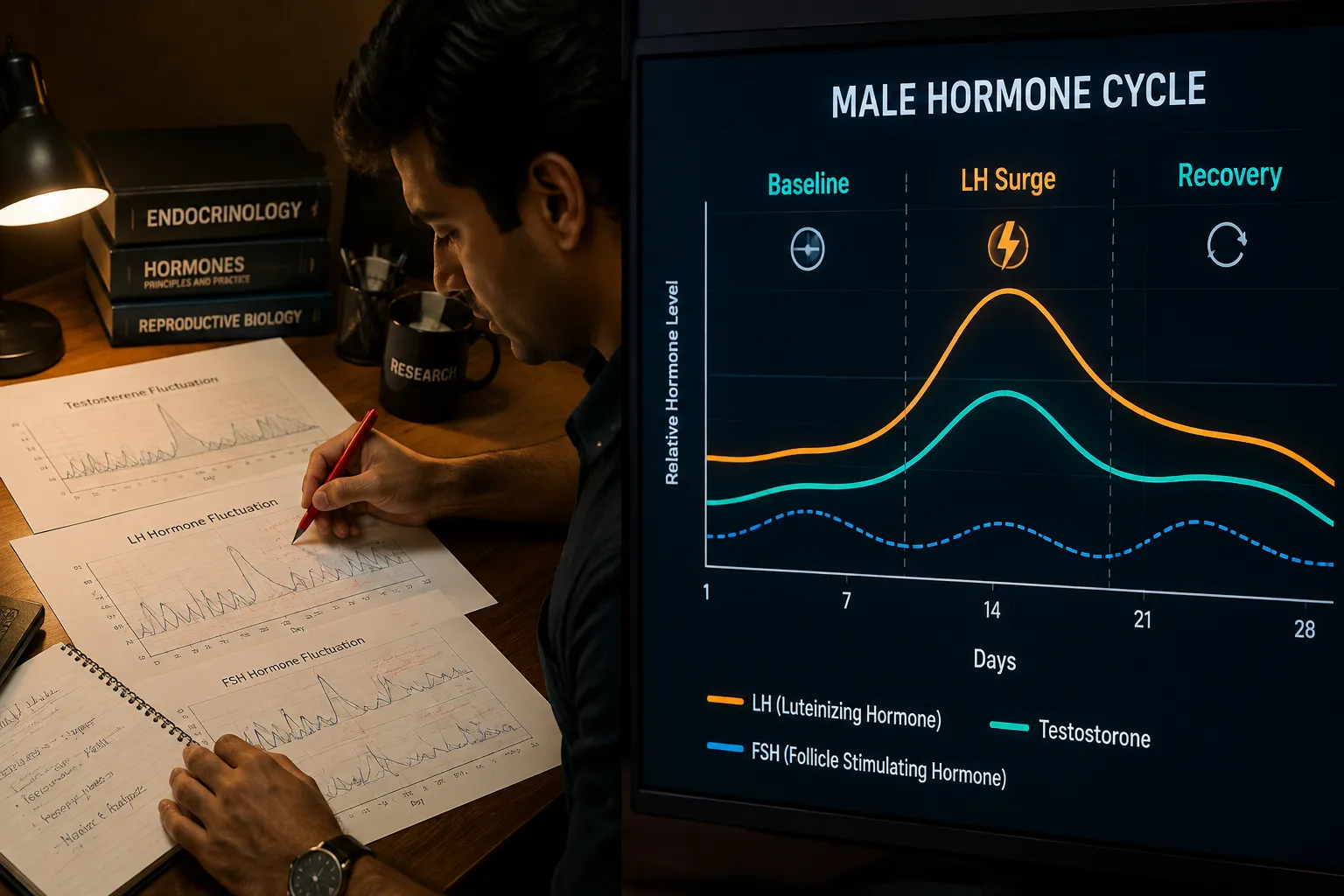
The practical value of this framework is significant. By defining a consistent hormonal window in male subjects, baseline, LH surge, and recovery, researchers can apply the same analytical tools used in female cycle research to male endocrine data. This standardization reduces variability between studies and makes meta-analyses more reliable.
How Enclomiphene Manipulates LH and FSH in Research Models
Enclomiphene is the trans-isomer of clomiphene citrate. Unlike its cis-isomer (zuclomiphene), enclomiphene has a shorter half-life and cleaner receptor binding profile, making it a more precise research tool for HPG-axis manipulation.
Mechanism of action in research contexts:
- Enclomiphene binds competitively to estrogen receptors in the hypothalamus.
- This blockade prevents estrogen from signaling its normal negative feedback.
- The hypothalamus responds by increasing GnRH pulse frequency.
- Elevated GnRH drives the pituitary to release more LH and FSH.
- Downstream, testicular Leydig cells respond with increased testosterone synthesis.
This cascade is highly reproducible, which is why Enclomiphene and the Luteinizing Phase: Modeling Male Reproductive Hormone Fluctuations in Endocrine Research has become a productive area of study. Researchers can reliably induce a defined LH surge window, observe the hormonal response curve, and then model how quickly the axis returns to baseline, all within a single study design.
| Research Phase | Primary Hormone Observed | Typical Duration |
|---|---|---|
| Baseline | Testosterone, LH, FSH | 7-14 days |
| LH Surge Window | LH, FSH elevation | 3-7 days |
| Recovery | Testosterone normalization | 7-21 days |
Researchers studying related peptide pathways, such as those examining IPA peptides or the CJC IPA 5 5mg compound, often run parallel HPG-axis assessments to understand how growth hormone secretagogues interact with gonadotropin signaling.
"Defining a male luteinizing phase analog is not merely semantic, it creates a reproducible experimental window that transforms anecdotal hormone data into structured, comparable research."
Study Design Frameworks for Modeling Male Hormone Fluctuations
Rigorous study design is what separates publishable enclomiphene research from inconclusive data. The most productive frameworks in 2026 share several structural features.
Core design elements include:
- Washout periods before compound administration to establish clean baseline LH and testosterone measurements.
- Serial blood sampling at defined intervals (often every 2-4 hours during the surge window) to capture LH pulsatility rather than single-point snapshots.
- Dose-response arms that test multiple enclomiphene concentrations to establish a pharmacodynamic curve.
- Recovery tracking that extends at least 21 days post-administration to document HPG axis normalization.
Researchers working on Enclomiphene and the Luteinizing Phase: Modeling Male Reproductive Hormone Fluctuations in Endocrine Research have also begun integrating metabolic co-variables. Given that GLP-1 receptor signaling influences hypothalamic function, some teams cross-reference HPG-axis data with metabolic markers. Resources covering GLP-1 peptide research concepts and sourcing and GLP-3 triple agonist research planning offer relevant context for researchers designing multi-axis endocrine studies.
Mitochondrial function is another emerging co-variable. Compounds studied under the SS-31 peptides category have shown relevance to Leydig cell energy metabolism, which directly affects testosterone synthesis capacity during the LH surge window.
Proper compound storage is equally critical. Degraded enclomiphene produces inconsistent receptor binding, which contaminates LH surge data. Researchers can reference protocols from resources like AOD 9604 storage and traceability notes to apply best-practice storage standards to their own compound management workflows.
Conclusion
The intersection of enclomiphene pharmacology and luteinizing phase modeling has opened a structured, reproducible pathway for studying male reproductive hormone fluctuations. Researchers who adopt standardized phase nomenclature, rigorous serial sampling protocols, and validated compound sourcing practices will generate data with the consistency needed for meta-analysis and cross-study comparison.
Actionable next steps for endocrine researchers:
- Define a clear male luteinizing phase analog window in study protocols before data collection begins.
- Implement serial LH sampling during the surge window rather than relying on single-timepoint measurements.
- Audit compound storage conditions to ensure enclomiphene purity and receptor-binding integrity.
- Consider integrating metabolic co-variables, including GLP-1 and mitochondrial markers, to build a more complete picture of HPG-axis function.
- Apply cross-sex comparative frameworks to align male hormone fluctuation data with established female cycle research standards.
As endocrine research grows more sophisticated in 2026, the tools and frameworks built around enclomiphene will remain central to understanding how the male reproductive axis is regulated, disrupted, and restored.