Call or Text 727-513-9780
  • Shopping Cart Shopping Cart
    0Shopping Cart
Pure Tested Peptides | America's most trusted Peptides for sale online
  • Peptides for sale
    • Oral Peptides for sale
      • Peptide Capsules for sale
      • BPC 157 Capsules 1000mcg
      • SLU-PP-332 Capsules | 1000 mcg
      • 5-Amino-1MQ 50mg Capsules
      • Tesofensine 500mcg
    • All Peptides for sale
    • Peptide Sprays
      • BPC 157 Nasal Spray Kit
      • BPC-157 TB500 Nasal Spray Kit
      • Semax Nasal Spray 10mg
      • Selank – Nasal Spray Kit – 10mg
      • Epithalon 50MG Nasal Spray Kit
      • Ipamorelin 10mg Nasal Spray
      • Klow Nasal Spray (BPC-157 + TB-500 + GHK-Cu + KPV) | 80mg
      • Hulk Nasal Spray Tesa / Ipa Blend 6/3 MG
      • Klow Nasal Spray
      • NAD + 500 mg Nasal Spray
      • PT-141 Nasal Spray Kit
    • GHRH Peptides
      • Ipa Peptides
      • CJC-1295 Peptides
        • CJC-1295 with DAC 5 mg
        • CJC-1295 without DAC 5 mg
        • CJC-1295 Ipa 10mg
      • Tesa Peptides
        • Tesa Peptide
        • Tesa 20 mg
    • GHK-Cu Peptides
      • All GHK-Cu Peptides
      • GHK-Cu 100mg
      • KLOW Peptide Blend – Buy KLOW blend online
    • BPC Peptides
      • All BPC Peptides
      • BPC-157
      • BPC-157 TB-500
      • BPC 157 capsules 1000mcg
    • SLU-PP-332 Peptides
      • All SLU-PP-332 Peptides
      • SLU-PP-332 5mg
    • GLP3 Peptides
      • GLP3-R
      • GLP3-R CAG 10mg
      • GLP3-R 20mg
    • PT-141 Peptides
      • PT-141 Peptides for sale
      • PT-141 10mg
      • PT-141 Nasal Spray
    • CAG Peptides
      • Lipo-C Peptide Blend
      • CAG 5mg
      • CAG 10mg
    • MOTS-C Peptides
      • MOTS-C Peptides for sale
      • MOTS-c peptide
      • MOTS-c 10mg *6 pack*
    • 5 Amino 1MQ Peptides
      • 5 Amino 1MQ Peptides for sale
      • 5-Amino-1MQ 50mg Capsules
      • 5-Amino-1MQ 5mg
    • Epithalon Peptides
      • Epithalon Peptides for sale
      • Epithalon 10mg
      • Epithalon 50mg
  • Shop
    • GLPs
      • 5-Amino-1MQ 50mg Capsules
      • 5-Amino-1MQ 5mg
      • GLP3-Reta
      • L-Carnitine 500mg/ml
      • Tesofensine 500mcg
      • SLU-PP-332 5mg
      • MOTS-c 10mg *6 pack*
    • Epithalon & BPC Peptides
      • Epithalon 10mg
      • Epithalon 50mg
      • BPC-157
      • BPC 157 capsules 1000mcg
      • BPC-157 TB-500
      • BPC-157 TB500 Nasal Spray Kit
      • BPC 157 Nasal Spray Kit
    • BPC TB-500 & NAD+ Peptides
      • NAD+ 500 mg
      • KLOW Peptide Blend – Buy KLOW blend online
      • GLOW Peptide Blend
      • TB 500 5mg
      • BPC 157 capsules 1000mcg – Supplement
      • BPC 157 Nasal Spray Kit
      • BPC-157
      • BPC-157 TB500 Nasal Spray Kit
      • BPC-157 TB-500
      • BPC 157 capsules 1000mcg
    • LL-37 Peptide
      • LL-37 10 mg
    • MOTS-C & Selank
      • MOTS-c peptide
      • Selank 10mg
    • GHK Peptides
      • GHK-Cu 100mg
      • GLOW Peptide Blend
      • KLOW Peptide Blend – Buy KLOW blend online
  • COAs
  • Wholesale
    • Wholesale Peptides for sale
  • PTP FAQ
  • Affiliates
    • Selank Peptide: Advanced Pharmacological Mechanisms Underlying Its Anxiolytic and Nootropic Effects in Research
      • 5-Amino-1MQ Peptide: Detailed Mechanisms of NNMT Inhibition and Its Impact on Cellular Metabolism Research
        • MOTS-C Peptide: Unraveling Its Role in Mitochondrial Dynamics and Energy Metabolism Research
          • Epithalon Peptide and Telomerase Regulation: Investigating Its Impact on Cellular Senescence and Lifespan Research Models
            • GLP2-T vs GLP2 Tirz Peptide: Understanding the Naming, Mechanistic Nuances, and Research Implications for Gut Health
      • Peptides and Polypeptides in Modern Pharmacology: What Research on Metoprolol, Prednisone, and Amlodipine Reveals
        • Polypeptide Peptides vs NSAIDs: What Naproxen and Diclofenac Teach Tissue-Repair Researchers About BPC‑157 and TB‑500
          • Peptides and Polypeptides in Endocrine Pharmacology: How GLP-1, GLP-2, and GLP-3 Retatrutide Differ From Classic Drugs Like Prednisone and Amlodipine
          • 5‑Amino‑1MQ Peptide and NNMT Inhibition: How It Compares With Statins Like Atorvastatin in Adipose and Lipid Metabolism Research
      • Enclomiphene, Estrogen Receptor Signaling, and Luteinizing Phase Biology: What Hormone Researchers Should Measure
        • Mesenchymal Stem Cells, BPC‑157, and GHK‑Cu: How Tissue Repair Peptides Compare With Classic NSAIDs Like Naproxen in Injury Models
          • Peptide Calculator Use Cases Beyond Growth Hormone: Working Through GLP‑3 Retatrutide, MOTS‑c, and BPC‑157 Research Dosing
        • Polypeptide Peptides in Endocrine and Metabolic Pharmacology: Lessons From Amlodipine, Prednisone, and Metoprolol
        • Peptides Calculator for Advanced Blends: Worked Examples for Tesamorelin, CJC‑1295, and Ipamorelin Stacks
          • Peptides and Polypeptides in Human Physiology: How Molecular Size Shapes Research Applications
            • Selank Peptide: Advanced Pharmacological Mechanisms Underlying Its Anxiolytic and Nootropic Effects in Research
          • 5-Amino-1MQ Peptide: Detailed Mechanisms of NNMT Inhibition and Its Impact on Cellular Metabolism Research
            • MOTS-C Peptide: Unraveling Its Role in Mitochondrial Dynamics and Energy Metabolism Research
              • Epithalon Peptide and Telomerase Regulation: Investigating Its Impact on Cellular Senescence and Lifespan Research Models
                • GLP2-T vs GLP2 Tirz Peptide: Understanding the Naming, Mechanistic Nuances, and Research Implications for Gut Health
                  • Peptides and Polypeptides in Endocrine Pharmacology: How GLP-1, GLP-2, and GLP-3 Retatrutide Differ From Classic Drugs Like Prednisone and Amlodipine
                    • Polypeptide Peptides vs NSAIDs: What Naproxen and Diclofenac Teach Tissue-Repair Researchers About BPC‑157 and TB‑500
                      • Peptides and Polypeptides in Modern Pharmacology: What Research on Metoprolol, Prednisone, and Amlodipine Reveals
                        • 5‑Amino‑1MQ Peptide and NNMT Inhibition: How It Compares With Statins Like Atorvastatin in Adipose and Lipid Metabolism Research
                        • Enclomiphene, Estrogen Receptor Signaling, and Luteinizing Phase Biology: What Hormone Researchers Should Measure
                        • Mesenchymal Stem Cells, BPC‑157, and GHK‑Cu: How Tissue Repair Peptides Compare With Classic NSAIDs Like Naproxen in Injury Models
                        • Peptide Calculator Use Cases Beyond Growth Hormone: Working Through GLP‑3 Retatrutide, MOTS‑c, and BPC‑157 Research Dosing
                        • Polypeptide Peptides in Endocrine and Metabolic Pharmacology: Lessons From Amlodipine, Prednisone, and Metoprolol
                        • Peptides Calculator for Advanced Blends: Worked Examples for Tesamorelin, CJC‑1295, and Ipamorelin Stacks
                        • Peptides and Polypeptides in Human Physiology: How Molecular Size Shapes Research Applications
                        • Selank Peptide: Advanced Pharmacological Mechanisms Underlying Its Anxiolytic and Nootropic Effects in Research
                        • MOTS-C Peptide: Unraveling Its Role in Mitochondrial Dynamics and Energy Metabolism Research
                        • Peptides and Polypeptides in Modern Pharmacology: What Research on Metoprolol, Prednisone, and Amlodipine Reveals
                        • Peptides and Polypeptides in Endocrine Pharmacology: How GLP-1, GLP-2, and GLP-3 Retatrutide Differ From Classic Drugs Like Prednisone and Amlodipine
                        • 5-Amino-1MQ Peptide: Detailed Mechanisms of NNMT Inhibition and Its Impact on Cellular Metabolism Research
                        • Mesenchymal Stem Cells, BPC‑157, and GHK‑Cu: How Tissue Repair Peptides Compare With Classic NSAIDs Like Naproxen in Injury Models
                        • Peptide Calculator Use Cases Beyond Growth Hormone: Working Through GLP‑3 Retatrutide, MOTS‑c, and BPC‑157 Research Dosing
                        • GLP2-T vs GLP2 Tirz Peptide: Understanding the Naming, Mechanistic Nuances, and Research Implications for Gut Health
                        • Polypeptide Peptides in Endocrine and Metabolic Pharmacology: Lessons From Amlodipine, Prednisone, and Metoprolol
                        • Polypeptide Peptides vs NSAIDs: What Naproxen and Diclofenac Teach Tissue-Repair Researchers About BPC‑157 and TB‑500
                        • Peptides and Polypeptides in Human Physiology: How Molecular Size Shapes Research Applications
                        • Peptides Calculator for Advanced Blends: Worked Examples for Tesamorelin, CJC‑1295, and Ipamorelin Stacks
                        • 5‑Amino‑1MQ Peptide and NNMT Inhibition: How It Compares With Statins Like Atorvastatin in Adipose and Lipid Metabolism Research
                        • Enclomiphene, Estrogen Receptor Signaling, and Luteinizing Phase Biology: What Hormone Researchers Should Measure
                        • Epithalon Peptide and Telomerase Regulation: Investigating Its Impact on Cellular Senescence and Lifespan Research Models
                        • Best research protocol Klow blend
                        • best time to take BPC-157
                        • best time to take DSIP (Delta Sleep Inducing Peptide)
                        • best time to take CJC-1295
                        • best time to take AOD-9604
                        • best time to take Follistatin 344
                        • best time to take Ipamorelin
                        • best time to take MK-677 (Ibutamoren)
                        • best time to take Ligandrol (LGD-4033) — research compound
                        • best time to take Ostarine (MK-2866) — research compound
                        • best time to take GHK-CU
                        • best time to take TB-500
                        • best time to take MOTS-c
                        • best time to take Semax
                        • best time to take RAD-140 (Testolone) — research compound
                        • best time to take Thymosin Alpha-1
                        • best time to take PEG-MGF
                        • Biolife Plasma, Octapharma Plasma, and Research Peptides: How Plasma Donation Labs Differ From Peptide Suppliers
                        • best time to take YK-11 — research compound
                        • best time to take PT-141 (Bremelanotide)
                        • Best research protocol Klow blend
                        • 5-Amino-1MQ and MOTS-C Synergy: Metabolic Signaling, Mitochondria, and Research Design
                        • BPC-157 and TB-500: Investigating Their Combined Effects on Angiogenesis and Cellular Migration in Tissue Repair Models
                        • BPC-157 Peptide: Gut Barrier Function, Inflammation, and Tissue-Recovery Research
                        • 5‑Amino‑1MQ and MOTS‑c Synergy in Metabolic Research: Designing NNMT and Mitochondrial Biogenesis Stacks
                        • CJC-1295 with DAC vs. Without DAC: Half-Life, Release Kinetics, and Research Implications
                        • CJC‑1295 with DAC vs. Without DAC: Expanding on Half‑Life Differences Using Tesamorelin and Ipamorelin Blend Case Studies
                        • Collagen Biology and Copper‑Binding Peptides: How GHK‑Cu, Glow Blend, and Klow Blend Interact with Skin and Connective Tissue
                        • Collagen Biology and Regenerative Peptides: How GHK‑Cu, Glow Blend, and Klow Blend Affect Extracellular Matrix Research
                    • DNA, Telomeres, and Longevity Peptides: Positioning Epithalon and MOTS‑c in Genetic Aging Research
                      • Enclomiphene Citrate: serm Mechanism, Testosterone Research, and Stack Compatibility
                        • Enclomiphene vs Enclomiphene Citrate: Formulation, Bioavailability, and Research Distinctions
                        • Epithalon Peptide Research: Telomerase Activation, Aging, and Pineal Gland Function
                        • Estrogen Receptor Signaling and Enclomiphene: How Selective Modulators Compare with Classic Polypeptide Hormones
                        • GHK-Cu Peptide: Advanced Mechanisms in Extracellular Matrix Remodeling and Wound Healing Research
                        • GHK-Cu Peptide: Collagen Synthesis, Wound Repair, and Skin-Barrier Research Models
                        • GLP-1 vs GLP-3 vs GLP-2: Peptide Classification and Research Applications
                        • GLP-2 Peptide Research Guide: Gut Barrier Function, Nutrient Absorption, and Intestinal Recovery Models
                        • GLP-3 Retatrutide vs. GLP-1 Drugs: What Triple-Agonist Biology Changes in Research Models
                        • Ipamorelin and Tesamorelin Combination: Synergistic GH Secretagogue Research and Dosing Protocols
                        • GLP2 Tirz Peptide: What It Is, Why the Name Exists, and How Researchers Should Interpret It
                        • Klow Blend Peptide Nasal Spray: What the Formulation Is Trying to Do in Cognitive Research
                        • Mitochondria, NNMT Inhibition, and Peptide Modulators: Where MOTS‑c and 5‑Amino‑1MQ Fit in Cellular Energy Research
                        • MOTS-c Peptide: Mitochondrial Function, Energy Metabolism, and What Researchers Measure
                        • MOTS-c vs. 5-Amino-1MQ: Which Metabolic Research Questions Each Compound Actually Answers
                        • Nasal Spray Peptides: Bioavailability, Administration, and Semax/Selank Research Applications
                        • PT-141 Peptide Research: Mechanism of Action and Melanocortin Receptor Signaling
                        • Retatrutide for Research: Mechanism, Structure, and GLP-1/GLP-3 Dual Action
                        • Retatrutide for Obesity and Type 2 Diabetes: What the Latest Trial Data Suggest
                        • Tesofensine Peptide Research: Mechanism, Appetite Suppression, and Neuropeptide Y Pathways
  • Contact
    • Contact Customer Service
    • Text Customer Support
  • About US
  • Shop all peptides
  • Affiliate Program
    • Affiliate Signup
  • Login / Register Login / Register Page Link Login / Register Page Link
  • Click to open the search input field Click to open the search input field Search
  • Menu Menu

Tag Archive for: matrix metalloproteinase regulation

GHK-Cu Peptide: Collagen Synthesis and Skin Matrix Biology Research

GHK-Cu Peptide: Collagen Synthesis and Skin Matrix Biology Research

August 30, 2026/0 Comments/in Uncategorized/by

A three-amino-acid copper-binding tripeptide found naturally in human plasma, urine, and saliva is quietly reshaping how researchers think about skin matrix biology. GHK-Cu, glycyl-L-histidyl-L-lysine complexed with copper(II), stimulates collagen production at concentrations as low as one picomolar, a potency that few naturally occurring compounds can match. For researchers investigating skin collagen synthesis, wound repair, and anti-aging mechanisms, GHK-Cu peptide: collagen synthesis and skin matrix biology research represents one of the most data-rich areas in topical peptide science.

Key Takeaways

  • GHK-Cu directly activates fibroblasts to produce collagen, elastin, and glycosaminoglycans at picomolar-to-nanomolar concentrations.
  • The peptide modulates matrix metalloproteinases (MMP-1 and MMP-2), balancing matrix breakdown and remodeling rather than simply blocking degradation.
  • Human biopsy data show collagen responses comparable to, and in some measures exceeding, vitamin C and retinoic acid benchmarks.
  • Approximately 30 topical skin studies published through 2025 support efficacy in photoaging, but large randomized controlled trials remain limited.
  • Safety data from short-term topical use appears favorable, though long-term and systemic data gaps persist as of 2026.

Molecular Mechanism: How GHK-Cu Drives Collagen and ECM Production
Molecular Mechanism: How GHK-Cu Drives Collagen and ECM Production

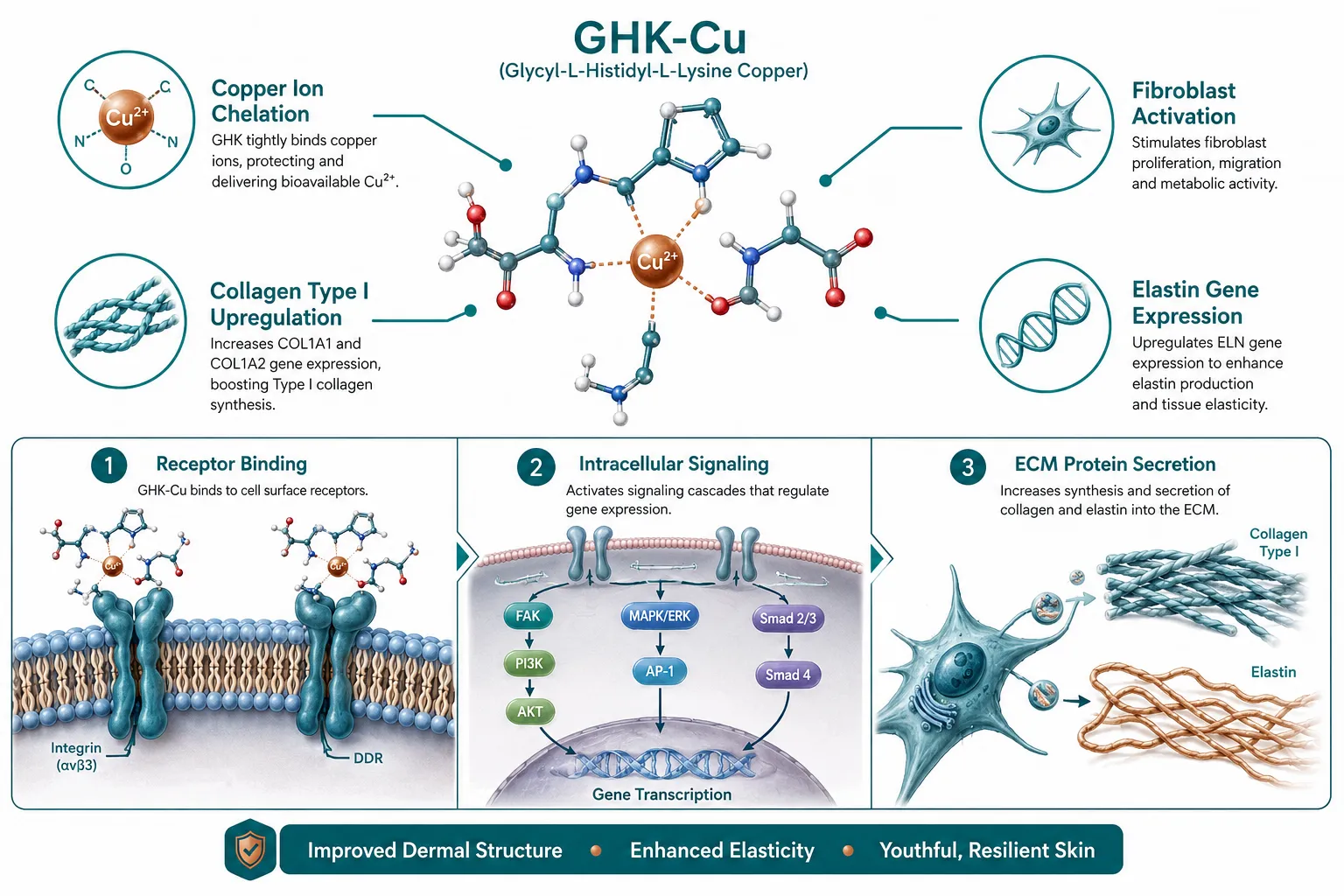
GHK-Cu does not act as a passive structural ingredient. It binds copper ions with high affinity and delivers them to fibroblasts, triggering a cascade of gene expression changes that directly upregulate extracellular matrix (ECM) proteins. The peptide activates transcription of collagen type I and type III genes, stimulates elastin synthesis, and promotes the production of glycosaminoglycans (GAGs) such as hyaluronic acid and dermatan sulfate, all critical components of healthy dermal architecture.

Key molecular actions include:

  • Upregulation of collagen I and III mRNA in dermal fibroblasts
  • Stimulation of elastin gene expression, improving skin elasticity
  • Increased decorin and versican proteoglycan deposition
  • Activation of TGF-beta signaling pathways that coordinate matrix assembly

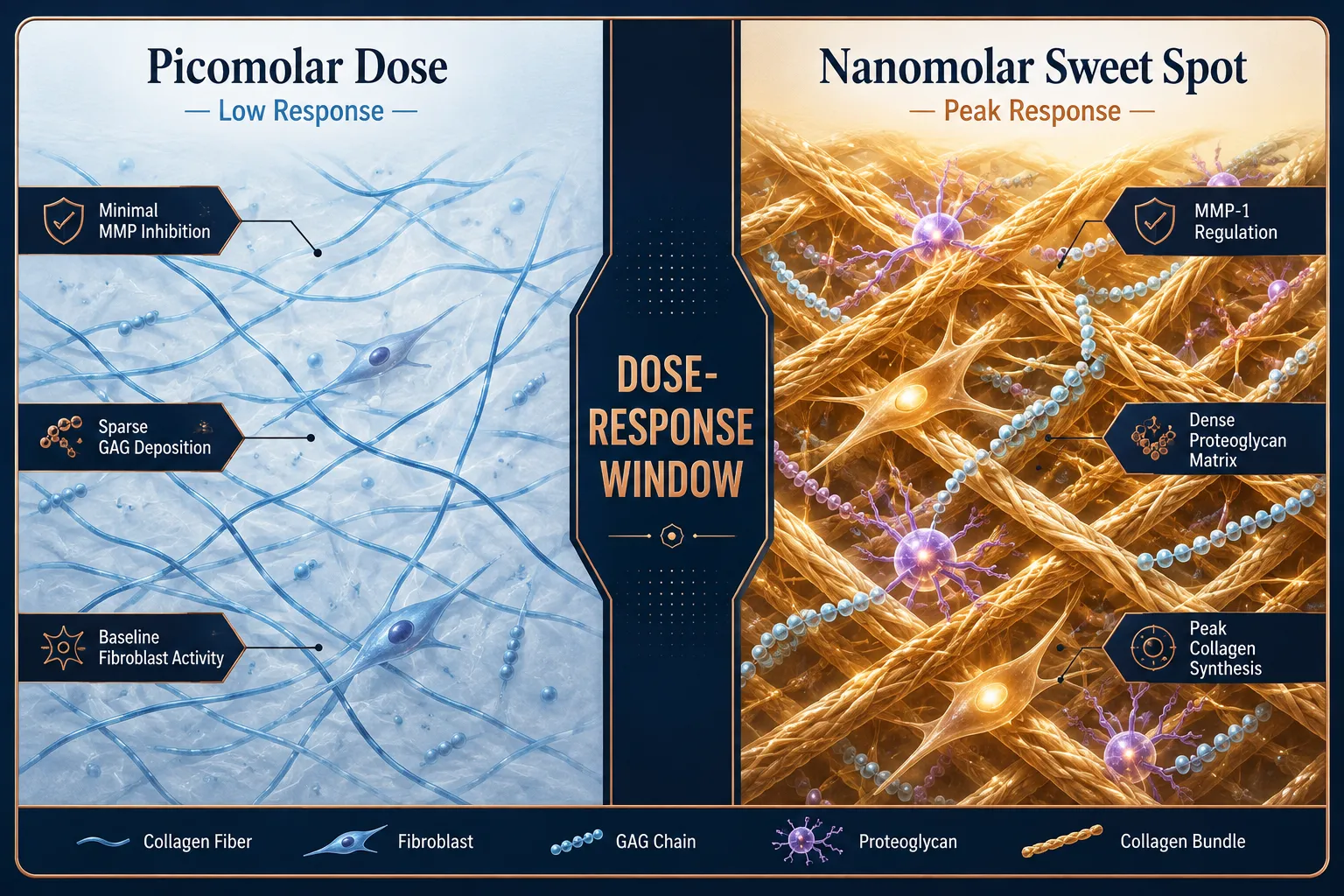
Beyond building matrix components, GHK-Cu modulates matrix metalloproteinases. It suppresses MMP-1 (collagenase) activity while maintaining or slightly elevating MMP-2 (gelatinase), a balance that supports controlled remodeling rather than unchecked degradation. This dual regulation is a defining feature of skin repair peptides that target matrix homeostasis rather than simply blocking breakdown enzymes.

The peptide also influences antioxidant defense systems, upregulating superoxide dismutase and reducing oxidative stress in fibroblast cultures, a property relevant to researchers exploring systemic peptide research applications beyond the skin.

Dose-Response Dynamics and the Picomolar-Nanomolar Sweet Spot
Dose-Response Dynamics and the Picomolar-Nanomolar Sweet Spot

One of the most scientifically significant aspects of GHK-Cu peptide: collagen synthesis and skin matrix biology research is the peptide's non-linear dose-response profile. Maximum biological activity occurs within a narrow picomolar-to-nanomolar concentration window. At higher micromolar concentrations, efficacy plateaus or may decline, a pattern consistent with receptor saturation or feedback inhibition at the fibroblast level.

“The potency of GHK-Cu at subnanomolar concentrations challenges conventional dose assumptions and underscores the importance of precise formulation in both research models and topical applications.”

This concentration specificity has direct implications for skin peptide endpoints in study design. Researchers must carefully calibrate exposure levels to remain within the active window. Studies using too-high concentrations may underreport efficacy, a methodological consideration that partly explains variability across published literature.

Dose-response summary:

Concentration Range Observed Effect
Picomolar (10^-12 M) Detectable fibroblast activation, early GAG upregulation
Nanomolar (10^-9 M) Peak collagen and elastin gene expression
Micromolar (10^-6 M) Plateau or diminishing returns in most cell models

Clinical Evidence: Human Biopsy Data and Photoaging Trial Outcomes
Clinical Evidence: Human Biopsy Data and Photoaging Trial Outcomes

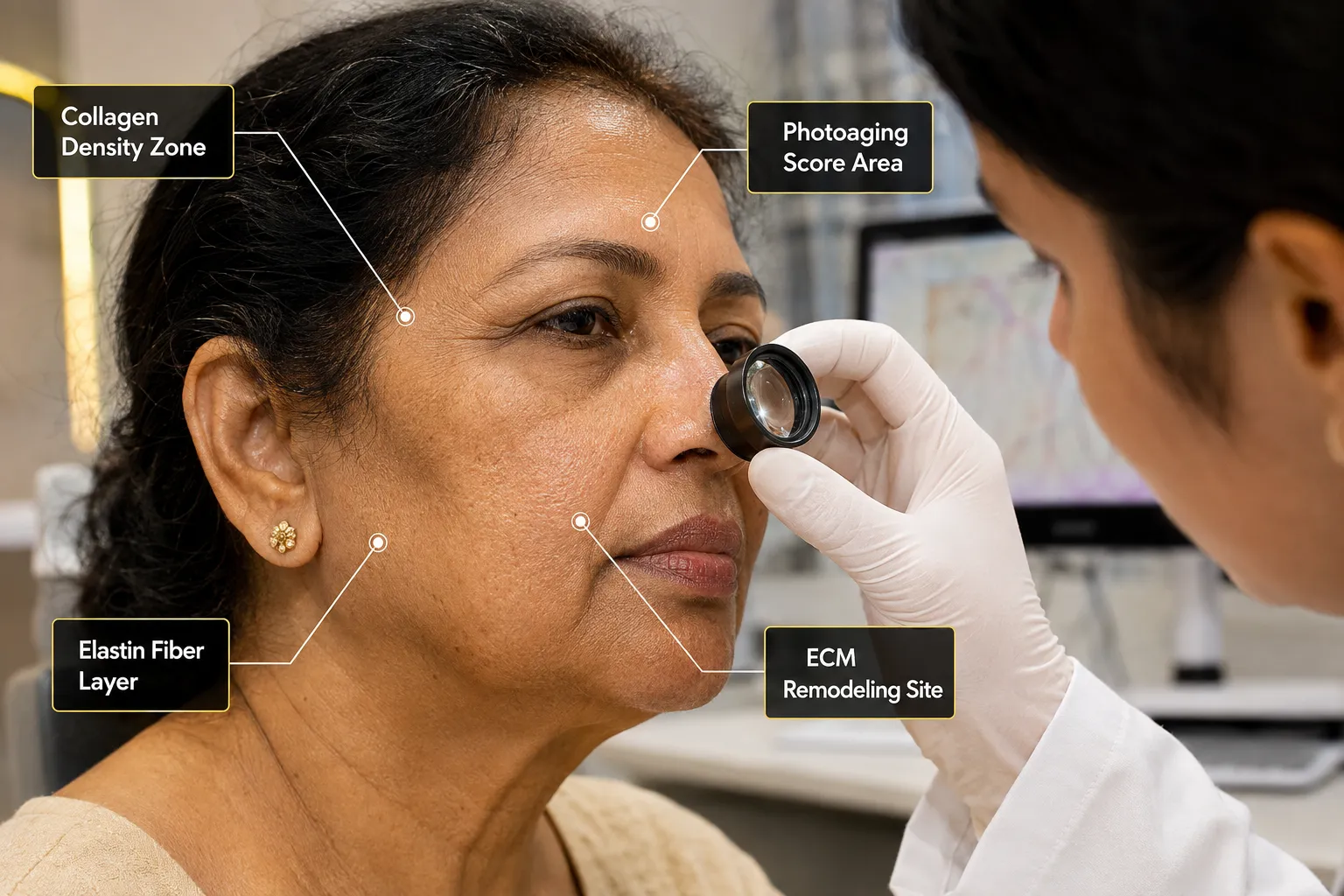
The clinical evidence base for GHK-Cu peptide: collagen synthesis and skin matrix biology research has grown substantially, with roughly 30 topical skin studies published through 2025. Human biopsy studies comparing GHK-Cu to established benchmarks are particularly instructive. In controlled comparisons, GHK-Cu-treated skin showed collagen density increases comparable to retinoic acid and vitamin C, two of the most studied topical actives in dermatology, a finding that has elevated the peptide's standing in expert commentary entering 2026.

Twelve-week cosmetic trials in subjects with facial photoaging have documented measurable improvements in:

  • Skin thickness and dermal density on ultrasound imaging
  • Fine line depth and surface roughness metrics
  • Skin firmness and elasticity by cutometry
  • Overall photoaging score reductions versus placebo

These outcomes align with the mechanistic data: increased collagen and GAG deposition produces measurable structural changes within weeks of consistent topical exposure. Researchers interested in skin peptide sourcing for study use should note that purity and copper-chelation integrity are critical variables affecting reproducibility across trial sites.

Current data gaps as of 2026:

  • No large-scale (n > 200) randomized controlled trials with histological endpoints
  • Limited data on optimal delivery vehicles and skin penetration enhancement
  • Sparse long-term safety data beyond 12-week observation windows
  • Minimal head-to-head comparisons with other therapeutic peptides in controlled settings

The safety profile from available short-term studies is reassuring. Topical GHK-Cu at studied concentrations shows low irritation potential and no significant adverse events in healthy adult populations. Systemic absorption from topical application appears minimal, though this has not been rigorously quantified across all formulation types.

Conclusion

GHK-Cu stands out in peptide science for its mechanistic depth, its activity at extraordinarily low concentrations, and a clinical evidence base that now spans three decades of investigation. The peptide's ability to simultaneously stimulate collagen, elastin, and GAG production while modulating MMP activity makes it a uniquely versatile tool for researchers studying skin matrix biology, wound healing, and photoaging reversal.

Actionable next steps for researchers in 2026:

  1. Design dose-ranging studies that specifically test the picomolar-to-nanomolar window rather than defaulting to higher concentrations.
  2. Incorporate histological biopsy endpoints alongside surface imaging to capture dermal structural changes.
  3. Standardize copper-chelation verification in peptide sourcing protocols to ensure biological activity consistency.
  4. Consider combination models pairing GHK-Cu with complementary actives, given emerging interest in synergistic peptides research.
  5. Prioritize longer observation windows (24+ weeks) to capture remodeling kinetics beyond the 12-week standard.

The field is maturing, but significant data gaps remain. Researchers who address these gaps with rigorous, well-powered trials will define the next chapter of GHK-Cu science.

https://www.puretestedpeptides.com/wp-content/uploads/2026/08/ghk-cu-peptide-collagen-synthesis-and-skin-matrix-biology-research.webp 1024 1536 https://www.puretestedpeptides.com/wp-content/uploads/2026/01/buy-peptides-online.jpg 2026-08-30 13:05:542026-08-30 13:05:54GHK-Cu Peptide: Collagen Synthesis and Skin Matrix Biology Research
×

Helpful Links

  • My account
  • Cart
  • Checkout
  • Refund and Returns Policy
  • Privacy Policy
  • SMS Privacy Policy
  • Login
  • My Account
  • Logout

USA Made Lab Tested Peptides

All products are sold for research, laboratory, or analytical purposes only, and are not for human consumption


Pure Tested Peptides is a chemical supplier. Pure Tested Peptides is not a compounding / chemical compounding facility as defined under 503A of the Federal Food, Drug, and Cosmetic act. Pure Tested Peptides is not an outsourcing facility as defined under 503B of the Federal Food, Drug, and Cosmetic act.

The statements made within this website have not been evaluated by the US Food and Drug Administration. The products we offer are not intended to diagnose, treat, cure or prevent any disease.

Human/Animal Consumption Prohibited. Laboratory/In-Vitro Experimental Use Only

Scroll to top Scroll to top Scroll to top