Glow Blend (GHK-Cu / BPC-157 / TB-500) In Vitro Fibroblast Migration Assays: Matrix Metalloproteinase Readouts
Collagen type I/III ratios are among the most clinically meaningful markers of dermal tissue quality, and the idea of shifting that ratio upward using a precisely formulated multi-peptide blend is now driving active interest among laboratory researchers. The Glow Blend (GHK-Cu / BPC-157 / TB-500) in vitro fibroblast migration assays: matrix metalloproteinase readouts framework sits at the intersection of peptide biochemistry, extracellular matrix (ECM) science, and scratch-wound modeling. As 2026 research-supply catalogs list a standardized 70 mg lyophilized vial (50 mg GHK-Cu, 10 mg BPC-157, 10 mg TB-500), the scientific rationale for pairing these three peptides in cell-based assays becomes worth examining in detail.
Key Takeaways
- The Glow Blend combines GHK-Cu, BPC-157, and TB-500 in a single research-grade vial designed for in vitro and non-clinical ECM and migration studies.
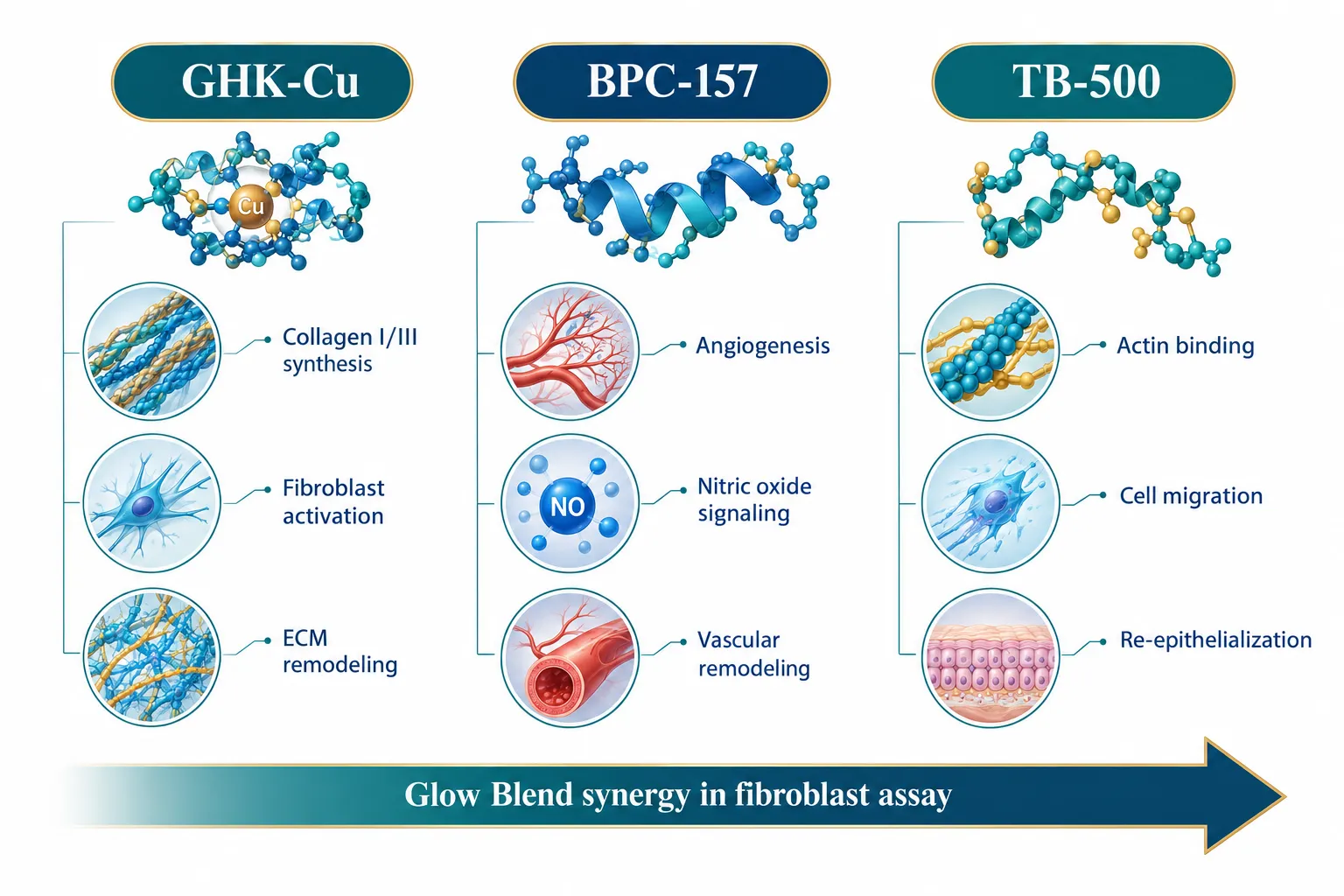
- Each peptide operates through a distinct mechanism: GHK-Cu drives collagen and elastin synthesis, BPC-157 supports angiogenesis and tissue remodeling, and TB-500 mediates actin-dependent cell migration.
- MMP-2 suppression and an elevated collagen I/III ratio are the two most theoretically relevant readouts when studying this blend in fibroblast scratch-wound assays.
- No publicly available, controlled dataset yet reports numerical MMP-2 or MMP-9 fold-change values specific to the Glow Blend combination; current expectations are model-based.
- All Glow Blend work is research-only; the combination has not been evaluated in controlled human trials.
Mechanism of Action: What Each Component Brings to Fibroblast Assays
Understanding the Glow Blend (GHK-Cu / BPC-157 / TB-500) in vitro fibroblast migration assays: matrix metalloproteinase readouts model requires separating what each peptide does at the cellular level before asking what their combination might do.
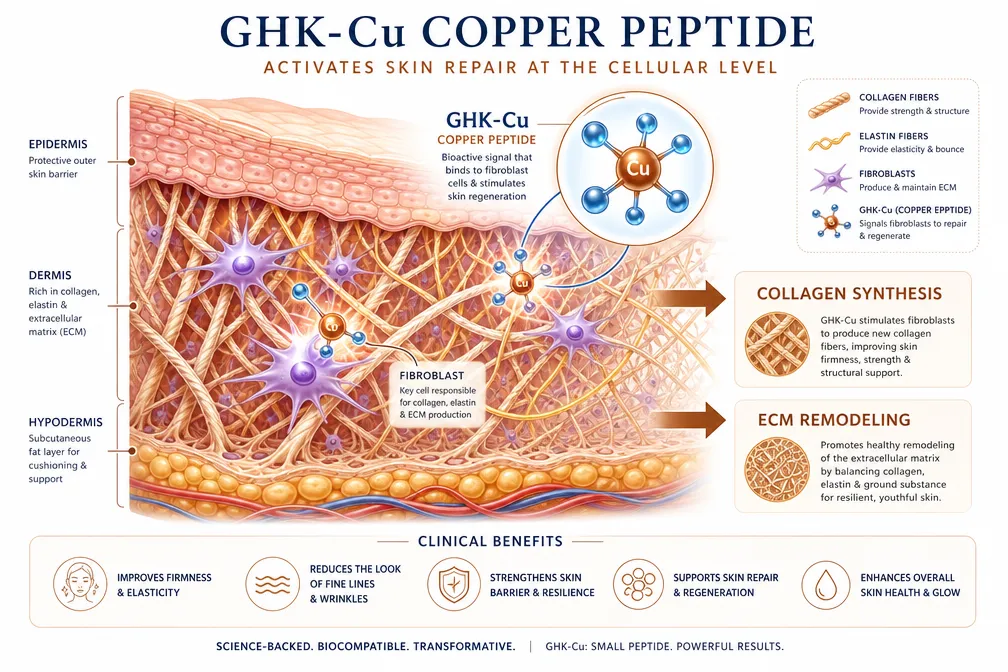
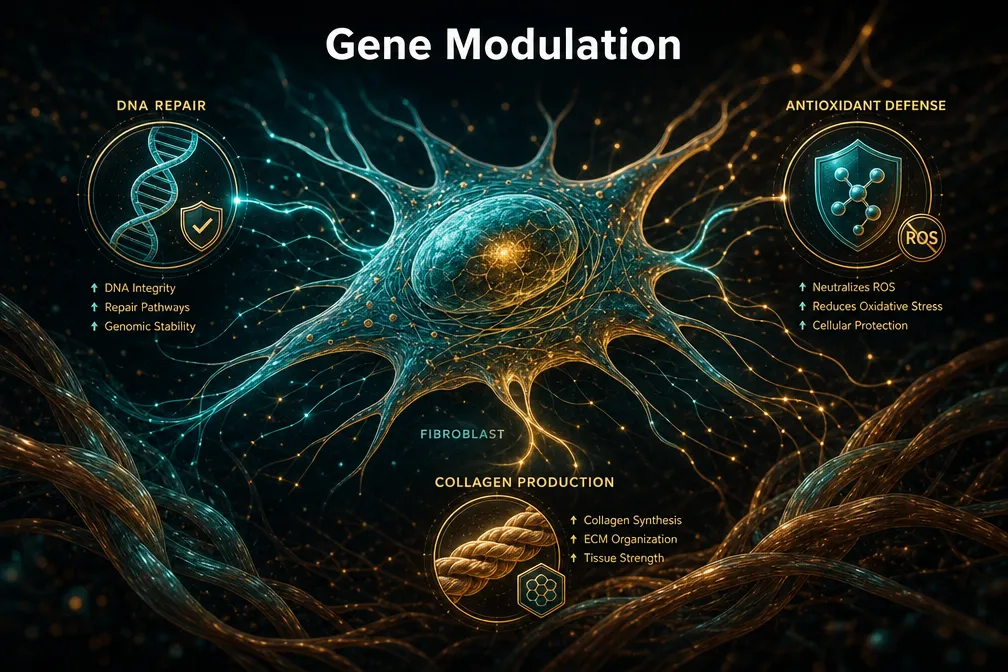
GHK-Cu (copper tripeptide) is a naturally occurring molecule with well-documented roles in collagen, elastin, and glycosaminoglycan synthesis. Animal wound-healing studies show enhanced wound contraction, elevated granulation tissue, and activated fibroblasts in GHK-Cu-treated wounds compared to controls. Its relevance to MMP biology is significant: GHK-Cu has been linked to both stimulating early matrix remodeling enzymes and, at later repair phases, helping to temper destructive MMP activity. The net effect in well-designed fibroblast assays is a favorable shift in the collagen I/III ratio, an indicator of mature, load-bearing scar tissue replacing fragile early-repair matrix.
BPC-157 is a 15-residue gastric protein fragment studied across a range of preclinical models. Its principal contributions to a fibroblast assay context are angiogenic (through nitric-oxide signaling pathways) and inflammatory-modulatory. By promoting vessel formation and dampening pro-inflammatory mediators that upregulate MMP-9, BPC-157 adds a vascular and regulatory dimension that single-peptide GHK-Cu studies cannot capture.
TB-500 (a thymosin beta-4 fragment) is an actin-sequestering peptide. Its role in cell migration is probably the most mechanistically direct of the three. Preclinical wound models using TB-500 alone report re-epithelialization rate increases of roughly 42% by day 4 and 61% by day 7 versus saline controls. At concentrations as low as 10 picograms, keratinocyte migration in culture assays can increase two- to threefold. In scratch-wound assays, this translates to faster wound closure, the primary visual endpoint researchers capture via time-lapse microscopy before moving to MMP quantification.
| Peptide | Primary Assay Mechanism | Relevant MMP Connection |
|---|---|---|
| GHK-Cu | Collagen/elastin synthesis, fibroblast activation | MMP-2 modulation, ECM maturation |
| BPC-157 | Angiogenesis, nitric oxide signaling | MMP-9 suppression (inflammatory axis) |
| TB-500 | Actin-mediated cell migration, proliferation | Indirect via ECM remodeling support |
Designing the Assay: Scratch-Wound Protocol and MMP Readout Selection
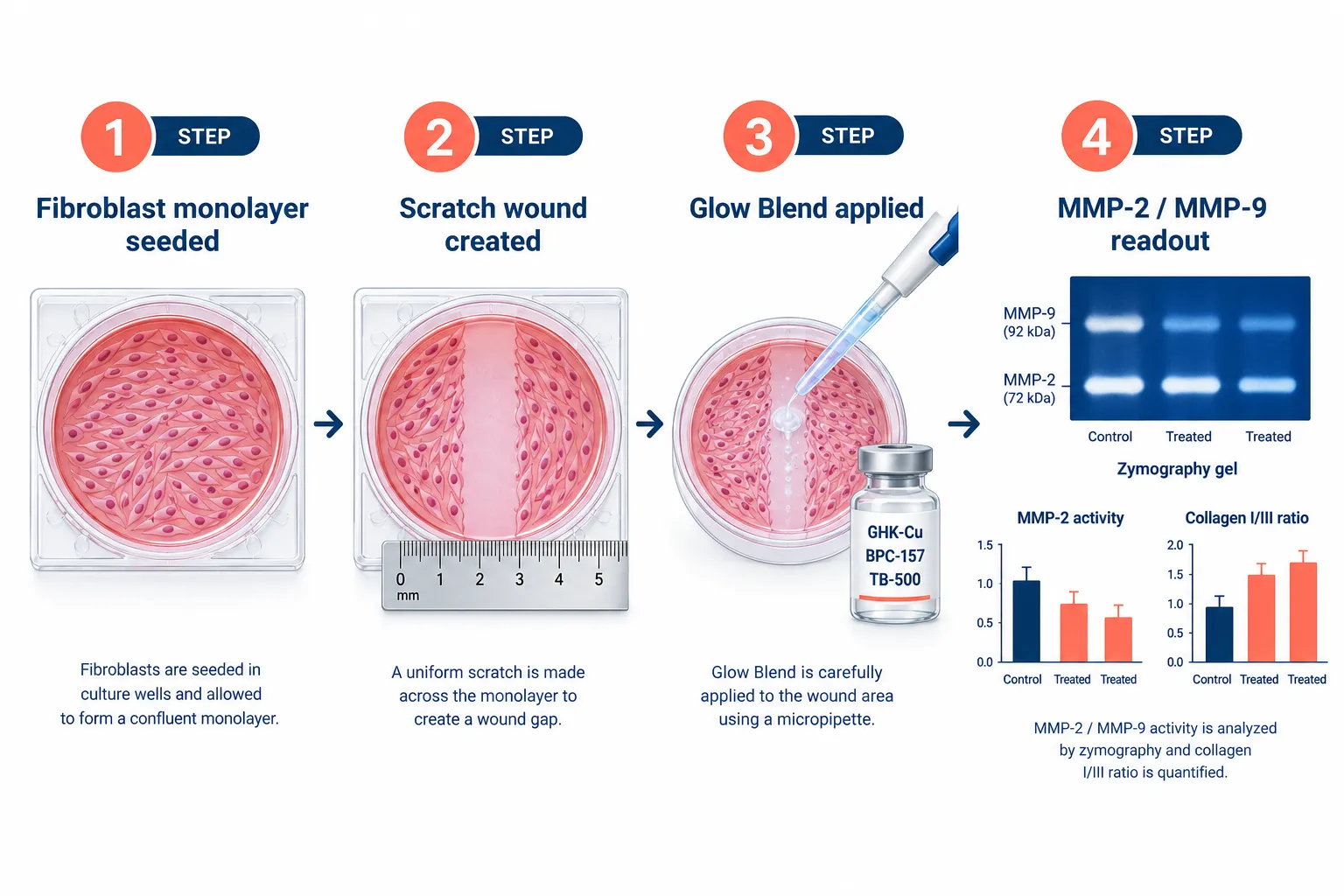
A rigorous Glow Blend (GHK-Cu / BPC-157 / TB-500) in vitro fibroblast migration assay begins with selecting an appropriate cell line. Primary human dermal fibroblasts (HDFs) or NIH 3T3 cells are the most commonly used models for collagen synthesis and MMP activity studies. After seeding to confluence, a standardized scratch is made with a pipette tip, media is changed to serum-reduced conditions to minimize confounding growth-factor signals, and the Glow Blend is introduced at defined concentration ranges.
Key readout decisions:
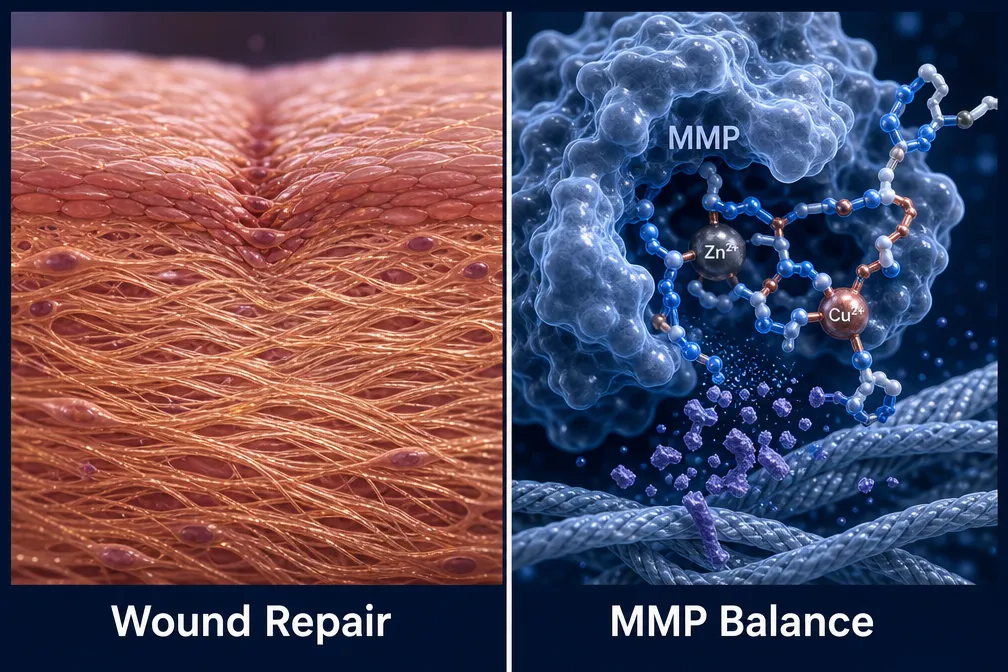
- MMP-2 (gelatinase A): This is the primary MMP of interest. MMP-2 degrades type IV collagen and denatured collagens; its activity level determines whether the ECM environment favors cell migration or matrix stabilization. Gelatin zymography or fluorescent substrate ELISA are the standard quantification tools.
- MMP-9 (gelatinase B): Often elevated in inflammatory conditions, MMP-9 can counteract collagen deposition. BPC-157's anti-inflammatory properties make MMP-9 suppression a plausible secondary endpoint.
- Collagen I/III ratio: Measured via immunofluorescence staining or western blot, this ratio distinguishes mature dermal remodeling (type I dominant) from early provisional matrix (type III dominant).
"The strongest experimental design for this blend will include both gap-closure imaging and concurrent MMP zymography, run in parallel time points at 24, 48, and 72 hours post-treatment."
Critically, no vendor or published laboratory has yet released a peer-reviewed or publicly documented dataset reporting numerical MMP-2 or MMP-9 fold-change values for the Glow Blend as a combination. Any current expectations are extrapolations from single-peptide data. Researchers sourcing GHK-Cu for these studies may also find value in reviewing this GHK-Cu peptide purchase and copper peptide research sourcing guide for purity and formulation considerations.
Those working on complementary ECM and wound-healing models may also find relevant mechanistic context in wound healing research and in VEGF upregulation studies, both of which intersect directly with the angiogenic component that BPC-157 contributes to a Glow Blend assay.
Interpreting Results: MMP-2 Suppression and Collagen I/III Upregulation
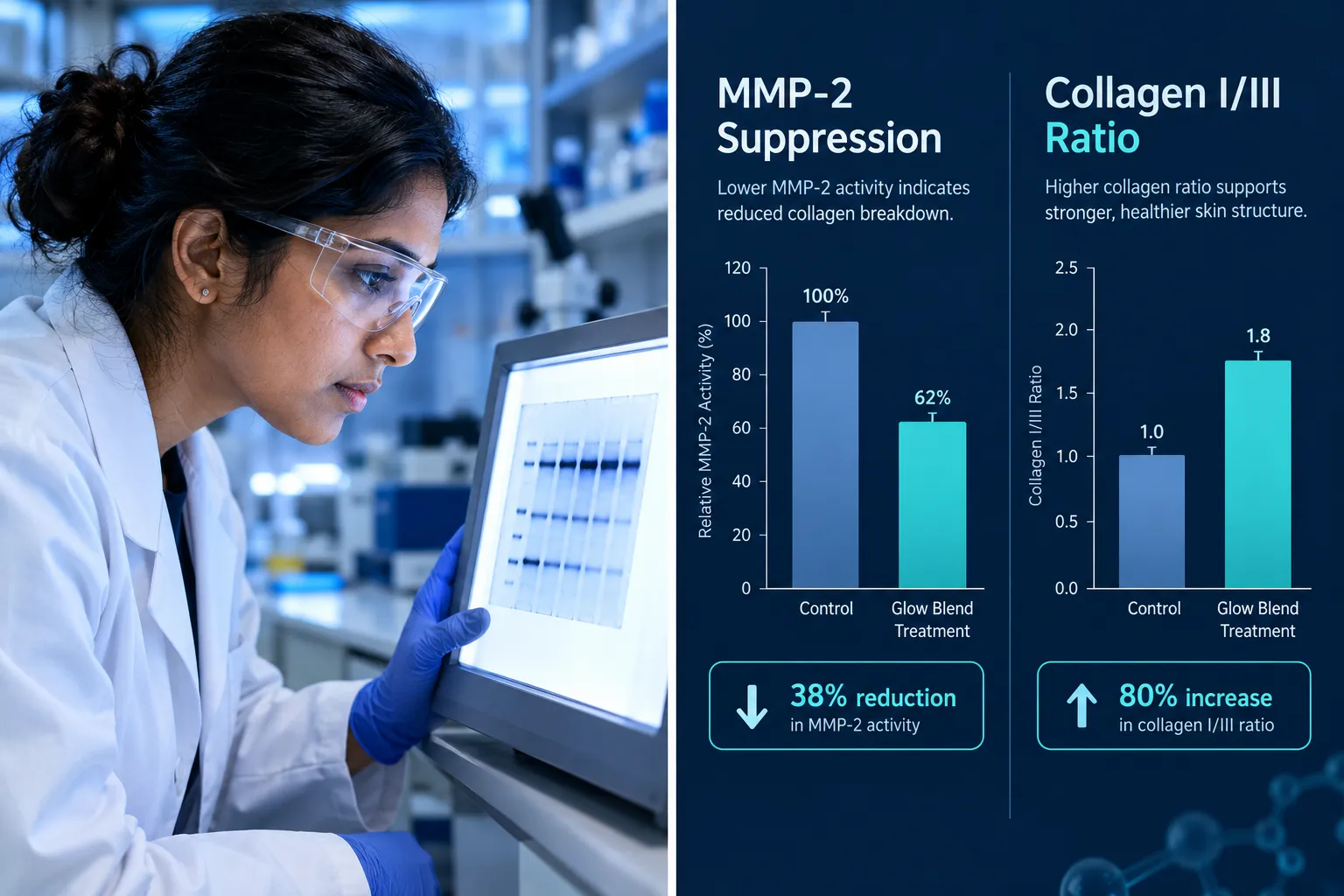
When running Glow Blend (GHK-Cu / BPC-157 / TB-500) in vitro fibroblast migration assays: matrix metalloproteinase readouts, the expected pattern, based on individual peptide data, is a biphasic MMP-2 profile: an early, modest elevation supporting initial cell migration, followed by suppression as collagen deposition consolidates. This mirrors physiological wound repair, where MMP activity is needed transiently to clear matrix debris but must be downregulated to allow scar maturation.
Predicted outcome summary:
- Faster scratch-wound closure versus vehicle control (TB-500 contribution)
- Reduced MMP-2 and MMP-9 activity at 48-72 hours (GHK-Cu and BPC-157 contribution)
- Higher collagen type I expression and improved I/III ratio by 72 hours (GHK-Cu primary driver)
- Increased tube formation in co-culture or conditioned media models (BPC-157 contribution)
Researchers comparing multi-peptide blends with single-agent controls should also consider how formulation quality affects these outcomes. Benchmarking against certified reference peptides is essential; the article on Bachem and reference standards for robust peptide benchmarks outlines why purity validation matters for interpreting assay variability.
For labs interested in broader peptide research portfolios that include anti-aging and cellular repair models, exploring aging support research peptides provides additional context on how ECM-targeting compounds fit within a broader framework.
It is also worth noting that the Glow Blend has not been evaluated in controlled human trials. All interpretations of fibroblast migration and MMP data remain preclinical. Researchers seeking related multi-peptide blend research designs may also reference the Hulk Blend as a contrast case in multi-peptide combination research.
Conclusion
The Glow Blend (GHK-Cu / BPC-157 / TB-500) represents a rationally designed multi-peptide tool for researchers studying ECM dynamics, fibroblast behavior, and MMP regulation. The theoretical case for using this blend in scratch-wound and transwell migration assays is strong: each peptide addresses a distinct bottleneck in the tissue repair cascade, and together they could produce a more complete model of dermal remodeling than any single agent allows.
Actionable next steps for researchers:
- Source research-grade Glow Blend with documented purity from a verified supplier and confirm component ratios before assay design.
- Run dose-response curves for each peptide individually before combining, to establish baseline MMP-2 and collagen I/III values.
- Use gelatin zymography alongside scratch-wound imaging at 24, 48, and 72 hours to capture the full MMP activity timeline.
- Include a positive control (e.g., TGF-beta1 for collagen induction) and a negative control (vehicle only) in every plate.
- Publish or pre-register protocols openly, the field needs validated, Glow Blend-specific MMP datasets to move beyond single-peptide extrapolation.
The data gap is also an opportunity. The first well-controlled, publicly available fibroblast migration plus MMP readout study for this blend will become a key reference point for the peptide research community in 2026 and beyond.