Call or Text 727-513-9780
  • Shopping Cart Shopping Cart
    0Shopping Cart
Pure Tested Peptides | America's most trusted Peptides for sale online
  • Peptides for sale
    • Oral Peptides for sale
      • Peptide Capsules for sale
      • BPC 157 Capsules 1000mcg
      • SLU-PP-332 Capsules | 1000 mcg
      • 5-Amino-1MQ 50mg Capsules
      • Tesofensine 500mcg
    • All Peptides for sale
    • Peptide Sprays
      • BPC 157 Nasal Spray Kit
      • BPC-157 TB500 Nasal Spray Kit
      • Semax Nasal Spray 10mg
      • Selank – Nasal Spray Kit – 10mg
      • Epithalon 50MG Nasal Spray Kit
      • Ipamorelin 10mg Nasal Spray
      • Klow Nasal Spray (BPC-157 + TB-500 + GHK-Cu + KPV) | 80mg
      • Hulk Nasal Spray Tesa / Ipa Blend 6/3 MG
      • Klow Nasal Spray
      • NAD + 500 mg Nasal Spray
      • PT-141 Nasal Spray Kit
    • GHRH Peptides
      • Ipa Peptides
      • CJC-1295 Peptides
        • CJC-1295 with DAC 5 mg
        • CJC-1295 without DAC 5 mg
        • CJC-1295 Ipa 10mg
      • Tesa Peptides
        • Tesa Peptide
        • Tesa 20 mg
    • GHK-Cu Peptides
      • All GHK-Cu Peptides
      • GHK-Cu 100mg
      • KLOW Peptide Blend – Buy KLOW blend online
    • BPC Peptides
      • All BPC Peptides
      • BPC-157
      • BPC-157 TB-500
      • BPC 157 capsules 1000mcg
    • SLU-PP-332 Peptides
      • All SLU-PP-332 Peptides
      • SLU-PP-332 5mg
    • GLP3 Peptides
    • PT-141 Peptides
      • PT-141 Peptides for sale
      • PT-141 10mg
      • PT-141 Nasal Spray
    • CAG Peptides
      • Lipo-C Peptide Blend
      • CAG 5mg
      • CAG 10mg
    • MOTS-C Peptides
      • MOTS-C Peptides for sale
      • MOTS-c peptide
      • MOTS-c 10mg *6 pack*
    • 5 Amino 1MQ Peptides
      • 5 Amino 1MQ Peptides for sale
      • 5-Amino-1MQ 50mg Capsules
      • 5-Amino-1MQ 5mg
    • Epithalon Peptides
      • Epithalon Peptides for sale
      • Epithalon 10mg
      • Epithalon 50mg
  • Shop
    • GLPs
      • 5-Amino-1MQ 50mg Capsules
      • 5-Amino-1MQ 5mg
      • L-Carnitine 500mg/ml
      • Tesofensine 500mcg
      • SLU-PP-332 5mg
      • MOTS-c 10mg *6 pack*
    • Epithalon & BPC Peptides
      • Epithalon 10mg
      • Epithalon 50mg
      • BPC-157
      • BPC 157 capsules 1000mcg
      • BPC-157 TB-500
      • BPC-157 TB500 Nasal Spray Kit
      • BPC 157 Nasal Spray Kit
    • BPC TB-500 & NAD+ Peptides
      • NAD+ 500 mg
      • KLOW Peptide Blend – Buy KLOW blend online
      • GLOW Peptide Blend
      • TB 500 5mg
      • BPC 157 capsules 1000mcg – Supplement
      • BPC 157 Nasal Spray Kit
      • BPC-157
      • BPC-157 TB500 Nasal Spray Kit
      • BPC-157 TB-500
      • BPC 157 capsules 1000mcg
    • LL-37 Peptide
      • LL-37 10 mg
    • MOTS-C & Selank
      • MOTS-c peptide
      • Selank 10mg
    • GHK Peptides
      • GHK-Cu 100mg
      • GLOW Peptide Blend
      • KLOW Peptide Blend – Buy KLOW blend online
  • COAs
  • Wholesale
    • Wholesale Peptides for sale
  • PTP FAQ
  • Affiliates
    • Selank Peptide: Advanced Pharmacological Mechanisms Underlying Its Anxiolytic and Nootropic Effects in Research
      • 5-Amino-1MQ Peptide: Detailed Mechanisms of NNMT Inhibition and Its Impact on Cellular Metabolism Research
        • MOTS-C Peptide: Unraveling Its Role in Mitochondrial Dynamics and Energy Metabolism Research
          • Epithalon Peptide and Telomerase Regulation: Investigating Its Impact on Cellular Senescence and Lifespan Research Models
            • GLP2-T vs GLP2 Tirz Peptide: Understanding the Naming, Mechanistic Nuances, and Research Implications for Gut Health
      • Peptides and Polypeptides in Modern Pharmacology: What Research on Metoprolol, Prednisone, and Amlodipine Reveals
        • Polypeptide Peptides vs NSAIDs: What Naproxen and Diclofenac Teach Tissue-Repair Researchers About BPC‑157 and TB‑500
          • Peptides and Polypeptides in Endocrine Pharmacology: How GLP-1, GLP-2, and GLP-3 Retatrutide Differ From Classic Drugs Like Prednisone and Amlodipine
          • 5‑Amino‑1MQ Peptide and NNMT Inhibition: How It Compares With Statins Like Atorvastatin in Adipose and Lipid Metabolism Research
      • Enclomiphene, Estrogen Receptor Signaling, and Luteinizing Phase Biology: What Hormone Researchers Should Measure
        • Mesenchymal Stem Cells, BPC‑157, and GHK‑Cu: How Tissue Repair Peptides Compare With Classic NSAIDs Like Naproxen in Injury Models
          • Peptide Calculator Use Cases Beyond Growth Hormone: Working Through GLP‑3 Retatrutide, MOTS‑c, and BPC‑157 Research Dosing
        • Polypeptide Peptides in Endocrine and Metabolic Pharmacology: Lessons From Amlodipine, Prednisone, and Metoprolol
        • Peptides Calculator for Advanced Blends: Worked Examples for Tesamorelin, CJC‑1295, and Ipamorelin Stacks
          • Peptides and Polypeptides in Human Physiology: How Molecular Size Shapes Research Applications
            • Selank Peptide: Advanced Pharmacological Mechanisms Underlying Its Anxiolytic and Nootropic Effects in Research
          • 5-Amino-1MQ Peptide: Detailed Mechanisms of NNMT Inhibition and Its Impact on Cellular Metabolism Research
            • MOTS-C Peptide: Unraveling Its Role in Mitochondrial Dynamics and Energy Metabolism Research
              • Epithalon Peptide and Telomerase Regulation: Investigating Its Impact on Cellular Senescence and Lifespan Research Models
                • GLP2-T vs GLP2 Tirz Peptide: Understanding the Naming, Mechanistic Nuances, and Research Implications for Gut Health
                  • Peptides and Polypeptides in Endocrine Pharmacology: How GLP-1, GLP-2, and GLP-3 Retatrutide Differ From Classic Drugs Like Prednisone and Amlodipine
                    • Polypeptide Peptides vs NSAIDs: What Naproxen and Diclofenac Teach Tissue-Repair Researchers About BPC‑157 and TB‑500
                      • Peptides and Polypeptides in Modern Pharmacology: What Research on Metoprolol, Prednisone, and Amlodipine Reveals
                        • 5‑Amino‑1MQ Peptide and NNMT Inhibition: How It Compares With Statins Like Atorvastatin in Adipose and Lipid Metabolism Research
                        • Enclomiphene, Estrogen Receptor Signaling, and Luteinizing Phase Biology: What Hormone Researchers Should Measure
                        • Mesenchymal Stem Cells, BPC‑157, and GHK‑Cu: How Tissue Repair Peptides Compare With Classic NSAIDs Like Naproxen in Injury Models
                        • Peptide Calculator Use Cases Beyond Growth Hormone: Working Through GLP‑3 Retatrutide, MOTS‑c, and BPC‑157 Research Dosing
                        • Polypeptide Peptides in Endocrine and Metabolic Pharmacology: Lessons From Amlodipine, Prednisone, and Metoprolol
                        • Peptides Calculator for Advanced Blends: Worked Examples for Tesamorelin, CJC‑1295, and Ipamorelin Stacks
                        • Peptides and Polypeptides in Human Physiology: How Molecular Size Shapes Research Applications
                        • Selank Peptide: Advanced Pharmacological Mechanisms Underlying Its Anxiolytic and Nootropic Effects in Research
                        • MOTS-C Peptide: Unraveling Its Role in Mitochondrial Dynamics and Energy Metabolism Research
                        • Peptides and Polypeptides in Modern Pharmacology: What Research on Metoprolol, Prednisone, and Amlodipine Reveals
                        • Peptides and Polypeptides in Endocrine Pharmacology: How GLP-1, GLP-2, and GLP-3 Retatrutide Differ From Classic Drugs Like Prednisone and Amlodipine
                        • 5-Amino-1MQ Peptide: Detailed Mechanisms of NNMT Inhibition and Its Impact on Cellular Metabolism Research
                        • Mesenchymal Stem Cells, BPC‑157, and GHK‑Cu: How Tissue Repair Peptides Compare With Classic NSAIDs Like Naproxen in Injury Models
                        • Peptide Calculator Use Cases Beyond Growth Hormone: Working Through GLP‑3 Retatrutide, MOTS‑c, and BPC‑157 Research Dosing
                        • GLP2-T vs GLP2 Tirz Peptide: Understanding the Naming, Mechanistic Nuances, and Research Implications for Gut Health
                        • Polypeptide Peptides in Endocrine and Metabolic Pharmacology: Lessons From Amlodipine, Prednisone, and Metoprolol
                        • Polypeptide Peptides vs NSAIDs: What Naproxen and Diclofenac Teach Tissue-Repair Researchers About BPC‑157 and TB‑500
                        • Peptides and Polypeptides in Human Physiology: How Molecular Size Shapes Research Applications
                        • Peptides Calculator for Advanced Blends: Worked Examples for Tesamorelin, CJC‑1295, and Ipamorelin Stacks
                        • 5‑Amino‑1MQ Peptide and NNMT Inhibition: How It Compares With Statins Like Atorvastatin in Adipose and Lipid Metabolism Research
                        • Enclomiphene, Estrogen Receptor Signaling, and Luteinizing Phase Biology: What Hormone Researchers Should Measure
                        • Epithalon Peptide and Telomerase Regulation: Investigating Its Impact on Cellular Senescence and Lifespan Research Models
                        • Best research protocol Klow blend
                        • best time to take BPC-157
                        • best time to take DSIP (Delta Sleep Inducing Peptide)
                        • best time to take CJC-1295
                        • best time to take AOD-9604
                        • best time to take Follistatin 344
                        • best time to take Ipamorelin
                        • best time to take MK-677 (Ibutamoren)
                        • best time to take Ligandrol (LGD-4033) — research compound
                        • best time to take Ostarine (MK-2866) — research compound
                        • best time to take GHK-CU
                        • best time to take TB-500
                        • best time to take MOTS-c
                        • best time to take Semax
                        • best time to take RAD-140 (Testolone) — research compound
                        • best time to take Thymosin Alpha-1
                        • best time to take PEG-MGF
                        • Biolife Plasma, Octapharma Plasma, and Research Peptides: How Plasma Donation Labs Differ From Peptide Suppliers
                        • best time to take YK-11 — research compound
                        • best time to take PT-141 (Bremelanotide)
                        • Best research protocol Klow blend
                        • 5-Amino-1MQ and MOTS-C Synergy: Metabolic Signaling, Mitochondria, and Research Design
                        • BPC-157 and TB-500: Investigating Their Combined Effects on Angiogenesis and Cellular Migration in Tissue Repair Models
                        • BPC-157 Peptide: Gut Barrier Function, Inflammation, and Tissue-Recovery Research
                        • 5‑Amino‑1MQ and MOTS‑c Synergy in Metabolic Research: Designing NNMT and Mitochondrial Biogenesis Stacks
                        • CJC-1295 with DAC vs. Without DAC: Half-Life, Release Kinetics, and Research Implications
                        • CJC‑1295 with DAC vs. Without DAC: Expanding on Half‑Life Differences Using Tesamorelin and Ipamorelin Blend Case Studies
                        • Collagen Biology and Copper‑Binding Peptides: How GHK‑Cu, Glow Blend, and Klow Blend Interact with Skin and Connective Tissue
                        • Collagen Biology and Regenerative Peptides: How GHK‑Cu, Glow Blend, and Klow Blend Affect Extracellular Matrix Research
                    • DNA, Telomeres, and Longevity Peptides: Positioning Epithalon and MOTS‑c in Genetic Aging Research
                      • Enclomiphene Citrate: serm Mechanism, Testosterone Research, and Stack Compatibility
                        • Enclomiphene vs Enclomiphene Citrate: Formulation, Bioavailability, and Research Distinctions
                        • Epithalon Peptide Research: Telomerase Activation, Aging, and Pineal Gland Function
                        • Estrogen Receptor Signaling and Enclomiphene: How Selective Modulators Compare with Classic Polypeptide Hormones
                        • GHK-Cu Peptide: Advanced Mechanisms in Extracellular Matrix Remodeling and Wound Healing Research
                        • GHK-Cu Peptide: Collagen Synthesis, Wound Repair, and Skin-Barrier Research Models
                        • GLP-1 vs GLP-3 vs GLP-2: Peptide Classification and Research Applications
                        • GLP-2 Peptide Research Guide: Gut Barrier Function, Nutrient Absorption, and Intestinal Recovery Models
                        • GLP-3 Retatrutide vs. GLP-1 Drugs: What Triple-Agonist Biology Changes in Research Models
                        • Ipamorelin and Tesamorelin Combination: Synergistic GH Secretagogue Research and Dosing Protocols
                        • GLP2 Tirz Peptide: What It Is, Why the Name Exists, and How Researchers Should Interpret It
                        • Klow Blend Peptide Nasal Spray: What the Formulation Is Trying to Do in Cognitive Research
                        • Mitochondria, NNMT Inhibition, and Peptide Modulators: Where MOTS‑c and 5‑Amino‑1MQ Fit in Cellular Energy Research
                        • MOTS-c Peptide: Mitochondrial Function, Energy Metabolism, and What Researchers Measure
                        • MOTS-c vs. 5-Amino-1MQ: Which Metabolic Research Questions Each Compound Actually Answers
                        • Nasal Spray Peptides: Bioavailability, Administration, and Semax/Selank Research Applications
                        • PT-141 Peptide Research: Mechanism of Action and Melanocortin Receptor Signaling
                        • Retatrutide for Research: Mechanism, Structure, and GLP-1/GLP-3 Dual Action
                        • Retatrutide for Obesity and Type 2 Diabetes: What the Latest Trial Data Suggest
                        • Tesofensine Peptide Research: Mechanism, Appetite Suppression, and Neuropeptide Y Pathways
  • Contact
    • Contact Customer Service
    • Text Customer Support
  • About US
  • Shop all peptides
  • Affiliate Program
    • Affiliate Signup
  • Login / Register Login / Register Page Link Login / Register Page Link
  • Click to open the search input field Click to open the search input field Search
  • Menu Menu

Tag Archive for: mc3r mc4r receptor studies

PT-141 in Receptor-Mechanism Studies: Separating Melanocortin Signaling From Vascular and Behavioral Readouts

PT-141 in Receptor-Mechanism Studies: Separating Melanocortin Signaling From Vascular and Behavioral Readouts

November 5, 2026/0 Comments/in Uncategorized/by

Fewer than a dozen peptides in pharmacological research sit at the crossroads of central neuromodulation and peripheral physiology as precisely as PT-141 (bremelanotide). Yet most assay frameworks treat it as a single-purpose probe, blurring the very distinctions that make it useful. PT-141 in receptor-mechanism studies offers a rare opportunity to dissect melanocortin signaling from vascular and behavioral readouts, but only when researchers build experiments around a receptor-first framework rather than endpoint-first assumptions.

Key Takeaways

  • PT-141 acts primarily through central MC3R and MC4R receptors via a GPCR-cAMP cascade, not through nitric oxide or vascular pathways.
  • Behavioral outputs (desire, motivation) and vascular outputs (genital blood flow) must be measured as separate, non-interchangeable endpoints.
  • cAMP accumulation and downstream neuromodulator release are the primary mechanistic markers for valid melanocortin assays.
  • Comparator compounds and negative controls are essential for attributing signals to specific receptor subtypes.
  • Regulatory bodies classify the mechanism as "not fully established," making rigorous receptor-level documentation especially important for research integrity.

The Melanocortin Receptor Cascade: What PT-141 Actually Activates
The Melanocortin Receptor Cascade: What PT-141 Actually Activates

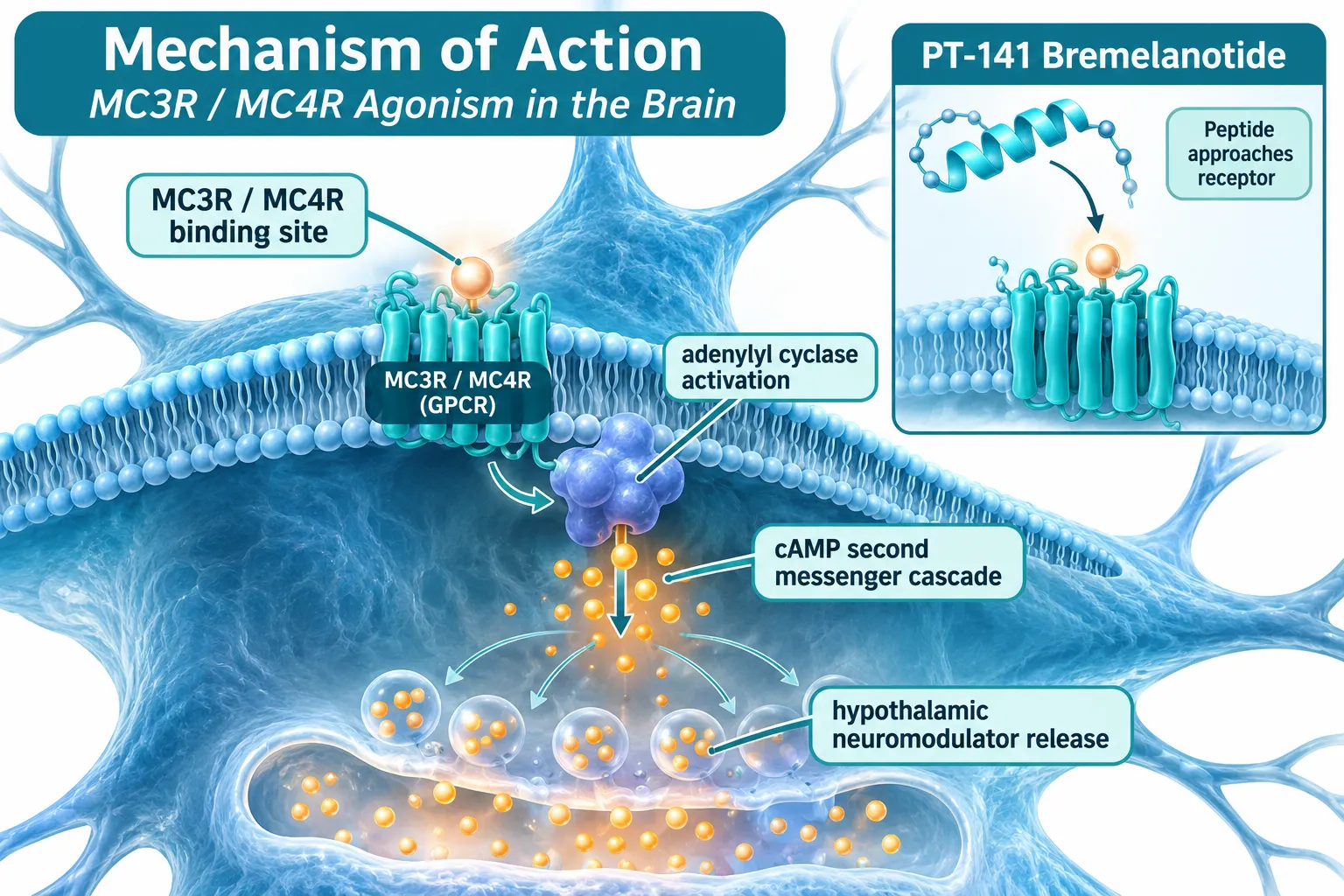
PT-141 is a synthetic analog of alpha-melanocyte-stimulating hormone (alpha-MSH). Its primary pharmacological targets are the melanocortin 3 receptor (MC3R) and melanocortin 4 receptor (MC4R), both G protein-coupled receptors (GPCRs) expressed heavily in hypothalamic nuclei. When PT-141 binds these receptors, it activates adenylyl cyclase, elevating intracellular cyclic AMP (cAMP). That second messenger cascade then triggers neuromodulator release within circuits governing arousal and motivational salience.

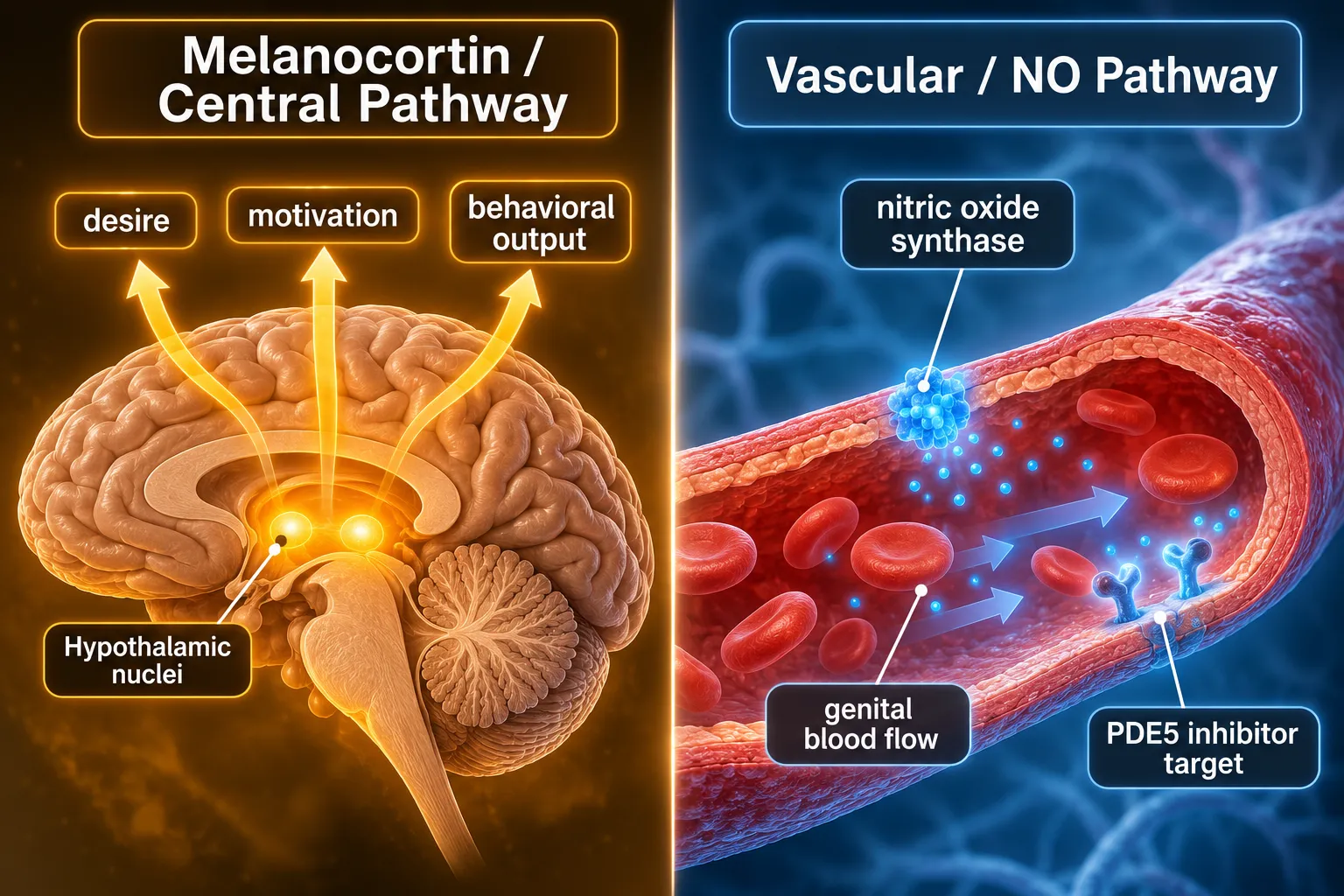
This is a critically different mechanism from that of phosphodiesterase-5 (PDE5) inhibitors such as sildenafil, which act peripherally on nitric oxide (NO) synthase pathways in vascular smooth muscle. Separating these two pathway families is not merely academic. In research settings, conflating them produces uninterpretable data.

Key receptor-level markers for assay design:

Marker Pathway Measurement Method
cAMP accumulation MC3R/MC4R → adenylyl cyclase HTRF or ELISA-based cAMP assay
Downstream neuromodulator release Hypothalamic nuclei Microdialysis or CSF sampling
Nitric oxide synthase activity NO/vascular pathway Griess reagent or DAF-FM fluorescence
Genital blood flow Vascular endpoint Laser Doppler flowmetry

Researchers designing clean melanocortin assays should track cAMP as the primary mechanistic readout. Nitric oxide synthase activity, when measured in parallel, consistently remains unaltered by PT-141 at pharmacologically relevant concentrations, a finding that underscores the NO-independent nature of the melanocortin cascade.

For teams sourcing purity-verified research peptides for multi-pathway assays, reviewing lab tested peptides ensures batch-to-batch consistency in receptor-binding studies.


Separating Melanocortin Signaling From Vascular Readouts in Assay Design
Separating Melanocortin Signaling From Vascular Readouts in Assay Design

The most common methodological error in PT-141 receptor-mechanism studies is treating genital hemodynamic changes as a proxy for melanocortin receptor activation. These endpoints can co-occur behaviorally but arise from separate biological pathways.

Why vascular endpoints are inadequate melanocortin markers:

  • Genital blood flow changes observed in some studies are modest and inconsistent across subjects.
  • The NO pathway, not MC3R/MC4R signaling, is the primary driver of vascular engorgement responses.
  • Male studies using PT-141 show that central arousal signals appear upstream and independent of erectile vascular pathways.
  • Female studies on hypoactive sexual desire disorder (HSDD) show statistically significant desire improvements without proportional blood flow changes.

"Central motivation and peripheral vascular response are parallel outputs, not sequential ones, PT-141 research that treats them as the same readout will consistently misattribute effects."

A properly controlled receptor-mechanism assay should therefore include:

  1. A central behavioral endpoint, operationalized as desire or motivational salience scoring in animal models or validated HSDD scales in clinical contexts.
  2. A peripheral vascular endpoint, measured independently and compared, not averaged.
  3. A NO-pathway control arm, using a known NO donor or PDE5 inhibitor as a comparator to confirm pathway independence.
  4. Receptor antagonist controls, MC4R-selective antagonists (such as SHU9119 in rodent models) to confirm specificity of observed cAMP changes.

Teams running parallel peptide assays across multiple signaling pathways may find the CJC-1295 Ipamorelin assay planning and sourcing checklist a useful structural model for multi-endpoint experimental design. Similarly, work comparing overlapping GPCR mechanisms can reference how Ipamorelin vs Tesamorelin receptor selectivity data is handled to separate pathway-specific from shared downstream effects.


Building a Receptor-First Assay Framework for PT-141 Studies
Building a Receptor-First Assay Framework for PT-141 Studies

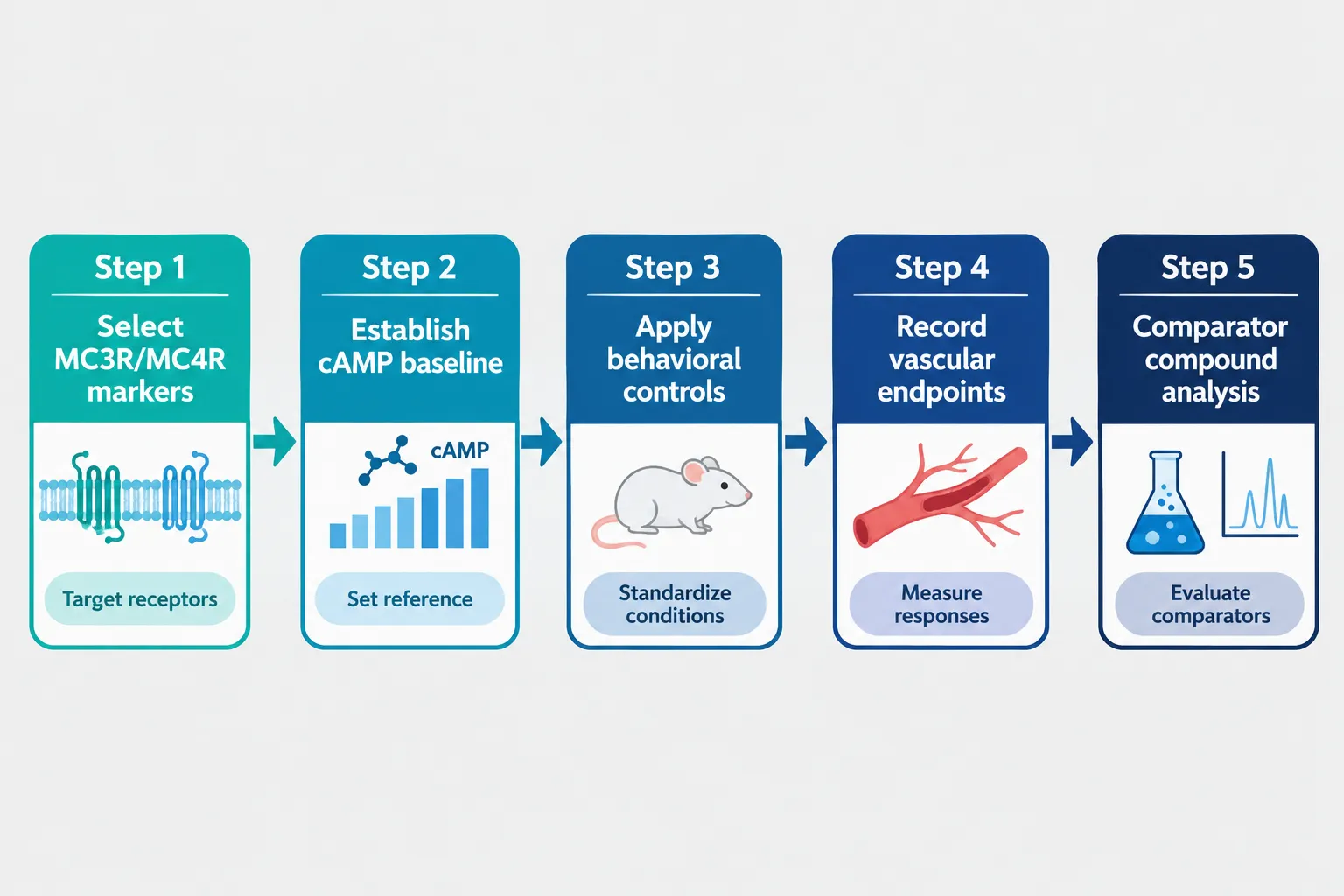
A receptor-first framework re-centers the entire experimental design on MC3R/MC4R occupancy and downstream cAMP signaling, treating behavioral and vascular changes as secondary outputs to be correlated, not as primary evidence of receptor activation.

Step-by-step framework for PT-141 receptor-mechanism assays:

  1. Define receptor targets explicitly. Pre-specify whether MC3R, MC4R, or both are the focus. These subtypes differ in tissue distribution and downstream coupling efficiency.
  2. Establish a cAMP baseline. Use vehicle-treated controls to define basal adenylyl cyclase activity in the target tissue or cell line before peptide application.
  3. Apply concentration-response titration. Run PT-141 across a minimum of six concentrations to generate a full dose-response curve, enabling EC50 calculation for each receptor subtype.
  4. Include selective antagonist arms. MC4R-selective and MC3R-selective antagonists allow attribution of cAMP changes to specific receptor populations.
  5. Record behavioral controls separately. Behavioral readouts (locomotor activity, approach behavior, operant responding) must be measured in blinded conditions with appropriate vehicle and positive-control arms.
  6. Record vascular endpoints independently. Genital hemodynamic or NO-related measures should run in separate cohorts or at minimum in separate measurement windows to avoid cross-contamination of readouts.
  7. Document off-target safety markers. Cardiovascular endpoints, including blood pressure and heart rate variability, must be monitored given known central and autonomic effects of melanocortin agonism.

Comparator compounds worth including:

  • Melanotan II, a less selective melanocortin agonist, useful as a broad-spectrum positive control.
  • Sildenafil, as a pure NO/vascular pathway reference, confirming pathway separation.
  • SHU9119, MC3R/MC4R antagonist for blockade confirmation.

For researchers interested in how related neuroendocrine peptides are handled in parallel assay planning, the Tesamorelin dosage per day dosing documentation and what is Tesamorelin mechanistic overview provide useful context on GPCR-linked hypothalamic peptide research methodology. Purity sourcing considerations for multi-peptide assays are also addressed in the peptide supplier comparisons guide.


Knowledge Gaps and 2026 Research Priorities

As of 2026, the mechanistic picture around PT-141 in receptor-mechanism studies remains incomplete in several important areas. Regulatory agencies continue to classify the precise mechanism as "not fully established," reflecting genuine gaps in receptor-subtype resolution at the human in vivo level.

Active knowledge gaps:

  • MC3R vs MC4R relative contribution in humans, rodent data supports MC4R dominance, but human receptor distribution data is limited.
  • Downstream neuromodulator identity, the specific neuromodulators released following hypothalamic cAMP elevation are not fully characterized.
  • Sex-based receptor expression differences, male and female receptor densities in relevant hypothalamic nuclei may explain divergent behavioral versus vascular response ratios.
  • Off-target receptor binding, PT-141 shows affinity for MC1R and MC5R at higher concentrations, introducing confounds in assays that do not use selective antagonist controls.

Addressing these gaps requires precisely the receptor-first assay framework described above, with rigorous separation of melanocortin signaling from vascular and behavioral readouts as a non-negotiable methodological standard.


Conclusion

PT-141 in receptor-mechanism studies represents one of the most informative tools available for dissecting melanocortin pharmacology, but only when researchers resist the temptation to collapse central signaling, vascular physiology, and behavioral motivation into a single endpoint. The actionable steps are clear: anchor every assay to cAMP as the primary mechanistic marker, treat behavioral and vascular readouts as independent outputs, include selective antagonist and comparator compound controls, and monitor cardiovascular safety markers throughout.

For research teams building out multi-peptide assay frameworks, the same discipline applied here, pathway-specific markers, rigorous controls, and receptor-level documentation, scales directly to other GPCR-linked hypothalamic peptides. Reviewing resources on Sermorelin vs Tesamorelin receptor selectivity comparisons can help calibrate those frameworks across related compound classes.

The goal is not simply cleaner data. It is a mechanistic map precise enough to advance understanding of melanocortin biology beyond the limitations of endpoint-only research design.

https://www.puretestedpeptides.com/wp-content/uploads/2026/11/pt-141-in-receptor-mechanism-studies-separating-melanocortin-signaling-from-vasc.webp 1024 1536 https://www.puretestedpeptides.com/wp-content/uploads/2026/01/buy-peptides-online.jpg 2026-11-05 14:03:392026-11-05 14:03:39PT-141 in Receptor-Mechanism Studies: Separating Melanocortin Signaling From Vascular and Behavioral Readouts
×

Helpful Links

  • My account
  • Cart
  • Checkout
  • Refund and Returns Policy
  • Privacy Policy
  • SMS Privacy Policy
  • Login
  • My Account
  • Logout

USA Made Lab Tested Peptides

All products are sold for research, laboratory, or analytical purposes only, and are not for human consumption


Pure Tested Peptides is a chemical supplier. Pure Tested Peptides is not a compounding / chemical compounding facility as defined under 503A of the Federal Food, Drug, and Cosmetic act. Pure Tested Peptides is not an outsourcing facility as defined under 503B of the Federal Food, Drug, and Cosmetic act.

The statements made within this website have not been evaluated by the US Food and Drug Administration. The products we offer are not intended to diagnose, treat, cure or prevent any disease.

Human/Animal Consumption Prohibited. Laboratory/In-Vitro Experimental Use Only

Scroll to top Scroll to top Scroll to top