Call or Text 727-513-9780
  • Shopping Cart Shopping Cart
    0Shopping Cart
Pure Tested Peptides | America's most trusted Peptides for sale online
  • Peptides for sale
    • Oral Peptides for sale
      • Peptide Capsules for sale
      • BPC 157 Capsules 1000mcg
      • SLU-PP-332 Capsules | 1000 mcg
      • 5-Amino-1MQ 50mg Capsules
      • Tesofensine 500mcg
    • All Peptides for sale
    • Peptide Sprays
      • BPC 157 Nasal Spray Kit
      • BPC-157 TB500 Nasal Spray Kit
      • Semax Nasal Spray 10mg
      • Selank – Nasal Spray Kit – 10mg
      • Epithalon 50MG Nasal Spray Kit
      • Ipamorelin 10mg Nasal Spray
      • Klow Nasal Spray (BPC-157 + TB-500 + GHK-Cu + KPV) | 80mg
      • Hulk Nasal Spray Tesa / Ipa Blend 6/3 MG
      • Klow Nasal Spray
      • NAD + 500 mg Nasal Spray
      • PT-141 Nasal Spray Kit
    • GHRH Peptides
      • Ipa Peptides
      • CJC-1295 Peptides
        • CJC-1295 with DAC 5 mg
        • CJC-1295 without DAC 5 mg
        • CJC-1295 Ipa 10mg
      • Tesa Peptides
        • Tesa Peptide
        • Tesa 20 mg
    • GHK-Cu Peptides
      • All GHK-Cu Peptides
      • GHK-Cu 100mg
      • KLOW Peptide Blend – Buy KLOW blend online
    • BPC Peptides
      • All BPC Peptides
      • BPC-157
      • BPC-157 TB-500
      • BPC 157 capsules 1000mcg
    • SLU-PP-332 Peptides
      • All SLU-PP-332 Peptides
      • SLU-PP-332 5mg
    • GLP3 Peptides
      • GLP3-R
      • GLP3-R CAG 10mg
      • GLP3-R 20mg
    • PT-141 Peptides
      • PT-141 Peptides for sale
      • PT-141 10mg
      • PT-141 Nasal Spray
    • CAG Peptides
      • Lipo-C Peptide Blend
      • CAG 5mg
      • CAG 10mg
    • MOTS-C Peptides
      • MOTS-C Peptides for sale
      • MOTS-c peptide
      • MOTS-c 10mg *6 pack*
    • 5 Amino 1MQ Peptides
      • 5 Amino 1MQ Peptides for sale
      • 5-Amino-1MQ 50mg Capsules
      • 5-Amino-1MQ 5mg
    • Epithalon Peptides
      • Epithalon Peptides for sale
      • Epithalon 10mg
      • Epithalon 50mg
  • Shop
    • GLPs
      • 5-Amino-1MQ 50mg Capsules
      • 5-Amino-1MQ 5mg
      • GLP3-Reta
      • L-Carnitine 500mg/ml
      • Tesofensine 500mcg
      • SLU-PP-332 5mg
      • MOTS-c 10mg *6 pack*
    • Epithalon & BPC Peptides
      • Epithalon 10mg
      • Epithalon 50mg
      • BPC-157
      • BPC 157 capsules 1000mcg
      • BPC-157 TB-500
      • BPC-157 TB500 Nasal Spray Kit
      • BPC 157 Nasal Spray Kit
    • BPC TB-500 & NAD+ Peptides
      • NAD+ 500 mg
      • KLOW Peptide Blend – Buy KLOW blend online
      • GLOW Peptide Blend
      • TB 500 5mg
      • BPC 157 capsules 1000mcg – Supplement
      • BPC 157 Nasal Spray Kit
      • BPC-157
      • BPC-157 TB500 Nasal Spray Kit
      • BPC-157 TB-500
      • BPC 157 capsules 1000mcg
    • LL-37 Peptide
      • LL-37 10 mg
    • MOTS-C & Selank
      • MOTS-c peptide
      • Selank 10mg
    • GHK Peptides
      • GHK-Cu 100mg
      • GLOW Peptide Blend
      • KLOW Peptide Blend – Buy KLOW blend online
  • COAs
  • Wholesale
    • Wholesale Peptides for sale
  • PTP FAQ
  • Affiliates
    • Selank Peptide: Advanced Pharmacological Mechanisms Underlying Its Anxiolytic and Nootropic Effects in Research
      • 5-Amino-1MQ Peptide: Detailed Mechanisms of NNMT Inhibition and Its Impact on Cellular Metabolism Research
        • MOTS-C Peptide: Unraveling Its Role in Mitochondrial Dynamics and Energy Metabolism Research
          • Epithalon Peptide and Telomerase Regulation: Investigating Its Impact on Cellular Senescence and Lifespan Research Models
            • GLP2-T vs GLP2 Tirz Peptide: Understanding the Naming, Mechanistic Nuances, and Research Implications for Gut Health
      • Peptides and Polypeptides in Modern Pharmacology: What Research on Metoprolol, Prednisone, and Amlodipine Reveals
        • Polypeptide Peptides vs NSAIDs: What Naproxen and Diclofenac Teach Tissue-Repair Researchers About BPC‑157 and TB‑500
          • Peptides and Polypeptides in Endocrine Pharmacology: How GLP-1, GLP-2, and GLP-3 Retatrutide Differ From Classic Drugs Like Prednisone and Amlodipine
          • 5‑Amino‑1MQ Peptide and NNMT Inhibition: How It Compares With Statins Like Atorvastatin in Adipose and Lipid Metabolism Research
      • Enclomiphene, Estrogen Receptor Signaling, and Luteinizing Phase Biology: What Hormone Researchers Should Measure
        • Mesenchymal Stem Cells, BPC‑157, and GHK‑Cu: How Tissue Repair Peptides Compare With Classic NSAIDs Like Naproxen in Injury Models
          • Peptide Calculator Use Cases Beyond Growth Hormone: Working Through GLP‑3 Retatrutide, MOTS‑c, and BPC‑157 Research Dosing
        • Polypeptide Peptides in Endocrine and Metabolic Pharmacology: Lessons From Amlodipine, Prednisone, and Metoprolol
        • Peptides Calculator for Advanced Blends: Worked Examples for Tesamorelin, CJC‑1295, and Ipamorelin Stacks
          • Peptides and Polypeptides in Human Physiology: How Molecular Size Shapes Research Applications
            • Selank Peptide: Advanced Pharmacological Mechanisms Underlying Its Anxiolytic and Nootropic Effects in Research
          • 5-Amino-1MQ Peptide: Detailed Mechanisms of NNMT Inhibition and Its Impact on Cellular Metabolism Research
            • MOTS-C Peptide: Unraveling Its Role in Mitochondrial Dynamics and Energy Metabolism Research
              • Epithalon Peptide and Telomerase Regulation: Investigating Its Impact on Cellular Senescence and Lifespan Research Models
                • GLP2-T vs GLP2 Tirz Peptide: Understanding the Naming, Mechanistic Nuances, and Research Implications for Gut Health
                  • Peptides and Polypeptides in Endocrine Pharmacology: How GLP-1, GLP-2, and GLP-3 Retatrutide Differ From Classic Drugs Like Prednisone and Amlodipine
                    • Polypeptide Peptides vs NSAIDs: What Naproxen and Diclofenac Teach Tissue-Repair Researchers About BPC‑157 and TB‑500
                      • Peptides and Polypeptides in Modern Pharmacology: What Research on Metoprolol, Prednisone, and Amlodipine Reveals
                        • 5‑Amino‑1MQ Peptide and NNMT Inhibition: How It Compares With Statins Like Atorvastatin in Adipose and Lipid Metabolism Research
                        • Enclomiphene, Estrogen Receptor Signaling, and Luteinizing Phase Biology: What Hormone Researchers Should Measure
                        • Mesenchymal Stem Cells, BPC‑157, and GHK‑Cu: How Tissue Repair Peptides Compare With Classic NSAIDs Like Naproxen in Injury Models
                        • Peptide Calculator Use Cases Beyond Growth Hormone: Working Through GLP‑3 Retatrutide, MOTS‑c, and BPC‑157 Research Dosing
                        • Polypeptide Peptides in Endocrine and Metabolic Pharmacology: Lessons From Amlodipine, Prednisone, and Metoprolol
                        • Peptides Calculator for Advanced Blends: Worked Examples for Tesamorelin, CJC‑1295, and Ipamorelin Stacks
                        • Peptides and Polypeptides in Human Physiology: How Molecular Size Shapes Research Applications
                        • Selank Peptide: Advanced Pharmacological Mechanisms Underlying Its Anxiolytic and Nootropic Effects in Research
                        • MOTS-C Peptide: Unraveling Its Role in Mitochondrial Dynamics and Energy Metabolism Research
                        • Peptides and Polypeptides in Modern Pharmacology: What Research on Metoprolol, Prednisone, and Amlodipine Reveals
                        • Peptides and Polypeptides in Endocrine Pharmacology: How GLP-1, GLP-2, and GLP-3 Retatrutide Differ From Classic Drugs Like Prednisone and Amlodipine
                        • 5-Amino-1MQ Peptide: Detailed Mechanisms of NNMT Inhibition and Its Impact on Cellular Metabolism Research
                        • Mesenchymal Stem Cells, BPC‑157, and GHK‑Cu: How Tissue Repair Peptides Compare With Classic NSAIDs Like Naproxen in Injury Models
                        • Peptide Calculator Use Cases Beyond Growth Hormone: Working Through GLP‑3 Retatrutide, MOTS‑c, and BPC‑157 Research Dosing
                        • GLP2-T vs GLP2 Tirz Peptide: Understanding the Naming, Mechanistic Nuances, and Research Implications for Gut Health
                        • Polypeptide Peptides in Endocrine and Metabolic Pharmacology: Lessons From Amlodipine, Prednisone, and Metoprolol
                        • Polypeptide Peptides vs NSAIDs: What Naproxen and Diclofenac Teach Tissue-Repair Researchers About BPC‑157 and TB‑500
                        • Peptides and Polypeptides in Human Physiology: How Molecular Size Shapes Research Applications
                        • Peptides Calculator for Advanced Blends: Worked Examples for Tesamorelin, CJC‑1295, and Ipamorelin Stacks
                        • 5‑Amino‑1MQ Peptide and NNMT Inhibition: How It Compares With Statins Like Atorvastatin in Adipose and Lipid Metabolism Research
                        • Enclomiphene, Estrogen Receptor Signaling, and Luteinizing Phase Biology: What Hormone Researchers Should Measure
                        • Epithalon Peptide and Telomerase Regulation: Investigating Its Impact on Cellular Senescence and Lifespan Research Models
                        • Best research protocol Klow blend
                        • best time to take BPC-157
                        • best time to take DSIP (Delta Sleep Inducing Peptide)
                        • best time to take CJC-1295
                        • best time to take AOD-9604
                        • best time to take Follistatin 344
                        • best time to take Ipamorelin
                        • best time to take MK-677 (Ibutamoren)
                        • best time to take Ligandrol (LGD-4033) — research compound
                        • best time to take Ostarine (MK-2866) — research compound
                        • best time to take GHK-CU
                        • best time to take TB-500
                        • best time to take MOTS-c
                        • best time to take Semax
                        • best time to take RAD-140 (Testolone) — research compound
                        • best time to take Thymosin Alpha-1
                        • best time to take PEG-MGF
                        • Biolife Plasma, Octapharma Plasma, and Research Peptides: How Plasma Donation Labs Differ From Peptide Suppliers
                        • best time to take YK-11 — research compound
                        • best time to take PT-141 (Bremelanotide)
                        • Best research protocol Klow blend
                        • 5-Amino-1MQ and MOTS-C Synergy: Metabolic Signaling, Mitochondria, and Research Design
                        • BPC-157 and TB-500: Investigating Their Combined Effects on Angiogenesis and Cellular Migration in Tissue Repair Models
                        • BPC-157 Peptide: Gut Barrier Function, Inflammation, and Tissue-Recovery Research
                        • 5‑Amino‑1MQ and MOTS‑c Synergy in Metabolic Research: Designing NNMT and Mitochondrial Biogenesis Stacks
                        • CJC-1295 with DAC vs. Without DAC: Half-Life, Release Kinetics, and Research Implications
                        • CJC‑1295 with DAC vs. Without DAC: Expanding on Half‑Life Differences Using Tesamorelin and Ipamorelin Blend Case Studies
                        • Collagen Biology and Copper‑Binding Peptides: How GHK‑Cu, Glow Blend, and Klow Blend Interact with Skin and Connective Tissue
                        • Collagen Biology and Regenerative Peptides: How GHK‑Cu, Glow Blend, and Klow Blend Affect Extracellular Matrix Research
                    • DNA, Telomeres, and Longevity Peptides: Positioning Epithalon and MOTS‑c in Genetic Aging Research
                      • Enclomiphene Citrate: serm Mechanism, Testosterone Research, and Stack Compatibility
                        • Enclomiphene vs Enclomiphene Citrate: Formulation, Bioavailability, and Research Distinctions
                        • Epithalon Peptide Research: Telomerase Activation, Aging, and Pineal Gland Function
                        • Estrogen Receptor Signaling and Enclomiphene: How Selective Modulators Compare with Classic Polypeptide Hormones
                        • GHK-Cu Peptide: Advanced Mechanisms in Extracellular Matrix Remodeling and Wound Healing Research
                        • GHK-Cu Peptide: Collagen Synthesis, Wound Repair, and Skin-Barrier Research Models
                        • GLP-1 vs GLP-3 vs GLP-2: Peptide Classification and Research Applications
                        • GLP-2 Peptide Research Guide: Gut Barrier Function, Nutrient Absorption, and Intestinal Recovery Models
                        • GLP-3 Retatrutide vs. GLP-1 Drugs: What Triple-Agonist Biology Changes in Research Models
                        • Ipamorelin and Tesamorelin Combination: Synergistic GH Secretagogue Research and Dosing Protocols
                        • GLP2 Tirz Peptide: What It Is, Why the Name Exists, and How Researchers Should Interpret It
                        • Klow Blend Peptide Nasal Spray: What the Formulation Is Trying to Do in Cognitive Research
                        • Mitochondria, NNMT Inhibition, and Peptide Modulators: Where MOTS‑c and 5‑Amino‑1MQ Fit in Cellular Energy Research
                        • MOTS-c Peptide: Mitochondrial Function, Energy Metabolism, and What Researchers Measure
                        • MOTS-c vs. 5-Amino-1MQ: Which Metabolic Research Questions Each Compound Actually Answers
                        • Nasal Spray Peptides: Bioavailability, Administration, and Semax/Selank Research Applications
                        • PT-141 Peptide Research: Mechanism of Action and Melanocortin Receptor Signaling
                        • Retatrutide for Research: Mechanism, Structure, and GLP-1/GLP-3 Dual Action
                        • Retatrutide for Obesity and Type 2 Diabetes: What the Latest Trial Data Suggest
                        • Tesofensine Peptide Research: Mechanism, Appetite Suppression, and Neuropeptide Y Pathways
  • Contact
    • Contact Customer Service
    • Text Customer Support
  • About US
  • Shop all peptides
  • Affiliate Program
    • Affiliate Signup
  • Login / Register Login / Register Page Link Login / Register Page Link
  • Click to open the search input field Click to open the search input field Search
  • Menu Menu

Tag Archive for: mc3r mc4r

PT-141 Peptide Research: Mechanism, Applications, and Comparison to Traditional Approaches

PT-141 Peptide Research: Mechanism, Applications, and Comparison to Traditional Approaches

August 9, 2026/0 Comments/in Uncategorized/by

Fewer than 30 years ago, the idea of targeting the central nervous system directly to study arousal-related biology was largely theoretical. PT-141 peptide research has since moved that concept into active experimental territory, giving researchers a distinct tool that operates through melanocortin signaling rather than the vascular or hormonal pathways that older pharmacological models rely on. This article breaks down the core mechanism behind PT-141 peptide research, its documented research applications, and how it compares to traditional approaches in experimental biology.
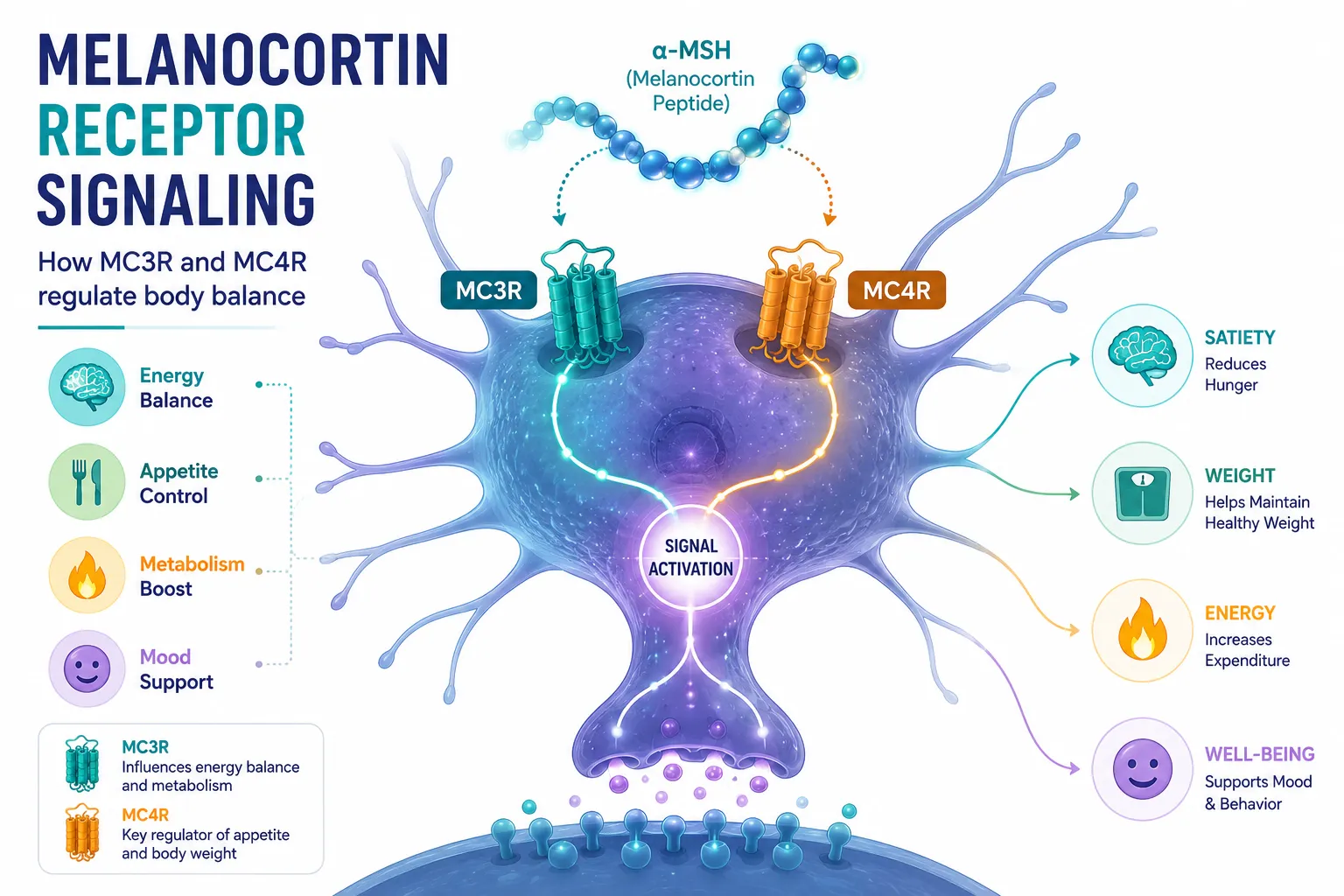
Bright editorial infographic-style landscape image () illustrating melanocortin receptor signaling: a clean flat-vector

Key Takeaways

  • PT-141 (bremelanotide) is a synthetic melanocortin receptor agonist derived from the alpha-MSH peptide family.
  • Its primary research interest centers on MC3R and MC4R activation in the central nervous system, not peripheral vascular targets.
  • Preclinical and clinical studies have examined PT-141 in the context of sexual dysfunction, energy regulation, and appetite modulation.
  • Unlike PDE5 inhibitors or hormone replacement strategies, PT-141 acts upstream at the neural level.
  • Researchers studying melanocortin biology often use PT-141 as a probe compound to understand receptor selectivity and downstream signaling.

Melanocortin Signaling: The Biological Foundation

PT-141 peptide research begins with understanding the melanocortin system. Melanocortins are a family of peptides derived from the precursor protein proopiomelanocortin (POMC). They bind to five known G-protein-coupled receptors, labeled MC1R through MC5R, each with distinct tissue distributions and downstream effects.

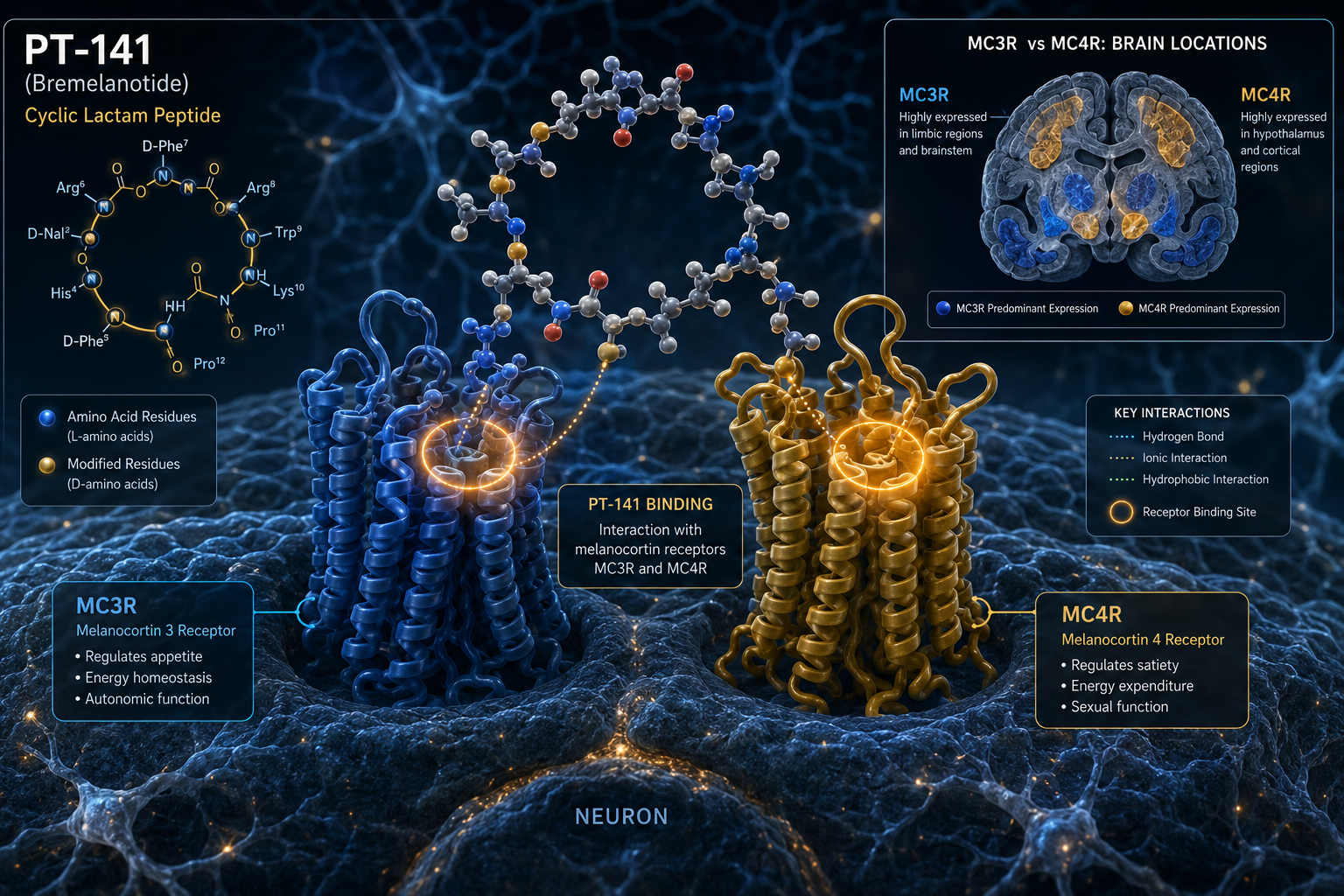
PT-141, also known as bremelanotide, is a cyclic heptapeptide analogue of alpha-melanocyte-stimulating hormone (alpha-MSH). Its structure was developed by modifying the natural peptide Melanotan II, with the primary goal of improving metabolic stability and receptor selectivity. The compound shows particular affinity for MC3R and MC4R, both of which are expressed in hypothalamic and limbic brain regions.

Why does this matter for researchers?

MC4R in particular has been linked to a wide range of central functions:

  • Energy homeostasis and appetite regulation
  • Autonomic nervous system tone
  • Sexual arousal and motivation pathways
  • Inflammation modulation

When PT-141 binds MC4R, it activates adenylyl cyclase through Gs-protein coupling, increasing intracellular cyclic AMP (cAMP). This cascade influences neuronal firing patterns in areas like the paraventricular nucleus of the hypothalamus. For more on how melanocortin receptor biology intersects with broader neural-metabolic themes, see the PT-141 neural metabolic research themes overview and the dedicated MC4R research resource.

Research Applications in PT-141 Peptide Studies

Research Applications in PT-141 Peptide Studies

Sexual Function Research

The most extensively studied application in PT-141 peptide research involves sexual dysfunction models. Unlike PDE5 inhibitors such as sildenafil, which work by relaxing smooth muscle in penile vasculature, PT-141 acts centrally. Animal studies demonstrated that MC4R agonism in the hypothalamus could trigger erections independent of direct genital stimulation, pointing to a neural motivational component rather than a purely mechanical vascular one.

In clinical trials, bremelanotide was evaluated in both male and female subjects. The FDA approved it in 2019 under the brand name Vyleesi for hypoactive sexual desire disorder (HSDD) in premenopausal women, one of the few approved agents with a central nervous system mechanism of action for this indication.

"PT-141 does not require sexual stimulation to initiate its effects in animal models, which distinguishes it fundamentally from peripheral vasodilatory agents."

Appetite and Energy Balance Research

Because MC4R is a key regulator of food intake, researchers have also used PT-141 as a probe to study appetite suppression pathways. Rodent studies show reduced food intake following MC4R agonist administration, consistent with the known role of this receptor in satiety signaling. This overlaps with broader metabolic peptide research, see the top 5 research peptides for metabolic health for context on where PT-141 sits relative to other metabolic probes.

Inflammation and Autonomic Modulation

Emerging preclinical data suggest MC3R and MC4R activation may modulate inflammatory cytokine release and autonomic tone. This positions PT-141 as a potential research tool in neuroinflammation models, though this area remains early-stage.

PT-141 Peptide Research vs. Traditional Pharmacological Approaches

PT-141 Peptide Research vs. Traditional Pharmacological Approaches

Understanding what makes PT-141 peptide research distinct requires a direct comparison with older paradigms.

Dimension PT-141 / Melanocortin Agonism Traditional Approaches
Primary target CNS receptors (MC3R, MC4R) Vascular smooth muscle or endocrine glands
Mechanism cAMP-mediated neural signaling PDE5 inhibition or hormone supplementation
Onset pathway Central (hypothalamic) Peripheral (genital, systemic)
Dependency on stimulation Not required in animal models Often required (PDE5 inhibitors)
Research selectivity Receptor subtype-specific probing Broad systemic effects

Traditional approaches to sexual dysfunction research have relied heavily on two frameworks: endocrine supplementation (testosterone, estrogen) and vascular modulation (PDE5 inhibitors). Both operate downstream of the neural decision-making process. PT-141 targets the motivational and arousal circuitry upstream, which is why it is valuable as an experimental probe for understanding the neurobiology of desire rather than the mechanics of physical response.

For researchers interested in how peptides broadly compare to small-molecule drugs in terms of receptor specificity and signaling depth, the peptides vs. classic small-molecule drugs analysis provides a useful framework. Delivery method also plays a role in research design; the nasal spray peptides: delivery methods, bioavailability, and research advantages article covers how route of administration affects peptide bioavailability in study contexts.

Researchers sourcing PT-141 for laboratory use can find high-purity material at the buy PT-141 peptide (bremelanotide) 10mg product page.

Conclusion

PT-141 peptide research occupies a unique position in experimental biology because it targets the central melanocortin system rather than peripheral vascular or endocrine structures. Its primary research value lies in its ability to activate MC3R and MC4R in hypothalamic circuits, making it a precise tool for studying neural arousal, appetite regulation, and autonomic modulation.

Actionable next steps for researchers:

  1. Review the published MC4R literature to understand receptor subtype selectivity before designing dosing protocols.
  2. Consider delivery route carefully, subcutaneous and intranasal models produce different pharmacokinetic profiles.
  3. Use PT-141 alongside complementary probes to map melanocortin pathway interactions rather than studying it in isolation.
  4. Cross-reference findings with related peptide research, such as Selank peptide research benefits and mechanism of action, to contextualize CNS peptide effects.
  5. Ensure compound purity is verified through third-party testing before use in any experimental protocol.

As 2026 research continues to expand the melanocortin receptor map, PT-141 remains one of the most pharmacologically informative tools available for probing the neural biology of motivation and metabolic regulation.

https://www.puretestedpeptides.com/wp-content/uploads/2026/08/pt-141-peptide-research-mechanism-applications-and-comparison-to-traditional-app.webp 1024 1536 https://www.puretestedpeptides.com/wp-content/uploads/2026/01/buy-peptides-online.jpg 2026-08-09 13:05:092026-08-09 13:05:09PT-141 Peptide Research: Mechanism, Applications, and Comparison to Traditional Approaches

Tag Archive for: mc3r mc4r

PT-141 Peptide: Melanocortin Receptor Agonism and Its Role in Sexual Function Research

PT-141 Peptide: Melanocortin Receptor Agonism and Its Role in Sexual Function Research

June 21, 2026/0 Comments/by Pure Tested

Roughly 40% of women and 30% of men report some form of sexual dysfunction during their lifetimes, yet for decades, pharmacological research focused almost exclusively on vascular mechanisms. PT-141 Peptide: Melanocortin Receptor Agonism and Its Role in Sexual Function Research represents a fundamentally different approach — one that targets desire and motivation at the level of the brain rather than blood flow.

Key Takeaways

  • PT-141 (bremelanotide) acts as an agonist at melanocortin receptor subtypes MC3R and MC4R in the central nervous system, not through vascular pathways.
  • The FDA approved bremelanotide under the brand name Vyleesi in June 2019 for hypoactive sexual desire disorder (HSDD) in premenopausal women.
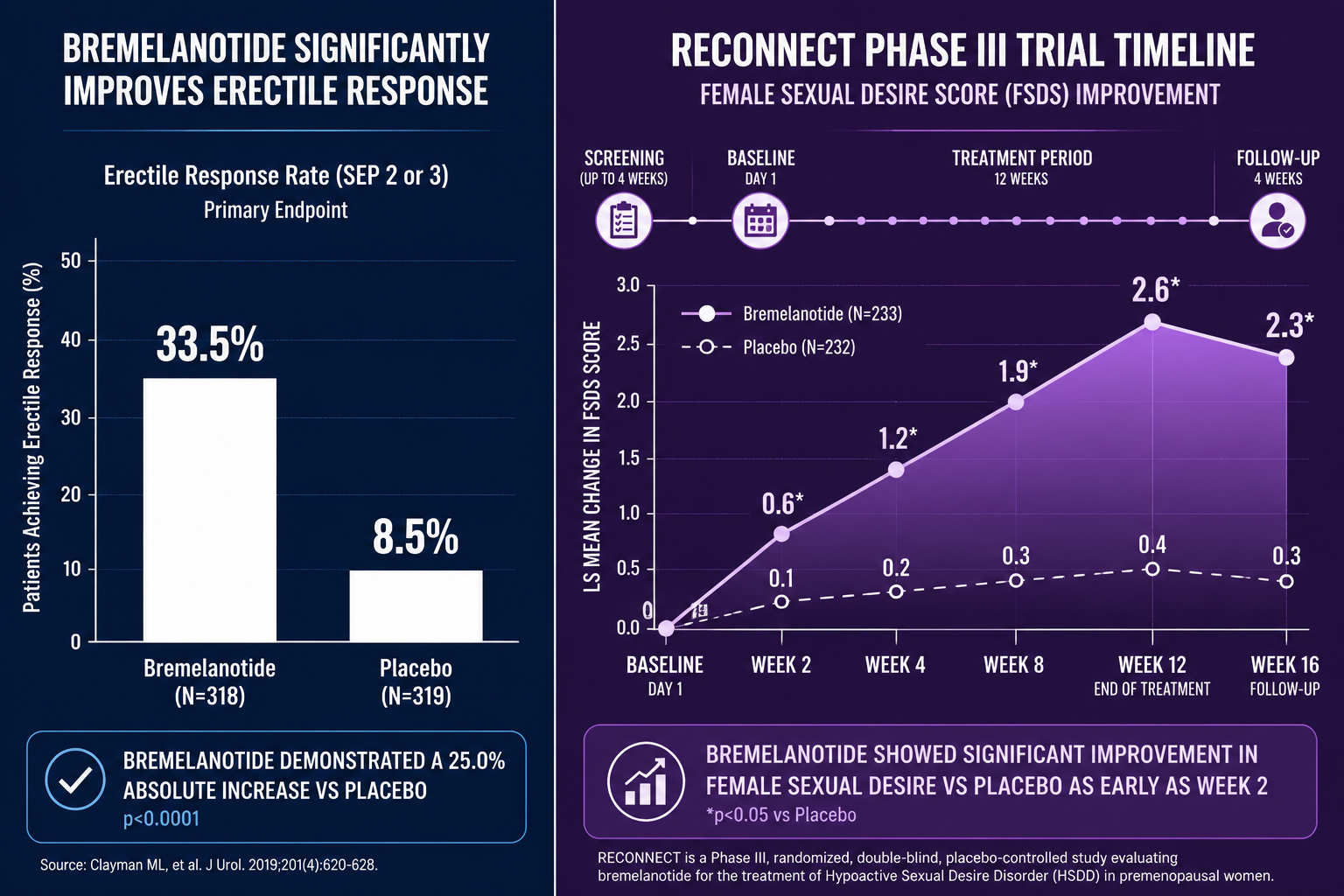
  • Phase IIB trials showed a 33.5% positive erectile response rate in men treated with bremelanotide, versus 8.5% in the placebo group.
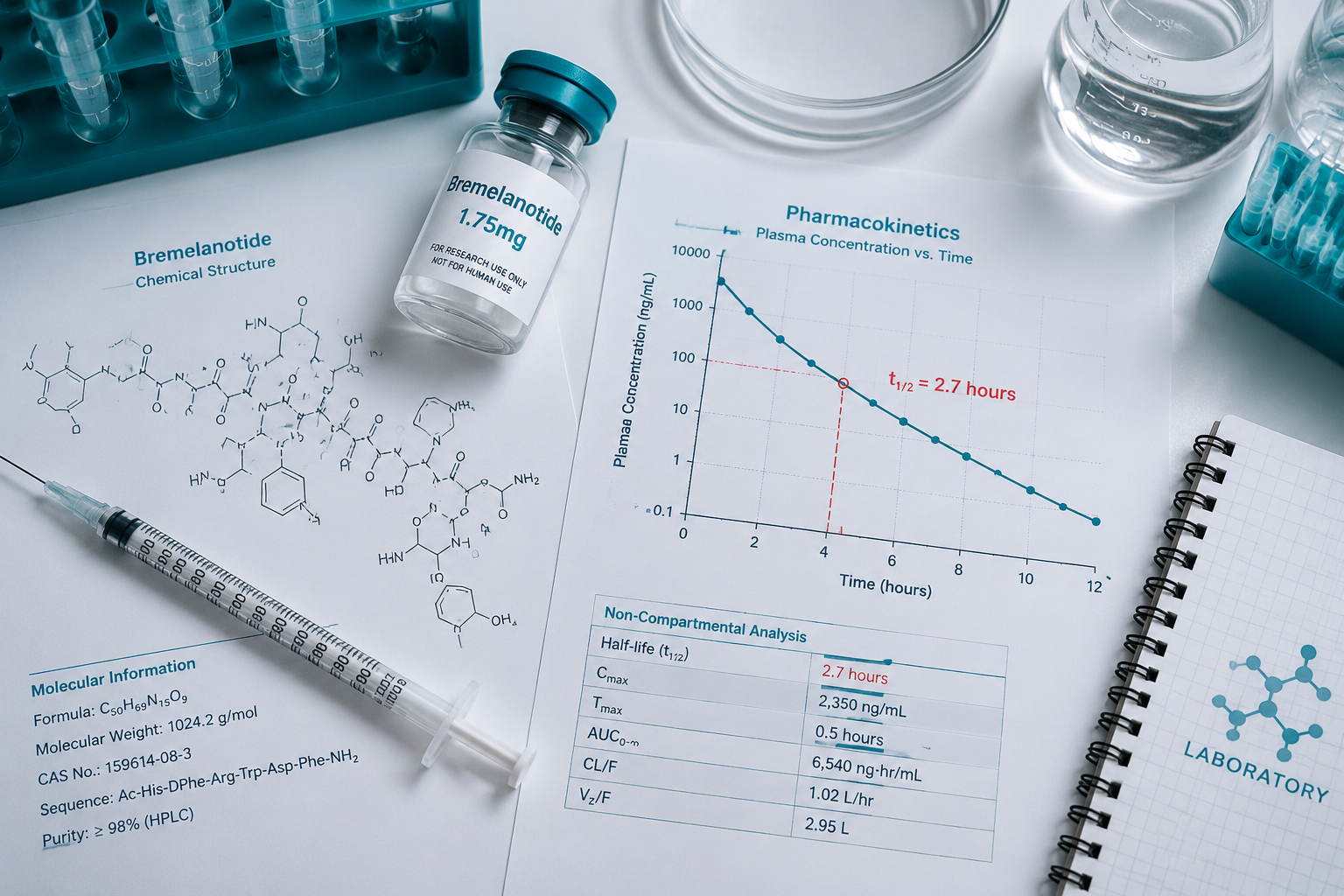
  • Its cyclic lactam structure resists enzymatic breakdown, giving it biological effects that outlast its 2.7-hour plasma half-life.
  • Research continues to explore its applications in both male and female sexual dysfunction, including cases where PDE5 inhibitors have failed.

Key Takeaways

Melanocortin Receptor Subtypes and the Central Mechanism of PT-141

Understanding PT-141 Peptide: Melanocortin Receptor Agonism and Its Role in Sexual Function Research begins with the melanocortin system itself. The melanocortin receptor family includes five G-protein-coupled receptor subtypes (MC1R through MC5R), each distributed across different tissues with distinct physiological roles.

PT-141 selectively targets MC3R and MC4R, both of which are expressed in regions of the central nervous system associated with motivation, reward, and autonomic regulation. MC4R, in particular, is densely expressed in the hypothalamus — a brain region central to sexual behavior and hormonal signaling.

This central mechanism sets PT-141 apart from phosphodiesterase type 5 (PDE5) inhibitors such as sildenafil. PDE5 inhibitors work peripherally by enhancing blood flow in genital tissue, and they require sexual stimulation to be effective. PT-141, by contrast, modulates desire and motivation upstream — in the brain — before any peripheral response occurs.

"PT-141 acts on the neural circuits that generate sexual interest, not merely the vascular response that follows it."

This distinction is clinically significant. Conditions like HSDD are characterized by a deficiency of desire, not a failure of vascular response. A vascular drug cannot address a motivational deficit. Melanocortin receptor agonism can.

For researchers exploring broader neuroendocrine signaling, the central arousal research context for PT-141 provides additional mechanistic background worth reviewing alongside this work.


Clinical Research Findings: Efficacy Across Male and Female Populations

Clinical Research Findings: Efficacy Across Male and Female Populations

Evidence in Women

The RECONNECT Phase III clinical trials provided the pivotal data that led to FDA approval of bremelanotide (Vyleesi) in June 2019. These trials enrolled premenopausal women diagnosed with HSDD and demonstrated statistically significant improvements in:

  • Sexual desire scores on validated patient-reported outcome measures
  • Distress levels associated with low sexual desire
  • Overall satisfaction with sexual experiences

The approved dosing protocol calls for 1.75 mg administered subcutaneously at least 45 minutes before anticipated sexual activity. This on-demand dosing model differs from daily hormonal therapies, offering flexibility that many patients prefer.

Research has also examined bremelanotide in women with female sexual arousal disorder (FSAD), finding positive effects on subjective sexual response — suggesting the compound's utility may extend beyond HSDD alone.

Evidence in Men

Although Vyleesi is FDA-approved only for premenopausal women with HSDD, Phase IIB trials in men produced compelling data. 33.5% of bremelanotide-treated men experienced positive erectile responses compared to 8.5% in the placebo group — a four-fold difference.

Perhaps more notable is the compound's performance in men who did not respond to sildenafil. Bremelanotide demonstrated a capacity to rescue erectile function in this treatment-resistant subgroup, pointing to its value in cases where vascular-focused therapies fall short.

Off-label use data in men has also reported improvements in:

Outcome Responder Rate
Erectile function 52%
Sexual desire 39%
Performance anxiety reduction 39%
Orgasm quality 17%

Researchers interested in peptide combinations addressing multiple physiological pathways may find value in reviewing peptide blend research for comparative context.


Pharmacokinetics, Safety Profile, and Research Considerations

Pharmacokinetics, Safety Profile, and Research Considerations

Structural Stability and Half-Life

PT-141's cyclic lactam structure is a key pharmacological feature. This configuration provides resistance to enzymatic degradation, which explains why biological effects persist beyond the compound's plasma elimination half-life of approximately 2.7 hours. Researchers studying peptide stability will recognize this as a meaningful advantage over linear peptide analogs.

Early intranasal administration studies demonstrated significant erectile responses at doses above 7 mg, with onset approximately 30 minutes post-administration — suggesting the compound's mechanism is rapid once absorption occurs.

Adverse Effect Profile

Common adverse effects reported in clinical trials include:

  • Flushing (the most frequently reported event)
  • Headache
  • Injection-site reactions
  • Nausea

A less common but notable finding is focal hyperpigmentation, observed in individuals using the medication more than eight times per month. This effect is linked to MC1R activity in skin melanocytes, a reminder that melanocortin receptor agonism is not tissue-specific in its entirety.

For researchers sourcing research-grade material, the PT-141 research context, Q&A, and controls page outlines purity standards and experimental controls relevant to in vitro and in vivo study design.

Those examining neuroendocrine peptide interactions more broadly may also find the neuroendocrine and innate immunity research overview useful for situating melanocortin signaling within wider physiological networks.

Researchers exploring innovative delivery systems for peptides like PT-141 should consult the innovative peptide delivery systems research overview for emerging administration strategies. Additionally, those comparing receptor-level agonism across compound classes may benefit from the GLP-1 dual receptor agonism breakdown as a structural parallel in receptor-targeted peptide pharmacology.


Conclusion

PT-141 Peptide: Melanocortin Receptor Agonism and Its Role in Sexual Function Research occupies a unique and well-supported position in the landscape of sexual health pharmacology. By targeting MC3R and MC4R in the central nervous system, bremelanotide addresses the neurological roots of sexual desire — a mechanism that neither hormonal therapies nor vascular drugs can replicate.

Actionable next steps for researchers and clinicians:

  1. Review the RECONNECT trial data in full to understand validated outcome measures used in HSDD research.
  2. Examine the off-label male data critically, noting the distinction between Phase IIB findings and anecdotal reports.
  3. Assess the cyclic lactam structural features of PT-141 when designing stability comparisons with other research peptides.
  4. Consider the focal hyperpigmentation risk as a dose-frequency variable in any long-term study protocol.
  5. Cross-reference melanocortin receptor distribution maps when hypothesizing secondary physiological effects beyond sexual function.

The central nervous system pathway that PT-141 activates remains one of the most promising and underexplored frontiers in sexual medicine research as of 2026.

https://www.puretestedpeptides.com/wp-content/uploads/2026/06/PT-141-Peptide-Melanocortin-Receptor-Agonism-and-Its-Role-in-Sexual-Function-Research.png 1024 1536 Pure Tested https://www.puretestedpeptides.com/wp-content/uploads/2026/01/buy-peptides-online.jpg Pure Tested2026-06-21 13:05:182026-07-20 15:02:38PT-141 Peptide: Melanocortin Receptor Agonism and Its Role in Sexual Function Research
×

Helpful Links

  • My account
  • Cart
  • Checkout
  • Refund and Returns Policy
  • Privacy Policy
  • SMS Privacy Policy
  • Login
  • My Account
  • Logout

USA Made Lab Tested Peptides

All products are sold for research, laboratory, or analytical purposes only, and are not for human consumption


Pure Tested Peptides is a chemical supplier. Pure Tested Peptides is not a compounding / chemical compounding facility as defined under 503A of the Federal Food, Drug, and Cosmetic act. Pure Tested Peptides is not an outsourcing facility as defined under 503B of the Federal Food, Drug, and Cosmetic act.

The statements made within this website have not been evaluated by the US Food and Drug Administration. The products we offer are not intended to diagnose, treat, cure or prevent any disease.

Human/Animal Consumption Prohibited. Laboratory/In-Vitro Experimental Use Only

Scroll to top Scroll to top Scroll to top