Call or Text 727-513-9780
  • Shopping Cart Shopping Cart
    0Shopping Cart
Pure Tested Peptides | America's most trusted Peptides for sale online
  • Peptides for sale
    • Oral Peptides for sale
      • Peptide Capsules for sale
      • BPC 157 Capsules 1000mcg
      • SLU-PP-332 Capsules | 1000 mcg
      • 5-Amino-1MQ 50mg Capsules
      • Tesofensine 500mcg
    • All Peptides for sale
    • Peptide Sprays
      • BPC 157 Nasal Spray Kit
      • BPC-157 TB500 Nasal Spray Kit
      • Semax Nasal Spray 10mg
      • Selank – Nasal Spray Kit – 10mg
      • Epithalon 50MG Nasal Spray Kit
      • Ipamorelin 10mg Nasal Spray
      • Klow Nasal Spray (BPC-157 + TB-500 + GHK-Cu + KPV) | 80mg
      • Hulk Nasal Spray Tesa / Ipa Blend 6/3 MG
      • Klow Nasal Spray
      • NAD + 500 mg Nasal Spray
      • PT-141 Nasal Spray Kit
    • GHRH Peptides
      • Ipa Peptides
      • CJC-1295 Peptides
        • CJC-1295 with DAC 5 mg
        • CJC-1295 without DAC 5 mg
        • CJC-1295 Ipa 10mg
      • Tesa Peptides
        • Tesa Peptide
        • Tesa 20 mg
    • GHK-Cu Peptides
      • All GHK-Cu Peptides
      • GHK-Cu 100mg
      • KLOW Peptide Blend – Buy KLOW blend online
    • BPC Peptides
      • All BPC Peptides
      • BPC-157
      • BPC-157 TB-500
      • BPC 157 capsules 1000mcg
    • SLU-PP-332 Peptides
      • All SLU-PP-332 Peptides
      • SLU-PP-332 5mg
    • GLP3 Peptides
      • GLP3-R
      • GLP3-R CAG 10mg
      • GLP3-R 20mg
    • PT-141 Peptides
      • PT-141 Peptides for sale
      • PT-141 10mg
      • PT-141 Nasal Spray
    • CAG Peptides
      • Lipo-C Peptide Blend
      • CAG 5mg
      • CAG 10mg
    • MOTS-C Peptides
      • MOTS-C Peptides for sale
      • MOTS-c peptide
      • MOTS-c 10mg *6 pack*
    • 5 Amino 1MQ Peptides
      • 5 Amino 1MQ Peptides for sale
      • 5-Amino-1MQ 50mg Capsules
      • 5-Amino-1MQ 5mg
    • Epithalon Peptides
      • Epithalon Peptides for sale
      • Epithalon 10mg
      • Epithalon 50mg
  • Shop
    • GLPs
      • 5-Amino-1MQ 50mg Capsules
      • 5-Amino-1MQ 5mg
      • GLP3-Reta
      • L-Carnitine 500mg/ml
      • Tesofensine 500mcg
      • SLU-PP-332 5mg
      • MOTS-c 10mg *6 pack*
    • Epithalon & BPC Peptides
      • Epithalon 10mg
      • Epithalon 50mg
      • BPC-157
      • BPC 157 capsules 1000mcg
      • BPC-157 TB-500
      • BPC-157 TB500 Nasal Spray Kit
      • BPC 157 Nasal Spray Kit
    • BPC TB-500 & NAD+ Peptides
      • NAD+ 500 mg
      • KLOW Peptide Blend – Buy KLOW blend online
      • GLOW Peptide Blend
      • TB 500 5mg
      • BPC 157 capsules 1000mcg – Supplement
      • BPC 157 Nasal Spray Kit
      • BPC-157
      • BPC-157 TB500 Nasal Spray Kit
      • BPC-157 TB-500
      • BPC 157 capsules 1000mcg
    • LL-37 Peptide
      • LL-37 10 mg
    • MOTS-C & Selank
      • MOTS-c peptide
      • Selank 10mg
    • GHK Peptides
      • GHK-Cu 100mg
      • GLOW Peptide Blend
      • KLOW Peptide Blend – Buy KLOW blend online
  • COAs
  • Wholesale
    • Wholesale Peptides for sale
  • PTP FAQ
  • Affiliates
    • Selank Peptide: Advanced Pharmacological Mechanisms Underlying Its Anxiolytic and Nootropic Effects in Research
      • 5-Amino-1MQ Peptide: Detailed Mechanisms of NNMT Inhibition and Its Impact on Cellular Metabolism Research
        • MOTS-C Peptide: Unraveling Its Role in Mitochondrial Dynamics and Energy Metabolism Research
          • Epithalon Peptide and Telomerase Regulation: Investigating Its Impact on Cellular Senescence and Lifespan Research Models
            • GLP2-T vs GLP2 Tirz Peptide: Understanding the Naming, Mechanistic Nuances, and Research Implications for Gut Health
      • Peptides and Polypeptides in Modern Pharmacology: What Research on Metoprolol, Prednisone, and Amlodipine Reveals
        • Polypeptide Peptides vs NSAIDs: What Naproxen and Diclofenac Teach Tissue-Repair Researchers About BPC‑157 and TB‑500
          • Peptides and Polypeptides in Endocrine Pharmacology: How GLP-1, GLP-2, and GLP-3 Retatrutide Differ From Classic Drugs Like Prednisone and Amlodipine
          • 5‑Amino‑1MQ Peptide and NNMT Inhibition: How It Compares With Statins Like Atorvastatin in Adipose and Lipid Metabolism Research
      • Enclomiphene, Estrogen Receptor Signaling, and Luteinizing Phase Biology: What Hormone Researchers Should Measure
        • Mesenchymal Stem Cells, BPC‑157, and GHK‑Cu: How Tissue Repair Peptides Compare With Classic NSAIDs Like Naproxen in Injury Models
          • Peptide Calculator Use Cases Beyond Growth Hormone: Working Through GLP‑3 Retatrutide, MOTS‑c, and BPC‑157 Research Dosing
        • Polypeptide Peptides in Endocrine and Metabolic Pharmacology: Lessons From Amlodipine, Prednisone, and Metoprolol
        • Peptides Calculator for Advanced Blends: Worked Examples for Tesamorelin, CJC‑1295, and Ipamorelin Stacks
          • Peptides and Polypeptides in Human Physiology: How Molecular Size Shapes Research Applications
            • Selank Peptide: Advanced Pharmacological Mechanisms Underlying Its Anxiolytic and Nootropic Effects in Research
          • 5-Amino-1MQ Peptide: Detailed Mechanisms of NNMT Inhibition and Its Impact on Cellular Metabolism Research
            • MOTS-C Peptide: Unraveling Its Role in Mitochondrial Dynamics and Energy Metabolism Research
              • Epithalon Peptide and Telomerase Regulation: Investigating Its Impact on Cellular Senescence and Lifespan Research Models
                • GLP2-T vs GLP2 Tirz Peptide: Understanding the Naming, Mechanistic Nuances, and Research Implications for Gut Health
                  • Peptides and Polypeptides in Endocrine Pharmacology: How GLP-1, GLP-2, and GLP-3 Retatrutide Differ From Classic Drugs Like Prednisone and Amlodipine
                    • Polypeptide Peptides vs NSAIDs: What Naproxen and Diclofenac Teach Tissue-Repair Researchers About BPC‑157 and TB‑500
                      • Peptides and Polypeptides in Modern Pharmacology: What Research on Metoprolol, Prednisone, and Amlodipine Reveals
                        • 5‑Amino‑1MQ Peptide and NNMT Inhibition: How It Compares With Statins Like Atorvastatin in Adipose and Lipid Metabolism Research
                        • Enclomiphene, Estrogen Receptor Signaling, and Luteinizing Phase Biology: What Hormone Researchers Should Measure
                        • Mesenchymal Stem Cells, BPC‑157, and GHK‑Cu: How Tissue Repair Peptides Compare With Classic NSAIDs Like Naproxen in Injury Models
                        • Peptide Calculator Use Cases Beyond Growth Hormone: Working Through GLP‑3 Retatrutide, MOTS‑c, and BPC‑157 Research Dosing
                        • Polypeptide Peptides in Endocrine and Metabolic Pharmacology: Lessons From Amlodipine, Prednisone, and Metoprolol
                        • Peptides Calculator for Advanced Blends: Worked Examples for Tesamorelin, CJC‑1295, and Ipamorelin Stacks
                        • Peptides and Polypeptides in Human Physiology: How Molecular Size Shapes Research Applications
                        • Selank Peptide: Advanced Pharmacological Mechanisms Underlying Its Anxiolytic and Nootropic Effects in Research
                        • MOTS-C Peptide: Unraveling Its Role in Mitochondrial Dynamics and Energy Metabolism Research
                        • Peptides and Polypeptides in Modern Pharmacology: What Research on Metoprolol, Prednisone, and Amlodipine Reveals
                        • Peptides and Polypeptides in Endocrine Pharmacology: How GLP-1, GLP-2, and GLP-3 Retatrutide Differ From Classic Drugs Like Prednisone and Amlodipine
                        • 5-Amino-1MQ Peptide: Detailed Mechanisms of NNMT Inhibition and Its Impact on Cellular Metabolism Research
                        • Mesenchymal Stem Cells, BPC‑157, and GHK‑Cu: How Tissue Repair Peptides Compare With Classic NSAIDs Like Naproxen in Injury Models
                        • Peptide Calculator Use Cases Beyond Growth Hormone: Working Through GLP‑3 Retatrutide, MOTS‑c, and BPC‑157 Research Dosing
                        • GLP2-T vs GLP2 Tirz Peptide: Understanding the Naming, Mechanistic Nuances, and Research Implications for Gut Health
                        • Polypeptide Peptides in Endocrine and Metabolic Pharmacology: Lessons From Amlodipine, Prednisone, and Metoprolol
                        • Polypeptide Peptides vs NSAIDs: What Naproxen and Diclofenac Teach Tissue-Repair Researchers About BPC‑157 and TB‑500
                        • Peptides and Polypeptides in Human Physiology: How Molecular Size Shapes Research Applications
                        • Peptides Calculator for Advanced Blends: Worked Examples for Tesamorelin, CJC‑1295, and Ipamorelin Stacks
                        • 5‑Amino‑1MQ Peptide and NNMT Inhibition: How It Compares With Statins Like Atorvastatin in Adipose and Lipid Metabolism Research
                        • Enclomiphene, Estrogen Receptor Signaling, and Luteinizing Phase Biology: What Hormone Researchers Should Measure
                        • Epithalon Peptide and Telomerase Regulation: Investigating Its Impact on Cellular Senescence and Lifespan Research Models
                        • Best research protocol Klow blend
                        • best time to take BPC-157
                        • best time to take DSIP (Delta Sleep Inducing Peptide)
                        • best time to take CJC-1295
                        • best time to take AOD-9604
                        • best time to take Follistatin 344
                        • best time to take Ipamorelin
                        • best time to take MK-677 (Ibutamoren)
                        • best time to take Ligandrol (LGD-4033) — research compound
                        • best time to take Ostarine (MK-2866) — research compound
                        • best time to take GHK-CU
                        • best time to take TB-500
                        • best time to take MOTS-c
                        • best time to take Semax
                        • best time to take RAD-140 (Testolone) — research compound
                        • best time to take Thymosin Alpha-1
                        • best time to take PEG-MGF
                        • Biolife Plasma, Octapharma Plasma, and Research Peptides: How Plasma Donation Labs Differ From Peptide Suppliers
                        • best time to take YK-11 — research compound
                        • best time to take PT-141 (Bremelanotide)
                        • Best research protocol Klow blend
                        • 5-Amino-1MQ and MOTS-C Synergy: Metabolic Signaling, Mitochondria, and Research Design
                        • BPC-157 and TB-500: Investigating Their Combined Effects on Angiogenesis and Cellular Migration in Tissue Repair Models
                        • BPC-157 Peptide: Gut Barrier Function, Inflammation, and Tissue-Recovery Research
                        • 5‑Amino‑1MQ and MOTS‑c Synergy in Metabolic Research: Designing NNMT and Mitochondrial Biogenesis Stacks
                        • CJC-1295 with DAC vs. Without DAC: Half-Life, Release Kinetics, and Research Implications
                        • CJC‑1295 with DAC vs. Without DAC: Expanding on Half‑Life Differences Using Tesamorelin and Ipamorelin Blend Case Studies
                        • Collagen Biology and Copper‑Binding Peptides: How GHK‑Cu, Glow Blend, and Klow Blend Interact with Skin and Connective Tissue
                        • Collagen Biology and Regenerative Peptides: How GHK‑Cu, Glow Blend, and Klow Blend Affect Extracellular Matrix Research
                    • DNA, Telomeres, and Longevity Peptides: Positioning Epithalon and MOTS‑c in Genetic Aging Research
                      • Enclomiphene Citrate: serm Mechanism, Testosterone Research, and Stack Compatibility
                        • Enclomiphene vs Enclomiphene Citrate: Formulation, Bioavailability, and Research Distinctions
                        • Epithalon Peptide Research: Telomerase Activation, Aging, and Pineal Gland Function
                        • Estrogen Receptor Signaling and Enclomiphene: How Selective Modulators Compare with Classic Polypeptide Hormones
                        • GHK-Cu Peptide: Advanced Mechanisms in Extracellular Matrix Remodeling and Wound Healing Research
                        • GHK-Cu Peptide: Collagen Synthesis, Wound Repair, and Skin-Barrier Research Models
                        • GLP-1 vs GLP-3 vs GLP-2: Peptide Classification and Research Applications
                        • GLP-2 Peptide Research Guide: Gut Barrier Function, Nutrient Absorption, and Intestinal Recovery Models
                        • GLP-3 Retatrutide vs. GLP-1 Drugs: What Triple-Agonist Biology Changes in Research Models
                        • Ipamorelin and Tesamorelin Combination: Synergistic GH Secretagogue Research and Dosing Protocols
                        • GLP2 Tirz Peptide: What It Is, Why the Name Exists, and How Researchers Should Interpret It
                        • Klow Blend Peptide Nasal Spray: What the Formulation Is Trying to Do in Cognitive Research
                        • Mitochondria, NNMT Inhibition, and Peptide Modulators: Where MOTS‑c and 5‑Amino‑1MQ Fit in Cellular Energy Research
                        • MOTS-c Peptide: Mitochondrial Function, Energy Metabolism, and What Researchers Measure
                        • MOTS-c vs. 5-Amino-1MQ: Which Metabolic Research Questions Each Compound Actually Answers
                        • Nasal Spray Peptides: Bioavailability, Administration, and Semax/Selank Research Applications
                        • PT-141 Peptide Research: Mechanism of Action and Melanocortin Receptor Signaling
                        • Retatrutide for Research: Mechanism, Structure, and GLP-1/GLP-3 Dual Action
                        • Retatrutide for Obesity and Type 2 Diabetes: What the Latest Trial Data Suggest
                        • Tesofensine Peptide Research: Mechanism, Appetite Suppression, and Neuropeptide Y Pathways
  • Contact
    • Contact Customer Service
    • Text Customer Support
  • About US
  • Shop all peptides
  • Affiliate Program
    • Affiliate Signup
  • Login / Register Login / Register Page Link Login / Register Page Link
  • Click to open the search input field Click to open the search input field Search
  • Menu Menu

Tag Archive for: metabolic dysfunction

How 5-Amino-1MQ and MOTS-c Are Studied Together in Metabolic Research

How 5-Amino-1MQ and MOTS-c Are Studied Together in Metabolic Research

August 13, 2026/0 Comments/in Uncategorized/by

Metabolic dysfunction now affects more than one billion people globally, yet the pipeline of approved pharmacological tools remains narrow. That gap has pushed researchers toward investigational compounds with complementary mechanisms, and few pairings have attracted more scientific curiosity in 2026 than 5-Amino-1MQ and MOTS-c. Understanding how 5-Amino-1MQ and MOTS-c are studied together in metabolic research requires looking at what each compound does independently before examining why their combination is considered scientifically interesting.

Key Takeaways

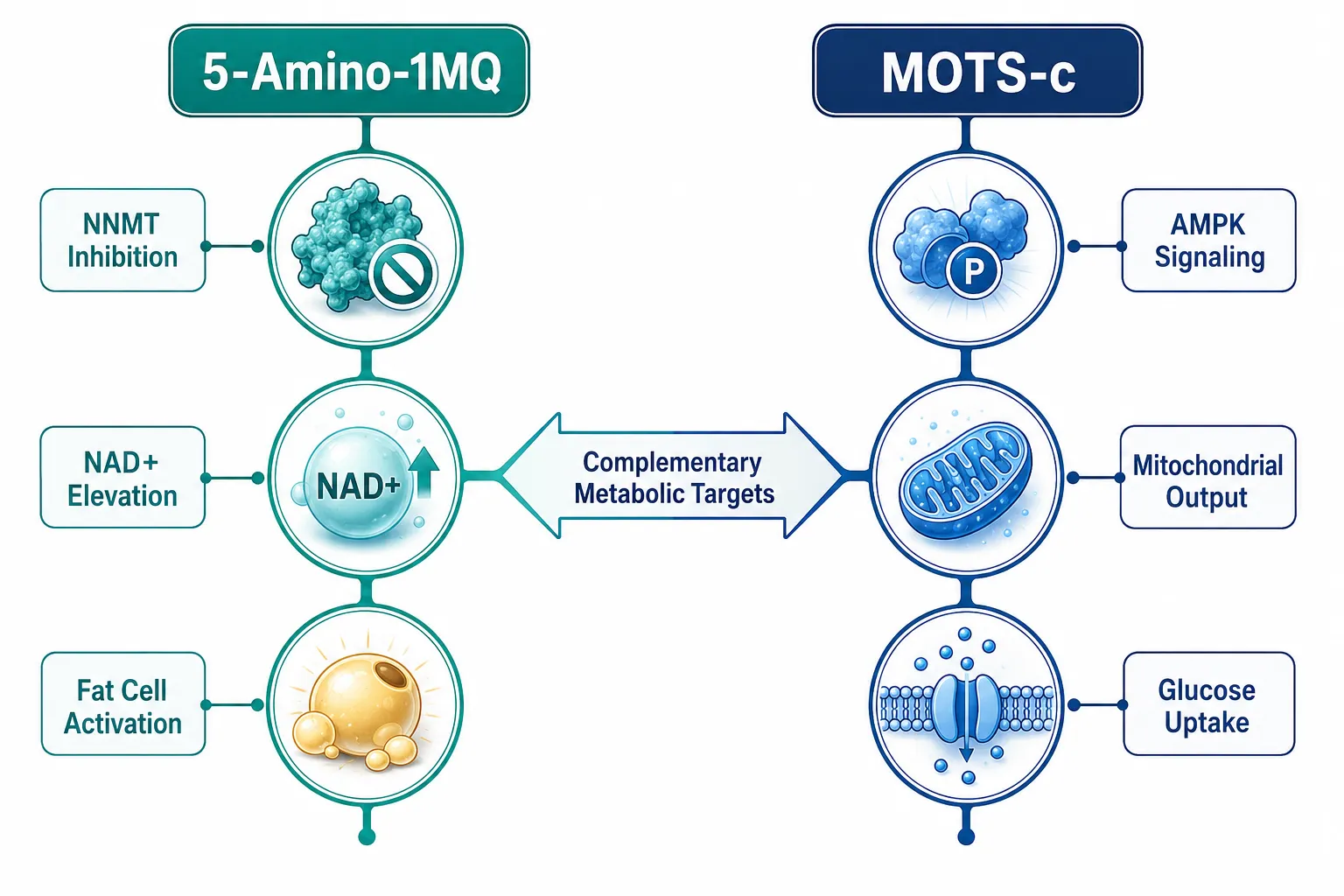
  • 5-Amino-1MQ inhibits the enzyme NNMT, raising NAD+ levels and activating fat metabolism at the cellular level.
  • MOTS-c is a mitochondria-derived peptide that activates AMPK signaling and improves glucose handling in preclinical models.
  • The two compounds target different but interconnected metabolic pathways, making them a subject of combination research.
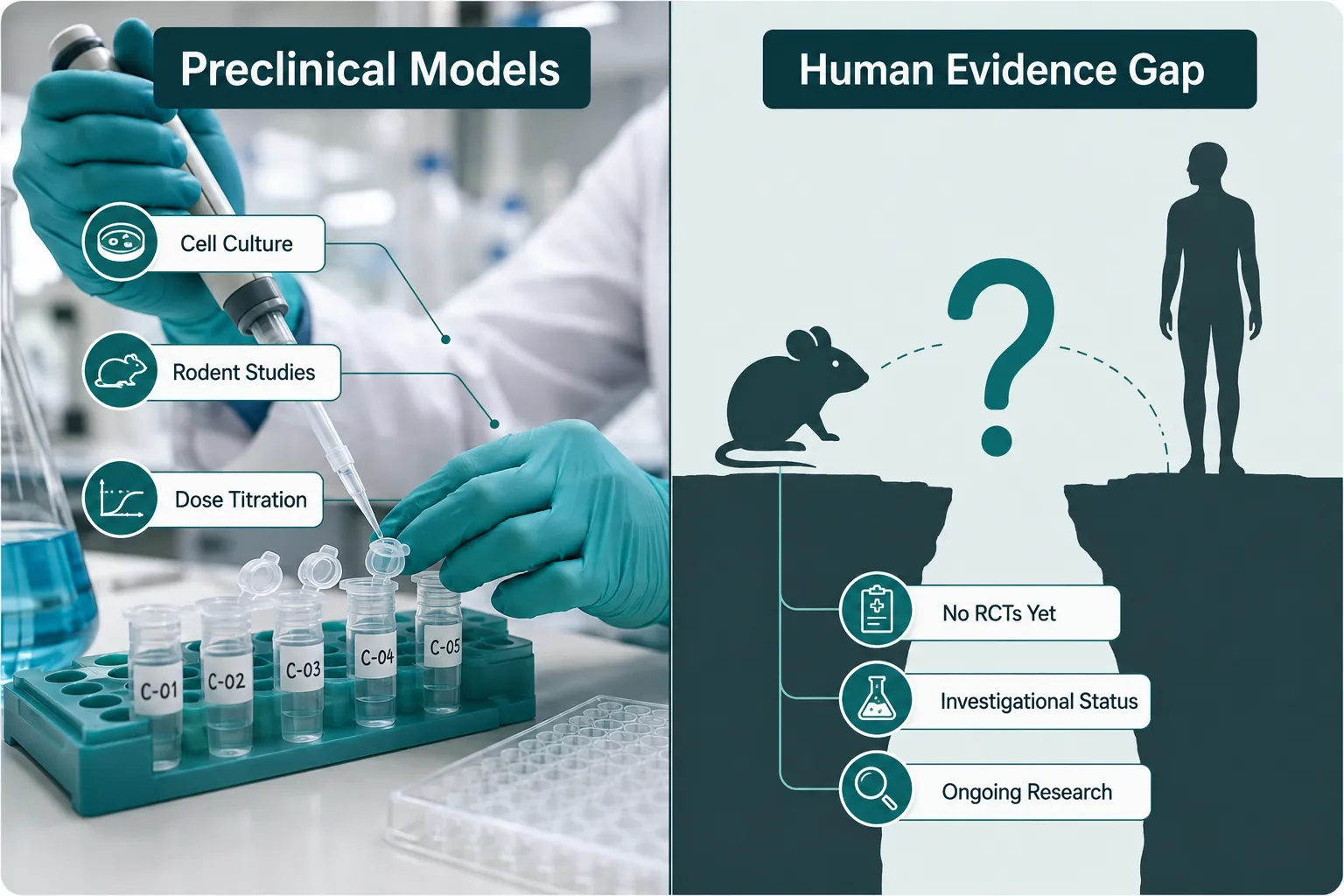
  • Both remain investigational; no randomized controlled trials in humans have confirmed fat-loss or metabolic outcomes for either agent.
  • Researchers and clinics are exploring stacking protocols with NAD+ precursors and GLP-1 agonists, though evidence remains early-stage.

The Distinct Mechanisms Behind Each Compound
The Distinct Mechanisms Behind Each Compound

5-Amino-1MQ is a small-molecule inhibitor of nicotinamide N-methyltransferase (NNMT), an enzyme that consumes NAD+ precursors. When NNMT is blocked, cellular NAD+ availability rises. Higher NAD+ levels are associated with increased activity of sirtuins and other metabolic regulators that govern fat oxidation and energy expenditure. In adipose tissue, this shift appears to reduce lipid storage and promote lipolysis in cell and animal models. For a deeper look at how NAD+ connects to these peptide systems, the resource on adenosine triphosphate and mitochondrial peptides: how MOTS-c and 5-Amino-1MQ influence ATP production provides useful mechanistic context.

MOTS-c is a 16-amino-acid peptide encoded within mitochondrial DNA. It primarily works through AMPK activation, a master energy sensor that promotes glucose uptake, suppresses lipogenesis, and enhances mitochondrial biogenesis. Unlike most peptides, MOTS-c can translocate to the nucleus under metabolic stress, where it modulates gene expression tied to metabolic flexibility. Researchers interested in its foundational biology can explore MOTS-c: the mitochondrial peptide for background on its discovery and signaling profile.

The key distinction is target specificity:

Feature 5-Amino-1MQ MOTS-c
Primary target NNMT enzyme AMPK pathway
Key metabolite affected NAD+ Glucose / lipid flux
Main tissue focus Adipose tissue Skeletal muscle, liver
Molecule type Small molecule Mitochondrial peptide
Administration route (research) Oral (preclinical) Injectable (preclinical)

How 5-Amino-1MQ and MOTS-c Are Studied Together in Metabolic Research: The Combination Rationale

The rationale for studying these two agents together is rooted in pathway complementarity. NNMT inhibition by 5-Amino-1MQ addresses the upstream availability of NAD+, while MOTS-c operates downstream through AMPK to improve how cells use the energy that NAD+ helps generate. In theory, raising NAD+ and simultaneously activating AMPK could produce additive effects on mitochondrial efficiency and substrate utilization.

Key insight: Researchers describe the pairing as targeting "two different floors of the same metabolic building", one compound improves fuel supply, the other improves how cells burn it.

Preclinical models examining this combination have focused on:

  • Adipose tissue remodeling, measuring changes in white adipose depots
  • Insulin sensitivity markers, fasting glucose, HOMA-IR in rodent models
  • Mitochondrial respiration assays, oxygen consumption rate in isolated cells
  • Body composition endpoints, lean mass preservation alongside fat reduction

Researchers studying related mitochondrial peptide combinations, such as the MOTS-c and Elamipretide pairing, have used similar assay frameworks, making that work a useful methodological reference point.

Evidence Tiers and Research Gaps
Evidence Tiers and Research Gaps

Both compounds remain firmly in the investigational category. Neither 5-Amino-1MQ nor MOTS-c is FDA-approved, and both are currently sold exclusively as research chemicals. The evidence base, as of mid-2026, sits at the following tiers:

Established (in vitro and animal data):

  • NNMT inhibition by 5-Amino-1MQ reduces adiposity in diet-induced obese mouse models
  • MOTS-c improves glucose tolerance and exercise capacity in aged rodents
  • Combination protocols in cell models suggest non-overlapping pathway activation

Emerging (mechanistic speculation and early protocol design):

  • Longevity-focused researchers have proposed NAD+/MOTS-c/5-Amino-1MQ stacks as a multi-target approach to metabolic aging
  • Clinics have begun positioning the duo for "weight plateau" scenarios alongside GLP-1 agonists, though this is protocol-level practice without controlled trial support

Missing (critical evidence gaps):

  • No randomized controlled trials in humans for either compound alone
  • No published human pharmacokinetic data for the combination
  • Organ-target interaction profiles at combined doses remain unstudied

Expert commentary from metabolic biology reviewers in 2026 consistently frames the situation as "interesting biology, weak human evidence." That honest assessment should anchor any research design that incorporates this pairing. For comparison, researchers interested in how appetite-modulating compounds are evaluated alongside metabolic peptides may find the analysis of tesofensine vs GLP-3 retatrutide appetite-modulating pathways instructive for study design principles.

How 5-Amino-1MQ and MOTS-c Are Studied Together: Protocol Design Considerations

How 5-Amino-1MQ and MOTS-c Are Studied Together: Protocol Design Considerations

For researchers designing combination studies, several practical considerations emerge from the existing preclinical literature.

Dosing sequencing: Some protocols administer 5-Amino-1MQ first to elevate NAD+ availability before introducing MOTS-c, hypothesizing that a primed NAD+ environment amplifies AMPK responsiveness. This sequencing remains theoretical but is gaining traction in research design discussions as of July 2026.

Biomarker selection: Researchers typically track NAD+/NADH ratios, phosphorylated AMPK levels, PGC-1 alpha expression, and mitochondrial membrane potential as primary readouts when studying this combination.

Stacking with other agents: A growing number of protocols layer this pairing with NAD+ precursors (NMN or NR) or GLP-1 receptor agonists. The MOTS-c and SLU-PP332 research context offers a parallel example of how MOTS-c is studied alongside exercise-mimetic compounds, which shares methodological overlap with 5-Amino-1MQ combination work.

Researchers comparing 5-Amino-1MQ against other weight-related compounds in isolation may also benefit from reviewing the 5-Amino-1MQ vs Tesofensine comparison to understand its standalone profile before interpreting combination data.

Conclusion

The study of how 5-Amino-1MQ and MOTS-c are examined together in metabolic research represents one of the more scientifically grounded areas of investigational peptide science in 2026. The mechanistic logic is sound: NNMT inhibition and AMPK activation address metabolic dysfunction from different but reinforcing angles. However, the evidence base remains preclinical, and the absence of human trial data is a significant limitation that no amount of mechanistic elegance can substitute.

Actionable next steps for researchers:

  1. Ground any combination protocol in the existing rodent and cell-model literature before extrapolating to human applications.
  2. Use validated biomarker panels (NAD+/NADH, p-AMPK, PGC-1 alpha) to generate quantifiable endpoints.
  3. Source research-grade material with verified purity documentation, the MOTS-c peptide 10mg research-grade product page is one reference point for purity standards.
  4. Monitor the clinical trial registries for emerging human studies, as this area is expected to move quickly given commercial and longevity-research interest.
  5. Treat any "synergy" claims with appropriate skepticism until controlled human data is available.

The biology is compelling. The human evidence is not yet there. That gap is precisely what makes this combination a productive area for rigorous investigation.

https://www.puretestedpeptides.com/wp-content/uploads/2026/08/how-5-amino-1mq-and-mots-c-are-studied-together-in-metabolic-research.webp 1024 1536 https://www.puretestedpeptides.com/wp-content/uploads/2026/01/buy-peptides-online.jpg 2026-08-13 13:04:512026-08-13 13:04:51How 5-Amino-1MQ and MOTS-c Are Studied Together in Metabolic Research
×

Helpful Links

  • My account
  • Cart
  • Checkout
  • Refund and Returns Policy
  • Privacy Policy
  • SMS Privacy Policy
  • Login
  • My Account
  • Logout

USA Made Lab Tested Peptides

All products are sold for research, laboratory, or analytical purposes only, and are not for human consumption


Pure Tested Peptides is a chemical supplier. Pure Tested Peptides is not a compounding / chemical compounding facility as defined under 503A of the Federal Food, Drug, and Cosmetic act. Pure Tested Peptides is not an outsourcing facility as defined under 503B of the Federal Food, Drug, and Cosmetic act.

The statements made within this website have not been evaluated by the US Food and Drug Administration. The products we offer are not intended to diagnose, treat, cure or prevent any disease.

Human/Animal Consumption Prohibited. Laboratory/In-Vitro Experimental Use Only

Scroll to top Scroll to top Scroll to top