

Mots-c Peptide: Deciphering Its Role in Mitochondrial Function and Metabolic Regulation for Research Applications
A 16-amino acid peptide encoded not by the nuclear genome but by mitochondrial DNA itself, that discovery in 2015 fundamentally shifted how researchers think about cellular energy signaling. The MOTS-c peptide, short for mitochondrial open reading frame of the 12S rRNA type-c, emerged as one of the first mitochondrial-derived peptides (MDPs) shown to exert endocrine-like effects across distant tissues. For researchers studying energy metabolism and age-related conditions in 2026, understanding Mots-c Peptide: Deciphering Its Role in Mitochondrial Function and Metabolic Regulation for Research Applications has become a priority area with rapidly expanding preclinical and early clinical data.
Key Takeaways
- MOTS-c is a 16-amino acid peptide encoded within the mitochondrial 12S rRNA gene, classifying it as a mitochondrial-derived peptide with systemic signaling capacity.
- Preclinical studies show MOTS-c enhances glucose uptake, improves oxidative phosphorylation efficiency, and activates AMPK pathways in skeletal muscle.
- Research in aged mouse models links MOTS-c to reduced markers of cellular senescence in pancreatic beta cells, suggesting relevance for aging research.
- Early human Phase 1 data indicate tolerability at subcutaneous doses up to 0.6 mg/kg, though no FDA-approved indication or standardized dosing protocol exists.
- WADA added MOTS-c to its prohibited substances list in 2024, reflecting its recognized exercise-mimetic potential.
What Is MOTS-c and How Does It Originate in Mitochondria
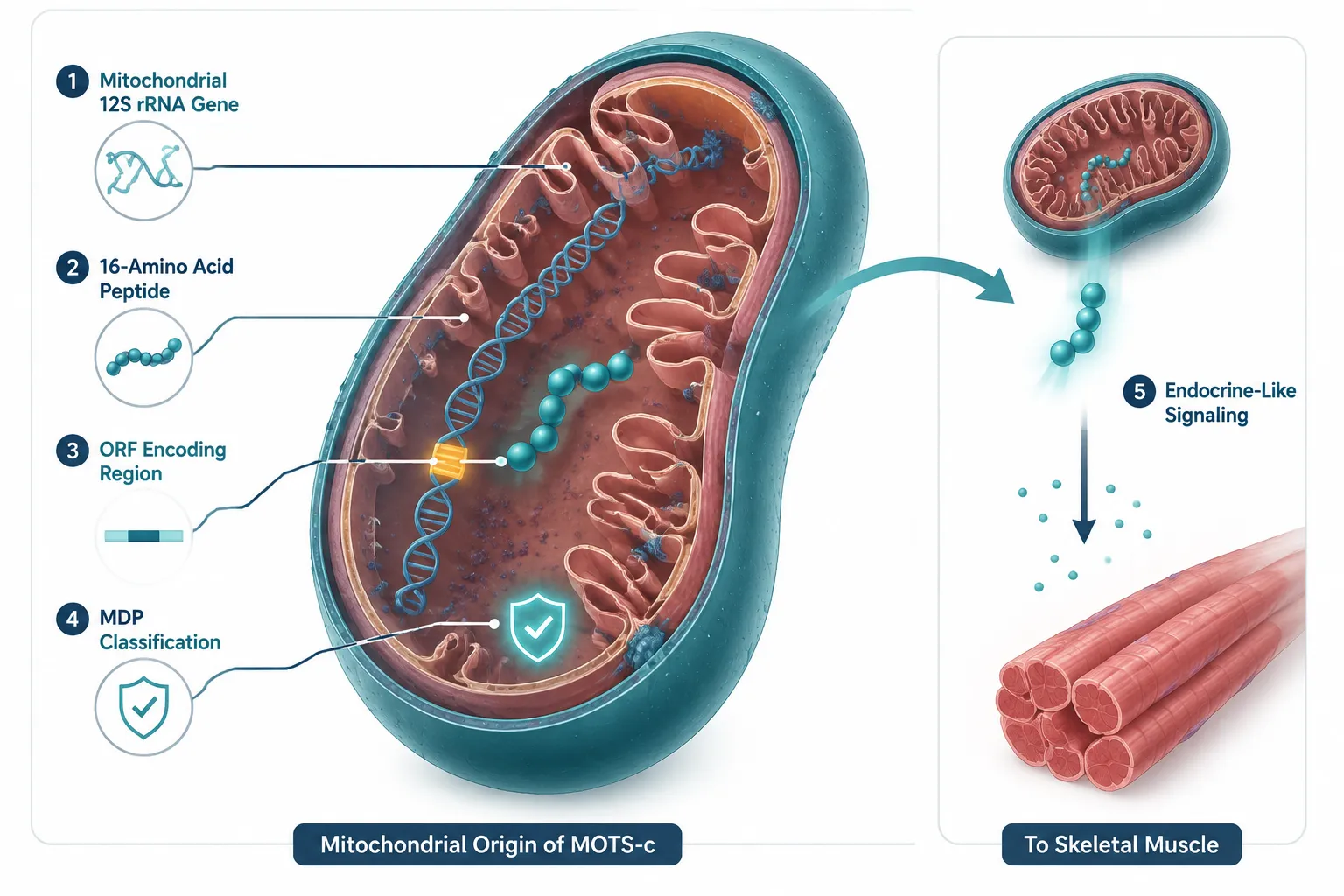
The story of MOTS-c begins inside the mitochondrial genome, a compact, circular DNA structure long considered to encode only structural components. When researchers identified a short open reading frame (ORF) within the 12S ribosomal RNA gene, they found it coded for a functional peptide with far-reaching biological effects. This placed MOTS-c in the emerging class of mitochondrial-derived peptides, a group that also includes humanin and SHLP peptides.
What makes MOTS-c structurally notable is its small size. At just 16 amino acids, it is compact enough to travel from mitochondria to the cytoplasm, nucleus, and even distant tissues through the bloodstream. This mobility underpins its classification as a mitochondrial signal with endocrine-like properties, a concept that has reshaped how researchers interpret mitochondrial communication.
Researchers interested in mitochondrial signaling peptides may also find value in reviewing SS-31 mitochondrial research themes, as SS-31 represents another well-studied peptide operating at the mitochondrial membrane level.
Mots-c Peptide: Deciphering Its Role in Mitochondrial Function and Metabolic Regulation
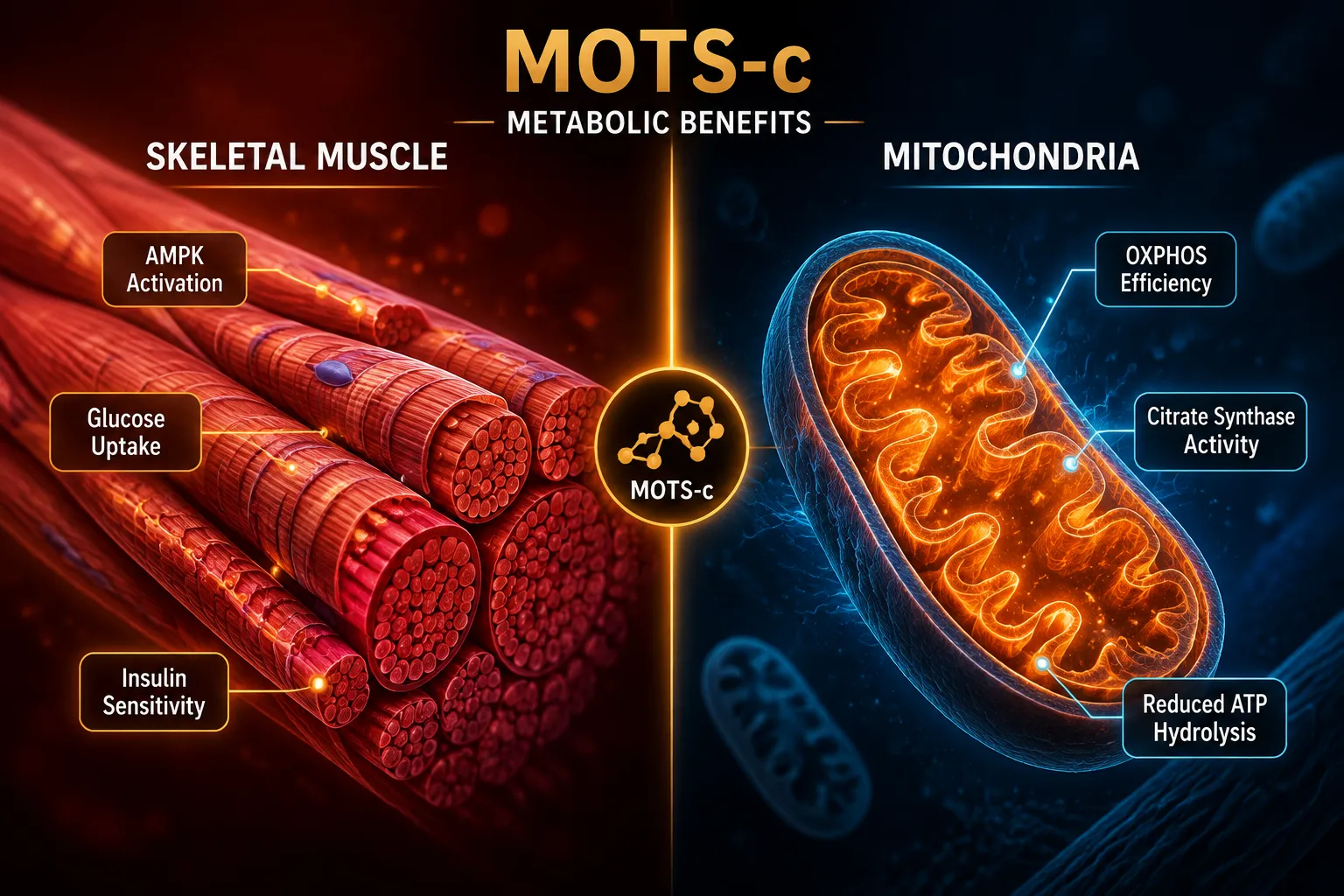
The metabolic effects of MOTS-c are best understood through two interconnected lenses: mitochondrial efficiency and systemic glucose regulation.
Mitochondrial Efficiency Under Stress
A 2025 study in diabetic mitochondria demonstrated that MOTS-c treatment produced measurable improvements in carbohydrate-supported oxidative phosphorylation (OXPHOS) respiration and citrate synthase activity. Notably, it also reduced ATP hydrolysis rates during anoxic, low-oxygen, conditions. This combination suggests that MOTS-c helps mitochondria conserve energy and maintain function precisely when metabolic stress is highest.
Glucose Uptake and AMPK Activation
In skeletal muscle, MOTS-c consistently activates AMP-activated protein kinase (AMPK), a master regulator of cellular energy balance. This activation drives enhanced glucose uptake independent of insulin, which is why the peptide has attracted attention in the context of insulin resistance research. Reviews from 2023 confirm that skeletal muscle remains the primary target tissue, with secondary effects observed in adipose tissue.
| Metabolic Effect | Primary Target Tissue | Mechanism |
|---|---|---|
| Enhanced glucose uptake | Skeletal muscle | AMPK activation |
| Improved OXPHOS efficiency | Mitochondria | Citrate synthase upregulation |
| Reduced ATP hydrolysis | Mitochondria | Anoxic stress adaptation |
| Glycolipid metabolism improvement | Liver, muscle | Systemic MDP signaling |
| Suppressed diet-induced obesity | Adipose tissue | Energy expenditure modulation |
Senescence and Aging Research
A 2025 study in aged mouse pancreatic islets found that MOTS-c treatment reduced markers of beta-cell senescence and altered nuclear gene expression patterns associated with senescence pathways. This finding is particularly relevant for researchers studying age-related metabolic decline, as beta-cell deterioration is a central feature of type 2 diabetes progression in older adults.
For context on how other peptides intersect with metabolic aging, the research on GLP-3 Retatrutide and the future of metabolic research beyond GLP-1 offers a complementary perspective on next-generation metabolic peptide research.
Research Applications and Current Status of Mots-c Peptide Studies
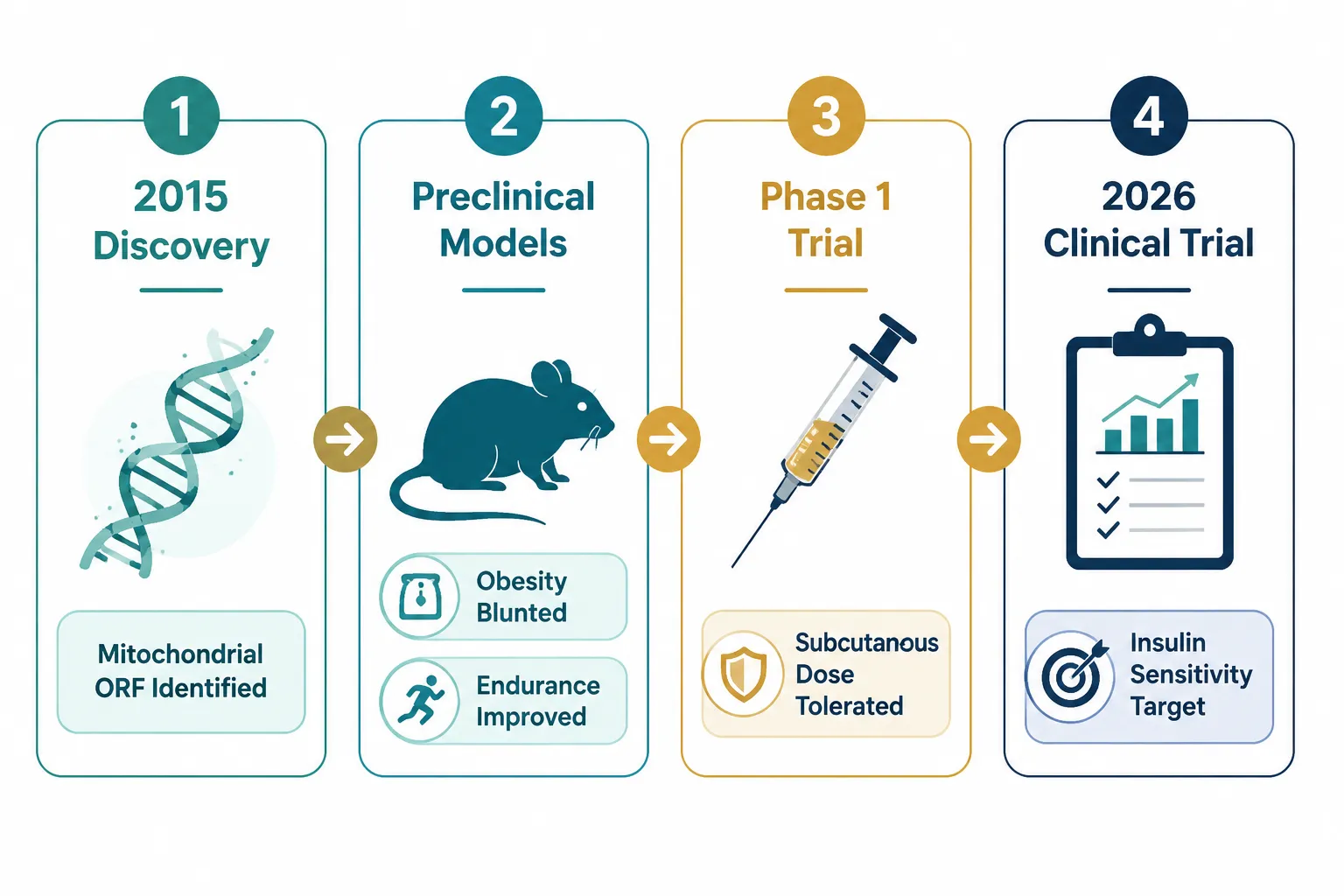
Understanding Mots-c Peptide: Deciphering Its Role in Mitochondrial Function and Metabolic Regulation for Research Applications requires a clear-eyed view of where the science currently stands, from robust preclinical findings to cautious early human data.
Preclinical Strengths
Mouse model research has produced strong, reproducible results:
- Improved endurance capacity
- Blunted diet-induced obesity
- Enhanced insulin sensitivity
- Reduced markers of cardiovascular stress
A 2024 systematic review and meta-analysis on mitochondrial-derived peptides highlighted MOTS-c as a key MDP capable of enhancing glycolipid metabolism in animal models. These findings have established a solid mechanistic foundation for human trials.
Early Human Trial Data
A Phase 1 dose-escalation trial in 36 adults with insulin resistance reported that single subcutaneous doses up to 0.6 mg/kg were tolerated without serious adverse events. However, expert analyses from May 2026 note that early human data show only modest improvements compared to placebo, a common gap between animal model efficacy and human translation.
In April 2026, a registered clinical trial was launched specifically to test MOTS-c for improving insulin sensitivity in adults, citing AMPK activation and skeletal muscle targeting as its primary mechanistic rationale.
Regulatory and Safety Considerations
Researchers must account for several important regulatory facts:
- FDA status: MOTS-c is not approved for any clinical indication.
- No standardized dosing protocol exists for the native peptide.
- WADA prohibition: MOTS-c was added to the World Anti-Doping Agency's prohibited list in 2024 due to its exercise-mimetic and performance-modifying potential.
- Preclinical cognitive and neuroprotective findings remain indirect and largely speculative according to the Alzheimer's Drug Discovery Foundation.
For researchers sourcing peptides for laboratory use, working with lab tested peptides ensures purity verification essential for reliable experimental outcomes.
Comparative research on mitochondria-targeting peptides such as those covered in LL-37 versus SS-31 benefits of each peptide can also help contextualize MOTS-c within the broader mitochondrial peptide landscape.
Key research note: The gap between mouse model results and early human trial outcomes for MOTS-c mirrors patterns seen across many metabolic peptides. Researchers should design studies that account for species-specific differences in AMPK signaling sensitivity.
Conclusion
MOTS-c represents one of the most scientifically compelling mitochondrial-derived peptides identified to date. Its dual role in improving mitochondrial efficiency and regulating systemic glucose metabolism gives it a unique position in metabolic research. The 2015 discovery of its mitochondrial genomic origin opened a new chapter in understanding how the mitochondria communicates with the rest of the body.
For researchers in 2026, actionable next steps include:
- Prioritize mechanistic studies focused on AMPK pathway activation in human skeletal muscle cell lines before scaling to in vivo models.
- Monitor the registered 2026 clinical trial (NCT07505745) for emerging insulin sensitivity data.
- Source verified, high-purity peptides for laboratory use to ensure experimental reproducibility.
- Cross-reference findings with related mitochondrial peptide research, including SS-31 and humanin studies, to build a comprehensive picture of MDP biology.
- Account for WADA classification when designing any exercise physiology or performance-related research protocols.
The science of MOTS-c is still unfolding, but its foundational role in mitochondrial signaling and metabolic regulation makes it a high-priority subject for researchers working at the intersection of aging, metabolic disease, and cellular energy biology.