Peptides vs Classic Small-Molecule Drugs: How Compounds Like Prednisone, Amlodipine, and Metoprolol Differ From Modern Research-Use Peptides
{"cover":"Professional landscape format (1536×1024) hero image with bold text overlay (≤42 chars): 'Peptides vs Classic Small-Molecule Drugs' in crisp white bold sans-serif centered on a deep navy semi-transparent panel, 8% safe margins from every edge, no text touching edges. Background: split editorial scene, left side shows a clinical pharmacy shelf with amber pill bottles (prednisone, amlodipine labels), right side shows a modern research lab with peptide vials on ice and molecular chain diagrams on a lightboard. Cool blue and white color palette, magazine-quality editorial lighting, high contrast, pharmaceutical science aesthetic.","content":["Bright editorial infographic-style landscape (1536×1024): two large molecular structure illustrations side by side, left shows a compact steroid ring structure labeled 'Small Molecule' in bold 4-word label, right shows an elongated amino acid chain labeled 'Peptide Chain', both rendered as glowing 3D models on a clean white laboratory background with soft blue accent lighting. Scientific diagram aesthetic, vivid teal and orange contrast palette, no tables, no pricing grids, save-worthy Pinterest science illustration style.","Split-screen editorial photograph landscape (1536×1024): left half shows a close-up of white prednisone tablets and amlodipine capsules arranged on a stainless steel lab tray under bright clinical white lighting; right half shows research-use peptide vials (BPC-157, MOTS-c labeled in 3-word max text) on crushed ice in a modern biochemistry lab with blue LED ambient lighting. High-contrast pharmaceutical editorial photography, cool clinical palette of white, steel-blue, and amber, sharp product focus, magazine quality.","Symbolic conceptual illustration landscape (1536×1024): isometric flat-vector scene of a research laboratory interior, a female South Asian scientist in a white coat examines a glowing peptide chain hologram floating above a lab bench, while in the background a wall display shows simplified receptor-binding diagrams with short labels 'Receptor Target' and 'Signal Path'. Bright daylight through large windows, clean pastel palette of mint green, soft yellow, and white, modern scientific illustration style, no tables, no grids, Pinterest-quality editorial."]
More than 90% of all approved drugs on the market today are small molecules, yet the fastest-growing segment of pharmaceutical research now centers on peptides. This shift is not accidental. As researchers probe the limits of traditional pharmacology, the structural and mechanistic gap between classic drugs like prednisone, amlodipine, and metoprolol and modern research-use peptides has become one of the most important distinctions in biochemistry. Understanding peptides vs classic small-molecule drugs clarifies why compounds like BPC-157, MOTS-c, and GLP-3 occupy a fundamentally different category from the drugs most people take daily.
Key Takeaways
- Small-molecule drugs are compact, chemically synthesized compounds that typically act on a single receptor or enzyme target.
- Peptides are short chains of amino acids that mimic or modulate the body's own signaling molecules, enabling more targeted biological interactions.
- Classic drugs like prednisone, amlodipine, and metoprolol have well-established clinical profiles; research-use peptides are studied under controlled laboratory conditions and are not approved for human therapeutic use.
- Peptides generally have higher target specificity but lower oral bioavailability than small molecules.
- The regulatory and research frameworks governing peptides differ substantially from those governing licensed pharmaceuticals.
Structural Foundations: What Separates Small Molecules From Peptides
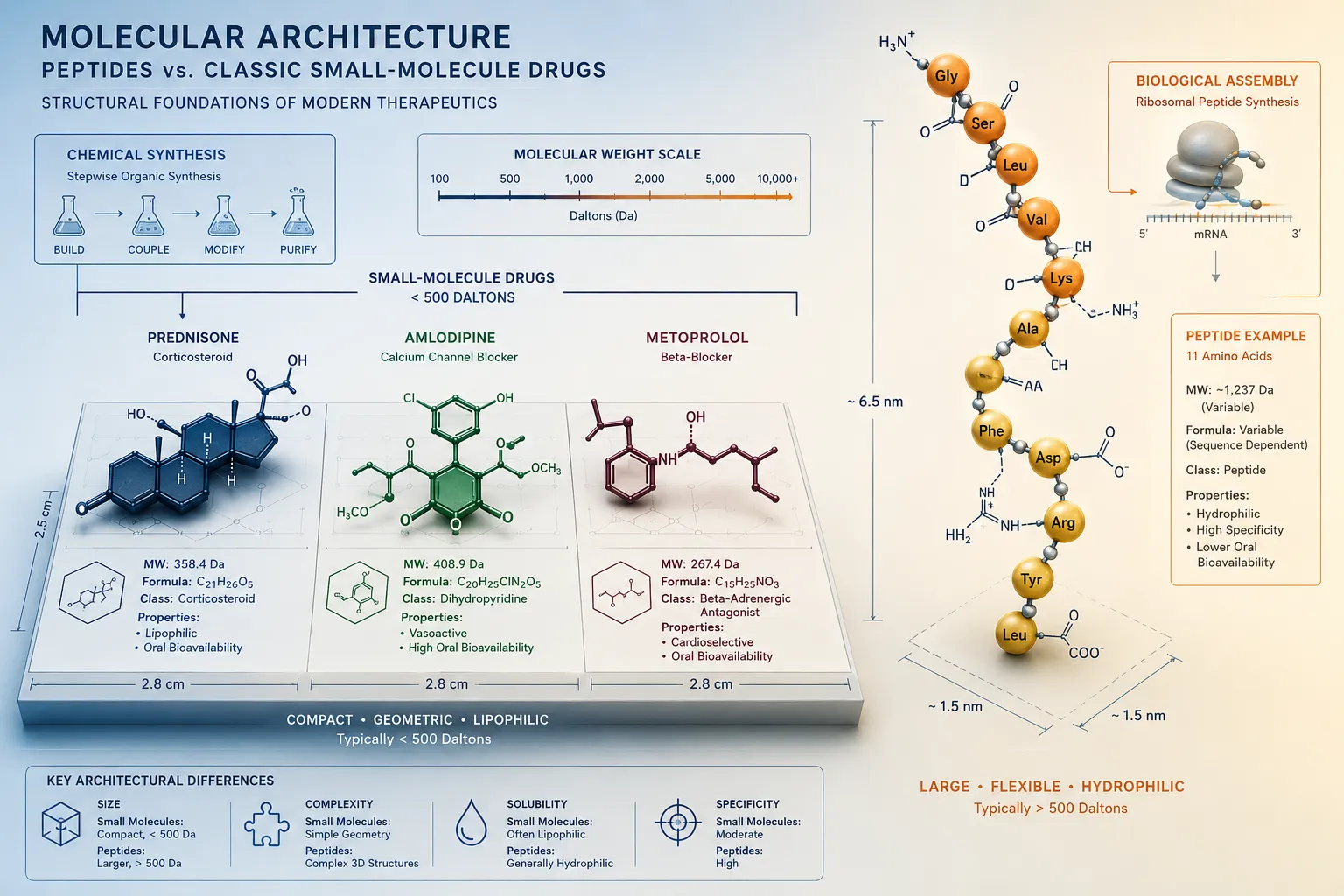
The most fundamental difference in peptides vs classic small-molecule drugs is molecular architecture.
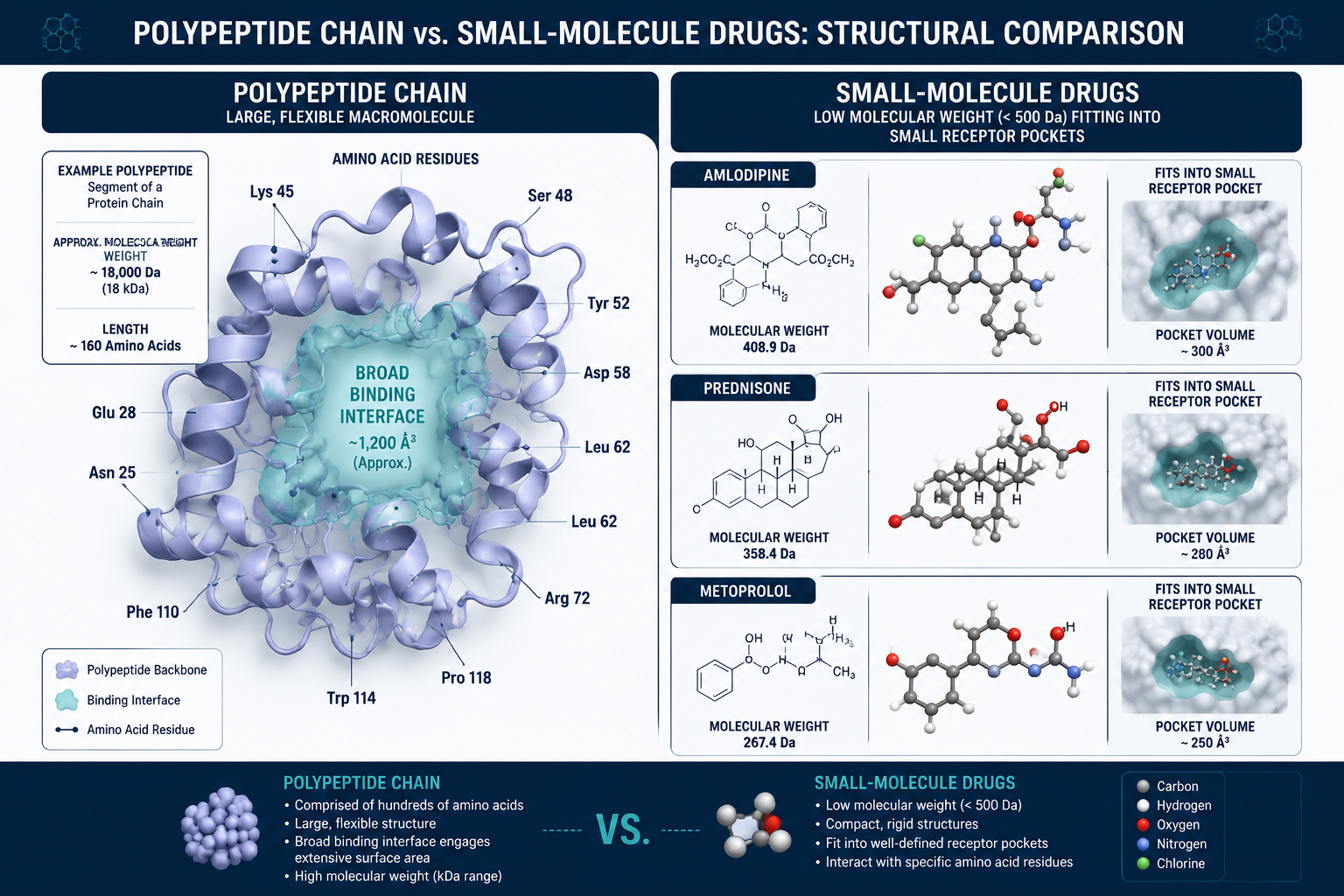
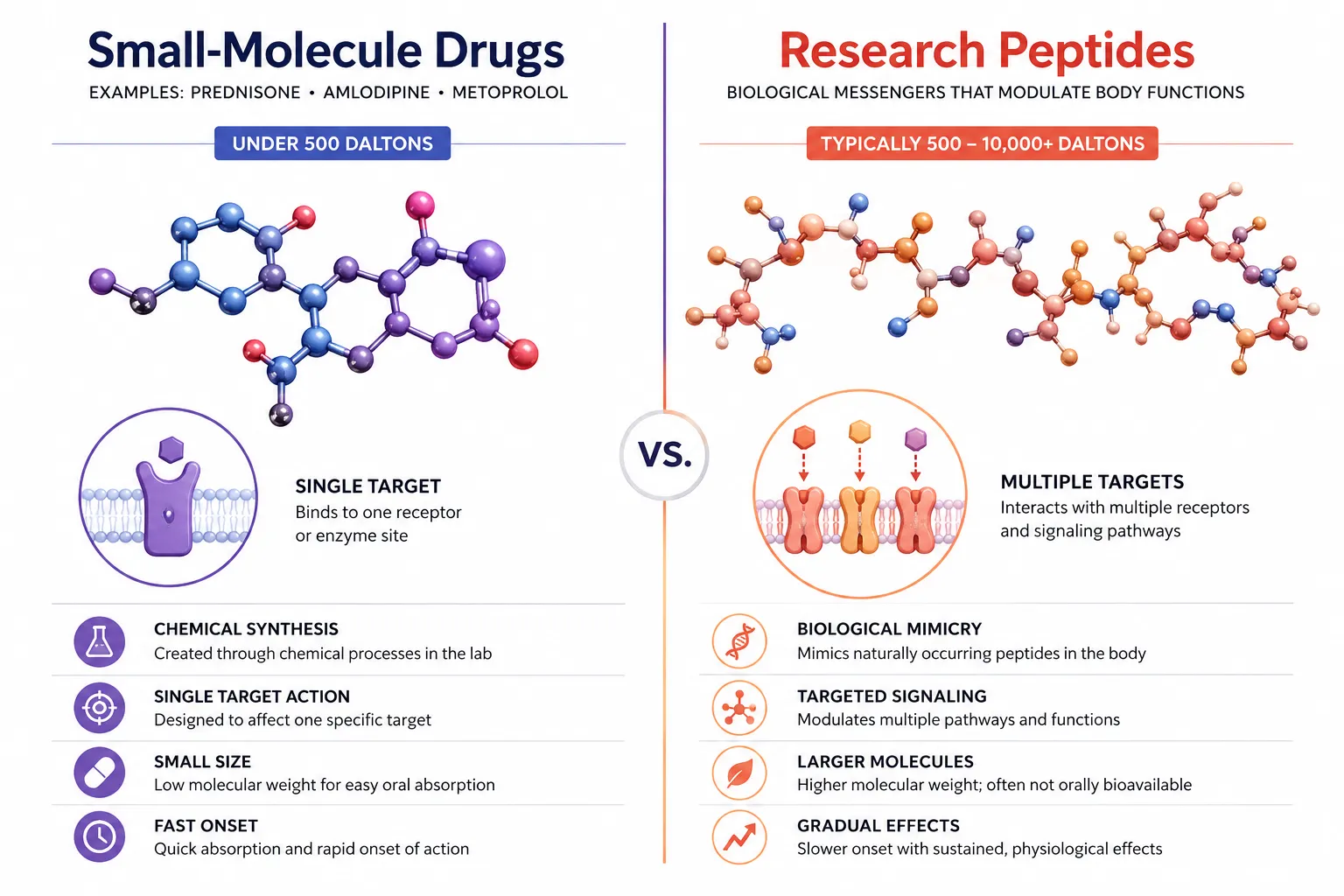
Small molecules, including prednisone, amlodipine, and metoprolol, are low-molecular-weight organic compounds, typically under 500 daltons. They are built through chemical synthesis, not biological processes, and their compact size allows them to cross cell membranes, enter the bloodstream via oral administration, and bind to specific receptor pockets.
| Feature | Small-Molecule Drugs | Research-Use Peptides |
|---|---|---|
| Molecular weight | Under 500 Da | 500-5,000+ Da |
| Composition | Synthetic organic chemistry | Amino acid chains |
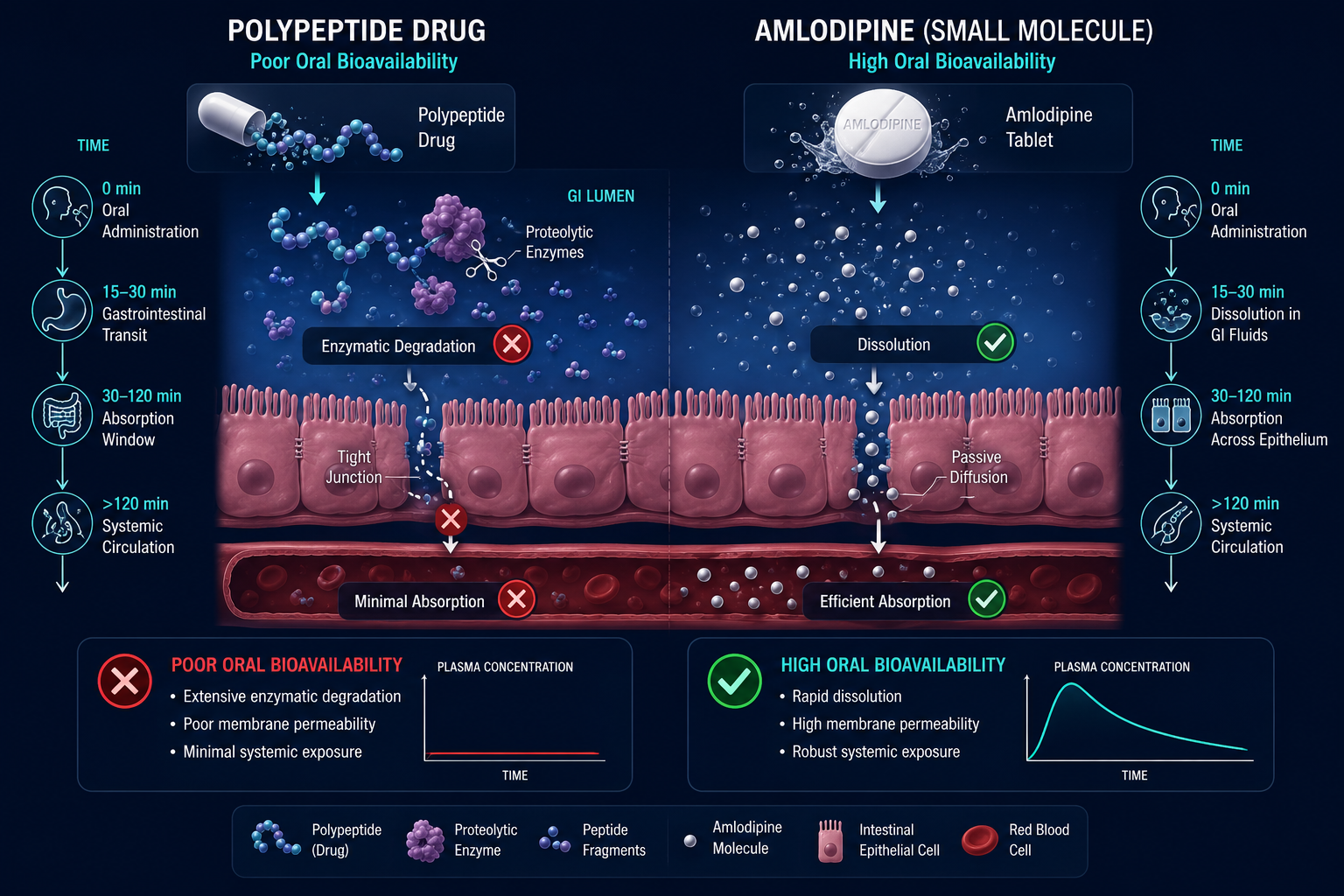
| Oral bioavailability | Generally high | Generally low |
| Synthesis route | Chemical | Chemical or biosynthetic |
| Target specificity | Moderate to high | High |
Peptides, by contrast, are short chains of amino acids, typically 2 to 50 residues, that mimic or modulate the body's endogenous signaling molecules. Their larger size and more complex three-dimensional shape allow them to interact with biological targets in ways small molecules cannot, but this same size makes them vulnerable to digestive enzymes, which is why many research-use peptides require parenteral administration.
"The structural complexity of a peptide is both its greatest advantage and its primary delivery challenge."
Compounds like TB-500 or the BPC-157 and TB-500 combination illustrate this point well, their amino acid sequences enable highly specific tissue interactions that a small steroid molecule like prednisone simply cannot replicate.
Mechanisms of Action: How Prednisone, Amlodipine, and Metoprolol Work vs Research Peptides
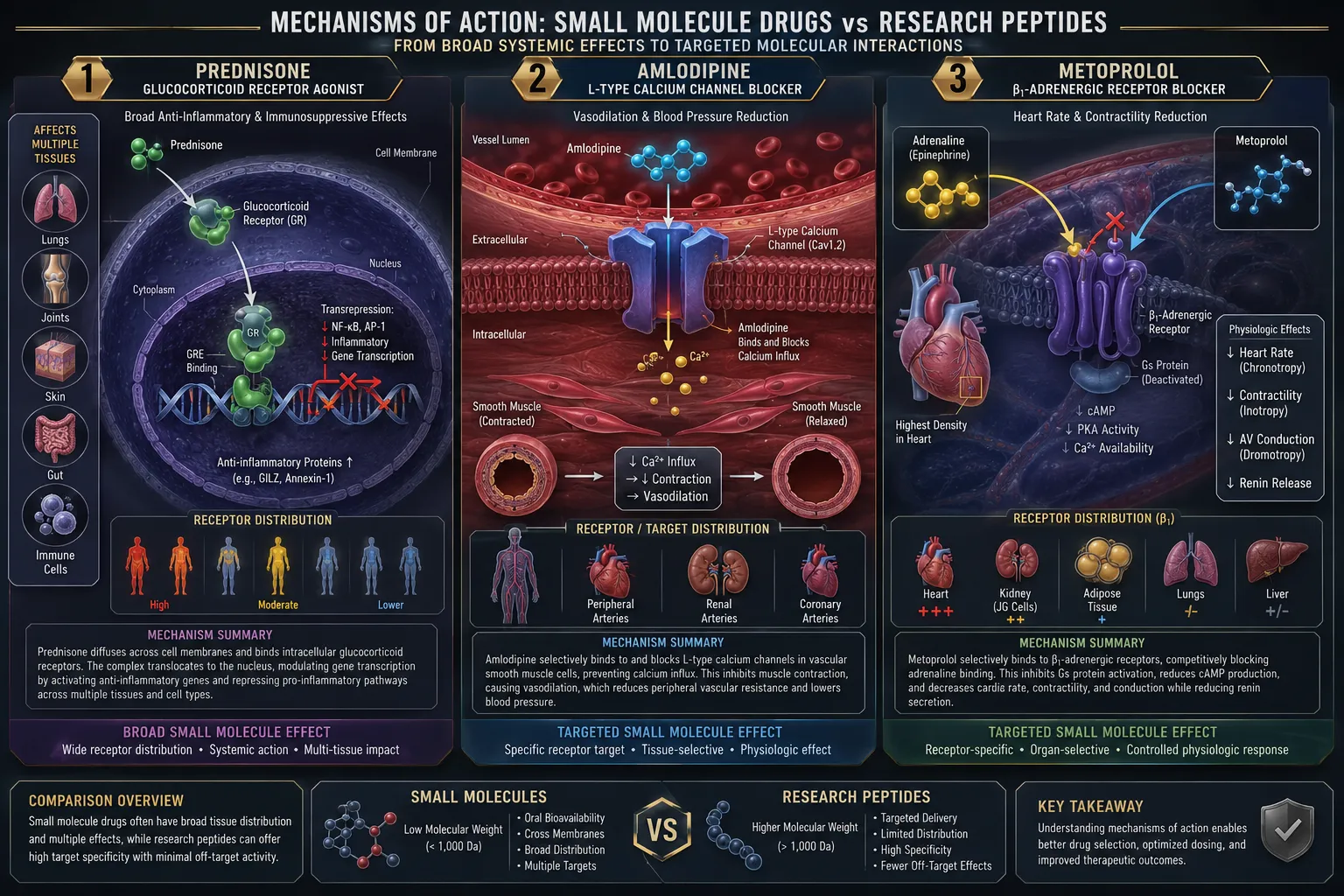
Classic small-molecule drugs each act through well-characterized, narrow mechanisms:
- Prednisone is a synthetic corticosteroid. It binds glucocorticoid receptors inside cells, suppressing inflammatory gene transcription broadly across multiple tissue types. Its wide receptor distribution explains both its therapeutic power and its side-effect profile (blood sugar changes, bone density loss, immune suppression).
- Amlodipine is a calcium channel blocker. It binds L-type calcium channels in vascular smooth muscle, reducing calcium influx and causing vasodilation. The mechanism is highly localized to one channel subtype.
- Metoprolol is a beta-1 selective adrenergic blocker. It competes with catecholamines at beta-1 receptors in cardiac tissue, slowing heart rate and reducing myocardial oxygen demand.
Each of these drugs acts on a defined, single-class receptor. Their mechanisms are predictable, well-studied, and the basis for decades of clinical data.
Research-use peptides operate differently. Rather than blocking or activating a single receptor, many peptides act as signaling modulators, they interact with receptor complexes, growth factor pathways, or intracellular signaling cascades in a more context-dependent way.
For example:
- BPC-157 is studied for its interactions with growth hormone receptor pathways and nitric oxide systems, with research endpoints focused on tissue repair models.
- MOTS-c is a mitochondria-derived peptide investigated for its role in metabolic regulation and cellular stress responses. Research on MOTS-c and mitochondrial function explores mechanisms that have no equivalent in classic pharmacology.
- GLP-1 and GLP-3 class peptides act on incretin receptors involved in insulin secretion and gut motility, a mechanism that bridges peptide biology and metabolic research.
The SS-31 peptide's mitochondrial research themes demonstrate another dimension: peptides can localize to specific organelles, something small molecules rarely achieve with the same precision.
Research Context, Regulatory Status, and Practical Differences
Understanding peptides vs classic small-molecule drugs also requires clarity on their regulatory and research contexts.
Prednisone, amlodipine, and metoprolol are FDA-approved pharmaceuticals. They have completed clinical trials, carry established dosing guidelines, and are prescribed by licensed clinicians for defined indications. Their safety and efficacy data span millions of patient-years.
Research-use peptides occupy a different category entirely. Compounds like AOD-9604 or Epithalon are sold strictly for laboratory and preclinical research purposes. They are not approved for human therapeutic use, and their research endpoints are studied in controlled in vitro and animal model settings.
Key practical distinctions include:
- Stability: Small molecules are generally shelf-stable at room temperature. Most research peptides require refrigeration or lyophilization to maintain structural integrity.
- Administration route: Classic drugs are predominantly oral. Research peptides are typically reconstituted and administered via injection in research settings.
- Selectivity: Peptides often show higher target selectivity, which is why combinations like LL-37 and SS-31 are studied for their complementary, non-overlapping mechanisms.
- Research endpoints: Small-molecule research focuses on receptor occupancy and clinical outcomes. Peptide research often examines upstream signaling, gene expression changes, and cellular repair processes.
Researchers exploring BDNF-related peptide pathways or Selank's neurological research profile encounter a level of mechanistic specificity that classic pharmacology rarely achieves.
Conclusion
The comparison of peptides vs classic small-molecule drugs is not a question of which category is superior, it is a question of purpose, mechanism, and context. Prednisone, amlodipine, and metoprolol are proven therapeutic tools with decades of clinical validation. Research-use peptides like BPC-157, MOTS-c, and GLP-3 represent a different scientific frontier: larger, more structurally complex molecules that interact with biological systems in ways that mirror the body's own signaling language.
Actionable next steps for researchers and informed readers:
- Review primary literature on specific peptide mechanisms before drawing comparisons to approved drugs.
- Source research-use peptides only from verified suppliers with documented purity testing.
- Consult the growing body of preclinical data on mitochondrial peptides, incretin analogs, and tissue-repair compounds to understand where the science currently stands.
- Recognize that regulatory status is not a proxy for scientific interest, many of the most actively studied peptides are pre-clinical compounds with significant research momentum.
The structural and mechanistic divide between small molecules and peptides will continue to shape pharmacology research well into the future.