Call or Text 727-513-9780
  • Shopping Cart Shopping Cart
    0Shopping Cart
Pure Tested Peptides | America's most trusted Peptides for sale online
  • Peptides for sale
    • Oral Peptides for sale
      • Peptide Capsules for sale
      • BPC 157 Capsules 1000mcg
      • SLU-PP-332 Capsules | 1000 mcg
      • 5-Amino-1MQ 50mg Capsules
      • Tesofensine 500mcg
    • All Peptides for sale
    • Peptide Sprays
      • BPC 157 Nasal Spray Kit
      • BPC-157 TB500 Nasal Spray Kit
      • Semax Nasal Spray 10mg
      • Selank – Nasal Spray Kit – 10mg
      • Epithalon 50MG Nasal Spray Kit
      • Ipamorelin 10mg Nasal Spray
      • Klow Nasal Spray (BPC-157 + TB-500 + GHK-Cu + KPV) | 80mg
      • Hulk Nasal Spray Tesa / Ipa Blend 6/3 MG
      • Klow Nasal Spray
      • NAD + 500 mg Nasal Spray
      • PT-141 Nasal Spray Kit
    • GHRH Peptides
      • Ipa Peptides
      • CJC-1295 Peptides
        • CJC-1295 with DAC 5 mg
        • CJC-1295 without DAC 5 mg
        • CJC-1295 Ipa 10mg
      • Tesa Peptides
        • Tesa Peptide
        • Tesa 20 mg
    • GHK-Cu Peptides
      • All GHK-Cu Peptides
      • GHK-Cu 100mg
      • KLOW Peptide Blend – Buy KLOW blend online
    • BPC Peptides
      • All BPC Peptides
      • BPC-157
      • BPC-157 TB-500
      • BPC 157 capsules 1000mcg
    • SLU-PP-332 Peptides
      • All SLU-PP-332 Peptides
      • SLU-PP-332 5mg
    • GLP3 Peptides
    • PT-141 Peptides
      • PT-141 Peptides for sale
      • PT-141 10mg
      • PT-141 Nasal Spray
    • CAG Peptides
      • Lipo-C Peptide Blend
      • CAG 5mg
      • CAG 10mg
    • MOTS-C Peptides
      • MOTS-C Peptides for sale
      • MOTS-c peptide
      • MOTS-c 10mg *6 pack*
    • 5 Amino 1MQ Peptides
      • 5 Amino 1MQ Peptides for sale
      • 5-Amino-1MQ 50mg Capsules
      • 5-Amino-1MQ 5mg
    • Epithalon Peptides
      • Epithalon Peptides for sale
      • Epithalon 10mg
      • Epithalon 50mg
  • Shop
    • GLPs
      • 5-Amino-1MQ 50mg Capsules
      • 5-Amino-1MQ 5mg
      • L-Carnitine 500mg/ml
      • Tesofensine 500mcg
      • SLU-PP-332 5mg
      • MOTS-c 10mg *6 pack*
    • Epithalon & BPC Peptides
      • Epithalon 10mg
      • Epithalon 50mg
      • BPC-157
      • BPC 157 capsules 1000mcg
      • BPC-157 TB-500
      • BPC-157 TB500 Nasal Spray Kit
      • BPC 157 Nasal Spray Kit
    • BPC TB-500 & NAD+ Peptides
      • NAD+ 500 mg
      • KLOW Peptide Blend – Buy KLOW blend online
      • GLOW Peptide Blend
      • TB 500 5mg
      • BPC 157 capsules 1000mcg – Supplement
      • BPC 157 Nasal Spray Kit
      • BPC-157
      • BPC-157 TB500 Nasal Spray Kit
      • BPC-157 TB-500
      • BPC 157 capsules 1000mcg
    • LL-37 Peptide
      • LL-37 10 mg
    • MOTS-C & Selank
      • MOTS-c peptide
      • Selank 10mg
    • GHK Peptides
      • GHK-Cu 100mg
      • GLOW Peptide Blend
      • KLOW Peptide Blend – Buy KLOW blend online
  • COAs
  • Wholesale
    • Wholesale Peptides for sale
  • PTP FAQ
  • Affiliates
    • Selank Peptide: Advanced Pharmacological Mechanisms Underlying Its Anxiolytic and Nootropic Effects in Research
      • 5-Amino-1MQ Peptide: Detailed Mechanisms of NNMT Inhibition and Its Impact on Cellular Metabolism Research
        • MOTS-C Peptide: Unraveling Its Role in Mitochondrial Dynamics and Energy Metabolism Research
          • Epithalon Peptide and Telomerase Regulation: Investigating Its Impact on Cellular Senescence and Lifespan Research Models
            • GLP2-T vs GLP2 Tirz Peptide: Understanding the Naming, Mechanistic Nuances, and Research Implications for Gut Health
      • Peptides and Polypeptides in Modern Pharmacology: What Research on Metoprolol, Prednisone, and Amlodipine Reveals
        • Polypeptide Peptides vs NSAIDs: What Naproxen and Diclofenac Teach Tissue-Repair Researchers About BPC‑157 and TB‑500
          • Peptides and Polypeptides in Endocrine Pharmacology: How GLP-1, GLP-2, and GLP-3 Retatrutide Differ From Classic Drugs Like Prednisone and Amlodipine
          • 5‑Amino‑1MQ Peptide and NNMT Inhibition: How It Compares With Statins Like Atorvastatin in Adipose and Lipid Metabolism Research
      • Enclomiphene, Estrogen Receptor Signaling, and Luteinizing Phase Biology: What Hormone Researchers Should Measure
        • Mesenchymal Stem Cells, BPC‑157, and GHK‑Cu: How Tissue Repair Peptides Compare With Classic NSAIDs Like Naproxen in Injury Models
          • Peptide Calculator Use Cases Beyond Growth Hormone: Working Through GLP‑3 Retatrutide, MOTS‑c, and BPC‑157 Research Dosing
        • Polypeptide Peptides in Endocrine and Metabolic Pharmacology: Lessons From Amlodipine, Prednisone, and Metoprolol
        • Peptides Calculator for Advanced Blends: Worked Examples for Tesamorelin, CJC‑1295, and Ipamorelin Stacks
          • Peptides and Polypeptides in Human Physiology: How Molecular Size Shapes Research Applications
            • Selank Peptide: Advanced Pharmacological Mechanisms Underlying Its Anxiolytic and Nootropic Effects in Research
          • 5-Amino-1MQ Peptide: Detailed Mechanisms of NNMT Inhibition and Its Impact on Cellular Metabolism Research
            • MOTS-C Peptide: Unraveling Its Role in Mitochondrial Dynamics and Energy Metabolism Research
              • Epithalon Peptide and Telomerase Regulation: Investigating Its Impact on Cellular Senescence and Lifespan Research Models
                • GLP2-T vs GLP2 Tirz Peptide: Understanding the Naming, Mechanistic Nuances, and Research Implications for Gut Health
                  • Peptides and Polypeptides in Endocrine Pharmacology: How GLP-1, GLP-2, and GLP-3 Retatrutide Differ From Classic Drugs Like Prednisone and Amlodipine
                    • Polypeptide Peptides vs NSAIDs: What Naproxen and Diclofenac Teach Tissue-Repair Researchers About BPC‑157 and TB‑500
                      • Peptides and Polypeptides in Modern Pharmacology: What Research on Metoprolol, Prednisone, and Amlodipine Reveals
                        • 5‑Amino‑1MQ Peptide and NNMT Inhibition: How It Compares With Statins Like Atorvastatin in Adipose and Lipid Metabolism Research
                        • Enclomiphene, Estrogen Receptor Signaling, and Luteinizing Phase Biology: What Hormone Researchers Should Measure
                        • Mesenchymal Stem Cells, BPC‑157, and GHK‑Cu: How Tissue Repair Peptides Compare With Classic NSAIDs Like Naproxen in Injury Models
                        • Peptide Calculator Use Cases Beyond Growth Hormone: Working Through GLP‑3 Retatrutide, MOTS‑c, and BPC‑157 Research Dosing
                        • Polypeptide Peptides in Endocrine and Metabolic Pharmacology: Lessons From Amlodipine, Prednisone, and Metoprolol
                        • Peptides Calculator for Advanced Blends: Worked Examples for Tesamorelin, CJC‑1295, and Ipamorelin Stacks
                        • Peptides and Polypeptides in Human Physiology: How Molecular Size Shapes Research Applications
                        • Selank Peptide: Advanced Pharmacological Mechanisms Underlying Its Anxiolytic and Nootropic Effects in Research
                        • MOTS-C Peptide: Unraveling Its Role in Mitochondrial Dynamics and Energy Metabolism Research
                        • Peptides and Polypeptides in Modern Pharmacology: What Research on Metoprolol, Prednisone, and Amlodipine Reveals
                        • Peptides and Polypeptides in Endocrine Pharmacology: How GLP-1, GLP-2, and GLP-3 Retatrutide Differ From Classic Drugs Like Prednisone and Amlodipine
                        • 5-Amino-1MQ Peptide: Detailed Mechanisms of NNMT Inhibition and Its Impact on Cellular Metabolism Research
                        • Mesenchymal Stem Cells, BPC‑157, and GHK‑Cu: How Tissue Repair Peptides Compare With Classic NSAIDs Like Naproxen in Injury Models
                        • Peptide Calculator Use Cases Beyond Growth Hormone: Working Through GLP‑3 Retatrutide, MOTS‑c, and BPC‑157 Research Dosing
                        • GLP2-T vs GLP2 Tirz Peptide: Understanding the Naming, Mechanistic Nuances, and Research Implications for Gut Health
                        • Polypeptide Peptides in Endocrine and Metabolic Pharmacology: Lessons From Amlodipine, Prednisone, and Metoprolol
                        • Polypeptide Peptides vs NSAIDs: What Naproxen and Diclofenac Teach Tissue-Repair Researchers About BPC‑157 and TB‑500
                        • Peptides and Polypeptides in Human Physiology: How Molecular Size Shapes Research Applications
                        • Peptides Calculator for Advanced Blends: Worked Examples for Tesamorelin, CJC‑1295, and Ipamorelin Stacks
                        • 5‑Amino‑1MQ Peptide and NNMT Inhibition: How It Compares With Statins Like Atorvastatin in Adipose and Lipid Metabolism Research
                        • Enclomiphene, Estrogen Receptor Signaling, and Luteinizing Phase Biology: What Hormone Researchers Should Measure
                        • Epithalon Peptide and Telomerase Regulation: Investigating Its Impact on Cellular Senescence and Lifespan Research Models
                        • Best research protocol Klow blend
                        • best time to take BPC-157
                        • best time to take DSIP (Delta Sleep Inducing Peptide)
                        • best time to take CJC-1295
                        • best time to take AOD-9604
                        • best time to take Follistatin 344
                        • best time to take Ipamorelin
                        • best time to take MK-677 (Ibutamoren)
                        • best time to take Ligandrol (LGD-4033) — research compound
                        • best time to take Ostarine (MK-2866) — research compound
                        • best time to take GHK-CU
                        • best time to take TB-500
                        • best time to take MOTS-c
                        • best time to take Semax
                        • best time to take RAD-140 (Testolone) — research compound
                        • best time to take Thymosin Alpha-1
                        • best time to take PEG-MGF
                        • Biolife Plasma, Octapharma Plasma, and Research Peptides: How Plasma Donation Labs Differ From Peptide Suppliers
                        • best time to take YK-11 — research compound
                        • best time to take PT-141 (Bremelanotide)
                        • Best research protocol Klow blend
                        • 5-Amino-1MQ and MOTS-C Synergy: Metabolic Signaling, Mitochondria, and Research Design
                        • BPC-157 and TB-500: Investigating Their Combined Effects on Angiogenesis and Cellular Migration in Tissue Repair Models
                        • BPC-157 Peptide: Gut Barrier Function, Inflammation, and Tissue-Recovery Research
                        • 5‑Amino‑1MQ and MOTS‑c Synergy in Metabolic Research: Designing NNMT and Mitochondrial Biogenesis Stacks
                        • CJC-1295 with DAC vs. Without DAC: Half-Life, Release Kinetics, and Research Implications
                        • CJC‑1295 with DAC vs. Without DAC: Expanding on Half‑Life Differences Using Tesamorelin and Ipamorelin Blend Case Studies
                        • Collagen Biology and Copper‑Binding Peptides: How GHK‑Cu, Glow Blend, and Klow Blend Interact with Skin and Connective Tissue
                        • Collagen Biology and Regenerative Peptides: How GHK‑Cu, Glow Blend, and Klow Blend Affect Extracellular Matrix Research
                    • DNA, Telomeres, and Longevity Peptides: Positioning Epithalon and MOTS‑c in Genetic Aging Research
                      • Enclomiphene Citrate: serm Mechanism, Testosterone Research, and Stack Compatibility
                        • Enclomiphene vs Enclomiphene Citrate: Formulation, Bioavailability, and Research Distinctions
                        • Epithalon Peptide Research: Telomerase Activation, Aging, and Pineal Gland Function
                        • Estrogen Receptor Signaling and Enclomiphene: How Selective Modulators Compare with Classic Polypeptide Hormones
                        • GHK-Cu Peptide: Advanced Mechanisms in Extracellular Matrix Remodeling and Wound Healing Research
                        • GHK-Cu Peptide: Collagen Synthesis, Wound Repair, and Skin-Barrier Research Models
                        • GLP-1 vs GLP-3 vs GLP-2: Peptide Classification and Research Applications
                        • GLP-2 Peptide Research Guide: Gut Barrier Function, Nutrient Absorption, and Intestinal Recovery Models
                        • GLP-3 Retatrutide vs. GLP-1 Drugs: What Triple-Agonist Biology Changes in Research Models
                        • Ipamorelin and Tesamorelin Combination: Synergistic GH Secretagogue Research and Dosing Protocols
                        • GLP2 Tirz Peptide: What It Is, Why the Name Exists, and How Researchers Should Interpret It
                        • Klow Blend Peptide Nasal Spray: What the Formulation Is Trying to Do in Cognitive Research
                        • Mitochondria, NNMT Inhibition, and Peptide Modulators: Where MOTS‑c and 5‑Amino‑1MQ Fit in Cellular Energy Research
                        • MOTS-c Peptide: Mitochondrial Function, Energy Metabolism, and What Researchers Measure
                        • MOTS-c vs. 5-Amino-1MQ: Which Metabolic Research Questions Each Compound Actually Answers
                        • Nasal Spray Peptides: Bioavailability, Administration, and Semax/Selank Research Applications
                        • PT-141 Peptide Research: Mechanism of Action and Melanocortin Receptor Signaling
                        • Retatrutide for Research: Mechanism, Structure, and GLP-1/GLP-3 Dual Action
                        • Retatrutide for Obesity and Type 2 Diabetes: What the Latest Trial Data Suggest
                        • Tesofensine Peptide Research: Mechanism, Appetite Suppression, and Neuropeptide Y Pathways
  • Contact
    • Contact Customer Service
    • Text Customer Support
  • About US
  • Shop all peptides
  • Affiliate Program
    • Affiliate Signup
  • Login / Register Login / Register Page Link Login / Register Page Link
  • Click to open the search input field Click to open the search input field Search
  • Menu Menu

Tag Archive for: nad+ biology

5‑Amino‑1MQ Peptide and NNMT Inhibition: How It Compares With Statins Like Atorvastatin in Adipose and Lipid Metabolism Research

5‑Amino‑1MQ Peptide and NNMT Inhibition: How It Compares With Statins Like Atorvastatin in Adipose and Lipid Metabolism Research

July 18, 2026/0 Comments/by Pure Tested

Nicotinamide N-methyltransferase (NNMT) activity is elevated in the fat tissue of obese individuals by as much as 100-fold compared to lean controls, a striking figure that has pushed NNMT inhibition to the forefront of metabolic research. The compound 5-Amino-1MQ has emerged as a targeted tool in this space, and understanding 5-Amino-1MQ Peptide and NNMT Inhibition: How It Compares With Statins Like Atorvastatin in Adipose and Lipid Metabolism Research helps clarify why researchers are paying close attention to its distinct mechanism versus conventional lipid-lowering agents.
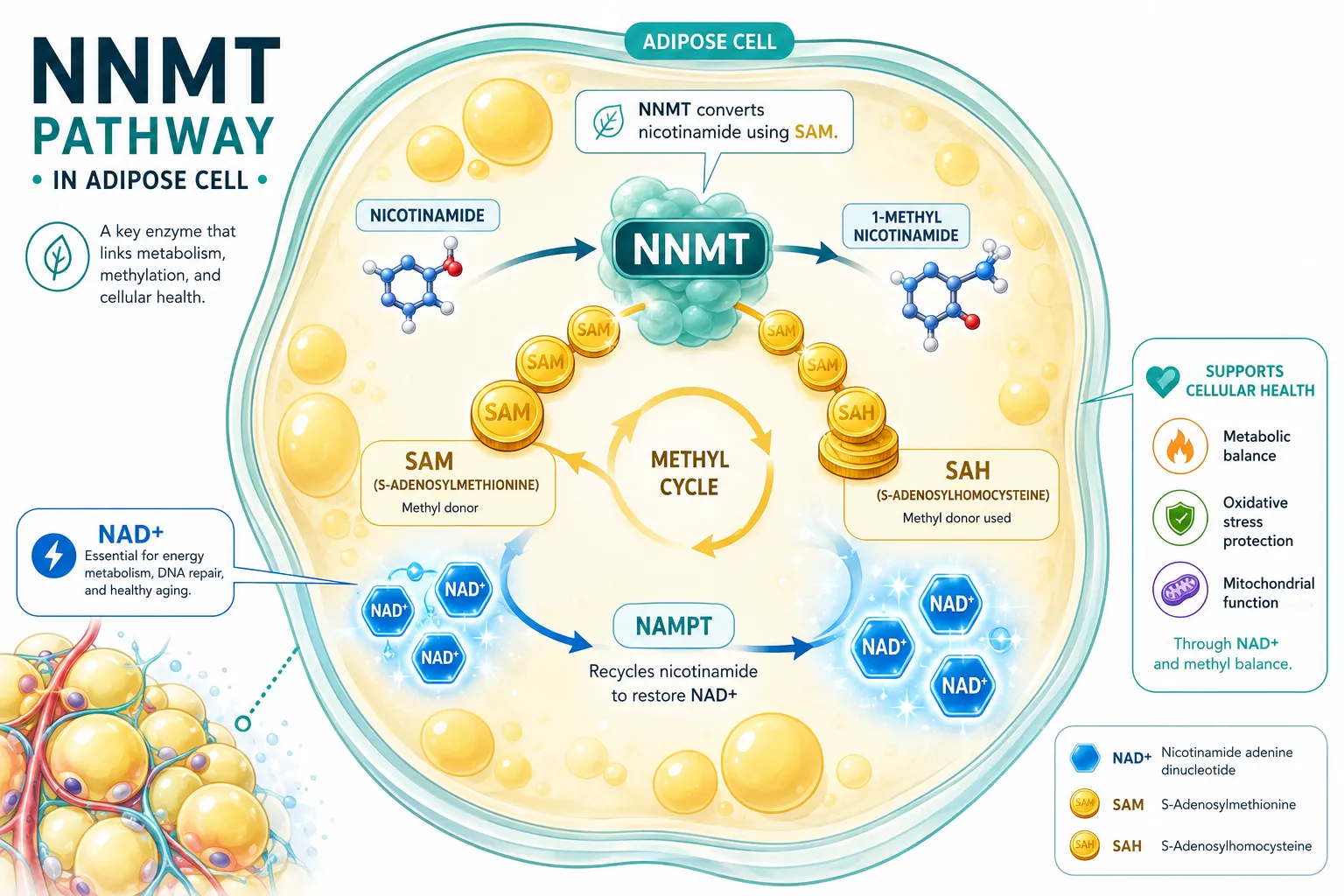
Bright editorial infographic-style landscape (): a vivid flat-vector illustration of the NNMT enzyme pathway inside a

Key Takeaways

  • 5-Amino-1MQ is a small-molecule NNMT inhibitor, not technically a peptide, though it is frequently grouped with research peptides in the literature.
  • NNMT inhibition raises intracellular NAD+ and SAM levels, promoting fat cell energy expenditure and reducing lipid storage.
  • Statins like atorvastatin target the mevalonate pathway to lower LDL cholesterol, a fundamentally different mechanism from NNMT inhibition.
  • The two approaches are not interchangeable in research models; each addresses a separate node in metabolic dysfunction.
  • Researchers studying body composition changes may find 5-Amino-1MQ more directly relevant to adipose tissue remodeling than statin-based models.

What Is 5-Amino-1MQ and How Does NNMT Inhibition Work

Clarifying the "Peptide" Label

A common point of confusion: 5-Amino-1MQ is not a peptide in the strict biochemical sense. It is a small-molecule methylquinolinium derivative, specifically, 5-amino-1-methylquinolinium. It carries no amino acid chain. The "peptide" label appears in research vendor catalogs because it is studied alongside peptide compounds in metabolic and longevity research contexts. Researchers exploring longevity peptide research will encounter 5-Amino-1MQ frequently within that broader category.

The NNMT Enzyme and Its Role in Fat Tissue

NNMT catalyzes the methylation of nicotinamide using S-adenosylmethionine (SAM) as the methyl donor. When NNMT is highly active, it consumes SAM and produces 1-methylnicotinamide, which drains the cell of two critical resources:

  • SAM, the primary methyl donor for epigenetic regulation and metabolic signaling
  • NAD+ precursors, molecules that feed mitochondrial energy production

In adipose tissue, this drain creates a low-energy, pro-storage environment. Fat cells become more efficient at storing lipids and less efficient at burning them. By blocking NNMT, 5-Amino-1MQ restores SAM and NAD+ availability, effectively shifting the metabolic balance toward energy expenditure. This connects directly to research themes explored in NAD+ energetics and longevity research.


5-Amino-1MQ Peptide and NNMT Inhibition: How It Compares With Statins Like Atorvastatin in Adipose and Lipid Metabolism Research
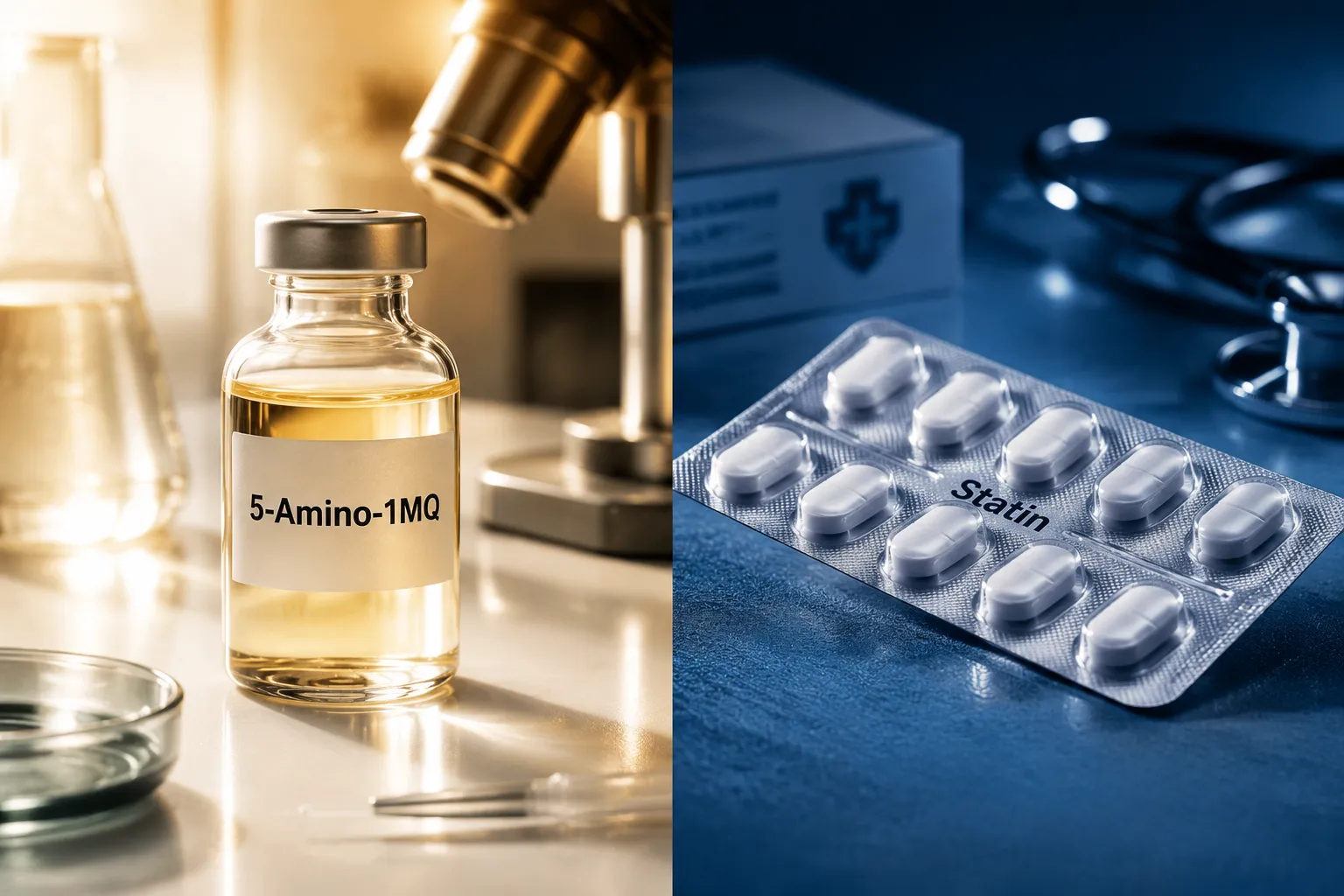
5-Amino-1MQ Peptide and NNMT Inhibition: How It Compares With Statins Like Atorvastatin in Adipose and Lipid Metabolism Resea

The Statin Mechanism: A Different Metabolic Target

Atorvastatin, one of the most prescribed statins globally, works by inhibiting HMG-CoA reductase, the rate-limiting enzyme in the mevalonate pathway. This reduces endogenous cholesterol synthesis in the liver, which lowers circulating LDL-cholesterol. Statins are highly effective for cardiovascular risk reduction, but their primary action is hepatic and cholesterol-focused.

Feature 5-Amino-1MQ (NNMT Inhibitor) Atorvastatin (Statin)
Primary target NNMT enzyme in adipose tissue HMG-CoA reductase in liver
Key metabolic effect Raises NAD+/SAM; increases fat oxidation Reduces LDL cholesterol synthesis
Primary tissue site Adipose, muscle Hepatic
Lipid storage impact Reduces triglyceride accumulation Indirect; minimal direct fat-cell effect

Where the Two Pathways Diverge

Statins do not meaningfully alter NNMT activity, and 5-Amino-1MQ does not inhibit cholesterol synthesis. This means the two compounds address entirely separate nodes of metabolic dysfunction:

  • Atorvastatin is most relevant in research models focused on cardiovascular lipid profiles and hepatic cholesterol output.
  • 5-Amino-1MQ is most relevant in models studying adipose tissue remodeling, visceral fat reduction, and NAD+ biology.

Researchers studying fat-cell metabolism may also find relevant parallels in IPA muscle and fat research themes and AOD-9604 research, both of which engage adipose biology through distinct mechanisms.


Research Implications and When Each Model Applies

Research Implications and When Each Model Applies

Choosing the Right Model for Adipose vs. Lipid Research

The distinction between adipose metabolism and lipid metabolism is often blurred in popular science writing, but it matters enormously in research design. Adipose metabolism refers to how fat cells store, mobilize, and oxidize lipids. Lipid metabolism refers to how lipids circulate in the bloodstream and are processed by the liver.

Researchers should consider the following when selecting a model:

  • For visceral fat reduction studies: 5-Amino-1MQ's NNMT inhibition offers a direct adipose-tissue mechanism, making it a stronger model candidate.
  • For cardiovascular lipid profiling: Atorvastatin remains the gold-standard reference compound.
  • For combined metabolic syndrome models: Both compounds may be relevant in separate experimental arms, not as direct substitutes.

Compounds like Adipotide and MOTS-c also engage adipose and mitochondrial pathways and may serve as useful comparators in multi-arm metabolic studies.

Downstream Research Considerations

Because 5-Amino-1MQ elevates NAD+ levels, it intersects with research on mitochondrial function, cellular aging, and energy sensing. This positions it alongside compounds studied in MOTS-c mitochondrial research and broader longevity peptide research. Statins, by contrast, have been studied for pleiotropic anti-inflammatory effects, but these do not overlap with the NAD+/SAM axis that makes 5-Amino-1MQ unique.

Key insight: Conflating NNMT inhibition with statin-like activity misrepresents both mechanisms and can lead to poorly designed research protocols.


Conclusion

The comparison between 5-Amino-1MQ Peptide and NNMT Inhibition: How It Compares With Statins Like Atorvastatin in Adipose and Lipid Metabolism Research reveals two non-competing, mechanistically distinct research tools. 5-Amino-1MQ targets NNMT in adipose tissue to restore NAD+ and SAM availability, shifting fat cells toward energy expenditure. Atorvastatin targets hepatic cholesterol synthesis to reduce circulating LDL. Neither replaces the other.

Actionable next steps for researchers:

  1. Define whether the study question centers on adipose remodeling or circulating lipid profiles before selecting a compound.
  2. Use 5-Amino-1MQ in models where NNMT overexpression or NAD+ depletion is a documented variable.
  3. Reserve statin models for cardiovascular-focused endpoints where LDL reduction is the primary outcome measure.
  4. Consider multi-pathway designs that include NNMT inhibitors alongside mitochondrial or GLP-1-axis compounds for broader metabolic coverage.

Understanding these distinctions ensures cleaner experimental design and more interpretable results across adipose and lipid metabolism research.


https://www.puretestedpeptides.com/wp-content/uploads/2026/07/5-amino-1mq-peptide-and-nnmt-inhibition-how-it-compares-with-statins-like-atorva-1.webp 1024 1536 Pure Tested https://www.puretestedpeptides.com/wp-content/uploads/2026/01/buy-peptides-online.jpg Pure Tested2026-07-18 13:05:322026-11-13 20:05:445‑Amino‑1MQ Peptide and NNMT Inhibition: How It Compares With Statins Like Atorvastatin in Adipose and Lipid Metabolism Research
5-Amino-1MQ Peptide: NNMT Inhibition, NAD+ Preservation, and Metabolic Research Applications

5-Amino-1MQ Peptide: NNMT Inhibition, NAD+ Preservation, and Metabolic Research Applications

June 2, 2026/0 Comments/by Pure Tested

A single enzyme quietly redirects the flow of cellular energy — and blocking it may reshape how researchers think about fat metabolism, muscle aging, and NAD+ biology. That enzyme is nicotinamide N-methyltransferase (NNMT), and the compound drawing the most attention in this space is 5-Amino-1MQ.

As of 2026, the 5-Amino-1MQ peptide — spanning NNMT inhibition, NAD+ preservation, and metabolic research applications — has generated a focused body of preclinical evidence that positions it as one of the more mechanistically interesting small molecules in metabolic science.

Key Takeaways

  • 5-Amino-1MQ selectively inhibits NNMT, an enzyme that consumes methyl groups and depletes NAD+ precursors in metabolically active tissues.
  • Preclinical studies show dose-dependent fat loss, improved insulin sensitivity, and reduced liver fat without changes in food intake.
  • Muscle regeneration data from aged mouse models is compelling, with peak torque improvements near 70% and grip strength gains up to 60% when combined with exercise.
  • No human clinical trials have been published or registered as of 2026; all data remain preclinical.
  • 5-Amino-1MQ is classified as a research compound and is not FDA-approved for any therapeutic use.

Key Takeaways

How NNMT Inhibition Drives NAD+ Preservation

NNMT catalyzes the methylation of nicotinamide, converting it to 1-methylnicotinamide (1-MNA) and effectively removing it from the NAD+ biosynthesis pathway. When NNMT is overactive — as it tends to be in obese and aged tissues — this process accelerates NAD+ precursor depletion, impairing mitochondrial function and energy output.

5-Amino-1MQ works by selectively binding to NNMT's active site, slowing this drain. The result is a measurable increase in intracellular NAD+ levels, which supports mitochondrial respiration, activates sirtuins, and improves overall metabolic efficiency.

"Blocking NNMT is not simply about preserving a molecule — it is about restoring the signaling environment that governs how cells burn fuel and repair themselves."

This mechanism distinguishes 5-Amino-1MQ from direct NAD+ precursor supplementation. Rather than flooding cells with nicotinamide riboside or NMN, it reduces the rate at which NAD+ precursors are diverted away from synthesis. For researchers exploring NAD+ biology and metabolic signaling, this upstream approach offers a distinct angle worth examining.

Key pharmacokinetic data from rat studies:

Parameter Value
Oral bioavailability 38.4%
Half-life 4-7 hours (route-dependent)
Tissue distribution Adipose, muscle, liver confirmed

Preclinical Evidence: Fat Loss, Muscle, and Metabolic Health

Preclinical Evidence: Fat Loss, Muscle, and Metabolic Health

The preclinical record for 5-Amino-1MQ across NNMT inhibition, NAD+ preservation, and metabolic research applications spans several well-designed animal studies.

Obesity and fat metabolism:

A 2018 study found that 20 mg/kg/day of 5-Amino-1MQ reversed diet-induced obesity in mice without reducing food intake. This is significant because it suggests a thermogenic or metabolic shift rather than appetite suppression. A 2024 dose-finding study extended this work, demonstrating 28-day treatment produced dose-dependent weight loss, improved glucose tolerance, better insulin sensitivity, and measurable reductions in hepatic steatosis.

When combined with caloric restriction, NNMT inhibition normalized adiposity faster than either intervention alone and produced a distinct gut microbiome shift enriched in Lactobacillus species.

Muscle regeneration and aging:

  • A 2019 study in aged mice showed NNMT inhibition doubled myofiber cross-sectional area and improved peak muscle torque by approximately 70%.
  • A 2024 follow-up reported a 40% improvement in grip strength in sedentary aged mice, rising to 60% when paired with exercise.

These findings make 5-Amino-1MQ relevant to researchers studying sarcopenia and age-related muscle decline. This complements work being done with compounds like MOTS-c, a mitochondrial peptide that also targets energy metabolism in aging tissue.

Researchers building metabolic stacks may also find value in reviewing the scientific evidence around NAD+ supplementation and how upstream inhibition strategies compare to direct precursor loading.

Research Limitations and Where 5-Amino-1MQ Fits in 2026

Research Limitations and Where 5-Amino-1MQ Fits in 2026

The most important limitation of 5-Amino-1MQ research is straightforward: as of 2026, no human clinical trials have been published or registered. Every data point discussed above comes from rodent models. Translating these findings to human physiology requires controlled trials that do not yet exist.

5-Amino-1MQ is not FDA-approved and is classified strictly as a research compound. Its safety profile in humans is unknown.

That said, its mechanism fits logically into current metabolic research frameworks. Researchers interested in longevity peptide research will recognize NNMT inhibition as a credible target given the enzyme's known upregulation in obesity, aging, and metabolic disease states.

For those sourcing research compounds, peptide purity testing remains a non-negotiable step before any preclinical work begins. Researchers can also explore the full catalog of available research peptides to review current compound specifications.

5-Amino-1MQ may also pair meaningfully with compounds targeting adjacent pathways. Research on SS-31, a mitochondrial-targeted peptide, addresses oxidative stress at the inner mitochondrial membrane — a complementary mechanism to the NAD+ preservation strategy of NNMT inhibition.

Conclusion

5-Amino-1MQ occupies a genuinely interesting position in metabolic research. Its mechanism — reducing NNMT activity to preserve NAD+ precursors and improve mitochondrial function — is well-supported at the molecular level, and preclinical data across obesity, insulin resistance, liver health, and muscle aging are consistent and encouraging.

Actionable next steps for researchers:

  • Review the 2024 dose-finding data carefully before designing rodent study protocols.
  • Pair NNMT inhibition research with gut microbiome analysis, given the Lactobacillus enrichment findings.
  • Prioritize third-party purity verification for all research-grade compounds.
  • Monitor clinical trial registries for the first human studies, which remain the critical missing piece.
  • Consider how 5-Amino-1MQ fits within broader metabolic stacks targeting NAD+ biology, mitochondrial function, and adipose tissue regulation.

The compound is not a clinical solution yet. It is a research priority — and in 2026, that distinction matters.


https://www.puretestedpeptides.com/wp-content/uploads/2026/06/5-Amino-1MQ-Peptide-NNMT-Inhibition-NAD-Preservation-and-Metabolic-Research-Applications.png 1024 1536 Pure Tested https://www.puretestedpeptides.com/wp-content/uploads/2026/01/buy-peptides-online.jpg Pure Tested2026-06-02 22:10:032026-11-13 20:06:355-Amino-1MQ Peptide: NNMT Inhibition, NAD+ Preservation, and Metabolic Research Applications
×

Helpful Links

  • My account
  • Cart
  • Checkout
  • Refund and Returns Policy
  • Privacy Policy
  • SMS Privacy Policy
  • Login
  • My Account
  • Logout
  • About
  • Contact
  • COA / Lab Testing
  • Shipping Policy
  • Terms and Conditions
  • Research Use Disclaimer

USA Made Lab Tested Peptides

All products are sold for research, laboratory, or analytical purposes only, and are not for human consumption


Pure Tested Peptides is a chemical supplier. Pure Tested Peptides is not a compounding / chemical compounding facility as defined under 503A of the Federal Food, Drug, and Cosmetic act. Pure Tested Peptides is not an outsourcing facility as defined under 503B of the Federal Food, Drug, and Cosmetic act.

The statements made within this website have not been evaluated by the US Food and Drug Administration. The products we offer are not intended to diagnose, treat, cure or prevent any disease.

Human/Animal Consumption Prohibited. Laboratory/In-Vitro Experimental Use Only

Scroll to top Scroll to top Scroll to top