Call or Text 727-513-9780
  • Shopping Cart Shopping Cart
    0Shopping Cart
Pure Tested Peptides | America's most trusted Peptides for sale online
  • Peptides for sale
    • Oral Peptides for sale
      • Peptide Capsules for sale
      • BPC 157 Capsules 1000mcg
      • SLU-PP-332 Capsules | 1000 mcg
      • 5-Amino-1MQ 50mg Capsules
      • Tesofensine 500mcg
    • All Peptides for sale
    • Peptide Sprays
      • BPC 157 Nasal Spray Kit
      • BPC-157 TB500 Nasal Spray Kit
      • Semax Nasal Spray 10mg
      • Selank – Nasal Spray Kit – 10mg
      • Epithalon 50MG Nasal Spray Kit
      • Ipamorelin 10mg Nasal Spray
      • Klow Nasal Spray (BPC-157 + TB-500 + GHK-Cu + KPV) | 80mg
      • Hulk Nasal Spray Tesa / Ipa Blend 6/3 MG
      • Klow Nasal Spray
      • NAD + 500 mg Nasal Spray
      • PT-141 Nasal Spray Kit
    • GHRH Peptides
      • Ipa Peptides
      • CJC-1295 Peptides
        • CJC-1295 with DAC 5 mg
        • CJC-1295 without DAC 5 mg
        • CJC-1295 Ipa 10mg
      • Tesa Peptides
        • Tesa Peptide
        • Tesa 20 mg
    • GHK-Cu Peptides
      • All GHK-Cu Peptides
      • GHK-Cu 100mg
      • KLOW Peptide Blend – Buy KLOW blend online
    • BPC Peptides
      • All BPC Peptides
      • BPC-157
      • BPC-157 TB-500
      • BPC 157 capsules 1000mcg
    • SLU-PP-332 Peptides
      • All SLU-PP-332 Peptides
      • SLU-PP-332 5mg
    • GLP3 Peptides
    • PT-141 Peptides
      • PT-141 Peptides for sale
      • PT-141 10mg
      • PT-141 Nasal Spray
    • CAG Peptides
      • Lipo-C Peptide Blend
      • CAG 5mg
      • CAG 10mg
    • MOTS-C Peptides
      • MOTS-C Peptides for sale
      • MOTS-c peptide
      • MOTS-c 10mg *6 pack*
    • 5 Amino 1MQ Peptides
      • 5 Amino 1MQ Peptides for sale
      • 5-Amino-1MQ 50mg Capsules
      • 5-Amino-1MQ 5mg
    • Epithalon Peptides
      • Epithalon Peptides for sale
      • Epithalon 10mg
      • Epithalon 50mg
  • Shop
    • GLPs
      • 5-Amino-1MQ 50mg Capsules
      • 5-Amino-1MQ 5mg
      • L-Carnitine 500mg/ml
      • Tesofensine 500mcg
      • SLU-PP-332 5mg
      • MOTS-c 10mg *6 pack*
    • Epithalon & BPC Peptides
      • Epithalon 10mg
      • Epithalon 50mg
      • BPC-157
      • BPC 157 capsules 1000mcg
      • BPC-157 TB-500
      • BPC-157 TB500 Nasal Spray Kit
      • BPC 157 Nasal Spray Kit
    • BPC TB-500 & NAD+ Peptides
      • NAD+ 500 mg
      • KLOW Peptide Blend – Buy KLOW blend online
      • GLOW Peptide Blend
      • TB 500 5mg
      • BPC 157 capsules 1000mcg – Supplement
      • BPC 157 Nasal Spray Kit
      • BPC-157
      • BPC-157 TB500 Nasal Spray Kit
      • BPC-157 TB-500
      • BPC 157 capsules 1000mcg
    • LL-37 Peptide
      • LL-37 10 mg
    • MOTS-C & Selank
      • MOTS-c peptide
      • Selank 10mg
    • GHK Peptides
      • GHK-Cu 100mg
      • GLOW Peptide Blend
      • KLOW Peptide Blend – Buy KLOW blend online
  • COAs
  • Wholesale
    • Wholesale Peptides for sale
  • PTP FAQ
  • Affiliates
    • Selank Peptide: Advanced Pharmacological Mechanisms Underlying Its Anxiolytic and Nootropic Effects in Research
      • 5-Amino-1MQ Peptide: Detailed Mechanisms of NNMT Inhibition and Its Impact on Cellular Metabolism Research
        • MOTS-C Peptide: Unraveling Its Role in Mitochondrial Dynamics and Energy Metabolism Research
          • Epithalon Peptide and Telomerase Regulation: Investigating Its Impact on Cellular Senescence and Lifespan Research Models
            • GLP2-T vs GLP2 Tirz Peptide: Understanding the Naming, Mechanistic Nuances, and Research Implications for Gut Health
      • Peptides and Polypeptides in Modern Pharmacology: What Research on Metoprolol, Prednisone, and Amlodipine Reveals
        • Polypeptide Peptides vs NSAIDs: What Naproxen and Diclofenac Teach Tissue-Repair Researchers About BPC‑157 and TB‑500
          • Peptides and Polypeptides in Endocrine Pharmacology: How GLP-1, GLP-2, and GLP-3 Retatrutide Differ From Classic Drugs Like Prednisone and Amlodipine
          • 5‑Amino‑1MQ Peptide and NNMT Inhibition: How It Compares With Statins Like Atorvastatin in Adipose and Lipid Metabolism Research
      • Enclomiphene, Estrogen Receptor Signaling, and Luteinizing Phase Biology: What Hormone Researchers Should Measure
        • Mesenchymal Stem Cells, BPC‑157, and GHK‑Cu: How Tissue Repair Peptides Compare With Classic NSAIDs Like Naproxen in Injury Models
          • Peptide Calculator Use Cases Beyond Growth Hormone: Working Through GLP‑3 Retatrutide, MOTS‑c, and BPC‑157 Research Dosing
        • Polypeptide Peptides in Endocrine and Metabolic Pharmacology: Lessons From Amlodipine, Prednisone, and Metoprolol
        • Peptides Calculator for Advanced Blends: Worked Examples for Tesamorelin, CJC‑1295, and Ipamorelin Stacks
          • Peptides and Polypeptides in Human Physiology: How Molecular Size Shapes Research Applications
            • Selank Peptide: Advanced Pharmacological Mechanisms Underlying Its Anxiolytic and Nootropic Effects in Research
          • 5-Amino-1MQ Peptide: Detailed Mechanisms of NNMT Inhibition and Its Impact on Cellular Metabolism Research
            • MOTS-C Peptide: Unraveling Its Role in Mitochondrial Dynamics and Energy Metabolism Research
              • Epithalon Peptide and Telomerase Regulation: Investigating Its Impact on Cellular Senescence and Lifespan Research Models
                • GLP2-T vs GLP2 Tirz Peptide: Understanding the Naming, Mechanistic Nuances, and Research Implications for Gut Health
                  • Peptides and Polypeptides in Endocrine Pharmacology: How GLP-1, GLP-2, and GLP-3 Retatrutide Differ From Classic Drugs Like Prednisone and Amlodipine
                    • Polypeptide Peptides vs NSAIDs: What Naproxen and Diclofenac Teach Tissue-Repair Researchers About BPC‑157 and TB‑500
                      • Peptides and Polypeptides in Modern Pharmacology: What Research on Metoprolol, Prednisone, and Amlodipine Reveals
                        • 5‑Amino‑1MQ Peptide and NNMT Inhibition: How It Compares With Statins Like Atorvastatin in Adipose and Lipid Metabolism Research
                        • Enclomiphene, Estrogen Receptor Signaling, and Luteinizing Phase Biology: What Hormone Researchers Should Measure
                        • Mesenchymal Stem Cells, BPC‑157, and GHK‑Cu: How Tissue Repair Peptides Compare With Classic NSAIDs Like Naproxen in Injury Models
                        • Peptide Calculator Use Cases Beyond Growth Hormone: Working Through GLP‑3 Retatrutide, MOTS‑c, and BPC‑157 Research Dosing
                        • Polypeptide Peptides in Endocrine and Metabolic Pharmacology: Lessons From Amlodipine, Prednisone, and Metoprolol
                        • Peptides Calculator for Advanced Blends: Worked Examples for Tesamorelin, CJC‑1295, and Ipamorelin Stacks
                        • Peptides and Polypeptides in Human Physiology: How Molecular Size Shapes Research Applications
                        • Selank Peptide: Advanced Pharmacological Mechanisms Underlying Its Anxiolytic and Nootropic Effects in Research
                        • MOTS-C Peptide: Unraveling Its Role in Mitochondrial Dynamics and Energy Metabolism Research
                        • Peptides and Polypeptides in Modern Pharmacology: What Research on Metoprolol, Prednisone, and Amlodipine Reveals
                        • Peptides and Polypeptides in Endocrine Pharmacology: How GLP-1, GLP-2, and GLP-3 Retatrutide Differ From Classic Drugs Like Prednisone and Amlodipine
                        • 5-Amino-1MQ Peptide: Detailed Mechanisms of NNMT Inhibition and Its Impact on Cellular Metabolism Research
                        • Mesenchymal Stem Cells, BPC‑157, and GHK‑Cu: How Tissue Repair Peptides Compare With Classic NSAIDs Like Naproxen in Injury Models
                        • Peptide Calculator Use Cases Beyond Growth Hormone: Working Through GLP‑3 Retatrutide, MOTS‑c, and BPC‑157 Research Dosing
                        • GLP2-T vs GLP2 Tirz Peptide: Understanding the Naming, Mechanistic Nuances, and Research Implications for Gut Health
                        • Polypeptide Peptides in Endocrine and Metabolic Pharmacology: Lessons From Amlodipine, Prednisone, and Metoprolol
                        • Polypeptide Peptides vs NSAIDs: What Naproxen and Diclofenac Teach Tissue-Repair Researchers About BPC‑157 and TB‑500
                        • Peptides and Polypeptides in Human Physiology: How Molecular Size Shapes Research Applications
                        • Peptides Calculator for Advanced Blends: Worked Examples for Tesamorelin, CJC‑1295, and Ipamorelin Stacks
                        • 5‑Amino‑1MQ Peptide and NNMT Inhibition: How It Compares With Statins Like Atorvastatin in Adipose and Lipid Metabolism Research
                        • Enclomiphene, Estrogen Receptor Signaling, and Luteinizing Phase Biology: What Hormone Researchers Should Measure
                        • Epithalon Peptide and Telomerase Regulation: Investigating Its Impact on Cellular Senescence and Lifespan Research Models
                        • Best research protocol Klow blend
                        • best time to take BPC-157
                        • best time to take DSIP (Delta Sleep Inducing Peptide)
                        • best time to take CJC-1295
                        • best time to take AOD-9604
                        • best time to take Follistatin 344
                        • best time to take Ipamorelin
                        • best time to take MK-677 (Ibutamoren)
                        • best time to take Ligandrol (LGD-4033) — research compound
                        • best time to take Ostarine (MK-2866) — research compound
                        • best time to take GHK-CU
                        • best time to take TB-500
                        • best time to take MOTS-c
                        • best time to take Semax
                        • best time to take RAD-140 (Testolone) — research compound
                        • best time to take Thymosin Alpha-1
                        • best time to take PEG-MGF
                        • Biolife Plasma, Octapharma Plasma, and Research Peptides: How Plasma Donation Labs Differ From Peptide Suppliers
                        • best time to take YK-11 — research compound
                        • best time to take PT-141 (Bremelanotide)
                        • Best research protocol Klow blend
                        • 5-Amino-1MQ and MOTS-C Synergy: Metabolic Signaling, Mitochondria, and Research Design
                        • BPC-157 and TB-500: Investigating Their Combined Effects on Angiogenesis and Cellular Migration in Tissue Repair Models
                        • BPC-157 Peptide: Gut Barrier Function, Inflammation, and Tissue-Recovery Research
                        • 5‑Amino‑1MQ and MOTS‑c Synergy in Metabolic Research: Designing NNMT and Mitochondrial Biogenesis Stacks
                        • CJC-1295 with DAC vs. Without DAC: Half-Life, Release Kinetics, and Research Implications
                        • CJC‑1295 with DAC vs. Without DAC: Expanding on Half‑Life Differences Using Tesamorelin and Ipamorelin Blend Case Studies
                        • Collagen Biology and Copper‑Binding Peptides: How GHK‑Cu, Glow Blend, and Klow Blend Interact with Skin and Connective Tissue
                        • Collagen Biology and Regenerative Peptides: How GHK‑Cu, Glow Blend, and Klow Blend Affect Extracellular Matrix Research
                    • DNA, Telomeres, and Longevity Peptides: Positioning Epithalon and MOTS‑c in Genetic Aging Research
                      • Enclomiphene Citrate: serm Mechanism, Testosterone Research, and Stack Compatibility
                        • Enclomiphene vs Enclomiphene Citrate: Formulation, Bioavailability, and Research Distinctions
                        • Epithalon Peptide Research: Telomerase Activation, Aging, and Pineal Gland Function
                        • Estrogen Receptor Signaling and Enclomiphene: How Selective Modulators Compare with Classic Polypeptide Hormones
                        • GHK-Cu Peptide: Advanced Mechanisms in Extracellular Matrix Remodeling and Wound Healing Research
                        • GHK-Cu Peptide: Collagen Synthesis, Wound Repair, and Skin-Barrier Research Models
                        • GLP-1 vs GLP-3 vs GLP-2: Peptide Classification and Research Applications
                        • GLP-2 Peptide Research Guide: Gut Barrier Function, Nutrient Absorption, and Intestinal Recovery Models
                        • GLP-3 Retatrutide vs. GLP-1 Drugs: What Triple-Agonist Biology Changes in Research Models
                        • Ipamorelin and Tesamorelin Combination: Synergistic GH Secretagogue Research and Dosing Protocols
                        • GLP2 Tirz Peptide: What It Is, Why the Name Exists, and How Researchers Should Interpret It
                        • Klow Blend Peptide Nasal Spray: What the Formulation Is Trying to Do in Cognitive Research
                        • Mitochondria, NNMT Inhibition, and Peptide Modulators: Where MOTS‑c and 5‑Amino‑1MQ Fit in Cellular Energy Research
                        • MOTS-c Peptide: Mitochondrial Function, Energy Metabolism, and What Researchers Measure
                        • MOTS-c vs. 5-Amino-1MQ: Which Metabolic Research Questions Each Compound Actually Answers
                        • Nasal Spray Peptides: Bioavailability, Administration, and Semax/Selank Research Applications
                        • PT-141 Peptide Research: Mechanism of Action and Melanocortin Receptor Signaling
                        • Retatrutide for Research: Mechanism, Structure, and GLP-1/GLP-3 Dual Action
                        • Retatrutide for Obesity and Type 2 Diabetes: What the Latest Trial Data Suggest
                        • Tesofensine Peptide Research: Mechanism, Appetite Suppression, and Neuropeptide Y Pathways
  • Contact
    • Contact Customer Service
    • Text Customer Support
  • About US
  • Shop all peptides
  • Affiliate Program
    • Affiliate Signup
  • Login / Register Login / Register Page Link Login / Register Page Link
  • Click to open the search input field Click to open the search input field Search
  • Menu Menu

Tag Archive for: pbs buffer

What Is Phosphate-Buffered Saline? pH, Osmolality, Sterility, and Vehicle Controls in Peptide Research

What Is Phosphate-Buffered Saline? pH, Osmolality, Sterility, and Vehicle Controls in Peptide Research

October 8, 2026/0 Comments/in Uncategorized/by

A single degree of pH drift in a buffer solution can degrade a peptide's bioactivity by more than 50 percent before a single experiment even begins. That fact alone explains why understanding what is phosphate-buffered saline, pH, osmolality, sterility, and vehicle controls in peptide research is not a background detail, it is a foundational requirement for producing reliable data.

Phosphate-buffered saline (PBS) is the most widely used aqueous vehicle in preclinical peptide work. Yet many researchers apply it by default without verifying whether its properties actually match the peptide being studied. This article clarifies what PBS is, what its critical parameters mean, and how to use it correctly as both a solvent and a vehicle control.

Key Takeaways

  • PBS is an isotonic, phosphate-based buffer formulated to mimic physiological salt concentration and pH.
  • The target pH for standard PBS is 7.2 to 7.4, and osmolality should fall between 280 and 310 mOsm/kg.
  • Sterility and endotoxin control are non-negotiable quality criteria, especially in cell-based and in vivo peptide assays.
  • A vehicle-only control group is essential for isolating the true effect of a peptide from the effect of the buffer itself.
  • PBS is not always the optimal vehicle; some peptides require alternative buffers or pH adjustments to maintain stability.

PBS Composition and Core Properties

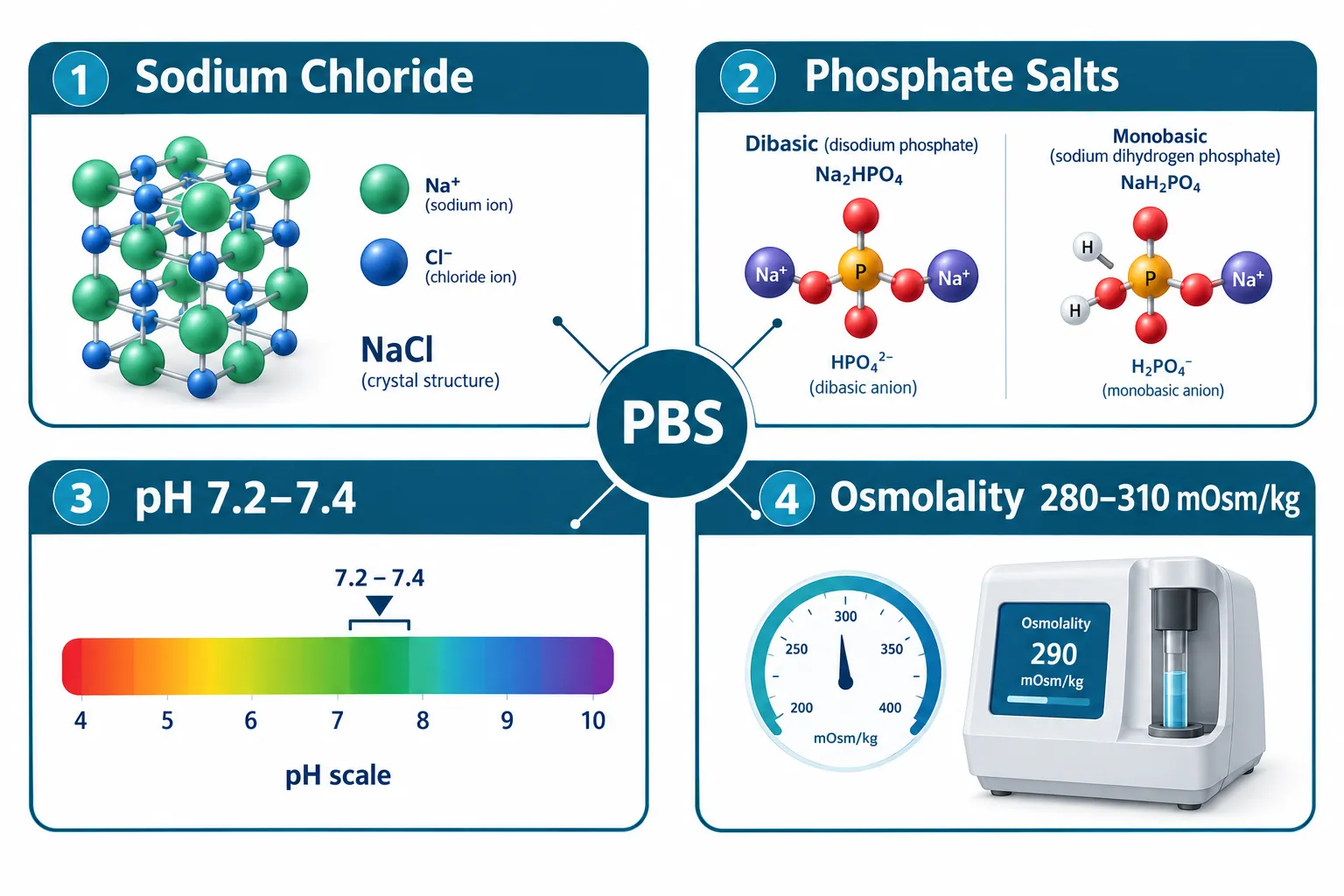
Phosphate-buffered saline is an aqueous solution containing sodium chloride, disodium hydrogen phosphate, and potassium dihydrogen phosphate, with potassium chloride sometimes included. These components work together to maintain a stable pH while keeping the solution isotonic with mammalian cells.
PBS Composition and Core Properties

The standard formulation targets a pH of 7.2 to 7.4 and an osmolality of 280 to 310 mOsm/kg. Both values are chosen to approximate normal physiological conditions in human and rodent tissue. When these parameters are met, PBS is considered isotonic and physiologically compatible, meaning it will not cause osmotic stress or pH-driven damage to cells during an assay.

A common variant is Dulbecco's PBS (DPBS), which is available with or without calcium and magnesium ions. The calcium- and magnesium-free version is preferred in most peptide and cell-dissociation protocols because divalent cations can interfere with certain peptide conformations and promote unwanted aggregation.

Key compositional parameters at a glance:

Parameter Standard PBS Target
pH 7.2-7.4
Osmolality 280-310 mOsm/kg
Sodium chloride ~137 mM
Phosphate concentration ~10 mM
Endotoxin limit Less than 0.1 EU/mL

pH, Osmolality, and Sterility in Peptide Research

Understanding what is phosphate-buffered saline, pH, osmolality, sterility, and vehicle controls in peptide research requires looking at each parameter as a potential source of experimental error.

pH stability is critical because most peptides carry ionizable side chains. Even a modest shift from pH 7.4 to pH 6.8 can alter the charge state of histidine, lysine, or aspartate residues, changing solubility, folding, and receptor binding. PBS resists pH drift through its phosphate buffering capacity, but that resistance is not unlimited. Dilution, CO2 absorption from ambient air, and freeze-thaw cycles can all shift pH outside the acceptable window. Researchers working with peptides such as those explored in SS-31 mitochondrial research themes should verify pH at the time of use, not just at preparation.

Osmolality drift is a subtler problem. Adding a concentrated peptide stock to PBS can raise osmolality above the isotonic range if the stock volume is significant relative to the total. Hyperosmotic solutions cause cell shrinkage and can trigger stress responses that confound results. Measuring osmolality with a calibrated osmometer before each experiment is best practice, particularly for in vivo dosing.

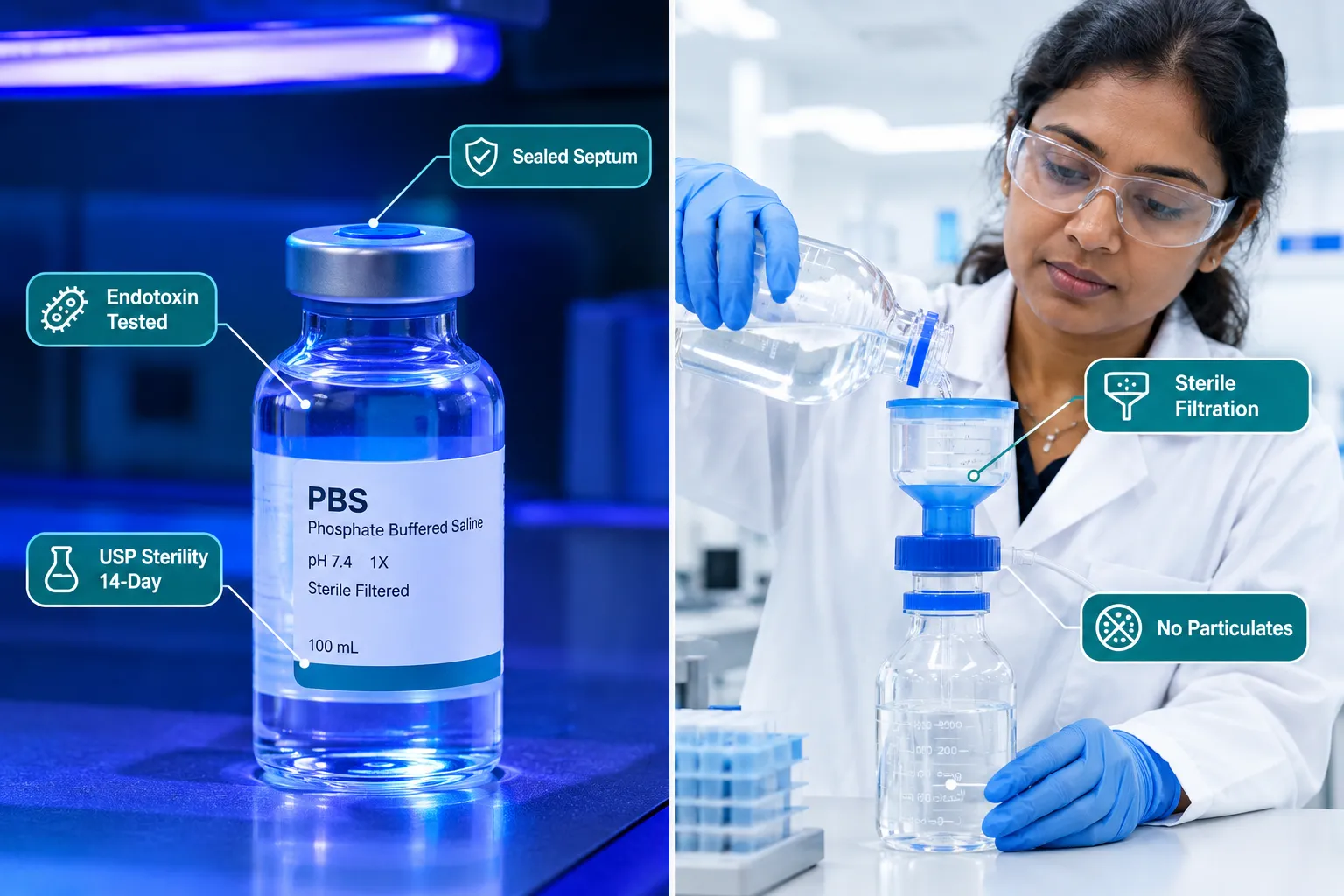
Sterility and endotoxin control represent the most consequential quality criteria in 2026. Commercial PBS products intended for cell culture and in vivo use are typically manufactured under USP-aligned sterility protocols, with no bacterial growth observed at 14 days. Endotoxin limits are set at less than 0.1 EU/mL, because even trace lipopolysaccharide contamination can trigger inflammatory responses that mask or amplify a peptide's apparent effect. Researchers sourcing lab-tested peptides should apply the same scrutiny to their buffer as they do to the peptide itself.

"The buffer is not inert. Every property of PBS, pH, osmolality, ionic strength, and sterility, becomes part of the experimental condition the moment it contacts a peptide."

Sterile filtration through a 0.22-micron membrane is the standard method for preparing PBS in-house. Autoclaving is less preferred because high heat can alter phosphate equilibria and shift pH.


Vehicle Controls and Buffer Optimization in Peptide Experiments

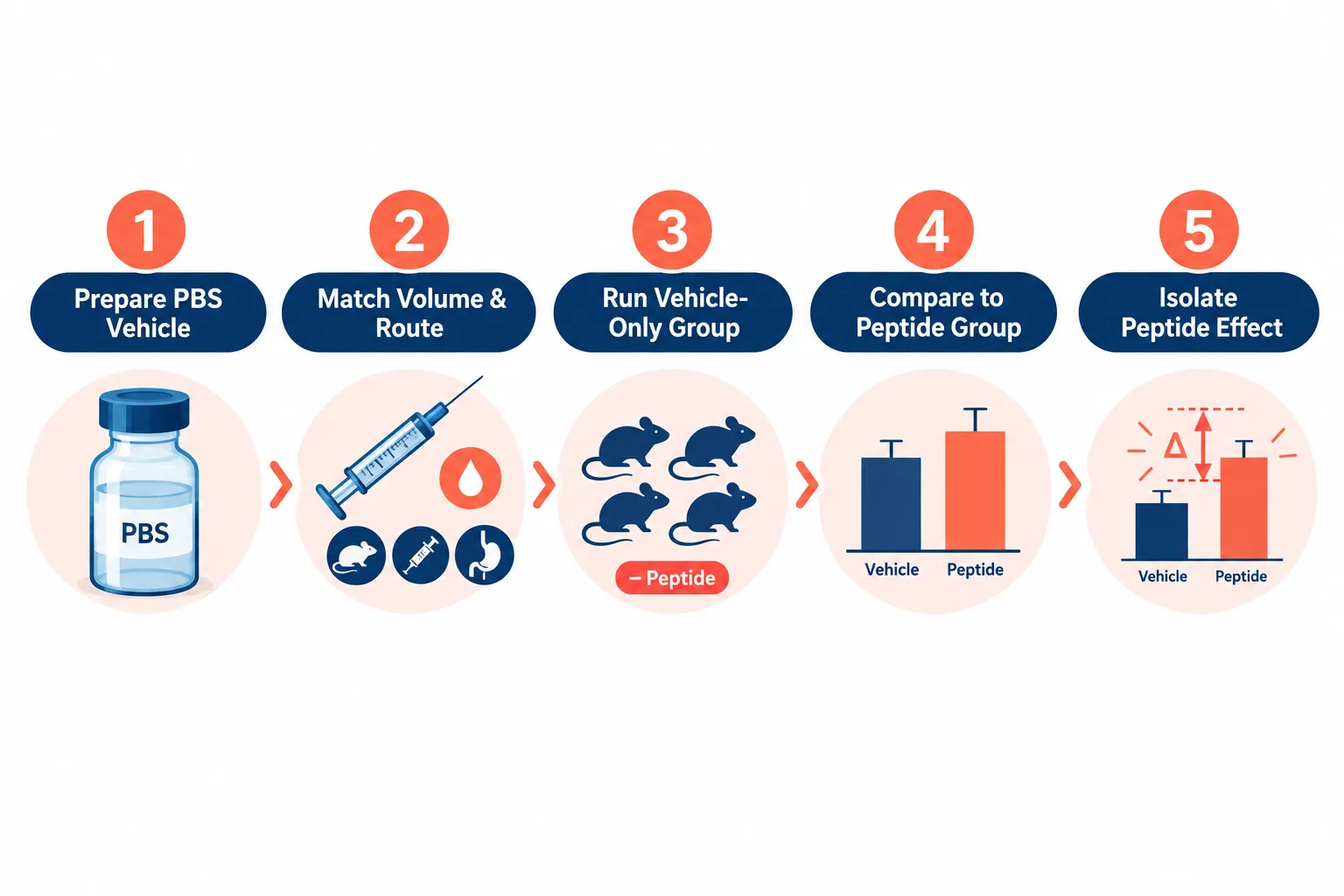
The most overlooked application of PBS in peptide research is its role as a vehicle control. A vehicle control group receives the same volume of PBS by the same route and at the same time as the treatment group, but without the peptide. This design element is essential for distinguishing the biological effect of the peptide from any effect caused by the injection itself, the volume delivered, or minor buffer-related stress.
Vehicle Controls and Buffer Optimization in Peptide Experiments

Without a vehicle control, a researcher cannot confidently attribute an observed outcome to the peptide. This matters especially for peptides studied in metabolic, neurological, or inflammatory contexts, areas where PBS alone can produce measurable physiological responses at larger volumes or in sensitive models.

When PBS is appropriate as a peptide vehicle:

  • The peptide is stable at pH 7.2 to 7.4
  • The peptide does not require organic co-solvents for solubility
  • The assay uses mammalian cells or rodent models where isotonic conditions are required
  • Endotoxin-free formulation is available

When PBS may not be the right choice:

  • Peptides with hydrophobic sequences often require DMSO or acetic acid as a co-solvent
  • Peptides sensitive to phosphate (some calcium-binding sequences) may aggregate in PBS
  • Acidic or basic peptides may require a buffer with a different pH range

The emerging consensus in 2026 is that researchers should optimize buffer choice for each peptide rather than defaulting to PBS. For example, GHK-Cu peptide formulations often benefit from slightly acidic buffers that preserve the copper-peptide complex, while GLP-1 peptides used in metabolic research are frequently formulated in PBS with added stabilizers. Researchers comparing peptides, such as those evaluating SLU-PP-332 versus MOTS-C, should use identical vehicle conditions in both arms to ensure the comparison is valid.

For peptides stored long-term, PBS is generally not the preferred medium. Lyophilized peptide reconstituted in sterile water and stored at -80°C outperforms PBS storage in most stability analyses, because phosphate ions can catalyze hydrolysis of certain peptide bonds over time. When PBS is used for short-term working solutions, single-use aliquots minimize freeze-thaw degradation.

Researchers working with mitochondria-targeted compounds can find additional context in the SS-31 kidney health research literature, where PBS vehicle controls are used consistently to isolate peptide-specific renoprotective effects.
Vehicle Controls and Buffer Optimization in Peptide Experiments


Conclusion

PBS remains the default buffer in peptide research for good reasons: it is isotonic, physiologically compatible, and well-characterized. However, treating it as a passive background component is a methodological error. pH must be verified at the point of use, osmolality should be measured when adding concentrated peptide stocks, and sterility plus endotoxin status must meet validated thresholds before any in vivo or cell-based application.

Actionable next steps for researchers:

  1. Measure pH and osmolality of every PBS preparation before use, do not rely solely on the manufacturer's certificate of analysis.
  2. Include a vehicle-only control group in every peptide experiment to isolate the peptide's true effect.
  3. Evaluate whether PBS is actually the optimal vehicle for each specific peptide, or whether a different buffer pH, ionic strength, or co-solvent is warranted.
  4. Use endotoxin-free, sterile-filtered PBS for all cell-based and in vivo work, and document the lot number and endotoxin test result.
  5. Store peptide working solutions as single-use aliquots in PBS to avoid freeze-thaw degradation.

Applying these practices consistently will strengthen the reproducibility and interpretability of peptide research data in 2026 and beyond.

https://www.puretestedpeptides.com/wp-content/uploads/2026/10/what-is-phosphate-buffered-saline-ph-osmolality-sterility-and-vehicle-controls-i.webp 1024 1536 https://www.puretestedpeptides.com/wp-content/uploads/2026/01/buy-peptides-online.jpg 2026-10-08 13:11:222026-10-08 13:11:22What Is Phosphate-Buffered Saline? pH, Osmolality, Sterility, and Vehicle Controls in Peptide Research
×

Helpful Links

  • My account
  • Cart
  • Checkout
  • Refund and Returns Policy
  • Privacy Policy
  • SMS Privacy Policy
  • Login
  • My Account
  • Logout

USA Made Lab Tested Peptides

All products are sold for research, laboratory, or analytical purposes only, and are not for human consumption


Pure Tested Peptides is a chemical supplier. Pure Tested Peptides is not a compounding / chemical compounding facility as defined under 503A of the Federal Food, Drug, and Cosmetic act. Pure Tested Peptides is not an outsourcing facility as defined under 503B of the Federal Food, Drug, and Cosmetic act.

The statements made within this website have not been evaluated by the US Food and Drug Administration. The products we offer are not intended to diagnose, treat, cure or prevent any disease.

Human/Animal Consumption Prohibited. Laboratory/In-Vitro Experimental Use Only

Scroll to top Scroll to top Scroll to top