Peptide Calculators in Research: How Labs Estimate Dosing, Concentration, and Reconstitution
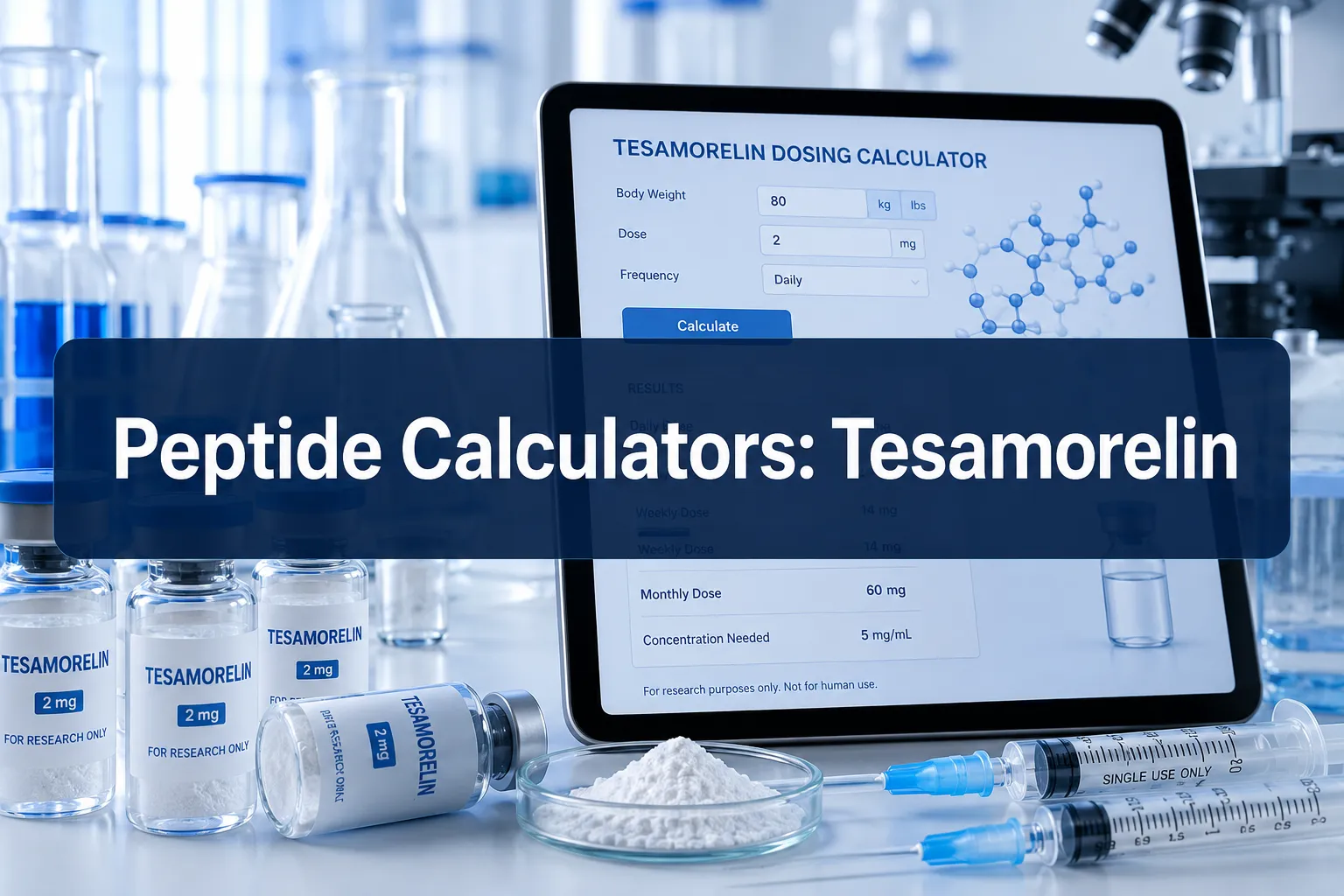
A single miscalculation in peptide reconstitution can render an entire experiment invalid, yet the math behind it is straightforward once researchers understand the core formulas. Peptide calculators in research: how labs estimate dosing, concentration, and reconstitution has become a central workflow topic in 2026, with multiple platforms releasing or updating dedicated calculation tools to support bench scientists working with compounds such as CJC-1295, Tesamorelin, and GLP-class molecules. This article is a technical tutorial for research use only, covering the underlying math, practical workflows, and common error-checking steps that modern peptide calculators are built around.
Key Takeaways
- The core concentration formula is: Concentration (mg/mL) = Vial Mass (mg) / Diluent Volume (mL)
- Converting between mg and mcg (1 mg = 1,000 mcg) is the most common source of calculation error
- U-100 insulin syringes require an additional unit conversion: 1 IU = 0.01 mL
- Modern peptide calculators use 3-4 step workflows and include error-checking to validate syringe capacity
- All calculations assume uniform dissolution of the peptide in bacteriostatic water
The Core Math Behind Peptide Concentration Calculations
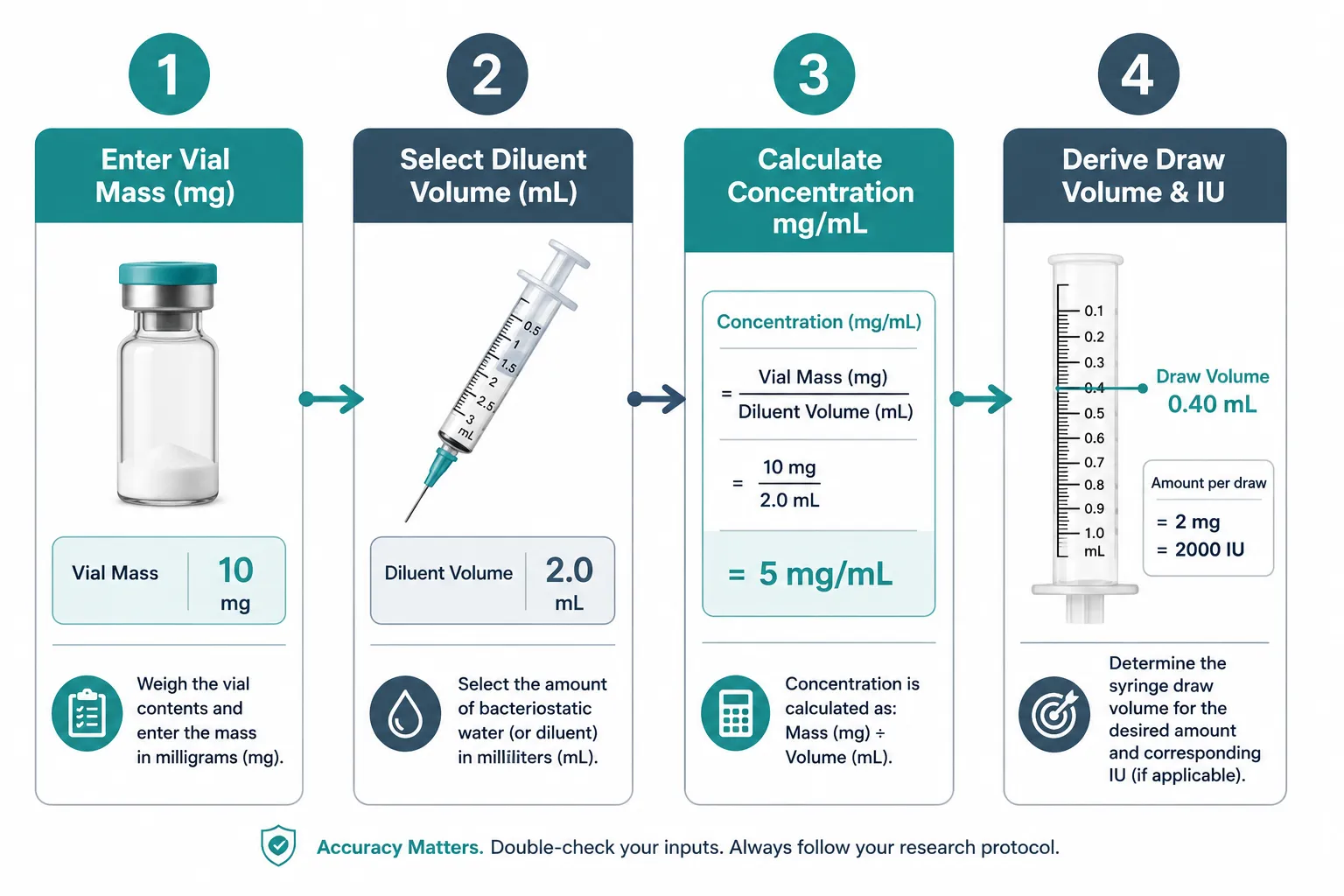
Every peptide calculator in research begins with one foundational equation. Once a lyophilized peptide is reconstituted in bacteriostatic water (BW), the resulting solution is assumed to be uniformly dissolved throughout the vial. This assumption makes the concentration formula clean and reliable:
Concentration (mg/mL) = Vial Mass (mg) / Reconstitution Volume (mL)
For example, a 5 mg vial of CJC-1295 reconstituted with 2.5 mL of bacteriostatic water yields a concentration of 2 mg/mL. If a researcher needs outputs in micrograms per milliliter, common in cell culture and assay protocols, the formula adjusts:
Concentration (mcg/mL) = (Vial Mass in mg × 1,000) / Diluent Volume (mL)
Using the same example: (5 × 1,000) / 2.5 = 2,000 mcg/mL.
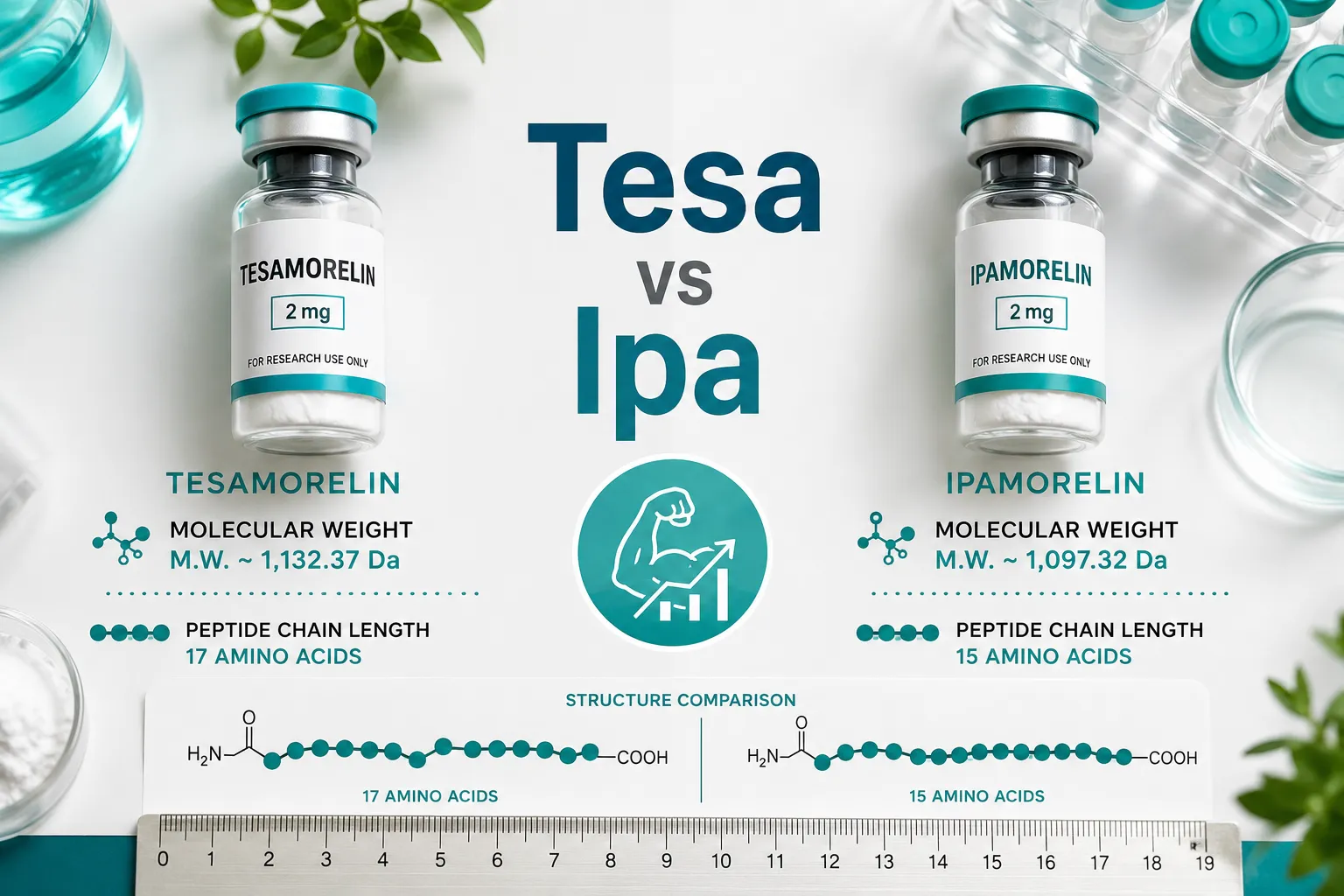
The relationship 1 mg = 1,000 mcg is highlighted repeatedly in calculator documentation because it is the most frequent source of dosing errors. Researchers working with compounds like Tesamorelin and Ipamorelin combination protocols must pay particular attention to this conversion, as both compounds are often dosed in the low-microgram range.
Deriving Injection Volume from Concentration
Once concentration is established, the draw volume for a target dose follows directly:
Draw Volume (mL) = Target Dose (mg or mcg) / Concentration (mg/mL or mcg/mL)
If the target research dose is 1 mg and the concentration is 2 mg/mL, the draw volume is 0.5 mL. This simple division is the backbone of every peptide dosing calculator available in 2026.
Syringe Unit Conversion: Translating mL Into IU on a U-100 Scale
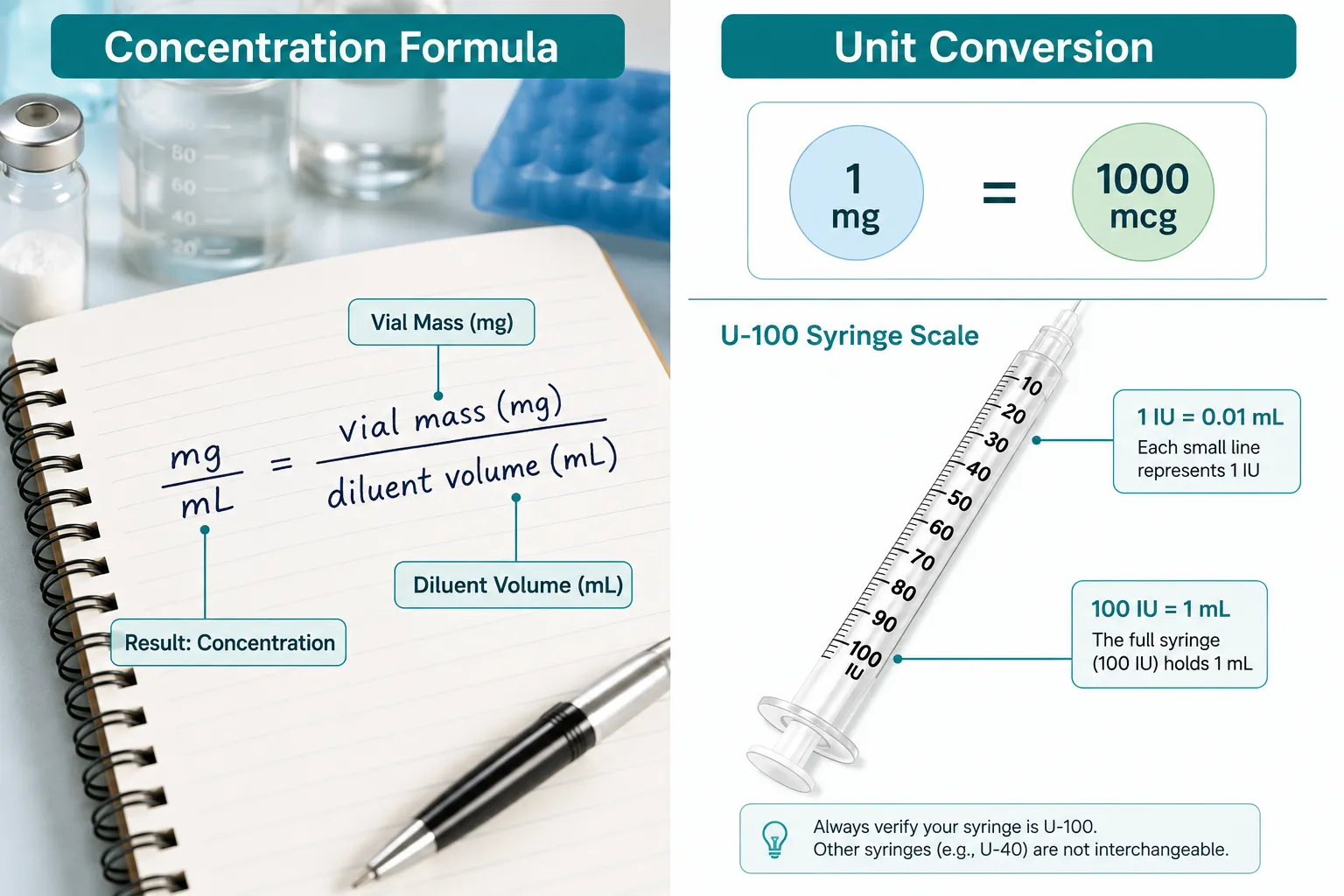
Most research labs use U-100 insulin syringes for subcutaneous peptide administration in animal models. These syringes are calibrated in International Units (IU), not milliliters, which introduces a conversion step that peptide calculators in research consistently address.
The key relationship is:
| Measurement | Equivalent |
|---|---|
| 1 mL | 100 IU |
| 1 IU | 0.01 mL |
| 0.5 mL | 50 IU |
| 0.1 mL | 10 IU |
To convert a draw volume in mL to syringe units:
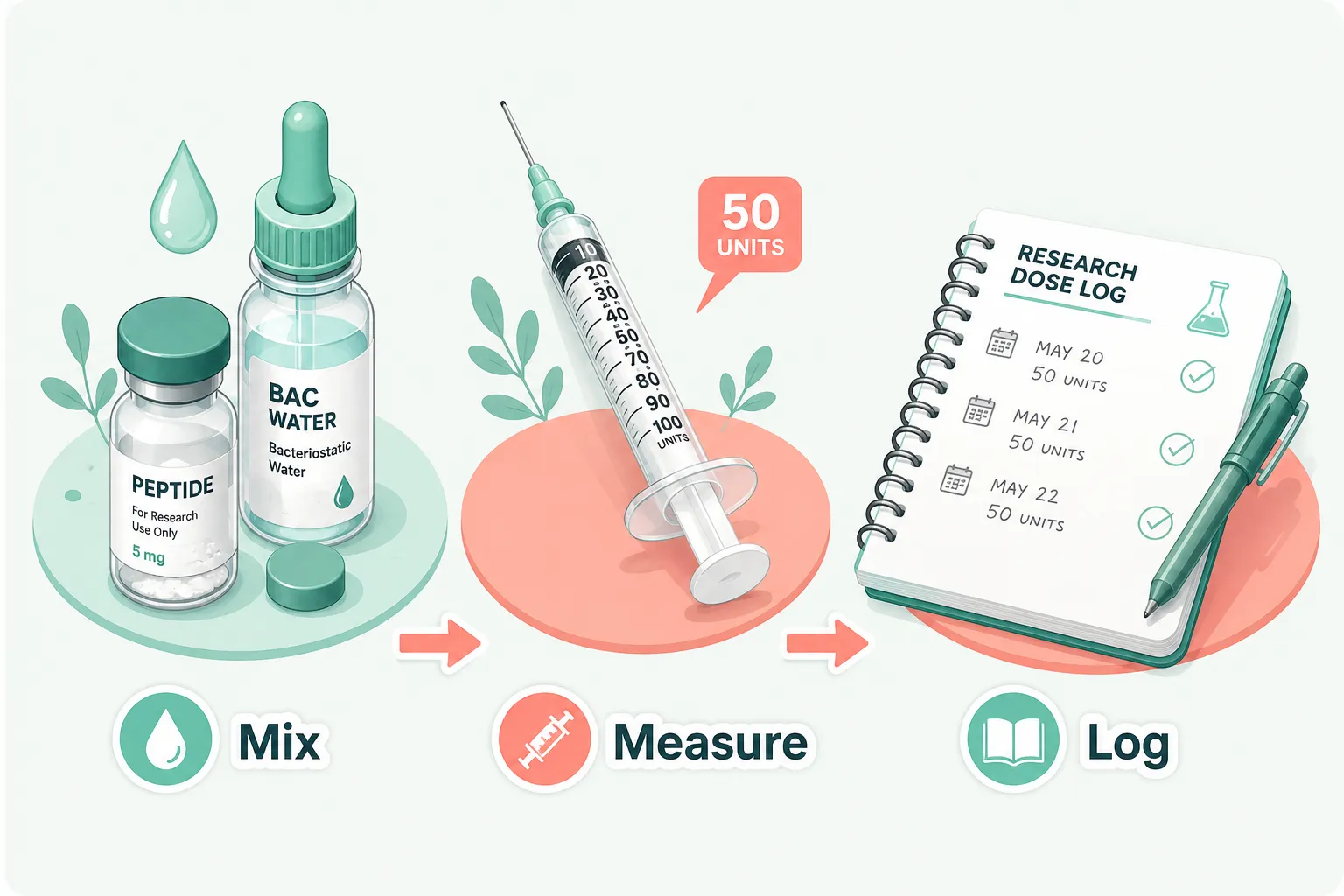
Syringe Units (IU) = Draw Volume (mL) × 100
Using the earlier example: 0.5 mL × 100 = 50 IU on the syringe scale.
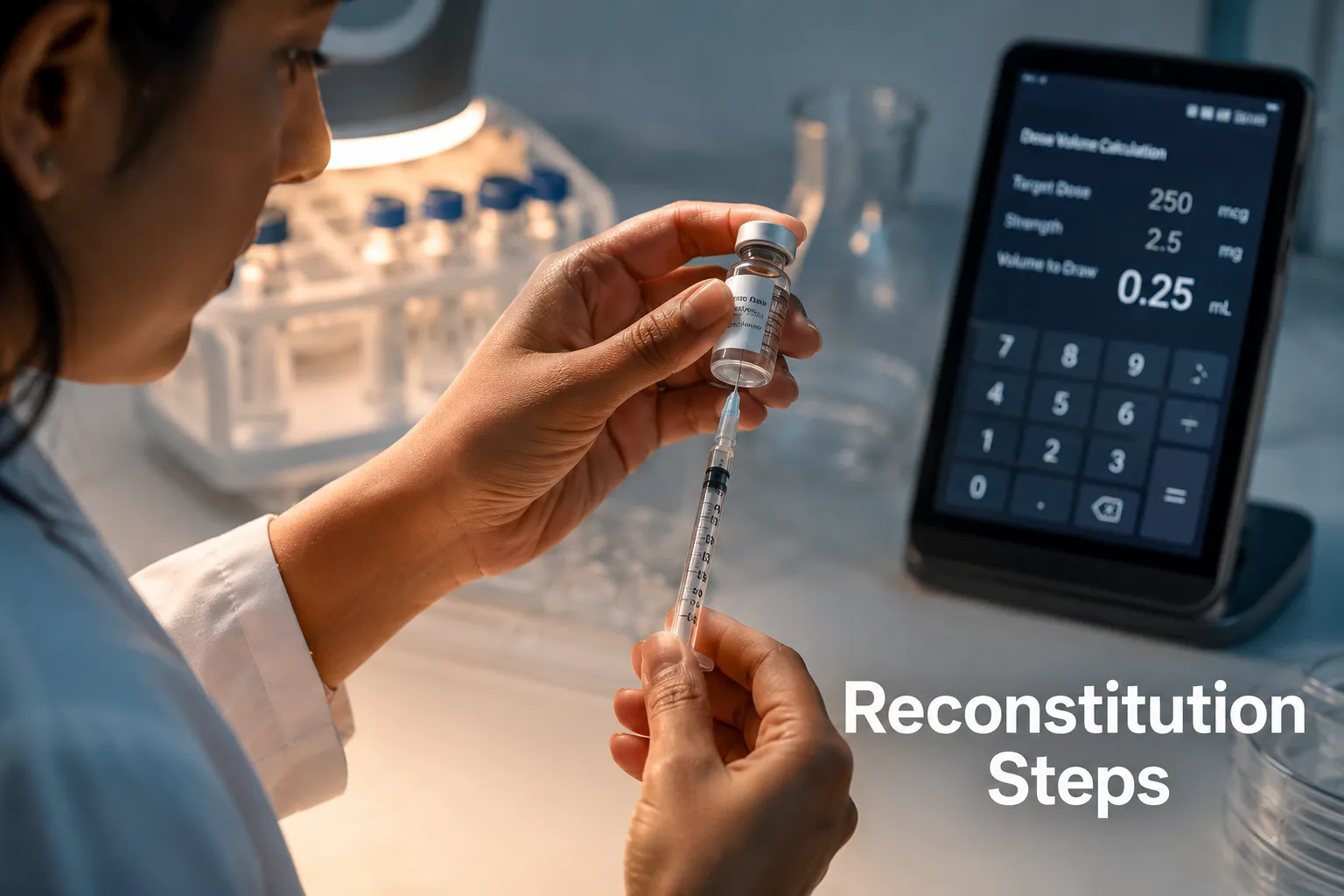
Modern calculators present this as part of a guided 4-step workflow:
- Enter vial mass (mg)
- Enter bacteriostatic water volume (mL)
- Enter target dose (mg or mcg)
- Receive draw volume in mL and IU
Some tools include visual syringe meters that animate exactly where to stop drawing on the scale, a practical feature for labs running high-throughput assays with compounds like those explored in SS-31 mechanism and research.
Error-Checking and Capacity Validation
A notable feature in 2026 calculator updates is capacity validation, the tool checks whether the calculated draw volume exceeds the selected syringe's maximum capacity. If a researcher selects a 0.3 mL syringe but the calculation returns 0.45 mL, the calculator flags the mismatch before any solution is drawn. Back-check logic also allows users to confirm that concentration, dose, and syringe units are internally consistent, reducing the risk of compounding errors across multi-compound protocols.
Applying Peptide Calculators to GLP-Class and Advanced Research Compounds
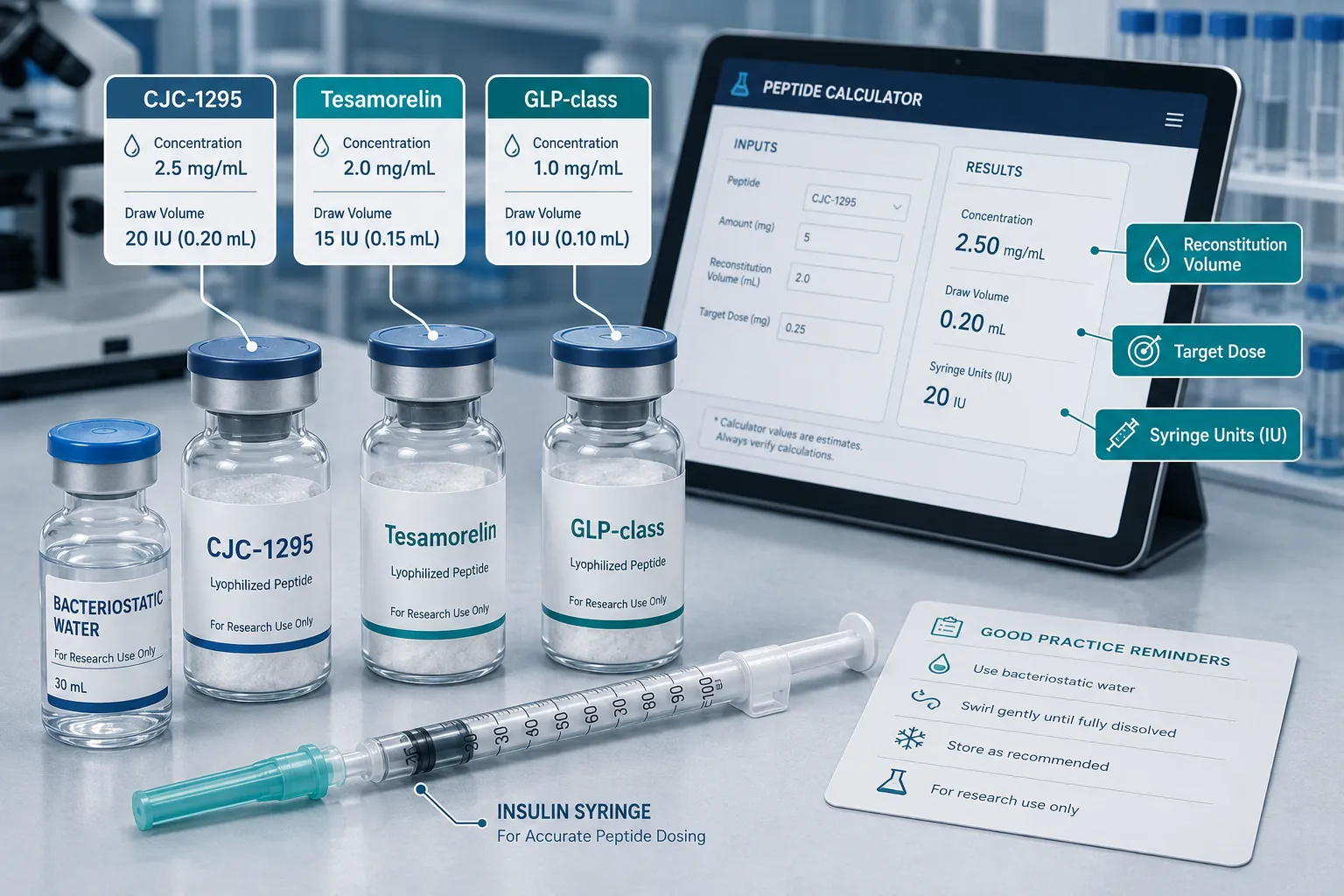
The same mg/mL concentration logic that governs classic research peptides applies directly to GLP-1 agonists, GLP-3 class molecules, and adjunct compounds like NAD+. This consistency has driven broad adoption of standardized peptide calculators across metabolic and longevity research programs.
For a GLP-class compound supplied as a 10 mg vial, reconstituted with 5 mL of bacteriostatic water:
- Concentration = 10 / 5 = 2 mg/mL (or 2,000 mcg/mL)
- Target dose of 0.5 mg = draw volume of 0.25 mL (25 IU on a U-100 syringe)
Researchers studying compounds such as those reviewed in Selank peptide research benefits and dosing concepts or MOTS-c mitochondrial signaling and metabolic research apply identical formulas, adjusting only the vial mass and target dose inputs.
For in-vitro protocols, such as cell culture or enzyme assays, calculators offer fields labeled "research amount" and "volume of reconstituted solution used in your experiment," returning outputs in mg/mL, mcg/mL, and IU. This makes the same tool useful across both in-vivo animal model work and bench-based assay preparation.
"The uniformity assumption, that a reconstituted peptide is evenly dissolved throughout the vial, is what makes the mg/mL formula reliable and repeatable across research contexts."
Labs sourcing compounds like GHK-Cu copper peptides or PT-141 in research context QA and controls benefit from pairing supplier documentation with a validated calculator workflow to ensure concentration consistency across experimental batches.
Quick Reference: Common Reconstitution Scenarios
| Vial Size | BW Added | Concentration | 0.5 mg Dose Draw |
|---|---|---|---|
| 2 mg | 1 mL | 2 mg/mL | 0.25 mL / 25 IU |
| 5 mg | 2.5 mL | 2 mg/mL | 0.25 mL / 25 IU |
| 10 mg | 5 mL | 2 mg/mL | 0.25 mL / 25 IU |
| 5 mg | 5 mL | 1 mg/mL | 0.5 mL / 50 IU |
Conclusion
Peptide calculators in research: how labs estimate dosing, concentration, and reconstitution comes down to three sequential calculations, concentration from vial mass and diluent volume, draw volume from concentration and target dose, and syringe units from draw volume and the U-100 scale. The math is accessible, but the consequences of skipping steps or mishandling unit conversions are significant in a research context.
Actionable next steps for research teams:
- Standardize on a single reconstitution volume per compound to keep concentration consistent across experimental runs
- Always verify the mg-to-mcg conversion before entering values into any calculator
- Use a calculator with capacity validation to confirm syringe selection before drawing
- Document concentration, draw volume, and IU for every batch in the lab notebook
- Cross-reference calculator outputs against the underlying formula manually at least once per new compound
For labs working with a broad compound library, pairing a validated peptide calculator with high-purity, lab-tested peptides and reliable supplier documentation is the most effective way to maintain experimental integrity across studies.