Call or Text 727-513-9780
  • Shopping Cart Shopping Cart
    0Shopping Cart
Pure Tested Peptides | America's most trusted Peptides for sale online
  • Peptides for sale
    • Oral Peptides for sale
      • Peptide Capsules for sale
      • BPC 157 Capsules 1000mcg
      • SLU-PP-332 Capsules | 1000 mcg
      • 5-Amino-1MQ 50mg Capsules
      • Tesofensine 500mcg
    • All Peptides for sale
    • Peptide Sprays
      • BPC 157 Nasal Spray Kit
      • BPC-157 TB500 Nasal Spray Kit
      • Semax Nasal Spray 10mg
      • Selank – Nasal Spray Kit – 10mg
      • Epithalon 50MG Nasal Spray Kit
      • Ipamorelin 10mg Nasal Spray
      • Klow Nasal Spray (BPC-157 + TB-500 + GHK-Cu + KPV) | 80mg
      • Hulk Nasal Spray Tesa / Ipa Blend 6/3 MG
      • Klow Nasal Spray
      • NAD + 500 mg Nasal Spray
      • PT-141 Nasal Spray Kit
    • GHRH Peptides
      • Ipa Peptides
      • CJC-1295 Peptides
        • CJC-1295 with DAC 5 mg
        • CJC-1295 without DAC 5 mg
        • CJC-1295 Ipa 10mg
      • Tesa Peptides
        • Tesa Peptide
        • Tesa 20 mg
    • GHK-Cu Peptides
      • All GHK-Cu Peptides
      • GHK-Cu 100mg
      • KLOW Peptide Blend – Buy KLOW blend online
    • BPC Peptides
      • All BPC Peptides
      • BPC-157
      • BPC-157 TB-500
      • BPC 157 capsules 1000mcg
    • SLU-PP-332 Peptides
      • All SLU-PP-332 Peptides
      • SLU-PP-332 5mg
    • GLP3 Peptides
    • PT-141 Peptides
      • PT-141 Peptides for sale
      • PT-141 10mg
      • PT-141 Nasal Spray
    • CAG Peptides
      • Lipo-C Peptide Blend
      • CAG 5mg
      • CAG 10mg
    • MOTS-C Peptides
      • MOTS-C Peptides for sale
      • MOTS-c peptide
      • MOTS-c 10mg *6 pack*
    • 5 Amino 1MQ Peptides
      • 5 Amino 1MQ Peptides for sale
      • 5-Amino-1MQ 50mg Capsules
      • 5-Amino-1MQ 5mg
    • Epithalon Peptides
      • Epithalon Peptides for sale
      • Epithalon 10mg
      • Epithalon 50mg
  • Shop
    • GLPs
      • 5-Amino-1MQ 50mg Capsules
      • 5-Amino-1MQ 5mg
      • L-Carnitine 500mg/ml
      • Tesofensine 500mcg
      • SLU-PP-332 5mg
      • MOTS-c 10mg *6 pack*
    • Epithalon & BPC Peptides
      • Epithalon 10mg
      • Epithalon 50mg
      • BPC-157
      • BPC 157 capsules 1000mcg
      • BPC-157 TB-500
      • BPC-157 TB500 Nasal Spray Kit
      • BPC 157 Nasal Spray Kit
    • BPC TB-500 & NAD+ Peptides
      • NAD+ 500 mg
      • KLOW Peptide Blend – Buy KLOW blend online
      • GLOW Peptide Blend
      • TB 500 5mg
      • BPC 157 capsules 1000mcg – Supplement
      • BPC 157 Nasal Spray Kit
      • BPC-157
      • BPC-157 TB500 Nasal Spray Kit
      • BPC-157 TB-500
      • BPC 157 capsules 1000mcg
    • LL-37 Peptide
      • LL-37 10 mg
    • MOTS-C & Selank
      • MOTS-c peptide
      • Selank 10mg
    • GHK Peptides
      • GHK-Cu 100mg
      • GLOW Peptide Blend
      • KLOW Peptide Blend – Buy KLOW blend online
  • COAs
  • Wholesale
    • Wholesale Peptides for sale
  • PTP FAQ
  • Affiliates
    • Selank Peptide: Advanced Pharmacological Mechanisms Underlying Its Anxiolytic and Nootropic Effects in Research
      • 5-Amino-1MQ Peptide: Detailed Mechanisms of NNMT Inhibition and Its Impact on Cellular Metabolism Research
        • MOTS-C Peptide: Unraveling Its Role in Mitochondrial Dynamics and Energy Metabolism Research
          • Epithalon Peptide and Telomerase Regulation: Investigating Its Impact on Cellular Senescence and Lifespan Research Models
            • GLP2-T vs GLP2 Tirz Peptide: Understanding the Naming, Mechanistic Nuances, and Research Implications for Gut Health
      • Peptides and Polypeptides in Modern Pharmacology: What Research on Metoprolol, Prednisone, and Amlodipine Reveals
        • Polypeptide Peptides vs NSAIDs: What Naproxen and Diclofenac Teach Tissue-Repair Researchers About BPC‑157 and TB‑500
          • Peptides and Polypeptides in Endocrine Pharmacology: How GLP-1, GLP-2, and GLP-3 Retatrutide Differ From Classic Drugs Like Prednisone and Amlodipine
          • 5‑Amino‑1MQ Peptide and NNMT Inhibition: How It Compares With Statins Like Atorvastatin in Adipose and Lipid Metabolism Research
      • Enclomiphene, Estrogen Receptor Signaling, and Luteinizing Phase Biology: What Hormone Researchers Should Measure
        • Mesenchymal Stem Cells, BPC‑157, and GHK‑Cu: How Tissue Repair Peptides Compare With Classic NSAIDs Like Naproxen in Injury Models
          • Peptide Calculator Use Cases Beyond Growth Hormone: Working Through GLP‑3 Retatrutide, MOTS‑c, and BPC‑157 Research Dosing
        • Polypeptide Peptides in Endocrine and Metabolic Pharmacology: Lessons From Amlodipine, Prednisone, and Metoprolol
        • Peptides Calculator for Advanced Blends: Worked Examples for Tesamorelin, CJC‑1295, and Ipamorelin Stacks
          • Peptides and Polypeptides in Human Physiology: How Molecular Size Shapes Research Applications
            • Selank Peptide: Advanced Pharmacological Mechanisms Underlying Its Anxiolytic and Nootropic Effects in Research
          • 5-Amino-1MQ Peptide: Detailed Mechanisms of NNMT Inhibition and Its Impact on Cellular Metabolism Research
            • MOTS-C Peptide: Unraveling Its Role in Mitochondrial Dynamics and Energy Metabolism Research
              • Epithalon Peptide and Telomerase Regulation: Investigating Its Impact on Cellular Senescence and Lifespan Research Models
                • GLP2-T vs GLP2 Tirz Peptide: Understanding the Naming, Mechanistic Nuances, and Research Implications for Gut Health
                  • Peptides and Polypeptides in Endocrine Pharmacology: How GLP-1, GLP-2, and GLP-3 Retatrutide Differ From Classic Drugs Like Prednisone and Amlodipine
                    • Polypeptide Peptides vs NSAIDs: What Naproxen and Diclofenac Teach Tissue-Repair Researchers About BPC‑157 and TB‑500
                      • Peptides and Polypeptides in Modern Pharmacology: What Research on Metoprolol, Prednisone, and Amlodipine Reveals
                        • 5‑Amino‑1MQ Peptide and NNMT Inhibition: How It Compares With Statins Like Atorvastatin in Adipose and Lipid Metabolism Research
                        • Enclomiphene, Estrogen Receptor Signaling, and Luteinizing Phase Biology: What Hormone Researchers Should Measure
                        • Mesenchymal Stem Cells, BPC‑157, and GHK‑Cu: How Tissue Repair Peptides Compare With Classic NSAIDs Like Naproxen in Injury Models
                        • Peptide Calculator Use Cases Beyond Growth Hormone: Working Through GLP‑3 Retatrutide, MOTS‑c, and BPC‑157 Research Dosing
                        • Polypeptide Peptides in Endocrine and Metabolic Pharmacology: Lessons From Amlodipine, Prednisone, and Metoprolol
                        • Peptides Calculator for Advanced Blends: Worked Examples for Tesamorelin, CJC‑1295, and Ipamorelin Stacks
                        • Peptides and Polypeptides in Human Physiology: How Molecular Size Shapes Research Applications
                        • Selank Peptide: Advanced Pharmacological Mechanisms Underlying Its Anxiolytic and Nootropic Effects in Research
                        • MOTS-C Peptide: Unraveling Its Role in Mitochondrial Dynamics and Energy Metabolism Research
                        • Peptides and Polypeptides in Modern Pharmacology: What Research on Metoprolol, Prednisone, and Amlodipine Reveals
                        • Peptides and Polypeptides in Endocrine Pharmacology: How GLP-1, GLP-2, and GLP-3 Retatrutide Differ From Classic Drugs Like Prednisone and Amlodipine
                        • 5-Amino-1MQ Peptide: Detailed Mechanisms of NNMT Inhibition and Its Impact on Cellular Metabolism Research
                        • Mesenchymal Stem Cells, BPC‑157, and GHK‑Cu: How Tissue Repair Peptides Compare With Classic NSAIDs Like Naproxen in Injury Models
                        • Peptide Calculator Use Cases Beyond Growth Hormone: Working Through GLP‑3 Retatrutide, MOTS‑c, and BPC‑157 Research Dosing
                        • GLP2-T vs GLP2 Tirz Peptide: Understanding the Naming, Mechanistic Nuances, and Research Implications for Gut Health
                        • Polypeptide Peptides in Endocrine and Metabolic Pharmacology: Lessons From Amlodipine, Prednisone, and Metoprolol
                        • Polypeptide Peptides vs NSAIDs: What Naproxen and Diclofenac Teach Tissue-Repair Researchers About BPC‑157 and TB‑500
                        • Peptides and Polypeptides in Human Physiology: How Molecular Size Shapes Research Applications
                        • Peptides Calculator for Advanced Blends: Worked Examples for Tesamorelin, CJC‑1295, and Ipamorelin Stacks
                        • 5‑Amino‑1MQ Peptide and NNMT Inhibition: How It Compares With Statins Like Atorvastatin in Adipose and Lipid Metabolism Research
                        • Enclomiphene, Estrogen Receptor Signaling, and Luteinizing Phase Biology: What Hormone Researchers Should Measure
                        • Epithalon Peptide and Telomerase Regulation: Investigating Its Impact on Cellular Senescence and Lifespan Research Models
                        • Best research protocol Klow blend
                        • best time to take BPC-157
                        • best time to take DSIP (Delta Sleep Inducing Peptide)
                        • best time to take CJC-1295
                        • best time to take AOD-9604
                        • best time to take Follistatin 344
                        • best time to take Ipamorelin
                        • best time to take MK-677 (Ibutamoren)
                        • best time to take Ligandrol (LGD-4033) — research compound
                        • best time to take Ostarine (MK-2866) — research compound
                        • best time to take GHK-CU
                        • best time to take TB-500
                        • best time to take MOTS-c
                        • best time to take Semax
                        • best time to take RAD-140 (Testolone) — research compound
                        • best time to take Thymosin Alpha-1
                        • best time to take PEG-MGF
                        • Biolife Plasma, Octapharma Plasma, and Research Peptides: How Plasma Donation Labs Differ From Peptide Suppliers
                        • best time to take YK-11 — research compound
                        • best time to take PT-141 (Bremelanotide)
                        • Best research protocol Klow blend
                        • 5-Amino-1MQ and MOTS-C Synergy: Metabolic Signaling, Mitochondria, and Research Design
                        • BPC-157 and TB-500: Investigating Their Combined Effects on Angiogenesis and Cellular Migration in Tissue Repair Models
                        • BPC-157 Peptide: Gut Barrier Function, Inflammation, and Tissue-Recovery Research
                        • 5‑Amino‑1MQ and MOTS‑c Synergy in Metabolic Research: Designing NNMT and Mitochondrial Biogenesis Stacks
                        • CJC-1295 with DAC vs. Without DAC: Half-Life, Release Kinetics, and Research Implications
                        • CJC‑1295 with DAC vs. Without DAC: Expanding on Half‑Life Differences Using Tesamorelin and Ipamorelin Blend Case Studies
                        • Collagen Biology and Copper‑Binding Peptides: How GHK‑Cu, Glow Blend, and Klow Blend Interact with Skin and Connective Tissue
                        • Collagen Biology and Regenerative Peptides: How GHK‑Cu, Glow Blend, and Klow Blend Affect Extracellular Matrix Research
                    • DNA, Telomeres, and Longevity Peptides: Positioning Epithalon and MOTS‑c in Genetic Aging Research
                      • Enclomiphene Citrate: serm Mechanism, Testosterone Research, and Stack Compatibility
                        • Enclomiphene vs Enclomiphene Citrate: Formulation, Bioavailability, and Research Distinctions
                        • Epithalon Peptide Research: Telomerase Activation, Aging, and Pineal Gland Function
                        • Estrogen Receptor Signaling and Enclomiphene: How Selective Modulators Compare with Classic Polypeptide Hormones
                        • GHK-Cu Peptide: Advanced Mechanisms in Extracellular Matrix Remodeling and Wound Healing Research
                        • GHK-Cu Peptide: Collagen Synthesis, Wound Repair, and Skin-Barrier Research Models
                        • GLP-1 vs GLP-3 vs GLP-2: Peptide Classification and Research Applications
                        • GLP-2 Peptide Research Guide: Gut Barrier Function, Nutrient Absorption, and Intestinal Recovery Models
                        • GLP-3 Retatrutide vs. GLP-1 Drugs: What Triple-Agonist Biology Changes in Research Models
                        • Ipamorelin and Tesamorelin Combination: Synergistic GH Secretagogue Research and Dosing Protocols
                        • GLP2 Tirz Peptide: What It Is, Why the Name Exists, and How Researchers Should Interpret It
                        • Klow Blend Peptide Nasal Spray: What the Formulation Is Trying to Do in Cognitive Research
                        • Mitochondria, NNMT Inhibition, and Peptide Modulators: Where MOTS‑c and 5‑Amino‑1MQ Fit in Cellular Energy Research
                        • MOTS-c Peptide: Mitochondrial Function, Energy Metabolism, and What Researchers Measure
                        • MOTS-c vs. 5-Amino-1MQ: Which Metabolic Research Questions Each Compound Actually Answers
                        • Nasal Spray Peptides: Bioavailability, Administration, and Semax/Selank Research Applications
                        • PT-141 Peptide Research: Mechanism of Action and Melanocortin Receptor Signaling
                        • Retatrutide for Research: Mechanism, Structure, and GLP-1/GLP-3 Dual Action
                        • Retatrutide for Obesity and Type 2 Diabetes: What the Latest Trial Data Suggest
                        • Tesofensine Peptide Research: Mechanism, Appetite Suppression, and Neuropeptide Y Pathways
  • Contact
    • Contact Customer Service
    • Text Customer Support
  • About US
  • Shop all peptides
  • Affiliate Program
    • Affiliate Signup
  • Login / Register Login / Register Page Link Login / Register Page Link
  • Click to open the search input field Click to open the search input field Search
  • Menu Menu

Tag Archive for: peptide combination research

BPC-157 and TB-500 Combination Research: How to Test Additivity Without Assuming Synergy

BPC-157 and TB-500 Combination Research: How to Test Additivity Without Assuming Synergy

October 18, 2026/0 Comments/in Uncategorized/by

Only three small pilot human studies of BPC-157 exist in the published literature, with a combined enrollment of roughly 30 participants, and not a single controlled trial has tested BPC-157 alongside TB-500 in people. Yet use of the so-called "Wolverine stack", combining these two peptides, has surged 33-fold between 2020 and 2026 in one observational dataset, driven largely by preclinical rodent data and influencer-led extrapolation. The gap between that popularity and the actual evidence base makes rigorous BPC-157 and TB-500 combination research not just useful, but necessary.

Key Takeaways

  • No human clinical trial has ever tested BPC-157 and TB-500 together; all combination claims are extrapolated from animal or cell data.
  • Synergy is a specific, measurable pharmacological claim, it must be distinguished from simple additivity using factorial designs and isobolograms.
  • The correct experimental framework uses four groups: vehicle control, BPC-157 alone, TB-500 alone, and the combination.
  • Relevant outcome measures include matrix remodeling markers, angiogenesis indices, barrier recovery scores, inflammation panels, and cell viability assays.
  • Researchers should apply formal interaction statistics before reporting any combined effect as synergistic rather than merely additive or even antagonistic.

Why the Synergy Assumption Is a Research Problem

The phrase "synergy" is used loosely in peptide communities, but in pharmacology it carries a precise meaning: two agents together produce an effect greater than the sum of their individual effects at equivalent doses. Calling the BPC-157 and TB-500 combination synergistic without testing that claim is not a minor semantic issue, it shapes dosing rationale, safety expectations, and downstream regulatory arguments.
Why the Synergy Assumption Is a Research Problem

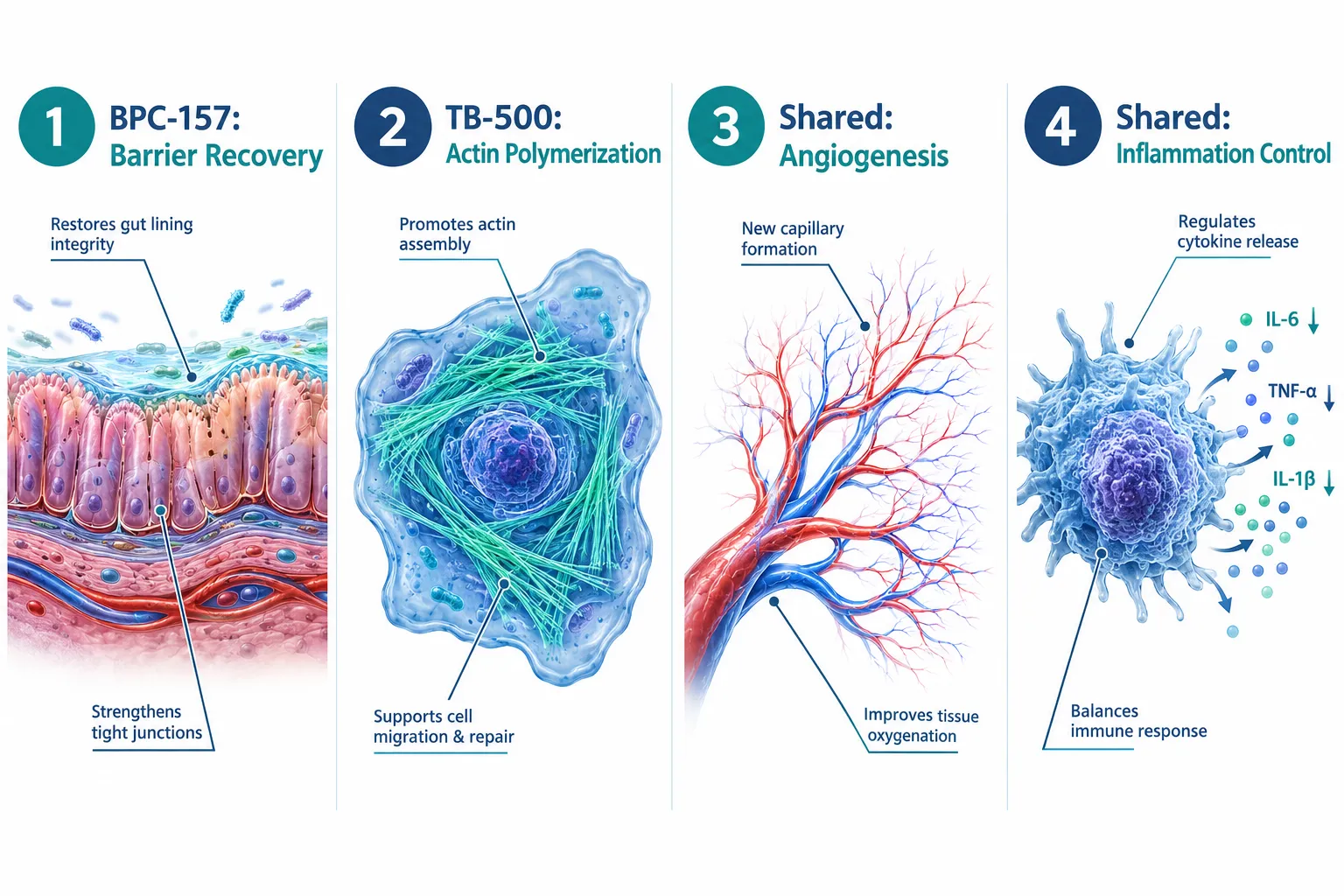
BPC-157 is a synthetic pentadecapeptide derived from a gastric protein. Its primary research interests include barrier recovery in gastrointestinal epithelium, modulation of nitric oxide signaling, and tendon-to-bone interface healing. TB-500 is a synthetic fragment of thymosin-beta-4, a protein involved in actin sequestration and cell migration. Its preclinical research focus centers on angiogenesis, satellite cell activation, and extracellular matrix remodeling. These two peptides act through partially overlapping but mechanistically distinct pathways.

That partial overlap is exactly why assuming synergy is problematic. When two agents share downstream targets, such as VEGF-driven angiogenesis or TGF-beta-mediated collagen synthesis, their combined effect may be purely additive, meaning each contributes its portion without amplifying the other. Some preclinical rodent models of tendon and muscle injury have shown that concurrent BPC-157 and TB-500 administration accelerated healing timelines compared with either peptide alone, with histological evidence of more organized collagen fiber deposition and earlier vascular network formation. However, none of those studies presented isobolograms, dose-response surfaces, or formal interaction statistics. Descriptive observations of faster healing cannot distinguish true synergy from additivity, and at least one preclinical summary noted that combined treatment did not provide additional benefit over individual peptides in certain models, directly undermining the universal synergy assumption.

"Descriptive observations of faster healing cannot distinguish true synergy from additivity without a formal interaction test."


The Factorial Design Framework for BPC-157 and TB-500 Combination Research

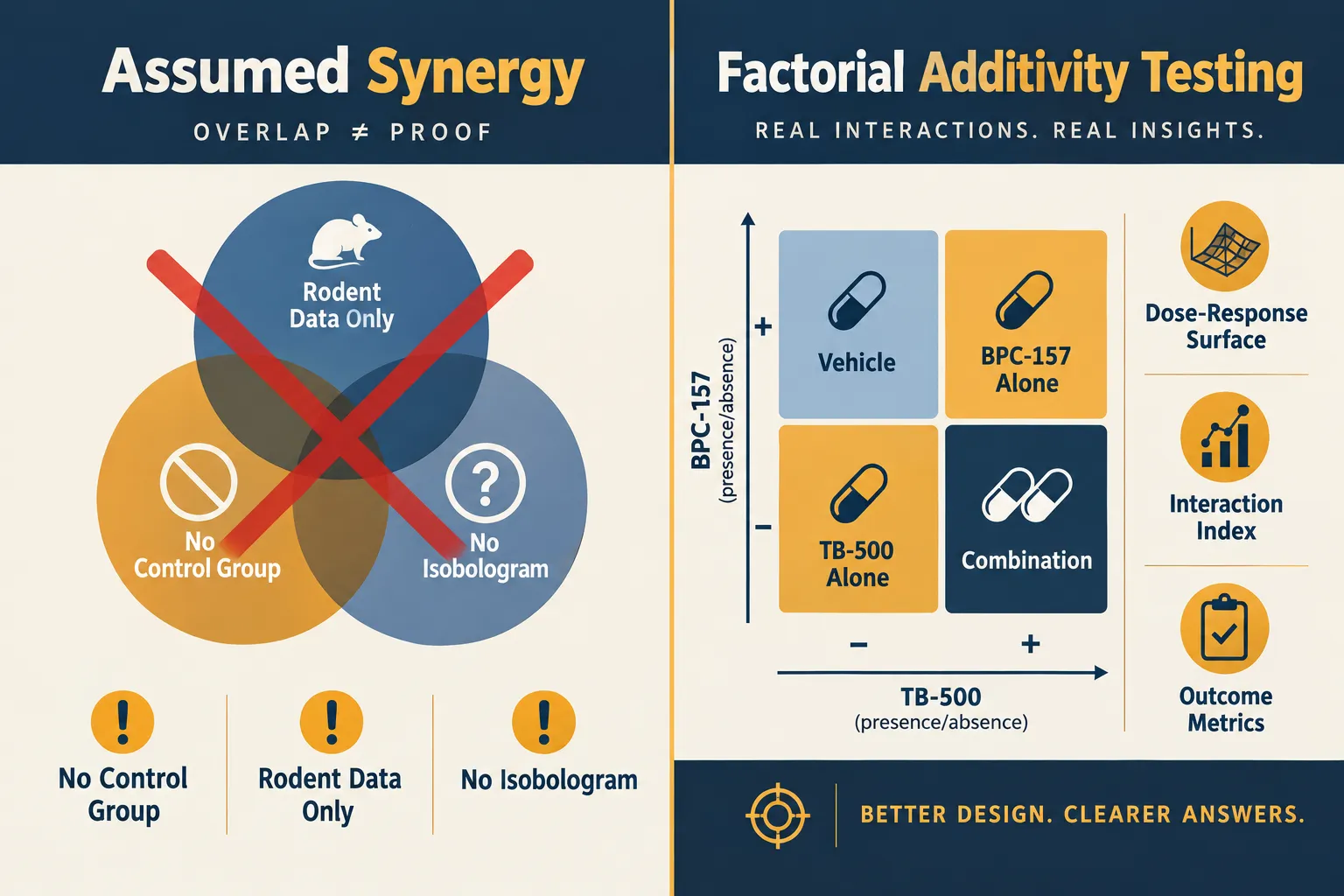
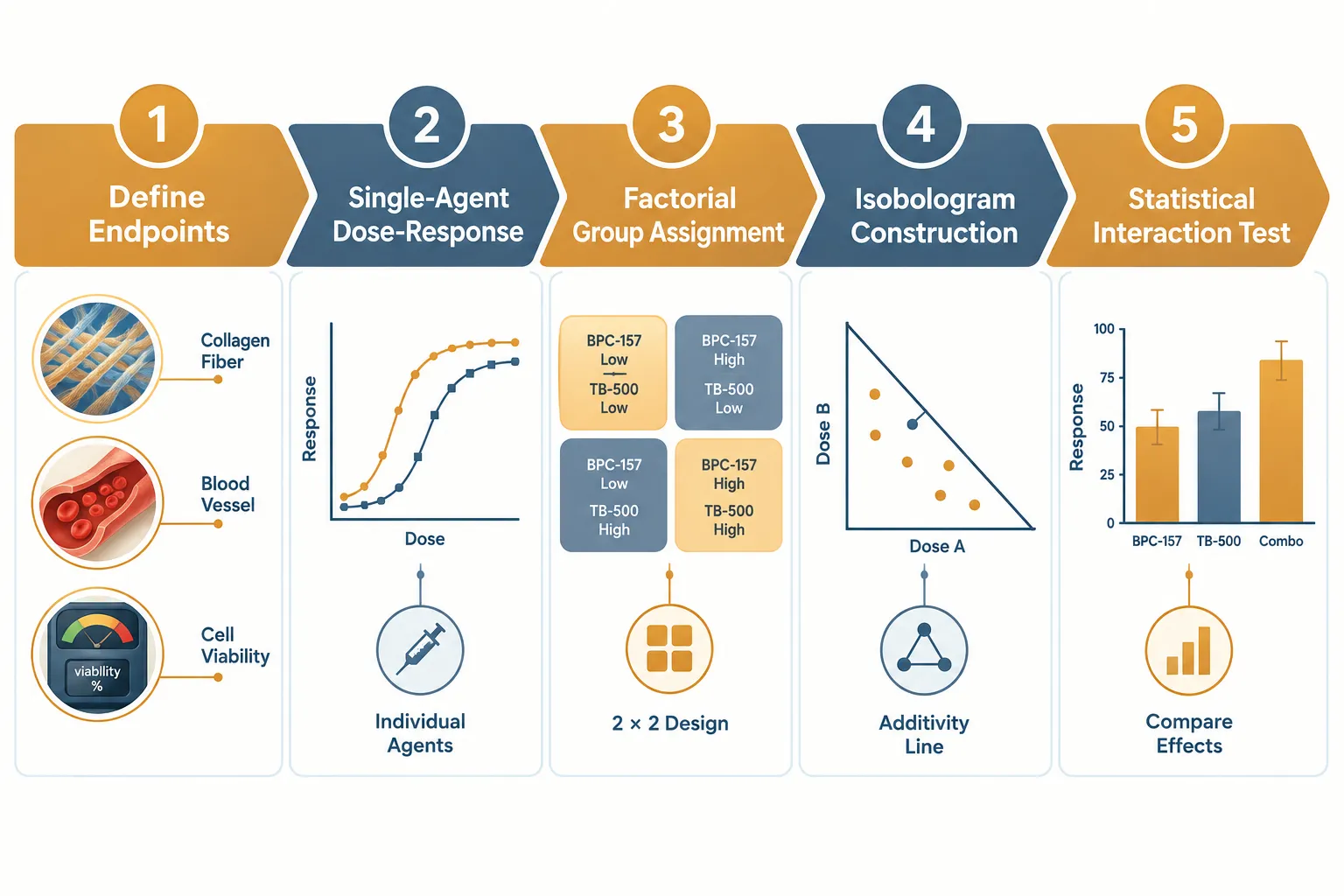
The gold standard for testing whether two agents interact, rather than simply add, is the factorial experiment. Applied to BPC-157 and TB-500 combination research, this means assigning subjects or cell preparations to four groups in a 2×2 matrix.
The Factorial Design Framework for BPC-157 and TB-500 Combination Research

The four required groups:

Group BPC-157 TB-500
Vehicle control No No
BPC-157 alone Yes No
TB-500 alone No Yes
Combination Yes Yes

Without all four groups, no interaction can be calculated. Many published preclinical studies compare only the combination group against a vehicle control, which conflates the individual contributions and makes it impossible to isolate any interaction term.

Selecting the right outcome measures matters equally. For BPC-157 and TB-500 combination research to generate interpretable data, endpoints should map to each peptide's known mechanism:

  • Matrix remodeling: collagen type I/III ratio, MMP-2 and MMP-9 activity, hydroxyproline content
  • Angiogenesis: CD31 staining density, VEGF expression, tube-formation assays in endothelial cells
  • Barrier recovery: transepithelial electrical resistance, tight-junction protein expression (ZO-1, occludin)
  • Inflammation: IL-6, TNF-alpha, IL-10 cytokine panels at defined time points
  • Cell viability: MTT or ATP-based assays to confirm non-toxicity at tested concentrations

Once dose-response curves are established for each agent individually, the isobologram method plots equieffective dose combinations. Points falling on the line of additivity confirm simple additivity; points below it indicate synergy; points above indicate antagonism. The combination index (CI) derived from the Chou-Talalay method provides a quantitative summary statistic that is reportable and reproducible.


Applying the Framework: Practical Steps for Researchers

Translating the factorial framework into a workable protocol requires sequencing experiments carefully to avoid wasting resources on combination doses that fall outside the informative range.
Applying the Framework: Practical Steps for Researchers

Step 1, Establish single-agent dose-response curves. Run BPC-157 and TB-500 individually across at least five concentrations bracketing the expected EC50. Use the outcome measures listed above, not just a single readout. This step is non-negotiable; without it, combination doses are chosen arbitrarily.

Step 2, Select fixed-ratio combination doses. Choose doses that correspond to fractions of each agent's EC50 (for example, 1:1, 2:1, 1:2 ratios). This preserves the ability to construct a meaningful isobologram.

Step 3, Run the full factorial experiment. Include vehicle, each single agent at each selected dose, and the combination at matched ratios. Blind outcome assessors to group assignment.

Step 4, Calculate the interaction index. Apply the CI method or a two-way ANOVA interaction term. Report the confidence interval around the interaction estimate, not just the point estimate.

Step 5, Replicate before concluding. A single experiment showing a sub-additive or supra-additive result is not sufficient. Biological replicates across at least two independent cell passages or animal cohorts are required before any interaction claim is published.

Researchers sourcing peptides for in vitro or preclinical work should consult a peptide supplier comparisons guide to evaluate purity documentation, as impure preparations introduce confounders that invalidate interaction analyses. Purity certificates and mass spectrometry data should accompany any research-grade material. For those exploring related dual-peptide interaction designs, the synergy of LL-37 and SS-31 framework offers a parallel methodological reference. Broader sourcing considerations are covered in the where to buy peptides resource. Researchers interested in other peptides with overlapping angiogenic or tissue-repair mechanisms may also find the GHK-Cu peptide sourcing guide and the SS-31 mitochondrial research themes overview useful for contextualizing multi-peptide experimental designs. For those examining growth-factor-adjacent peptides in musculoskeletal models, IGF-1 LR3 research products represent another mechanistically relevant comparison arm.


Conclusion

BPC-157 and TB-500 combination research sits at a critical juncture in 2026. Preclinical observations are intriguing, but they have been systematically over-interpreted as proof of synergy when the data support, at best, a hypothesis worth testing. The human evidence base, three small pilot BPC-157 studies, no TB-500 human trials, and no combination data whatsoever, cannot support clinical claims of any kind, let alone synergistic ones.

Actionable next steps for researchers:

  1. Design every combination experiment with all four factorial groups before collecting a single data point.
  2. Establish individual dose-response curves first; do not skip to combination testing.
  3. Choose outcome measures that map to the specific mechanisms of each peptide: matrix remodeling, angiogenesis, barrier recovery, inflammation, and cell viability.
  4. Apply the isobologram or CI method and report interaction confidence intervals.
  5. Replicate findings across independent biological systems before drawing conclusions about interaction type.
  6. Clearly label any findings as preclinical and resist extrapolating to human dosing or clinical benefit.

The scientific value of BPC-157 and TB-500 combination research will only be realized when the field replaces assumption-driven stacking narratives with interaction-design frameworks built on measurable, reproducible pharmacological evidence.

https://www.puretestedpeptides.com/wp-content/uploads/2026/10/bpc-157-and-tb-500-combination-research-how-to-test-additivity-without-assuming.webp 1024 1536 https://www.puretestedpeptides.com/wp-content/uploads/2026/01/buy-peptides-online.jpg 2026-10-18 13:03:432026-11-22 02:20:05BPC-157 and TB-500 Combination Research: How to Test Additivity Without Assuming Synergy
How Researchers Use Tesamorelin and Ipamorelin Together vs Separately

How Researchers Use Tesamorelin and Ipamorelin Together vs Separately

August 13, 2026/0 Comments/in Uncategorized/by

Only one peptide in the growth hormone secretagogue class has ever received FDA approval: tesa, cleared specifically for HIV-associated lipodystrophy. Every other compound in this space, including ipamorelin, remains strictly in the research domain. That regulatory gap matters enormously when examining how researchers use tesa and ipamorelin together vs separately, because it shapes which questions are scientifically answerable today and which remain speculative.

This guide focuses on research design logic, not dosing protocols. The goal is to help investigators and informed readers understand the mechanistic rationale behind each compound used alone, and the theoretical (but largely unvalidated) basis for studying them as a stack.

Key Takeaways

  • Tesamorelin is a GHRH analog with an established clinical evidence base; ipamorelin is a ghrelin mimetic with a distinct receptor target and no approved indication.
  • Used separately, each compound acts through a different node of the GH axis, making their individual pharmacology well-characterized in isolation.
  • No peer-reviewed clinical trials have validated the tesamorelin-ipamorelin combination as of 2026; reported trial programs remain in early or unconfirmed stages.
  • Researchers examining the stack must extrapolate safety considerations from GH-class risk data rather than combination-specific studies.
  • Monotherapy remains the methodological standard; combination use is niche, experimental, and requires careful study design justification.

Tesamorelin and Ipamorelin: Two Different Mechanisms on the Same Axis

Understanding how researchers use tesa and ipamorelin together vs separately begins with recognizing that these two peptides do not duplicate each other, they target different receptors within the same growth hormone axis.

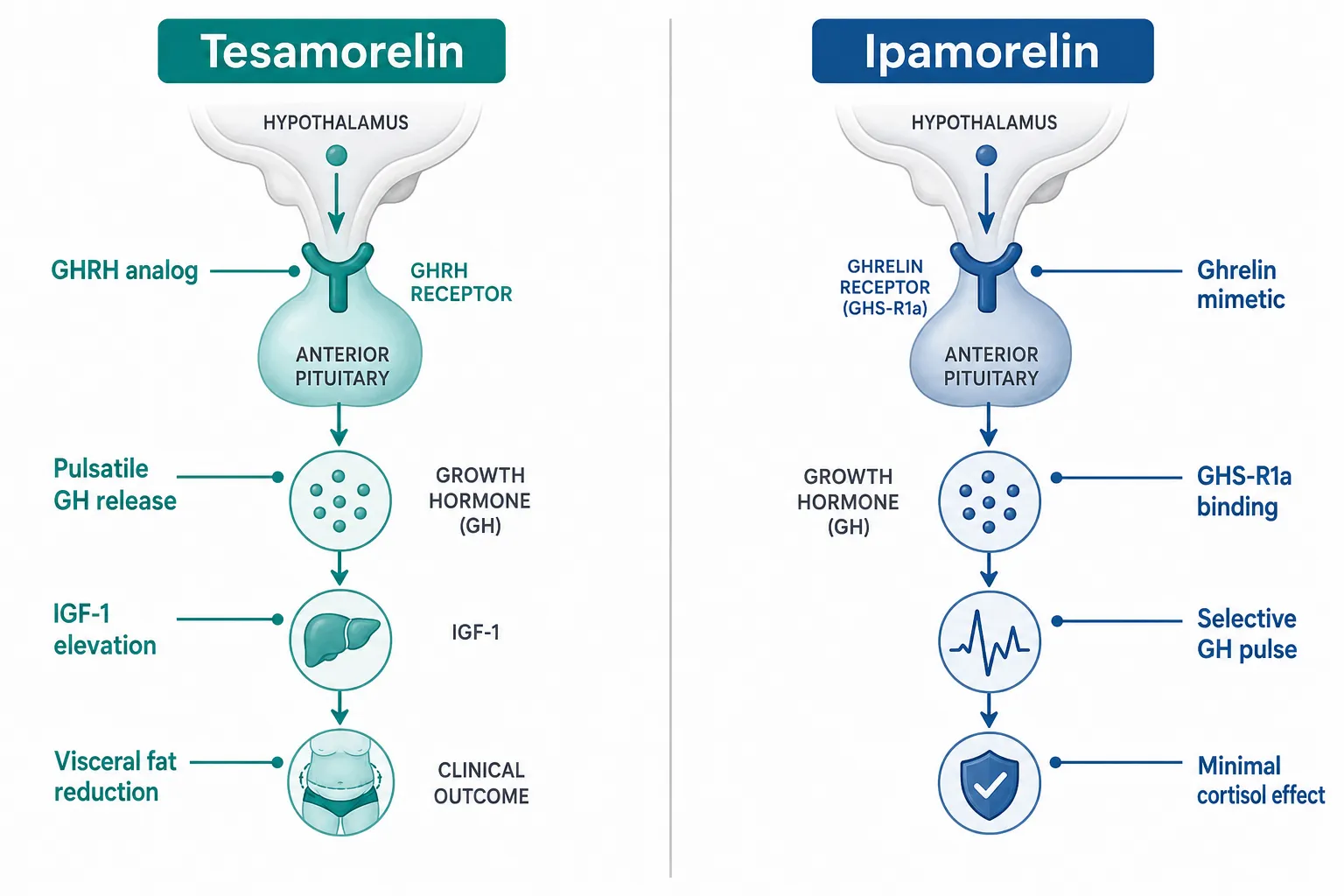
Tesamorelin is a synthetic analog of growth hormone-releasing hormone (GHRH). It binds to GHRH receptors on the anterior pituitary, stimulating pulsatile GH secretion. Its approved clinical use centers on reducing visceral adipose tissue in HIV-positive adults with lipodystrophy, and its metabolic and IGF-1 effects are well-documented in that population. For a deeper look at the science behind this compound, see this overview of what tesa is and the science behind it.

Ipamorelin, by contrast, is a selective growth hormone secretagogue receptor agonist (GHS-R1a), a ghrelin mimetic. It triggers GH release through a separate receptor pathway and is noted in preclinical literature for producing relatively selective GH pulses with minimal impact on cortisol or prolactin compared to earlier secretagogues.

Tesamorelin and Ipamorelin: Two Different Mechanisms on the Same Axis

The table below summarizes the key mechanistic distinctions:

Feature Tesamorelin Ipamorelin
Receptor target GHRH receptor GHS-R1a (ghrelin receptor)
Mechanism class GHRH analog Ghrelin mimetic
Regulatory status FDA-approved (limited indication) Research use only
Primary studied effect Visceral fat reduction, IGF-1 elevation Selective GH pulse stimulation
Cortisol/prolactin impact Minimal in approved studies Low relative to older GHS compounds

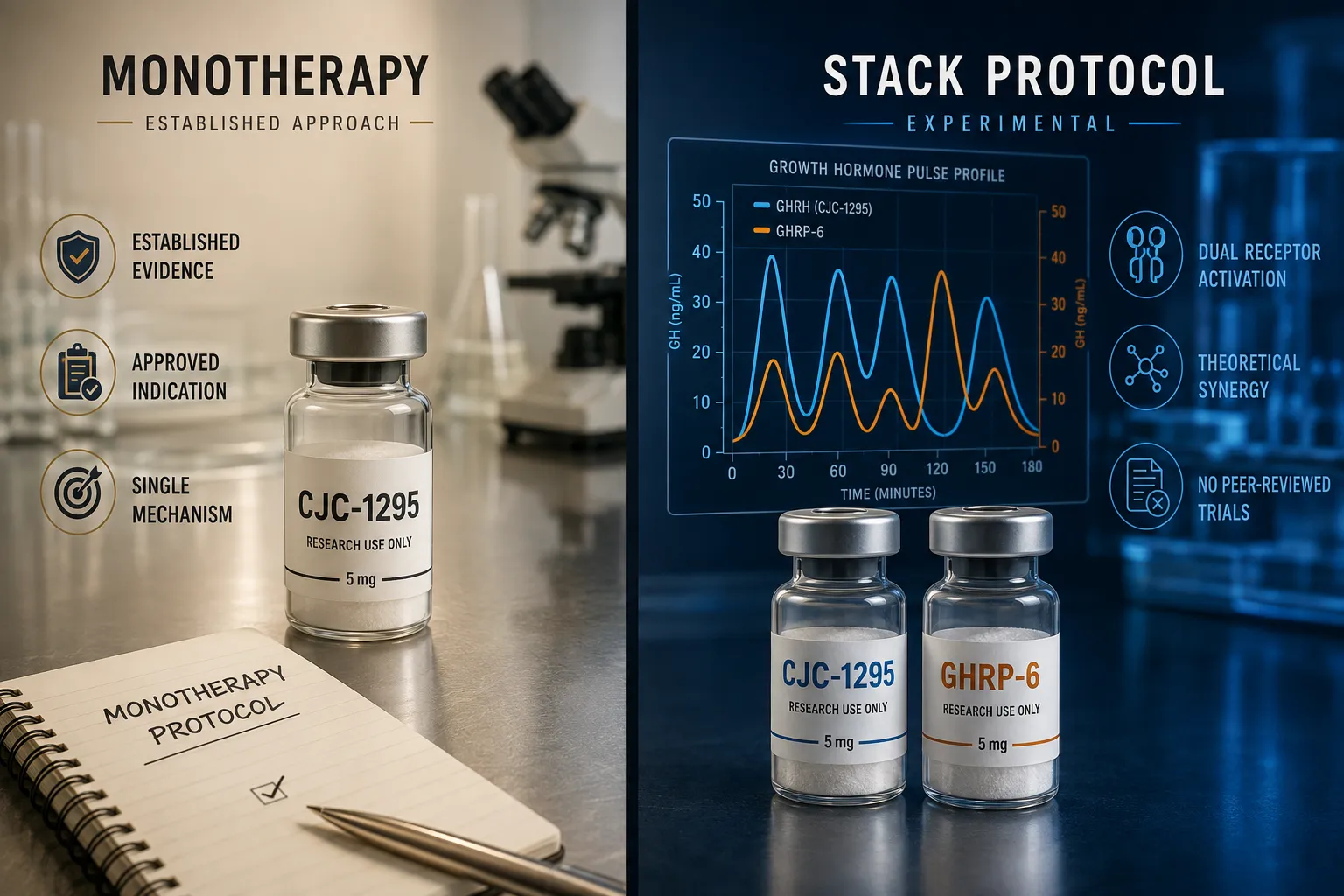
Because the two compounds act at distinct receptor sites, researchers theorize that co-administration could produce additive or synergistic GH stimulation, engaging both the GHRH and ghrelin pathways simultaneously. This is the core rationale behind studying them as a stack.

How Researchers Use Tesamorelin and Ipamorelin Together vs Separately in Study Design

When designing a GH-axis study, the first methodological question is whether the research question requires isolating a single mechanism or probing pathway interactions. This is where the choice between monotherapy and combination protocols becomes a scientific decision, not a preference.

Monotherapy Research: The Established Standard

Tesamorelin monotherapy has the strongest evidentiary foundation. Studies in HIV-associated lipodystrophy populations have documented reductions in hepatic fat, improvements in triglyceride profiles, and measurable IGF-1 changes. Researchers working in metabolic health contexts often use tesa as a comparator anchor precisely because its effects are quantifiable against a known baseline.

Ipamorelin monotherapy, while lacking approved-indication data, has been studied in preclinical and early-phase models for its GH pulse characteristics. Its selectivity profile makes it a useful research tool when investigators want to stimulate GH release without the confounding hormonal noise associated with less selective secretagogues.

"Monotherapy designs allow researchers to attribute observed outcomes to a single compound's mechanism, a methodological clarity that combination protocols inherently sacrifice."

Researchers interested in the broader context of how these compounds fit within metabolic peptide research may find value in reviewing the top research peptides for metabolic health and how tesa compares to other secretagogues in the tesa vs sermorelin analysis.

Combination Research: Theoretical Synergy Without Peer-Reviewed Validation

As of 2026, no peer-reviewed clinical trials have been published validating the tesamorelin-ipamorelin combination. Vendor protocol guides and community forums describe a theoretical synergy based on dual-node GH axis stimulation, but this framing represents hypothesis generation, not established pharmacology.

A reported clinical trial program, sometimes referenced under the informal designation SYNERGY-1, -2, and -3, has been cited in research community discussions, but peer-reviewed results from these programs are not yet available. Researchers should treat any combination protocol claims with the same scrutiny applied to any unvalidated intervention.

Combination Research: Theoretical Synergy Without Peer-Reviewed Validation

For researchers considering multi-peptide formulations, pre-blended formats exist that combine tesa with other GH-axis compounds. The Tesamorelin CJC-1295 Ipamorelin 12mg blend and related reconstitution protocols illustrate how vendors have operationalized combination formats, though these are distinct from peer-reviewed study designs.

Safety Considerations and Research Limitations

When researchers use tesa and ipamorelin together vs separately, safety analysis must account for the absence of combination-specific clinical data.

Extrapolating From GH-Class Risk Profiles

For tesa alone, documented considerations include effects on glucose metabolism, potential IGF-1 elevation beyond target ranges, and liver-related monitoring in metabolic populations. A detailed review of tesa side effects provides a structured reference for these considerations.

For combination use, researchers must extrapolate from:

  • GH-class adverse event profiles observed across secretagogue research broadly
  • Additive IGF-1 effects, which may exceed what either compound produces alone
  • Glucose homeostasis disruption, a known class-level concern with sustained GH elevation
  • Limited safety reporting, since no large-scale combination trial data exists

Designing Responsible Combination Studies

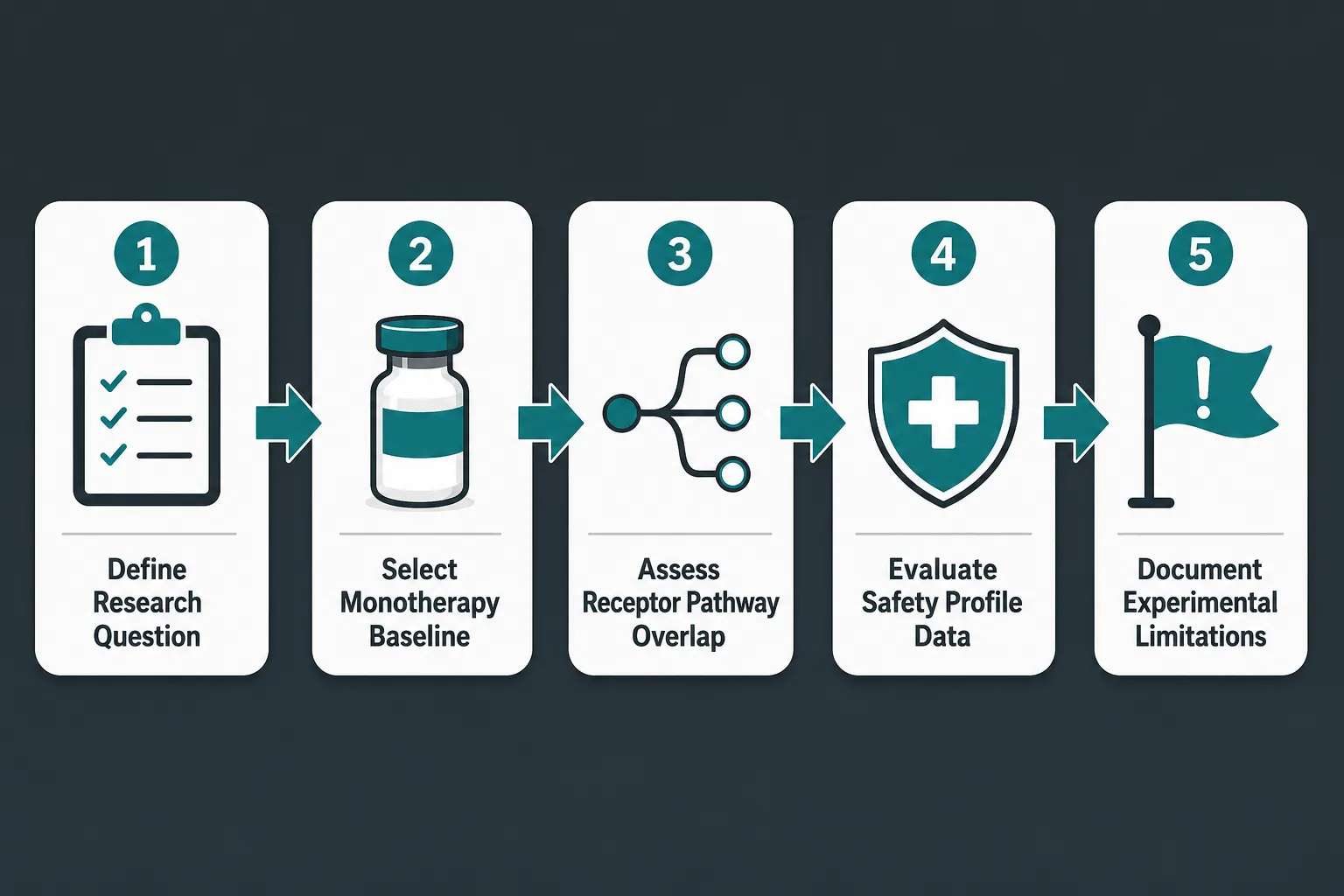
Researchers approaching combination protocols should consider the following framework:

  1. Establish individual compound baselines before introducing the stack
  2. Define clear IGF-1 and glucose monitoring endpoints
  3. Document receptor pathway rationale explicitly in study design
  4. Acknowledge the absence of peer-reviewed combination pharmacokinetic data
  5. Distinguish between vendor-described protocols and validated research methodology

Accurate dosing precision is also critical in any multi-compound design. Tools discussed in resources on peptide calculators for tesa and ipamorelin can support reconstitution accuracy, though they do not substitute for validated protocols.

Designing Responsible Combination Studies

Further reading on this topic: Tesamorelin vs Ipamorelin in Body Composition Research and Tesamorelin and Ipamorelin Mechanism.

Conclusion

The question of how researchers use tesa and ipamorelin together vs separately is ultimately a question about matching study design to the state of available evidence. Tesamorelin monotherapy stands on a foundation of clinical trial data and regulatory approval within a defined indication. Ipamorelin monotherapy offers a mechanistically distinct tool for GH pulse research with a selective profile. The combination, while theoretically grounded in dual-node GH axis stimulation, lacks peer-reviewed validation as of 2026.

Actionable next steps for researchers:

  • Default to monotherapy designs when the research question can be answered with a single compound
  • If combination protocols are pursued, pre-specify the mechanistic rationale and safety monitoring plan in study documentation
  • Distinguish vendor marketing claims from published pharmacology when evaluating the stack
  • Monitor for peer-reviewed outputs from any registered combination trial programs before incorporating combination data into literature reviews
  • Use validated reconstitution and dosing tools to maintain experimental precision regardless of protocol type

The science of GH-axis peptide research is advancing, but rigorous methodology requires acknowledging what the evidence currently supports, and what it does not.

https://www.puretestedpeptides.com/wp-content/uploads/2026/08/how-researchers-use-tesamorelin-and-ipamorelin-together-vs-separately.webp 1024 1536 https://www.puretestedpeptides.com/wp-content/uploads/2026/01/buy-peptides-online.jpg 2026-08-13 13:05:022026-11-21 15:31:31How Researchers Use Tesamorelin and Ipamorelin Together vs Separately
×

Helpful Links

  • My account
  • Cart
  • Checkout
  • Refund and Returns Policy
  • Privacy Policy
  • SMS Privacy Policy
  • Login
  • My Account
  • Logout
  • About
  • Contact
  • COA / Lab Testing
  • Shipping Policy
  • Terms and Conditions
  • Research Use Disclaimer

USA Made Lab Tested Peptides

All products are sold for research, laboratory, or analytical purposes only, and are not for human consumption


Pure Tested Peptides is a chemical supplier. Pure Tested Peptides is not a compounding / chemical compounding facility as defined under 503A of the Federal Food, Drug, and Cosmetic act. Pure Tested Peptides is not an outsourcing facility as defined under 503B of the Federal Food, Drug, and Cosmetic act.

The statements made within this website have not been evaluated by the US Food and Drug Administration. The products we offer are not intended to diagnose, treat, cure or prevent any disease.

Human/Animal Consumption Prohibited. Laboratory/In-Vitro Experimental Use Only

Scroll to top Scroll to top Scroll to top