Call or Text 727-513-9780
  • Shopping Cart Shopping Cart
    0Shopping Cart
Pure Tested Peptides | America's most trusted Peptides for sale online
  • Peptides for sale
    • Oral Peptides for sale
      • Peptide Capsules for sale
      • BPC 157 Capsules 1000mcg
      • SLU-PP-332 Capsules | 1000 mcg
      • 5-Amino-1MQ 50mg Capsules
      • Tesofensine 500mcg
    • All Peptides for sale
    • Peptide Sprays
      • BPC 157 Nasal Spray Kit
      • BPC-157 TB500 Nasal Spray Kit
      • Semax Nasal Spray 10mg
      • Selank – Nasal Spray Kit – 10mg
      • Epithalon 50MG Nasal Spray Kit
      • Ipamorelin 10mg Nasal Spray
      • Klow Nasal Spray (BPC-157 + TB-500 + GHK-Cu + KPV) | 80mg
      • Hulk Nasal Spray Tesa / Ipa Blend 6/3 MG
      • Klow Nasal Spray
      • NAD + 500 mg Nasal Spray
      • PT-141 Nasal Spray Kit
    • GHRH Peptides
      • Ipa Peptides
      • CJC-1295 Peptides
        • CJC-1295 with DAC 5 mg
        • CJC-1295 without DAC 5 mg
        • CJC-1295 Ipa 10mg
      • Tesa Peptides
        • Tesa Peptide
        • Tesa 20 mg
    • GHK-Cu Peptides
      • All GHK-Cu Peptides
      • GHK-Cu 100mg
      • KLOW Peptide Blend – Buy KLOW blend online
    • BPC Peptides
      • All BPC Peptides
      • BPC-157
      • BPC-157 TB-500
      • BPC 157 capsules 1000mcg
    • SLU-PP-332 Peptides
      • All SLU-PP-332 Peptides
      • SLU-PP-332 5mg
    • GLP3 Peptides
    • PT-141 Peptides
      • PT-141 Peptides for sale
      • PT-141 10mg
      • PT-141 Nasal Spray
    • CAG Peptides
      • Lipo-C Peptide Blend
      • CAG 5mg
      • CAG 10mg
    • MOTS-C Peptides
      • MOTS-C Peptides for sale
      • MOTS-c peptide
      • MOTS-c 10mg *6 pack*
    • 5 Amino 1MQ Peptides
      • 5 Amino 1MQ Peptides for sale
      • 5-Amino-1MQ 50mg Capsules
      • 5-Amino-1MQ 5mg
    • Epithalon Peptides
      • Epithalon Peptides for sale
      • Epithalon 10mg
      • Epithalon 50mg
  • Shop
    • GLPs
      • 5-Amino-1MQ 50mg Capsules
      • 5-Amino-1MQ 5mg
      • L-Carnitine 500mg/ml
      • Tesofensine 500mcg
      • SLU-PP-332 5mg
      • MOTS-c 10mg *6 pack*
    • Epithalon & BPC Peptides
      • Epithalon 10mg
      • Epithalon 50mg
      • BPC-157
      • BPC 157 capsules 1000mcg
      • BPC-157 TB-500
      • BPC-157 TB500 Nasal Spray Kit
      • BPC 157 Nasal Spray Kit
    • BPC TB-500 & NAD+ Peptides
      • NAD+ 500 mg
      • KLOW Peptide Blend – Buy KLOW blend online
      • GLOW Peptide Blend
      • TB 500 5mg
      • BPC 157 capsules 1000mcg – Supplement
      • BPC 157 Nasal Spray Kit
      • BPC-157
      • BPC-157 TB500 Nasal Spray Kit
      • BPC-157 TB-500
      • BPC 157 capsules 1000mcg
    • LL-37 Peptide
      • LL-37 10 mg
    • MOTS-C & Selank
      • MOTS-c peptide
      • Selank 10mg
    • GHK Peptides
      • GHK-Cu 100mg
      • GLOW Peptide Blend
      • KLOW Peptide Blend – Buy KLOW blend online
  • COAs
  • Wholesale
    • Wholesale Peptides for sale
  • PTP FAQ
  • Affiliates
    • Selank Peptide: Advanced Pharmacological Mechanisms Underlying Its Anxiolytic and Nootropic Effects in Research
      • 5-Amino-1MQ Peptide: Detailed Mechanisms of NNMT Inhibition and Its Impact on Cellular Metabolism Research
        • MOTS-C Peptide: Unraveling Its Role in Mitochondrial Dynamics and Energy Metabolism Research
          • Epithalon Peptide and Telomerase Regulation: Investigating Its Impact on Cellular Senescence and Lifespan Research Models
            • GLP2-T vs GLP2 Tirz Peptide: Understanding the Naming, Mechanistic Nuances, and Research Implications for Gut Health
      • Peptides and Polypeptides in Modern Pharmacology: What Research on Metoprolol, Prednisone, and Amlodipine Reveals
        • Polypeptide Peptides vs NSAIDs: What Naproxen and Diclofenac Teach Tissue-Repair Researchers About BPC‑157 and TB‑500
          • Peptides and Polypeptides in Endocrine Pharmacology: How GLP-1, GLP-2, and GLP-3 Retatrutide Differ From Classic Drugs Like Prednisone and Amlodipine
          • 5‑Amino‑1MQ Peptide and NNMT Inhibition: How It Compares With Statins Like Atorvastatin in Adipose and Lipid Metabolism Research
      • Enclomiphene, Estrogen Receptor Signaling, and Luteinizing Phase Biology: What Hormone Researchers Should Measure
        • Mesenchymal Stem Cells, BPC‑157, and GHK‑Cu: How Tissue Repair Peptides Compare With Classic NSAIDs Like Naproxen in Injury Models
          • Peptide Calculator Use Cases Beyond Growth Hormone: Working Through GLP‑3 Retatrutide, MOTS‑c, and BPC‑157 Research Dosing
        • Polypeptide Peptides in Endocrine and Metabolic Pharmacology: Lessons From Amlodipine, Prednisone, and Metoprolol
        • Peptides Calculator for Advanced Blends: Worked Examples for Tesamorelin, CJC‑1295, and Ipamorelin Stacks
          • Peptides and Polypeptides in Human Physiology: How Molecular Size Shapes Research Applications
            • Selank Peptide: Advanced Pharmacological Mechanisms Underlying Its Anxiolytic and Nootropic Effects in Research
          • 5-Amino-1MQ Peptide: Detailed Mechanisms of NNMT Inhibition and Its Impact on Cellular Metabolism Research
            • MOTS-C Peptide: Unraveling Its Role in Mitochondrial Dynamics and Energy Metabolism Research
              • Epithalon Peptide and Telomerase Regulation: Investigating Its Impact on Cellular Senescence and Lifespan Research Models
                • GLP2-T vs GLP2 Tirz Peptide: Understanding the Naming, Mechanistic Nuances, and Research Implications for Gut Health
                  • Peptides and Polypeptides in Endocrine Pharmacology: How GLP-1, GLP-2, and GLP-3 Retatrutide Differ From Classic Drugs Like Prednisone and Amlodipine
                    • Polypeptide Peptides vs NSAIDs: What Naproxen and Diclofenac Teach Tissue-Repair Researchers About BPC‑157 and TB‑500
                      • Peptides and Polypeptides in Modern Pharmacology: What Research on Metoprolol, Prednisone, and Amlodipine Reveals
                        • 5‑Amino‑1MQ Peptide and NNMT Inhibition: How It Compares With Statins Like Atorvastatin in Adipose and Lipid Metabolism Research
                        • Enclomiphene, Estrogen Receptor Signaling, and Luteinizing Phase Biology: What Hormone Researchers Should Measure
                        • Mesenchymal Stem Cells, BPC‑157, and GHK‑Cu: How Tissue Repair Peptides Compare With Classic NSAIDs Like Naproxen in Injury Models
                        • Peptide Calculator Use Cases Beyond Growth Hormone: Working Through GLP‑3 Retatrutide, MOTS‑c, and BPC‑157 Research Dosing
                        • Polypeptide Peptides in Endocrine and Metabolic Pharmacology: Lessons From Amlodipine, Prednisone, and Metoprolol
                        • Peptides Calculator for Advanced Blends: Worked Examples for Tesamorelin, CJC‑1295, and Ipamorelin Stacks
                        • Peptides and Polypeptides in Human Physiology: How Molecular Size Shapes Research Applications
                        • Selank Peptide: Advanced Pharmacological Mechanisms Underlying Its Anxiolytic and Nootropic Effects in Research
                        • MOTS-C Peptide: Unraveling Its Role in Mitochondrial Dynamics and Energy Metabolism Research
                        • Peptides and Polypeptides in Modern Pharmacology: What Research on Metoprolol, Prednisone, and Amlodipine Reveals
                        • Peptides and Polypeptides in Endocrine Pharmacology: How GLP-1, GLP-2, and GLP-3 Retatrutide Differ From Classic Drugs Like Prednisone and Amlodipine
                        • 5-Amino-1MQ Peptide: Detailed Mechanisms of NNMT Inhibition and Its Impact on Cellular Metabolism Research
                        • Mesenchymal Stem Cells, BPC‑157, and GHK‑Cu: How Tissue Repair Peptides Compare With Classic NSAIDs Like Naproxen in Injury Models
                        • Peptide Calculator Use Cases Beyond Growth Hormone: Working Through GLP‑3 Retatrutide, MOTS‑c, and BPC‑157 Research Dosing
                        • GLP2-T vs GLP2 Tirz Peptide: Understanding the Naming, Mechanistic Nuances, and Research Implications for Gut Health
                        • Polypeptide Peptides in Endocrine and Metabolic Pharmacology: Lessons From Amlodipine, Prednisone, and Metoprolol
                        • Polypeptide Peptides vs NSAIDs: What Naproxen and Diclofenac Teach Tissue-Repair Researchers About BPC‑157 and TB‑500
                        • Peptides and Polypeptides in Human Physiology: How Molecular Size Shapes Research Applications
                        • Peptides Calculator for Advanced Blends: Worked Examples for Tesamorelin, CJC‑1295, and Ipamorelin Stacks
                        • 5‑Amino‑1MQ Peptide and NNMT Inhibition: How It Compares With Statins Like Atorvastatin in Adipose and Lipid Metabolism Research
                        • Enclomiphene, Estrogen Receptor Signaling, and Luteinizing Phase Biology: What Hormone Researchers Should Measure
                        • Epithalon Peptide and Telomerase Regulation: Investigating Its Impact on Cellular Senescence and Lifespan Research Models
                        • Best research protocol Klow blend
                        • best time to take BPC-157
                        • best time to take DSIP (Delta Sleep Inducing Peptide)
                        • best time to take CJC-1295
                        • best time to take AOD-9604
                        • best time to take Follistatin 344
                        • best time to take Ipamorelin
                        • best time to take MK-677 (Ibutamoren)
                        • best time to take Ligandrol (LGD-4033) — research compound
                        • best time to take Ostarine (MK-2866) — research compound
                        • best time to take GHK-CU
                        • best time to take TB-500
                        • best time to take MOTS-c
                        • best time to take Semax
                        • best time to take RAD-140 (Testolone) — research compound
                        • best time to take Thymosin Alpha-1
                        • best time to take PEG-MGF
                        • Biolife Plasma, Octapharma Plasma, and Research Peptides: How Plasma Donation Labs Differ From Peptide Suppliers
                        • best time to take YK-11 — research compound
                        • best time to take PT-141 (Bremelanotide)
                        • Best research protocol Klow blend
                        • 5-Amino-1MQ and MOTS-C Synergy: Metabolic Signaling, Mitochondria, and Research Design
                        • BPC-157 and TB-500: Investigating Their Combined Effects on Angiogenesis and Cellular Migration in Tissue Repair Models
                        • BPC-157 Peptide: Gut Barrier Function, Inflammation, and Tissue-Recovery Research
                        • 5‑Amino‑1MQ and MOTS‑c Synergy in Metabolic Research: Designing NNMT and Mitochondrial Biogenesis Stacks
                        • CJC-1295 with DAC vs. Without DAC: Half-Life, Release Kinetics, and Research Implications
                        • CJC‑1295 with DAC vs. Without DAC: Expanding on Half‑Life Differences Using Tesamorelin and Ipamorelin Blend Case Studies
                        • Collagen Biology and Copper‑Binding Peptides: How GHK‑Cu, Glow Blend, and Klow Blend Interact with Skin and Connective Tissue
                        • Collagen Biology and Regenerative Peptides: How GHK‑Cu, Glow Blend, and Klow Blend Affect Extracellular Matrix Research
                    • DNA, Telomeres, and Longevity Peptides: Positioning Epithalon and MOTS‑c in Genetic Aging Research
                      • Enclomiphene Citrate: serm Mechanism, Testosterone Research, and Stack Compatibility
                        • Enclomiphene vs Enclomiphene Citrate: Formulation, Bioavailability, and Research Distinctions
                        • Epithalon Peptide Research: Telomerase Activation, Aging, and Pineal Gland Function
                        • Estrogen Receptor Signaling and Enclomiphene: How Selective Modulators Compare with Classic Polypeptide Hormones
                        • GHK-Cu Peptide: Advanced Mechanisms in Extracellular Matrix Remodeling and Wound Healing Research
                        • GHK-Cu Peptide: Collagen Synthesis, Wound Repair, and Skin-Barrier Research Models
                        • GLP-1 vs GLP-3 vs GLP-2: Peptide Classification and Research Applications
                        • GLP-2 Peptide Research Guide: Gut Barrier Function, Nutrient Absorption, and Intestinal Recovery Models
                        • GLP-3 Retatrutide vs. GLP-1 Drugs: What Triple-Agonist Biology Changes in Research Models
                        • Ipamorelin and Tesamorelin Combination: Synergistic GH Secretagogue Research and Dosing Protocols
                        • GLP2 Tirz Peptide: What It Is, Why the Name Exists, and How Researchers Should Interpret It
                        • Klow Blend Peptide Nasal Spray: What the Formulation Is Trying to Do in Cognitive Research
                        • Mitochondria, NNMT Inhibition, and Peptide Modulators: Where MOTS‑c and 5‑Amino‑1MQ Fit in Cellular Energy Research
                        • MOTS-c Peptide: Mitochondrial Function, Energy Metabolism, and What Researchers Measure
                        • MOTS-c vs. 5-Amino-1MQ: Which Metabolic Research Questions Each Compound Actually Answers
                        • Nasal Spray Peptides: Bioavailability, Administration, and Semax/Selank Research Applications
                        • PT-141 Peptide Research: Mechanism of Action and Melanocortin Receptor Signaling
                        • Retatrutide for Research: Mechanism, Structure, and GLP-1/GLP-3 Dual Action
                        • Retatrutide for Obesity and Type 2 Diabetes: What the Latest Trial Data Suggest
                        • Tesofensine Peptide Research: Mechanism, Appetite Suppression, and Neuropeptide Y Pathways
  • Contact
    • Contact Customer Service
    • Text Customer Support
  • About US
  • Shop all peptides
  • Affiliate Program
    • Affiliate Signup
  • Login / Register Login / Register Page Link Login / Register Page Link
  • Click to open the search input field Click to open the search input field Search
  • Menu Menu

Tag Archive for: peptide immunotoxicology

Complement-Dependent Cytotoxicity, Immune Assays, and Safety Considerations in GLP-3, BPC-157, and Novel Peptide Studies

Complement-Dependent Cytotoxicity, Immune Assays, and Safety Considerations in GLP-3, BPC-157, and Novel Peptide Studies

September 13, 2026/0 Comments/in Uncategorized/by

Fewer than one in ten novel peptides entering preclinical development in 2026 has a published, peer-reviewed complement-dependent cytotoxicity (CDC) dataset attached to its safety profile. That gap matters enormously, because complement activation is one of the fastest routes by which an injected or infused peptide can trigger unintended immune cell lysis, inflammation, or vascular disruption. Understanding complement-dependent cytotoxicity, immune assays, and safety considerations in GLP-3, BPC-157, and novel peptide studies is no longer optional for responsible research, it is the foundation of a credible preclinical safety package.

Key Takeaways

  • Complement-dependent cytotoxicity (CDC) is an IgG/IgM-driven effector mechanism that can cause target cell lysis when complement proteins are activated in the presence of a peptide or antibody.
  • Four main assay formats, dye influx, dye release, metabolic, and ATP-luminescence, each measure CDC differently, and choosing the wrong one can produce misleading safety data.
  • Published CDC datasets for BPC-157, GHK-Cu, and MOTS-c are largely absent from the scientific literature as of mid-2026, creating a critical regulatory and safety gap.
  • The U.S. FDA classifies BPC-157 as a Category 2 bulk drug substance and states that insufficient clinical safety information exists to characterize its full safety profile.
  • Researchers and manufacturers should integrate CDC screening into early-stage preclinical batteries, not as a late add-on, and document peptide aggregation state before each assay run.

What Is Complement-Dependent Cytotoxicity and Why It Matters for Peptide Research
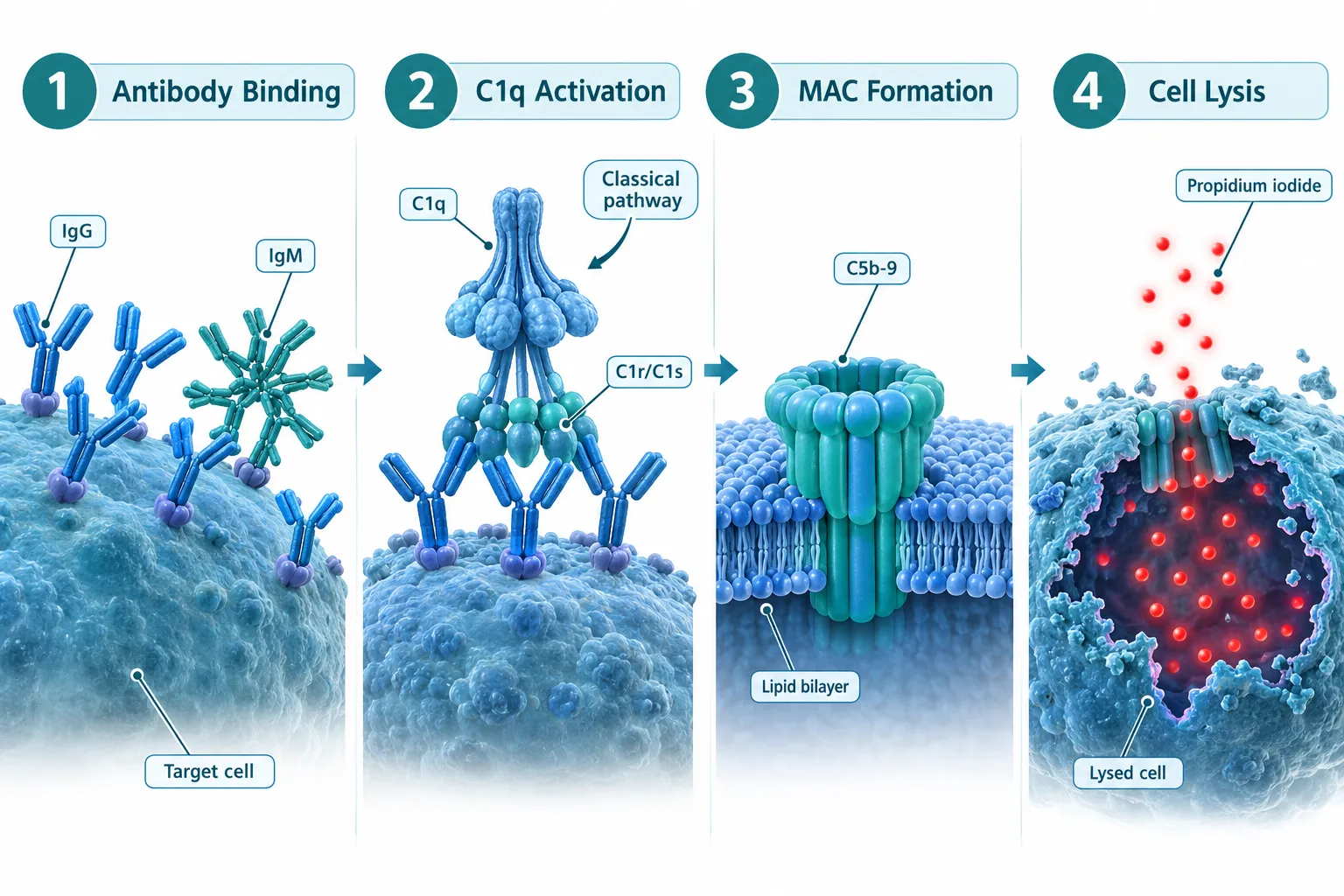
What Is Complement-Dependent Cytotoxicity and Why It Matters for Peptide Research

Complement-dependent cytotoxicity is an effector mechanism of the immune system. When IgG or IgM antibodies bind to a target cell surface, they recruit the C1q protein, triggering a cascade through the classical complement pathway. The end product is the membrane attack complex (MAC), a pore-forming structure that punches through the lipid bilayer and causes osmotic cell lysis.

In the context of peptide research, CDC becomes relevant whenever a synthetic peptide, or the antibodies it induces, interacts with cell surfaces in a way that activates complement. This is not a theoretical concern. Peptides that modulate immune or vascular pathways, including tissue-repair and receptor-targeted candidates, are structurally capable of engaging complement proteins, particularly if they aggregate or form oligomeric structures in solution.

Why aggregation state matters: Aggregated peptide fractions activate complement at significantly lower concentrations than monomeric forms. Before any CDC assay, researchers should characterize the peptide's aggregation state using dynamic light scattering. Skipping this step is one of the most common protocol errors identified in peptide laboratories in 2026.

"Absence of severe toxicity in animal models does not rule out immunogenicity or complement activation risks in humans."

For researchers working with GLP-3 peptide candidates or tissue-repair compounds, this mechanistic background is the starting point for designing a defensible immune safety evaluation.

Complement-Dependent Cytotoxicity, Immune Assays, and Safety Considerations: Assay Formats Compared
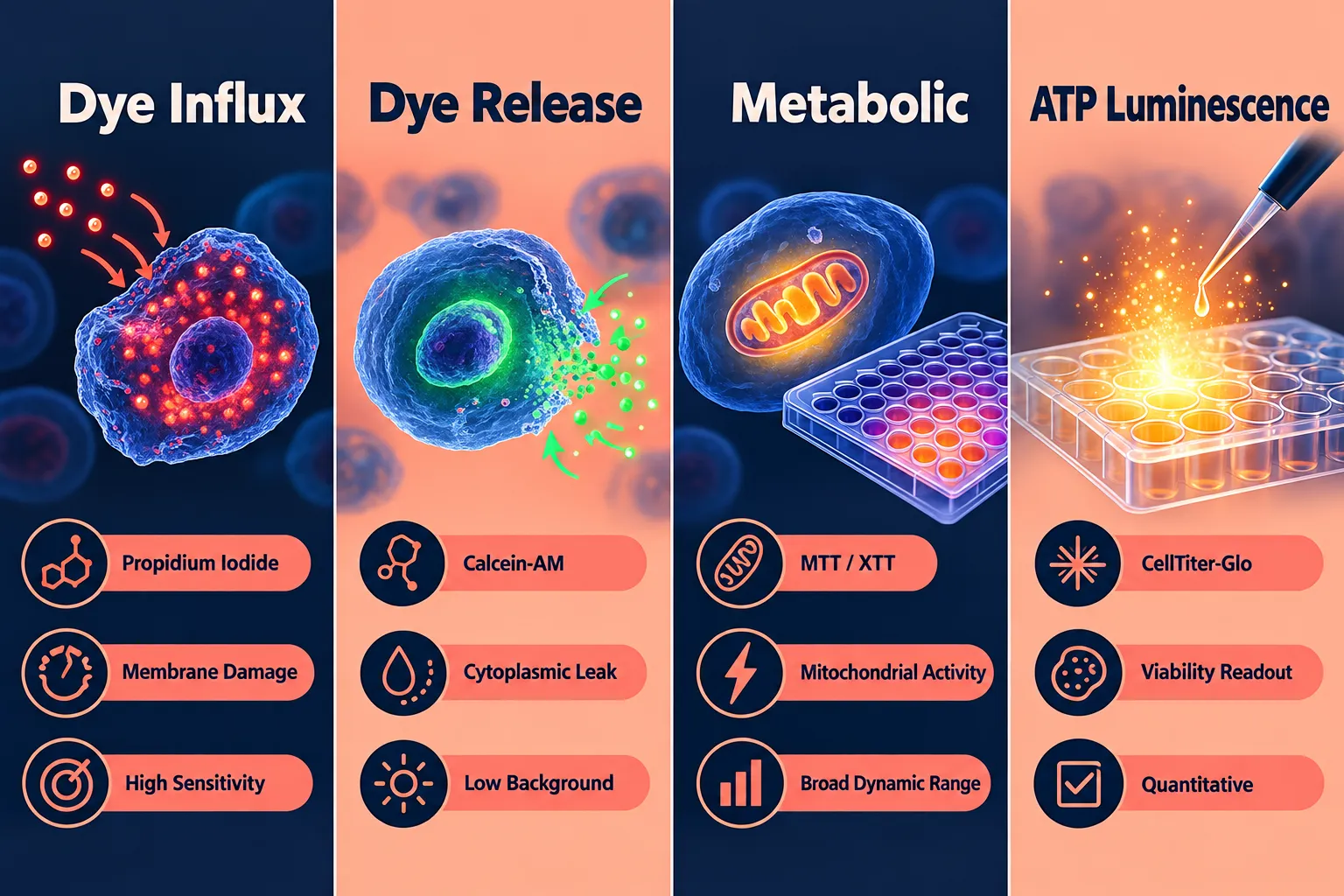
Complement-Dependent Cytotoxicity, Immune Assays, and Safety Considerations: Assay Formats Compared

Not all CDC assays are equal. A 2026 systematic review of major assay formats demonstrated that the choice of readout method can significantly alter how complement-mediated killing is quantified. The four main categories are:

Assay Format Readout Mechanism Key Strength Key Limitation
Dye Influx Propidium iodide enters lysed cells High sensitivity Background in damaged cells
Dye Release Calcein-AM leaks from cytoplasm Low background noise Requires pre-loading step
Metabolic MTT, XTT, or Alamar Blue activity Broad dynamic range Indirect cell death measure
ATP Luminescence CellTiter-Glo viability signal Quantitative, fast Reagent cost, lysis artifacts

A standardized CDC assay configuration recommended for peptide labs includes:

  1. Target cells expressing the relevant antigen or receptor
  2. Peptide-specific IgG/IgM or the test peptide itself
  3. Fresh rabbit or human serum as complement source (never heat-inactivated for the test condition)
  4. Serum at 10-25% v/v concentration
  5. Incubation at 37 degrees Celsius for 60-120 minutes
  6. Readout via LDH release, propidium iodide uptake, trypan blue exclusion, or luminescence

The essential negative control is heat-inactivated serum. Omitting this control, which destroys complement activity while preserving antibody function, is a frequent and consequential error. The standard cytotoxicity formula used in luminescence-based CDC is: % cytotoxicity = 100 x (1 – E/S), where E is luminescence with the experimental antibody and S is luminescence with serum alone.

For receptor-targeted peptides, the assay cell line must express the relevant receptor. Using a cell line that lacks the target receptor will produce false-negative CDC results, a critical consideration for GLP-3 R peptide constructs and other receptor-specific candidates.

Researchers should also probe both classical and alternative complement pathways using pathway-specific inhibitors: C1q depletion for the classical pathway and Factor D inhibition for the alternative pathway. This mechanistic layering distinguishes true CDC from non-specific cytotoxicity.

Safety Considerations in GLP-3, BPC-157, and Novel Peptide Studies: Regulatory and Data Gaps
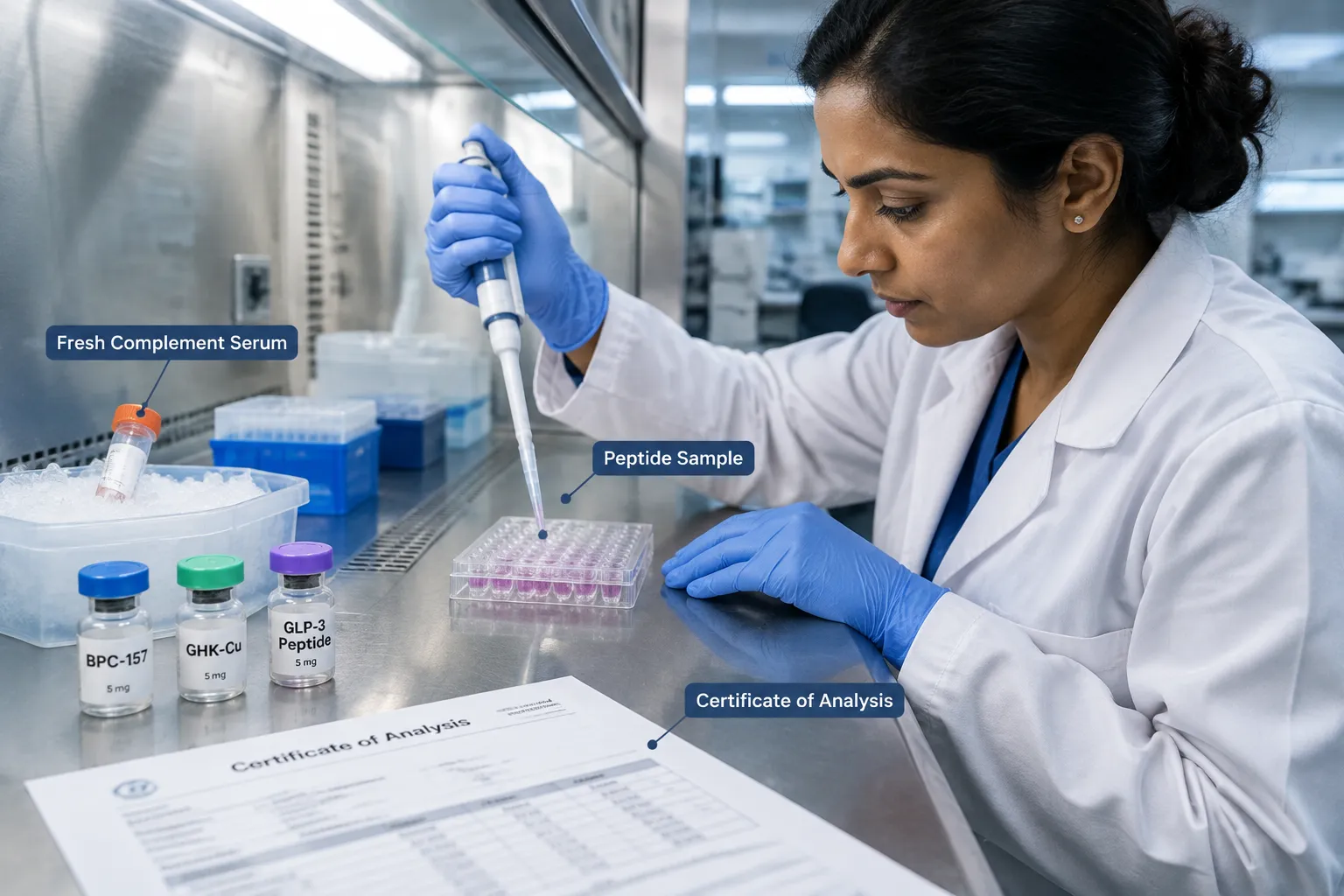
Safety Considerations in GLP-3, BPC-157, and Novel Peptide Studies: Regulatory and Data Gaps

The most pressing safety issue in 2026 is not what the existing CDC data shows, it is what data does not yet exist. Formal, peer-reviewed CDC assay datasets for BPC-157, GHK-Cu, and MOTS-c are largely absent from the published scientific record. This gap directly complicates risk assessment for cosmetic, research, and healing peptide formulations.

BPC-157 regulatory status is particularly instructive. The U.S. FDA Pharmacy Compounding Advisory Committee classifies BPC-157 as a Category 2 bulk drug substance and explicitly states that insufficient clinical safety information exists to characterize the safety profile of BPC-157 free base and BPC-157 acetate. While animal studies in rats and beagle dogs at doses up to 20 mg/kg found no lethal outcomes or organ toxicity on histopathological examination, preclinical safety margins in animals do not translate directly to human immunogenicity risk.

Clinical guidance for healing peptides, including BPC-157 and TB-500, characterizes BPC-157 as having lower theoretical immune risk relative to some other agents but still recommends monitoring for local and systemic infection signs at injection sites. TB-500 use is advised against in transplant recipients due to immune modulation concerns, a reminder that even well-tolerated peptides can pose clinically significant immunologic risks in special populations.

For multi-peptide blends, industry guidance recommends:

  • Running individual component wells alongside the full blend
  • Tracking purity with certificates of analysis for every lot
  • For copper-containing peptides like GHK-Cu, distinguishing copper-specific cytotoxicity from complement-mediated effects with appropriate controls
  • Including excipient-only controls to determine whether formulation vehicles contribute to complement activation

Researchers exploring peptides 101 fundamentals will find that understanding CDC is inseparable from understanding how novel peptide structures interact with innate immune defense systems.

Control structure for a rigorous CDC experiment:

  • Positive control: known complement-activating antibody
  • Negative control: peptide-free vehicle
  • Peptide-alone control: no complement added (isolates direct cytotoxicity)
  • Complement-alone control: detects non-specific lysis

Industry guidance for 2026 is unambiguous: CDC screening should run in parallel with standard cytotoxicity panels from the earliest stages of preclinical development, not as a late-stage add-on. This applies equally to lab-tested peptides entering any formal research protocol and to novel candidates like GLP-3 RT 20mg nasal spray formulations where mucosal complement exposure adds another layer of complexity.

Looking ahead, regulatory authorities and institutional review boards are expected to require standardized CDC and complement-activation panels as part of GLP-grade immunotoxicology packages for any new peptide entering human studies. Industry practice is shifting toward routine complement pathway profiling, aggregation characterization, and harmonized assay formats, particularly aligning luminescence versus dye-influx readouts, so that safety data becomes comparable across laboratories.

Conclusion

Complement-dependent cytotoxicity, immune assays, and safety considerations in GLP-3, BPC-157, and novel peptide studies represent one of the most underdeveloped areas of preclinical peptide science in 2026. The immunology is well understood; the application to specific peptide candidates is not.

Actionable next steps for researchers and manufacturers:

  1. Characterize aggregation state using dynamic light scattering before every CDC assay run, monomeric, oligomeric, and aggregated fractions should be tested separately.
  2. Select the assay format deliberately, luminescence-based ATP readouts offer quantitative precision, while propidium iodide influx provides high sensitivity for membrane damage detection.
  3. Always include heat-inactivated serum as a negative control and complement-alone wells to detect non-specific lysis.
  4. Probe both complement pathways using C1q depletion and Factor D inhibition to distinguish classical from alternative activation.
  5. Close the data gap, any organization working with BPC-157, GHK-Cu, GLP-3 candidates, or tissue-repair peptides should prioritize generating and publishing CDC safety data as part of a complete preclinical immunotoxicology package.

The field is moving toward mandatory complement profiling. Researchers who build these endpoints into their protocols now will be better positioned for regulatory review and will contribute to a safer, more credible peptide research ecosystem.

https://www.puretestedpeptides.com/wp-content/uploads/2026/09/complement-dependent-cytotoxicity-immune-assays-and-safety-considerations-in-glp.webp 1024 1536 https://www.puretestedpeptides.com/wp-content/uploads/2026/01/buy-peptides-online.jpg 2026-09-13 13:04:032026-09-13 13:04:03Complement-Dependent Cytotoxicity, Immune Assays, and Safety Considerations in GLP-3, BPC-157, and Novel Peptide Studies
×

Helpful Links

  • My account
  • Cart
  • Checkout
  • Refund and Returns Policy
  • Privacy Policy
  • SMS Privacy Policy
  • Login
  • My Account
  • Logout

USA Made Lab Tested Peptides

All products are sold for research, laboratory, or analytical purposes only, and are not for human consumption


Pure Tested Peptides is a chemical supplier. Pure Tested Peptides is not a compounding / chemical compounding facility as defined under 503A of the Federal Food, Drug, and Cosmetic act. Pure Tested Peptides is not an outsourcing facility as defined under 503B of the Federal Food, Drug, and Cosmetic act.

The statements made within this website have not been evaluated by the US Food and Drug Administration. The products we offer are not intended to diagnose, treat, cure or prevent any disease.

Human/Animal Consumption Prohibited. Laboratory/In-Vitro Experimental Use Only

Scroll to top Scroll to top Scroll to top