Call or Text 727-513-9780
  • Shopping Cart Shopping Cart
    0Shopping Cart
Pure Tested Peptides | America's most trusted Peptides for sale online
  • Peptides for sale
    • Oral Peptides for sale
      • Peptide Capsules for sale
      • BPC 157 Capsules 1000mcg
      • SLU-PP-332 Capsules | 1000 mcg
      • 5-Amino-1MQ 50mg Capsules
      • Tesofensine 500mcg
    • All Peptides for sale
    • Peptide Sprays
      • BPC 157 Nasal Spray Kit
      • BPC-157 TB500 Nasal Spray Kit
      • Semax Nasal Spray 10mg
      • Selank – Nasal Spray Kit – 10mg
      • Epithalon 50MG Nasal Spray Kit
      • Ipamorelin 10mg Nasal Spray
      • Klow Nasal Spray (BPC-157 + TB-500 + GHK-Cu + KPV) | 80mg
      • Hulk Nasal Spray Tesa / Ipa Blend 6/3 MG
      • Klow Nasal Spray
      • NAD + 500 mg Nasal Spray
      • PT-141 Nasal Spray Kit
    • GHRH Peptides
      • Ipa Peptides
      • CJC-1295 Peptides
        • CJC-1295 with DAC 5 mg
        • CJC-1295 without DAC 5 mg
        • CJC-1295 Ipa 10mg
      • Tesa Peptides
        • Tesa Peptide
        • Tesa 20 mg
    • GHK-Cu Peptides
      • All GHK-Cu Peptides
      • GHK-Cu 100mg
      • KLOW Peptide Blend – Buy KLOW blend online
    • BPC Peptides
      • All BPC Peptides
      • BPC-157
      • BPC-157 TB-500
      • BPC 157 capsules 1000mcg
    • SLU-PP-332 Peptides
      • All SLU-PP-332 Peptides
      • SLU-PP-332 5mg
    • GLP3 Peptides
      • GLP3-R
      • GLP3-R CAG 10mg
      • GLP3-R 20mg
    • PT-141 Peptides
      • PT-141 Peptides for sale
      • PT-141 10mg
      • PT-141 Nasal Spray
    • CAG Peptides
      • Lipo-C Peptide Blend
      • CAG 5mg
      • CAG 10mg
    • MOTS-C Peptides
      • MOTS-C Peptides for sale
      • MOTS-c peptide
      • MOTS-c 10mg *6 pack*
    • 5 Amino 1MQ Peptides
      • 5 Amino 1MQ Peptides for sale
      • 5-Amino-1MQ 50mg Capsules
      • 5-Amino-1MQ 5mg
    • Epithalon Peptides
      • Epithalon Peptides for sale
      • Epithalon 10mg
      • Epithalon 50mg
  • Shop
    • GLPs
      • 5-Amino-1MQ 50mg Capsules
      • 5-Amino-1MQ 5mg
      • GLP3-Reta
      • L-Carnitine 500mg/ml
      • Tesofensine 500mcg
      • SLU-PP-332 5mg
      • MOTS-c 10mg *6 pack*
    • Epithalon & BPC Peptides
      • Epithalon 10mg
      • Epithalon 50mg
      • BPC-157
      • BPC 157 capsules 1000mcg
      • BPC-157 TB-500
      • BPC-157 TB500 Nasal Spray Kit
      • BPC 157 Nasal Spray Kit
    • BPC TB-500 & NAD+ Peptides
      • NAD+ 500 mg
      • KLOW Peptide Blend – Buy KLOW blend online
      • GLOW Peptide Blend
      • TB 500 5mg
      • BPC 157 capsules 1000mcg – Supplement
      • BPC 157 Nasal Spray Kit
      • BPC-157
      • BPC-157 TB500 Nasal Spray Kit
      • BPC-157 TB-500
      • BPC 157 capsules 1000mcg
    • LL-37 Peptide
      • LL-37 10 mg
    • MOTS-C & Selank
      • MOTS-c peptide
      • Selank 10mg
    • GHK Peptides
      • GHK-Cu 100mg
      • GLOW Peptide Blend
      • KLOW Peptide Blend – Buy KLOW blend online
  • COAs
  • Wholesale
    • Wholesale Peptides for sale
  • PTP FAQ
  • Affiliates
    • Selank Peptide: Advanced Pharmacological Mechanisms Underlying Its Anxiolytic and Nootropic Effects in Research
      • 5-Amino-1MQ Peptide: Detailed Mechanisms of NNMT Inhibition and Its Impact on Cellular Metabolism Research
        • MOTS-C Peptide: Unraveling Its Role in Mitochondrial Dynamics and Energy Metabolism Research
          • Epithalon Peptide and Telomerase Regulation: Investigating Its Impact on Cellular Senescence and Lifespan Research Models
            • GLP2-T vs GLP2 Tirz Peptide: Understanding the Naming, Mechanistic Nuances, and Research Implications for Gut Health
      • Peptides and Polypeptides in Modern Pharmacology: What Research on Metoprolol, Prednisone, and Amlodipine Reveals
        • Polypeptide Peptides vs NSAIDs: What Naproxen and Diclofenac Teach Tissue-Repair Researchers About BPC‑157 and TB‑500
          • Peptides and Polypeptides in Endocrine Pharmacology: How GLP-1, GLP-2, and GLP-3 Retatrutide Differ From Classic Drugs Like Prednisone and Amlodipine
          • 5‑Amino‑1MQ Peptide and NNMT Inhibition: How It Compares With Statins Like Atorvastatin in Adipose and Lipid Metabolism Research
      • Enclomiphene, Estrogen Receptor Signaling, and Luteinizing Phase Biology: What Hormone Researchers Should Measure
        • Mesenchymal Stem Cells, BPC‑157, and GHK‑Cu: How Tissue Repair Peptides Compare With Classic NSAIDs Like Naproxen in Injury Models
          • Peptide Calculator Use Cases Beyond Growth Hormone: Working Through GLP‑3 Retatrutide, MOTS‑c, and BPC‑157 Research Dosing
        • Polypeptide Peptides in Endocrine and Metabolic Pharmacology: Lessons From Amlodipine, Prednisone, and Metoprolol
        • Peptides Calculator for Advanced Blends: Worked Examples for Tesamorelin, CJC‑1295, and Ipamorelin Stacks
          • Peptides and Polypeptides in Human Physiology: How Molecular Size Shapes Research Applications
            • Selank Peptide: Advanced Pharmacological Mechanisms Underlying Its Anxiolytic and Nootropic Effects in Research
          • 5-Amino-1MQ Peptide: Detailed Mechanisms of NNMT Inhibition and Its Impact on Cellular Metabolism Research
            • MOTS-C Peptide: Unraveling Its Role in Mitochondrial Dynamics and Energy Metabolism Research
              • Epithalon Peptide and Telomerase Regulation: Investigating Its Impact on Cellular Senescence and Lifespan Research Models
                • GLP2-T vs GLP2 Tirz Peptide: Understanding the Naming, Mechanistic Nuances, and Research Implications for Gut Health
                  • Peptides and Polypeptides in Endocrine Pharmacology: How GLP-1, GLP-2, and GLP-3 Retatrutide Differ From Classic Drugs Like Prednisone and Amlodipine
                    • Polypeptide Peptides vs NSAIDs: What Naproxen and Diclofenac Teach Tissue-Repair Researchers About BPC‑157 and TB‑500
                      • Peptides and Polypeptides in Modern Pharmacology: What Research on Metoprolol, Prednisone, and Amlodipine Reveals
                        • 5‑Amino‑1MQ Peptide and NNMT Inhibition: How It Compares With Statins Like Atorvastatin in Adipose and Lipid Metabolism Research
                        • Enclomiphene, Estrogen Receptor Signaling, and Luteinizing Phase Biology: What Hormone Researchers Should Measure
                        • Mesenchymal Stem Cells, BPC‑157, and GHK‑Cu: How Tissue Repair Peptides Compare With Classic NSAIDs Like Naproxen in Injury Models
                        • Peptide Calculator Use Cases Beyond Growth Hormone: Working Through GLP‑3 Retatrutide, MOTS‑c, and BPC‑157 Research Dosing
                        • Polypeptide Peptides in Endocrine and Metabolic Pharmacology: Lessons From Amlodipine, Prednisone, and Metoprolol
                        • Peptides Calculator for Advanced Blends: Worked Examples for Tesamorelin, CJC‑1295, and Ipamorelin Stacks
                        • Peptides and Polypeptides in Human Physiology: How Molecular Size Shapes Research Applications
                        • Selank Peptide: Advanced Pharmacological Mechanisms Underlying Its Anxiolytic and Nootropic Effects in Research
                        • MOTS-C Peptide: Unraveling Its Role in Mitochondrial Dynamics and Energy Metabolism Research
                        • Peptides and Polypeptides in Modern Pharmacology: What Research on Metoprolol, Prednisone, and Amlodipine Reveals
                        • Peptides and Polypeptides in Endocrine Pharmacology: How GLP-1, GLP-2, and GLP-3 Retatrutide Differ From Classic Drugs Like Prednisone and Amlodipine
                        • 5-Amino-1MQ Peptide: Detailed Mechanisms of NNMT Inhibition and Its Impact on Cellular Metabolism Research
                        • Mesenchymal Stem Cells, BPC‑157, and GHK‑Cu: How Tissue Repair Peptides Compare With Classic NSAIDs Like Naproxen in Injury Models
                        • Peptide Calculator Use Cases Beyond Growth Hormone: Working Through GLP‑3 Retatrutide, MOTS‑c, and BPC‑157 Research Dosing
                        • GLP2-T vs GLP2 Tirz Peptide: Understanding the Naming, Mechanistic Nuances, and Research Implications for Gut Health
                        • Polypeptide Peptides in Endocrine and Metabolic Pharmacology: Lessons From Amlodipine, Prednisone, and Metoprolol
                        • Polypeptide Peptides vs NSAIDs: What Naproxen and Diclofenac Teach Tissue-Repair Researchers About BPC‑157 and TB‑500
                        • Peptides and Polypeptides in Human Physiology: How Molecular Size Shapes Research Applications
                        • Peptides Calculator for Advanced Blends: Worked Examples for Tesamorelin, CJC‑1295, and Ipamorelin Stacks
                        • 5‑Amino‑1MQ Peptide and NNMT Inhibition: How It Compares With Statins Like Atorvastatin in Adipose and Lipid Metabolism Research
                        • Enclomiphene, Estrogen Receptor Signaling, and Luteinizing Phase Biology: What Hormone Researchers Should Measure
                        • Epithalon Peptide and Telomerase Regulation: Investigating Its Impact on Cellular Senescence and Lifespan Research Models
                        • Best research protocol Klow blend
                        • best time to take BPC-157
                        • best time to take DSIP (Delta Sleep Inducing Peptide)
                        • best time to take CJC-1295
                        • best time to take AOD-9604
                        • best time to take Follistatin 344
                        • best time to take Ipamorelin
                        • best time to take MK-677 (Ibutamoren)
                        • best time to take Ligandrol (LGD-4033) — research compound
                        • best time to take Ostarine (MK-2866) — research compound
                        • best time to take GHK-CU
                        • best time to take TB-500
                        • best time to take MOTS-c
                        • best time to take Semax
                        • best time to take RAD-140 (Testolone) — research compound
                        • best time to take Thymosin Alpha-1
                        • best time to take PEG-MGF
                        • Biolife Plasma, Octapharma Plasma, and Research Peptides: How Plasma Donation Labs Differ From Peptide Suppliers
                        • best time to take YK-11 — research compound
                        • best time to take PT-141 (Bremelanotide)
                        • Best research protocol Klow blend
                        • 5-Amino-1MQ and MOTS-C Synergy: Metabolic Signaling, Mitochondria, and Research Design
                        • BPC-157 and TB-500: Investigating Their Combined Effects on Angiogenesis and Cellular Migration in Tissue Repair Models
                        • BPC-157 Peptide: Gut Barrier Function, Inflammation, and Tissue-Recovery Research
                        • 5‑Amino‑1MQ and MOTS‑c Synergy in Metabolic Research: Designing NNMT and Mitochondrial Biogenesis Stacks
                        • CJC-1295 with DAC vs. Without DAC: Half-Life, Release Kinetics, and Research Implications
                        • CJC‑1295 with DAC vs. Without DAC: Expanding on Half‑Life Differences Using Tesamorelin and Ipamorelin Blend Case Studies
                        • Collagen Biology and Copper‑Binding Peptides: How GHK‑Cu, Glow Blend, and Klow Blend Interact with Skin and Connective Tissue
                        • Collagen Biology and Regenerative Peptides: How GHK‑Cu, Glow Blend, and Klow Blend Affect Extracellular Matrix Research
                    • DNA, Telomeres, and Longevity Peptides: Positioning Epithalon and MOTS‑c in Genetic Aging Research
                      • Enclomiphene Citrate: serm Mechanism, Testosterone Research, and Stack Compatibility
                        • Enclomiphene vs Enclomiphene Citrate: Formulation, Bioavailability, and Research Distinctions
                        • Epithalon Peptide Research: Telomerase Activation, Aging, and Pineal Gland Function
                        • Estrogen Receptor Signaling and Enclomiphene: How Selective Modulators Compare with Classic Polypeptide Hormones
                        • GHK-Cu Peptide: Advanced Mechanisms in Extracellular Matrix Remodeling and Wound Healing Research
                        • GHK-Cu Peptide: Collagen Synthesis, Wound Repair, and Skin-Barrier Research Models
                        • GLP-1 vs GLP-3 vs GLP-2: Peptide Classification and Research Applications
                        • GLP-2 Peptide Research Guide: Gut Barrier Function, Nutrient Absorption, and Intestinal Recovery Models
                        • GLP-3 Retatrutide vs. GLP-1 Drugs: What Triple-Agonist Biology Changes in Research Models
                        • Ipamorelin and Tesamorelin Combination: Synergistic GH Secretagogue Research and Dosing Protocols
                        • GLP2 Tirz Peptide: What It Is, Why the Name Exists, and How Researchers Should Interpret It
                        • Klow Blend Peptide Nasal Spray: What the Formulation Is Trying to Do in Cognitive Research
                        • Mitochondria, NNMT Inhibition, and Peptide Modulators: Where MOTS‑c and 5‑Amino‑1MQ Fit in Cellular Energy Research
                        • MOTS-c Peptide: Mitochondrial Function, Energy Metabolism, and What Researchers Measure
                        • MOTS-c vs. 5-Amino-1MQ: Which Metabolic Research Questions Each Compound Actually Answers
                        • Nasal Spray Peptides: Bioavailability, Administration, and Semax/Selank Research Applications
                        • PT-141 Peptide Research: Mechanism of Action and Melanocortin Receptor Signaling
                        • Retatrutide for Research: Mechanism, Structure, and GLP-1/GLP-3 Dual Action
                        • Retatrutide for Obesity and Type 2 Diabetes: What the Latest Trial Data Suggest
                        • Tesofensine Peptide Research: Mechanism, Appetite Suppression, and Neuropeptide Y Pathways
  • Contact
    • Contact Customer Service
    • Text Customer Support
  • About US
  • Shop all peptides
  • Affiliate Program
    • Affiliate Signup
  • Login / Register Login / Register Page Link Login / Register Page Link
  • Click to open the search input field Click to open the search input field Search
  • Menu Menu

Tag Archive for: peptides in modern research

Peptides in Modern Research: From Simple Chains to Complex Polypeptide Hormones

Peptides in Modern Research: From Simple Chains to Complex Polypeptide Hormones

August 15, 2026/0 Comments/in Uncategorized/by

More than 80 peptide-based drugs have received FDA approval to date, covering everything from endocrinology to oncology, and in 2026 alone, the pipeline holds over 150 additional candidates in active clinical development. That scale of activity signals something fundamental: the study of peptides in modern research, from simple chains to complex polypeptide hormones, has moved from a niche biochemical pursuit to one of the most productive frontiers in science.

Key Takeaways

  • Peptides range from two-amino-acid dipeptides to large, folded polypeptide hormones, and their size directly shapes their biological function and research utility.
  • The FDA approved oral semaglutide for chronic weight management in late 2025, and orforglipron followed in April 2026, both driven by polypeptide hormone biology.
  • Research compounds such as BPC-157, GHK-Cu, MOTS-c, and 5-Amino-1MQ represent distinct peptide classes with different mechanisms and experimental profiles.
  • Regulatory policy shifted in 2026, with 12 peptides removed from the FDA's restricted Category 2 compounding list, reshaping access for research applications.
  • Purity and sourcing quality remain critical variables in any peptide research program.

Classifying Peptides: Size, Structure, and Function
Classifying Peptides: Size, Structure, and Function

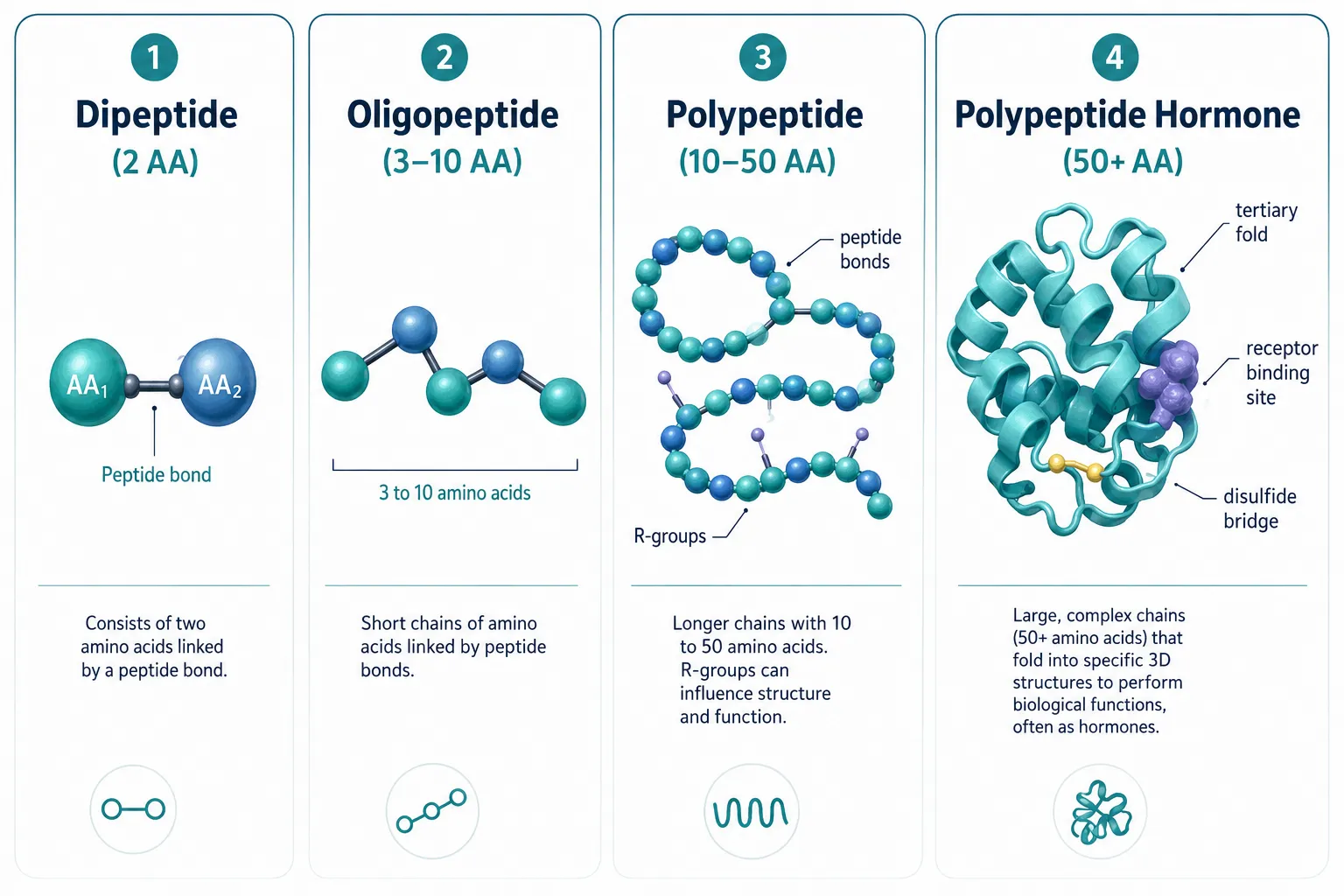
Understanding peptides in modern research, from simple chains to complex polypeptide hormones, starts with a clear classification framework. Not all peptides are alike. Their length, folding behavior, and receptor interactions differ significantly, and those differences determine what each compound can do in a research model.

Peptide size categories at a glance:

Category Amino Acid Count Examples
Dipeptide 2 Carnosine
Oligopeptide 3-10 BPC-157 fragment analogs
Polypeptide 10-50 GHK-Cu, MOTS-c
Polypeptide Hormone 50+ Semaglutide, PTH analogs

Short peptides, those with fewer than ten amino acids, tend to be more stable, easier to synthesize, and simpler to study in isolated cellular models. Longer polypeptides and hormone analogs introduce complexity: tertiary folding, disulfide bridges, and receptor-binding domains that require more sophisticated handling and storage protocols.

For a deeper look at how molecular size shapes experimental design, the article on peptides and polypeptides in modern research: how molecular size shapes function, stability, and experimental design provides a detailed structural breakdown.

"Peptide length is not just a chemical detail, it is a primary determinant of how a compound behaves in biological systems, how it is stored, and how it is interpreted in research data."

Key Research Peptide Classes in 2026
Key Research Peptide Classes in 2026

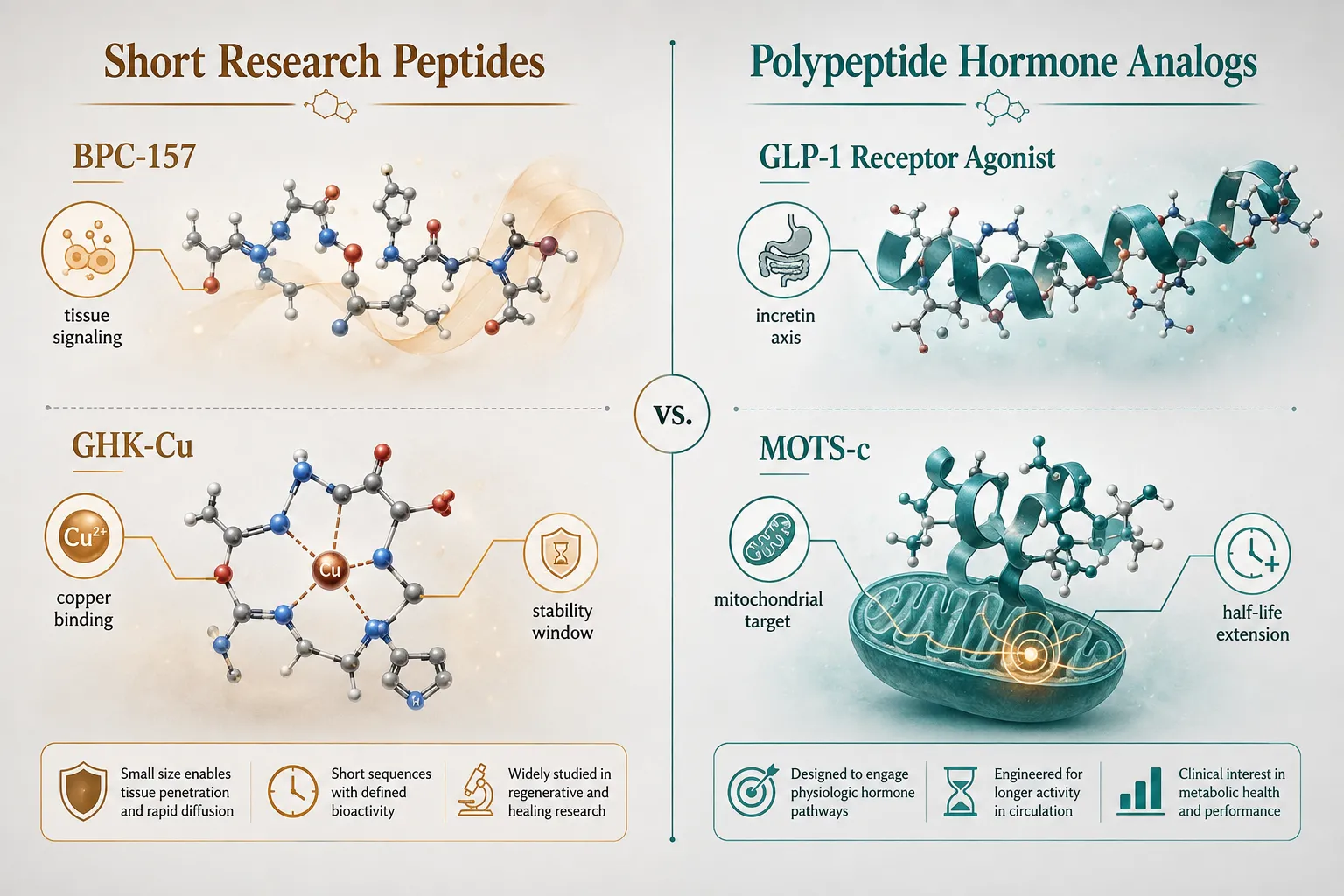
The landscape of peptides in modern research, from simple chains to complex polypeptide hormones, now spans several distinct compound classes. Each class serves different experimental goals.

Short and Mid-Length Research Peptides

BPC-157 is a synthetic pentadecapeptide derived from a gastric protein sequence. It has been studied extensively in tissue and wound models. Researchers interested in its documented profile can consult the BPC-157 core peptides documentation first research guide for a structured overview of its experimental applications.

GHK-Cu is a copper-binding tripeptide that has attracted attention in skin, collagen, and tissue research. Its copper-complex chemistry gives it unique stability considerations. The GHK-Cu peptide: copper complex chemistry, research stability, and lab use considerations article covers the handling nuances relevant to lab settings.

Mitochondrial Peptides

MOTS-c and 5-Amino-1MQ represent a newer class of metabolically active research compounds. MOTS-c is a mitochondria-derived peptide that influences insulin sensitivity and energy metabolism pathways. 5-Amino-1MQ is a small-molecule NNMT inhibitor often studied alongside MOTS-c in adiposity models. Their combined profile is explored in the article on 5-Amino-1MQ and MOTS-c synergy: how mitochondrial peptides target adiposity and insulin resistance in experimental models.

Polypeptide Hormone Analogs

This is the most clinically advanced category. GLP-1 receptor agonists such as semaglutide and dulaglutide are structurally engineered polypeptide hormones designed to mimic and extend the action of endogenous incretin hormones. Retatrutide, a triple agonist targeting GLP-1, GIP, and glucagon receptors, represents the next generation of multi-target hormone-mimetic design.

Emerging compounds like GLP-3 and GLP-2-T are also entering research discussions, reflecting how the incretin hormone family continues to expand as a research target. For context on how these naming conventions and compound categories are evolving, the GLP-2-T peptide and GLP-2 Tirz peptide: naming confusion, product labels, and research interpretation article addresses common points of confusion.

Regulatory Shifts and the Research Pipeline
Regulatory Shifts and the Research Pipeline

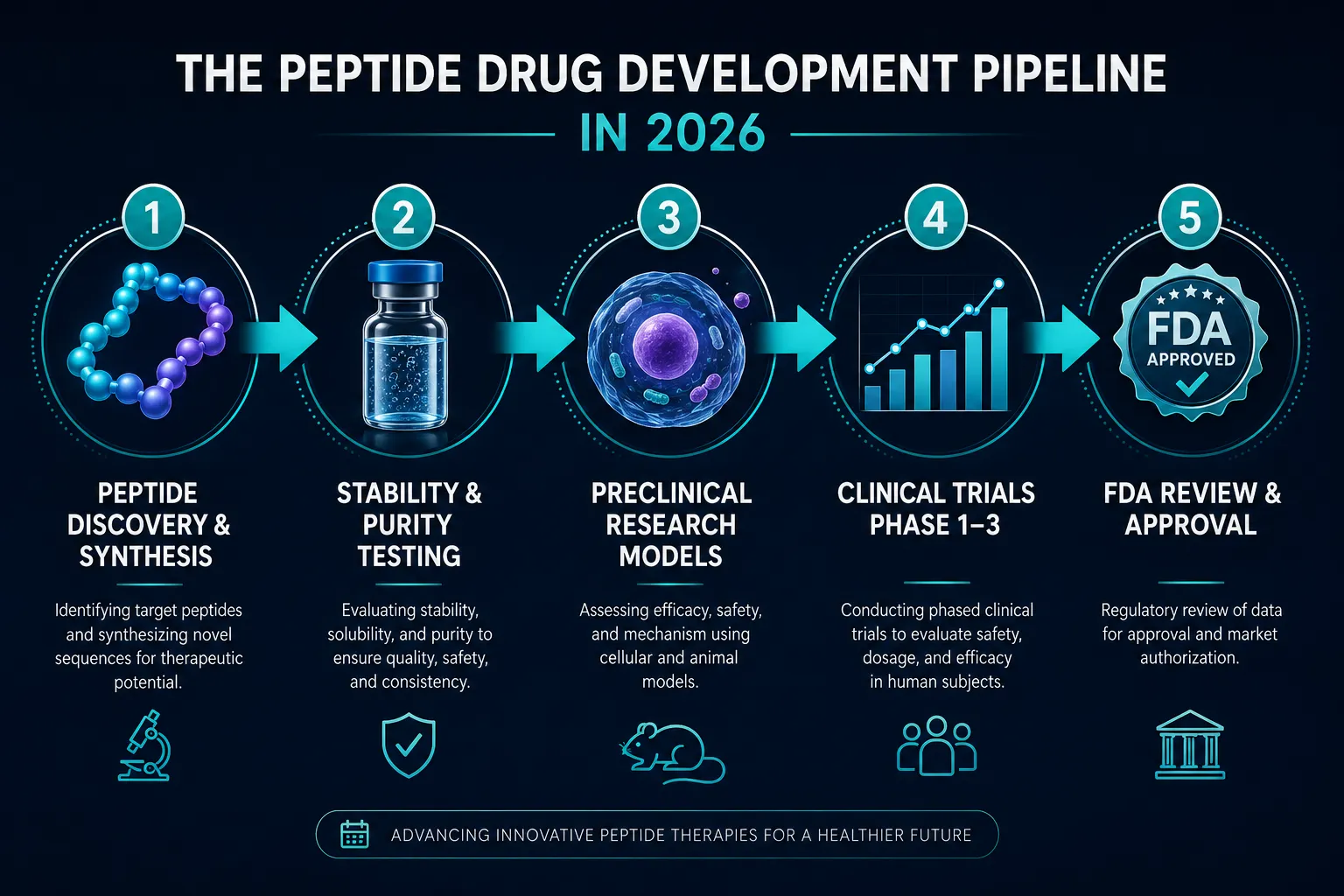
The regulatory environment surrounding peptides in modern research, from simple chains to complex polypeptide hormones, changed materially in 2026. In February 2026, HHS announced that roughly 14 of 19 peptides on the FDA's restricted Category 2 compounding list would be returned to Category 1 status. By April 23, 2026, the FDA formally removed 12 peptides from that restricted list following Federal Register notices issued April 15-16.

However, compounds including BPC-157 and TB-500 remained on the restricted list and were scheduled for review by the FDA Peptide Compounding Advisory Committee in July 2026. These deliberations reflect the ongoing tension between research access and consumer safety in the compounding space.

On the clinical side, several milestones defined the period:

  • Oral semaglutide (25 mg) was approved in December 2025 for chronic weight management, extending polypeptide hormone therapy beyond injectables.
  • Orforglipron (Foundayo) was approved April 1, 2026, as the first oral, non-peptide GLP-1 receptor agonist, a product directly enabled by decades of polypeptide hormone biology research.
  • Palopegteriparatide (Yorvipath), a PEGylated parathyroid hormone prodrug, was approved in 2024 as the first treatment specifically for hypoparathyroidism, illustrating how complex polypeptide engineering enables long-acting endocrine therapies.
  • A peptide-based radiopharmaceutical was among the landmark approvals in Q1 2026, reflecting the growing use of conjugated peptides as diagnostic imaging agents.

Seven Phase 3 trial readouts are expected across 2026 in type 2 diabetes, sleep apnea, liver disease, and cardiovascular outcomes, most driven by incretin and hormone-mimetic peptide analogs.

For researchers evaluating metabolic peptides, the top 5 research peptides for metabolic health: an updated buyer's guide offers a curated overview of compounds with the strongest current research profiles.

Conclusion

The field of peptides in modern research, from simple chains to complex polypeptide hormones, is advancing on multiple fronts simultaneously. Short peptides like BPC-157 and GHK-Cu continue to generate data in tissue and cellular models. Mid-length compounds like MOTS-c are opening new windows into mitochondrial biology. And large polypeptide hormone analogs are reshaping clinical medicine in metabolic disease, endocrinology, and oncology.

Actionable next steps for researchers and professionals:

  1. Audit the peptide compounds in your current research program against the updated 2026 FDA compounding classifications to ensure compliance.
  2. Distinguish clearly between short peptides, polypeptides, and hormone analogs in experimental design, size and structure determine stability, dosing, and data interpretation.
  3. Prioritize purity-verified, lab-tested peptide sources. Compound quality directly affects result reproducibility.
  4. Monitor the FDA Peptide Compounding Advisory Committee outputs from mid-2026 onward, as these will continue to shape access to research compounds.
  5. Explore the growing literature on mitochondrial peptides and multi-agonist hormone analogs, as these represent the most active areas of mechanistic discovery heading into 2027.
https://www.puretestedpeptides.com/wp-content/uploads/2026/08/peptides-in-modern-research-from-simple-chains-to-complex-polypeptide-hormones.webp 1024 1536 https://www.puretestedpeptides.com/wp-content/uploads/2026/01/buy-peptides-online.jpg 2026-08-15 13:04:552026-08-15 13:04:55Peptides in Modern Research: From Simple Chains to Complex Polypeptide Hormones
×

Helpful Links

  • My account
  • Cart
  • Checkout
  • Refund and Returns Policy
  • Privacy Policy
  • SMS Privacy Policy
  • Login
  • My Account
  • Logout

USA Made Lab Tested Peptides

All products are sold for research, laboratory, or analytical purposes only, and are not for human consumption


Pure Tested Peptides is a chemical supplier. Pure Tested Peptides is not a compounding / chemical compounding facility as defined under 503A of the Federal Food, Drug, and Cosmetic act. Pure Tested Peptides is not an outsourcing facility as defined under 503B of the Federal Food, Drug, and Cosmetic act.

The statements made within this website have not been evaluated by the US Food and Drug Administration. The products we offer are not intended to diagnose, treat, cure or prevent any disease.

Human/Animal Consumption Prohibited. Laboratory/In-Vitro Experimental Use Only

Scroll to top Scroll to top Scroll to top