Call or Text 727-513-9780
  • Shopping Cart Shopping Cart
    0Shopping Cart
Pure Tested Peptides | America's most trusted Peptides for sale online
  • Peptides for sale
    • Oral Peptides for sale
      • Peptide Capsules for sale
      • BPC 157 Capsules 1000mcg
      • SLU-PP-332 Capsules | 1000 mcg
      • 5-Amino-1MQ 50mg Capsules
      • Tesofensine 500mcg
    • All Peptides for sale
    • Peptide Sprays
      • BPC 157 Nasal Spray Kit
      • BPC-157 TB500 Nasal Spray Kit
      • Semax Nasal Spray 10mg
      • Selank – Nasal Spray Kit – 10mg
      • Epithalon 50MG Nasal Spray Kit
      • Ipamorelin 10mg Nasal Spray
      • Klow Nasal Spray (BPC-157 + TB-500 + GHK-Cu + KPV) | 80mg
      • Hulk Nasal Spray Tesa / Ipa Blend 6/3 MG
      • Klow Nasal Spray
      • NAD + 500 mg Nasal Spray
      • PT-141 Nasal Spray Kit
    • GHRH Peptides
      • Ipa Peptides
      • CJC-1295 Peptides
        • CJC-1295 with DAC 5 mg
        • CJC-1295 without DAC 5 mg
        • CJC-1295 Ipa 10mg
      • Tesa Peptides
        • Tesa Peptide
        • Tesa 20 mg
    • GHK-Cu Peptides
      • All GHK-Cu Peptides
      • GHK-Cu 100mg
      • KLOW Peptide Blend – Buy KLOW blend online
    • BPC Peptides
      • All BPC Peptides
      • BPC-157
      • BPC-157 TB-500
      • BPC 157 capsules 1000mcg
    • SLU-PP-332 Peptides
      • All SLU-PP-332 Peptides
      • SLU-PP-332 5mg
    • GLP3 Peptides
    • PT-141 Peptides
      • PT-141 Peptides for sale
      • PT-141 10mg
      • PT-141 Nasal Spray
    • CAG Peptides
      • Lipo-C Peptide Blend
      • CAG 5mg
      • CAG 10mg
    • MOTS-C Peptides
      • MOTS-C Peptides for sale
      • MOTS-c peptide
      • MOTS-c 10mg *6 pack*
    • 5 Amino 1MQ Peptides
      • 5 Amino 1MQ Peptides for sale
      • 5-Amino-1MQ 50mg Capsules
      • 5-Amino-1MQ 5mg
    • Epithalon Peptides
      • Epithalon Peptides for sale
      • Epithalon 10mg
      • Epithalon 50mg
  • Shop
    • GLPs
      • 5-Amino-1MQ 50mg Capsules
      • 5-Amino-1MQ 5mg
      • L-Carnitine 500mg/ml
      • Tesofensine 500mcg
      • SLU-PP-332 5mg
      • MOTS-c 10mg *6 pack*
    • Epithalon & BPC Peptides
      • Epithalon 10mg
      • Epithalon 50mg
      • BPC-157
      • BPC 157 capsules 1000mcg
      • BPC-157 TB-500
      • BPC-157 TB500 Nasal Spray Kit
      • BPC 157 Nasal Spray Kit
    • BPC TB-500 & NAD+ Peptides
      • NAD+ 500 mg
      • KLOW Peptide Blend – Buy KLOW blend online
      • GLOW Peptide Blend
      • TB 500 5mg
      • BPC 157 capsules 1000mcg – Supplement
      • BPC 157 Nasal Spray Kit
      • BPC-157
      • BPC-157 TB500 Nasal Spray Kit
      • BPC-157 TB-500
      • BPC 157 capsules 1000mcg
    • LL-37 Peptide
      • LL-37 10 mg
    • MOTS-C & Selank
      • MOTS-c peptide
      • Selank 10mg
    • GHK Peptides
      • GHK-Cu 100mg
      • GLOW Peptide Blend
      • KLOW Peptide Blend – Buy KLOW blend online
  • COAs
  • Wholesale
    • Wholesale Peptides for sale
  • PTP FAQ
  • Affiliates
    • Selank Peptide: Advanced Pharmacological Mechanisms Underlying Its Anxiolytic and Nootropic Effects in Research
      • 5-Amino-1MQ Peptide: Detailed Mechanisms of NNMT Inhibition and Its Impact on Cellular Metabolism Research
        • MOTS-C Peptide: Unraveling Its Role in Mitochondrial Dynamics and Energy Metabolism Research
          • Epithalon Peptide and Telomerase Regulation: Investigating Its Impact on Cellular Senescence and Lifespan Research Models
            • GLP2-T vs GLP2 Tirz Peptide: Understanding the Naming, Mechanistic Nuances, and Research Implications for Gut Health
      • Peptides and Polypeptides in Modern Pharmacology: What Research on Metoprolol, Prednisone, and Amlodipine Reveals
        • Polypeptide Peptides vs NSAIDs: What Naproxen and Diclofenac Teach Tissue-Repair Researchers About BPC‑157 and TB‑500
          • Peptides and Polypeptides in Endocrine Pharmacology: How GLP-1, GLP-2, and GLP-3 Retatrutide Differ From Classic Drugs Like Prednisone and Amlodipine
          • 5‑Amino‑1MQ Peptide and NNMT Inhibition: How It Compares With Statins Like Atorvastatin in Adipose and Lipid Metabolism Research
      • Enclomiphene, Estrogen Receptor Signaling, and Luteinizing Phase Biology: What Hormone Researchers Should Measure
        • Mesenchymal Stem Cells, BPC‑157, and GHK‑Cu: How Tissue Repair Peptides Compare With Classic NSAIDs Like Naproxen in Injury Models
          • Peptide Calculator Use Cases Beyond Growth Hormone: Working Through GLP‑3 Retatrutide, MOTS‑c, and BPC‑157 Research Dosing
        • Polypeptide Peptides in Endocrine and Metabolic Pharmacology: Lessons From Amlodipine, Prednisone, and Metoprolol
        • Peptides Calculator for Advanced Blends: Worked Examples for Tesamorelin, CJC‑1295, and Ipamorelin Stacks
          • Peptides and Polypeptides in Human Physiology: How Molecular Size Shapes Research Applications
            • Selank Peptide: Advanced Pharmacological Mechanisms Underlying Its Anxiolytic and Nootropic Effects in Research
          • 5-Amino-1MQ Peptide: Detailed Mechanisms of NNMT Inhibition and Its Impact on Cellular Metabolism Research
            • MOTS-C Peptide: Unraveling Its Role in Mitochondrial Dynamics and Energy Metabolism Research
              • Epithalon Peptide and Telomerase Regulation: Investigating Its Impact on Cellular Senescence and Lifespan Research Models
                • GLP2-T vs GLP2 Tirz Peptide: Understanding the Naming, Mechanistic Nuances, and Research Implications for Gut Health
                  • Peptides and Polypeptides in Endocrine Pharmacology: How GLP-1, GLP-2, and GLP-3 Retatrutide Differ From Classic Drugs Like Prednisone and Amlodipine
                    • Polypeptide Peptides vs NSAIDs: What Naproxen and Diclofenac Teach Tissue-Repair Researchers About BPC‑157 and TB‑500
                      • Peptides and Polypeptides in Modern Pharmacology: What Research on Metoprolol, Prednisone, and Amlodipine Reveals
                        • 5‑Amino‑1MQ Peptide and NNMT Inhibition: How It Compares With Statins Like Atorvastatin in Adipose and Lipid Metabolism Research
                        • Enclomiphene, Estrogen Receptor Signaling, and Luteinizing Phase Biology: What Hormone Researchers Should Measure
                        • Mesenchymal Stem Cells, BPC‑157, and GHK‑Cu: How Tissue Repair Peptides Compare With Classic NSAIDs Like Naproxen in Injury Models
                        • Peptide Calculator Use Cases Beyond Growth Hormone: Working Through GLP‑3 Retatrutide, MOTS‑c, and BPC‑157 Research Dosing
                        • Polypeptide Peptides in Endocrine and Metabolic Pharmacology: Lessons From Amlodipine, Prednisone, and Metoprolol
                        • Peptides Calculator for Advanced Blends: Worked Examples for Tesamorelin, CJC‑1295, and Ipamorelin Stacks
                        • Peptides and Polypeptides in Human Physiology: How Molecular Size Shapes Research Applications
                        • Selank Peptide: Advanced Pharmacological Mechanisms Underlying Its Anxiolytic and Nootropic Effects in Research
                        • MOTS-C Peptide: Unraveling Its Role in Mitochondrial Dynamics and Energy Metabolism Research
                        • Peptides and Polypeptides in Modern Pharmacology: What Research on Metoprolol, Prednisone, and Amlodipine Reveals
                        • Peptides and Polypeptides in Endocrine Pharmacology: How GLP-1, GLP-2, and GLP-3 Retatrutide Differ From Classic Drugs Like Prednisone and Amlodipine
                        • 5-Amino-1MQ Peptide: Detailed Mechanisms of NNMT Inhibition and Its Impact on Cellular Metabolism Research
                        • Mesenchymal Stem Cells, BPC‑157, and GHK‑Cu: How Tissue Repair Peptides Compare With Classic NSAIDs Like Naproxen in Injury Models
                        • Peptide Calculator Use Cases Beyond Growth Hormone: Working Through GLP‑3 Retatrutide, MOTS‑c, and BPC‑157 Research Dosing
                        • GLP2-T vs GLP2 Tirz Peptide: Understanding the Naming, Mechanistic Nuances, and Research Implications for Gut Health
                        • Polypeptide Peptides in Endocrine and Metabolic Pharmacology: Lessons From Amlodipine, Prednisone, and Metoprolol
                        • Polypeptide Peptides vs NSAIDs: What Naproxen and Diclofenac Teach Tissue-Repair Researchers About BPC‑157 and TB‑500
                        • Peptides and Polypeptides in Human Physiology: How Molecular Size Shapes Research Applications
                        • Peptides Calculator for Advanced Blends: Worked Examples for Tesamorelin, CJC‑1295, and Ipamorelin Stacks
                        • 5‑Amino‑1MQ Peptide and NNMT Inhibition: How It Compares With Statins Like Atorvastatin in Adipose and Lipid Metabolism Research
                        • Enclomiphene, Estrogen Receptor Signaling, and Luteinizing Phase Biology: What Hormone Researchers Should Measure
                        • Epithalon Peptide and Telomerase Regulation: Investigating Its Impact on Cellular Senescence and Lifespan Research Models
                        • Best research protocol Klow blend
                        • best time to take BPC-157
                        • best time to take DSIP (Delta Sleep Inducing Peptide)
                        • best time to take CJC-1295
                        • best time to take AOD-9604
                        • best time to take Follistatin 344
                        • best time to take Ipamorelin
                        • best time to take MK-677 (Ibutamoren)
                        • best time to take Ligandrol (LGD-4033) — research compound
                        • best time to take Ostarine (MK-2866) — research compound
                        • best time to take GHK-CU
                        • best time to take TB-500
                        • best time to take MOTS-c
                        • best time to take Semax
                        • best time to take RAD-140 (Testolone) — research compound
                        • best time to take Thymosin Alpha-1
                        • best time to take PEG-MGF
                        • Biolife Plasma, Octapharma Plasma, and Research Peptides: How Plasma Donation Labs Differ From Peptide Suppliers
                        • best time to take YK-11 — research compound
                        • best time to take PT-141 (Bremelanotide)
                        • Best research protocol Klow blend
                        • 5-Amino-1MQ and MOTS-C Synergy: Metabolic Signaling, Mitochondria, and Research Design
                        • BPC-157 and TB-500: Investigating Their Combined Effects on Angiogenesis and Cellular Migration in Tissue Repair Models
                        • BPC-157 Peptide: Gut Barrier Function, Inflammation, and Tissue-Recovery Research
                        • 5‑Amino‑1MQ and MOTS‑c Synergy in Metabolic Research: Designing NNMT and Mitochondrial Biogenesis Stacks
                        • CJC-1295 with DAC vs. Without DAC: Half-Life, Release Kinetics, and Research Implications
                        • CJC‑1295 with DAC vs. Without DAC: Expanding on Half‑Life Differences Using Tesamorelin and Ipamorelin Blend Case Studies
                        • Collagen Biology and Copper‑Binding Peptides: How GHK‑Cu, Glow Blend, and Klow Blend Interact with Skin and Connective Tissue
                        • Collagen Biology and Regenerative Peptides: How GHK‑Cu, Glow Blend, and Klow Blend Affect Extracellular Matrix Research
                    • DNA, Telomeres, and Longevity Peptides: Positioning Epithalon and MOTS‑c in Genetic Aging Research
                      • Enclomiphene Citrate: serm Mechanism, Testosterone Research, and Stack Compatibility
                        • Enclomiphene vs Enclomiphene Citrate: Formulation, Bioavailability, and Research Distinctions
                        • Epithalon Peptide Research: Telomerase Activation, Aging, and Pineal Gland Function
                        • Estrogen Receptor Signaling and Enclomiphene: How Selective Modulators Compare with Classic Polypeptide Hormones
                        • GHK-Cu Peptide: Advanced Mechanisms in Extracellular Matrix Remodeling and Wound Healing Research
                        • GHK-Cu Peptide: Collagen Synthesis, Wound Repair, and Skin-Barrier Research Models
                        • GLP-1 vs GLP-3 vs GLP-2: Peptide Classification and Research Applications
                        • GLP-2 Peptide Research Guide: Gut Barrier Function, Nutrient Absorption, and Intestinal Recovery Models
                        • GLP-3 Retatrutide vs. GLP-1 Drugs: What Triple-Agonist Biology Changes in Research Models
                        • Ipamorelin and Tesamorelin Combination: Synergistic GH Secretagogue Research and Dosing Protocols
                        • GLP2 Tirz Peptide: What It Is, Why the Name Exists, and How Researchers Should Interpret It
                        • Klow Blend Peptide Nasal Spray: What the Formulation Is Trying to Do in Cognitive Research
                        • Mitochondria, NNMT Inhibition, and Peptide Modulators: Where MOTS‑c and 5‑Amino‑1MQ Fit in Cellular Energy Research
                        • MOTS-c Peptide: Mitochondrial Function, Energy Metabolism, and What Researchers Measure
                        • MOTS-c vs. 5-Amino-1MQ: Which Metabolic Research Questions Each Compound Actually Answers
                        • Nasal Spray Peptides: Bioavailability, Administration, and Semax/Selank Research Applications
                        • PT-141 Peptide Research: Mechanism of Action and Melanocortin Receptor Signaling
                        • Retatrutide for Research: Mechanism, Structure, and GLP-1/GLP-3 Dual Action
                        • Retatrutide for Obesity and Type 2 Diabetes: What the Latest Trial Data Suggest
                        • Tesofensine Peptide Research: Mechanism, Appetite Suppression, and Neuropeptide Y Pathways
  • Contact
    • Contact Customer Service
    • Text Customer Support
  • About US
  • Shop all peptides
  • Affiliate Program
    • Affiliate Signup
  • Login / Register Login / Register Page Link Login / Register Page Link
  • Click to open the search input field Click to open the search input field Search
  • Menu Menu

Tag Archive for: peptides vs polypeptides

The Fundamental Difference: Peptides vs. Polypeptides in Research and Their Distinct Applications

The Fundamental Difference: Peptides vs. Polypeptides in Research and Their Distinct Applications

August 22, 2026/0 Comments/in Uncategorized/by

Over 40 peptide-based drugs have reached clinical use in the last decade alone, yet many researchers still use the terms "peptide" and "polypeptide" interchangeably, a habit that can blur critical distinctions in experimental design, sourcing, and application. Understanding the fundamental difference between peptides vs. polypeptides in research and their distinct applications is not a matter of pedantry. It directly shapes how compounds are synthesized, characterized, and deployed across therapeutic and biomaterial science.

Key Takeaways

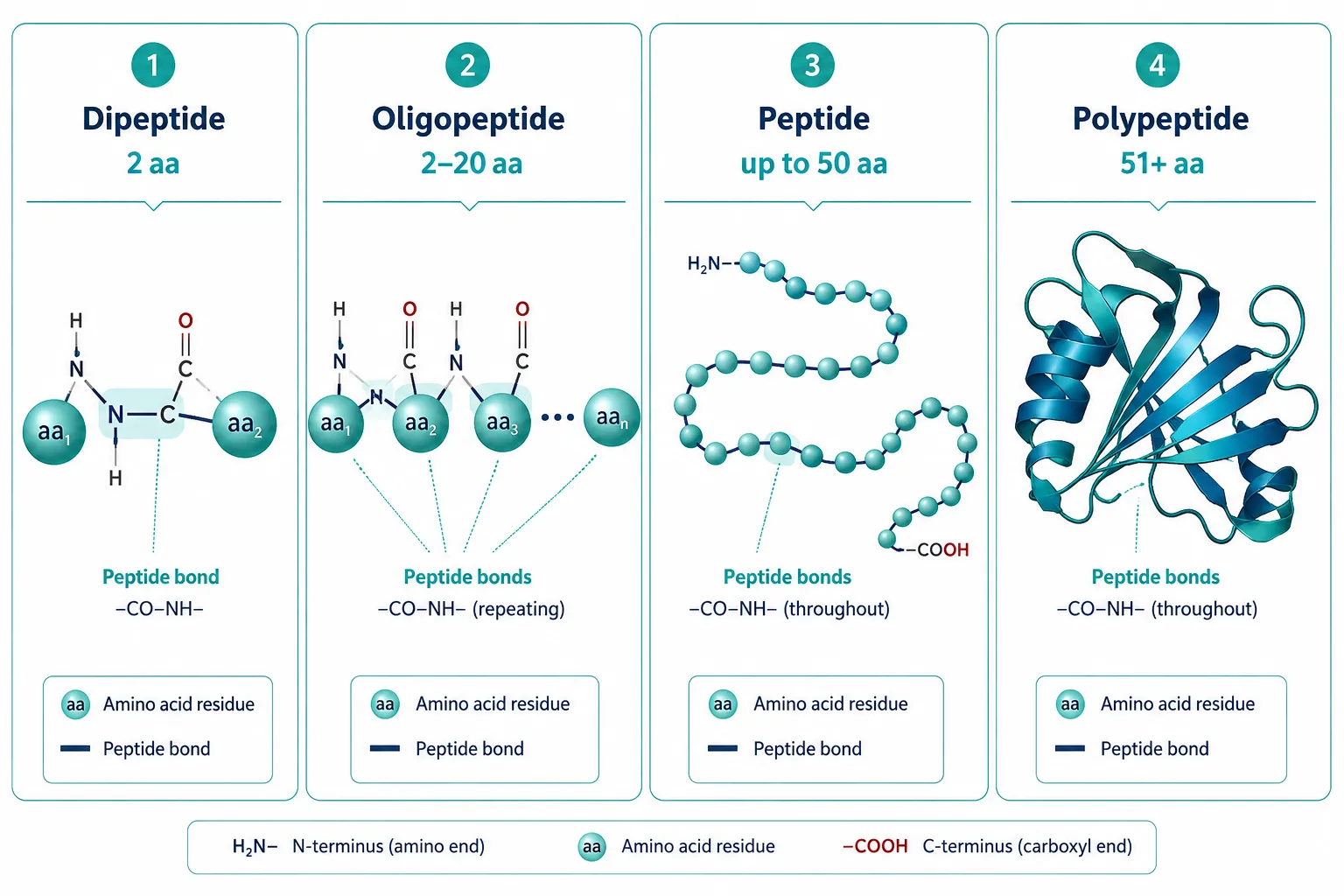
  • Peptides are short amino acid chains of 2-50 residues; polypeptides contain 51 or more residues and begin to adopt protein-like structural properties.
  • Both are built from amino acids joined by peptide bonds, but size determines structural behavior and research function.
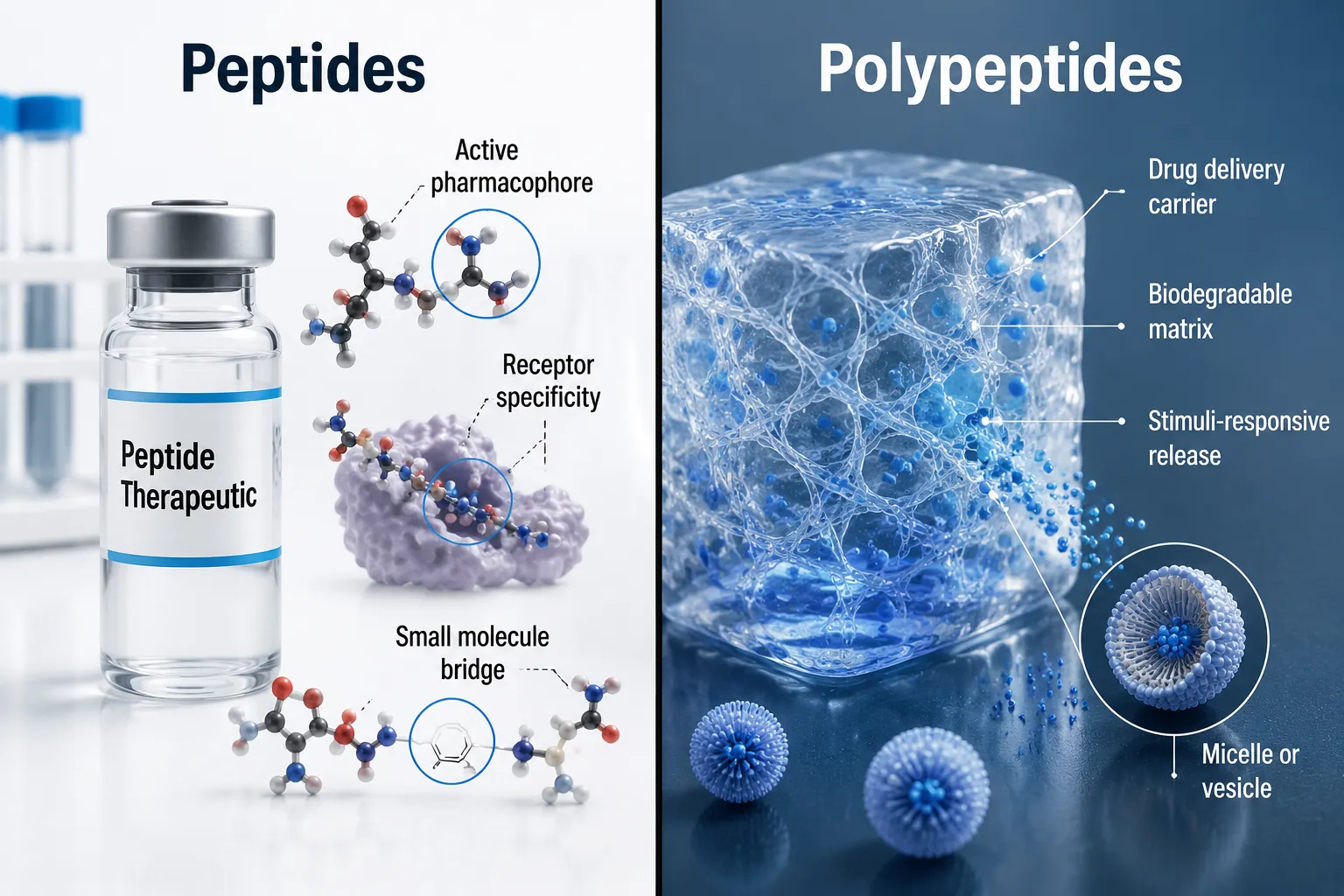
  • Peptides are primarily used as active therapeutic agents targeting receptors and signaling pathways.
  • Polypeptides serve as biodegradable carriers, scaffolds, and structural biomaterials in drug delivery systems.
  • The operational distinction between the two is increasingly aligned with regulatory and industrial product categories.

Defining the Terms: Chain Length and Structural Behavior
Defining the Terms: Chain Length and Structural Behavior

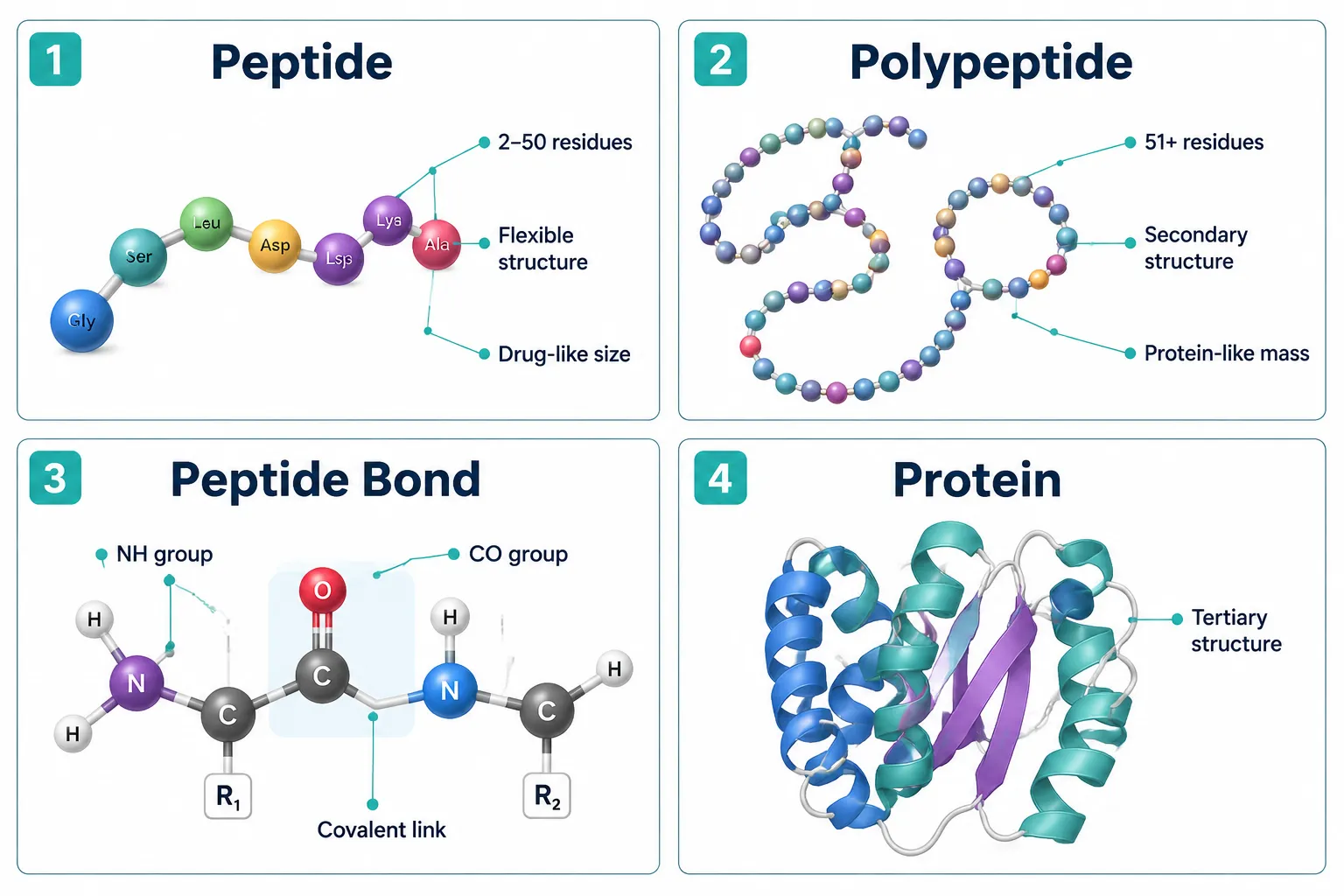
At the most basic level, a peptide is a chain of two to approximately 50 amino acid residues linked by peptide bonds. A polypeptide is a longer chain, generally 51 or more residues, that begins to exhibit structural complexity beyond what short peptides can achieve. Authoritative genetics and biochemistry glossaries now consistently frame this as a length-based distinction, while acknowledging that no single universal cut-off exists.

The chemistry underlying both is identical: amino acids are joined by covalent peptide bonds formed between the carboxyl group of one residue and the amino group of the next. What changes with length is behavior.

Feature Peptide (2-50 residues) Polypeptide (51+ residues)
Typical molecular weight Under ~5-10 kDa Above ~10 kDa
Secondary structure Rare or minimal Increasingly common
Tertiary/folded structure Generally absent Possible; defines proteins
Research role Active pharmacophore Carrier, scaffold, or protein precursor

"In strict biochemical usage, every peptide and every protein is technically a polypeptide, but the shorter 'peptide' label is reserved for when size and drug-like behavior are the central concern."

Polypeptides above roughly 50 residues can begin to form stable secondary structures such as alpha-helices and beta-sheets. Once a polypeptide folds into a defined three-dimensional shape, it crosses the threshold into what researchers call a protein. This means the terminology forms a nested hierarchy: all peptides are polypeptides, and all proteins are polypeptides, but not all polypeptides are proteins.

Why the Fundamental Difference Between Peptides vs. Polypeptides Matters in Research
Why the Fundamental Difference Between Peptides vs. Polypeptides Matters in Research

The distinction is not merely academic. It has direct consequences for how compounds are synthesized, stored, tested, and regulated.

Peptides as Precision Therapeutics

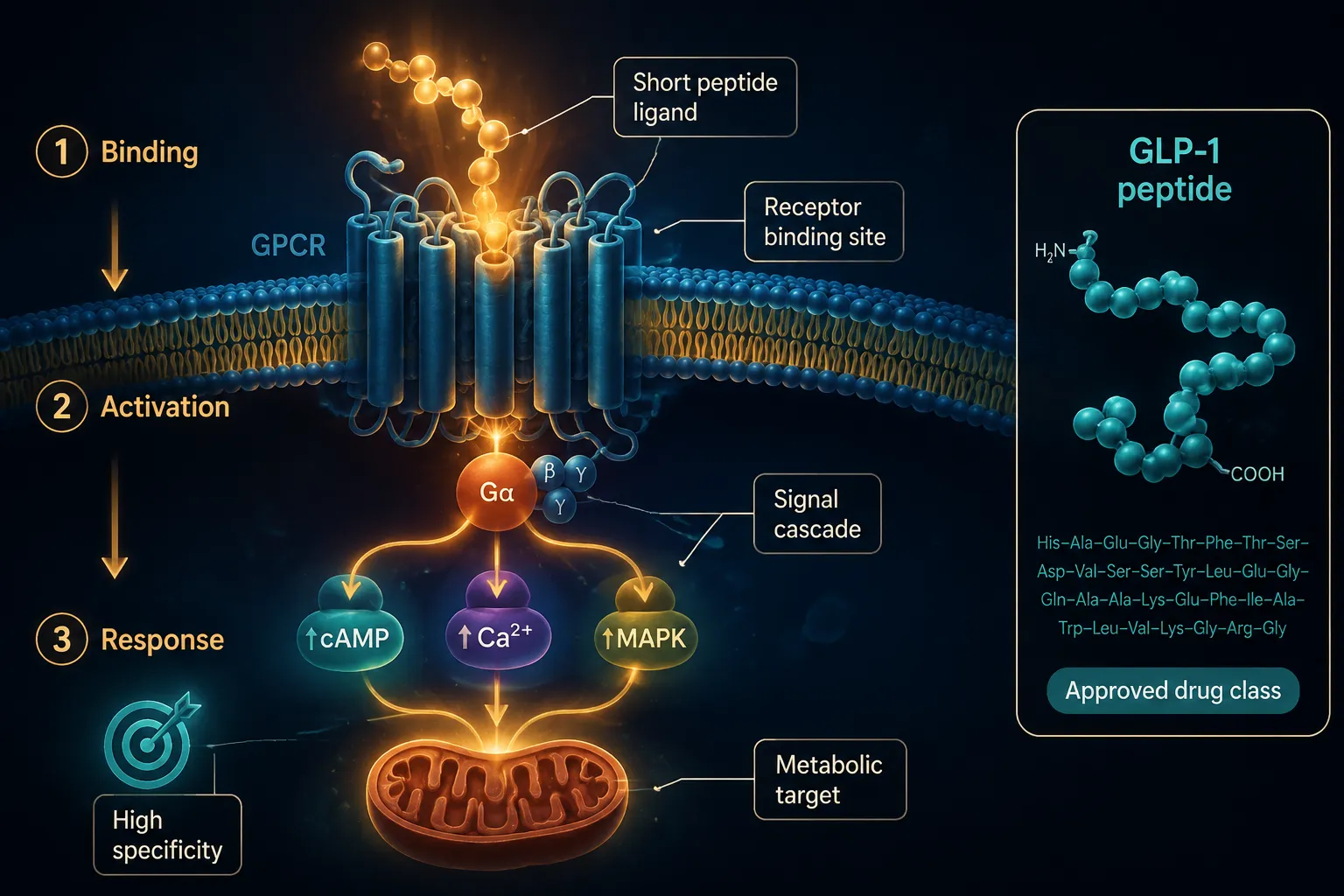
Short peptides have emerged as a major class of bioactive research compounds. Their small size gives them several advantages:

  • High receptor specificity, short chains can be precisely engineered to fit receptor binding sites
  • Favorable safety profiles, metabolized into natural amino acids
  • Tunability, cyclization, PEGylation, and backbone modification extend stability and half-life

Research into top peptides for metabolic health illustrates how short peptide chains are designed to interact with specific receptors involved in energy regulation. Similarly, compounds such as those explored in GLP-1, GLP-2, and GLP-3 peptide family research demonstrate the precision with which short peptides can modulate metabolic signaling.

Peptides are also being investigated for growth hormone pathways. Research into CJC-1295 and half-life in growth hormone research shows how even small structural changes in a short peptide chain can dramatically alter its pharmacokinetic profile.

Polypeptides as Structural and Delivery Platforms

Polypeptides play a fundamentally different role. Because of their greater length and capacity to form secondary structures, they are engineered as:

  • Drug delivery vehicles, micelles, vesicles, and hydrogels built from polypeptide chains encapsulate active drugs and release them in a controlled manner
  • Biodegradable scaffolds, used in implantable or injectable biomaterials
  • Stimuli-responsive carriers, designed to respond to pH shifts, redox conditions, or enzymatic activity at target tissue sites

In this context, the polypeptide is not the active drug, it is the architecture that delivers it. This represents a clear functional divide from therapeutic peptides, which are themselves the pharmacologically active entities.

Distinct Applications Across Research Disciplines
Distinct Applications Across Research Disciplines

Understanding the fundamental difference between peptides vs. polypeptides in research and their distinct applications becomes most practical when mapped to specific research domains.

Oncology and metabolic disease research predominantly uses short peptides as precision effectors. Compounds such as those examined in MOTS-C peptide and mitochondrial biogenesis research target cellular energy pathways with a specificity that larger polypeptide structures cannot achieve at the receptor level.

Cardioprotection and organ health research uses short peptides such as SS-31, which targets mitochondrial membranes. Researchers sourcing compounds for this work can explore SS-31 peptide research and mechanism studies to understand how a four-residue peptide achieves potent organelle-level activity.

Tissue repair and regeneration research uses peptides such as BPC-157 and TB-500. Resources covering BPC-157 and TB-500 peptides highlight how short chains modulate healing cascades at the cellular level.

Drug delivery and biomaterial science, by contrast, relies on polypeptide-length chains to build the scaffolding that transports active compounds to target sites. The mechanical properties, degradation rates, and structural tunability of polypeptides, not their receptor affinity, are what matter here.

Key Application Differences at a Glance

  • Peptides: active drug, receptor agonist or antagonist, signaling modulator
  • Polypeptides: carrier matrix, biodegradable scaffold, stimuli-responsive vehicle
  • Proteins (folded polypeptides): enzymes, antibodies, structural biologics

Conclusion

The fundamental difference between peptides vs. polypeptides in research and their distinct applications comes down to chain length, structural capacity, and functional role. Short peptides, typically 2 to 50 residues, are optimized for receptor binding, signaling modulation, and therapeutic precision. Polypeptides, with their greater length and structural complexity, serve as the architectural platforms of modern drug delivery and biomaterial science.

Actionable next steps for researchers:

  1. Confirm residue count and molecular weight when classifying a compound as a peptide or polypeptide, do not rely on naming conventions alone.
  2. Match the compound class to its intended function: use short peptides for active pharmacophore applications and polypeptide systems for delivery or scaffold needs.
  3. When sourcing research-grade compounds, prioritize lab-tested peptides with verified purity documentation to ensure experimental reliability.
  4. Stay current with evolving regulatory language, as the distinction between "peptide therapeutics" and "polypeptide/protein biologics" is increasingly codified in approval pathways and market categories.

As the field advances, short peptides will increasingly rely on polypeptide-based delivery technologies to overcome stability and bioavailability challenges, making a clear understanding of both classes not just useful, but essential.

https://www.puretestedpeptides.com/wp-content/uploads/2026/08/the-fundamental-difference-peptides-vs-polypeptides-in-research-and-their-distin.webp 1024 1536 https://www.puretestedpeptides.com/wp-content/uploads/2026/01/buy-peptides-online.jpg 2026-08-22 13:04:442026-08-22 13:04:44The Fundamental Difference: Peptides vs. Polypeptides in Research and Their Distinct Applications
Peptides vs Polypeptides: How Molecular Size and Structure Change Research Questions

Peptides vs Polypeptides: How Molecular Size and Structure Change Research Questions

August 15, 2026/0 Comments/in Uncategorized/by

A single amino acid added to a chain can shift a molecule from one regulatory category to another, and that shift changes the entire research strategy around it. The question of peptides vs polypeptides: how molecular size and structure change research questions is not a matter of academic trivia. It determines how compounds are synthesized, formulated, classified by regulators, and studied in the lab. In 2026, with over 80 FDA- and EMA-approved peptide drugs on the market and more than 650 candidates in development, getting this distinction right has direct consequences for research design and data interpretation.

Key Takeaways

  • Peptides are conventionally defined as chains of 2-50 amino acids; polypeptides contain 51 or more, though some teaching contexts set the boundary at 20 residues.
  • Chain length determines whether research focuses on receptor binding and delivery (peptides) or folding, expression, and immunogenicity (polypeptides).
  • Mid-length molecules, 20 to 50 amino acids, create genuine ambiguity and require researchers to state their classification criteria explicitly.
  • Research-use compounds like BPC-157, MOTS-c, and GLP-3 retatrutide sit at different points on this spectrum, each raising distinct mechanistic questions.
  • Inconsistent cutoffs across publications can distort meta-analyses and comparative studies if researchers do not align definitions before pooling data.

Defining the Boundary: Where Peptides End and Polypeptides Begin

Defining the Boundary: Where Peptides End and Polypeptides Begin

The most widely cited modern definition places peptides at 2-50 amino acids and polypeptides at 51 or more. The NIH-linked Genome.gov genetics glossary encodes this numerical boundary explicitly, making chain length part of the official language of molecular medicine. StatPearls refines the picture further, carving out "oligopeptides" at roughly 10-20 residues, while classifying chains above 20 amino acids as polypeptides in some educational contexts.

That overlap, chains between 20 and 50 amino acids, is where most confusion lives.

"Whether a 32-amino-acid hormone is called a peptide or a polypeptide depends entirely on which publication's definition you are reading."

These boundaries are practical conventions, not strict biochemical laws. They evolved to help researchers, clinicians, and regulators communicate efficiently. Drug-development literature updated in 2026 explicitly advises authors to state the residue range and classification used in any paper, because different cutoffs can change how a candidate is grouped in a meta-analysis or regulatory review.

Category Typical Residue Range Primary Research Context
Dipeptide / Oligopeptide 2-19 aa Signaling, taste, neurotransmission
Peptide 2-50 aa (therapeutic convention) Receptor ligands, hormones, drug candidates
Polypeptide 51+ aa (or 20+ in some teaching contexts) Folded structures, enzymes, biologics
Protein Variable; typically folded polypeptide(s) Multi-domain function, antibody engineering

For researchers working with compounds like MOTS-c and 5-Amino-1MQ, understanding where a molecule falls on this spectrum shapes every downstream decision, from synthesis method to stability testing.

How Molecular Size and Structure Change Research Questions in Practice

How Molecular Size and Structure Change Research Questions in Practice

The core insight in understanding peptides vs polypeptides: how molecular size and structure change research questions is this: chain length changes functional expectation.

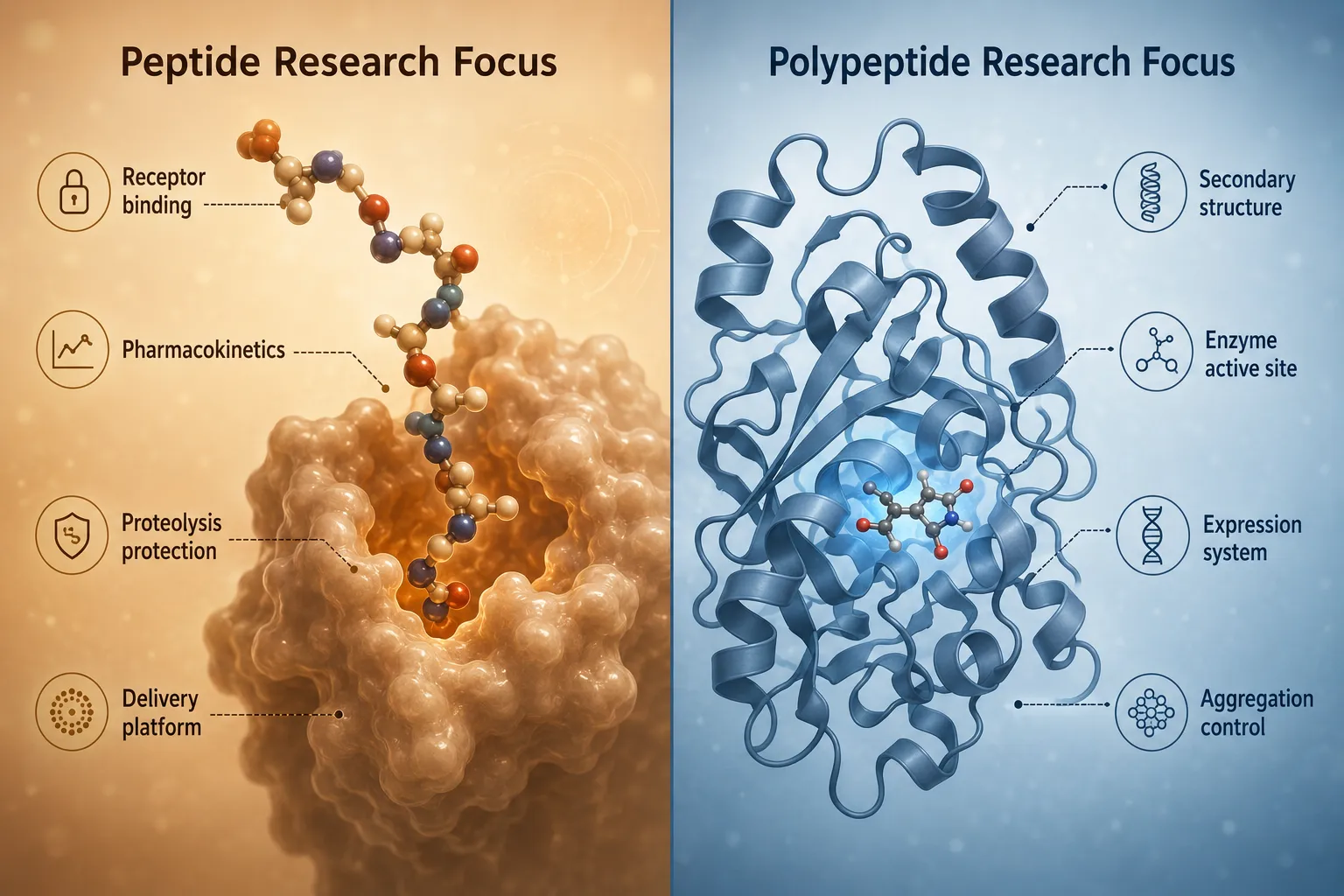
Short peptides, roughly 2 to 50 amino acids, are primarily studied as signaling molecules. They act as receptor ligands, hormones, and short regulatory motifs. Because they are small and flexible, research questions center on:

  • How well does the compound bind its target receptor?
  • How quickly is it degraded by proteases?
  • What delivery platform, nasal spray, nanoparticle, depot injection, best protects it?
  • How can half-life be extended without losing selectivity?

For example, research-use nasal spray peptides like Semax and Selank raise exactly these questions: mucosal absorption, carrier solvent stability, and CNS delivery efficiency.

Longer polypeptides, 51 or more residues, are long enough to fold into stable three-dimensional structures. Research questions shift dramatically:

  • What secondary and tertiary structures does the chain adopt?
  • Can it form an enzyme active site?
  • How is it expressed in a microbial or mammalian system?
  • Does it aggregate or generate immunogenic epitopes?

This is why polypeptide and protein engineering literature is dominated by folding, domain design, and bioprocess optimization, problems that simply do not arise at short chain lengths.

Mid-length molecules (20-50 amino acids) blur the line. Calcitonin (32 aa), glucagon (29 aa), atrial natriuretic peptide (28 aa), and thymosin beta-4 (43 aa) are long enough to adopt distinct conformations and interact with multiple targets, yet still short enough that solid-phase synthesis and peptide-style formulation remain appropriate. Compounds like GHK-Cu, a copper-binding peptide studied in collagen and tissue research, illustrate how even short chains can engage complex structural biology when metal coordination is involved.

Mapping Size Differences onto Modern Research-Use Compounds

Mapping Size Differences onto Modern Research-Use Compounds

Applying peptides vs polypeptides: how molecular size and structure change research questions to specific research-use compounds clarifies why this distinction matters beyond textbooks.

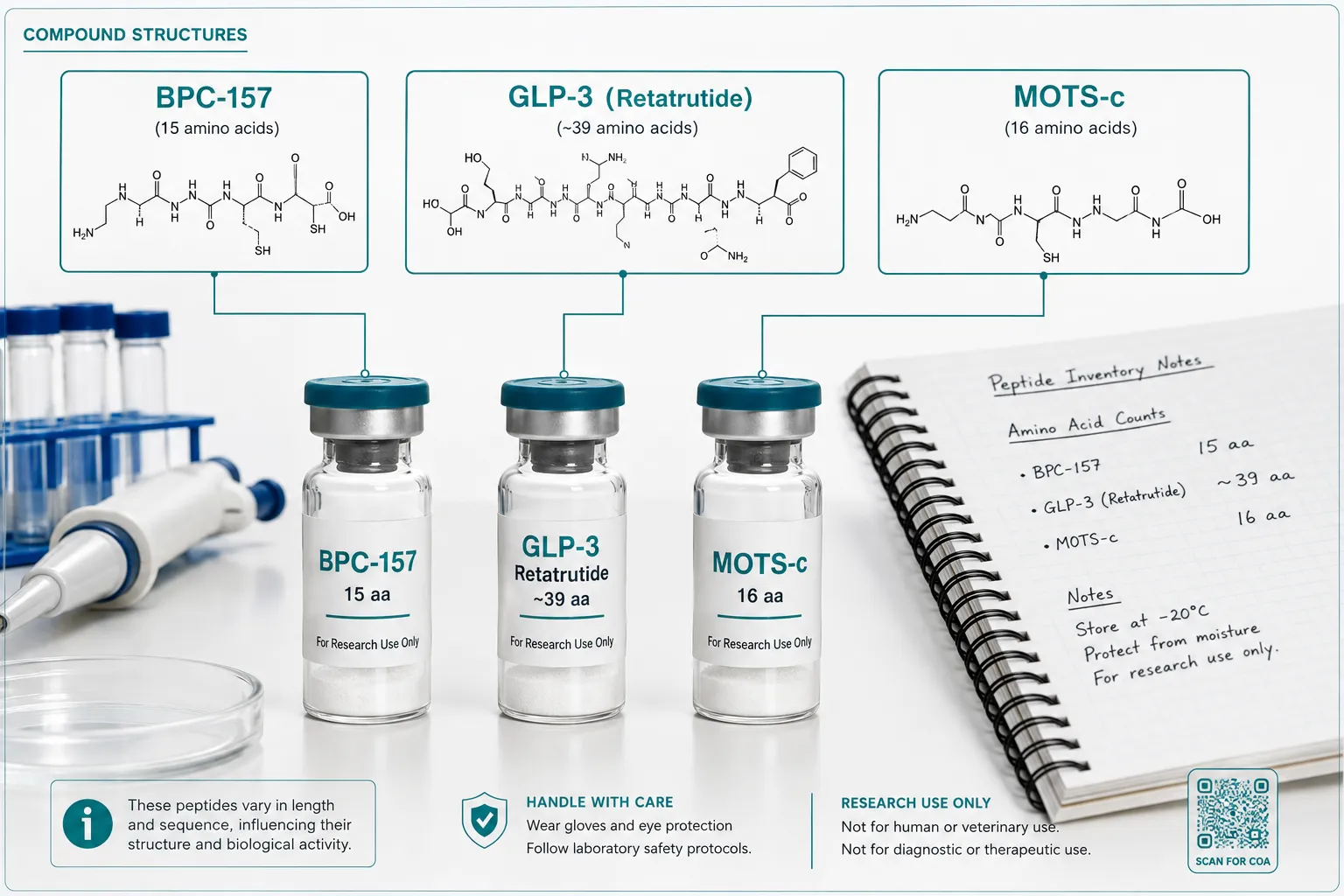
BPC-157 is a 15-amino-acid synthetic peptide. Its short length places it firmly in peptide territory, meaning research priorities are stability in gastric or injectable environments, receptor interaction mapping, and tissue-specific delivery. The peptides and polypeptides framework connecting DNA, mitochondria, and modern research compounds helps contextualize how such short chains can still exert broad biological effects through targeted signaling.

MOTS-c is a 16-amino-acid mitochondria-derived peptide. Despite its small size, it interfaces with genomic and metabolic pathways in ways that raise questions more typically associated with longer regulatory molecules. Research on MOTS-c and its role in mitochondrial biology focuses on ATP production, insulin sensitivity, and cellular energy regulation, mechanistic questions driven by receptor-level signaling rather than folding.

GLP-3 retatrutide, a triple-agonist peptide in late-stage obesity trials, sits in the mid-length range. Its research questions span both categories: receptor selectivity (peptide-type question) and conformational stability at the receptor interface (a question that edges toward polypeptide territory). The emerging data from GLP-3 retatrutide phase 3 trials illustrate how mid-length peptides are reshaping metabolic research priorities in 2026.

CJC-1295, a growth hormone-releasing hormone analog, demonstrates another dimension: how DAC modification changes pharmacokinetics, a quintessentially peptide-focused research question about half-life extension rather than folding architecture.

The industry now treats peptides as a distinct modality sitting between classical small molecules and full biologics. This intermediate status forces unique considerations in:

  • Synthesis: solid-phase peptide synthesis vs. recombinant expression
  • Characterization: mass spectrometry and HPLC purity vs. protein structural assays
  • Regulatory classification: CMC strategy, comparability, and biosimilarity rules differ by size category

Conclusion

The distinction between peptides and polypeptides is not semantic, it is operational. Chain length determines folding capacity, receptor interaction mode, synthesis strategy, delivery requirements, and regulatory classification. Short peptides raise questions about stability, targeting, and pharmacokinetics. Longer polypeptides raise questions about structure, expression, and immunogenicity. Mid-length molecules in the 20-50 amino acid range demand that researchers state their definitions clearly before pooling data or designing comparative studies.

Actionable next steps for researchers in 2026:

  1. Always specify the residue count and the classification convention used in any publication or protocol.
  2. When working with mid-length compounds (20-50 aa), explicitly address whether folding behavior or delivery stability is the primary concern, do not assume one framework applies.
  3. Before integrating datasets from multiple studies, verify that each study uses the same peptide/polypeptide boundary to avoid misclassification errors in meta-analyses.
  4. Match synthesis and formulation strategy to chain length: solid-phase synthesis and peptide-style delivery for shorter chains; expression systems and structural characterization for longer ones.

Understanding where a compound sits on the amino acid chain spectrum is the first step toward asking the right research questions, and getting meaningful answers.

https://www.puretestedpeptides.com/wp-content/uploads/2026/08/peptides-vs-polypeptides-how-molecular-size-and-structure-change-research-questi.webp 1024 1536 https://www.puretestedpeptides.com/wp-content/uploads/2026/01/buy-peptides-online.jpg 2026-08-15 13:05:042026-08-15 13:05:04Peptides vs Polypeptides: How Molecular Size and Structure Change Research Questions

Tag Archive for: peptides vs polypeptides

Peptides vs Polypeptides: Structural Differences, Chain Length, and Why the Distinction Matters in Research

July 9, 2026/0 Comments/by Pure Tested

Cover Image

The difference between a peptide and a polypeptide is not just a matter of naming preference, it directly shapes how researchers design experiments, interpret published data, and source compounds for study. Understanding Peptides vs Polypeptides: Structural Differences, Chain Length, and Why the Distinction Matters in Research is foundational chemistry knowledge that every serious investigator should have locked down before reviewing literature or ordering compounds.

Key Takeaways

  • Peptides are short amino acid chains, typically 2-50 residues; polypeptides contain 51 or more residues.
  • Oligopeptides (fewer than roughly 10 residues) behave differently in solution than longer chains.
  • The naming boundary is not universally fixed, so context and the source authority matter.
  • Structural length drives folding behavior, receptor binding specificity, and synthesis complexity.
  • Misidentifying a compound as a peptide or polypeptide can lead to flawed experimental design.

Side-by-side molecular comparison of peptide and polypeptide chain lengths

Defining the Terms: Amino Acids, Peptides, and Polypeptides

Every protein-based molecule begins with the same building block: an amino acid. When two amino acids join through a peptide bond, a covalent link between the carboxyl group of one and the amino group of another, the result is a dipeptide. Add a third residue and it becomes a tripeptide. This sequential assembly is the foundation of all peptide and polypeptide chemistry.

The NIH Genome.gov genetics glossary uses a widely accepted operational cutoff: a peptide is a chain of 2-50 amino acids, while a polypeptide contains 51 or more. IUPAC guidelines further subdivide the peptide category:

Term Residue Range Typical Behavior
Oligopeptide 2-10 Highly soluble, minimal folding
Peptide 2-50 Moderate folding, receptor-active
Polypeptide 51+ Complex folding, structural roles
Protein 100+ (functional) Tertiary/quaternary structure

It is worth noting that no single governing body has set an absolute, universally enforced cutoff. Some biochemistry texts place the peptide/polypeptide boundary at 100 residues. Researchers should always check which convention the source publication follows before drawing comparisons.


Research laboratory bench with peptide nomenclature journals and molecular models

Structural Differences and Chain Length: What Changes as Residues Increase

Chain length is not just a counting exercise, it governs physical and biological properties in measurable ways.

Short peptides (oligopeptides, 2-10 residues) tend to remain largely unstructured in solution. Their small size allows rapid diffusion and high bioavailability in certain delivery contexts. Compounds like KPV and Selank and Semax fall into this short-chain category and are studied precisely because their compact size enables targeted receptor interactions without the steric bulk of larger molecules.

Medium peptides (10-50 residues) begin to adopt partial secondary structures, alpha helices or beta sheets, that influence receptor binding geometry. Many growth hormone secretagogues, including those explored in CJC-1295 research, sit in this range. The GHK-Cu peptide is a well-known tripeptide-copper complex studied for tissue remodeling applications.

Polypeptides (51+ residues) fold into defined three-dimensional conformations. This folding is driven by hydrophobic interactions, hydrogen bonds, and disulfide bridges. The resulting shape is what determines enzyme activity, structural support, or hormonal signaling. Somatotropin (growth hormone), for example, is a polypeptide of approximately 191 residues, a useful reference point discussed in resources on what somatotropin is.

Key insight: A polypeptide is not simply a "bigger peptide." Its folded architecture creates functional properties that short peptides cannot replicate, and vice versa.


Why the Distinction Matters in Research

Researcher examining peptide compound with polypeptide structural model on screen

Conflating peptides with polypeptides introduces real errors at multiple stages of a research workflow.

Literature interpretation: A paper reporting results for a "peptide" using a 120-residue compound is using the term loosely. Recognizing this prevents researchers from applying those findings to short-chain analogs without proper justification.

Synthesis and sourcing: Short peptides are synthesized via solid-phase peptide synthesis (SPPS), a well-standardized process. Polypeptides often require recombinant expression systems. Understanding this distinction helps researchers evaluate supplier credibility. Reviewing peptide supplier comparisons and understanding reference standards becomes far more meaningful when the researcher understands what chain length implies about production complexity.

Stability and storage: Shorter peptides are generally more stable under standard lyophilized storage conditions. Polypeptides are more susceptible to aggregation and denaturation. This has direct implications for lab-tested peptide procurement and handling protocols.

Regulatory and ethical framing: In research contexts, compounds are often categorized differently based on molecular weight and chain length. Knowing whether a compound is technically a peptide or polypeptide affects how it is classified in study documentation.

For researchers exploring the broader landscape of chain-length-specific compounds, the complete peptides for sale catalog offers a useful reference for understanding how different molecules are positioned in active research programs.


Conclusion

The distinction between peptides and polypeptides is not academic hairsplitting. Chain length drives folding behavior, synthesis method, receptor specificity, storage requirements, and how results should be interpreted across studies. The most reliable operational boundary, 2-50 residues for peptides, 51 or more for polypeptides, provides a working framework, but researchers must always verify which convention a given publication applies.

Actionable next steps:

  • Before citing a study, confirm the chain length of the compound used and verify the author's definition of "peptide" versus "polypeptide."
  • When sourcing compounds, request certificates of analysis that specify molecular weight and sequence length.
  • Cross-reference supplier claims against established reference standards to ensure compound identity.
  • Use chain length as a first filter when evaluating whether findings from one compound class can be extrapolated to another.

Building this foundational clarity will sharpen experimental design, reduce misinterpretation of published data, and strengthen the overall quality of peptide research in 2026 and beyond.

https://www.puretestedpeptides.com/wp-content/uploads/2026/01/buy-peptides-online.jpg 0 0 Pure Tested https://www.puretestedpeptides.com/wp-content/uploads/2026/01/buy-peptides-online.jpg Pure Tested2026-07-09 13:18:122026-07-20 15:00:32Peptides vs Polypeptides: Structural Differences, Chain Length, and Why the Distinction Matters in Research

Peptides vs Polypeptides: Structural Differences, Chain Length, and Why the Distinction Matters in Research

July 9, 2026/0 Comments/by Pure Tested

Cover Image

The difference between a peptide and a polypeptide is not just a matter of naming preference, it directly shapes how researchers design experiments, interpret published data, and source compounds for study. Understanding Peptides vs Polypeptides: Structural Differences, Chain Length, and Why the Distinction Matters in Research is foundational chemistry knowledge that every serious investigator should have locked down before reviewing literature or ordering compounds.

Key Takeaways

  • Peptides are short amino acid chains, typically 2-50 residues; polypeptides contain 51 or more residues.
  • Oligopeptides (fewer than roughly 10 residues) behave differently in solution than longer chains.
  • The naming boundary is not universally fixed, so context and the source authority matter.
  • Structural length drives folding behavior, receptor binding specificity, and synthesis complexity.
  • Misidentifying a compound as a peptide or polypeptide can lead to flawed experimental design.

Side-by-side molecular comparison of peptide and polypeptide chain lengths

Defining the Terms: Amino Acids, Peptides, and Polypeptides

Every protein-based molecule begins with the same building block: an amino acid. When two amino acids join through a peptide bond, a covalent link between the carboxyl group of one and the amino group of another, the result is a dipeptide. Add a third residue and it becomes a tripeptide. This sequential assembly is the foundation of all peptide and polypeptide chemistry.

The NIH Genome.gov genetics glossary uses a widely accepted operational cutoff: a peptide is a chain of 2-50 amino acids, while a polypeptide contains 51 or more. IUPAC guidelines further subdivide the peptide category:

Term Residue Range Typical Behavior
Oligopeptide 2-10 Highly soluble, minimal folding
Peptide 2-50 Moderate folding, receptor-active
Polypeptide 51+ Complex folding, structural roles
Protein 100+ (functional) Tertiary/quaternary structure

It is worth noting that no single governing body has set an absolute, universally enforced cutoff. Some biochemistry texts place the peptide/polypeptide boundary at 100 residues. Researchers should always check which convention the source publication follows before drawing comparisons.


Research laboratory bench with peptide nomenclature journals and molecular models

Structural Differences and Chain Length: What Changes as Residues Increase

Chain length is not just a counting exercise, it governs physical and biological properties in measurable ways.

Short peptides (oligopeptides, 2-10 residues) tend to remain largely unstructured in solution. Their small size allows rapid diffusion and high bioavailability in certain delivery contexts. Compounds like KPV and Selank and Semax fall into this short-chain category and are studied precisely because their compact size enables targeted receptor interactions without the steric bulk of larger molecules.

Medium peptides (10-50 residues) begin to adopt partial secondary structures, alpha helices or beta sheets, that influence receptor binding geometry. Many growth hormone secretagogues, including those explored in CJC-1295 research, sit in this range. The GHK-Cu peptide is a well-known tripeptide-copper complex studied for tissue remodeling applications.

Polypeptides (51+ residues) fold into defined three-dimensional conformations. This folding is driven by hydrophobic interactions, hydrogen bonds, and disulfide bridges. The resulting shape is what determines enzyme activity, structural support, or hormonal signaling. Somatotropin (growth hormone), for example, is a polypeptide of approximately 191 residues, a useful reference point discussed in resources on what somatotropin is.

Key insight: A polypeptide is not simply a "bigger peptide." Its folded architecture creates functional properties that short peptides cannot replicate, and vice versa.


Why the Distinction Matters in Research

Researcher examining peptide compound with polypeptide structural model on screen

Conflating peptides with polypeptides introduces real errors at multiple stages of a research workflow.

Literature interpretation: A paper reporting results for a "peptide" using a 120-residue compound is using the term loosely. Recognizing this prevents researchers from applying those findings to short-chain analogs without proper justification.

Synthesis and sourcing: Short peptides are synthesized via solid-phase peptide synthesis (SPPS), a well-standardized process. Polypeptides often require recombinant expression systems. Understanding this distinction helps researchers evaluate supplier credibility. Reviewing peptide supplier comparisons and understanding reference standards becomes far more meaningful when the researcher understands what chain length implies about production complexity.

Stability and storage: Shorter peptides are generally more stable under standard lyophilized storage conditions. Polypeptides are more susceptible to aggregation and denaturation. This has direct implications for lab-tested peptide procurement and handling protocols.

Regulatory and ethical framing: In research contexts, compounds are often categorized differently based on molecular weight and chain length. Knowing whether a compound is technically a peptide or polypeptide affects how it is classified in study documentation.

For researchers exploring the broader landscape of chain-length-specific compounds, the complete peptides for sale catalog offers a useful reference for understanding how different molecules are positioned in active research programs.


Conclusion

The distinction between peptides and polypeptides is not academic hairsplitting. Chain length drives folding behavior, synthesis method, receptor specificity, storage requirements, and how results should be interpreted across studies. The most reliable operational boundary, 2-50 residues for peptides, 51 or more for polypeptides, provides a working framework, but researchers must always verify which convention a given publication applies.

Actionable next steps:

  • Before citing a study, confirm the chain length of the compound used and verify the author's definition of "peptide" versus "polypeptide."
  • When sourcing compounds, request certificates of analysis that specify molecular weight and sequence length.
  • Cross-reference supplier claims against established reference standards to ensure compound identity.
  • Use chain length as a first filter when evaluating whether findings from one compound class can be extrapolated to another.

Building this foundational clarity will sharpen experimental design, reduce misinterpretation of published data, and strengthen the overall quality of peptide research in 2026 and beyond.

https://www.puretestedpeptides.com/wp-content/uploads/2026/01/buy-peptides-online.jpg 0 0 Pure Tested https://www.puretestedpeptides.com/wp-content/uploads/2026/01/buy-peptides-online.jpg Pure Tested2026-07-09 13:18:102026-07-20 15:00:33Peptides vs Polypeptides: Structural Differences, Chain Length, and Why the Distinction Matters in Research
×

Helpful Links

  • My account
  • Cart
  • Checkout
  • Refund and Returns Policy
  • Privacy Policy
  • SMS Privacy Policy
  • Login
  • My Account
  • Logout

USA Made Lab Tested Peptides

All products are sold for research, laboratory, or analytical purposes only, and are not for human consumption


Pure Tested Peptides is a chemical supplier. Pure Tested Peptides is not a compounding / chemical compounding facility as defined under 503A of the Federal Food, Drug, and Cosmetic act. Pure Tested Peptides is not an outsourcing facility as defined under 503B of the Federal Food, Drug, and Cosmetic act.

The statements made within this website have not been evaluated by the US Food and Drug Administration. The products we offer are not intended to diagnose, treat, cure or prevent any disease.

Human/Animal Consumption Prohibited. Laboratory/In-Vitro Experimental Use Only

Scroll to top Scroll to top Scroll to top