Call or Text 727-513-9780
  • Shopping Cart Shopping Cart
    0Shopping Cart
Pure Tested Peptides | America's most trusted Peptides for sale online
  • Peptides for sale
    • Oral Peptides for sale
      • Peptide Capsules for sale
      • BPC 157 Capsules 1000mcg
      • SLU-PP-332 Capsules | 1000 mcg
      • 5-Amino-1MQ 50mg Capsules
      • Tesofensine 500mcg
    • All Peptides for sale
    • Peptide Sprays
      • BPC 157 Nasal Spray Kit
      • BPC-157 TB500 Nasal Spray Kit
      • Semax Nasal Spray 10mg
      • Selank – Nasal Spray Kit – 10mg
      • Epithalon 50MG Nasal Spray Kit
      • Ipamorelin 10mg Nasal Spray
      • Klow Nasal Spray (BPC-157 + TB-500 + GHK-Cu + KPV) | 80mg
      • Hulk Nasal Spray Tesa / Ipa Blend 6/3 MG
      • Klow Nasal Spray
      • NAD + 500 mg Nasal Spray
      • PT-141 Nasal Spray Kit
    • GHRH Peptides
      • Ipa Peptides
      • CJC-1295 Peptides
        • CJC-1295 with DAC 5 mg
        • CJC-1295 without DAC 5 mg
        • CJC-1295 Ipa 10mg
      • Tesa Peptides
        • Tesa Peptide
        • Tesa 20 mg
    • GHK-Cu Peptides
      • All GHK-Cu Peptides
      • GHK-Cu 100mg
      • KLOW Peptide Blend – Buy KLOW blend online
    • BPC Peptides
      • All BPC Peptides
      • BPC-157
      • BPC-157 TB-500
      • BPC 157 capsules 1000mcg
    • SLU-PP-332 Peptides
      • All SLU-PP-332 Peptides
      • SLU-PP-332 5mg
    • GLP3 Peptides
      • GLP3-R
      • GLP3-R CAG 10mg
      • GLP3-R 20mg
    • PT-141 Peptides
      • PT-141 Peptides for sale
      • PT-141 10mg
      • PT-141 Nasal Spray
    • CAG Peptides
      • Lipo-C Peptide Blend
      • CAG 5mg
      • CAG 10mg
    • MOTS-C Peptides
      • MOTS-C Peptides for sale
      • MOTS-c peptide
      • MOTS-c 10mg *6 pack*
    • 5 Amino 1MQ Peptides
      • 5 Amino 1MQ Peptides for sale
      • 5-Amino-1MQ 50mg Capsules
      • 5-Amino-1MQ 5mg
    • Epithalon Peptides
      • Epithalon Peptides for sale
      • Epithalon 10mg
      • Epithalon 50mg
  • Shop
    • GLPs
      • 5-Amino-1MQ 50mg Capsules
      • 5-Amino-1MQ 5mg
      • GLP3-Reta
      • L-Carnitine 500mg/ml
      • Tesofensine 500mcg
      • SLU-PP-332 5mg
      • MOTS-c 10mg *6 pack*
    • Epithalon & BPC Peptides
      • Epithalon 10mg
      • Epithalon 50mg
      • BPC-157
      • BPC 157 capsules 1000mcg
      • BPC-157 TB-500
      • BPC-157 TB500 Nasal Spray Kit
      • BPC 157 Nasal Spray Kit
    • BPC TB-500 & NAD+ Peptides
      • NAD+ 500 mg
      • KLOW Peptide Blend – Buy KLOW blend online
      • GLOW Peptide Blend
      • TB 500 5mg
      • BPC 157 capsules 1000mcg – Supplement
      • BPC 157 Nasal Spray Kit
      • BPC-157
      • BPC-157 TB500 Nasal Spray Kit
      • BPC-157 TB-500
      • BPC 157 capsules 1000mcg
    • LL-37 Peptide
      • LL-37 10 mg
    • MOTS-C & Selank
      • MOTS-c peptide
      • Selank 10mg
    • GHK Peptides
      • GHK-Cu 100mg
      • GLOW Peptide Blend
      • KLOW Peptide Blend – Buy KLOW blend online
  • COAs
  • Wholesale
    • Wholesale Peptides for sale
  • PTP FAQ
  • Affiliates
    • Selank Peptide: Advanced Pharmacological Mechanisms Underlying Its Anxiolytic and Nootropic Effects in Research
      • 5-Amino-1MQ Peptide: Detailed Mechanisms of NNMT Inhibition and Its Impact on Cellular Metabolism Research
        • MOTS-C Peptide: Unraveling Its Role in Mitochondrial Dynamics and Energy Metabolism Research
          • Epithalon Peptide and Telomerase Regulation: Investigating Its Impact on Cellular Senescence and Lifespan Research Models
            • GLP2-T vs GLP2 Tirz Peptide: Understanding the Naming, Mechanistic Nuances, and Research Implications for Gut Health
      • Peptides and Polypeptides in Modern Pharmacology: What Research on Metoprolol, Prednisone, and Amlodipine Reveals
        • Polypeptide Peptides vs NSAIDs: What Naproxen and Diclofenac Teach Tissue-Repair Researchers About BPC‑157 and TB‑500
          • Peptides and Polypeptides in Endocrine Pharmacology: How GLP-1, GLP-2, and GLP-3 Retatrutide Differ From Classic Drugs Like Prednisone and Amlodipine
          • 5‑Amino‑1MQ Peptide and NNMT Inhibition: How It Compares With Statins Like Atorvastatin in Adipose and Lipid Metabolism Research
      • Enclomiphene, Estrogen Receptor Signaling, and Luteinizing Phase Biology: What Hormone Researchers Should Measure
        • Mesenchymal Stem Cells, BPC‑157, and GHK‑Cu: How Tissue Repair Peptides Compare With Classic NSAIDs Like Naproxen in Injury Models
          • Peptide Calculator Use Cases Beyond Growth Hormone: Working Through GLP‑3 Retatrutide, MOTS‑c, and BPC‑157 Research Dosing
        • Polypeptide Peptides in Endocrine and Metabolic Pharmacology: Lessons From Amlodipine, Prednisone, and Metoprolol
        • Peptides Calculator for Advanced Blends: Worked Examples for Tesamorelin, CJC‑1295, and Ipamorelin Stacks
          • Peptides and Polypeptides in Human Physiology: How Molecular Size Shapes Research Applications
            • Selank Peptide: Advanced Pharmacological Mechanisms Underlying Its Anxiolytic and Nootropic Effects in Research
          • 5-Amino-1MQ Peptide: Detailed Mechanisms of NNMT Inhibition and Its Impact on Cellular Metabolism Research
            • MOTS-C Peptide: Unraveling Its Role in Mitochondrial Dynamics and Energy Metabolism Research
              • Epithalon Peptide and Telomerase Regulation: Investigating Its Impact on Cellular Senescence and Lifespan Research Models
                • GLP2-T vs GLP2 Tirz Peptide: Understanding the Naming, Mechanistic Nuances, and Research Implications for Gut Health
                  • Peptides and Polypeptides in Endocrine Pharmacology: How GLP-1, GLP-2, and GLP-3 Retatrutide Differ From Classic Drugs Like Prednisone and Amlodipine
                    • Polypeptide Peptides vs NSAIDs: What Naproxen and Diclofenac Teach Tissue-Repair Researchers About BPC‑157 and TB‑500
                      • Peptides and Polypeptides in Modern Pharmacology: What Research on Metoprolol, Prednisone, and Amlodipine Reveals
                        • 5‑Amino‑1MQ Peptide and NNMT Inhibition: How It Compares With Statins Like Atorvastatin in Adipose and Lipid Metabolism Research
                        • Enclomiphene, Estrogen Receptor Signaling, and Luteinizing Phase Biology: What Hormone Researchers Should Measure
                        • Mesenchymal Stem Cells, BPC‑157, and GHK‑Cu: How Tissue Repair Peptides Compare With Classic NSAIDs Like Naproxen in Injury Models
                        • Peptide Calculator Use Cases Beyond Growth Hormone: Working Through GLP‑3 Retatrutide, MOTS‑c, and BPC‑157 Research Dosing
                        • Polypeptide Peptides in Endocrine and Metabolic Pharmacology: Lessons From Amlodipine, Prednisone, and Metoprolol
                        • Peptides Calculator for Advanced Blends: Worked Examples for Tesamorelin, CJC‑1295, and Ipamorelin Stacks
                        • Peptides and Polypeptides in Human Physiology: How Molecular Size Shapes Research Applications
                        • Selank Peptide: Advanced Pharmacological Mechanisms Underlying Its Anxiolytic and Nootropic Effects in Research
                        • MOTS-C Peptide: Unraveling Its Role in Mitochondrial Dynamics and Energy Metabolism Research
                        • Peptides and Polypeptides in Modern Pharmacology: What Research on Metoprolol, Prednisone, and Amlodipine Reveals
                        • Peptides and Polypeptides in Endocrine Pharmacology: How GLP-1, GLP-2, and GLP-3 Retatrutide Differ From Classic Drugs Like Prednisone and Amlodipine
                        • 5-Amino-1MQ Peptide: Detailed Mechanisms of NNMT Inhibition and Its Impact on Cellular Metabolism Research
                        • Mesenchymal Stem Cells, BPC‑157, and GHK‑Cu: How Tissue Repair Peptides Compare With Classic NSAIDs Like Naproxen in Injury Models
                        • Peptide Calculator Use Cases Beyond Growth Hormone: Working Through GLP‑3 Retatrutide, MOTS‑c, and BPC‑157 Research Dosing
                        • GLP2-T vs GLP2 Tirz Peptide: Understanding the Naming, Mechanistic Nuances, and Research Implications for Gut Health
                        • Polypeptide Peptides in Endocrine and Metabolic Pharmacology: Lessons From Amlodipine, Prednisone, and Metoprolol
                        • Polypeptide Peptides vs NSAIDs: What Naproxen and Diclofenac Teach Tissue-Repair Researchers About BPC‑157 and TB‑500
                        • Peptides and Polypeptides in Human Physiology: How Molecular Size Shapes Research Applications
                        • Peptides Calculator for Advanced Blends: Worked Examples for Tesamorelin, CJC‑1295, and Ipamorelin Stacks
                        • 5‑Amino‑1MQ Peptide and NNMT Inhibition: How It Compares With Statins Like Atorvastatin in Adipose and Lipid Metabolism Research
                        • Enclomiphene, Estrogen Receptor Signaling, and Luteinizing Phase Biology: What Hormone Researchers Should Measure
                        • Epithalon Peptide and Telomerase Regulation: Investigating Its Impact on Cellular Senescence and Lifespan Research Models
                        • Best research protocol Klow blend
                        • best time to take BPC-157
                        • best time to take DSIP (Delta Sleep Inducing Peptide)
                        • best time to take CJC-1295
                        • best time to take AOD-9604
                        • best time to take Follistatin 344
                        • best time to take Ipamorelin
                        • best time to take MK-677 (Ibutamoren)
                        • best time to take Ligandrol (LGD-4033) — research compound
                        • best time to take Ostarine (MK-2866) — research compound
                        • best time to take GHK-CU
                        • best time to take TB-500
                        • best time to take MOTS-c
                        • best time to take Semax
                        • best time to take RAD-140 (Testolone) — research compound
                        • best time to take Thymosin Alpha-1
                        • best time to take PEG-MGF
                        • Biolife Plasma, Octapharma Plasma, and Research Peptides: How Plasma Donation Labs Differ From Peptide Suppliers
                        • best time to take YK-11 — research compound
                        • best time to take PT-141 (Bremelanotide)
                        • Best research protocol Klow blend
                        • 5-Amino-1MQ and MOTS-C Synergy: Metabolic Signaling, Mitochondria, and Research Design
                        • BPC-157 and TB-500: Investigating Their Combined Effects on Angiogenesis and Cellular Migration in Tissue Repair Models
                        • BPC-157 Peptide: Gut Barrier Function, Inflammation, and Tissue-Recovery Research
                        • 5‑Amino‑1MQ and MOTS‑c Synergy in Metabolic Research: Designing NNMT and Mitochondrial Biogenesis Stacks
                        • CJC-1295 with DAC vs. Without DAC: Half-Life, Release Kinetics, and Research Implications
                        • CJC‑1295 with DAC vs. Without DAC: Expanding on Half‑Life Differences Using Tesamorelin and Ipamorelin Blend Case Studies
                        • Collagen Biology and Copper‑Binding Peptides: How GHK‑Cu, Glow Blend, and Klow Blend Interact with Skin and Connective Tissue
                        • Collagen Biology and Regenerative Peptides: How GHK‑Cu, Glow Blend, and Klow Blend Affect Extracellular Matrix Research
                    • DNA, Telomeres, and Longevity Peptides: Positioning Epithalon and MOTS‑c in Genetic Aging Research
                      • Enclomiphene Citrate: serm Mechanism, Testosterone Research, and Stack Compatibility
                        • Enclomiphene vs Enclomiphene Citrate: Formulation, Bioavailability, and Research Distinctions
                        • Epithalon Peptide Research: Telomerase Activation, Aging, and Pineal Gland Function
                        • Estrogen Receptor Signaling and Enclomiphene: How Selective Modulators Compare with Classic Polypeptide Hormones
                        • GHK-Cu Peptide: Advanced Mechanisms in Extracellular Matrix Remodeling and Wound Healing Research
                        • GHK-Cu Peptide: Collagen Synthesis, Wound Repair, and Skin-Barrier Research Models
                        • GLP-1 vs GLP-3 vs GLP-2: Peptide Classification and Research Applications
                        • GLP-2 Peptide Research Guide: Gut Barrier Function, Nutrient Absorption, and Intestinal Recovery Models
                        • GLP-3 Retatrutide vs. GLP-1 Drugs: What Triple-Agonist Biology Changes in Research Models
                        • Ipamorelin and Tesamorelin Combination: Synergistic GH Secretagogue Research and Dosing Protocols
                        • GLP2 Tirz Peptide: What It Is, Why the Name Exists, and How Researchers Should Interpret It
                        • Klow Blend Peptide Nasal Spray: What the Formulation Is Trying to Do in Cognitive Research
                        • Mitochondria, NNMT Inhibition, and Peptide Modulators: Where MOTS‑c and 5‑Amino‑1MQ Fit in Cellular Energy Research
                        • MOTS-c Peptide: Mitochondrial Function, Energy Metabolism, and What Researchers Measure
                        • MOTS-c vs. 5-Amino-1MQ: Which Metabolic Research Questions Each Compound Actually Answers
                        • Nasal Spray Peptides: Bioavailability, Administration, and Semax/Selank Research Applications
                        • PT-141 Peptide Research: Mechanism of Action and Melanocortin Receptor Signaling
                        • Retatrutide for Research: Mechanism, Structure, and GLP-1/GLP-3 Dual Action
                        • Retatrutide for Obesity and Type 2 Diabetes: What the Latest Trial Data Suggest
                        • Tesofensine Peptide Research: Mechanism, Appetite Suppression, and Neuropeptide Y Pathways
  • Contact
    • Contact Customer Service
    • Text Customer Support
  • About US
  • Shop all peptides
  • Affiliate Program
    • Affiliate Signup
  • Login / Register Login / Register Page Link Login / Register Page Link
  • Click to open the search input field Click to open the search input field Search
  • Menu Menu

Tag Archive for: photosynthesis and metabolism

Photosynthesis, Cellular Energy, and Mitochondrial Peptides: How MOTS‑c Research Connects Plant Biology Concepts to Human Metabolism

Photosynthesis, Cellular Energy, and Mitochondrial Peptides: How MOTS‑c Research Connects Plant Biology Concepts to Human Metabolism

August 28, 2026/0 Comments/in Uncategorized/by

Every biology student learns that chloroplasts and mitochondria share a common evolutionary ancestor. What fewer people realize is that this ancient relationship quietly shapes one of the most compelling areas of metabolic peptide research in 2026, the study of MOTS-c, a small signaling molecule encoded directly within mitochondrial DNA.

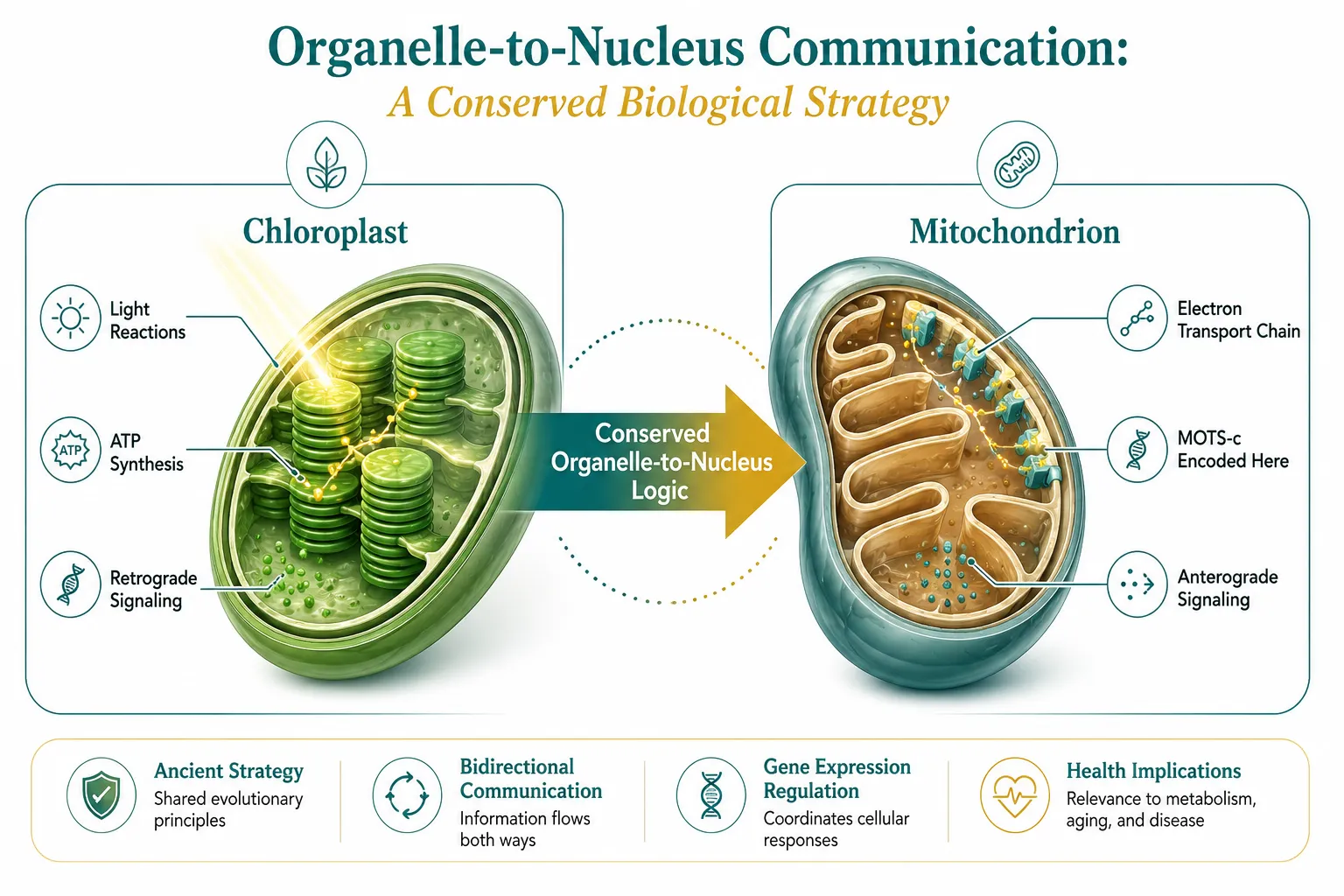
The field of photosynthesis, cellular energy, and mitochondrial peptides is not simply an academic curiosity. It reveals a conserved logic, organelles communicating with the cell nucleus to regulate energy output, that appears in both plant cells and human cells. Understanding that logic helps explain why MOTS-c research connects plant biology concepts to human metabolism in ways that are both scientifically rigorous and practically relevant.

Key Takeaways

  • Chloroplasts and mitochondria use strikingly similar retrograde signaling strategies to communicate organelle status to the nucleus.
  • MOTS-c is a peptide encoded in mitochondrial DNA that acts as a metabolic stress signal, activating AMPK and redirecting glucose metabolism.
  • Exercise significantly raises MOTS-c levels, earning it the label of an "exercise-mimetic" peptide in the research literature.
  • Early human trials in 2026 show modest but consistent improvements in insulin sensitivity among prediabetic participants.
  • MOTS-c is currently classified as a prohibited substance by WADA and remains a research compound in the United States.

The Shared Logic of Organelle-to-Nucleus Signaling
The Shared Logic of Organelle-to-Nucleus Signaling

In plant cells, chloroplasts do not operate in isolation. When light conditions change or photosynthetic machinery is stressed, chloroplasts send chemical signals back to the nucleus, a process called retrograde signaling. The nucleus then adjusts gene expression to protect the cell and optimize energy output. This feedback loop is essential for plant survival.

Human mitochondria follow an almost identical logic. When mitochondrial function is compromised, by nutrient excess, oxidative stress, or aging, the organelle communicates with the nucleus through its own signaling molecules. MOTS-c is one of those molecules.

"The organelle-to-nucleus communication axis is one of the most conserved features of eukaryotic life. Recognizing it in both photosynthesis and human metabolism reframes how researchers think about metabolic disease."

This parallel is not coincidental. Both chloroplasts and mitochondria were once free-living bacteria that were incorporated into host cells roughly 1.5 billion years ago. Both retained small, independent genomes. Both evolved sophisticated ways to alert the host cell when energy production was at risk. Studying one system genuinely informs the other.

For a broader look at how peptides function at the cellular and receptor level, the article on Peptides Mechanism 101: From GLP-3 Retatrutide to CJC-1295 and MOTS-c provides useful foundational context.

What MOTS-c Is and Why It Matters for Cellular Energy
What MOTS-c Is and Why It Matters for Cellular Energy

MOTS-c (Mitochondrial Open Reading Frame of the 12S rRNA type-c) is a 16-amino-acid peptide encoded in the 12S ribosomal RNA region of the mitochondrial genome. Its discovery challenged a long-held assumption that mitochondrial DNA only coded for components of the respiratory chain. MOTS-c proved that mitochondria could produce independent signaling peptides, molecules that travel outside the organelle and even outside the cell to regulate metabolism systemically.

How MOTS-c Activates Metabolic Pathways

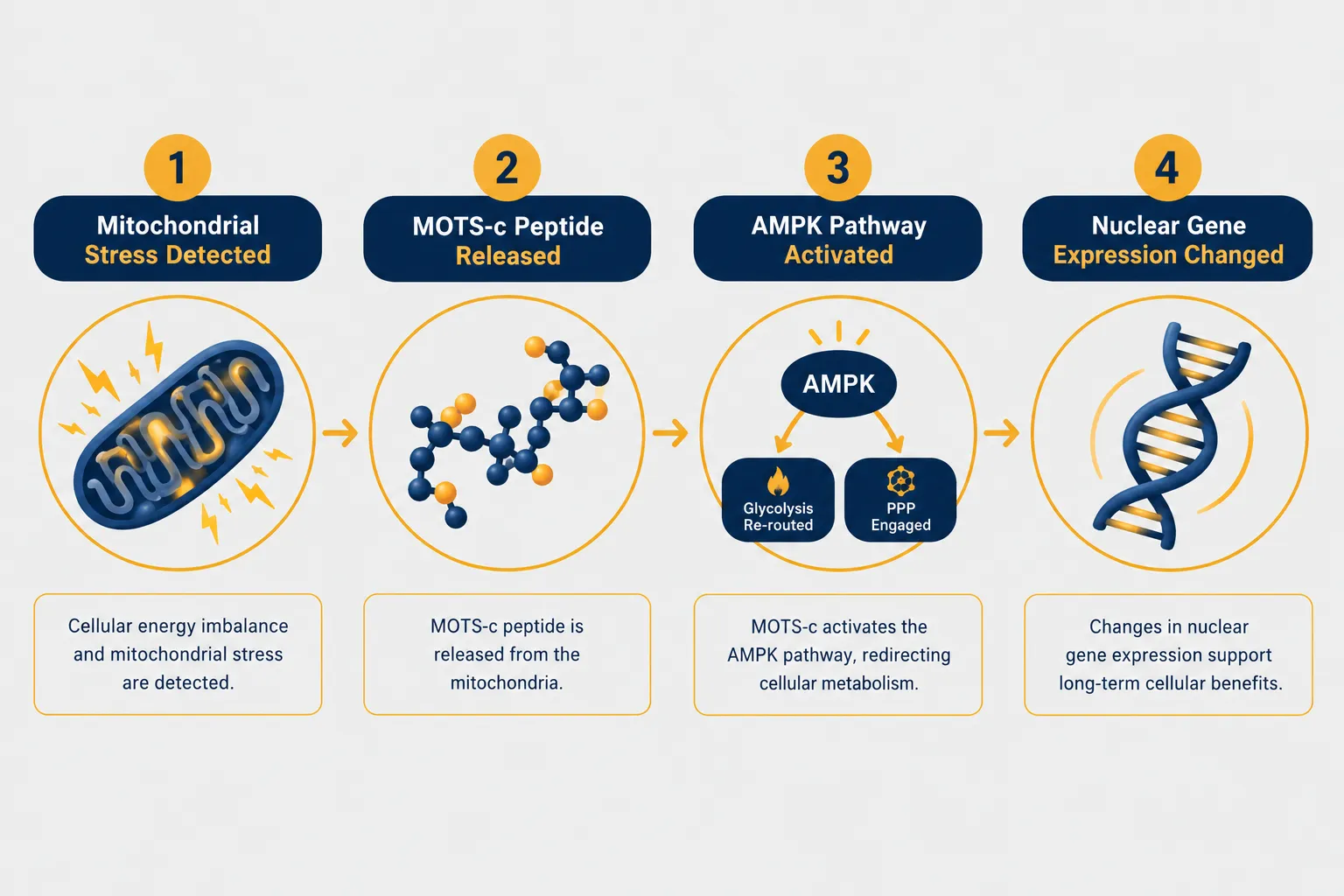
The core mechanism involves three interconnected steps:

  1. AMPK activation, MOTS-c stimulates AMP-activated protein kinase, the cell's master energy sensor, which switches on fat oxidation and suppresses energy-wasting processes.
  2. Glycolysis and pentose phosphate pathway (PPP) re-routing, Under metabolic stress, MOTS-c shifts glucose away from standard glycolysis and toward the PPP, which generates antioxidant molecules and nucleotide precursors.
  3. Mitochondrial protection, By reducing oxidative stress and supporting respiratory chain efficiency, MOTS-c helps preserve the very organelle that produced it.

This three-step cascade mirrors, in a meaningful way, the regulatory adjustments a plant cell makes when photosynthetic electron transport is disrupted. In both cases, the organelle detects an energy imbalance and triggers a protective metabolic shift.

Researchers exploring MOTS-c and related mitochondrial peptides have noted that this mechanism makes MOTS-c particularly interesting for metabolic disease models.

MOTS-c as a Host-Defense Peptide

New evidence published in August 2026 adds another dimension: MOTS-c also functions as a mitochondrial-encoded host-defense peptide (HDP). This means it may play a role in immune modulation beyond pure metabolic signaling, a finding that significantly broadens its research profile.

For those comparing MOTS-c to other mitochondria-targeting compounds, the SS-31 and MOTS-c research catalog offers a useful point of comparison between these two peptide classes.

MOTS-c in Human Metabolism: Diabetes, Aging, and Exercise
MOTS-c in Human Metabolism: Diabetes, Aging, and Exercise

The translation from cellular mechanism to human metabolic health is where MOTS-c research becomes most clinically relevant.

Key findings from recent research include:

Research Area Finding
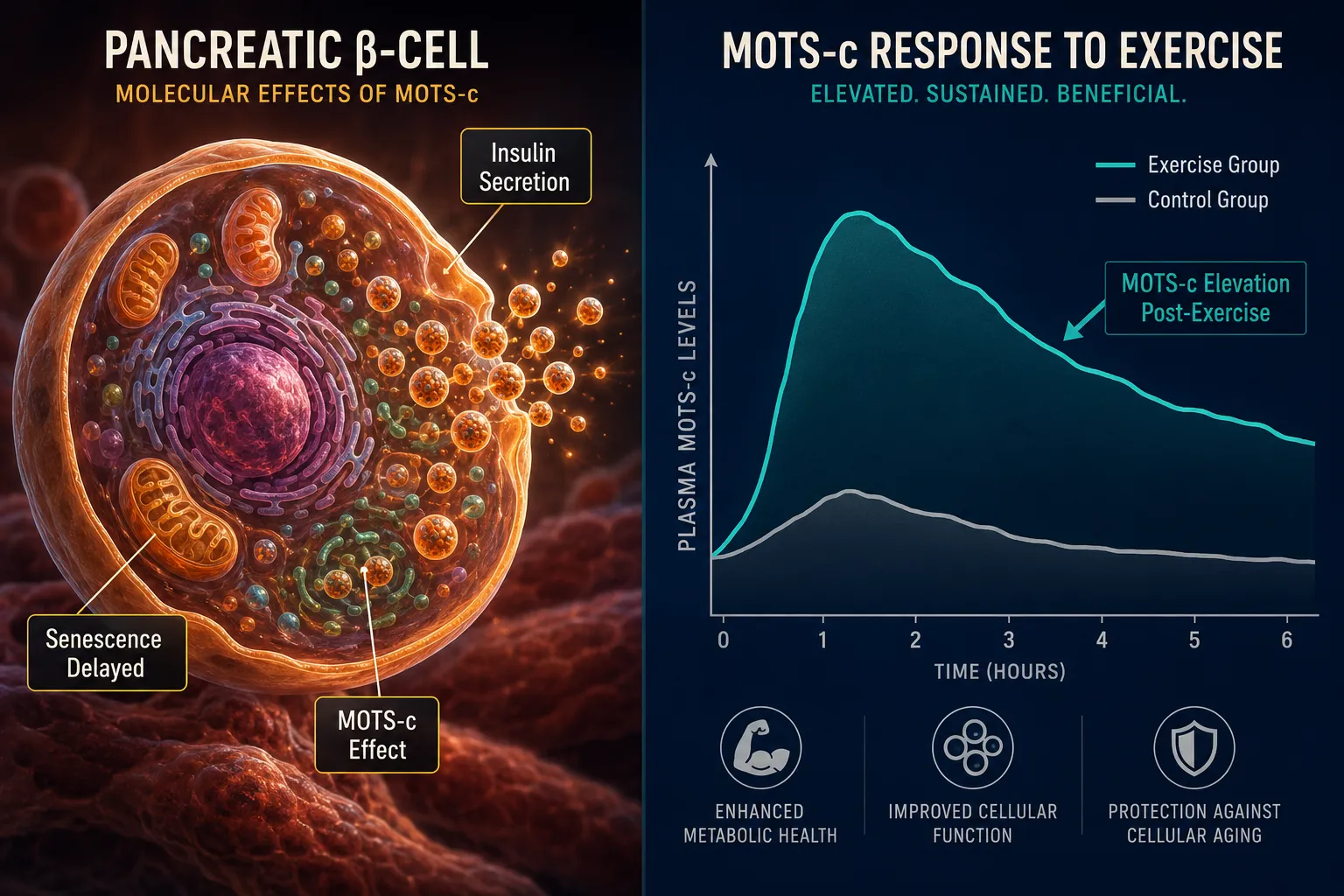
Pancreatic beta cells MOTS-c delays cellular senescence in animal models, preserving insulin secretion capacity
Type 2 diabetic heart 2025 data shows MOTS-c restores mitochondrial respiration in cardiac tissue
Exercise response Physical activity sharply elevates circulating MOTS-c, supporting its role as an exercise-mimetic signal
Obesity biomarker Elevated systemic MOTS-c levels are observed in obese and insulin-resistant individuals, suggesting a compensatory response

The exercise connection is particularly notable. When skeletal muscle contracts repeatedly, mitochondria in muscle cells are stressed, MOTS-c is released, and downstream metabolic improvements follow. This is one reason some researchers describe MOTS-c as a molecular explanation for why exercise improves insulin sensitivity, the peptide may be part of the signaling chain that carries the benefit.

Human Trial Landscape in 2026

As of mid-2026, the first Phase 2a clinical trial in prediabetic participants is underway, with early signals showing modest but consistent improvements in insulin sensitivity and body composition. A separate study is examining MOTS-c in metabolic syndrome populations. Researchers caution that the gap between animal-model results and human efficacy remains significant, and that mechanistic rationale, however strong, does not substitute for robust clinical evidence.

From a regulatory standpoint, MOTS-c is currently listed as a prohibited substance by the World Anti-Doping Agency (WADA) and remains a research-only compound in the United States. It is not approved for human therapeutic use.

For researchers interested in how molecular size and structure influence peptide function and experimental design, the overview of peptides and polypeptides in modern research is a relevant companion resource.

Those sourcing compounds for laboratory work can also review the MOTS-c product tag page for catalog availability, and researchers comparing mitochondria-targeted peptides may find the SS-31 peptide benefits resource useful for cross-referencing mechanisms.

Conclusion

The connection between photosynthesis, cellular energy, and mitochondrial peptides is not a metaphor, it is a reflection of shared evolutionary biology. Both plant chloroplasts and human mitochondria evolved to monitor their own function and signal the nucleus when energy production is at risk. MOTS-c is one of the clearest examples of that conserved logic operating in human physiology.

Actionable next steps for researchers and educators:

  • Use the chloroplast retrograde signaling model as a teaching framework when introducing MOTS-c mechanisms, the parallel makes complex mitochondrial biology more accessible.
  • Follow the Phase 2a prediabetes trial results expected in late 2026 or early 2027, as these will provide the first meaningful human efficacy data.
  • When designing MOTS-c experiments, account for baseline exercise levels in subjects, since physical activity independently elevates circulating peptide concentrations.
  • Treat current biomarker data (elevated MOTS-c in obesity) as hypothesis-generating rather than conclusive, the compensatory vs. causative question remains open.
  • Consult regulatory guidance before any non-research application, given WADA prohibition status and the absence of therapeutic approval.

The field sits at a genuinely exciting intersection of foundational biology and translational medicine. The photosynthesis-to-mitochondria conceptual bridge is more than an analogy, it is a map of where the science is heading.

https://www.puretestedpeptides.com/wp-content/uploads/2026/08/photosynthesis-cellular-energy-and-mitochondrial-peptides-how-mots-c-research-co.webp 1024 1536 https://www.puretestedpeptides.com/wp-content/uploads/2026/01/buy-peptides-online.jpg 2026-08-28 13:06:482026-08-28 13:06:48Photosynthesis, Cellular Energy, and Mitochondrial Peptides: How MOTS‑c Research Connects Plant Biology Concepts to Human Metabolism
×

Helpful Links

  • My account
  • Cart
  • Checkout
  • Refund and Returns Policy
  • Privacy Policy
  • SMS Privacy Policy
  • Login
  • My Account
  • Logout

USA Made Lab Tested Peptides

All products are sold for research, laboratory, or analytical purposes only, and are not for human consumption


Pure Tested Peptides is a chemical supplier. Pure Tested Peptides is not a compounding / chemical compounding facility as defined under 503A of the Federal Food, Drug, and Cosmetic act. Pure Tested Peptides is not an outsourcing facility as defined under 503B of the Federal Food, Drug, and Cosmetic act.

The statements made within this website have not been evaluated by the US Food and Drug Administration. The products we offer are not intended to diagnose, treat, cure or prevent any disease.

Human/Animal Consumption Prohibited. Laboratory/In-Vitro Experimental Use Only

Scroll to top Scroll to top Scroll to top