

Peptide Research Samples and Common Prescription Drugs: How to Map Metoprolol, Lisinopril, Omeprazole, and Statin Confounders
More than 60 percent of adults enrolled in cardiometabolic research studies take at least one of four drug classes, beta-blockers, ACE inhibitors, proton pump inhibitors, or statins, yet fewer than half of published peptide study protocols include a formal confounder mapping strategy for these agents. That gap creates reproducibility problems that surface long after data collection ends.
Mapping peptide research samples and common prescription drugs, specifically metoprolol, lisinopril, omeprazole, and statin confounders, is not a clinical pharmacology exercise reserved for late-stage trials. It is a foundational study-design task that applies equally to cell-based models, ex vivo tissue preparations, and preclinical animal work. The sections below build a practical medication-confounder matrix organized around exposure timing, physiological readouts, assay controls, and documentation.
Key Takeaways
- Peptide compounds largely bypass CYP-mediated metabolism, so pharmacokinetic drug-drug interactions with metoprolol, lisinopril, omeprazole, and statins are minimal, but pharmacodynamic and assay-level interference is substantial.
- A confounder matrix should address four dimensions: exposure timing, physiological endpoint overlap, chromatographic interference, and immunogenicity background.
- LC-MS/MS assays for peptide biomarkers must include spiked interference panels containing the major metabolites of each concomitant drug class.
- Stratifying animal cohorts or ex vivo samples by background drug exposure before analysis prevents mis-attribution of endpoint changes to the peptide under study.
- Formal documentation of confounder mapping, including inclusion/exclusion logic and assay selectivity data, is expected by regulatory agencies reviewing INDs, NDAs, and BLAs for peptide products.
Understanding Why These Four Drug Classes Matter in Peptide Research
Regulatory guidance from the FDA on clinical pharmacology for peptide drug products makes a clear distinction: because peptides are typically degraded by proteolytic enzymes rather than CYP enzymes, classical pharmacokinetic drug-drug interactions with small molecules are uncommon. That conclusion, however, does not mean background medications are irrelevant. It means the risk shifts from PK to PD and to bioanalytical interference.
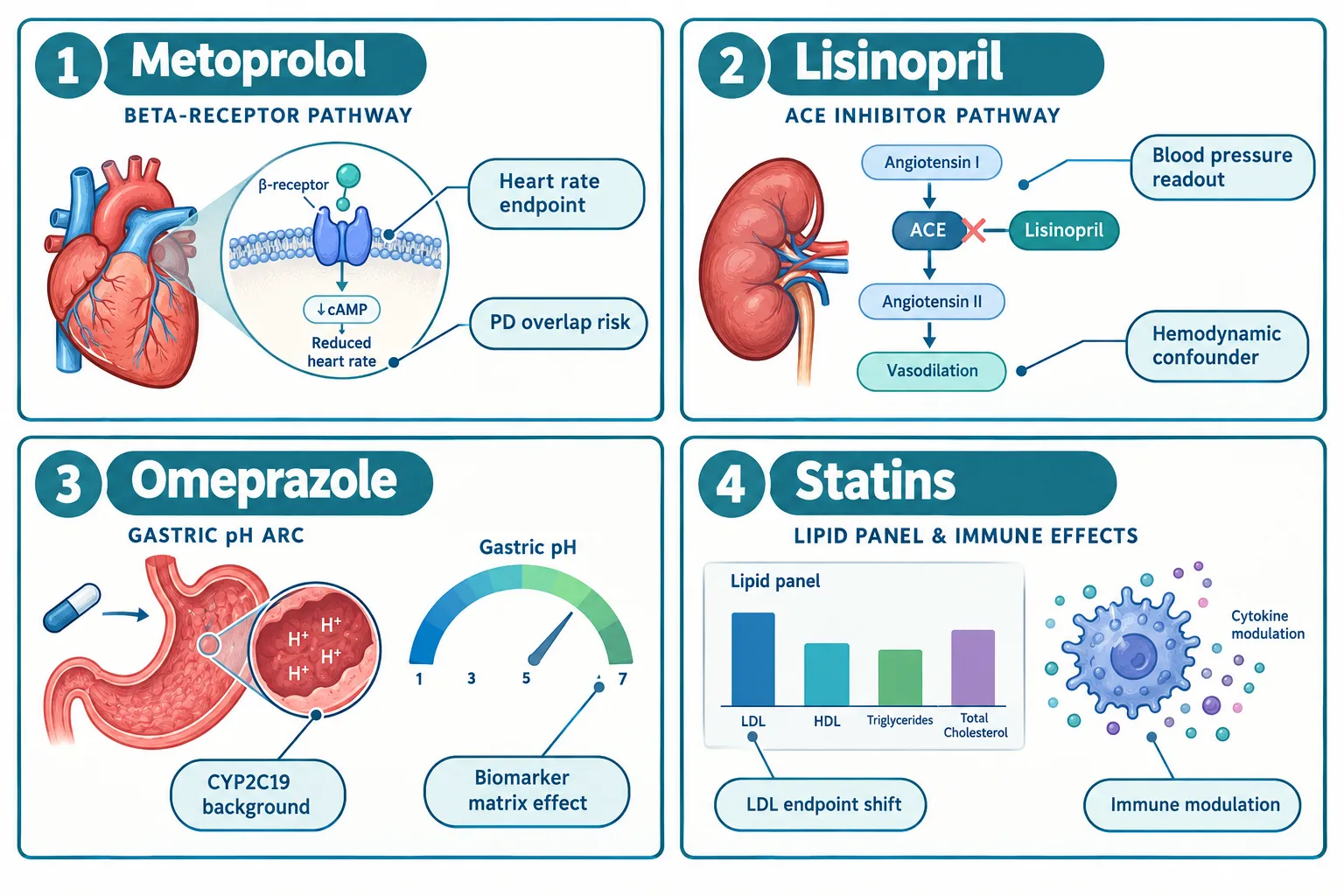
Metoprolol is a beta-1 selective adrenergic blocker. In peptide research involving cardiovascular or autonomic endpoints, heart rate, cardiac output, blood pressure variability, metoprolol directly modulates the same physiological parameters a peptide may be expected to influence. Any cohort or animal group receiving metoprolol will show attenuated heart rate responses, which can mask or amplify a peptide's apparent hemodynamic activity.
Lisinopril, an ACE inhibitor, suppresses angiotensin II generation and elevates bradykinin levels. In ex vivo vascular models or animal studies examining endothelial function, inflammatory cytokine profiles, or renal perfusion, lisinopril creates a shifted physiological baseline. Peptide-mediated vasodilation or anti-inflammatory signals measured against that background will be systematically different from peptide signals measured in drug-naive tissue.
Omeprazole is a proton pump inhibitor and a known CYP2C19 inhibitor. While the peptide itself may not be a CYP substrate, co-administered small-molecule probes or metabolic tracers used alongside a peptide study may be affected. More critically, omeprazole alters gastric and intestinal pH, which can affect oral bioavailability of companion agents and shift matrix composition in gastrointestinal tissue samples.
Statins present a dual challenge. First, they directly alter lipid panel endpoints, LDL, HDL, triglycerides, that are commonly used as efficacy biomarkers in cardiometabolic peptide research. A peptide with lipid-modulating properties cannot be fairly evaluated in a statin-treated cohort without stratification. Second, certain statins have documented immunomodulatory effects, meaning they can influence immune biomarker readouts relevant to peptide immunogenicity assessments.
For researchers exploring mitochondrial or cardiometabolic angles, resources such as the SS-31 mitochondrial research themes overview and the discussion of peptides in cardiometabolic models provide useful context on how peptide mechanisms intersect with the same pathways these drugs target.
Building the Confounder Matrix: Exposure Timing, Readouts, and Assay Controls
A confounder matrix is a structured reference document, not a statistical model, that maps each background drug to the specific dimensions where it can distort peptide research data. The matrix should be built before sample collection begins.
Dimension 1: Exposure Timing
The timing of background drug exposure relative to peptide administration or sample collection determines whether interference is acute or chronic. The table below summarizes key timing considerations.
| Drug | Relevant Exposure Window | Primary Timing Risk |
|---|---|---|
| Metoprolol | Acute (1-4 hrs) and chronic | Blunted heart rate response during peptide challenge |
| Lisinopril | Chronic (days to weeks) | Shifted vascular baseline at time of tissue harvest |
| Omeprazole | Chronic (steady-state CYP2C19 inhibition) | Altered matrix pH; companion probe metabolism affected |
| Statins | Chronic (lipid and immune effects) | Lipid endpoint suppression; immune biomarker shift |
Dimension 2: Physiological Readout Overlap
For each peptide under study, list the primary and secondary efficacy endpoints. Then cross-reference each drug class against those endpoints. If metoprolol and the peptide both affect resting heart rate, that endpoint requires either exclusion of metoprolol-treated subjects from the primary analysis or formal stratification with sufficient statistical power in each stratum.
Key principle: An endpoint that is also a pharmacological target of a background drug cannot serve as an unconfounded primary readout without stratification or covariate adjustment.
Dimension 3: Assay Controls and Chromatographic Interference
FDA bioanalytical method validation guidance for biomarkers explicitly requires sponsors to demonstrate assay selectivity and assess matrix effects across relevant patient subgroups and concomitant therapies. For LC-MS/MS workflows used to quantify peptide concentrations or peptide-related biomarkers, this means building an interference panel.
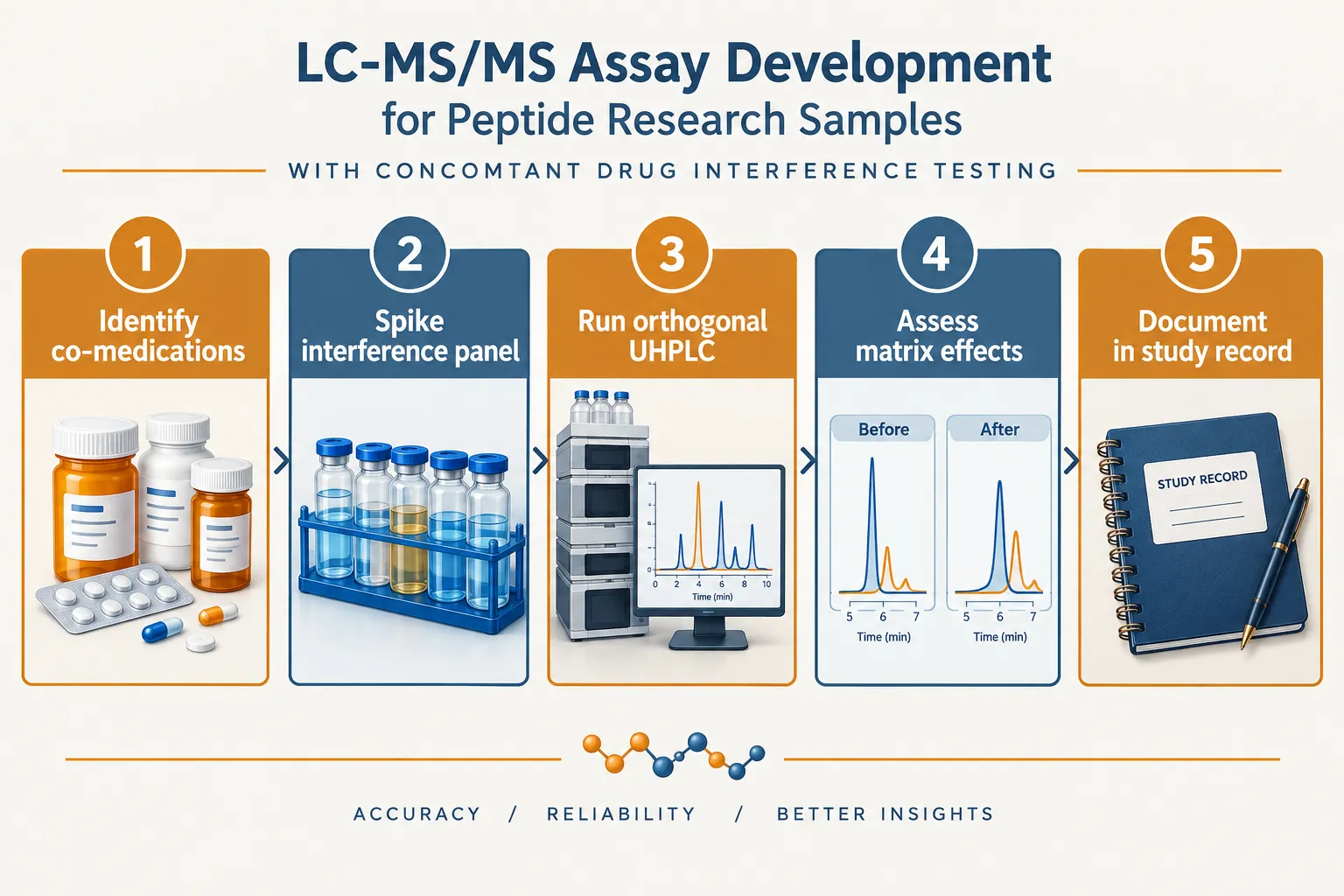
Interference panel construction steps:
- Obtain authenticated reference standards for the parent compound and major metabolites of metoprolol, lisinopril, omeprazole, and the relevant statin.
- Spike each compound individually into the biological matrix at clinically relevant concentrations.
- Run the spiked samples using the validated LC-MS/MS method and record retention times, peak areas, and any co-elution with peptide analyte peaks.
- Apply orthogonal chromatographic separation (e.g., UHPLC-HRMS/MS) to resolve any co-eluting species.
- Document selectivity data in the bioanalytical method validation report.
Published LC-MS assay work on cardiovascular medications has demonstrated that lisinopril and statins such as lovastatin exhibit peak tailing and matrix-dependent variability that can compromise quantification accuracy. These findings reinforce the need to include such compounds in interference testing rather than assuming they are chromatographically inert.
For researchers working with antioxidant or mitochondrially targeted peptides, the LL-37 versus SS-31 benefits comparison illustrates how different peptide classes engage distinct biological pathways, a factor that determines which background drugs are most likely to confound a given readout.
Dimension 4: Immunogenicity Background
Statins and long-term PPI use can influence immune biomarkers. FDA draft guidance on immunogenicity risk for synthetic peptides notes that impurities and background immunomodulatory agents can affect the summative immune response. When designing immunogenicity assays for a peptide program, the confounder matrix should flag statin and omeprazole exposure as variables requiring documentation in the sample metadata.
Documentation, Stratification, and Regulatory Alignment

Mapping confounders is only useful if the map is formally embedded in study documentation. Regulatory science frameworks, including FDA product-specific guidances for generic peptide products updated in 2026, tighten expectations around impurity analysis and biological comparability, making it more important than ever to distinguish product-related signals from background medication effects in real-world samples.
Recommended documentation elements:
- Inclusion/exclusion criteria log: Record which drug classes are permitted, restricted, or required to be stable-dose before enrollment or sample collection begins.
- Stratification plan: Pre-specify strata for metoprolol use (yes/no), statin type and dose, and omeprazole use. Assign samples to strata before unblinding any endpoint data.
- Assay selectivity appendix: Attach interference panel results to the bioanalytical method validation report. Include retention time tables and representative chromatograms for each spiked drug.
- Biomarker qualification notes: For each lipid or cardiovascular endpoint used as a peptide efficacy biomarker, note whether statin or beta-blocker use was a pre-specified covariate in the analysis plan.
Regulatory guidance consistently positions concomitant medication mapping as part of clinical pharmacology planning rather than an afterthought. Practical recommendations from FDA workshop materials include prospectively capturing beta-blocker, ACE inhibitor, PPI, and statin use, stratifying PK/PD and biomarker analyses by these medications, and pre-screening bioanalytical methods for interference from their major metabolites.
Researchers sourcing verified peptide compounds for these studies can explore options through resources such as the best peptide website directory and the best place to buy peptide listings to ensure purity standards align with the stringent analytical requirements described above. For studies involving endocrine or receptor-level interactions, the discussion of peptides in endocrine pharmacology offers additional context on how background drug classes can shift receptor biology.
Conclusion
Mapping peptide research samples and common prescription drugs, metoprolol, lisinopril, omeprazole, and statin confounders, is a concrete, executable task that protects data integrity from the earliest stages of study design. The confounder matrix framework presented here addresses four actionable dimensions: exposure timing, physiological readout overlap, LC-MS/MS assay interference, and immunogenicity background documentation.
Actionable next steps for research teams:
- Before finalizing a study protocol, audit every primary and secondary endpoint against the pharmacological targets of the four drug classes covered here.
- Build an interference panel for all LC-MS/MS or ligand-binding assays using authenticated reference standards for each background drug and its major metabolites.
- Pre-specify stratification variables in the statistical analysis plan so that background drug exposure is a documented covariate, not a post-hoc explanation.
- Attach selectivity and matrix-effect data to the bioanalytical validation report as a dedicated confounder appendix.
- Review current FDA product-specific guidances and bioanalytical method validation guidance for biomarkers to ensure documentation meets the latest regulatory expectations.
Treating confounder mapping as a first-class study-design deliverable, not a footnote, is what separates reproducible peptide research from data that cannot be interpreted with confidence.