

Peptide Research and Omeprazole: What Acid-Suppressing Drugs Mean for GLP-2 and Gut-Focused Studies
More than 15 percent of adults in Western countries take a proton pump inhibitor (PPI) like omeprazole on a regular basis, yet this common medication rarely appears as a controlled variable in gut-focused peptide trials. That gap matters more than most researchers realize. Understanding peptide research and omeprazole interactions, especially what acid-suppressing drugs mean for GLP-2 and gut-focused studies, is quickly becoming a prerequisite for designing credible intestinal peptide protocols in 2026.
Key Takeaways
- Omeprazole and other PPIs modestly improve gut barrier function, but GLP-2 peptides produce significantly larger gains in villus height and tight-junction integrity through distinct downstream mechanisms.
- Pharmacokinetic data show omeprazole does not meaningfully blunt GLP-peptide exposure; any increase in drug absorption is small and clinically irrelevant.
- Long-term PPI use reduces gut microbiota diversity, while GLP-2 therapy is linked to more favorable microbiota profiles, making PPI status a critical covariate in intestinal studies.
- Oral peptide formulations should follow an empty-stomach dosing window, with PPI administration delayed by at least 30 minutes to protect bioavailability.
- Future GLP-2 and teduglutide trials are expected to treat chronic PPI use as a pre-specified variable or exclusion criterion to isolate peptide-driven mucosal effects.
How Omeprazole Affects the Gut Environment Relevant to Peptide Research
Omeprazole works by irreversibly blocking the hydrogen-potassium ATPase enzyme in gastric parietal cells, suppressing acid output and raising gastric pH. That pH shift creates downstream changes throughout the gastrointestinal tract, changes that overlap with the very endpoints gut-focused peptide studies are designed to measure.
What PPIs do to the gut environment:
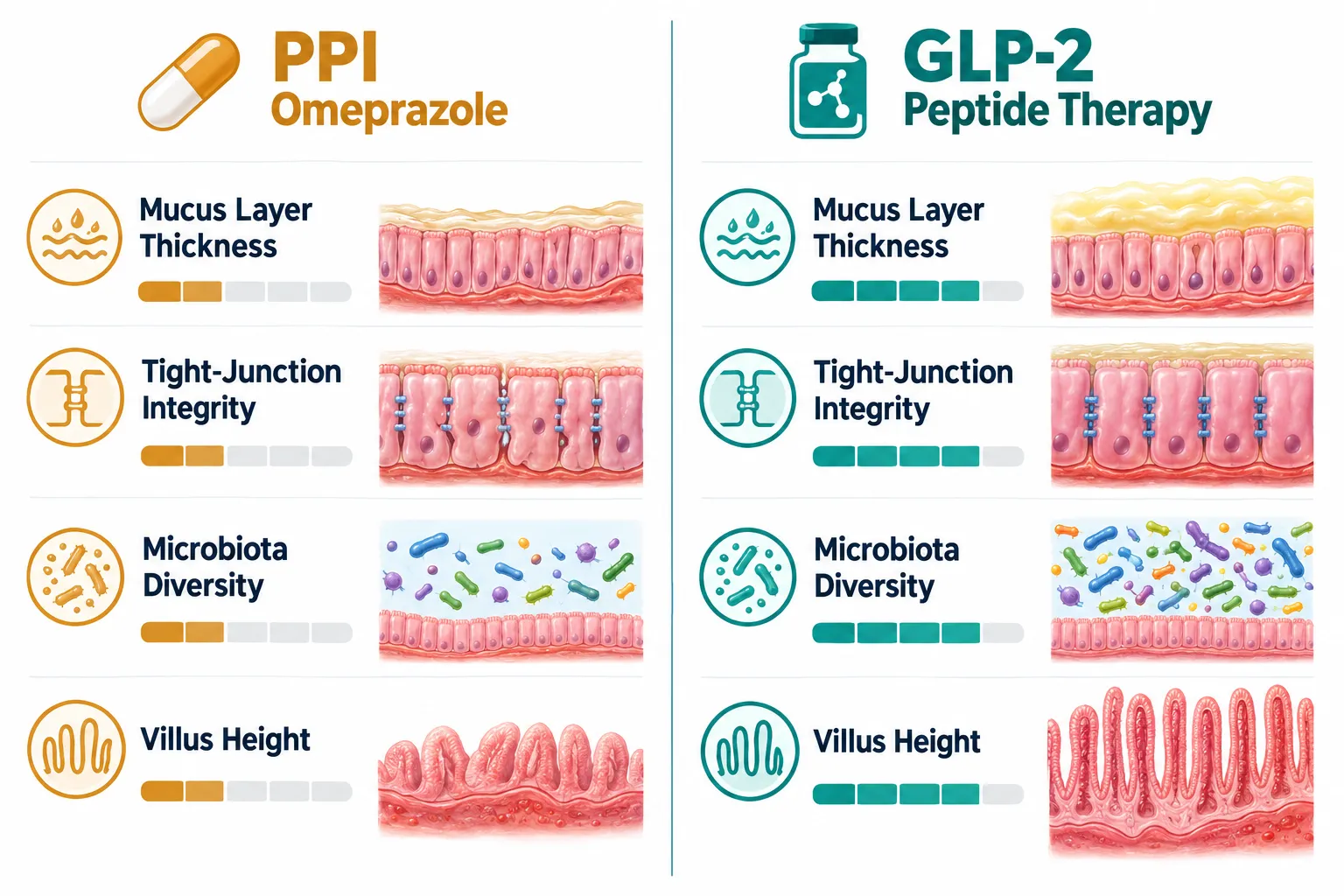
- Modestly increase mucus layer thickness
- Improve tight-junction integrity by reducing acid-driven mucosal injury
- Raise gastric pH, which can affect the absorption window for orally administered compounds
- With long-term use, reduce gut microbiota diversity, a recognized risk in chronic PPI therapy
- Associate with a small but statistically significant increase in gastric cancer risk over 10 years (number needed to harm approximately 1,191 over a decade)
PPIs also carry documented risks including infection susceptibility and nutrient malabsorption. These effects are not trivial in a research context. When a participant is taking omeprazole daily, the baseline gut environment is already shifted, and that shift can confound mucosal endpoints in any gut-focused peptide study.
Key point: PPIs and GLP-2 peptides act on overlapping but not identical gut endpoints. Failing to account for PPI use in study design risks attributing PPI-driven changes to the peptide under investigation.
GLP-2 Mechanisms Compared to Acid Suppression
GLP-2 (glucagon-like peptide-2) and its clinical analog teduglutide (GLP-2-T) operate through mechanisms that are fundamentally different from acid suppression. Understanding this distinction is central to interpreting peptide research and omeprazole co-administration scenarios.
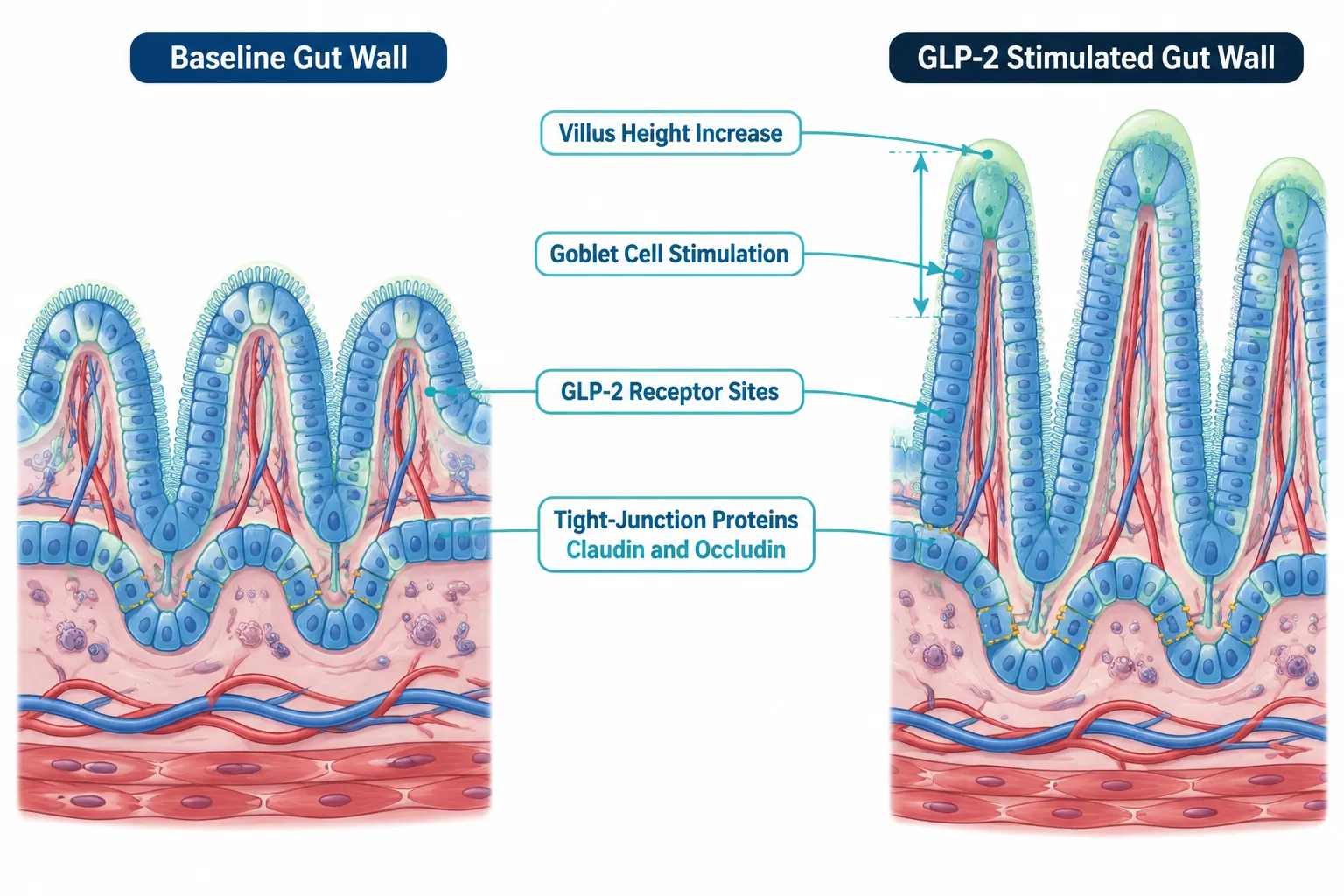
How GLP-2 remodels the intestinal mucosa:
- Directly stimulates goblet cells to increase mucus production
- Upregulates tight-junction proteins claudin and occludin, strengthening the epithelial barrier
- Promotes enterocyte proliferation, producing measurable increases in villus height
- Supports crypt cell survival and reduces apoptosis along the intestinal lining
Compared to the modest barrier improvements seen with PPIs, GLP-2 and GLP-2-T produce substantially larger gains in villus height and barrier function. Longitudinal data from 2025 link GLP-2-T therapy to improved barrier integrity and more favorable microbiota profiles, a meaningful contrast to the microbiota diversity losses associated with long-term PPI use.
For researchers exploring GLP-3 peptide variants and related proglucagon-derived compounds, this mechanistic separation is equally relevant. The mucosal effects of GLP-class peptides operate sufficiently downstream of acid secretion that elevated gastric pH from omeprazole does not appear to blunt their activity.
Those working with GLP-3 R peptide formulations should note that the structural similarities across proglucagon-derived peptides make these pharmacokinetic findings broadly applicable to the class.
Pharmacokinetics: Does Omeprazole Interfere With GLP-Peptide Absorption?
This is the practical question most researchers and clinicians ask first. The short answer, supported by pharmacokinetic data, is no, not in any clinically meaningful way.
Randomized pharmacokinetic studies using oral semaglutide as a structural proxy for proglucagon-derived peptides found only a small, non-statistically-significant increase in peptide exposure when omeprazole was co-administered. The AUC ratio was approximately 1.13 and the Cmax ratio approximately 1.16, changes deemed clinically irrelevant, with no dose adjustment required.
Updated guidance for oral semaglutide in 2026 confirms it can be safely combined with omeprazole, with one practical caveat: take the peptide first on an empty stomach and delay omeprazole by at least 30 minutes. This timing protocol protects bioavailability without requiring formulation changes.
Similar findings apply across the GLP class:
| Peptide/Drug | Omeprazole Interaction | Dose Adjustment Needed? |
|---|---|---|
| Oral semaglutide | Minor AUC increase (~13%) | No |
| Tirzepatide | No known PK or PD interaction | No |
| Liraglutide | Low-severity rating, no signal | No |
For labs sourcing research-grade GLP-3 peptides for gut-focused protocols, this data supports including omeprazole-using participants without automatic exclusion, provided PPI status is recorded and stratified in the analysis.
Study Design Implications: Treating PPI Use as a Covariate
The convergence of evidence in 2026 points toward a clear methodological standard for future GLP-2 and teduglutide trials: chronic PPI use must be treated as a pre-specified covariate or exclusion criterion.
The rationale is straightforward. PPIs independently affect:
- Mucus layer thickness
- Tight-junction protein expression
- Gut microbiota composition and diversity
- Gastric and intestinal cancer risk over time
- Glycemic markers, PPIs show modest HbA1c-lowering effects, likely via increased gastrin and downstream incretin activity
That last point is particularly relevant. Meta-analytic data through 2025-2026 suggest PPIs may modestly improve glycemic control in type 2 diabetes, with HbA1c reductions comparable to some incretin-based therapies. This creates a potential mild synergy, not antagonism, when PPIs are combined with GLP-1 receptor agonists or other gut-acting peptides.
For researchers also evaluating mitochondrial or systemic peptides alongside gut endpoints, resources such as the LL-37 versus SS-31 peptide comparison offer useful context on how peptide class affects study variable selection.
Labs sourcing lab-tested peptides for intestinal research should document participant PPI status at enrollment and consider stratified randomization by PPI use to prevent confounding at the analysis stage.
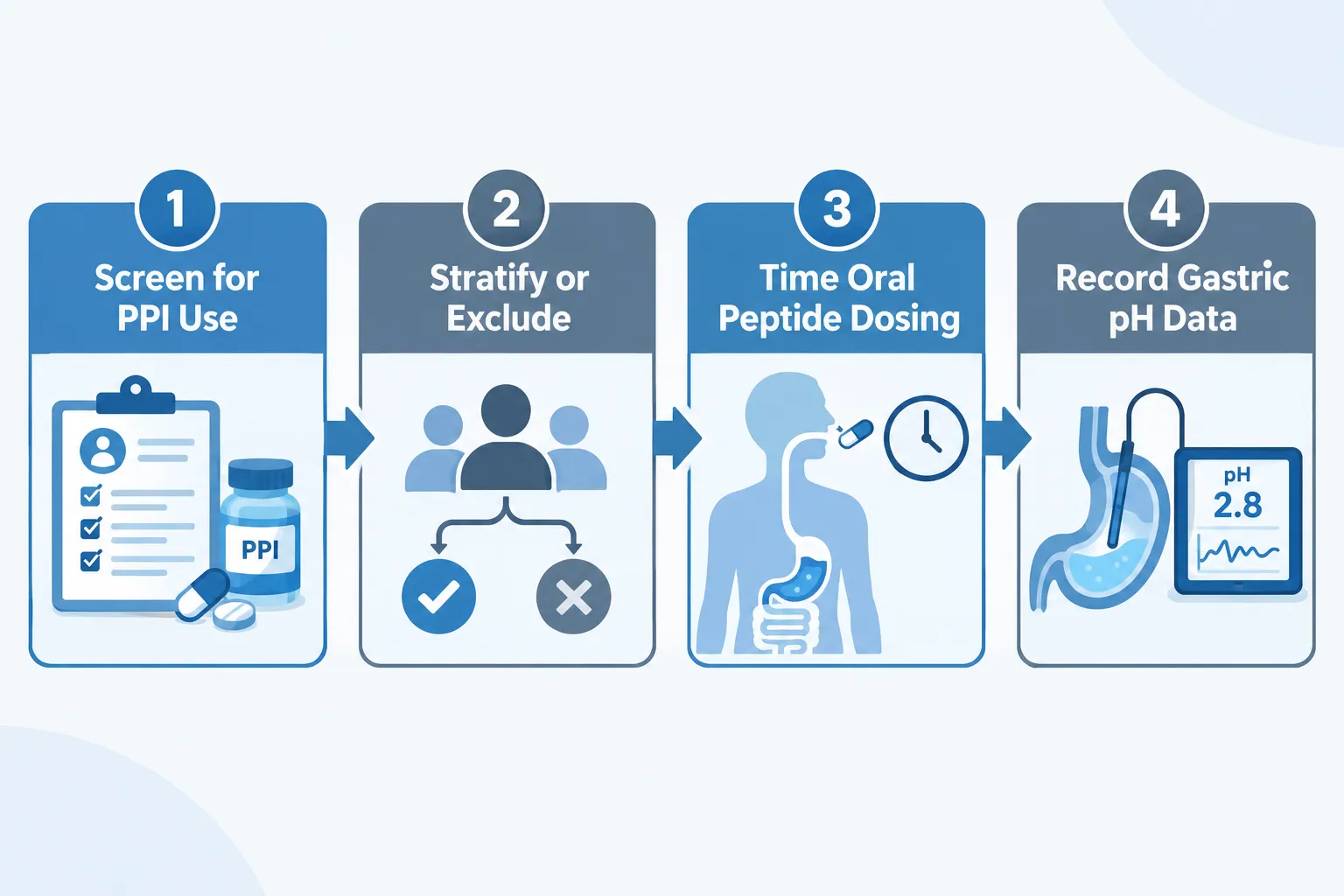
Recommended steps for GLP-2 trial design in 2026:
- Screen all participants for current PPI use at baseline
- Stratify or exclude chronic PPI users based on study endpoints
- For oral peptide arms, standardize the dosing window (empty stomach, 30-minute PPI delay)
- Record gastric pH data as a secondary variable where feasible
- Pre-specify PPI status as a covariate in the statistical analysis plan
As oral peptide formulations expand, following the template established by oral semaglutide, future GLP-2 analog trials are expected to mirror these protocols, optimizing dosing windows relative to PPIs while leveraging the finding that PPI-induced pH changes alone do not meaningfully suppress peptide exposure.
Conclusion
The relationship between peptide research and omeprazole is more nuanced than a simple drug interaction. Omeprazole does not meaningfully block GLP-2 or GLP-1 class peptide activity at the pharmacokinetic level, but it does independently alter the gut environment in ways that directly overlap with mucosal endpoints these peptides are designed to affect.
Actionable next steps for researchers and study designers:
- Always document and stratify PPI use in gut-focused peptide protocols, do not treat it as background noise
- Apply the 30-minute empty-stomach dosing rule for any oral peptide formulation when participants are on PPIs
- Treat long-term PPI use as a potential confounder for microbiota, barrier integrity, and glycemic endpoints
- Review updated 2026 guidance for oral GLP-class peptides before finalizing co-administration protocols
- Consider pre-specifying PPI status as an exclusion criterion or stratification variable in GLP-2-T trials targeting villus height and tight-junction outcomes
Getting this variable right is not a minor methodological detail, it is the difference between clean data and results that cannot be replicated.