Call or Text 727-513-9780
  • Shopping Cart Shopping Cart
    0Shopping Cart
Pure Tested Peptides | America's most trusted Peptides for sale online
  • Peptides for sale
    • Oral Peptides for sale
      • Peptide Capsules for sale
      • BPC 157 Capsules 1000mcg
      • SLU-PP-332 Capsules | 1000 mcg
      • 5-Amino-1MQ 50mg Capsules
      • Tesofensine 500mcg
    • All Peptides for sale
    • Peptide Sprays
      • BPC 157 Nasal Spray Kit
      • BPC-157 TB500 Nasal Spray Kit
      • Semax Nasal Spray 10mg
      • Selank – Nasal Spray Kit – 10mg
      • Epithalon 50MG Nasal Spray Kit
      • Ipamorelin 10mg Nasal Spray
      • Klow Nasal Spray (BPC-157 + TB-500 + GHK-Cu + KPV) | 80mg
      • Hulk Nasal Spray Tesa / Ipa Blend 6/3 MG
      • Klow Nasal Spray
      • NAD + 500 mg Nasal Spray
      • PT-141 Nasal Spray Kit
    • GHRH Peptides
      • Ipa Peptides
      • CJC-1295 Peptides
        • CJC-1295 with DAC 5 mg
        • CJC-1295 without DAC 5 mg
        • CJC-1295 Ipa 10mg
      • Tesa Peptides
        • Tesa Peptide
        • Tesa 20 mg
    • GHK-Cu Peptides
      • All GHK-Cu Peptides
      • GHK-Cu 100mg
      • KLOW Peptide Blend – Buy KLOW blend online
    • BPC Peptides
      • All BPC Peptides
      • BPC-157
      • BPC-157 TB-500
      • BPC 157 capsules 1000mcg
    • SLU-PP-332 Peptides
      • All SLU-PP-332 Peptides
      • SLU-PP-332 5mg
    • GLP3 Peptides
    • PT-141 Peptides
      • PT-141 Peptides for sale
      • PT-141 10mg
      • PT-141 Nasal Spray
    • CAG Peptides
      • Lipo-C Peptide Blend
      • CAG 5mg
      • CAG 10mg
    • MOTS-C Peptides
      • MOTS-C Peptides for sale
      • MOTS-c peptide
      • MOTS-c 10mg *6 pack*
    • 5 Amino 1MQ Peptides
      • 5 Amino 1MQ Peptides for sale
      • 5-Amino-1MQ 50mg Capsules
      • 5-Amino-1MQ 5mg
    • Epithalon Peptides
      • Epithalon Peptides for sale
      • Epithalon 10mg
      • Epithalon 50mg
  • Shop
    • GLPs
      • 5-Amino-1MQ 50mg Capsules
      • 5-Amino-1MQ 5mg
      • L-Carnitine 500mg/ml
      • Tesofensine 500mcg
      • SLU-PP-332 5mg
      • MOTS-c 10mg *6 pack*
    • Epithalon & BPC Peptides
      • Epithalon 10mg
      • Epithalon 50mg
      • BPC-157
      • BPC 157 capsules 1000mcg
      • BPC-157 TB-500
      • BPC-157 TB500 Nasal Spray Kit
      • BPC 157 Nasal Spray Kit
    • BPC TB-500 & NAD+ Peptides
      • NAD+ 500 mg
      • KLOW Peptide Blend – Buy KLOW blend online
      • GLOW Peptide Blend
      • TB 500 5mg
      • BPC 157 capsules 1000mcg – Supplement
      • BPC 157 Nasal Spray Kit
      • BPC-157
      • BPC-157 TB500 Nasal Spray Kit
      • BPC-157 TB-500
      • BPC 157 capsules 1000mcg
    • LL-37 Peptide
      • LL-37 10 mg
    • MOTS-C & Selank
      • MOTS-c peptide
      • Selank 10mg
    • GHK Peptides
      • GHK-Cu 100mg
      • GLOW Peptide Blend
      • KLOW Peptide Blend – Buy KLOW blend online
  • COAs
  • Wholesale
    • Wholesale Peptides for sale
  • PTP FAQ
  • Affiliates
    • Selank Peptide: Advanced Pharmacological Mechanisms Underlying Its Anxiolytic and Nootropic Effects in Research
      • 5-Amino-1MQ Peptide: Detailed Mechanisms of NNMT Inhibition and Its Impact on Cellular Metabolism Research
        • MOTS-C Peptide: Unraveling Its Role in Mitochondrial Dynamics and Energy Metabolism Research
          • Epithalon Peptide and Telomerase Regulation: Investigating Its Impact on Cellular Senescence and Lifespan Research Models
            • GLP2-T vs GLP2 Tirz Peptide: Understanding the Naming, Mechanistic Nuances, and Research Implications for Gut Health
      • Peptides and Polypeptides in Modern Pharmacology: What Research on Metoprolol, Prednisone, and Amlodipine Reveals
        • Polypeptide Peptides vs NSAIDs: What Naproxen and Diclofenac Teach Tissue-Repair Researchers About BPC‑157 and TB‑500
          • Peptides and Polypeptides in Endocrine Pharmacology: How GLP-1, GLP-2, and GLP-3 Retatrutide Differ From Classic Drugs Like Prednisone and Amlodipine
          • 5‑Amino‑1MQ Peptide and NNMT Inhibition: How It Compares With Statins Like Atorvastatin in Adipose and Lipid Metabolism Research
      • Enclomiphene, Estrogen Receptor Signaling, and Luteinizing Phase Biology: What Hormone Researchers Should Measure
        • Mesenchymal Stem Cells, BPC‑157, and GHK‑Cu: How Tissue Repair Peptides Compare With Classic NSAIDs Like Naproxen in Injury Models
          • Peptide Calculator Use Cases Beyond Growth Hormone: Working Through GLP‑3 Retatrutide, MOTS‑c, and BPC‑157 Research Dosing
        • Polypeptide Peptides in Endocrine and Metabolic Pharmacology: Lessons From Amlodipine, Prednisone, and Metoprolol
        • Peptides Calculator for Advanced Blends: Worked Examples for Tesamorelin, CJC‑1295, and Ipamorelin Stacks
          • Peptides and Polypeptides in Human Physiology: How Molecular Size Shapes Research Applications
            • Selank Peptide: Advanced Pharmacological Mechanisms Underlying Its Anxiolytic and Nootropic Effects in Research
          • 5-Amino-1MQ Peptide: Detailed Mechanisms of NNMT Inhibition and Its Impact on Cellular Metabolism Research
            • MOTS-C Peptide: Unraveling Its Role in Mitochondrial Dynamics and Energy Metabolism Research
              • Epithalon Peptide and Telomerase Regulation: Investigating Its Impact on Cellular Senescence and Lifespan Research Models
                • GLP2-T vs GLP2 Tirz Peptide: Understanding the Naming, Mechanistic Nuances, and Research Implications for Gut Health
                  • Peptides and Polypeptides in Endocrine Pharmacology: How GLP-1, GLP-2, and GLP-3 Retatrutide Differ From Classic Drugs Like Prednisone and Amlodipine
                    • Polypeptide Peptides vs NSAIDs: What Naproxen and Diclofenac Teach Tissue-Repair Researchers About BPC‑157 and TB‑500
                      • Peptides and Polypeptides in Modern Pharmacology: What Research on Metoprolol, Prednisone, and Amlodipine Reveals
                        • 5‑Amino‑1MQ Peptide and NNMT Inhibition: How It Compares With Statins Like Atorvastatin in Adipose and Lipid Metabolism Research
                        • Enclomiphene, Estrogen Receptor Signaling, and Luteinizing Phase Biology: What Hormone Researchers Should Measure
                        • Mesenchymal Stem Cells, BPC‑157, and GHK‑Cu: How Tissue Repair Peptides Compare With Classic NSAIDs Like Naproxen in Injury Models
                        • Peptide Calculator Use Cases Beyond Growth Hormone: Working Through GLP‑3 Retatrutide, MOTS‑c, and BPC‑157 Research Dosing
                        • Polypeptide Peptides in Endocrine and Metabolic Pharmacology: Lessons From Amlodipine, Prednisone, and Metoprolol
                        • Peptides Calculator for Advanced Blends: Worked Examples for Tesamorelin, CJC‑1295, and Ipamorelin Stacks
                        • Peptides and Polypeptides in Human Physiology: How Molecular Size Shapes Research Applications
                        • Selank Peptide: Advanced Pharmacological Mechanisms Underlying Its Anxiolytic and Nootropic Effects in Research
                        • MOTS-C Peptide: Unraveling Its Role in Mitochondrial Dynamics and Energy Metabolism Research
                        • Peptides and Polypeptides in Modern Pharmacology: What Research on Metoprolol, Prednisone, and Amlodipine Reveals
                        • Peptides and Polypeptides in Endocrine Pharmacology: How GLP-1, GLP-2, and GLP-3 Retatrutide Differ From Classic Drugs Like Prednisone and Amlodipine
                        • 5-Amino-1MQ Peptide: Detailed Mechanisms of NNMT Inhibition and Its Impact on Cellular Metabolism Research
                        • Mesenchymal Stem Cells, BPC‑157, and GHK‑Cu: How Tissue Repair Peptides Compare With Classic NSAIDs Like Naproxen in Injury Models
                        • Peptide Calculator Use Cases Beyond Growth Hormone: Working Through GLP‑3 Retatrutide, MOTS‑c, and BPC‑157 Research Dosing
                        • GLP2-T vs GLP2 Tirz Peptide: Understanding the Naming, Mechanistic Nuances, and Research Implications for Gut Health
                        • Polypeptide Peptides in Endocrine and Metabolic Pharmacology: Lessons From Amlodipine, Prednisone, and Metoprolol
                        • Polypeptide Peptides vs NSAIDs: What Naproxen and Diclofenac Teach Tissue-Repair Researchers About BPC‑157 and TB‑500
                        • Peptides and Polypeptides in Human Physiology: How Molecular Size Shapes Research Applications
                        • Peptides Calculator for Advanced Blends: Worked Examples for Tesamorelin, CJC‑1295, and Ipamorelin Stacks
                        • 5‑Amino‑1MQ Peptide and NNMT Inhibition: How It Compares With Statins Like Atorvastatin in Adipose and Lipid Metabolism Research
                        • Enclomiphene, Estrogen Receptor Signaling, and Luteinizing Phase Biology: What Hormone Researchers Should Measure
                        • Epithalon Peptide and Telomerase Regulation: Investigating Its Impact on Cellular Senescence and Lifespan Research Models
                        • Best research protocol Klow blend
                        • best time to take BPC-157
                        • best time to take DSIP (Delta Sleep Inducing Peptide)
                        • best time to take CJC-1295
                        • best time to take AOD-9604
                        • best time to take Follistatin 344
                        • best time to take Ipamorelin
                        • best time to take MK-677 (Ibutamoren)
                        • best time to take Ligandrol (LGD-4033) — research compound
                        • best time to take Ostarine (MK-2866) — research compound
                        • best time to take GHK-CU
                        • best time to take TB-500
                        • best time to take MOTS-c
                        • best time to take Semax
                        • best time to take RAD-140 (Testolone) — research compound
                        • best time to take Thymosin Alpha-1
                        • best time to take PEG-MGF
                        • Biolife Plasma, Octapharma Plasma, and Research Peptides: How Plasma Donation Labs Differ From Peptide Suppliers
                        • best time to take YK-11 — research compound
                        • best time to take PT-141 (Bremelanotide)
                        • Best research protocol Klow blend
                        • 5-Amino-1MQ and MOTS-C Synergy: Metabolic Signaling, Mitochondria, and Research Design
                        • BPC-157 and TB-500: Investigating Their Combined Effects on Angiogenesis and Cellular Migration in Tissue Repair Models
                        • BPC-157 Peptide: Gut Barrier Function, Inflammation, and Tissue-Recovery Research
                        • 5‑Amino‑1MQ and MOTS‑c Synergy in Metabolic Research: Designing NNMT and Mitochondrial Biogenesis Stacks
                        • CJC-1295 with DAC vs. Without DAC: Half-Life, Release Kinetics, and Research Implications
                        • CJC‑1295 with DAC vs. Without DAC: Expanding on Half‑Life Differences Using Tesamorelin and Ipamorelin Blend Case Studies
                        • Collagen Biology and Copper‑Binding Peptides: How GHK‑Cu, Glow Blend, and Klow Blend Interact with Skin and Connective Tissue
                        • Collagen Biology and Regenerative Peptides: How GHK‑Cu, Glow Blend, and Klow Blend Affect Extracellular Matrix Research
                    • DNA, Telomeres, and Longevity Peptides: Positioning Epithalon and MOTS‑c in Genetic Aging Research
                      • Enclomiphene Citrate: serm Mechanism, Testosterone Research, and Stack Compatibility
                        • Enclomiphene vs Enclomiphene Citrate: Formulation, Bioavailability, and Research Distinctions
                        • Epithalon Peptide Research: Telomerase Activation, Aging, and Pineal Gland Function
                        • Estrogen Receptor Signaling and Enclomiphene: How Selective Modulators Compare with Classic Polypeptide Hormones
                        • GHK-Cu Peptide: Advanced Mechanisms in Extracellular Matrix Remodeling and Wound Healing Research
                        • GHK-Cu Peptide: Collagen Synthesis, Wound Repair, and Skin-Barrier Research Models
                        • GLP-1 vs GLP-3 vs GLP-2: Peptide Classification and Research Applications
                        • GLP-2 Peptide Research Guide: Gut Barrier Function, Nutrient Absorption, and Intestinal Recovery Models
                        • GLP-3 Retatrutide vs. GLP-1 Drugs: What Triple-Agonist Biology Changes in Research Models
                        • Ipamorelin and Tesamorelin Combination: Synergistic GH Secretagogue Research and Dosing Protocols
                        • GLP2 Tirz Peptide: What It Is, Why the Name Exists, and How Researchers Should Interpret It
                        • Klow Blend Peptide Nasal Spray: What the Formulation Is Trying to Do in Cognitive Research
                        • Mitochondria, NNMT Inhibition, and Peptide Modulators: Where MOTS‑c and 5‑Amino‑1MQ Fit in Cellular Energy Research
                        • MOTS-c Peptide: Mitochondrial Function, Energy Metabolism, and What Researchers Measure
                        • MOTS-c vs. 5-Amino-1MQ: Which Metabolic Research Questions Each Compound Actually Answers
                        • Nasal Spray Peptides: Bioavailability, Administration, and Semax/Selank Research Applications
                        • PT-141 Peptide Research: Mechanism of Action and Melanocortin Receptor Signaling
                        • Retatrutide for Research: Mechanism, Structure, and GLP-1/GLP-3 Dual Action
                        • Retatrutide for Obesity and Type 2 Diabetes: What the Latest Trial Data Suggest
                        • Tesofensine Peptide Research: Mechanism, Appetite Suppression, and Neuropeptide Y Pathways
  • Contact
    • Contact Customer Service
    • Text Customer Support
  • About US
  • Shop all peptides
  • Affiliate Program
    • Affiliate Signup
  • Login / Register Login / Register Page Link Login / Register Page Link
  • Click to open the search input field Click to open the search input field Search
  • Menu Menu

Tag Archive for: red blood cell indices

Hemoglobin and Hematocrit in Peptide Research: How to Interpret Oxygen-Carrying Capacity and Safety Signals

Hemoglobin and Hematocrit in Peptide Research: How to Interpret Oxygen-Carrying Capacity and Safety Signals

September 26, 2026/0 Comments/in Uncategorized/by

A hematocrit reading of 54% in a research subject is not just a number, it is a stop signal. Yet many researchers encounter elevated red-cell indices in their bloodwork panels and lack a clear framework for deciding what those values mean, whether they reflect a true physiological change, and what action, if any, is warranted. Understanding hemoglobin and hematocrit in peptide research: how to interpret oxygen-carrying capacity and safety signals is one of the most practical skills any serious investigator can develop.

Key Takeaways

  • Hemoglobin measures the protein that carries oxygen; hematocrit measures the percentage of blood volume occupied by red cells, both are essential safety markers in peptide research.
  • Baseline values must be established before any research protocol begins, because pre-existing elevations change how subsequent readings are interpreted.
  • A hematocrit of 51-52% warrants review; 54% or above typically triggers intervention or protocol cessation.
  • Dehydration and red-cell indices like MCV can confound hematocrit readings and must be ruled out before attributing a rise to a peptide compound.
  • Monitoring frequency, action thresholds, and management strategies follow a guideline-style algorithm that researchers should apply consistently.

What Hemoglobin and Hematocrit Actually Measure
What Hemoglobin and Hematocrit Actually Measure

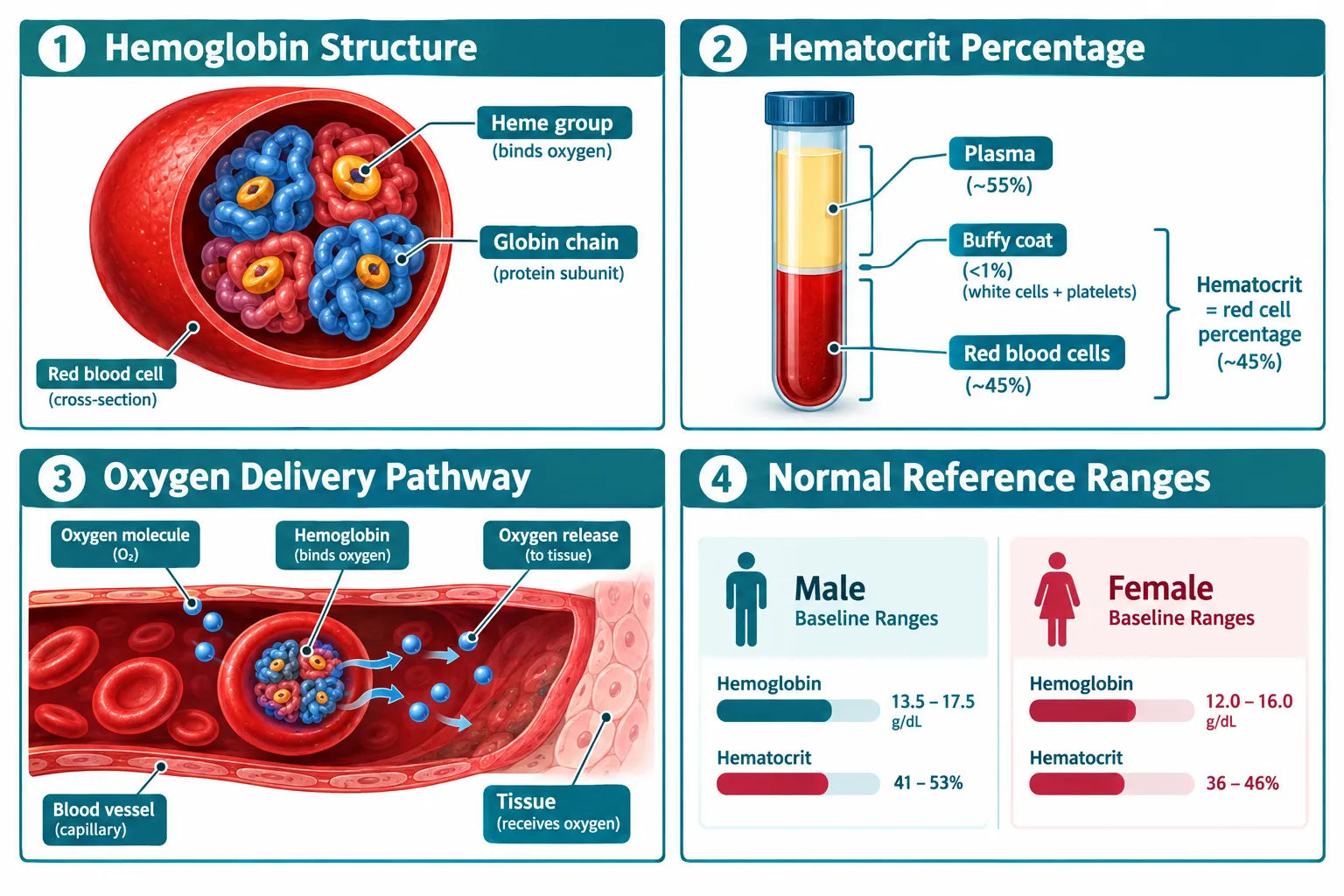
Hemoglobin (Hb) is the iron-containing protein inside red blood cells. Its job is to bind oxygen in the lungs and release it to tissues. It is measured in grams per deciliter (g/dL). Normal ranges sit roughly at 13.5-17.5 g/dL for adult males and 12.0-15.5 g/dL for adult females, though reference intervals vary slightly by laboratory.

Hematocrit (Hct) is a different but related measurement. It expresses the proportion of whole blood that is made up of red blood cells, reported as a percentage. Because hematocrit is a ratio of cells to total blood volume, it can be influenced by both the number of red cells and the volume of plasma. This distinction matters enormously when interpreting results in a research context.

Red-cell indices, including mean corpuscular volume (MCV), mean corpuscular hemoglobin (MCH), and red cell distribution width (RDW), add important context. A high hematocrit paired with a normal MCV and normal RDW looks very different from one paired with microcytic, hypochromic cells, which would suggest iron deficiency rather than true erythrocytosis.

The Difference Between True Erythrocytosis and a Spurious Rise

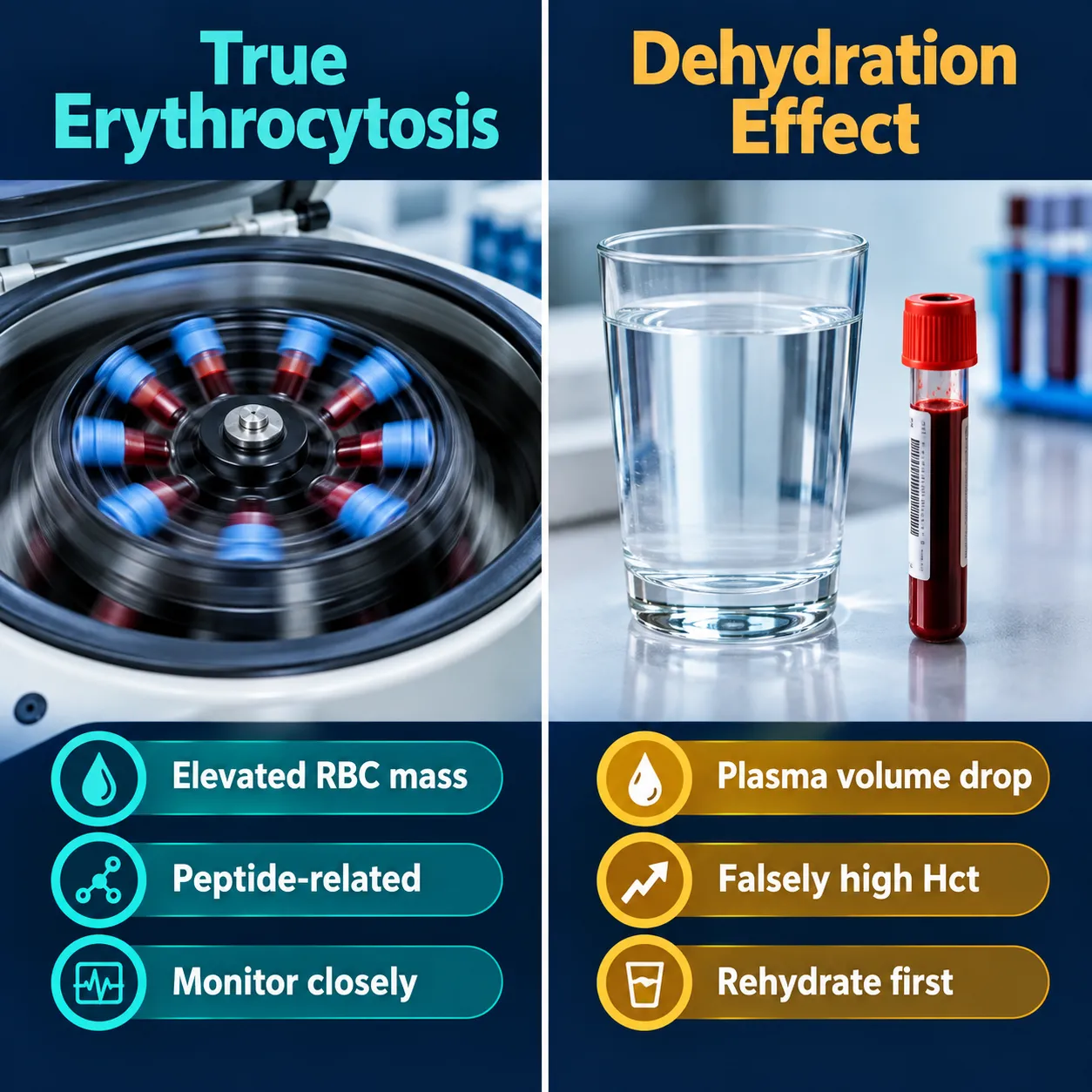
True erythrocytosis means the body is producing more red blood cells, increasing the absolute red cell mass. A spurious rise in hematocrit, by contrast, happens when plasma volume decreases, most commonly through dehydration, without any actual increase in red cell production. A subject who is even mildly dehydrated at the time of blood draw can show a hematocrit several points higher than their true baseline.

Researchers should always confirm adequate hydration before attributing a hematocrit elevation to a peptide compound. When in doubt, repeating the draw after proper rehydration is the most straightforward corrective step.


Monitoring Protocols: Hemoglobin and Hematocrit in Peptide Research
Monitoring Protocols: Hemoglobin and Hematocrit in Peptide Research

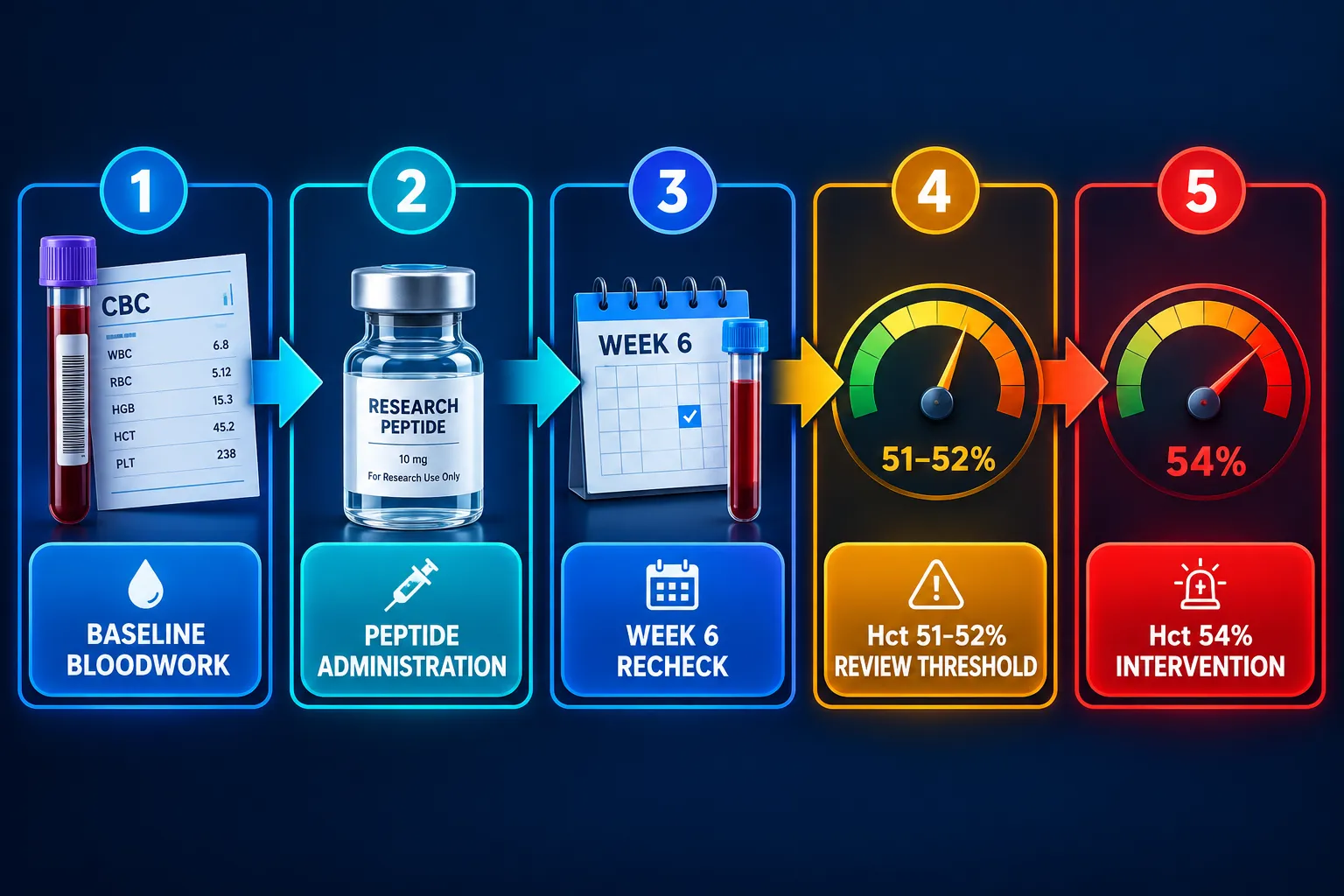
Establishing a monitoring schedule is not optional, it is the foundation of responsible research. The general framework follows a logical sequence:

  1. Baseline bloodwork before the protocol begins, capturing Hb, Hct, and a full red-cell panel.
  2. Recheck at 6-8 weeks, which is typically when androgenic or peptide-adjacent compounds begin to exert measurable effects on erythropoiesis.
  3. Ongoing monitoring every 3-6 months once values are stable.

This schedule mirrors the approach used in testosterone replacement and gender-affirming hormone research, where hematocrit elevation is documented to be several-fold more common than in placebo groups. The same logic applies when investigating compounds that interact with growth hormone axes or metabolic pathways. Researchers exploring options like Tesamorelin peptide benefits or mitochondria-targeted agents such as SS-31 peptides for sale should incorporate hematological monitoring from the outset.

Action Thresholds Every Researcher Should Know

Hematocrit Level Recommended Action
Below 50% Continue protocol; monitor per schedule
51-52% Flag for review; assess hydration and confounders
53% Increase monitoring frequency; evaluate risk factors
54% or above Pause protocol; consider intervention or cessation

These thresholds are not arbitrary. At hematocrit levels above 54%, blood viscosity increases meaningfully, raising the theoretical risk of thromboembolic events. Even in research settings, that risk profile demands a conservative response.


Confounders, Red Flags, and Interpreting Safety Signals
Confounders, Red Flags, and Interpreting Safety Signals

Several factors can confound hematocrit readings and lead to misinterpretation. Researchers using lab tested peptides should be aware of the following:

  • Altitude: Living or training at elevation stimulates erythropoietin production naturally, raising baseline Hct independent of any compound.
  • Sleep apnea: Chronic intermittent hypoxia drives compensatory erythrocytosis and can be mistaken for a compound-induced effect.
  • Polycythemia vera: A rare myeloproliferative condition that elevates red cell mass; it must be ruled out when hematocrit rises without a clear cause.
  • Androgens and peptides with androgenic overlap: Compounds like MT-2 research peptides operate through melanocortin receptors, but any compound that indirectly influences testosterone or IGF-1 pathways warrants careful hematological oversight.

When a true elevation is confirmed, management options include dose reduction, increased hydration, therapeutic phlebotomy in severe cases, and in some protocols, temporary cessation. Researchers investigating compounds with systemic metabolic effects, including those in the GLP-3 peptide class or IPA peptides, should document any hematological changes as part of their safety reporting.

It is also worth noting that severe erythrocytosis remains relatively rare when protocols are well-managed. Evidence from gender-affirming testosterone care shows that diligent monitoring catches elevations early, before they reach clinically dangerous levels. The same principle applies to peptide research: early detection through consistent bloodwork is far more effective than reactive management.

Researchers sourcing compounds from a best peptide manufacturer should also confirm purity, since contaminants or misidentified compounds can introduce unexpected physiological effects, including on erythropoiesis.


Conclusion

Interpreting hemoglobin and hematocrit in peptide research: how to interpret oxygen-carrying capacity and safety signals requires more than reading a number off a lab report. It demands understanding what the values represent, what can distort them, and what action each threshold calls for.

Actionable next steps for researchers:

  • Establish a full baseline CBC before starting any peptide protocol.
  • Rule out dehydration and altitude effects before attributing any Hct rise to the compound under study.
  • Apply the 51-52% review threshold and the 54% intervention threshold consistently across all protocols.
  • Document red-cell indices alongside Hb and Hct to distinguish true erythrocytosis from nutritional or plasma-volume artifacts.
  • Recheck values at 6-8 weeks and every 3-6 months thereafter, adjusting frequency if values trend upward.

Rigorous hematological monitoring is not a bureaucratic formality. It is the mechanism by which researchers protect subject safety and generate data that is actually interpretable. Build it into every protocol from day one.

https://www.puretestedpeptides.com/wp-content/uploads/2026/09/hemoglobin-and-hematocrit-in-peptide-research-how-to-interpret-oxygen-carrying-c.webp 1024 1536 https://www.puretestedpeptides.com/wp-content/uploads/2026/01/buy-peptides-online.jpg 2026-09-26 13:10:032026-09-26 13:10:03Hemoglobin and Hematocrit in Peptide Research: How to Interpret Oxygen-Carrying Capacity and Safety Signals
×

Helpful Links

  • My account
  • Cart
  • Checkout
  • Refund and Returns Policy
  • Privacy Policy
  • SMS Privacy Policy
  • Login
  • My Account
  • Logout

USA Made Lab Tested Peptides

All products are sold for research, laboratory, or analytical purposes only, and are not for human consumption


Pure Tested Peptides is a chemical supplier. Pure Tested Peptides is not a compounding / chemical compounding facility as defined under 503A of the Federal Food, Drug, and Cosmetic act. Pure Tested Peptides is not an outsourcing facility as defined under 503B of the Federal Food, Drug, and Cosmetic act.

The statements made within this website have not been evaluated by the US Food and Drug Administration. The products we offer are not intended to diagnose, treat, cure or prevent any disease.

Human/Animal Consumption Prohibited. Laboratory/In-Vitro Experimental Use Only

Scroll to top Scroll to top Scroll to top