Call or Text 727-513-9780
  • Shopping Cart Shopping Cart
    0Shopping Cart
Pure Tested Peptides | America's most trusted Peptides for sale online
  • Peptides for sale
    • Oral Peptides for sale
      • Peptide Capsules for sale
      • BPC 157 Capsules 1000mcg
      • SLU-PP-332 Capsules | 1000 mcg
      • 5-Amino-1MQ 50mg Capsules
      • Tesofensine 500mcg
    • All Peptides for sale
    • Peptide Sprays
      • BPC 157 Nasal Spray Kit
      • BPC-157 TB500 Nasal Spray Kit
      • Semax Nasal Spray 10mg
      • Selank – Nasal Spray Kit – 10mg
      • Epithalon 50MG Nasal Spray Kit
      • Ipamorelin 10mg Nasal Spray
      • Klow Nasal Spray (BPC-157 + TB-500 + GHK-Cu + KPV) | 80mg
      • Hulk Nasal Spray Tesa / Ipa Blend 6/3 MG
      • Klow Nasal Spray
      • NAD + 500 mg Nasal Spray
      • PT-141 Nasal Spray Kit
    • GHRH Peptides
      • Ipa Peptides
      • CJC-1295 Peptides
        • CJC-1295 with DAC 5 mg
        • CJC-1295 without DAC 5 mg
        • CJC-1295 Ipa 10mg
      • Tesa Peptides
        • Tesa Peptide
        • Tesa 20 mg
    • GHK-Cu Peptides
      • All GHK-Cu Peptides
      • GHK-Cu 100mg
      • KLOW Peptide Blend – Buy KLOW blend online
    • BPC Peptides
      • All BPC Peptides
      • BPC-157
      • BPC-157 TB-500
      • BPC 157 capsules 1000mcg
    • SLU-PP-332 Peptides
      • All SLU-PP-332 Peptides
      • SLU-PP-332 5mg
    • GLP3 Peptides
      • GLP3-R
      • GLP3-R CAG 10mg
      • GLP3-R 20mg
    • PT-141 Peptides
      • PT-141 Peptides for sale
      • PT-141 10mg
      • PT-141 Nasal Spray
    • CAG Peptides
      • Lipo-C Peptide Blend
      • CAG 5mg
      • CAG 10mg
    • MOTS-C Peptides
      • MOTS-C Peptides for sale
      • MOTS-c peptide
      • MOTS-c 10mg *6 pack*
    • 5 Amino 1MQ Peptides
      • 5 Amino 1MQ Peptides for sale
      • 5-Amino-1MQ 50mg Capsules
      • 5-Amino-1MQ 5mg
    • Epithalon Peptides
      • Epithalon Peptides for sale
      • Epithalon 10mg
      • Epithalon 50mg
  • Shop
    • GLPs
      • 5-Amino-1MQ 50mg Capsules
      • 5-Amino-1MQ 5mg
      • GLP3-Reta
      • L-Carnitine 500mg/ml
      • Tesofensine 500mcg
      • SLU-PP-332 5mg
      • MOTS-c 10mg *6 pack*
    • Epithalon & BPC Peptides
      • Epithalon 10mg
      • Epithalon 50mg
      • BPC-157
      • BPC 157 capsules 1000mcg
      • BPC-157 TB-500
      • BPC-157 TB500 Nasal Spray Kit
      • BPC 157 Nasal Spray Kit
    • BPC TB-500 & NAD+ Peptides
      • NAD+ 500 mg
      • KLOW Peptide Blend – Buy KLOW blend online
      • GLOW Peptide Blend
      • TB 500 5mg
      • BPC 157 capsules 1000mcg – Supplement
      • BPC 157 Nasal Spray Kit
      • BPC-157
      • BPC-157 TB500 Nasal Spray Kit
      • BPC-157 TB-500
      • BPC 157 capsules 1000mcg
    • LL-37 Peptide
      • LL-37 10 mg
    • MOTS-C & Selank
      • MOTS-c peptide
      • Selank 10mg
    • GHK Peptides
      • GHK-Cu 100mg
      • GLOW Peptide Blend
      • KLOW Peptide Blend – Buy KLOW blend online
  • COAs
  • Wholesale
    • Wholesale Peptides for sale
  • PTP FAQ
  • Affiliates
    • Selank Peptide: Advanced Pharmacological Mechanisms Underlying Its Anxiolytic and Nootropic Effects in Research
      • 5-Amino-1MQ Peptide: Detailed Mechanisms of NNMT Inhibition and Its Impact on Cellular Metabolism Research
        • MOTS-C Peptide: Unraveling Its Role in Mitochondrial Dynamics and Energy Metabolism Research
          • Epithalon Peptide and Telomerase Regulation: Investigating Its Impact on Cellular Senescence and Lifespan Research Models
            • GLP2-T vs GLP2 Tirz Peptide: Understanding the Naming, Mechanistic Nuances, and Research Implications for Gut Health
      • Peptides and Polypeptides in Modern Pharmacology: What Research on Metoprolol, Prednisone, and Amlodipine Reveals
        • Polypeptide Peptides vs NSAIDs: What Naproxen and Diclofenac Teach Tissue-Repair Researchers About BPC‑157 and TB‑500
          • Peptides and Polypeptides in Endocrine Pharmacology: How GLP-1, GLP-2, and GLP-3 Retatrutide Differ From Classic Drugs Like Prednisone and Amlodipine
          • 5‑Amino‑1MQ Peptide and NNMT Inhibition: How It Compares With Statins Like Atorvastatin in Adipose and Lipid Metabolism Research
      • Enclomiphene, Estrogen Receptor Signaling, and Luteinizing Phase Biology: What Hormone Researchers Should Measure
        • Mesenchymal Stem Cells, BPC‑157, and GHK‑Cu: How Tissue Repair Peptides Compare With Classic NSAIDs Like Naproxen in Injury Models
          • Peptide Calculator Use Cases Beyond Growth Hormone: Working Through GLP‑3 Retatrutide, MOTS‑c, and BPC‑157 Research Dosing
        • Polypeptide Peptides in Endocrine and Metabolic Pharmacology: Lessons From Amlodipine, Prednisone, and Metoprolol
        • Peptides Calculator for Advanced Blends: Worked Examples for Tesamorelin, CJC‑1295, and Ipamorelin Stacks
          • Peptides and Polypeptides in Human Physiology: How Molecular Size Shapes Research Applications
            • Selank Peptide: Advanced Pharmacological Mechanisms Underlying Its Anxiolytic and Nootropic Effects in Research
          • 5-Amino-1MQ Peptide: Detailed Mechanisms of NNMT Inhibition and Its Impact on Cellular Metabolism Research
            • MOTS-C Peptide: Unraveling Its Role in Mitochondrial Dynamics and Energy Metabolism Research
              • Epithalon Peptide and Telomerase Regulation: Investigating Its Impact on Cellular Senescence and Lifespan Research Models
                • GLP2-T vs GLP2 Tirz Peptide: Understanding the Naming, Mechanistic Nuances, and Research Implications for Gut Health
                  • Peptides and Polypeptides in Endocrine Pharmacology: How GLP-1, GLP-2, and GLP-3 Retatrutide Differ From Classic Drugs Like Prednisone and Amlodipine
                    • Polypeptide Peptides vs NSAIDs: What Naproxen and Diclofenac Teach Tissue-Repair Researchers About BPC‑157 and TB‑500
                      • Peptides and Polypeptides in Modern Pharmacology: What Research on Metoprolol, Prednisone, and Amlodipine Reveals
                        • 5‑Amino‑1MQ Peptide and NNMT Inhibition: How It Compares With Statins Like Atorvastatin in Adipose and Lipid Metabolism Research
                        • Enclomiphene, Estrogen Receptor Signaling, and Luteinizing Phase Biology: What Hormone Researchers Should Measure
                        • Mesenchymal Stem Cells, BPC‑157, and GHK‑Cu: How Tissue Repair Peptides Compare With Classic NSAIDs Like Naproxen in Injury Models
                        • Peptide Calculator Use Cases Beyond Growth Hormone: Working Through GLP‑3 Retatrutide, MOTS‑c, and BPC‑157 Research Dosing
                        • Polypeptide Peptides in Endocrine and Metabolic Pharmacology: Lessons From Amlodipine, Prednisone, and Metoprolol
                        • Peptides Calculator for Advanced Blends: Worked Examples for Tesamorelin, CJC‑1295, and Ipamorelin Stacks
                        • Peptides and Polypeptides in Human Physiology: How Molecular Size Shapes Research Applications
                        • Selank Peptide: Advanced Pharmacological Mechanisms Underlying Its Anxiolytic and Nootropic Effects in Research
                        • MOTS-C Peptide: Unraveling Its Role in Mitochondrial Dynamics and Energy Metabolism Research
                        • Peptides and Polypeptides in Modern Pharmacology: What Research on Metoprolol, Prednisone, and Amlodipine Reveals
                        • Peptides and Polypeptides in Endocrine Pharmacology: How GLP-1, GLP-2, and GLP-3 Retatrutide Differ From Classic Drugs Like Prednisone and Amlodipine
                        • 5-Amino-1MQ Peptide: Detailed Mechanisms of NNMT Inhibition and Its Impact on Cellular Metabolism Research
                        • Mesenchymal Stem Cells, BPC‑157, and GHK‑Cu: How Tissue Repair Peptides Compare With Classic NSAIDs Like Naproxen in Injury Models
                        • Peptide Calculator Use Cases Beyond Growth Hormone: Working Through GLP‑3 Retatrutide, MOTS‑c, and BPC‑157 Research Dosing
                        • GLP2-T vs GLP2 Tirz Peptide: Understanding the Naming, Mechanistic Nuances, and Research Implications for Gut Health
                        • Polypeptide Peptides in Endocrine and Metabolic Pharmacology: Lessons From Amlodipine, Prednisone, and Metoprolol
                        • Polypeptide Peptides vs NSAIDs: What Naproxen and Diclofenac Teach Tissue-Repair Researchers About BPC‑157 and TB‑500
                        • Peptides and Polypeptides in Human Physiology: How Molecular Size Shapes Research Applications
                        • Peptides Calculator for Advanced Blends: Worked Examples for Tesamorelin, CJC‑1295, and Ipamorelin Stacks
                        • 5‑Amino‑1MQ Peptide and NNMT Inhibition: How It Compares With Statins Like Atorvastatin in Adipose and Lipid Metabolism Research
                        • Enclomiphene, Estrogen Receptor Signaling, and Luteinizing Phase Biology: What Hormone Researchers Should Measure
                        • Epithalon Peptide and Telomerase Regulation: Investigating Its Impact on Cellular Senescence and Lifespan Research Models
                        • Best research protocol Klow blend
                        • best time to take BPC-157
                        • best time to take DSIP (Delta Sleep Inducing Peptide)
                        • best time to take CJC-1295
                        • best time to take AOD-9604
                        • best time to take Follistatin 344
                        • best time to take Ipamorelin
                        • best time to take MK-677 (Ibutamoren)
                        • best time to take Ligandrol (LGD-4033) — research compound
                        • best time to take Ostarine (MK-2866) — research compound
                        • best time to take GHK-CU
                        • best time to take TB-500
                        • best time to take MOTS-c
                        • best time to take Semax
                        • best time to take RAD-140 (Testolone) — research compound
                        • best time to take Thymosin Alpha-1
                        • best time to take PEG-MGF
                        • Biolife Plasma, Octapharma Plasma, and Research Peptides: How Plasma Donation Labs Differ From Peptide Suppliers
                        • best time to take YK-11 — research compound
                        • best time to take PT-141 (Bremelanotide)
                        • Best research protocol Klow blend
                        • 5-Amino-1MQ and MOTS-C Synergy: Metabolic Signaling, Mitochondria, and Research Design
                        • BPC-157 and TB-500: Investigating Their Combined Effects on Angiogenesis and Cellular Migration in Tissue Repair Models
                        • BPC-157 Peptide: Gut Barrier Function, Inflammation, and Tissue-Recovery Research
                        • 5‑Amino‑1MQ and MOTS‑c Synergy in Metabolic Research: Designing NNMT and Mitochondrial Biogenesis Stacks
                        • CJC-1295 with DAC vs. Without DAC: Half-Life, Release Kinetics, and Research Implications
                        • CJC‑1295 with DAC vs. Without DAC: Expanding on Half‑Life Differences Using Tesamorelin and Ipamorelin Blend Case Studies
                        • Collagen Biology and Copper‑Binding Peptides: How GHK‑Cu, Glow Blend, and Klow Blend Interact with Skin and Connective Tissue
                        • Collagen Biology and Regenerative Peptides: How GHK‑Cu, Glow Blend, and Klow Blend Affect Extracellular Matrix Research
                    • DNA, Telomeres, and Longevity Peptides: Positioning Epithalon and MOTS‑c in Genetic Aging Research
                      • Enclomiphene Citrate: serm Mechanism, Testosterone Research, and Stack Compatibility
                        • Enclomiphene vs Enclomiphene Citrate: Formulation, Bioavailability, and Research Distinctions
                        • Epithalon Peptide Research: Telomerase Activation, Aging, and Pineal Gland Function
                        • Estrogen Receptor Signaling and Enclomiphene: How Selective Modulators Compare with Classic Polypeptide Hormones
                        • GHK-Cu Peptide: Advanced Mechanisms in Extracellular Matrix Remodeling and Wound Healing Research
                        • GHK-Cu Peptide: Collagen Synthesis, Wound Repair, and Skin-Barrier Research Models
                        • GLP-1 vs GLP-3 vs GLP-2: Peptide Classification and Research Applications
                        • GLP-2 Peptide Research Guide: Gut Barrier Function, Nutrient Absorption, and Intestinal Recovery Models
                        • GLP-3 Retatrutide vs. GLP-1 Drugs: What Triple-Agonist Biology Changes in Research Models
                        • Ipamorelin and Tesamorelin Combination: Synergistic GH Secretagogue Research and Dosing Protocols
                        • GLP2 Tirz Peptide: What It Is, Why the Name Exists, and How Researchers Should Interpret It
                        • Klow Blend Peptide Nasal Spray: What the Formulation Is Trying to Do in Cognitive Research
                        • Mitochondria, NNMT Inhibition, and Peptide Modulators: Where MOTS‑c and 5‑Amino‑1MQ Fit in Cellular Energy Research
                        • MOTS-c Peptide: Mitochondrial Function, Energy Metabolism, and What Researchers Measure
                        • MOTS-c vs. 5-Amino-1MQ: Which Metabolic Research Questions Each Compound Actually Answers
                        • Nasal Spray Peptides: Bioavailability, Administration, and Semax/Selank Research Applications
                        • PT-141 Peptide Research: Mechanism of Action and Melanocortin Receptor Signaling
                        • Retatrutide for Research: Mechanism, Structure, and GLP-1/GLP-3 Dual Action
                        • Retatrutide for Obesity and Type 2 Diabetes: What the Latest Trial Data Suggest
                        • Tesofensine Peptide Research: Mechanism, Appetite Suppression, and Neuropeptide Y Pathways
  • Contact
    • Contact Customer Service
    • Text Customer Support
  • About US
  • Shop all peptides
  • Affiliate Program
    • Affiliate Signup
  • Login / Register Login / Register Page Link Login / Register Page Link
  • Click to open the search input field Click to open the search input field Search
  • Menu Menu

Tag Archive for: research-use only compounds

5-Amino-1MQ Peptide: How Researchers Frame NAD+ and Metabolic Pathway Questions

5-Amino-1MQ Peptide: How Researchers Frame NAD+ and Metabolic Pathway Questions

August 14, 2026/0 Comments/in Uncategorized/by

NAD+ depletion is one of the most studied variables in modern metabolic research, and the enzyme that quietly drains it, NNMT, has become a focal point for a growing class of small-molecule inhibitors. Among them, 5-Amino-1MQ has attracted significant attention from researchers who want to understand how blocking NNMT reshapes energy metabolism, fat storage, and cellular methylation balance.

This article maps the search demand around the 5-Amino-1MQ peptide: how researchers frame NAD+ and metabolic pathway questions, and provides a clean foundation before diving into more advanced protocol content.

Key Takeaways

  • 5-Amino-1MQ is a small-molecule NNMT inhibitor, not technically a peptide, though it is widely grouped with research peptides in the supplier market.
  • Its primary mechanism involves blocking NNMT to preserve NAD+ availability and improve the SAM/SAH methylation ratio.
  • Most foundational data comes from mouse obesity models; no human clinical trials have been completed as of mid-2026.
  • Researchers distinguish it from other NAD+ strategies such as NR, NMN, and NAMPT activators because it targets consumption rather than production.
  • Selectivity and off-target effects in NAD+-linked pathways remain active areas of study.

What 5-Amino-1MQ Actually Is (And Why "Peptide" Is a Misnomer)
What 5-Amino-1MQ Actually Is (And Why "Peptide" Is a Misnomer)

The compound formally known as 5-amino-1-methylquinolinium is a quaternary ammonium salt, a small organic molecule, not a peptide chain. It does not contain amino acid residues linked by peptide bonds. Despite this, the research-peptide supplier market routinely groups it alongside true peptides, partly because its experimental applications overlap with those of metabolically active peptides, and partly because the term "research peptide" has become a broad commercial category.

Understanding this distinction matters when reviewing literature. Studies that examine 5-Amino-1MQ are classified under small-molecule pharmacology, not peptide biochemistry. Researchers sourcing it should apply the same purity and documentation standards they would for any research-grade compound.

For context on how molecular size shapes function and experimental design, see Peptides and Polypeptides in Modern Research: How Molecular Size Shapes Function, Stability, and Experimental Design.

The NNMT Mechanism: Where NAD+ and Methylation Intersect

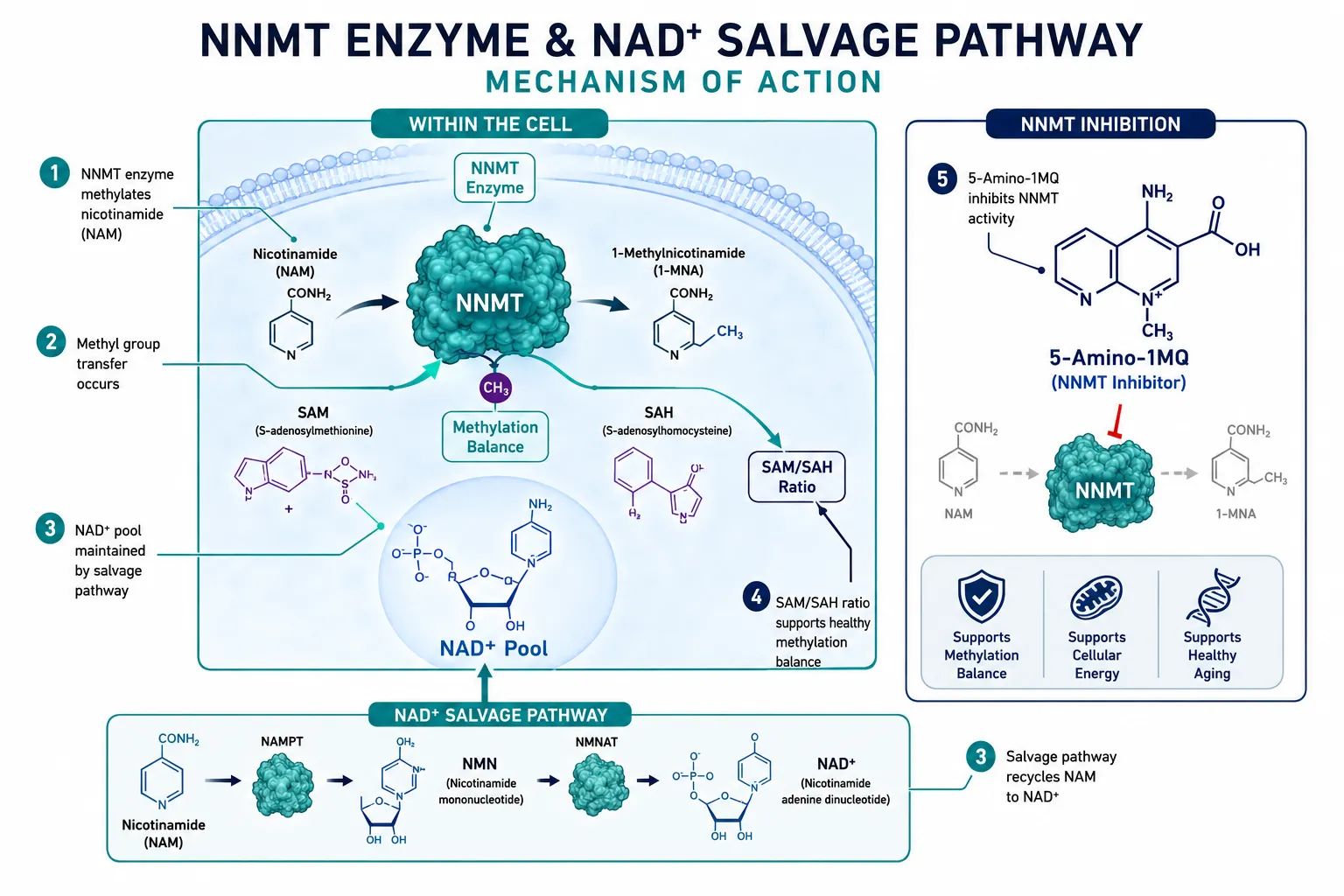
The enzyme nicotinamide N-methyltransferase (NNMT) catalyzes the transfer of a methyl group from S-adenosylmethionine (SAM) to nicotinamide, producing 1-methylnicotinamide and S-adenosylhomocysteine (SAH). This reaction has two downstream consequences that researchers care about:

  1. NAD+ pool reduction, nicotinamide is a precursor in the NAD+ salvage pathway. When NNMT diverts it, less nicotinamide is available for NAD+ resynthesis.
  2. Methylation imbalance, the conversion of SAM to SAH lowers the SAM/SAH ratio, reducing the cell's capacity for other methylation reactions.

5-Amino-1MQ competitively inhibits NNMT, which theoretically redirects nicotinamide back into the salvage pathway and restores a more favorable SAM/SAH ratio. This dual effect is why researchers frame it as a metabolic pathway regulator rather than a simple energy booster.

"The appeal of NNMT inhibition is that it addresses NAD+ availability from the consumption side rather than the production side, a fundamentally different angle from precursor supplementation strategies."

How Researchers Frame NAD+ and Metabolic Pathway Questions with 5-Amino-1MQ
How Researchers Frame NAD+ and Metabolic Pathway Questions with 5-Amino-1MQ

Distinguishing 5-Amino-1MQ from Other NAD+ Strategies

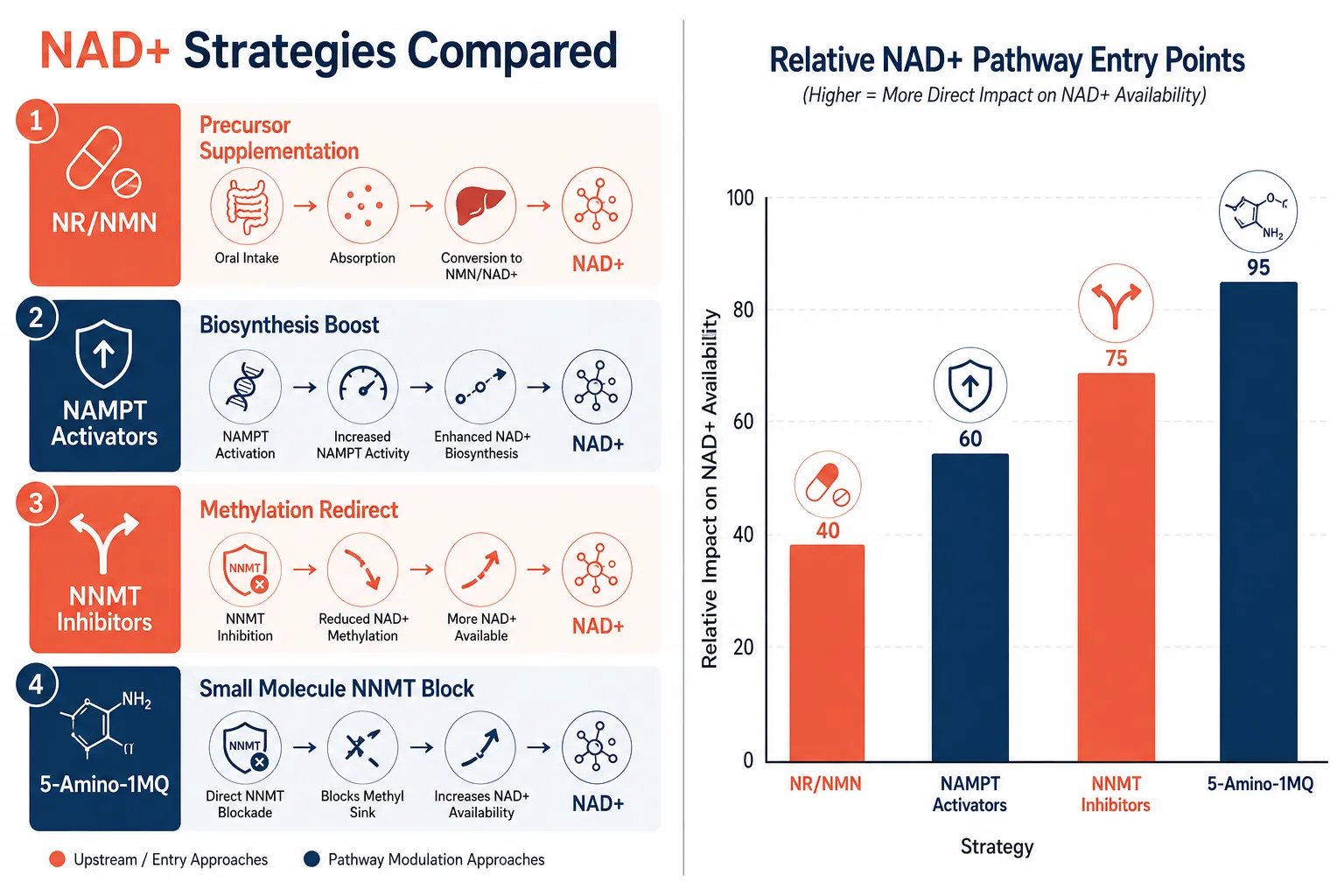
The NAD+ research landscape includes several distinct intervention points. Understanding where 5-Amino-1MQ sits helps researchers design cleaner experiments.

Strategy Mechanism Entry Point
NR / NMN supplementation Provides NAD+ precursors Production side
NAMPT activators Boost rate-limiting biosynthesis enzyme Production side
Sirtuin activators Modulate NAD+-consuming enzymes Consumption side
NNMT inhibitors (5-Amino-1MQ) Block nicotinamide diversion Consumption/salvage side

This positioning is important. When researchers ask "what happens to NAD+ levels if we reduce NNMT activity?", they are probing a conservation mechanism rather than a synthesis mechanism. The experimental questions differ accordingly, outcome measures tend to focus on adipocyte metabolism, mitochondrial efficiency, and methylation markers rather than simple NAD+ concentration alone.

For a broader look at metabolically active research compounds, the Top 5 Research Peptides for Metabolic Health: An Updated Buyer's Guide provides useful comparative context.

Core Preclinical Data That Anchor Current Framing

The foundational experiments most cited in 5-Amino-1MQ discussions used diet-induced obese mouse models. Key observations included:

  • Reduced fat mass without significant changes in lean mass
  • Improved insulin sensitivity markers in adipose tissue
  • Elevated NAD+ levels in metabolically active tissues
  • Increased energy expenditure as measured by indirect calorimetry

Researchers have also examined 5-Amino-1MQ in combination with caloric restriction protocols, asking whether NNMT inhibition amplifies the metabolic adaptations seen during energy deficit. These combination studies raise specific NAD+ questions: does restricting calories and simultaneously conserving nicotinamide create additive effects on mitochondrial function, or does one intervention dominate?

For researchers studying related mitochondrial pathways, the article on 5-Amino-1MQ and MOTS-c Synergy: How Mitochondrial Pathways Are Studied Together explores how these compounds are paired in experimental designs.

Selectivity and Off-Target Considerations

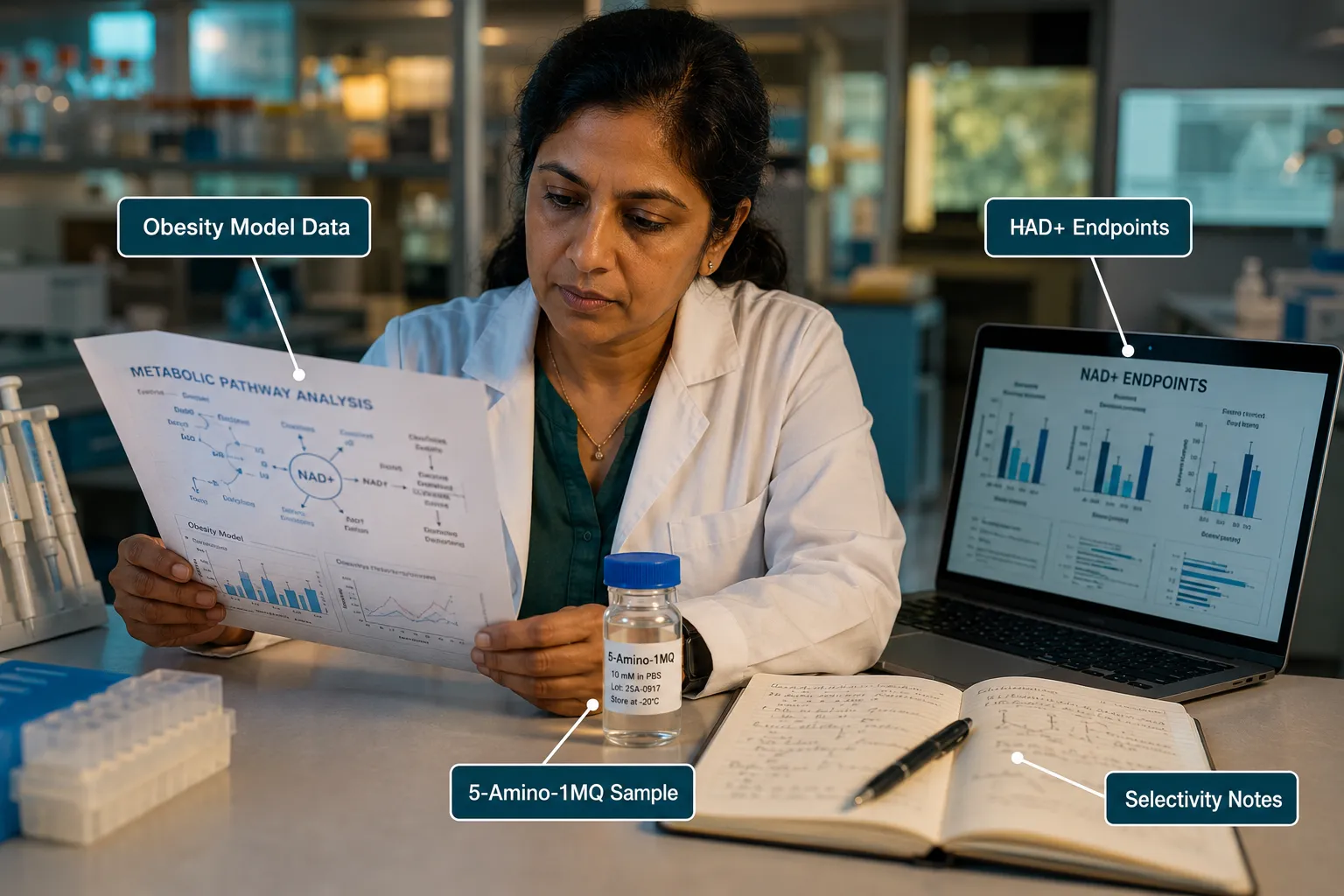
A recurring concern in NNMT inhibitor research is selectivity. NNMT shares structural features with other methyltransferases, and researchers must account for potential off-target activity when interpreting metabolic data. Current in vitro selectivity profiling for 5-Amino-1MQ suggests reasonable specificity, but comprehensive off-target panels in mammalian systems remain an area of active investigation.

This is particularly relevant when designing NAD+-centric experiments: if an NNMT inhibitor also affects other SAM-dependent reactions, attributing observed metabolic changes solely to NAD+ salvage becomes methodologically problematic.

Clinical Status, Market Framing, and Research Ethics in 2026
Clinical Status, Market Framing, and Research Ethics in 2026

As of mid-2026, no completed human clinical trials for 5-Amino-1MQ have been published. The compound remains in the preclinical research phase. Its appearance in the "research peptide" market means it is sold for laboratory and in vitro use only, not for human administration.

Researchers and clinicians reviewing the landscape should note several important framing issues:

  • Regulatory status: 5-Amino-1MQ is not approved by the FDA or equivalent bodies for therapeutic use.
  • Market labeling: Supplier descriptions often emphasize weight loss and energy metabolism in language that implies clinical readiness. This framing outpaces the available evidence.
  • Ethical sourcing: Research-use compounds should come with certificates of analysis, HPLC purity data, and clear documentation of synthesis origin.

For foundational guidance on evaluating research compounds before purchasing, Peptides 101 for Research-Use Only Buyers: Structure, Mechanisms, and Where GLP-3, MOTS-c, and 5-Amino-1MQ Fit In is a practical starting point.

Researchers interested in how other metabolic compounds are positioned in 2026 can also review the Polypeptide Peptides in Cardiometabolic Models article for comparative framing across compound classes.

Conclusion

The 5-Amino-1MQ peptide: how researchers frame NAD+ and metabolic pathway questions is a topic that sits at the intersection of enzyme biology, methylation chemistry, and metabolic research design. The compound's value in a research context lies in its ability to probe the consumption side of NAD+ availability, a mechanistically distinct angle from precursor or biosynthesis strategies.

Actionable next steps for researchers:

  • Review the preclinical obesity model data critically, noting species, dosing, and duration before extrapolating to other models.
  • Design selectivity controls when using 5-Amino-1MQ in NAD+-centric assays to isolate NNMT-specific effects.
  • Source only from suppliers who provide third-party HPLC and mass spectrometry documentation.
  • Monitor the clinical trial registry landscape through 2026 and beyond for any first-in-human studies that may reframe current preclinical assumptions.
  • Pair 5-Amino-1MQ experiments with complementary mitochondrial markers, such as those used in MOTS-c mitochondrial peptide research, to build a more complete metabolic picture.

The preclinical foundation is genuinely interesting. The gap between that foundation and clinical application remains wide, and that gap is exactly where rigorous, well-controlled research belongs.

https://www.puretestedpeptides.com/wp-content/uploads/2026/08/5-amino-1mq-peptide-how-researchers-frame-nad-and-metabolic-pathway-questions.webp 1024 1536 https://www.puretestedpeptides.com/wp-content/uploads/2026/01/buy-peptides-online.jpg 2026-08-14 13:06:102026-08-14 13:06:105-Amino-1MQ Peptide: How Researchers Frame NAD+ and Metabolic Pathway Questions
×

Helpful Links

  • My account
  • Cart
  • Checkout
  • Refund and Returns Policy
  • Privacy Policy
  • SMS Privacy Policy
  • Login
  • My Account
  • Logout

USA Made Lab Tested Peptides

All products are sold for research, laboratory, or analytical purposes only, and are not for human consumption


Pure Tested Peptides is a chemical supplier. Pure Tested Peptides is not a compounding / chemical compounding facility as defined under 503A of the Federal Food, Drug, and Cosmetic act. Pure Tested Peptides is not an outsourcing facility as defined under 503B of the Federal Food, Drug, and Cosmetic act.

The statements made within this website have not been evaluated by the US Food and Drug Administration. The products we offer are not intended to diagnose, treat, cure or prevent any disease.

Human/Animal Consumption Prohibited. Laboratory/In-Vitro Experimental Use Only

Scroll to top Scroll to top Scroll to top