

Tesofensine: Understanding Its Noradrenergic and Dopaminergic Mechanisms for Appetite Regulation Research
{"cover":"Professional landscape format (1536×1024) hero image with bold text overlay 'Tesofensine: Understanding Its' in crisp white modern sans-serif centered on a deep navy semi-transparent overlay panel, 8% safe margins from every edge, no character touching the border. Background: dramatic macro editorial illustration of a glowing neural synapse cross-section showing norepinephrine and dopamine molecular structures floating between neuron terminals, teal and electric-blue bioluminescent glow against deep navy, ultra-sharp scientific magazine aesthetic, high contrast, editorial quality.","content":["Annotated mechanism-of-action diagram, landscape format (1536×1024): central illustration of a stylized neuron synapse with three labeled transporter proteins, NET (norepinephrine transporter), DAT (dopamine transporter), SERT (serotonin transporter), each with a callout arrow and short label. Tesofensine molecule shown blocking all three, teal callout lines pointing to each site. Side panel shows potency hierarchy: NE greater than DA greater than 5-HT with short bar indicators. Clean white background, teal-and-navy palette, clinical infographic polish, all labels 1-5 words, inside 5% safe margin.","Four-panel labelled comparison guide, landscape format (1536×1024): Panel 1 labeled 'Noradrenergic Pathway' shows hypothalamus with alpha-1 receptor activation callout and 'Satiety Signal' arrow; Panel 2 labeled 'Dopaminergic Pathway' shows mesolimbic circuit with DAT blockade callout and 'Reward Suppression' label; Panel 3 labeled 'LH GABAergic Silencing' shows lateral hypothalamus with inhibitory neuron highlighted; Panel 4 labeled 'Integrated Effect' shows appetite suppression outcome with downward arrow. Teal-and-slate color scheme, thin callout lines, clinical editorial style, all labels under 6 words, white background.","Split-screen editorial infographic, landscape format (1536×1024): left half titled 'Monoamine-Based Approach' shows a stylized brain diagram with NE and DA pathway highlights, noradrenergic and dopaminergic circuit arrows, warm amber-teal palette; right half titled 'GLP-1 Based Approach' shows a gut-brain axis diagram with incretin hormone arrows and hypothalamic receptor icons, cool blue-green palette. Center dividing line with label 'Appetite Regulation Comparison'. All panel labels 1-5 words, callout lines sharp and non-overlapping, inside 5% safe margin, editorial medical-guide polish, high contrast."]
Fewer than a dozen small-molecule compounds have demonstrated the ability to simultaneously modulate three monoamine systems in the brain while producing measurable reductions in caloric intake in controlled human studies. Tesofensine is one of them. Originally developed as a neurological agent, it drew significant scientific attention when early metabolic trials revealed robust appetite-suppressing effects tied to its triple reuptake inhibition profile. Tesofensine: Understanding Its Noradrenergic and Dopaminergic Mechanisms for Appetite Regulation Research has become a priority area for investigators examining central nervous system control of hunger, reward-driven feeding, and energy homeostasis.
Key Takeaways
- Tesofensine inhibits the reuptake of norepinephrine, dopamine, and serotonin, with norepinephrine as the dominant target.
- Its noradrenergic action drives satiety signaling through alpha-1 receptor activation and sympathetic outflow modulation.
- Dopamine transporter blockade reduces reward-driven feeding by dampening mesolimbic circuit activity.
- The two pathways produce additive anorexigenic effects, particularly in hypothalamic and limbic circuits.
- Research in 2026 has focused on lateral hypothalamus GABAergic silencing as a key downstream mechanism.
The Triple Reuptake Profile: Where Tesofensine Begins
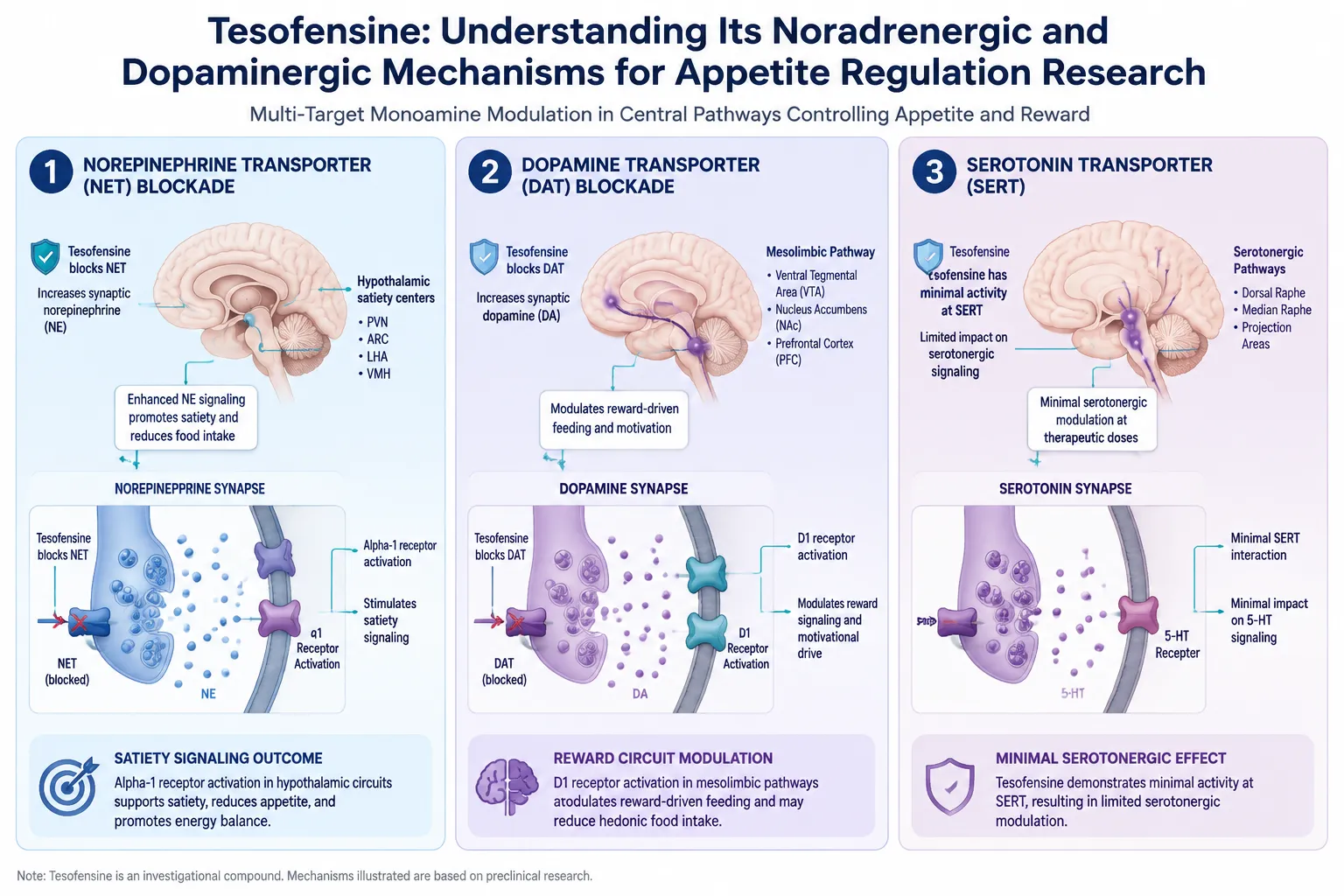
Tesofensine functions as a pre-synaptic reuptake inhibitor, blocking three monoamine transporters: the norepinephrine transporter (NET), the dopamine transporter (DAT), and the serotonin transporter (SERT). Its potency ranking follows a clear hierarchy, norepinephrine (NE) greater than dopamine (DA) greater than serotonin (5-HT). This ordering is not merely pharmacological trivia; it directly shapes the compound's downstream effects on appetite circuits.
Why the NE-dominant profile matters: Norepinephrine is the primary catecholamine driving sympathetic activation and hypothalamic satiety signaling. When NET is blocked, synaptic NE concentrations rise, prolonging adrenergic receptor engagement. This sets Tesofensine apart from pure serotonergic appetite suppressants and from dopamine-centric stimulants, giving it a mechanistically distinct footprint.
| Transporter | Relative Potency | Primary Downstream Effect |
|---|---|---|
| NET (Norepinephrine) | Highest | Satiety signaling, sympathetic outflow |
| DAT (Dopamine) | Moderate | Reward modulation, reduced hedonic eating |
| SERT (Serotonin) | Lowest | Mood stabilization, secondary satiety |
Researchers comparing this profile to GLP-1-based therapies, explored in detail in the GLP-3, GLP-1, and GLP-2 peptide family research guide, note that while incretin-based agents work peripherally through gut-brain signaling, Tesofensine acts centrally from the synapse outward.
Noradrenergic Mechanisms: Satiety, Sympathetic Tone, and Hypothalamic Control
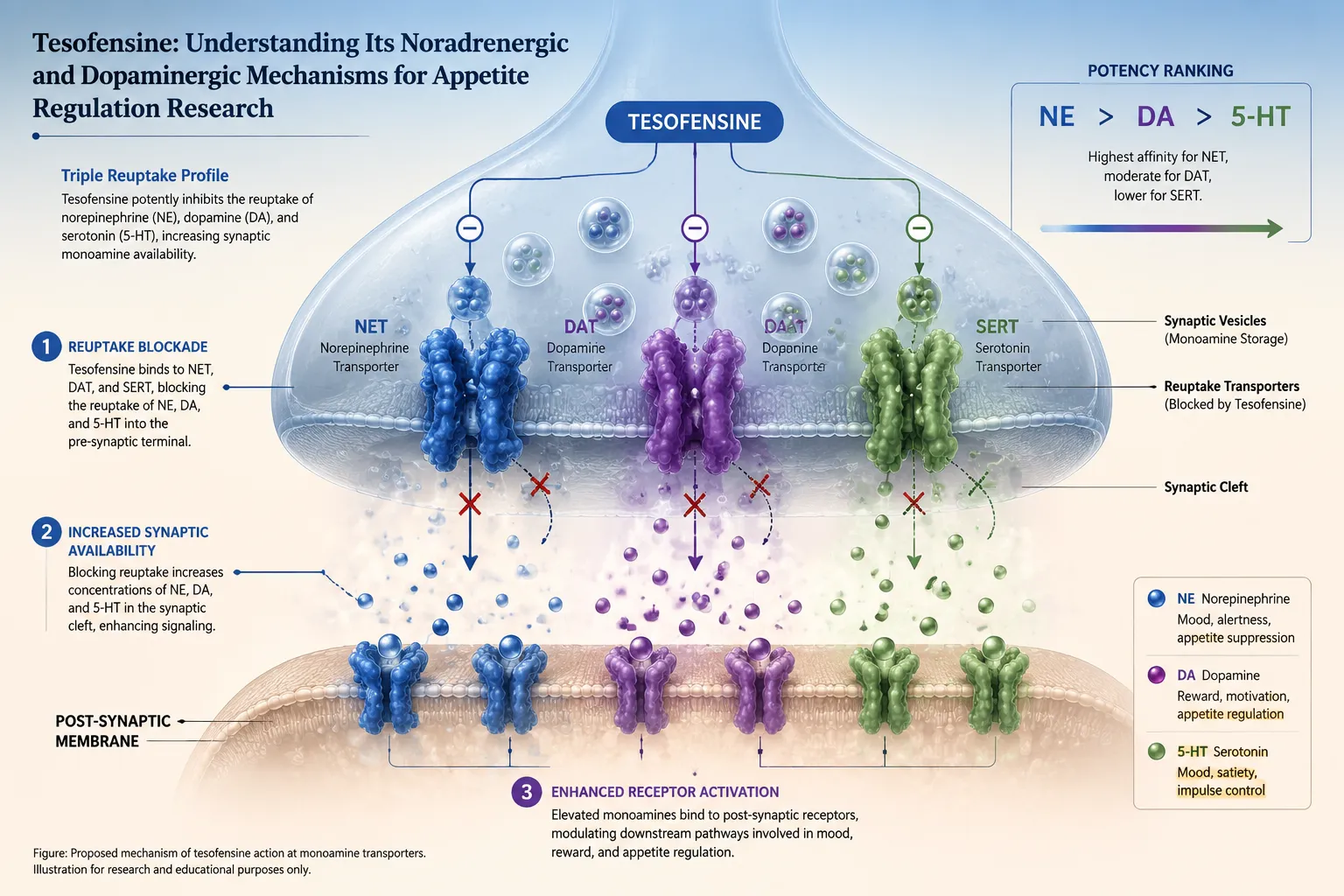
The noradrenergic component of Tesofensine: Understanding Its Noradrenergic and Dopaminergic Mechanisms for Appetite Regulation Research is arguably its most clinically significant feature. Elevated synaptic NE activates alpha-1 adrenergic receptors in the hypothalamus, a region central to hunger and satiety regulation. This activation promotes sympathetic outflow and suppresses orexigenic (hunger-promoting) neuronal activity.
Key noradrenergic effects observed in research:
- Increased alpha-1 receptor stimulation in the paraventricular nucleus (PVN) of the hypothalamus
- Enhanced sympathetic nervous system tone, raising metabolic rate and reducing appetite drive
- Suppression of neuropeptide Y (NPY) signaling, a potent hunger-promoting pathway
- Prolonged satiety scores in human appetite studies, with subjects reporting reduced hunger between meals
A notable research application involves hypothalamic injury-induced obesity, a condition where normal satiety circuitry is disrupted. In these models, Tesofensine has been studied alongside beta-blockers to preserve its appetite-suppressing effects while managing the cardiovascular consequences of elevated noradrenergic tone. This co-administration strategy reflects the precision required when working with NE-dominant compounds.
Research note: The noradrenergic pathway's contribution to appetite suppression is not simply about reducing caloric intake, it also appears to accelerate the onset of satiety, meaning subjects feel full sooner during a meal, not just less hungry before it.
This mechanism complements research into other metabolically active peptides. For instance, investigators studying AOD-9604 research methods, storage, and traceability often examine how lipolytic agents interact with central appetite signals, a question that becomes more nuanced when central NE tone is also elevated.
Dopaminergic Mechanisms: DAT Blockade and Reward-Driven Feeding
The dopaminergic dimension of Tesofensine's profile targets a fundamentally different but equally important feeding circuit. DAT blockade elevates synaptic dopamine in the mesolimbic pathway, the brain's primary reward system. Elevated DA then activates D1 receptors, which are associated with reduced motivation for food-seeking behavior, particularly in the context of hedonic or reward-driven eating.
What this means for appetite research:
- Reduced dopaminergic signaling in the nucleus accumbens diminishes the rewarding value of highly palatable foods
- D1 receptor activation in the prefrontal cortex strengthens inhibitory control over impulsive eating
- DAT kinetics studied in 2026 analyses suggest that Tesofensine's dopamine elevation is sustained but moderate, avoiding the sharp peaks associated with addictive stimulant profiles
This is a critical distinction. A sharp, rapid dopamine surge produces euphoria and reinforces compulsive behavior. Tesofensine's moderate, sustained DAT blockade appears to blunt reward salience for food without generating the reinforcement cycle seen with classical stimulants.
Researchers exploring parallel reward-modulation mechanisms in metabolic peptide research, such as those reviewing GLP-3 triple agonist research planning and catalog navigation, recognize that targeting reward circuitry alongside incretin pathways may represent a complementary strategy for comprehensive appetite management research.
Integrated NE and DA Effects: Hypothalamic and Mesolimbic Convergence
When noradrenergic and dopaminergic mechanisms are considered together, the picture becomes more compelling. Tesofensine: Understanding Its Noradrenergic and Dopaminergic Mechanisms for Appetite Regulation Research reveals that these two pathways do not simply add their effects, they converge on shared circuits to produce amplified anorexigenic outcomes.
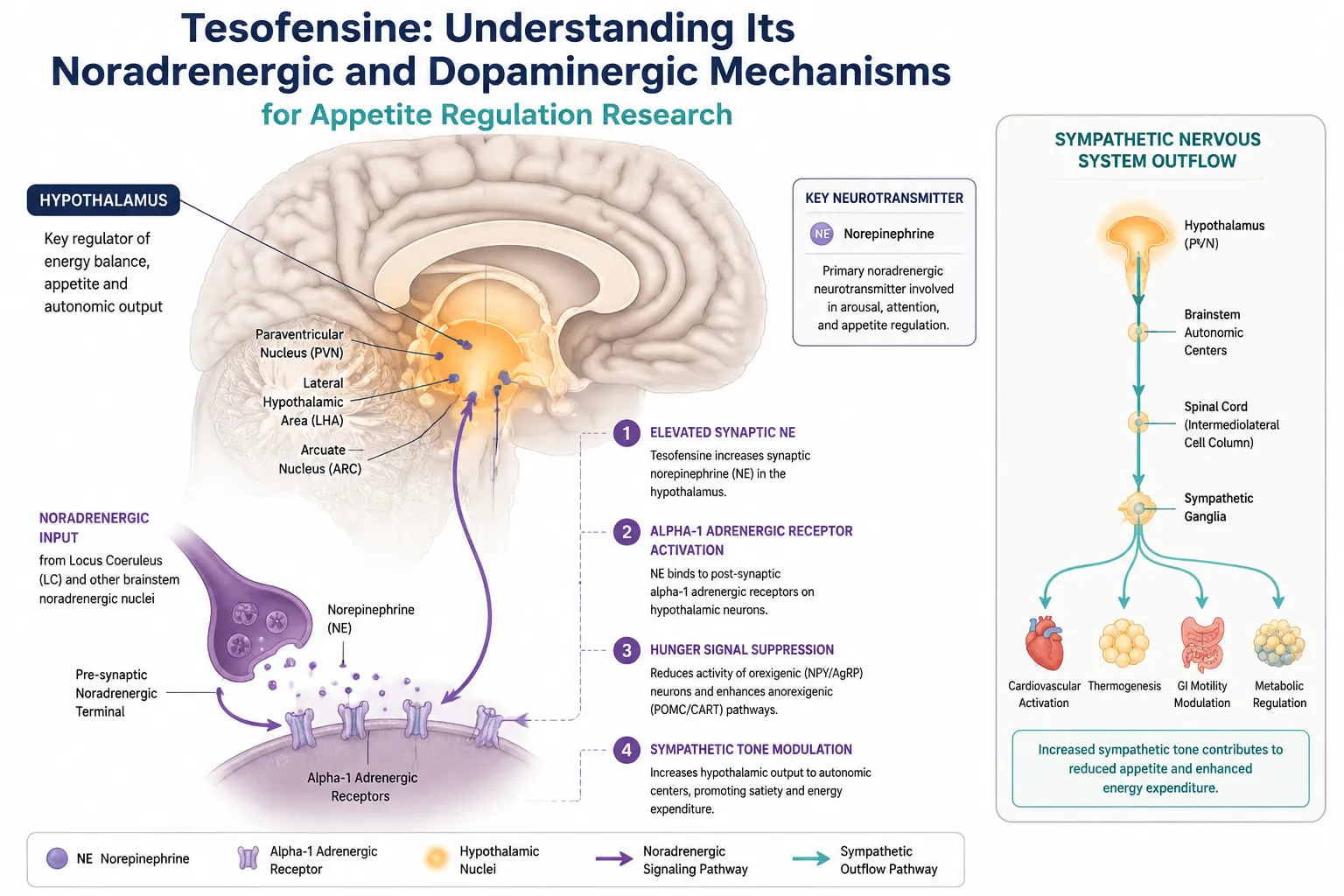
The lateral hypothalamus (LH) connection: Updated mechanistic analyses from 2024 to 2026 have highlighted LH GABAergic silencing as a downstream consequence of combined NE and DA elevation. The LH contains orexin-producing neurons that drive feeding motivation. When GABAergic interneurons in this region are activated by elevated monoamine tone, orexin output is suppressed, reducing the drive to eat.
Additive anorexigenic effects in key circuits:
- Hypothalamic satiety axis, NE activates PVN satiety neurons while DA reduces orexigenic LH output
- Mesolimbic reward circuit, DA dampens nucleus accumbens food-reward signaling
- Prefrontal-limbic inhibition, Combined NE and DA elevation strengthens top-down control over impulsive eating
Human appetite data from controlled studies show sustained appetite suppression and significantly higher satiety scores compared to placebo, consistent with this multi-circuit mechanism. These findings position Tesofensine distinctly within the anti-obesity research landscape, where most monoamine-based approaches target only one or two of these circuits.
Researchers working with growth hormone secretagogues such as those described in the CJC-1295 without DAC half-life and growth hormone research guide may find value in understanding how central monoamine tone interacts with GH-axis signaling in metabolic regulation studies.
Positioning Tesofensine in the 2026 Research Landscape
The current research environment in 2026 places Tesofensine in an interesting position. GLP-1-based therapies dominate clinical obesity treatment, yet they work through fundamentally different mechanisms, peripheral incretin signaling, gastric emptying, and gut-brain vagal pathways. Tesofensine's monoamine-driven approach operates upstream of these peripheral signals, acting directly on the central circuits that generate hunger and food-seeking behavior.
Comparative positioning:
- GLP-1 agents: Peripheral gut-brain axis, incretin receptor activation, strong clinical adoption
- Tesofensine: Central monoamine reuptake inhibition, NE-dominant, direct hypothalamic and mesolimbic action
- Combination research potential: Investigators are examining whether central monoamine modulation and peripheral incretin signaling produce complementary or synergistic appetite suppression
Researchers interested in the broader incretin peptide landscape can explore the GLP-1 for sale research category for context on how GLP-1-based compounds are currently catalogued for research use.
Additionally, those studying mitochondrial and metabolic peptides, such as those reviewed in the research-grade MOTS-c and 5-Amino-1MQ quality criteria guide, may find that understanding central monoamine tone adds important context to whole-body energy regulation studies.
Conclusion
Tesofensine: Understanding Its Noradrenergic and Dopaminergic Mechanisms for Appetite Regulation Research provides a framework for appreciating how central monoamine modulation can produce meaningful, multi-circuit appetite suppression. Its NE-dominant reuptake inhibition drives hypothalamic satiety signaling and sympathetic tone, while its dopaminergic component reduces reward-driven feeding through DAT blockade and D1 receptor activation. Together, these pathways converge on the lateral hypothalamus and mesolimbic circuits to amplify anorexigenic effects.
Actionable next steps for researchers:
- Review the latest DAT/NET kinetic data from 2024 to 2026 mechanistic analyses when designing appetite suppression protocols
- Consider beta-blocker co-administration strategies when studying Tesofensine in models with elevated cardiovascular sensitivity
- Compare central monoamine mechanisms against GLP-1 pathway data to identify potential complementary research designs
- Ensure compound sourcing meets purity and traceability standards before initiating any in vitro or in vivo work
- Document all storage conditions and handling protocols to maintain experimental integrity across study phases
The mechanistic depth of Tesofensine's noradrenergic and dopaminergic profile makes it a valuable research tool for investigators serious about understanding the central nervous system's role in appetite and metabolic regulation.