Call or Text 727-513-9780
  • Shopping Cart Shopping Cart
    0Shopping Cart
Pure Tested Peptides | America's most trusted Peptides for sale online
  • Peptides for sale
    • Oral Peptides for sale
      • Peptide Capsules for sale
      • BPC 157 Capsules 1000mcg
      • SLU-PP-332 Capsules | 1000 mcg
      • 5-Amino-1MQ 50mg Capsules
      • Tesofensine 500mcg
    • All Peptides for sale
    • Peptide Sprays
      • BPC 157 Nasal Spray Kit
      • BPC-157 TB500 Nasal Spray Kit
      • Semax Nasal Spray 10mg
      • Selank – Nasal Spray Kit – 10mg
      • Epithalon 50MG Nasal Spray Kit
      • Ipamorelin 10mg Nasal Spray
      • Klow Nasal Spray (BPC-157 + TB-500 + GHK-Cu + KPV) | 80mg
      • Hulk Nasal Spray Tesa / Ipa Blend 6/3 MG
      • Klow Nasal Spray
      • NAD + 500 mg Nasal Spray
      • PT-141 Nasal Spray Kit
    • GHRH Peptides
      • Ipa Peptides
      • CJC-1295 Peptides
        • CJC-1295 with DAC 5 mg
        • CJC-1295 without DAC 5 mg
        • CJC-1295 Ipa 10mg
      • Tesa Peptides
        • Tesa Peptide
        • Tesa 20 mg
    • GHK-Cu Peptides
      • All GHK-Cu Peptides
      • GHK-Cu 100mg
      • KLOW Peptide Blend – Buy KLOW blend online
    • BPC Peptides
      • All BPC Peptides
      • BPC-157
      • BPC-157 TB-500
      • BPC 157 capsules 1000mcg
    • SLU-PP-332 Peptides
      • All SLU-PP-332 Peptides
      • SLU-PP-332 5mg
    • GLP3 Peptides
      • GLP3-R
      • GLP3-R CAG 10mg
      • GLP3-R 20mg
    • PT-141 Peptides
      • PT-141 Peptides for sale
      • PT-141 10mg
      • PT-141 Nasal Spray
    • CAG Peptides
      • Lipo-C Peptide Blend
      • CAG 5mg
      • CAG 10mg
    • MOTS-C Peptides
      • MOTS-C Peptides for sale
      • MOTS-c peptide
      • MOTS-c 10mg *6 pack*
    • 5 Amino 1MQ Peptides
      • 5 Amino 1MQ Peptides for sale
      • 5-Amino-1MQ 50mg Capsules
      • 5-Amino-1MQ 5mg
    • Epithalon Peptides
      • Epithalon Peptides for sale
      • Epithalon 10mg
      • Epithalon 50mg
  • Shop
    • GLPs
      • 5-Amino-1MQ 50mg Capsules
      • 5-Amino-1MQ 5mg
      • GLP3-Reta
      • L-Carnitine 500mg/ml
      • Tesofensine 500mcg
      • SLU-PP-332 5mg
      • MOTS-c 10mg *6 pack*
    • Epithalon & BPC Peptides
      • Epithalon 10mg
      • Epithalon 50mg
      • BPC-157
      • BPC 157 capsules 1000mcg
      • BPC-157 TB-500
      • BPC-157 TB500 Nasal Spray Kit
      • BPC 157 Nasal Spray Kit
    • BPC TB-500 & NAD+ Peptides
      • NAD+ 500 mg
      • KLOW Peptide Blend – Buy KLOW blend online
      • GLOW Peptide Blend
      • TB 500 5mg
      • BPC 157 capsules 1000mcg – Supplement
      • BPC 157 Nasal Spray Kit
      • BPC-157
      • BPC-157 TB500 Nasal Spray Kit
      • BPC-157 TB-500
      • BPC 157 capsules 1000mcg
    • LL-37 Peptide
      • LL-37 10 mg
    • MOTS-C & Selank
      • MOTS-c peptide
      • Selank 10mg
    • GHK Peptides
      • GHK-Cu 100mg
      • GLOW Peptide Blend
      • KLOW Peptide Blend – Buy KLOW blend online
  • COAs
  • Wholesale
    • Wholesale Peptides for sale
  • PTP FAQ
  • Affiliates
    • Selank Peptide: Advanced Pharmacological Mechanisms Underlying Its Anxiolytic and Nootropic Effects in Research
      • 5-Amino-1MQ Peptide: Detailed Mechanisms of NNMT Inhibition and Its Impact on Cellular Metabolism Research
        • MOTS-C Peptide: Unraveling Its Role in Mitochondrial Dynamics and Energy Metabolism Research
          • Epithalon Peptide and Telomerase Regulation: Investigating Its Impact on Cellular Senescence and Lifespan Research Models
            • GLP2-T vs GLP2 Tirz Peptide: Understanding the Naming, Mechanistic Nuances, and Research Implications for Gut Health
      • Peptides and Polypeptides in Modern Pharmacology: What Research on Metoprolol, Prednisone, and Amlodipine Reveals
        • Polypeptide Peptides vs NSAIDs: What Naproxen and Diclofenac Teach Tissue-Repair Researchers About BPC‑157 and TB‑500
          • Peptides and Polypeptides in Endocrine Pharmacology: How GLP-1, GLP-2, and GLP-3 Retatrutide Differ From Classic Drugs Like Prednisone and Amlodipine
          • 5‑Amino‑1MQ Peptide and NNMT Inhibition: How It Compares With Statins Like Atorvastatin in Adipose and Lipid Metabolism Research
      • Enclomiphene, Estrogen Receptor Signaling, and Luteinizing Phase Biology: What Hormone Researchers Should Measure
        • Mesenchymal Stem Cells, BPC‑157, and GHK‑Cu: How Tissue Repair Peptides Compare With Classic NSAIDs Like Naproxen in Injury Models
          • Peptide Calculator Use Cases Beyond Growth Hormone: Working Through GLP‑3 Retatrutide, MOTS‑c, and BPC‑157 Research Dosing
        • Polypeptide Peptides in Endocrine and Metabolic Pharmacology: Lessons From Amlodipine, Prednisone, and Metoprolol
        • Peptides Calculator for Advanced Blends: Worked Examples for Tesamorelin, CJC‑1295, and Ipamorelin Stacks
          • Peptides and Polypeptides in Human Physiology: How Molecular Size Shapes Research Applications
            • Selank Peptide: Advanced Pharmacological Mechanisms Underlying Its Anxiolytic and Nootropic Effects in Research
          • 5-Amino-1MQ Peptide: Detailed Mechanisms of NNMT Inhibition and Its Impact on Cellular Metabolism Research
            • MOTS-C Peptide: Unraveling Its Role in Mitochondrial Dynamics and Energy Metabolism Research
              • Epithalon Peptide and Telomerase Regulation: Investigating Its Impact on Cellular Senescence and Lifespan Research Models
                • GLP2-T vs GLP2 Tirz Peptide: Understanding the Naming, Mechanistic Nuances, and Research Implications for Gut Health
                  • Peptides and Polypeptides in Endocrine Pharmacology: How GLP-1, GLP-2, and GLP-3 Retatrutide Differ From Classic Drugs Like Prednisone and Amlodipine
                    • Polypeptide Peptides vs NSAIDs: What Naproxen and Diclofenac Teach Tissue-Repair Researchers About BPC‑157 and TB‑500
                      • Peptides and Polypeptides in Modern Pharmacology: What Research on Metoprolol, Prednisone, and Amlodipine Reveals
                        • 5‑Amino‑1MQ Peptide and NNMT Inhibition: How It Compares With Statins Like Atorvastatin in Adipose and Lipid Metabolism Research
                        • Enclomiphene, Estrogen Receptor Signaling, and Luteinizing Phase Biology: What Hormone Researchers Should Measure
                        • Mesenchymal Stem Cells, BPC‑157, and GHK‑Cu: How Tissue Repair Peptides Compare With Classic NSAIDs Like Naproxen in Injury Models
                        • Peptide Calculator Use Cases Beyond Growth Hormone: Working Through GLP‑3 Retatrutide, MOTS‑c, and BPC‑157 Research Dosing
                        • Polypeptide Peptides in Endocrine and Metabolic Pharmacology: Lessons From Amlodipine, Prednisone, and Metoprolol
                        • Peptides Calculator for Advanced Blends: Worked Examples for Tesamorelin, CJC‑1295, and Ipamorelin Stacks
                        • Peptides and Polypeptides in Human Physiology: How Molecular Size Shapes Research Applications
                        • Selank Peptide: Advanced Pharmacological Mechanisms Underlying Its Anxiolytic and Nootropic Effects in Research
                        • MOTS-C Peptide: Unraveling Its Role in Mitochondrial Dynamics and Energy Metabolism Research
                        • Peptides and Polypeptides in Modern Pharmacology: What Research on Metoprolol, Prednisone, and Amlodipine Reveals
                        • Peptides and Polypeptides in Endocrine Pharmacology: How GLP-1, GLP-2, and GLP-3 Retatrutide Differ From Classic Drugs Like Prednisone and Amlodipine
                        • 5-Amino-1MQ Peptide: Detailed Mechanisms of NNMT Inhibition and Its Impact on Cellular Metabolism Research
                        • Mesenchymal Stem Cells, BPC‑157, and GHK‑Cu: How Tissue Repair Peptides Compare With Classic NSAIDs Like Naproxen in Injury Models
                        • Peptide Calculator Use Cases Beyond Growth Hormone: Working Through GLP‑3 Retatrutide, MOTS‑c, and BPC‑157 Research Dosing
                        • GLP2-T vs GLP2 Tirz Peptide: Understanding the Naming, Mechanistic Nuances, and Research Implications for Gut Health
                        • Polypeptide Peptides in Endocrine and Metabolic Pharmacology: Lessons From Amlodipine, Prednisone, and Metoprolol
                        • Polypeptide Peptides vs NSAIDs: What Naproxen and Diclofenac Teach Tissue-Repair Researchers About BPC‑157 and TB‑500
                        • Peptides and Polypeptides in Human Physiology: How Molecular Size Shapes Research Applications
                        • Peptides Calculator for Advanced Blends: Worked Examples for Tesamorelin, CJC‑1295, and Ipamorelin Stacks
                        • 5‑Amino‑1MQ Peptide and NNMT Inhibition: How It Compares With Statins Like Atorvastatin in Adipose and Lipid Metabolism Research
                        • Enclomiphene, Estrogen Receptor Signaling, and Luteinizing Phase Biology: What Hormone Researchers Should Measure
                        • Epithalon Peptide and Telomerase Regulation: Investigating Its Impact on Cellular Senescence and Lifespan Research Models
                        • Best research protocol Klow blend
                        • best time to take BPC-157
                        • best time to take DSIP (Delta Sleep Inducing Peptide)
                        • best time to take CJC-1295
                        • best time to take AOD-9604
                        • best time to take Follistatin 344
                        • best time to take Ipamorelin
                        • best time to take MK-677 (Ibutamoren)
                        • best time to take Ligandrol (LGD-4033) — research compound
                        • best time to take Ostarine (MK-2866) — research compound
                        • best time to take GHK-CU
                        • best time to take TB-500
                        • best time to take MOTS-c
                        • best time to take Semax
                        • best time to take RAD-140 (Testolone) — research compound
                        • best time to take Thymosin Alpha-1
                        • best time to take PEG-MGF
                        • Biolife Plasma, Octapharma Plasma, and Research Peptides: How Plasma Donation Labs Differ From Peptide Suppliers
                        • best time to take YK-11 — research compound
                        • best time to take PT-141 (Bremelanotide)
                        • Best research protocol Klow blend
                        • 5-Amino-1MQ and MOTS-C Synergy: Metabolic Signaling, Mitochondria, and Research Design
                        • BPC-157 and TB-500: Investigating Their Combined Effects on Angiogenesis and Cellular Migration in Tissue Repair Models
                        • BPC-157 Peptide: Gut Barrier Function, Inflammation, and Tissue-Recovery Research
                        • 5‑Amino‑1MQ and MOTS‑c Synergy in Metabolic Research: Designing NNMT and Mitochondrial Biogenesis Stacks
                        • CJC-1295 with DAC vs. Without DAC: Half-Life, Release Kinetics, and Research Implications
                        • CJC‑1295 with DAC vs. Without DAC: Expanding on Half‑Life Differences Using Tesamorelin and Ipamorelin Blend Case Studies
                        • Collagen Biology and Copper‑Binding Peptides: How GHK‑Cu, Glow Blend, and Klow Blend Interact with Skin and Connective Tissue
                        • Collagen Biology and Regenerative Peptides: How GHK‑Cu, Glow Blend, and Klow Blend Affect Extracellular Matrix Research
                    • DNA, Telomeres, and Longevity Peptides: Positioning Epithalon and MOTS‑c in Genetic Aging Research
                      • Enclomiphene Citrate: serm Mechanism, Testosterone Research, and Stack Compatibility
                        • Enclomiphene vs Enclomiphene Citrate: Formulation, Bioavailability, and Research Distinctions
                        • Epithalon Peptide Research: Telomerase Activation, Aging, and Pineal Gland Function
                        • Estrogen Receptor Signaling and Enclomiphene: How Selective Modulators Compare with Classic Polypeptide Hormones
                        • GHK-Cu Peptide: Advanced Mechanisms in Extracellular Matrix Remodeling and Wound Healing Research
                        • GHK-Cu Peptide: Collagen Synthesis, Wound Repair, and Skin-Barrier Research Models
                        • GLP-1 vs GLP-3 vs GLP-2: Peptide Classification and Research Applications
                        • GLP-2 Peptide Research Guide: Gut Barrier Function, Nutrient Absorption, and Intestinal Recovery Models
                        • GLP-3 Retatrutide vs. GLP-1 Drugs: What Triple-Agonist Biology Changes in Research Models
                        • Ipamorelin and Tesamorelin Combination: Synergistic GH Secretagogue Research and Dosing Protocols
                        • GLP2 Tirz Peptide: What It Is, Why the Name Exists, and How Researchers Should Interpret It
                        • Klow Blend Peptide Nasal Spray: What the Formulation Is Trying to Do in Cognitive Research
                        • Mitochondria, NNMT Inhibition, and Peptide Modulators: Where MOTS‑c and 5‑Amino‑1MQ Fit in Cellular Energy Research
                        • MOTS-c Peptide: Mitochondrial Function, Energy Metabolism, and What Researchers Measure
                        • MOTS-c vs. 5-Amino-1MQ: Which Metabolic Research Questions Each Compound Actually Answers
                        • Nasal Spray Peptides: Bioavailability, Administration, and Semax/Selank Research Applications
                        • PT-141 Peptide Research: Mechanism of Action and Melanocortin Receptor Signaling
                        • Retatrutide for Research: Mechanism, Structure, and GLP-1/GLP-3 Dual Action
                        • Retatrutide for Obesity and Type 2 Diabetes: What the Latest Trial Data Suggest
                        • Tesofensine Peptide Research: Mechanism, Appetite Suppression, and Neuropeptide Y Pathways
  • Contact
    • Contact Customer Service
    • Text Customer Support
  • About US
  • Shop all peptides
  • Affiliate Program
    • Affiliate Signup
  • Login / Register Login / Register Page Link Login / Register Page Link
  • Click to open the search input field Click to open the search input field Search
  • Menu Menu

Tag Archive for: ruo compounds

Research-Use Only BPC-157: What It Is, What It Is Not, and Where It Fits in Tissue-Repair Models

Research-Use Only BPC-157: What It Is, What It Is Not, and Where It Fits in Tissue-Repair Models

August 13, 2026/0 Comments/in Uncategorized/by

More than 100 published animal studies have examined a single synthetic peptide fragment, yet not one completed, published randomized controlled human trial exists to confirm its safety or efficacy in people. That gap sits at the heart of every conversation about Research-Use Only BPC-157: What It Is, What It Is Not, and Where It Fits in Tissue-Repair Models, and it explains why the compound occupies such a contested space in 2026.

Key Takeaways

  • BPC-157 is a synthetic 15-amino-acid peptide derived from a gastric protein, sold strictly as a research-use only (RUO) compound in the United States.
  • It is not an FDA-approved drug, not a legal dietary supplement, and not currently authorized for pharmacy compounding for routine clinical use.
  • On July 23, 2026, an FDA advisory committee voted 8-6 to recommend adding BPC-157 to the 503A Bulks List, but this vote is non-binding and no final FDA decision has been issued.
  • Preclinical models show BPC-157 as a broad tissue-repair modulator, with endpoints spanning tendon, gut, nerve, and vascular healing.
  • Legitimate use in 2026 is confined to bench science and animal models, with RUO labeling explicitly prohibiting human consumption.

What BPC-157 Actually Is
What BPC-157 Actually Is

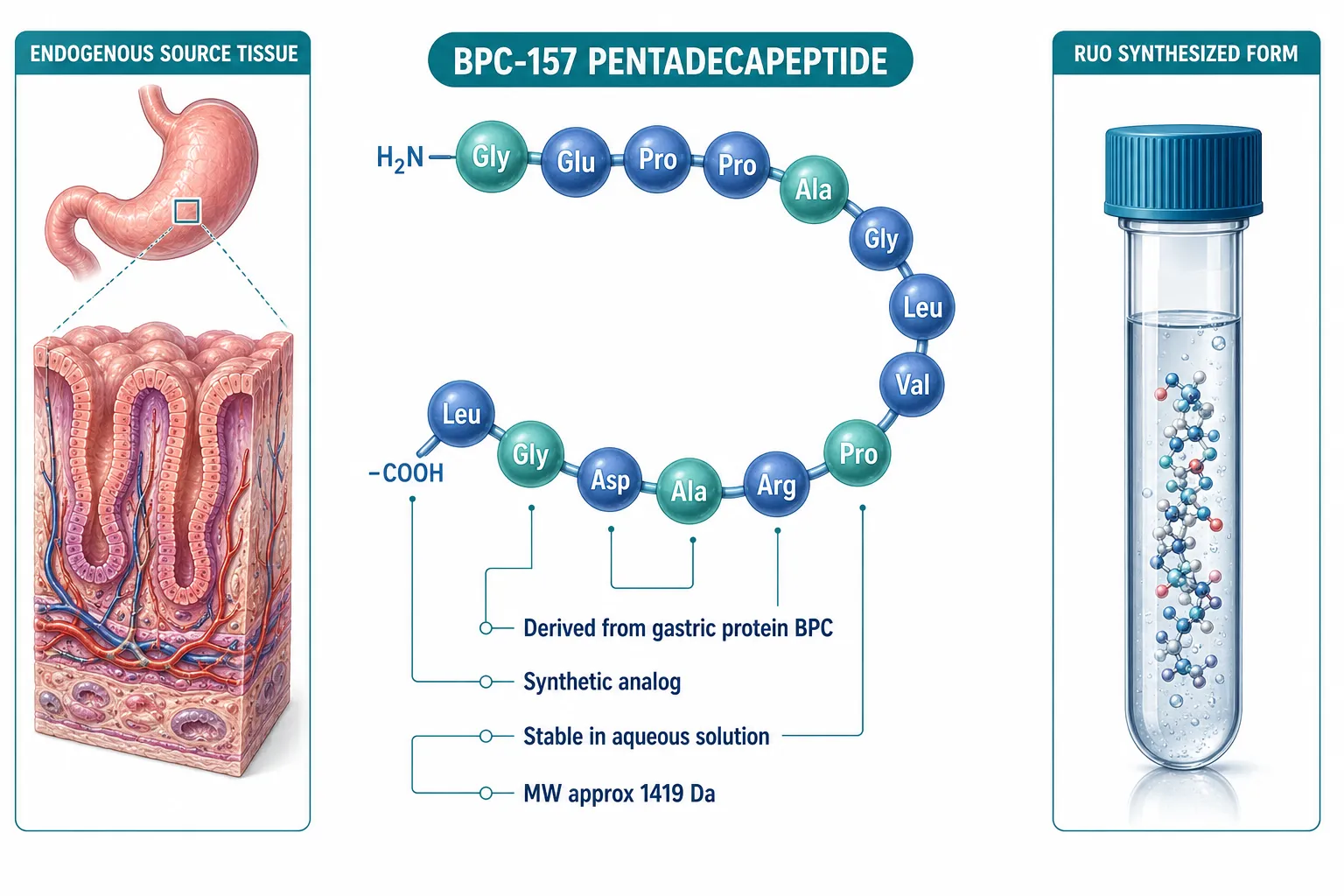
BPC-157 stands for Body Protection Compound-157. It is a synthetic pentadecapeptide, a chain of 15 amino acids, derived from a larger protective protein found in human gastric juice. The full name is sometimes written as PL 14736, and its molecular weight sits at approximately 1,419 daltons. Because it is synthesized in a laboratory rather than extracted from a biological source, it can be produced with high purity and consistency, which is precisely why it is valued as a reference compound in preclinical research.

Key structural facts:

Property Detail
Amino acid count 15
Origin Partial sequence of gastric BPC protein
Form Synthetic analog
Approximate MW 1,419 Da
Solubility Aqueous (water-soluble)

In the United States, BPC-157 can be purchased and possessed only as an RUO compound, labeled "for laboratory research use only," supplied without dosing instructions, and explicitly prohibited for human consumption or use as a dietary supplement. Suppliers provide it solely as a reference material for in vitro and preclinical work. The receiving laboratory determines the research application; the supplier does not direct therapeutic use.

This classification places BPC-157 alongside other peptides studied in controlled lab environments. For context on how other peptides are handled under similar RUO frameworks, the article on complement-dependent cytotoxicity and peptide-based safety assays for BPC-157 and related compounds outlines how researchers approach safety profiling at the bench level.

What Research-Use Only BPC-157 Is Not
What Research-Use Only BPC-157 Is Not

Understanding the boundaries of this compound is just as important as understanding its properties. Confusion about its legal and regulatory status is widespread, and that confusion carries real consequences.

BPC-157 is not:

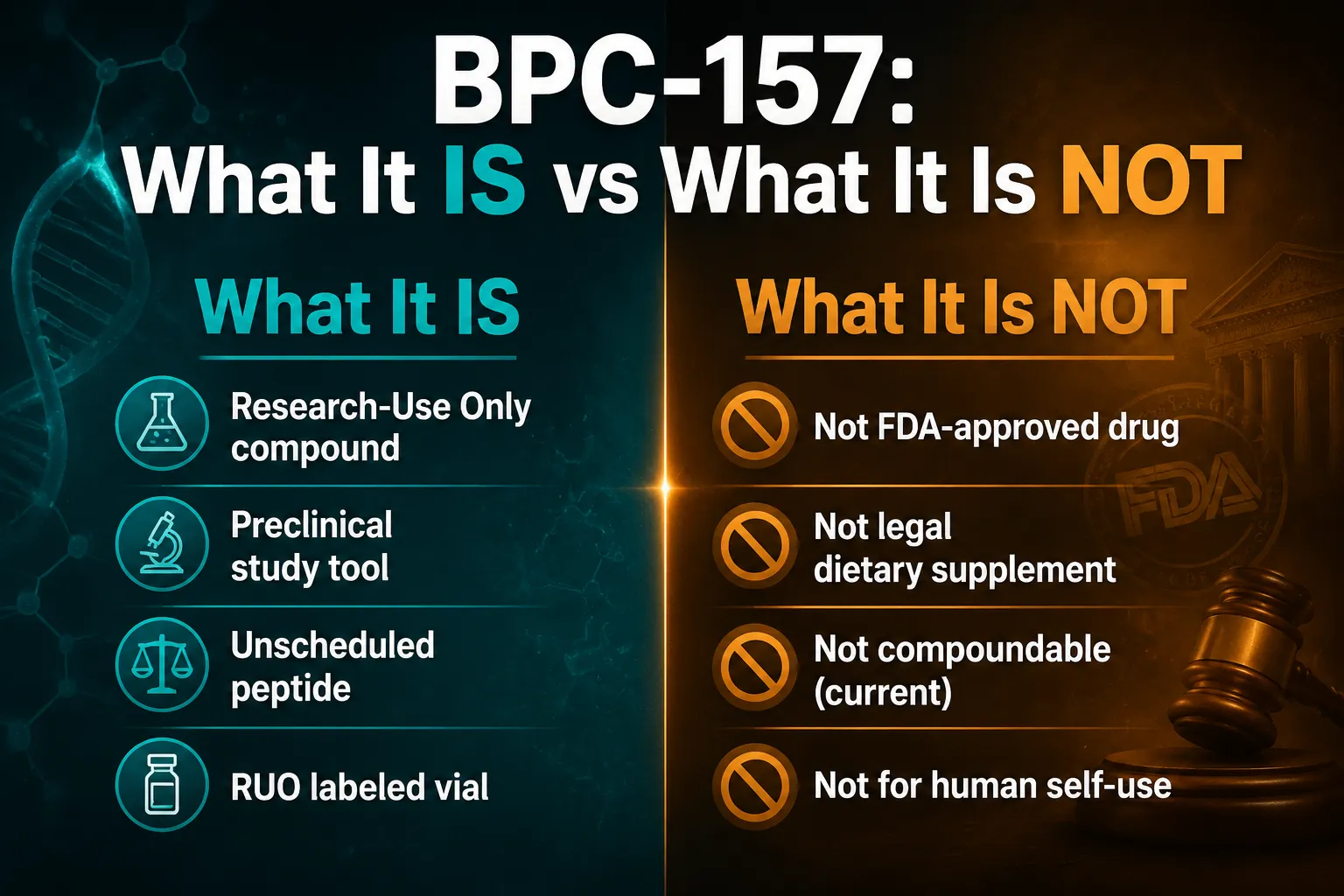
  • An FDA-approved drug. No new drug application for BPC-157 has been approved. It has no approved indication for any human condition.
  • A lawful dietary supplement ingredient. It does not meet the definition of a dietary ingredient under the Dietary Supplement Health and Education Act (DSHEA).
  • Currently authorized for pharmacy compounding. As of mid-2026, BPC-157 is not on the FDA's 503A Bulks List, meaning licensed compounding pharmacies cannot legally prepare it for routine prescription use.
  • A scheduled controlled substance. It is not listed under the Controlled Substances Act, which is why it remains broadly accessible online, but unscheduled does not mean legal for personal use.
  • A clinically validated therapy. Despite extensive animal data, no robust published randomized controlled human trials have demonstrated its safety and efficacy for any indication.

"Unscheduled does not mean authorized. The absence of a ban is not the same as permission."

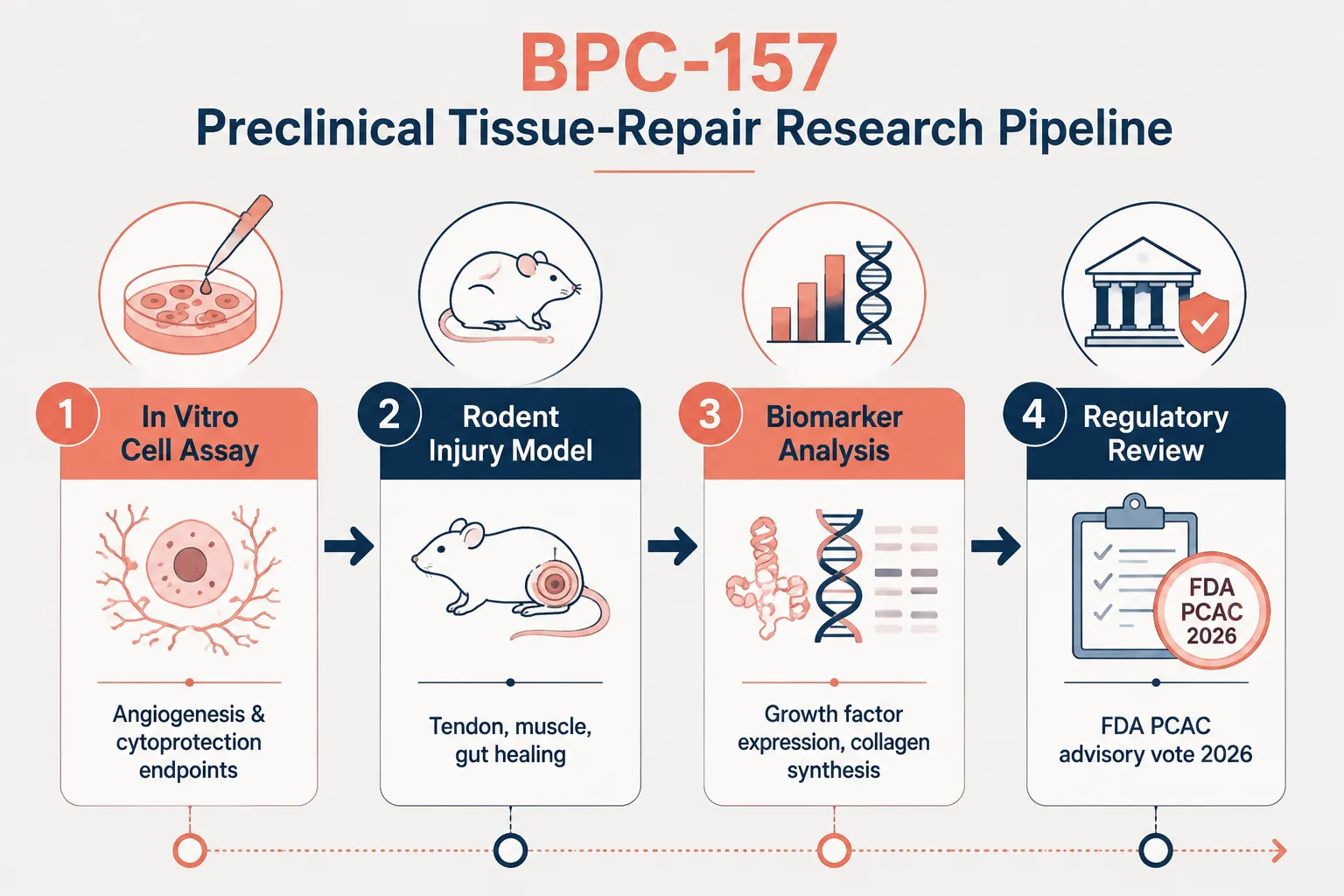
On July 23, 2026, the FDA's Pharmacy Compounding Advisory Committee (PCAC) voted 8-6 (with one abstention) to recommend adding BPC-157 to the 503A Bulks List. This is a meaningful development, it signals that the committee found enough scientific basis to warrant further consideration. However, the vote is advisory and non-binding. The FDA has not issued a final ruling, and analysts caution that the agency often follows its own staff's more conservative briefings. Until a final decision is published, BPC-157 remains in a regulatory gray area: neither banned nor authorized for compounding.

Purchasing BPC-157 marketed as "research use only" for personal self-administration remains unlawful under current FDA enforcement policy.

Where BPC-157 Fits in Tissue-Repair Models
Where BPC-157 Fits in Tissue-Repair Models

The preclinical literature on BPC-157 is substantial. Animal models have examined its effects across a wide range of tissue types, consistently framing it as a broad tissue-repair modulator rather than a compound with a single narrow mechanism.

Documented preclinical research endpoints include:

  • Musculoskeletal repair, tendon, ligament, and muscle healing in rodent injury models
  • Gastrointestinal protection, gut lining repair, ulcer models, and intestinal anastomosis studies
  • Neurological recovery, peripheral nerve regeneration and spinal cord injury models
  • Angiogenesis, formation of new blood vessels, relevant to wound healing
  • Bone and dental tissue, fracture and periodontal repair models
  • Corneal healing, ocular surface repair in animal studies

The proposed mechanisms center on upregulation of growth factors (including VEGF), modulation of nitric oxide pathways, and cytoprotective activity at the cellular level. These pathways make BPC-157 a useful tool for probing regenerative biology, not because it is a proven therapy, but because it allows researchers to interrogate how specific repair cascades respond to a defined molecular signal.

For researchers interested in how BPC-157 is studied alongside other repair-focused peptides in combined formulations, the overview of GHK-Cu, BPC-157, and supporting compounds in skin and hair research provides useful context on multi-peptide laboratory models.

It is also worth noting how BPC-157 compares to other peptides studied for cytoprotective or metabolic endpoints. Researchers working with mitochondrial peptides such as those described in the MOTS-c peptide mitochondrial signaling and metabolic research overview will recognize a shared pattern: strong preclinical signal, active regulatory scrutiny, and a clear RUO boundary in 2026.

The FDA's own briefing documents, prepared ahead of the July 2026 PCAC meeting, acknowledged the volume of animal data, more than 100 studies cited by proponents, while recommending against adding BPC-157 to the bulks list precisely because no completed, published randomized human trials exist. That recommendation reflects the agency's standard evidentiary threshold, and it is the same threshold that separates a promising preclinical tool from a clinically approved compound.

Researchers sourcing BPC-157 for legitimate laboratory work should apply the same quality criteria used for other research-grade peptides. The guide on quality criteria for sourcing research-grade MOTS-c and 5-Amino-1MQ outlines purity verification, certificate of analysis standards, and supplier vetting practices that apply equally to BPC-157 procurement.

Conclusion

Research-Use Only BPC-157: What It Is, What It Is Not, and Where It Fits in Tissue-Repair Models is not a simple question with a simple answer, but the core facts are clear. BPC-157 is a well-characterized synthetic peptide with a robust preclinical profile and a firmly defined regulatory boundary. In 2026, it is a laboratory research tool, not an approved therapy.

Actionable next steps for researchers and informed readers:

  1. Verify RUO labeling. Any legitimate supplier will label BPC-157 explicitly for laboratory use only, with no dosing guidance.
  2. Demand a certificate of analysis. Purity, identity, and sterility data should accompany every research-grade purchase.
  3. Monitor the FDA's response to the July 2026 PCAC vote. A final agency decision on the 503A Bulks List could change the compounding landscape, but has not done so yet.
  4. Distinguish preclinical data from clinical evidence. Animal models are hypothesis-generating, not confirmatory. Treat them accordingly in any research design.
  5. Stay current on regulatory trackers. BPC-157's status has shifted before and may shift again; legal-status guides aimed at laboratories are the most reliable real-time source.

The preclinical science is genuinely interesting. The regulatory picture is genuinely unsettled. Both facts deserve equal weight.

https://www.puretestedpeptides.com/wp-content/uploads/2026/08/research-use-only-bpc-157-what-it-is-what-it-is-not-and-where-it-fits-in-tissue.webp 1024 1536 https://www.puretestedpeptides.com/wp-content/uploads/2026/01/buy-peptides-online.jpg 2026-08-13 13:05:272026-08-13 13:05:27Research-Use Only BPC-157: What It Is, What It Is Not, and Where It Fits in Tissue-Repair Models
×

Helpful Links

  • My account
  • Cart
  • Checkout
  • Refund and Returns Policy
  • Privacy Policy
  • SMS Privacy Policy
  • Login
  • My Account
  • Logout

USA Made Lab Tested Peptides

All products are sold for research, laboratory, or analytical purposes only, and are not for human consumption


Pure Tested Peptides is a chemical supplier. Pure Tested Peptides is not a compounding / chemical compounding facility as defined under 503A of the Federal Food, Drug, and Cosmetic act. Pure Tested Peptides is not an outsourcing facility as defined under 503B of the Federal Food, Drug, and Cosmetic act.

The statements made within this website have not been evaluated by the US Food and Drug Administration. The products we offer are not intended to diagnose, treat, cure or prevent any disease.

Human/Animal Consumption Prohibited. Laboratory/In-Vitro Experimental Use Only

Scroll to top Scroll to top Scroll to top