Call or Text 727-513-9780
  • Shopping Cart Shopping Cart
    0Shopping Cart
Pure Tested Peptides | America's most trusted Peptides for sale online
  • Peptides for sale
    • Oral Peptides for sale
      • Peptide Capsules for sale
      • BPC 157 Capsules 1000mcg
      • SLU-PP-332 Capsules | 1000 mcg
      • 5-Amino-1MQ 50mg Capsules
      • Tesofensine 500mcg
    • All Peptides for sale
    • Peptide Sprays
      • BPC 157 Nasal Spray Kit
      • BPC-157 TB500 Nasal Spray Kit
      • Semax Nasal Spray 10mg
      • Selank – Nasal Spray Kit – 10mg
      • Epithalon 50MG Nasal Spray Kit
      • Ipamorelin 10mg Nasal Spray
      • Klow Nasal Spray (BPC-157 + TB-500 + GHK-Cu + KPV) | 80mg
      • Hulk Nasal Spray Tesa / Ipa Blend 6/3 MG
      • Klow Nasal Spray
      • NAD + 500 mg Nasal Spray
      • PT-141 Nasal Spray Kit
    • GHRH Peptides
      • Ipa Peptides
      • CJC-1295 Peptides
        • CJC-1295 with DAC 5 mg
        • CJC-1295 without DAC 5 mg
        • CJC-1295 Ipa 10mg
      • Tesa Peptides
        • Tesa Peptide
        • Tesa 20 mg
    • GHK-Cu Peptides
      • All GHK-Cu Peptides
      • GHK-Cu 100mg
      • KLOW Peptide Blend – Buy KLOW blend online
    • BPC Peptides
      • All BPC Peptides
      • BPC-157
      • BPC-157 TB-500
      • BPC 157 capsules 1000mcg
    • SLU-PP-332 Peptides
      • All SLU-PP-332 Peptides
      • SLU-PP-332 5mg
    • GLP3 Peptides
    • PT-141 Peptides
      • PT-141 Peptides for sale
      • PT-141 10mg
      • PT-141 Nasal Spray
    • CAG Peptides
      • Lipo-C Peptide Blend
      • CAG 5mg
      • CAG 10mg
    • MOTS-C Peptides
      • MOTS-C Peptides for sale
      • MOTS-c peptide
      • MOTS-c 10mg *6 pack*
    • 5 Amino 1MQ Peptides
      • 5 Amino 1MQ Peptides for sale
      • 5-Amino-1MQ 50mg Capsules
      • 5-Amino-1MQ 5mg
    • Epithalon Peptides
      • Epithalon Peptides for sale
      • Epithalon 10mg
      • Epithalon 50mg
  • Shop
    • GLPs
      • 5-Amino-1MQ 50mg Capsules
      • 5-Amino-1MQ 5mg
      • L-Carnitine 500mg/ml
      • Tesofensine 500mcg
      • SLU-PP-332 5mg
      • MOTS-c 10mg *6 pack*
    • Epithalon & BPC Peptides
      • Epithalon 10mg
      • Epithalon 50mg
      • BPC-157
      • BPC 157 capsules 1000mcg
      • BPC-157 TB-500
      • BPC-157 TB500 Nasal Spray Kit
      • BPC 157 Nasal Spray Kit
    • BPC TB-500 & NAD+ Peptides
      • NAD+ 500 mg
      • KLOW Peptide Blend – Buy KLOW blend online
      • GLOW Peptide Blend
      • TB 500 5mg
      • BPC 157 capsules 1000mcg – Supplement
      • BPC 157 Nasal Spray Kit
      • BPC-157
      • BPC-157 TB500 Nasal Spray Kit
      • BPC-157 TB-500
      • BPC 157 capsules 1000mcg
    • LL-37 Peptide
      • LL-37 10 mg
    • MOTS-C & Selank
      • MOTS-c peptide
      • Selank 10mg
    • GHK Peptides
      • GHK-Cu 100mg
      • GLOW Peptide Blend
      • KLOW Peptide Blend – Buy KLOW blend online
  • COAs
  • Wholesale
    • Wholesale Peptides for sale
  • PTP FAQ
  • Affiliates
    • Selank Peptide: Advanced Pharmacological Mechanisms Underlying Its Anxiolytic and Nootropic Effects in Research
      • 5-Amino-1MQ Peptide: Detailed Mechanisms of NNMT Inhibition and Its Impact on Cellular Metabolism Research
        • MOTS-C Peptide: Unraveling Its Role in Mitochondrial Dynamics and Energy Metabolism Research
          • Epithalon Peptide and Telomerase Regulation: Investigating Its Impact on Cellular Senescence and Lifespan Research Models
            • GLP2-T vs GLP2 Tirz Peptide: Understanding the Naming, Mechanistic Nuances, and Research Implications for Gut Health
      • Peptides and Polypeptides in Modern Pharmacology: What Research on Metoprolol, Prednisone, and Amlodipine Reveals
        • Polypeptide Peptides vs NSAIDs: What Naproxen and Diclofenac Teach Tissue-Repair Researchers About BPC‑157 and TB‑500
          • Peptides and Polypeptides in Endocrine Pharmacology: How GLP-1, GLP-2, and GLP-3 Retatrutide Differ From Classic Drugs Like Prednisone and Amlodipine
          • 5‑Amino‑1MQ Peptide and NNMT Inhibition: How It Compares With Statins Like Atorvastatin in Adipose and Lipid Metabolism Research
      • Enclomiphene, Estrogen Receptor Signaling, and Luteinizing Phase Biology: What Hormone Researchers Should Measure
        • Mesenchymal Stem Cells, BPC‑157, and GHK‑Cu: How Tissue Repair Peptides Compare With Classic NSAIDs Like Naproxen in Injury Models
          • Peptide Calculator Use Cases Beyond Growth Hormone: Working Through GLP‑3 Retatrutide, MOTS‑c, and BPC‑157 Research Dosing
        • Polypeptide Peptides in Endocrine and Metabolic Pharmacology: Lessons From Amlodipine, Prednisone, and Metoprolol
        • Peptides Calculator for Advanced Blends: Worked Examples for Tesamorelin, CJC‑1295, and Ipamorelin Stacks
          • Peptides and Polypeptides in Human Physiology: How Molecular Size Shapes Research Applications
            • Selank Peptide: Advanced Pharmacological Mechanisms Underlying Its Anxiolytic and Nootropic Effects in Research
          • 5-Amino-1MQ Peptide: Detailed Mechanisms of NNMT Inhibition and Its Impact on Cellular Metabolism Research
            • MOTS-C Peptide: Unraveling Its Role in Mitochondrial Dynamics and Energy Metabolism Research
              • Epithalon Peptide and Telomerase Regulation: Investigating Its Impact on Cellular Senescence and Lifespan Research Models
                • GLP2-T vs GLP2 Tirz Peptide: Understanding the Naming, Mechanistic Nuances, and Research Implications for Gut Health
                  • Peptides and Polypeptides in Endocrine Pharmacology: How GLP-1, GLP-2, and GLP-3 Retatrutide Differ From Classic Drugs Like Prednisone and Amlodipine
                    • Polypeptide Peptides vs NSAIDs: What Naproxen and Diclofenac Teach Tissue-Repair Researchers About BPC‑157 and TB‑500
                      • Peptides and Polypeptides in Modern Pharmacology: What Research on Metoprolol, Prednisone, and Amlodipine Reveals
                        • 5‑Amino‑1MQ Peptide and NNMT Inhibition: How It Compares With Statins Like Atorvastatin in Adipose and Lipid Metabolism Research
                        • Enclomiphene, Estrogen Receptor Signaling, and Luteinizing Phase Biology: What Hormone Researchers Should Measure
                        • Mesenchymal Stem Cells, BPC‑157, and GHK‑Cu: How Tissue Repair Peptides Compare With Classic NSAIDs Like Naproxen in Injury Models
                        • Peptide Calculator Use Cases Beyond Growth Hormone: Working Through GLP‑3 Retatrutide, MOTS‑c, and BPC‑157 Research Dosing
                        • Polypeptide Peptides in Endocrine and Metabolic Pharmacology: Lessons From Amlodipine, Prednisone, and Metoprolol
                        • Peptides Calculator for Advanced Blends: Worked Examples for Tesamorelin, CJC‑1295, and Ipamorelin Stacks
                        • Peptides and Polypeptides in Human Physiology: How Molecular Size Shapes Research Applications
                        • Selank Peptide: Advanced Pharmacological Mechanisms Underlying Its Anxiolytic and Nootropic Effects in Research
                        • MOTS-C Peptide: Unraveling Its Role in Mitochondrial Dynamics and Energy Metabolism Research
                        • Peptides and Polypeptides in Modern Pharmacology: What Research on Metoprolol, Prednisone, and Amlodipine Reveals
                        • Peptides and Polypeptides in Endocrine Pharmacology: How GLP-1, GLP-2, and GLP-3 Retatrutide Differ From Classic Drugs Like Prednisone and Amlodipine
                        • 5-Amino-1MQ Peptide: Detailed Mechanisms of NNMT Inhibition and Its Impact on Cellular Metabolism Research
                        • Mesenchymal Stem Cells, BPC‑157, and GHK‑Cu: How Tissue Repair Peptides Compare With Classic NSAIDs Like Naproxen in Injury Models
                        • Peptide Calculator Use Cases Beyond Growth Hormone: Working Through GLP‑3 Retatrutide, MOTS‑c, and BPC‑157 Research Dosing
                        • GLP2-T vs GLP2 Tirz Peptide: Understanding the Naming, Mechanistic Nuances, and Research Implications for Gut Health
                        • Polypeptide Peptides in Endocrine and Metabolic Pharmacology: Lessons From Amlodipine, Prednisone, and Metoprolol
                        • Polypeptide Peptides vs NSAIDs: What Naproxen and Diclofenac Teach Tissue-Repair Researchers About BPC‑157 and TB‑500
                        • Peptides and Polypeptides in Human Physiology: How Molecular Size Shapes Research Applications
                        • Peptides Calculator for Advanced Blends: Worked Examples for Tesamorelin, CJC‑1295, and Ipamorelin Stacks
                        • 5‑Amino‑1MQ Peptide and NNMT Inhibition: How It Compares With Statins Like Atorvastatin in Adipose and Lipid Metabolism Research
                        • Enclomiphene, Estrogen Receptor Signaling, and Luteinizing Phase Biology: What Hormone Researchers Should Measure
                        • Epithalon Peptide and Telomerase Regulation: Investigating Its Impact on Cellular Senescence and Lifespan Research Models
                        • Best research protocol Klow blend
                        • best time to take BPC-157
                        • best time to take DSIP (Delta Sleep Inducing Peptide)
                        • best time to take CJC-1295
                        • best time to take AOD-9604
                        • best time to take Follistatin 344
                        • best time to take Ipamorelin
                        • best time to take MK-677 (Ibutamoren)
                        • best time to take Ligandrol (LGD-4033) — research compound
                        • best time to take Ostarine (MK-2866) — research compound
                        • best time to take GHK-CU
                        • best time to take TB-500
                        • best time to take MOTS-c
                        • best time to take Semax
                        • best time to take RAD-140 (Testolone) — research compound
                        • best time to take Thymosin Alpha-1
                        • best time to take PEG-MGF
                        • Biolife Plasma, Octapharma Plasma, and Research Peptides: How Plasma Donation Labs Differ From Peptide Suppliers
                        • best time to take YK-11 — research compound
                        • best time to take PT-141 (Bremelanotide)
                        • Best research protocol Klow blend
                        • 5-Amino-1MQ and MOTS-C Synergy: Metabolic Signaling, Mitochondria, and Research Design
                        • BPC-157 and TB-500: Investigating Their Combined Effects on Angiogenesis and Cellular Migration in Tissue Repair Models
                        • BPC-157 Peptide: Gut Barrier Function, Inflammation, and Tissue-Recovery Research
                        • 5‑Amino‑1MQ and MOTS‑c Synergy in Metabolic Research: Designing NNMT and Mitochondrial Biogenesis Stacks
                        • CJC-1295 with DAC vs. Without DAC: Half-Life, Release Kinetics, and Research Implications
                        • CJC‑1295 with DAC vs. Without DAC: Expanding on Half‑Life Differences Using Tesamorelin and Ipamorelin Blend Case Studies
                        • Collagen Biology and Copper‑Binding Peptides: How GHK‑Cu, Glow Blend, and Klow Blend Interact with Skin and Connective Tissue
                        • Collagen Biology and Regenerative Peptides: How GHK‑Cu, Glow Blend, and Klow Blend Affect Extracellular Matrix Research
                    • DNA, Telomeres, and Longevity Peptides: Positioning Epithalon and MOTS‑c in Genetic Aging Research
                      • Enclomiphene Citrate: serm Mechanism, Testosterone Research, and Stack Compatibility
                        • Enclomiphene vs Enclomiphene Citrate: Formulation, Bioavailability, and Research Distinctions
                        • Epithalon Peptide Research: Telomerase Activation, Aging, and Pineal Gland Function
                        • Estrogen Receptor Signaling and Enclomiphene: How Selective Modulators Compare with Classic Polypeptide Hormones
                        • GHK-Cu Peptide: Advanced Mechanisms in Extracellular Matrix Remodeling and Wound Healing Research
                        • GHK-Cu Peptide: Collagen Synthesis, Wound Repair, and Skin-Barrier Research Models
                        • GLP-1 vs GLP-3 vs GLP-2: Peptide Classification and Research Applications
                        • GLP-2 Peptide Research Guide: Gut Barrier Function, Nutrient Absorption, and Intestinal Recovery Models
                        • GLP-3 Retatrutide vs. GLP-1 Drugs: What Triple-Agonist Biology Changes in Research Models
                        • Ipamorelin and Tesamorelin Combination: Synergistic GH Secretagogue Research and Dosing Protocols
                        • GLP2 Tirz Peptide: What It Is, Why the Name Exists, and How Researchers Should Interpret It
                        • Klow Blend Peptide Nasal Spray: What the Formulation Is Trying to Do in Cognitive Research
                        • Mitochondria, NNMT Inhibition, and Peptide Modulators: Where MOTS‑c and 5‑Amino‑1MQ Fit in Cellular Energy Research
                        • MOTS-c Peptide: Mitochondrial Function, Energy Metabolism, and What Researchers Measure
                        • MOTS-c vs. 5-Amino-1MQ: Which Metabolic Research Questions Each Compound Actually Answers
                        • Nasal Spray Peptides: Bioavailability, Administration, and Semax/Selank Research Applications
                        • PT-141 Peptide Research: Mechanism of Action and Melanocortin Receptor Signaling
                        • Retatrutide for Research: Mechanism, Structure, and GLP-1/GLP-3 Dual Action
                        • Retatrutide for Obesity and Type 2 Diabetes: What the Latest Trial Data Suggest
                        • Tesofensine Peptide Research: Mechanism, Appetite Suppression, and Neuropeptide Y Pathways
  • Contact
    • Contact Customer Service
    • Text Customer Support
  • About US
  • Shop all peptides
  • Affiliate Program
    • Affiliate Signup
  • Login / Register Login / Register Page Link Login / Register Page Link
  • Click to open the search input field Click to open the search input field Search
  • Menu Menu

Tag Archive for: tb-500 angiogenesis

Meloxicam, Naproxen, and Diclofenac in Peptide Research: A Comparative NSAID Confounder Guide

Meloxicam, Naproxen, and Diclofenac in Peptide Research: A Comparative NSAID Confounder Guide

November 3, 2026/0 Comments/in Uncategorized/by

Roughly 30 million people take an NSAID every day, yet the specific drug chosen rarely appears as a controlled variable in published peptide studies. That omission matters enormously. When a research model co-administers BPC-157, TB-500, or a metabolic peptide alongside an anti-inflammatory drug, the identity of that NSAID quietly reshapes nearly every downstream readout, from prostaglandin flux to angiogenic signaling. This guide to meloxicam, naproxen, and diclofenac in peptide research: a comparative NSAID confounder guide unpacks why those three agents produce meaningfully different confounds, and how researchers can account for them before designing protocols.

Key Takeaways

  • Meloxicam, naproxen, and diclofenac differ in COX-2 selectivity, half-life, and renal impact, each creates a distinct interference pattern in peptide assays.
  • BPC-157 repair models are especially sensitive to prostaglandin suppression; COX selectivity determines how deeply each NSAID blunts that signal.
  • Naproxen's long half-life and full COX-1/COX-2 blockade present the broadest confounder window in time-sensitive dosing schedules.
  • Diclofenac's short half-life offers a narrower interference window, but its variable plasma peaks complicate washout calculations.
  • Matching NSAID choice to the specific peptide pathway under study, rather than defaulting to the most prescribed agent, is the single highest-yield protocol adjustment available.

Why COX Selectivity Is the First Variable to Nail Down
Why COX Selectivity Is the First Variable to Nail Down

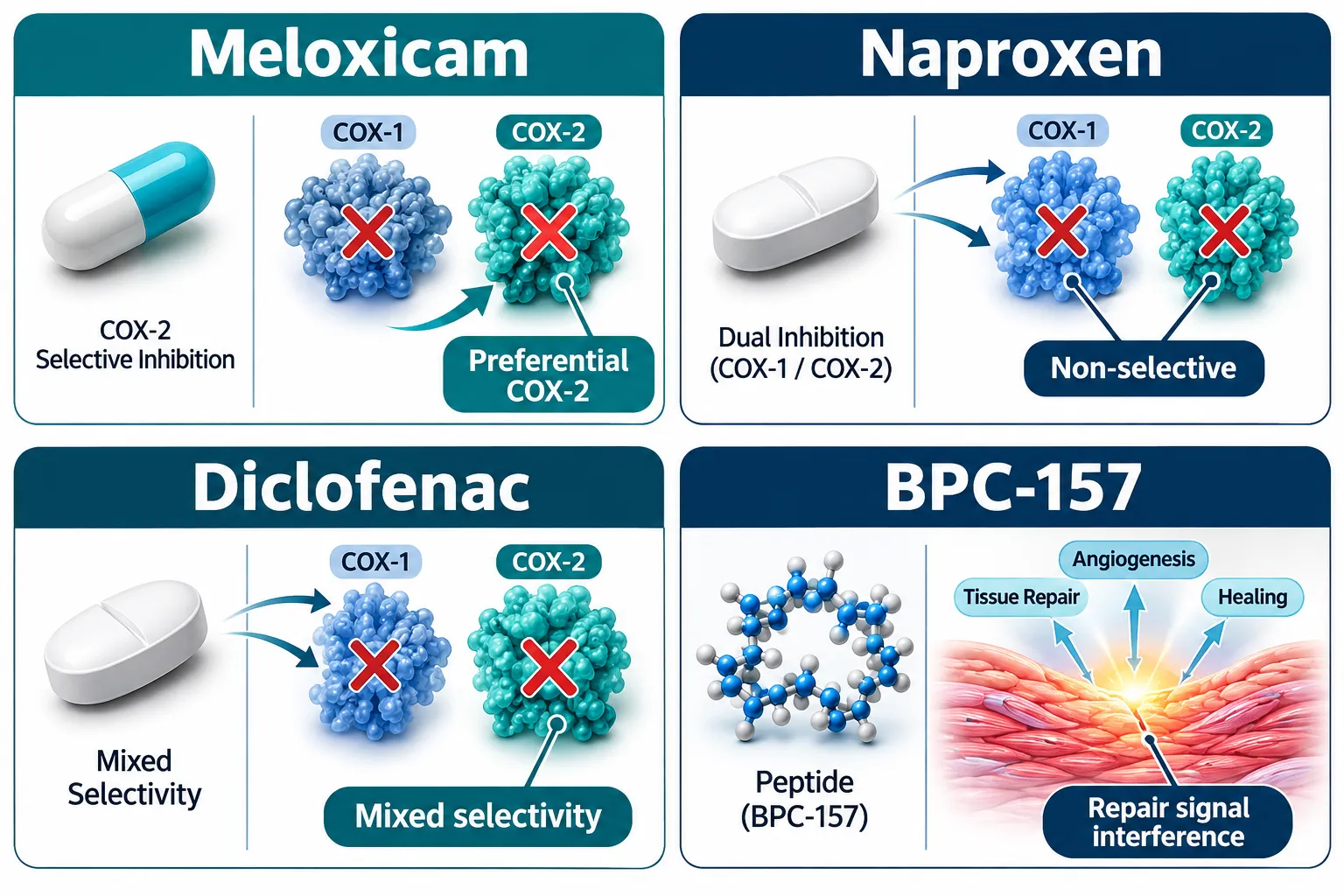
Every NSAID reduces inflammation by blocking cyclooxygenase enzymes, but the ratio of COX-1 to COX-2 inhibition differs sharply across the three agents.

Meloxicam is a preferential COX-2 inhibitor at standard doses (7.5-15 mg daily). It suppresses prostaglandin E2 production in inflamed tissue more than it disturbs constitutive COX-1 activity in the gastric mucosa. Naproxen is non-selective, blocking both isoforms roughly equally at its standard 250-500 mg twice-daily range. Diclofenac sits in the middle, it leans toward COX-2 at lower doses but loses selectivity as plasma concentration rises.

For peptide researchers, this hierarchy carries direct consequences:

NSAID COX-2 Preference Standard Daily Dose Range Plasma Half-Life
Meloxicam High 7.5-15 mg ~20 hours
Naproxen None (non-selective) 500-1000 mg ~12-17 hours
Diclofenac Moderate 75-150 mg ~2 hours

BPC-157 exerts part of its tissue-repair effect through prostaglandin-dependent pathways. A non-selective NSAID like naproxen suppresses that prostaglandin environment far more completely than meloxicam would, potentially masking BPC-157 efficacy in a wound-healing endpoint. Researchers sourcing peptides for these models can review purity benchmarks in the GHK-Cu peptide purchase and copper peptide research sourcing guide for related quality considerations.


Inflammation Timing, Half-Life, and the Dosing Window Problem
Inflammation Timing, Half-Life, and the Dosing Window Problem

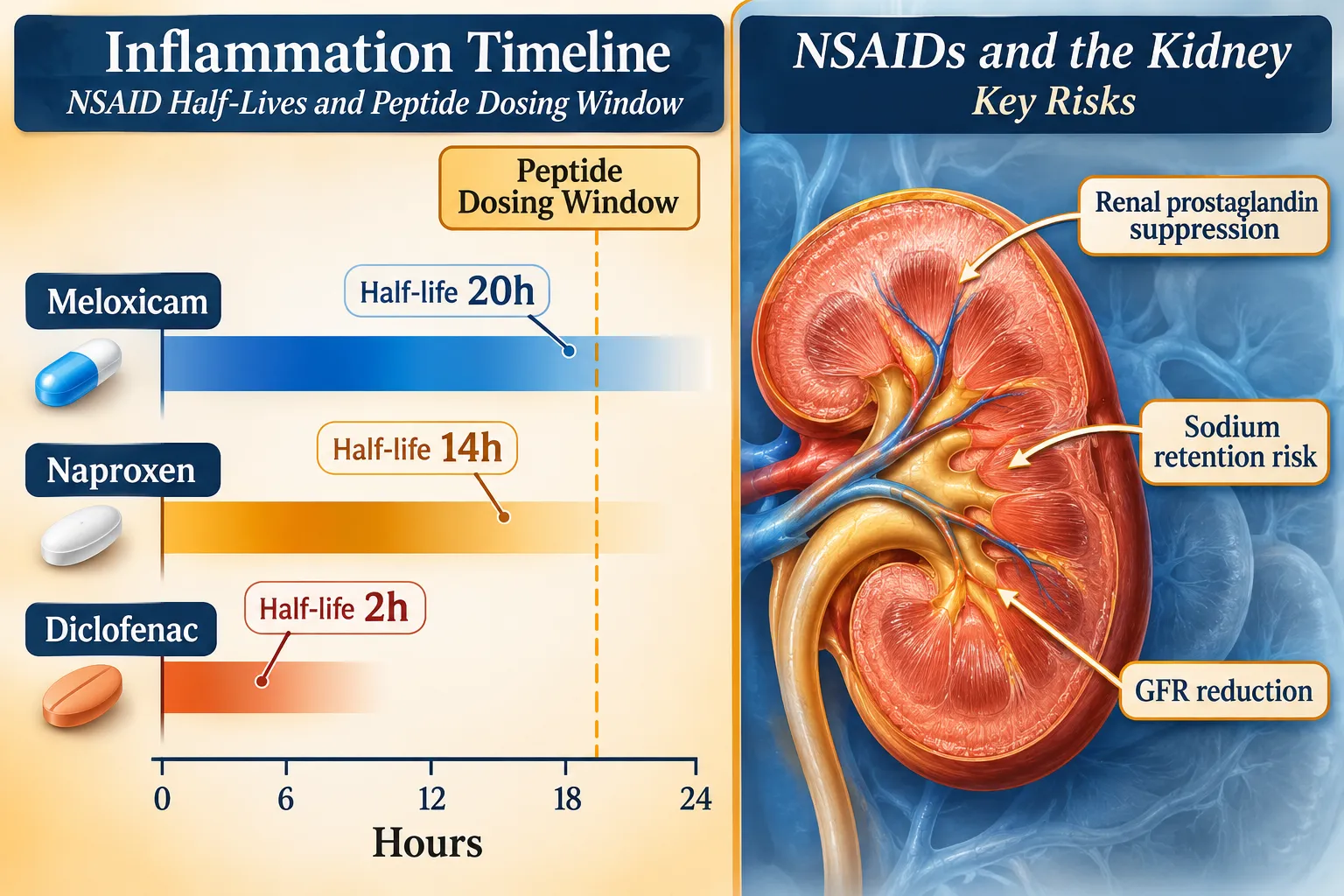
Half-life directly determines how long each NSAID occupies the inflammatory environment during a peptide experiment.

Naproxen's 12-to-17-hour half-life means that a morning dose still suppresses prostaglandins well into the following day. In a TB-500 actin-polymerization or angiogenesis study with once-daily peptide dosing, naproxen's persistent COX blockade overlaps almost entirely with the peptide's active window. Diclofenac, by contrast, clears rapidly, plasma levels drop steeply within four to six hours. That short window looks appealing for washout management, but diclofenac's variable absorption produces erratic peaks that are difficult to synchronize with peptide pharmacokinetics.

Meloxicam's ~20-hour half-life is the longest of the three, but because its COX-2 preference spares much of the COX-1-dependent prostanoid pool, the breadth of interference on repair-oriented pathways is narrower than naproxen's. For studies using mitochondria-targeted peptides, where researchers may want to explore products like SS-31 peptide, the renal prostaglandin implications of long-half-life agents deserve particular attention.

Renal effects are the second underappreciated confounder. All three NSAIDs reduce glomerular prostaglandin synthesis. In metabolic peptide models where GLP-related agents are under study, such as those listed on the GLP-3 peptide for sale page, NSAID-driven sodium retention and reduced GFR can directly alter peptide clearance rates and distort dose-response curves.


Matching Each NSAID to Specific Peptide Research Models
Matching Each NSAID to Specific Peptide Research Models

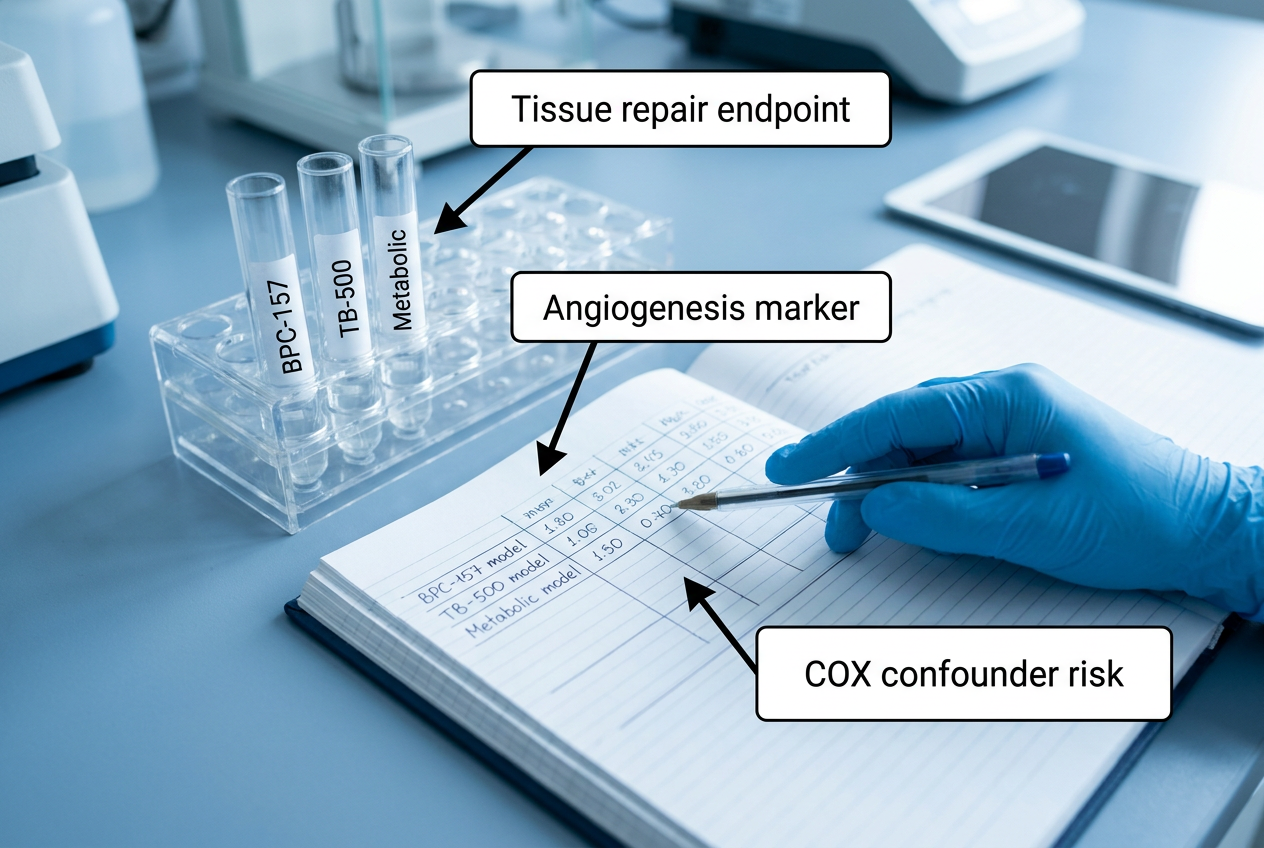
Applying the principles of a comparative NSAID confounder guide practically means mapping each drug to the peptide pathway it is most likely to disrupt.

BPC-157 models (tissue repair, tendon, gut)
BPC-157 stimulates angiogenesis partly through VEGF and nitric oxide pathways, but prostaglandin E2 is a co-signal in the early inflammatory phase of repair. Naproxen's full COX blockade presents the highest risk of attenuating early repair signals. Meloxicam is a lower-risk choice if an NSAID must be co-administered, though the ideal design uses a NSAID-free control arm. Researchers interested in peptide comparisons for repair models can also consult the LL-37 versus SS-31 benefits of each peptide overview for related mechanistic context.

TB-500 (thymosin beta-4) models
TB-500 accelerates actin remodeling and endothelial migration. COX-2-derived prostaglandins facilitate endothelial tube formation. Diclofenac's partial COX-2 inhibition at therapeutic doses may modestly blunt this effect, while naproxen's non-selective blockade is most likely to flatten angiogenic endpoints. Pharmacogenomic metabolism notes are also relevant: both meloxicam and diclofenac are CYP2C9 substrates, meaning subjects with poor CYP2C9 activity accumulate higher drug levels and produce disproportionate prostaglandin suppression.

Metabolic peptide models
For researchers working with GLP-related compounds, including those available via the GLP-3R 10mg peptide GA10 listing, NSAID-induced fluid retention and insulin-sensitivity shifts are genuine confounders. Naproxen's sustained COX-1 activity affects platelet thromboxane, which in turn modulates insulin secretion indirectly. Diclofenac's cardiovascular risk signal, stronger than meloxicam's in real-world prescribing data, also introduces hemodynamic variables that metabolic assays rarely account for. For quality assurance across peptide sourcing decisions, the lab tested peptides resource provides useful benchmarking context.

Practical NSAID selection hierarchy for peptide researchers:

  1. Avoid NSAIDs entirely when the primary endpoint is prostaglandin-dependent.
  2. Use meloxicam when an anti-inflammatory control is necessary and COX-1 preservation matters.
  3. Use diclofenac only when a short interference window is operationally required and CYP2C9 status is known.
  4. Avoid naproxen in any time-sensitive repair or angiogenesis model.
  5. Always include a NSAID-free arm regardless of which agent is selected.

"The NSAID chosen is not a neutral background variable, it is an active experimental input that reshapes the prostaglandin and renal environment in which every peptide signal is read."

For growth-hormone secretagogue studies, the GHRP-2 peptide vs Sermorelin comparison demonstrates how pharmacokinetic differences between agents in the same class produce measurably distinct outcomes, the same logic applies here.


Conclusion

Meloxicam, naproxen, and diclofenac in peptide research constitute a comparative NSAID confounder guide that every researcher using anti-inflammatory agents alongside bioactive peptides should review before finalizing a protocol. The three agents diverge on COX selectivity, half-life, renal impact, and CYP2C9 metabolism, each difference capable of shifting an endpoint enough to misrepresent the peptide's true effect.

Actionable next steps for 2026 research designs:

  • Document the specific NSAID, dose, and timing in every protocol section, not just as a footnote.
  • Pre-screen for CYP2C9 poor-metabolizer status when using meloxicam or diclofenac.
  • Include a minimum 48-hour washout period for naproxen before any prostaglandin-sensitive peptide assay.
  • Power studies to detect NSAID-by-peptide interaction effects, not just main peptide effects.
  • Choose meloxicam over naproxen when an NSAID control arm is unavoidable in repair or angiogenesis models.

Treating NSAID selection as a true independent variable, not an administrative default, is one of the most cost-effective ways to improve the reproducibility of peptide research outcomes.

https://www.puretestedpeptides.com/wp-content/uploads/2026/11/meloxicam-naproxen-and-diclofenac-in-peptide-research-a-comparative-nsaid-confou.webp 1024 1536 https://www.puretestedpeptides.com/wp-content/uploads/2026/01/buy-peptides-online.jpg 2026-11-03 14:27:042026-11-03 14:27:04Meloxicam, Naproxen, and Diclofenac in Peptide Research: A Comparative NSAID Confounder Guide

Tag Archive for: tb-500 angiogenesis

Glow Blend and Klow Blend Peptides: Example Stacks for Skin, Hair, and ‘Aging Support’ Research Only

Glow Blend and Klow Blend Peptides: Example Stacks for Skin, Hair, and ‘Aging Support’ Research Only

June 13, 2026/0 Comments/by Pure Tested

Fewer than 5% of multi-peptide research blends currently on the market combine collagen-stimulating, angiogenic, and anti-inflammatory compounds into a single lyophilized formulation — yet that is precisely what Glow Blend and Klow Blend peptides represent. Understanding how each component maps to specific cellular pathways is essential for researchers designing protocols around skin remodeling, hair follicle biology, and aging-related cellular decline.

This article breaks down the ingredient profiles of both blends, explains the mechanistic rationale behind each stack, and outlines hypothetical research applications. All content is strictly for informational and educational purposes. Neither blend is approved for human therapeutic use.

Key Takeaways

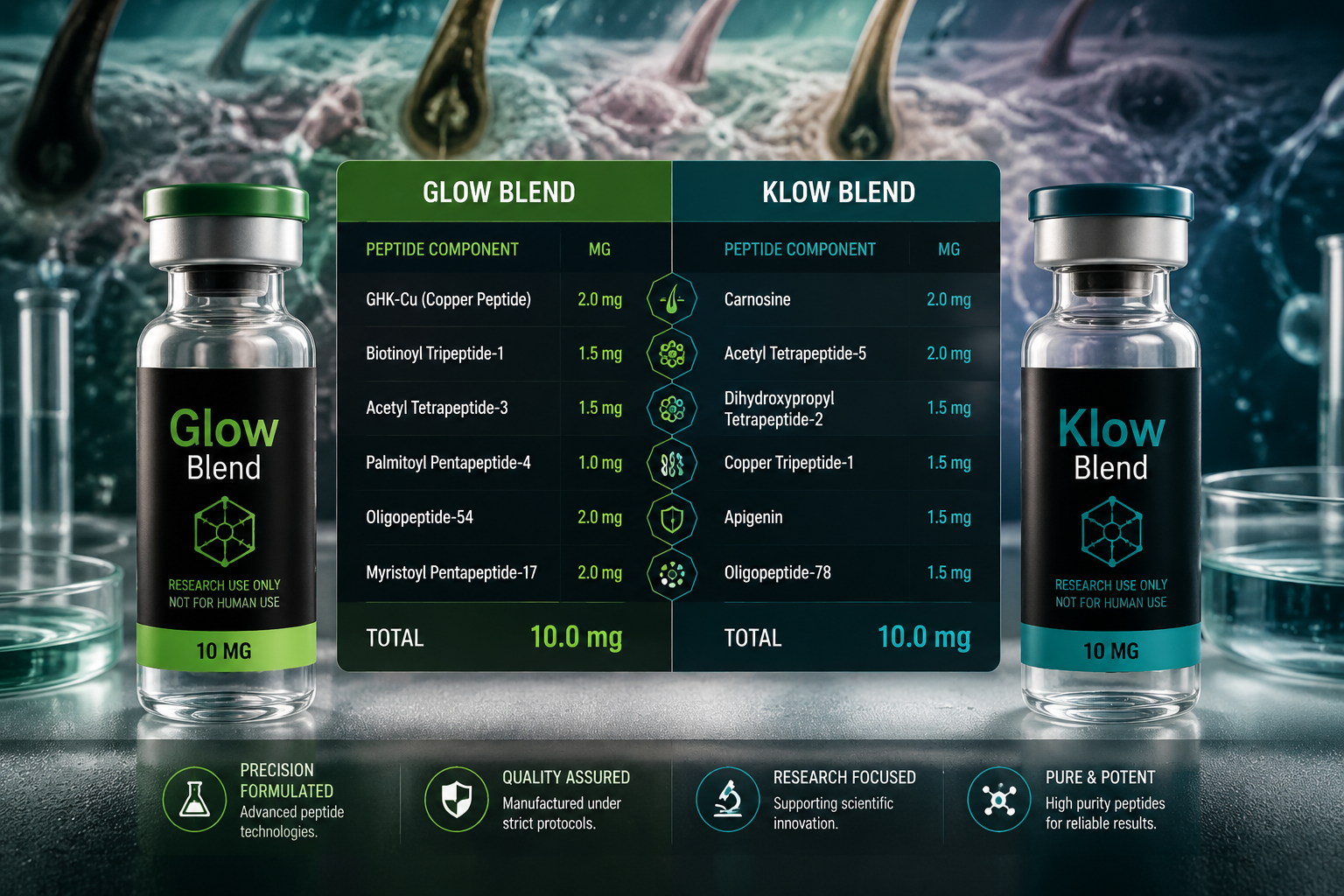
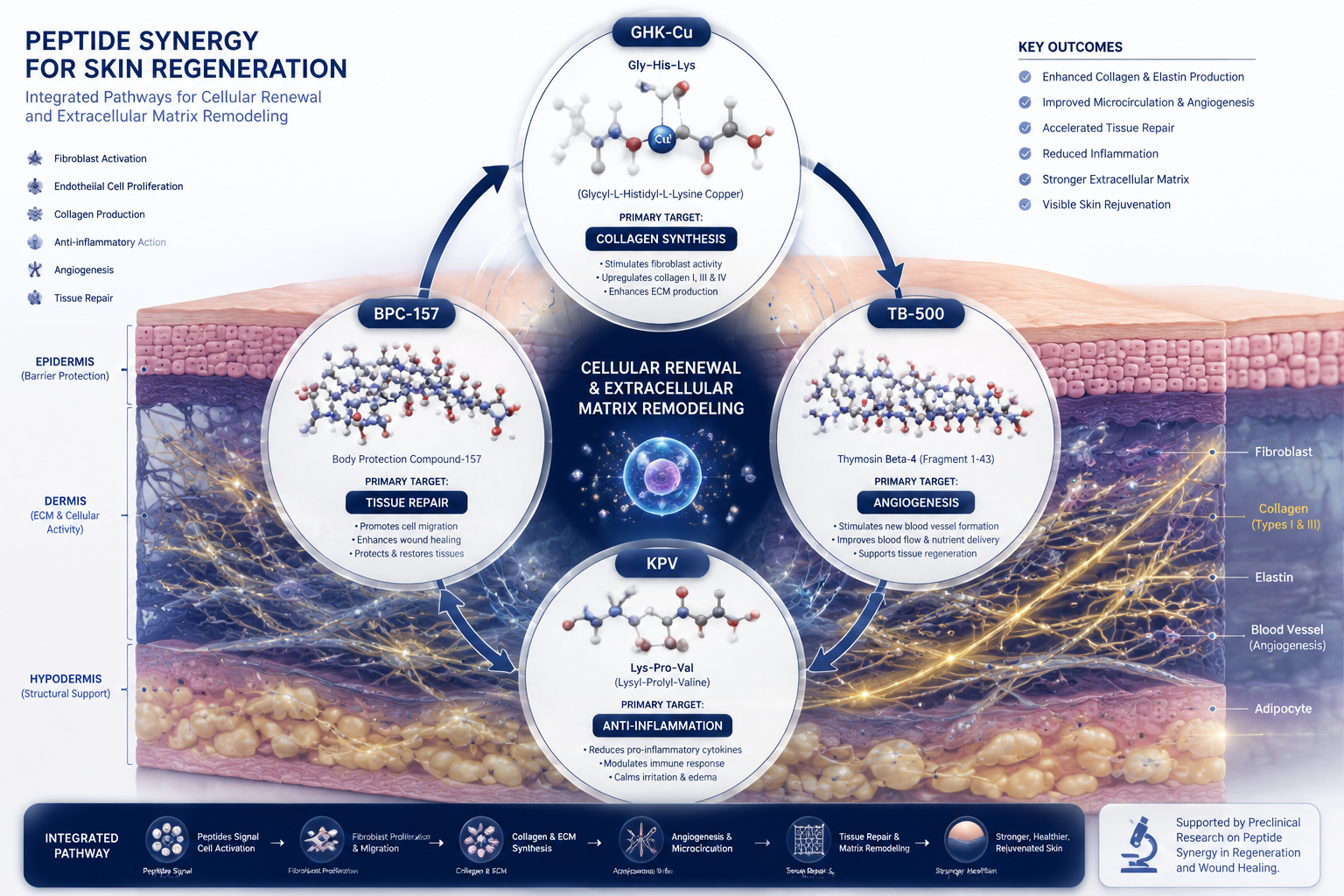
  • Glow Blend contains GHK-Cu, BPC-157, and TB-500, targeting collagen synthesis, tissue repair, and angiogenesis.
  • Klow Blend adds KPV to the same three-peptide base, extending coverage to inflammatory and immunomodulatory pathways.
  • Both blends are research-grade only and have no published clinical trials as combined formulations.
  • Choosing between the two depends on whether inflammation is a primary variable in the research model.
  • Proper storage and purity verification are critical for maintaining peptide integrity in any lab setting.

Key Takeaways

Ingredient Profiles: What Each Peptide Does at the Cellular Level

Understanding Glow Blend and Klow Blend peptides as example stacks for skin, hair, and aging support research begins with mapping each ingredient to a specific biological mechanism.

GHK-Cu: Collagen, Elastin, and Cellular Renewal

GHK-Cu (Glycyl-L-Histidyl-L-Lysine Copper) is the anchor compound in both blends. At the cellular level, it stimulates fibroblast activity, upregulates collagen and elastin synthesis, and promotes angiogenesis — the formation of new blood vessels that supply nutrients to skin tissue. It also carries potent antioxidant activity, helping neutralize reactive oxygen species that accelerate cellular aging. In hair follicle research models, GHK-Cu has been studied for its ability to support follicle cycling and reduce miniaturization signals. Researchers interested in topical applications can explore topical GHK-Cu formulations as a reference point for delivery considerations.

BPC-157: Connective Tissue and Healing Cascade Activation

BPC-157 (Body Protection Compound 157) accelerates the repair of muscle, ligament, and tendon tissue while reducing local inflammation. In skin research models, its relevance lies in connective tissue strengthening and its ability to enhance growth factor signaling. It works synergistically with TB-500 by activating overlapping but distinct repair pathways. For a deeper look at its regenerative applications, the BPC-157 and TB-500 regeneration research page provides useful context.

TB-500: Cell Migration and Vascular Support

TB-500 (Thymosin Beta-4) promotes actin polymerization, which drives cell migration — a critical step in wound closure and tissue remodeling. It enhances blood flow to damaged areas and complements BPC-157 by improving the scaffolding environment in which new cells proliferate. Together, these two peptides create a repair-focused foundation for both blends.

KPV: The Anti-Inflammatory Addition in Klow Blend

KPV (Lys-Pro-Val) is a tripeptide fragment derived from alpha-melanocyte-stimulating hormone. It binds to melanocortin receptors and downregulates pro-inflammatory cytokines, making it particularly relevant in research models involving dermatitis, rosacea, psoriasis, or chronic wound inflammation. Its inclusion in Klow Blend shifts the entire stack's focus from pure remodeling toward remodeling plus immune modulation.

Component Glow Blend Klow Blend Primary Pathway
GHK-Cu (50 mg) Yes Yes Collagen, antioxidant
BPC-157 (10 mg) Yes Yes Tissue repair
TB-500 (10 mg) Yes Yes Cell migration, angiogenesis
KPV (10 mg) No Yes Anti-inflammatory

KPV: The Anti-Inflammatory Addition in Klow Blend

Hypothetical Research Stacks: Skin, Hair, and Aging Support Applications

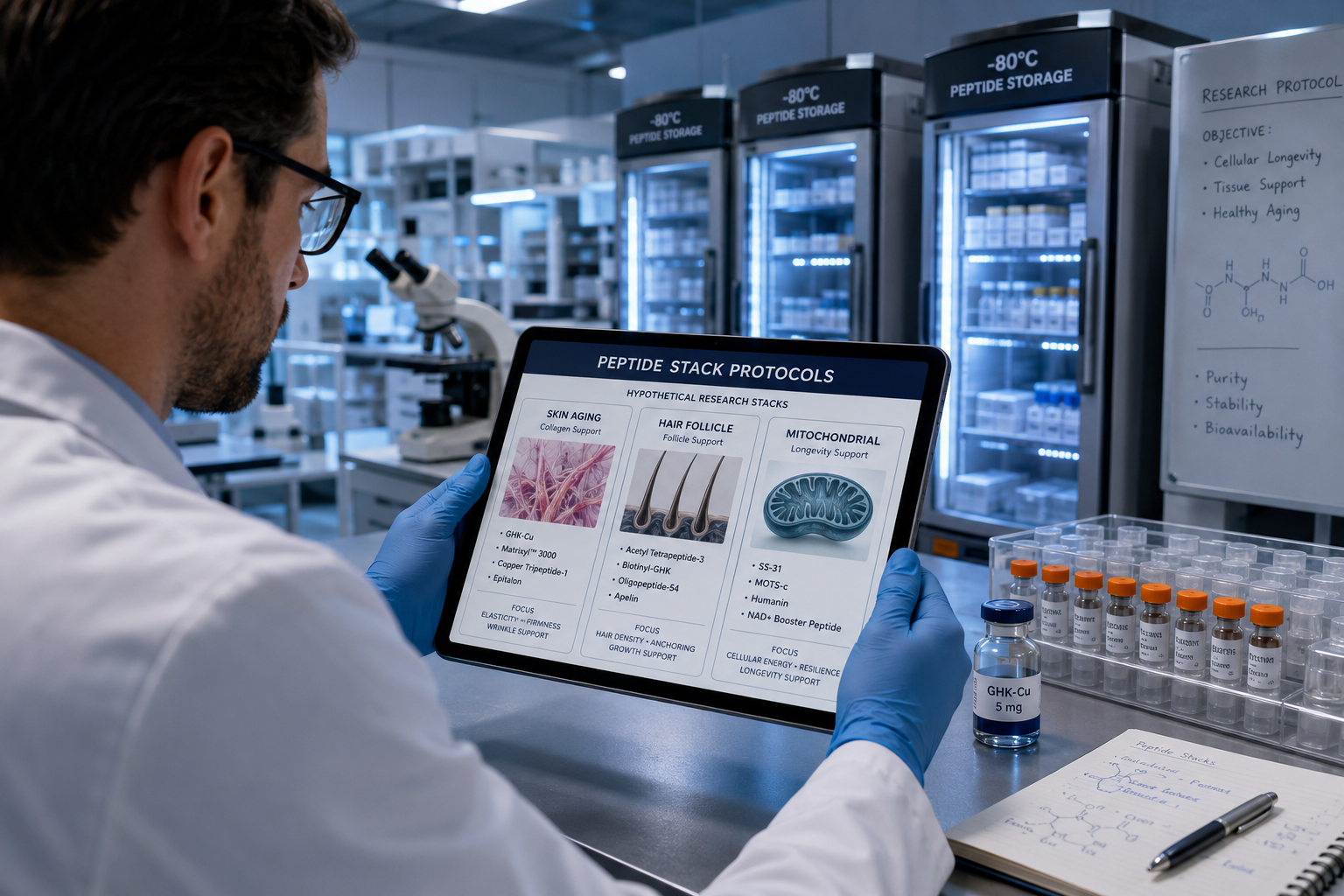
When designing protocols using Glow Blend and Klow Blend peptides as example stacks for skin, hair, and aging support research, the choice between the two blends depends on the dominant variable in the research model.

Skin Remodeling and Anti-Aging Research

For models focused on fine line reduction, scar remodeling, or post-procedural recovery (e.g., after microneedling or laser treatment), Glow Blend's three-peptide profile is sufficient. GHK-Cu drives the collagen response, while BPC-157 and TB-500 accelerate the repair cascade. Researchers exploring broader longevity peptide research themes may find value in pairing either blend with mitochondrial-support compounds for a more comprehensive aging model.

Hair Follicle Biology

In hair research models, GHK-Cu's role in follicle cycling makes it the primary active compound. BPC-157 adds connective tissue support around the dermal papilla, while TB-500 improves local vascularization. Both blends are relevant here, though Klow Blend may be preferred in models where scalp inflammation is a confounding variable.

Inflammatory Skin Conditions and Chronic Wound Models

Klow Blend is the more appropriate choice when inflammation is a primary research variable. KPV's cytokine-suppressing activity makes it well-suited for eczema, psoriasis, or chronic wound models where persistent inflammatory infiltration prevents normal tissue repair. Researchers working on peptide serums and evidence-based skin applications will find the KPV mechanism particularly relevant.

Research note: As of 2026, no published clinical trials exist for either blend as a combined formulation. All mechanistic claims are extrapolated from individual-component literature.


Inflammatory Skin Conditions and Chronic Wound Models

Sourcing, Storage, and Research Integrity

Peptide purity is non-negotiable in any research setting. Both blends should be sourced from suppliers who provide independent third-party testing. Reviewing how peptide purity testing works is a practical first step before acquiring any multi-peptide formulation.

Storage guidelines for lyophilized blends:

  • Unmixed (freeze-dried): stable up to 1 year at 2-8 degrees C; over 5 years at -20 degrees C
  • Post-reconstitution: refrigerate and use within 30 days
  • Avoid repeated freeze-thaw cycles to preserve peptide integrity

Researchers building broader aging-focused protocols may also want to explore mitochondrial longevity research themes and MOTS-c and Epithalon research as complementary areas, since cellular energy metabolism is a parallel pathway to the extracellular matrix remodeling that Glow and Klow blends target.


Conclusion

Glow Blend and Klow Blend peptides represent a structured approach to multi-target research stacking for skin, hair, and aging support models. Glow Blend's three-peptide profile covers collagen synthesis, angiogenesis, and tissue repair. Klow Blend extends that coverage with KPV's anti-inflammatory action, making it the stronger candidate for inflammation-dominant research models.

Actionable next steps for researchers:

  1. Define the primary biological variable in the model before selecting a blend.
  2. Verify supplier purity documentation and certificate of analysis before procurement.
  3. Review individual-component literature for each peptide before designing dosing protocols.
  4. Consider complementary stacks targeting mitochondrial or hormonal pathways for broader aging research coverage.

Both blends are research-grade compounds intended solely for laboratory use. They are not approved medications and are not intended for human consumption or self-administration.

https://www.puretestedpeptides.com/wp-content/uploads/2026/06/Glow-Blend-and-Klow-Blend-Peptides-Example-Stacks-for-Skin-Hair-and-‘Aging-Support-Research-Only.png 1024 1536 Pure Tested https://www.puretestedpeptides.com/wp-content/uploads/2026/01/buy-peptides-online.jpg Pure Tested2026-06-13 13:03:442026-07-20 15:03:18Glow Blend and Klow Blend Peptides: Example Stacks for Skin, Hair, and ‘Aging Support’ Research Only
×

Helpful Links

  • My account
  • Cart
  • Checkout
  • Refund and Returns Policy
  • Privacy Policy
  • SMS Privacy Policy
  • Login
  • My Account
  • Logout

USA Made Lab Tested Peptides

All products are sold for research, laboratory, or analytical purposes only, and are not for human consumption


Pure Tested Peptides is a chemical supplier. Pure Tested Peptides is not a compounding / chemical compounding facility as defined under 503A of the Federal Food, Drug, and Cosmetic act. Pure Tested Peptides is not an outsourcing facility as defined under 503B of the Federal Food, Drug, and Cosmetic act.

The statements made within this website have not been evaluated by the US Food and Drug Administration. The products we offer are not intended to diagnose, treat, cure or prevent any disease.

Human/Animal Consumption Prohibited. Laboratory/In-Vitro Experimental Use Only

Scroll to top Scroll to top Scroll to top