Call or Text 727-513-9780
  • Shopping Cart Shopping Cart
    0Shopping Cart
Pure Tested Peptides | America's most trusted Peptides for sale online
  • Peptides for sale
    • Oral Peptides for sale
      • Peptide Capsules for sale
      • BPC 157 Capsules 1000mcg
      • SLU-PP-332 Capsules | 1000 mcg
      • 5-Amino-1MQ 50mg Capsules
      • Tesofensine 500mcg
    • All Peptides for sale
    • Peptide Sprays
      • BPC 157 Nasal Spray Kit
      • BPC-157 TB500 Nasal Spray Kit
      • Semax Nasal Spray 10mg
      • Selank – Nasal Spray Kit – 10mg
      • Epithalon 50MG Nasal Spray Kit
      • Ipamorelin 10mg Nasal Spray
      • Klow Nasal Spray (BPC-157 + TB-500 + GHK-Cu + KPV) | 80mg
      • Hulk Nasal Spray Tesa / Ipa Blend 6/3 MG
      • Klow Nasal Spray
      • NAD + 500 mg Nasal Spray
      • PT-141 Nasal Spray Kit
    • GHRH Peptides
      • Ipa Peptides
      • CJC-1295 Peptides
        • CJC-1295 with DAC 5 mg
        • CJC-1295 without DAC 5 mg
        • CJC-1295 Ipa 10mg
      • Tesa Peptides
        • Tesa Peptide
        • Tesa 20 mg
    • GHK-Cu Peptides
      • All GHK-Cu Peptides
      • GHK-Cu 100mg
      • KLOW Peptide Blend – Buy KLOW blend online
    • BPC Peptides
      • All BPC Peptides
      • BPC-157
      • BPC-157 TB-500
      • BPC 157 capsules 1000mcg
    • SLU-PP-332 Peptides
      • All SLU-PP-332 Peptides
      • SLU-PP-332 5mg
    • GLP3 Peptides
      • GLP3-R
      • GLP3-R CAG 10mg
      • GLP3-R 20mg
    • PT-141 Peptides
      • PT-141 Peptides for sale
      • PT-141 10mg
      • PT-141 Nasal Spray
    • CAG Peptides
      • Lipo-C Peptide Blend
      • CAG 5mg
      • CAG 10mg
    • MOTS-C Peptides
      • MOTS-C Peptides for sale
      • MOTS-c peptide
      • MOTS-c 10mg *6 pack*
    • 5 Amino 1MQ Peptides
      • 5 Amino 1MQ Peptides for sale
      • 5-Amino-1MQ 50mg Capsules
      • 5-Amino-1MQ 5mg
    • Epithalon Peptides
      • Epithalon Peptides for sale
      • Epithalon 10mg
      • Epithalon 50mg
  • Shop
    • GLPs
      • 5-Amino-1MQ 50mg Capsules
      • 5-Amino-1MQ 5mg
      • GLP3-Reta
      • L-Carnitine 500mg/ml
      • Tesofensine 500mcg
      • SLU-PP-332 5mg
      • MOTS-c 10mg *6 pack*
    • Epithalon & BPC Peptides
      • Epithalon 10mg
      • Epithalon 50mg
      • BPC-157
      • BPC 157 capsules 1000mcg
      • BPC-157 TB-500
      • BPC-157 TB500 Nasal Spray Kit
      • BPC 157 Nasal Spray Kit
    • BPC TB-500 & NAD+ Peptides
      • NAD+ 500 mg
      • KLOW Peptide Blend – Buy KLOW blend online
      • GLOW Peptide Blend
      • TB 500 5mg
      • BPC 157 capsules 1000mcg – Supplement
      • BPC 157 Nasal Spray Kit
      • BPC-157
      • BPC-157 TB500 Nasal Spray Kit
      • BPC-157 TB-500
      • BPC 157 capsules 1000mcg
    • LL-37 Peptide
      • LL-37 10 mg
    • MOTS-C & Selank
      • MOTS-c peptide
      • Selank 10mg
    • GHK Peptides
      • GHK-Cu 100mg
      • GLOW Peptide Blend
      • KLOW Peptide Blend – Buy KLOW blend online
  • COAs
  • Wholesale
    • Wholesale Peptides for sale
  • PTP FAQ
  • Affiliates
    • Affiliate Program
    • Affiliate Signup
  • Contact
    • Contact Customer Service
    • Text Customer Support
  • About US
  • Shop all peptides
  • Login / Register Login / Register Page Link Login / Register Page Link
  • Click to open the search input field Click to open the search input field Search
  • Menu Menu

Tag Archive for: tesa

Tesamorelin and Ipamorelin: Differentiating Their GHRH Mimetic Activity and Receptor Binding in Research

Tesamorelin and Ipamorelin: Differentiating Their GHRH Mimetic Activity and Receptor Binding in Research

July 13, 2026/0 Comments/in Uncategorized/by

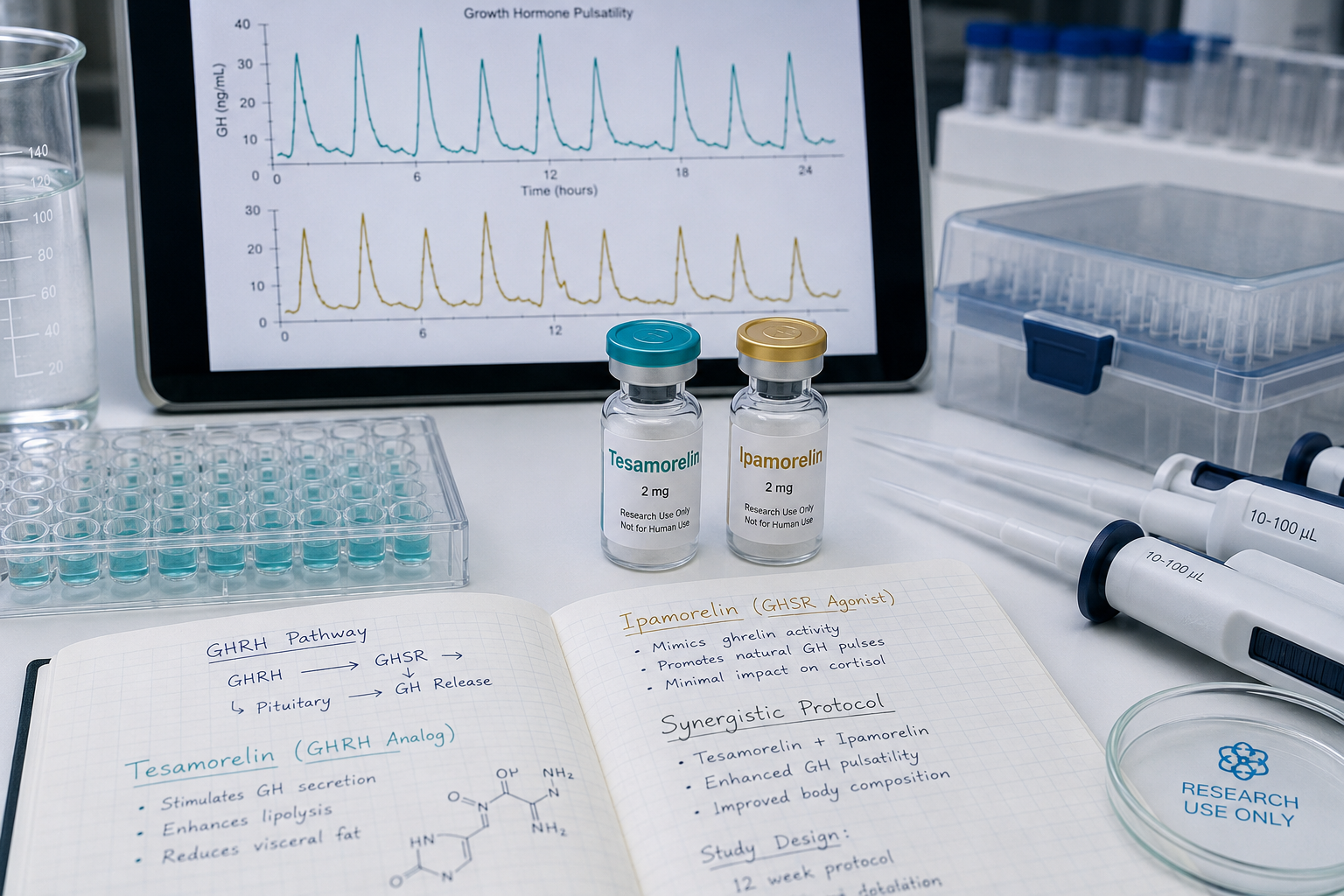
Two peptides can both raise growth hormone levels yet work through entirely different receptor systems, and that distinction changes everything about how researchers design their studies. Understanding the contrast between Tesamorelin and Ipamorelin: Differentiating Their GHRH Mimetic Activity and Receptor Binding in Research is not just an academic exercise. It shapes which experimental models are appropriate, which endpoints are meaningful, and how the two compounds might interact when combined.

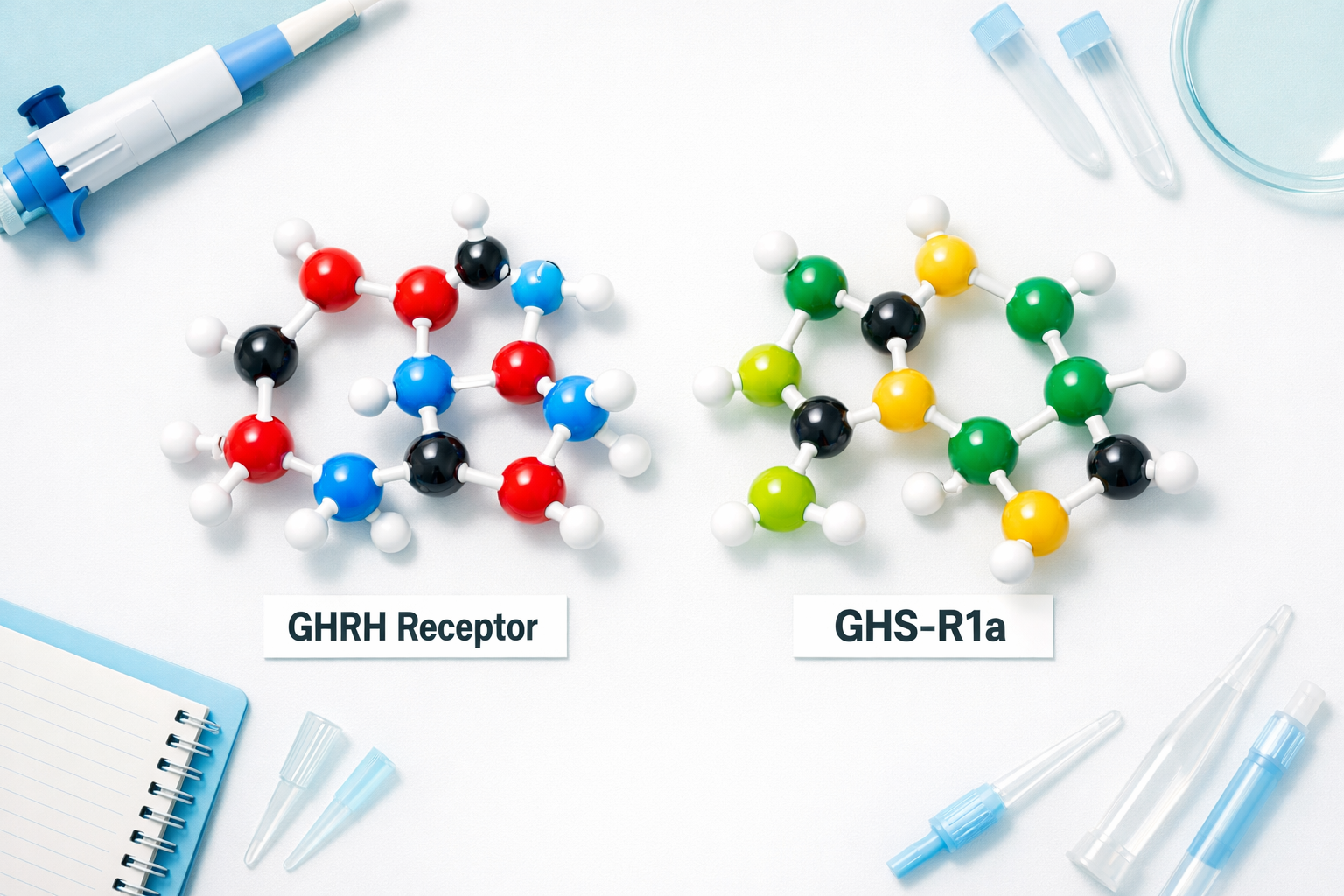
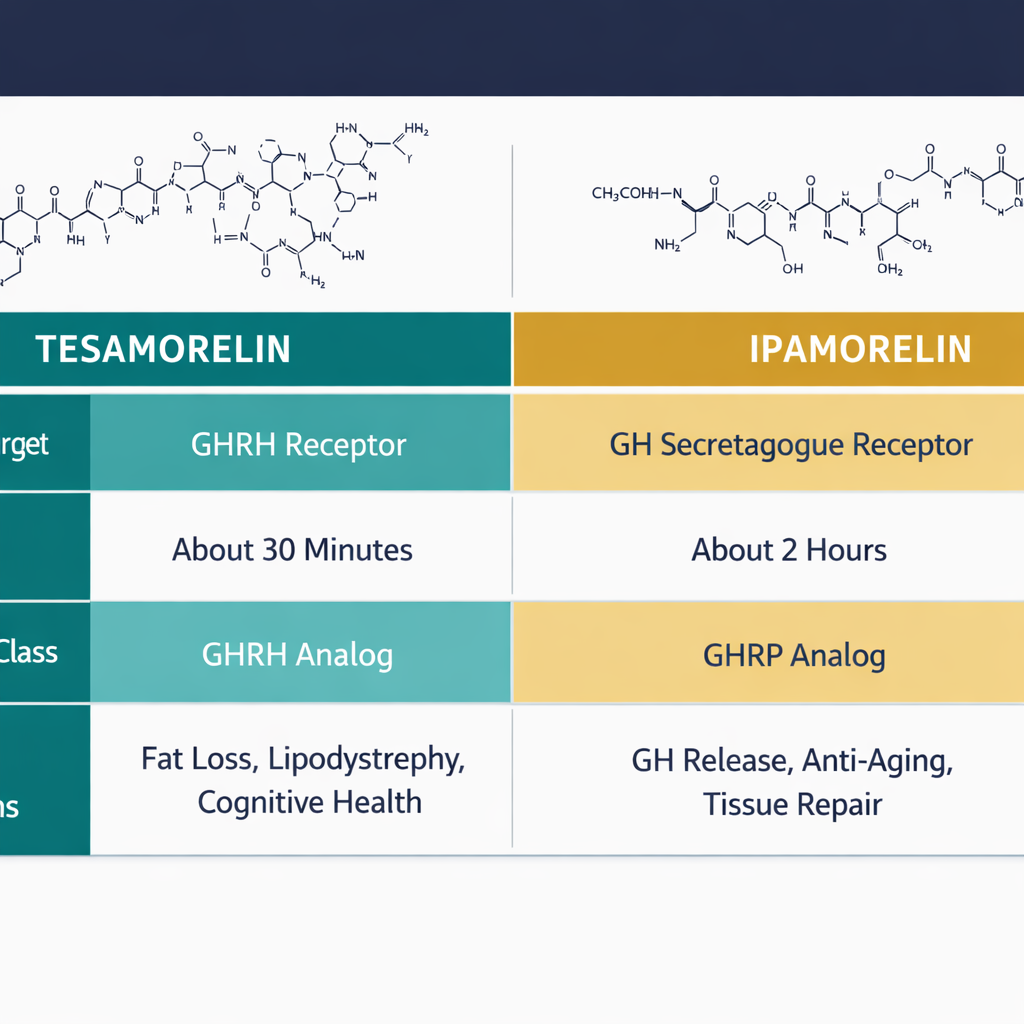
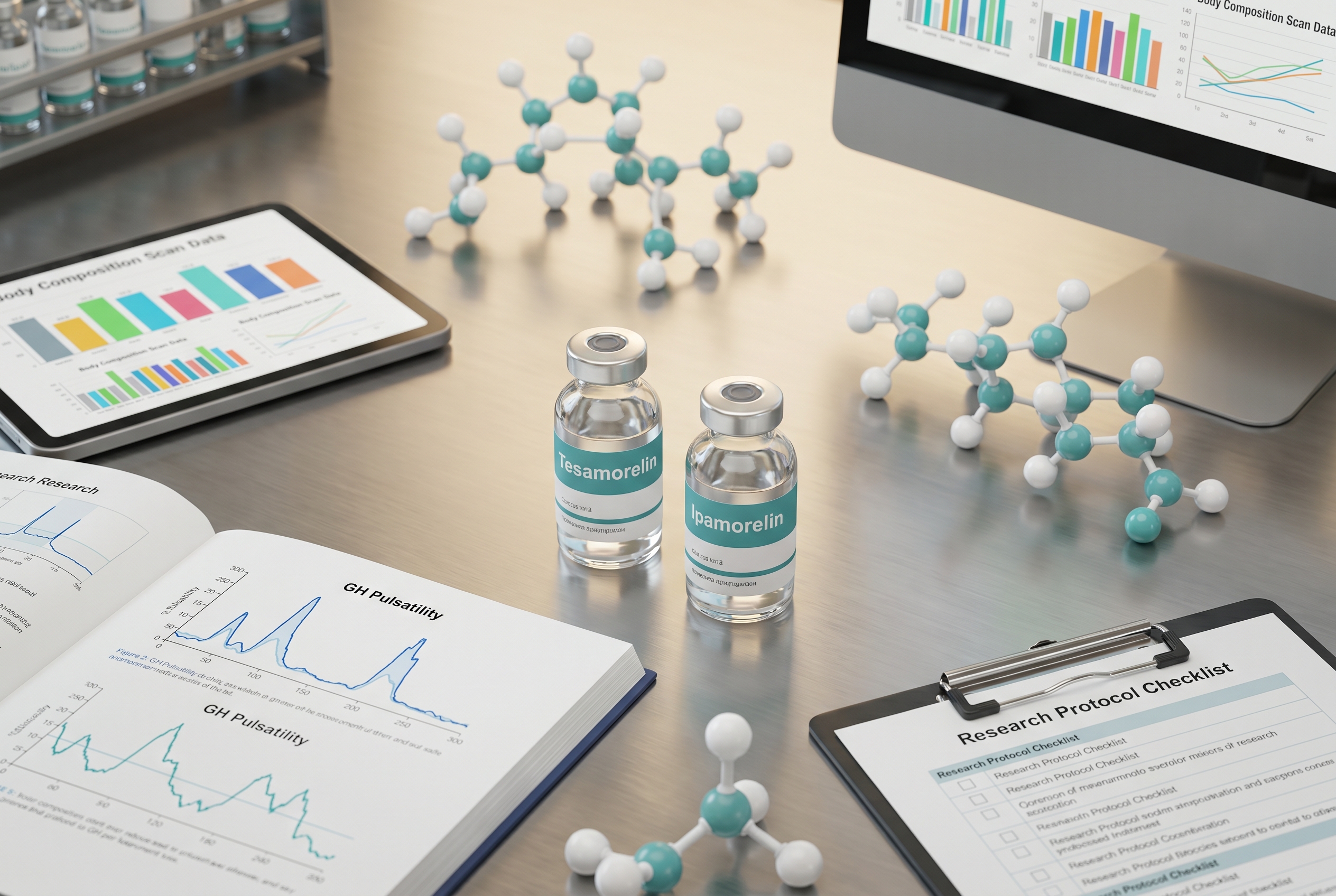
Bright editorial flat-lay landscape (): overhead studio shot of two distinct peptide molecular structure models side by side

Key Takeaways

  • Tesamorelin is a structural analog of GHRH that binds directly to GHRH receptors on pituitary somatotrophs, triggering the cAMP/PKA signaling cascade.
  • Ipamorelin is a selective GHS-R1a agonist that mimics ghrelin's receptor, producing GH release without significant cortisol or prolactin elevation.
  • Tesamorelin carries a trans-3-hexenoic acid modification that extends its half-life to roughly 26 minutes, far beyond native GHRH's sub-two-minute window.
  • Combining both peptides in research models can produce amplified GH secretion because they activate distinct, complementary receptor pathways.
  • Tesamorelin holds FDA approval for HIV-associated lipodystrophy; Ipamorelin remains a research compound as of 2026.

Distinct Receptor Targets: The Core of Differentiating GHRH Mimetic Activity

The most important distinction between these two peptides is where they bind.

Tesamorelin is a synthetic analog of endogenous human GHRH. It binds to GHRH receptors (GHRHR) located on somatotroph cells in the anterior pituitary. Once bound, it activates the cyclic AMP / protein kinase A (cAMP/PKA) pathway, which directly stimulates both GH synthesis and pulsatile GH release. Because it mirrors the body's own GHRH signal, its downstream effects closely replicate physiological GH secretion patterns.

Ipamorelin, by contrast, is a selective agonist of the growth hormone secretagogue receptor 1a (GHS-R1a), the same receptor that endogenous ghrelin activates. This is a fundamentally different binding site. The GHS-R1a pathway operates through a separate intracellular mechanism, and its activation produces GH release without the off-target hormonal effects seen with earlier secretagogues. Specifically, Ipamorelin does not meaningfully raise cortisol, ACTH, or prolactin levels, which makes it a cleaner research tool when isolating GH-specific outcomes.

For a deeper look at how Ipamorelin functions as a secretagogue, the IPA GHRH secretagogue research overview provides useful context.


Structural Modifications and Receptor Binding Kinetics

Structural Modifications and Receptor Binding Kinetics

Receptor binding is only part of the story. Binding kinetics, how long a peptide stays active, determine its practical utility in research protocols.

Native GHRH has a plasma half-life of under two minutes because it is rapidly degraded by dipeptidyl peptidase IV (DPP-IV). Tesamorelin addresses this through a structural addition: a trans-3-hexenoic acid group attached to its N-terminus. This modification confers resistance to enzymatic cleavage, extending its half-life to approximately 26 minutes. That is a roughly 13-fold improvement, allowing sustained receptor engagement and a more prolonged GH pulse.

Ipamorelin is a pentapeptide, just five amino acids, and its compact structure contributes to its receptor selectivity. Its binding affinity for GHS-R1a is high, and its small size reduces the likelihood of cross-reactivity with other receptor families. This selectivity is precisely why Ipamorelin became a benchmark compound in GH secretagogue research.

Feature Tesamorelin Ipamorelin
Receptor Target GHRHR (pituitary) GHS-R1a (ghrelin receptor)
Signaling Pathway cAMP/PKA Separate GHS pathway
Approximate Half-Life ~26 minutes Short (minutes)
Cortisol/Prolactin Effect Minimal Minimal to none
FDA Approval Status Yes (lipodystrophy) No (research only)

Researchers exploring how these kinetics translate to experimental design may also find value in reviewing CJC-1295 and Ipamorelin GH axis research, which examines related GHRH-class combinations.


Synergistic Research Applications and Practical Implications

Because Tesamorelin and Ipamorelin act on different receptors, their combined use in research models produces additive, and in some study designs, synergistic, GH release. This dual-pathway activation is the scientific rationale behind blended peptide formulations studied in preclinical settings.

From a research planning perspective, this complementarity is significant:

  • Tesamorelin drives GH release through the GHRH axis, closely mimicking natural pituitary stimulation.
  • Ipamorelin amplifies that signal through the ghrelin receptor axis, adding a second, independent GH secretion trigger.
  • Together, they may help researchers model more robust GH secretion states without resorting to exogenous GH administration.

Those interested in blended formulation research can explore the Tesamorelin, CJC-1295, and Ipamorelin blend reconstitution resource for technical preparation details.

Tesamorelin's clinical track record also distinguishes it. Approved by the FDA in 2010 under the brand name Egrifta for HIV-associated lipodystrophy, it remains the only GHRH analog to achieve that regulatory milestone. Researchers can review the broader Tesamorelin benefits profile and compare it with related analogs through the Tesamorelin vs. Sermorelin comparison to contextualize its position among GHRH-class peptides.

Ipamorelin, despite its strong selectivity profile and favorable tolerability data in preclinical models, has not received FDA approval for any clinical indication as of 2026. It remains classified as a research compound. For researchers sourcing it, the Ipamorelin research peptide catalog offers relevant product information.

"The receptor-level distinction between Tesamorelin and Ipamorelin is not a minor technical detail, it is the foundation for understanding why their combined use in research produces effects neither achieves independently."

For researchers also exploring metabolic endpoints alongside GH axis modulation, the metabolic modulation research lines overview provides a broader framework for study design.


Conclusion

Differentiating Tesamorelin and Ipamorelin: Differentiating Their GHRH Mimetic Activity and Receptor Binding in Research comes down to one foundational fact: they do not compete for the same receptor. Tesamorelin engages the GHRH receptor via cAMP/PKA signaling with an extended half-life enabled by structural modification. Ipamorelin selectively activates GHS-R1a without off-target hormonal effects. Each compound offers a distinct mechanistic lens for studying GH secretion.

Actionable next steps for researchers:

  • Define your receptor target before selecting a compound, GHRHR vs. GHS-R1a studies require different controls.
  • Consider dual-pathway protocols when studying maximal GH secretion states.
  • Review Tesamorelin's FDA-approved clinical data as a validated reference point for GHRH analog research.
  • Consult current literature on GHS-R1a selectivity when designing Ipamorelin studies to leverage its clean hormonal profile.

Selecting the right peptide for a given research question is not about which compound is "better", it is about which receptor system best models the biological question at hand.

https://www.puretestedpeptides.com/wp-content/uploads/2026/07/tesa-and-ipamorelin-differentiating-their-ghrh-mimetic-activity-and-recep.webp 1024 1536 https://www.puretestedpeptides.com/wp-content/uploads/2026/01/buy-peptides-online.jpg 2026-07-13 13:19:352026-07-13 13:19:35Tesamorelin and Ipamorelin: Differentiating Their GHRH Mimetic Activity and Receptor Binding in Research
CJC-1295 with Ipamorelin vs. Tesamorelin: Which GHRH Mimetic Stack is Best for Your Research?

CJC-1295 with Ipamorelin vs. Tesamorelin: Which GHRH Mimetic Stack is Best for Your Research?

July 12, 2026/0 Comments/in Uncategorized/by

Only one growth hormone peptide has ever cleared FDA approval, and it is not the stack that dominates anti-aging clinics worldwide. That contrast sits at the heart of the CJC-1295 with Ipamorelin vs. Tesamorelin debate, and understanding it can sharpen the focus of any serious growth hormone research program in 2026.

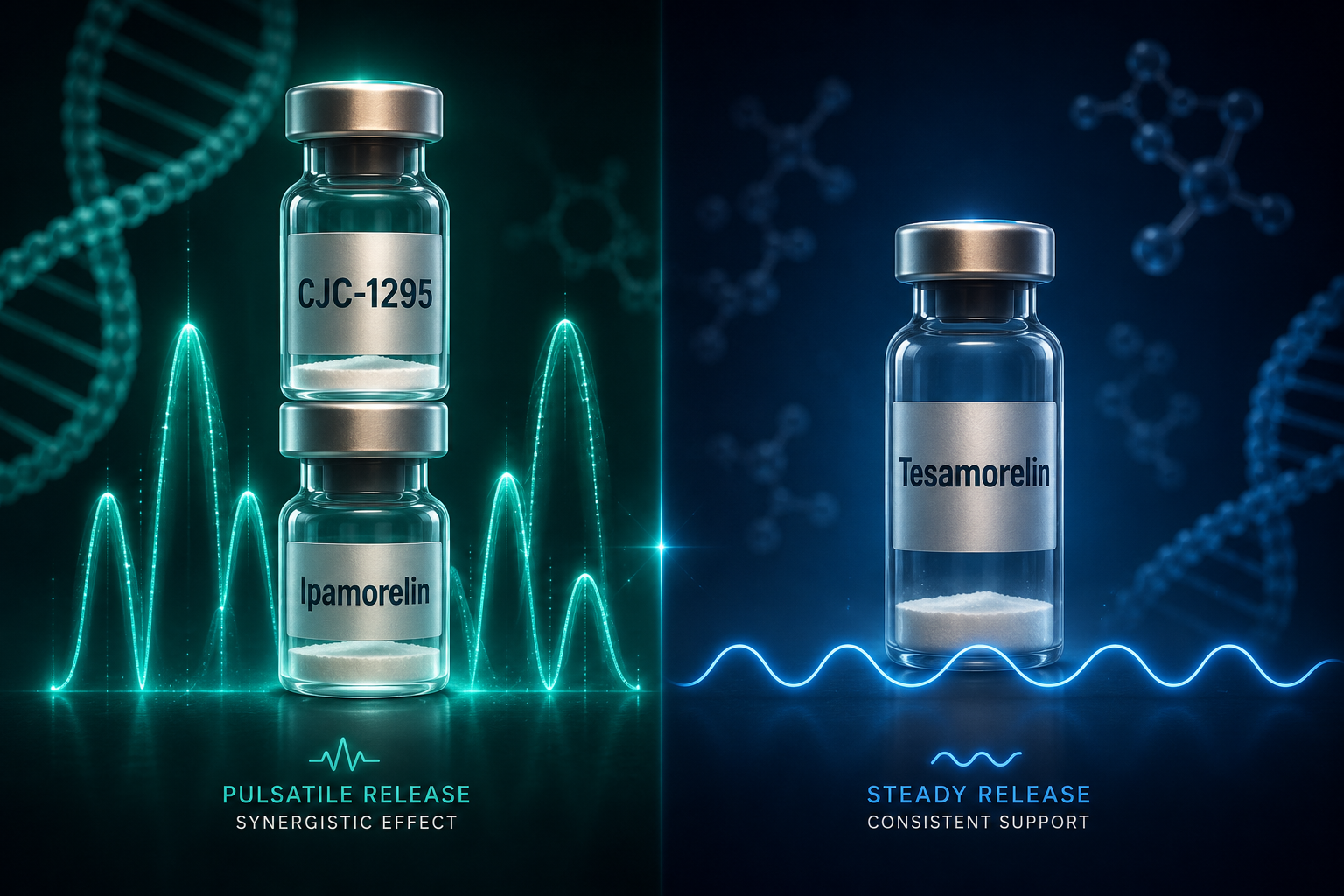
Editorial () split-screen conceptual illustration: left half shows a stylized dual-vial peptide stack labeled 'CJC-1295' and

Key Takeaways

  • CJC-1295 paired with Ipamorelin exploits two distinct pituitary signaling pathways simultaneously, producing a synergistic, pulsatile GH release pattern.
  • Tesamorelin is the only FDA-approved GHRH analog, backed by multiple randomized controlled trials confirming visceral fat reduction.
  • The dual-peptide stack offers more flexible dosing protocols; Tesamorelin follows a fixed, well-validated clinical regimen.
  • Side-effect profiles differ meaningfully: Ipamorelin's selectivity avoids cortisol and prolactin spikes, while Tesamorelin's risks are thoroughly documented from clinical trial data.
  • Choosing between these options depends on the specific research question, dual-pathway GH modulation versus targeted visceral adiposity outcomes.

Mechanisms of Action: How Each Approach Stimulates GH

CJC-1295 is a synthetic GHRH analog that binds GHRH receptors on pituitary somatotroph cells, prompting them to synthesize and release growth hormone. Its standard (non-DAC) form carries a half-life of roughly 30 minutes, closely mimicking the natural GHRH pulse. Researchers interested in CJC-1295 research findings will note that the DAC-modified version extends the half-life dramatically but at the cost of disrupting the pulsatile GH pattern.

Ipamorelin operates through a completely different receptor. Originally developed by Novo Nordisk, it is a selective ghrelin receptor agonist, a Growth Hormone Secretagogue (GHS), with a half-life of approximately two hours. Critically, it does not elevate cortisol or prolactin at research-relevant doses, a selectivity advantage that older GHRPs lack. Explore the Ipamorelin research profile for a deeper look at its receptor pharmacology.

Tesamorelin is a synthetic GHRH analog comprising all 44 amino acids of human GHRH plus a trans-3-hexenoic acid group attached at the N-terminus. This structural modification boosts receptor binding affinity and provides modest resistance to dipeptidyl peptidase-IV (DPP-IV) cleavage. Its half-life ranges from 26 to 38 minutes, similar to native GHRH, yet its clinical performance is meaningfully stronger than unmodified GHRH.

"The synergistic interaction between GHRH-pathway and ghrelin-pathway signaling creates a permissive window that amplifies GH output beyond what either peptide achieves alone."


Synergistic Effects and Research Applications of the CJC-1295 with Ipamorelin vs. Tesamorelin Comparison

Synergistic Effects and Research Applications of the CJC-1295 with Ipamorelin vs. Tesamorelin Comparison

The Dual-Pathway Advantage of the Stack

When CJC-1295 and Ipamorelin are co-administered, they act on two distinct receptor populations on the same somatotroph cell. CJC-1295 activates the GHRH receptor; Ipamorelin activates the ghrelin receptor (GHS-R1a). The result is a synergistic amplification of GH pulse amplitude while preserving the natural pulsatile secretion pattern, a research-relevant feature because pulsatility governs downstream IGF-1 signaling and metabolic effects.

This combination is the most widely used GH peptide stack in anti-aging research settings. Typical research protocols administer 100-300 mcg of each peptide in a single subcutaneous injection, one to three times daily, often timed before sleep to align with endogenous GH peaks. Cycles commonly run 8-12 weeks on a 5-days-on, 2-days-off schedule.

For researchers exploring broader peptide combination strategies, the Sermorelin, Ipamorelin, and CJC-1295 stack overview provides useful context on stacking GHRH analogs with secretagogues.

Tesamorelin's Targeted Research Niche

Tesamorelin's research value is concentrated and well-defined. It received FDA approval in 2010 under the brand name Egrifta for HIV-associated lipodystrophy, making it the only GH-axis peptide with a validated clinical indication. Multiple randomized controlled trials using CT-measured visceral fat as an endpoint confirm its efficacy in reducing abdominal adiposity.

For researchers focused on visceral fat outcomes, the tesa dosage for fat loss resource outlines the validated 2 mg subcutaneous daily protocol with abdominal injection site rotation.

The trade-off is scope: Tesamorelin's evidence base is deep but narrow. The CJC-1295/Ipamorelin stack has broader exploratory application but far less published clinical-trial data supporting body composition outcomes specifically.

Feature CJC-1295 + Ipamorelin Tesamorelin
FDA Approval No Yes (2010, Egrifta)
Half-Life ~30 min / ~2 hr 26-38 min
Mechanism GHRH + GHS dual-pathway GHRH analog only
Primary Research Use Broad GH modulation Visceral fat reduction
Clinical RCT Data Limited Multiple trials

Choosing the Right Option: Practical Guidance for Researchers Comparing CJC-1295 with Ipamorelin vs. Tesamorelin

Choosing the Right Option: Practical Guidance for Researchers Comparing CJC-1295 with Ipamorelin vs. Tesamorelin

Matching Peptide Choice to Research Objectives

Choose the CJC-1295/Ipamorelin stack when:

  • The research question involves broad GH pulse modulation
  • Dual-pathway receptor pharmacology is the focus
  • Flexible dosing frequency is operationally important
  • Cortisol and prolactin neutrality is a study requirement

Choose Tesamorelin when:

  • Visceral adiposity is the primary endpoint
  • Regulatory-grade clinical precedent is required
  • A single-compound, once-daily protocol simplifies the study design
  • Comparison to FDA-approved benchmarks is methodologically necessary

Researchers comparing these agents against other GHRH-related compounds may also find value in the tesa vs. sermorelin comparison and the broader tesa research sourcing guide.

Blend Formulations as a Third Path

A growing area of interest involves pre-formulated blends that combine all three peptides. The Tesamorelin, CJC-1295, and Ipamorelin 12 mg blend consolidates the GHRH analog and GHS mechanisms into a single research compound, reducing preparation complexity. Detailed dosage guidance for the 12 mg blend is available for researchers designing protocols around this formulation.


Conclusion

The CJC-1295 with Ipamorelin vs. Tesamorelin question does not have a single universal answer, it has a research-design answer. The dual-peptide stack delivers synergistic, pulsatile GH stimulation through complementary receptor pathways, making it the more versatile tool for exploratory GH-axis research. Tesamorelin offers something the stack cannot: a validated, FDA-backed clinical record with reproducible visceral fat endpoints.

Actionable next steps for researchers in 2026:

  1. Define the primary endpoint before selecting a compound, body composition, GH pulse amplitude, or receptor pharmacology each favor a different agent.
  2. Review the IPA and Sermorelin stack research overview to benchmark against adjacent peptide combinations.
  3. Consult the tesa daily dosage protocols to ensure any Tesamorelin study arm aligns with established clinical parameters.
  4. Consider pre-blended formulations when protocol simplicity and multi-pathway coverage are both priorities.

Rigorous peptide research begins with matching the compound's mechanism to the study's question, and on that basis, both options have a legitimate, distinct place in the modern growth hormone research toolkit.

https://www.puretestedpeptides.com/wp-content/uploads/2026/07/cjc-1295-with-ipamorelin-vs-tesa-which-ghrh-mimetic-stack-is-best-for-you.png 1024 1536 https://www.puretestedpeptides.com/wp-content/uploads/2026/01/buy-peptides-online.jpg 2026-07-12 13:03:352026-07-12 13:03:35CJC-1295 with Ipamorelin vs. Tesamorelin: Which GHRH Mimetic Stack is Best for Your Research?
Tesamorelin and Ipamorelin: Differentiating Their Growth Hormone Releasing Mechanisms for Research

Tesamorelin and Ipamorelin: Differentiating Their Growth Hormone Releasing Mechanisms for Research

July 8, 2026/0 Comments/in Uncategorized/by

Two peptides can both raise growth hormone levels yet work through completely different biological locks and keys, that distinction is exactly what makes studying Tesamorelin and Ipamorelin: Differentiating Their Growth Hormone Releasing Mechanisms for Research so valuable for investigators designing targeted protocols in 2026.

Key Takeaways

  • Tesamorelin acts on the GHRH receptor (GHRH-R), mimicking the body's natural growth hormone-releasing hormone.
  • Ipamorelin acts on the ghrelin receptor (GHSR-1a), classifying it as a growth hormone secretagogue.
  • These distinct receptor targets produce different pulse patterns, selectivity profiles, and downstream effects.
  • Combining both peptides may amplify GH release through complementary, non-competing pathways.
  • Researchers must account for these mechanistic differences when designing assays, dosing schedules, and outcome measures.

Key Takeaways

Understanding the Two Core Mechanisms

At the heart of Tesamorelin and Ipamorelin: Differentiating Their Growth Hormone Releasing Mechanisms for Research is a straightforward but critical distinction: receptor class.

Tesamorelin is a synthetic analogue of endogenous growth hormone-releasing hormone (GHRH). It binds selectively to the GHRH receptor (GHRH-R) on somatotroph cells in the anterior pituitary. This binding triggers a cyclic AMP (cAMP)-dependent signaling cascade that stimulates GH synthesis and secretion. Because it mirrors the body's own GHRH, the resulting GH pulses tend to follow a physiologically familiar pattern. Researchers interested in Tesamorelin's benefits and mechanisms often note its strong clinical validation, including FDA approval for HIV-associated lipodystrophy.

Ipamorelin, by contrast, belongs to the growth hormone secretagogue (GHS) class. It binds to the ghrelin receptor, formally called GHSR-1a. Rather than mimicking GHRH, Ipamorelin mimics ghrelin, a gut-derived hormone that signals energy status to the pituitary. This receptor engagement activates a phospholipase C / inositol trisphosphate (IP3) pathway, which is mechanistically separate from the cAMP route used by Tesamorelin. Ipamorelin is also noted for its high selectivity; unlike older GHS peptides, it produces minimal stimulation of cortisol or prolactin.

Research Insight: Because Tesamorelin and Ipamorelin engage separate receptor classes, they can stimulate GH release through additive or synergistic pathways without directly competing for the same binding site.

Side-by-Side Comparison for Research Planning

Feature Tesamorelin Ipamorelin
Peptide Class GHRH Analogue GH Secretagogue (GHS)
Primary Receptor GHRH-R GHSR-1a (Ghrelin Receptor)
Signaling Pathway cAMP / PKA PLC / IP3
Selectivity High (GH axis) Very High (minimal cortisol/prolactin)
Combination Potential Complementary with GHS Complementary with GHRH analogues

Side-by-Side Comparison for Research Planning

For researchers evaluating Ipamorelin versus Tesamorelin as standalone or combined agents, this receptor-level separation is the most important design variable to control.


Research Applications and Combination Protocols

Understanding Tesamorelin and Ipamorelin: Differentiating Their Growth Hormone Releasing Mechanisms for Research becomes especially actionable when planning multi-peptide protocols.

Because the two peptides work on different receptors, stacking them does not create direct receptor competition. Studies examining the safety of combining Tesamorelin with CJC/Ipamorelin suggest that dual-pathway stimulation can produce a more robust GH pulse than either agent alone. This is also why blended formulations, such as the Tesamorelin, CJC-1295, and Ipamorelin 12mg blend, have attracted research interest.

Key research considerations when using both peptides:

  • Pulse timing: Tesamorelin pulses follow endogenous GHRH rhythms; Ipamorelin pulses can be timed more flexibly due to ghrelin receptor kinetics.
  • Feedback sensitivity: Both peptides remain subject to somatostatin-mediated negative feedback, so researchers should account for somatostatin tone in study design.
  • Dosing protocols: Reviewing established Tesamorelin dosage frameworks alongside Ipamorelin titration data helps set appropriate research benchmarks.
  • Outcome markers: IGF-1 levels, GH pulse amplitude, and body composition metrics each respond differently depending on which receptor pathway is engaged.

Researchers comparing GHRH-class peptides more broadly may also find value in reviewing Sermorelin, Ipamorelin, and CJC-1295 combination research to contextualize Tesamorelin's relative potency and duration of action.

Research Applications and Combination Protocols


Conclusion

Differentiating Tesamorelin and Ipamorelin at the receptor level, GHRH-R versus GHSR-1a, is not a minor technical detail. It shapes every aspect of a well-designed GH research protocol, from signal pathway selection and pulse timing to combination strategy and outcome measurement.

Actionable next steps for researchers:

  1. Define whether the study goal requires GHRH-pathway activation, ghrelin-pathway activation, or both.
  2. Review published Tesamorelin benefit profiles and Ipamorelin selectivity data before finalizing dosing schedules.
  3. Source peptides from verified, lab-tested suppliers to ensure purity and accurate concentration for reliable data.
  4. Consider CJC-1295 and Ipamorelin assay planning resources when building a multi-peptide experimental framework.

Mechanistic clarity is the foundation of reproducible peptide research. Knowing precisely how each compound triggers GH release allows investigators to isolate variables, interpret results accurately, and build on findings with confidence.

https://www.puretestedpeptides.com/wp-content/uploads/2026/07/Tesamorelin-and-Ipamorelin-Differentiating-Their-Growth-Hormone-Releasing-Mechanisms-for-Research.png 1024 1024 https://www.puretestedpeptides.com/wp-content/uploads/2026/01/buy-peptides-online.jpg 2026-07-08 13:05:332026-07-08 13:05:33Tesamorelin and Ipamorelin: Differentiating Their Growth Hormone Releasing Mechanisms for Research
The Peptide Craze: What Human Evidence Exists for Research-Only Peptides and Why That Matters for Search Intent

The Peptide Craze: What Human Evidence Exists for Research-Only Peptides and Why That Matters for Search Intent

June 18, 2026/0 Comments/in Uncategorized/by

Only about 60 peptide drugs hold full FDA approval — yet thousands of peptide compounds are actively discussed, searched, and sourced online every day in 2026. That gap between approved science and widespread curiosity is exactly what makes understanding The Peptide Craze: What Human Evidence Exists for Research-Only Peptides and Why That Matters for Search Intent so important for researchers, clinicians, and content professionals alike.

The enthusiasm is real. So is the confusion. Separating mechanism-level biology from actual human clinical data is the credibility challenge at the center of this conversation.

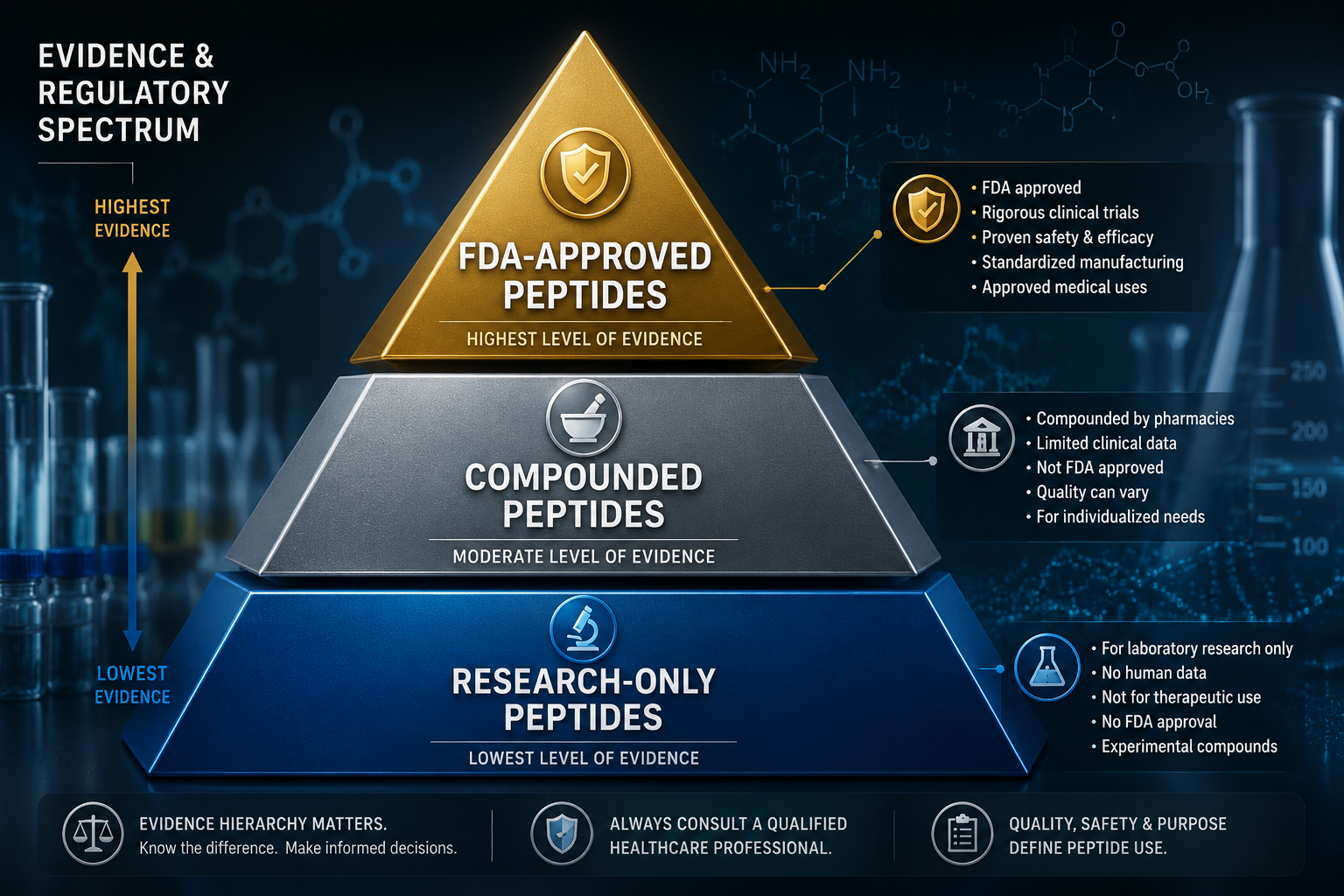
Detailed () editorial illustration showing a tiered pyramid diagram comparing three evidence levels: 'FDA-Approved Peptides'

Key Takeaways

  • Fewer than 60 peptides have full FDA approval; most discussed compounds exist in a regulatory gray area
  • Human clinical evidence for research-only peptides is sparse — most data comes from animal or in vitro studies
  • Some peptides, like tesa and bremelanotide, have crossed the threshold into approved or compounded status
  • In April 2026, the FDA reclassified 12 peptides, including CJC-1295 and ipamorelin, back to legal compounding status
  • Search intent around peptides ranges from educational curiosity to purchase-ready queries — content must match both accurately

The Regulatory Spectrum: From Approved to Research-Only

Not all peptides occupy the same legal or scientific ground. Understanding the spectrum is essential before evaluating any evidence claim.

Three broad categories exist:

Category Examples Human Evidence Level
FDA-Approved Semaglutide, Tirzepatide, Tesamorelin Extensive RCT data
Compounded (503A/503B) CJC-1295, Ipamorelin, BPC-157 Limited to moderate
Research-Only GHK-Cu, many novel peptides Preclinical only

Semaglutide (Ozempic, Wegovy) and tirzepatide (Mounjaro, Zepbound) represent the gold standard — multi-phase clinical trials, thousands of human participants, and confirmed safety profiles. Tesamorelin, sold as Egrifta for HIV-associated lipodystrophy, also carries full approval. Bremelanotide (PT-141/Vyleesi) received approval for hypoactive sexual desire disorder.

In April 2026, the FDA reclassified 12 peptides — including CJC-1295, ipamorelin, selank, semax, and epithalon — from Category 2 (banned from compounding) back to Category 1, making them legally compoundable with a valid prescription through licensed 503A and 503B pharmacies. This was a significant regulatory shift that directly affects sourcing and search behavior.

Research-only peptides like GHK-Cu topical compounds and LL-37 sit at the far end of the spectrum. Their mechanisms are well-described in cell and animal models, but controlled human trials remain scarce.


What Human Evidence Actually Exists for Research-Only Peptides

This is the core of The Peptide Craze: What Human Evidence Exists for Research-Only Peptides and Why That Matters for Search Intent — and the answer requires honesty.

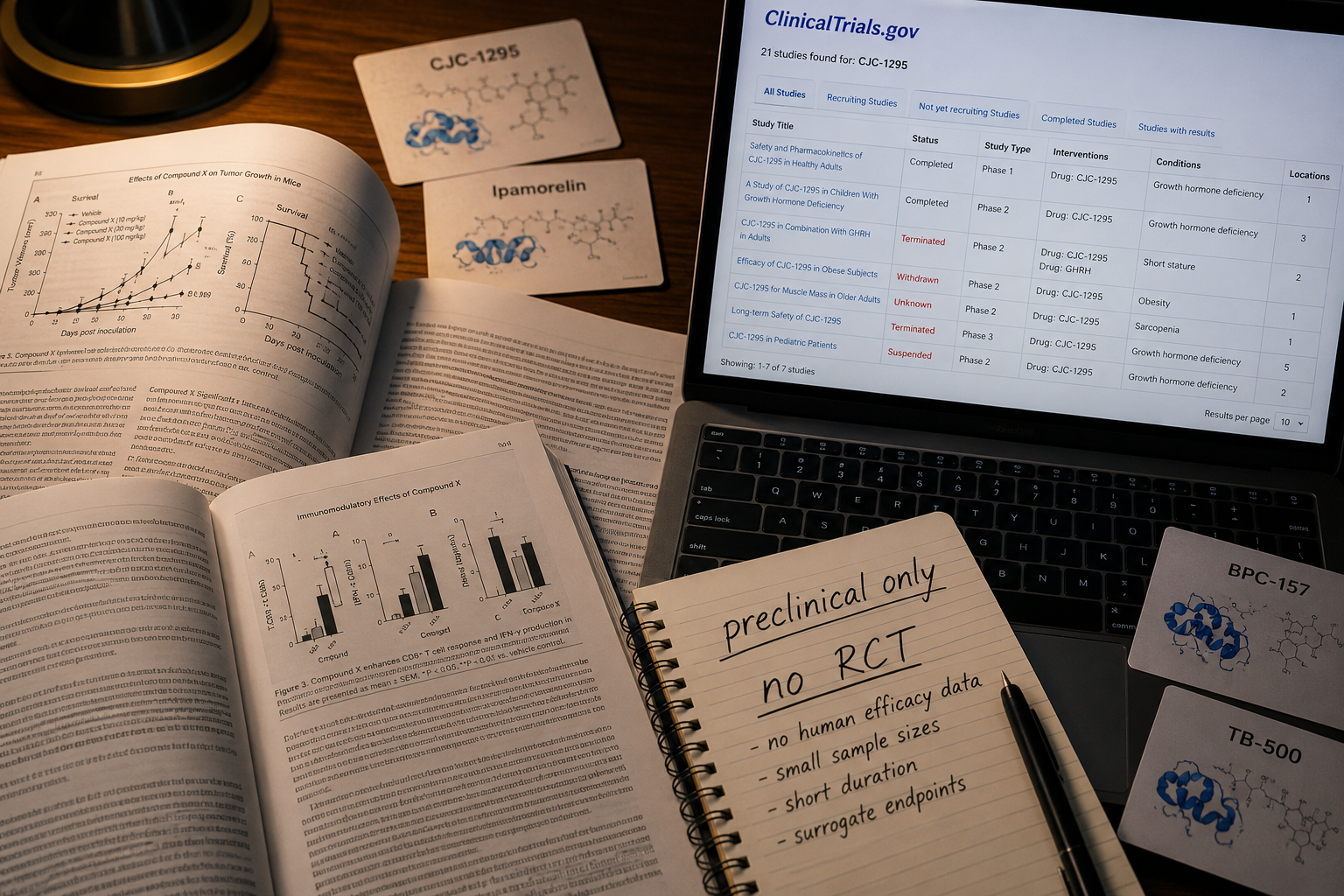
BPC-157 has generated significant preclinical excitement. Animal models show tissue repair signals, gut protection, and tendon healing activity. Human trials, however, are nearly absent from the peer-reviewed literature. The compound remains classified as a research chemical, and the FDA has issued warnings against products sold without prescription oversight.

GHK-Cu shows compelling in vitro data on collagen synthesis and wound healing. Human skin studies exist but are limited in scale and rigor. The mechanism is biologically plausible; the clinical confirmation is incomplete.

MOTS-c, a mitochondrial-derived peptide, has attracted longevity researchers. Preclinical data on metabolic flexibility and mitochondrial dynamics is promising. Human pharmacokinetic studies are early-stage.

SS-31 (Elamipretide) targets mitochondrial membrane integrity. Some early human trials in heart failure populations have been conducted, making it one of the more advanced research-only peptides in terms of human data.

"Preclinical signals are hypothesis generators, not clinical conclusions. The distance between a rat model and a human outcome is often larger than the peptide community acknowledges."

NAD+ and related energetics compounds follow a similar pattern — strong mechanistic rationale, growing but still limited human trial data.

What Human Evidence Actually Exists for Research-Only Peptides

The honest summary: most research-only peptides have strong preclinical signals, plausible mechanisms, and thin human evidence. That is not a dismissal — it is a calibration.


Why Search Intent Makes This Distinction Critical

The Peptide Craze: What Human Evidence Exists for Research-Only Peptides and Why That Matters for Search Intent is not just a scientific question — it is a content strategy question.

Search queries around peptides fall into distinct intent categories:

  • Informational: "How does ipamorelin work?" or "What is MOTS-c?"
  • Navigational: "Where to buy tesa" or "pure tested peptides catalog"
  • Transactional: "Buy BPC-157 research peptide"
  • Investigational: "Is there human evidence for GHK-Cu?"

Each intent requires a different content response. Informational queries demand accurate mechanism explanations. Investigational queries — the fastest-growing segment in 2026 — demand honest evidence grading. Conflating preclinical animal data with human clinical outcomes in content written for investigational searchers destroys credibility and risks regulatory scrutiny.

For GLP-1 peptide research themes and newer compounds like retatrutide, the human evidence base is actively expanding — making real-time accuracy even more important.

Content that clearly labels evidence tiers — approved, compounded, preclinical — serves both the reader and search algorithms that increasingly reward expertise, authoritativeness, and trustworthiness (E-E-A-T).

Why Search Intent Makes This Distinction Critical

Researchers exploring ipamorelin mechanisms or tesa body composition data deserve content that distinguishes what is known in humans from what is extrapolated from animal models.


Conclusion

The peptide craze is not going away — and neither is the demand for accurate, evidence-graded information about it. The actionable path forward is straightforward:

  • Grade every claim by evidence tier: FDA-approved, compounded, or preclinical research
  • Match content to search intent — investigational queries require honest evidence summaries, not marketing language
  • Monitor regulatory changes — the April 2026 FDA reclassification shows the landscape shifts quickly
  • Prioritize sourcing transparency by reviewing quality testing protocols before engaging with any research compound

The researchers and content creators who build authority in this space will be those who resist overstating the evidence — and who help their audience understand exactly where on the spectrum each peptide sits.

https://www.puretestedpeptides.com/wp-content/uploads/2026/06/The-Peptide-Craze-What-Human-Evidence-Exists-for-Research-Only-Peptides-and-Why-That-Matters-for-Search-Intent.png 1024 1536 https://www.puretestedpeptides.com/wp-content/uploads/2026/01/buy-peptides-online.jpg 2026-06-18 13:04:242026-06-18 13:04:24The Peptide Craze: What Human Evidence Exists for Research-Only Peptides and Why That Matters for Search Intent
Tesamorelin and Ipamorelin: How the Two Growth Hormone Secretagogues Differ Mechanistically

Tesamorelin and Ipamorelin: How the Two Growth Hormone Secretagogues Differ Mechanistically

June 15, 2026/0 Comments/in Uncategorized/by

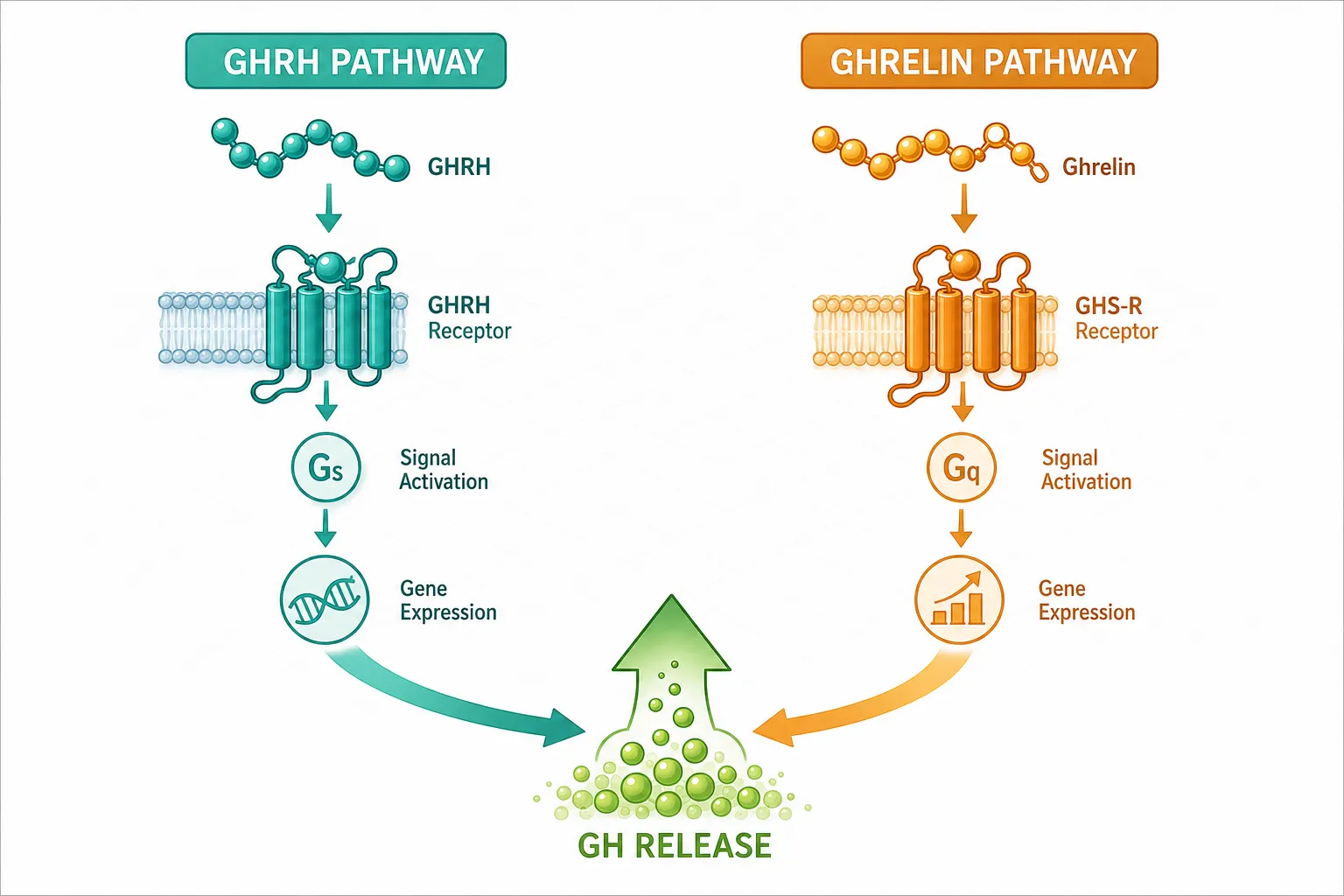
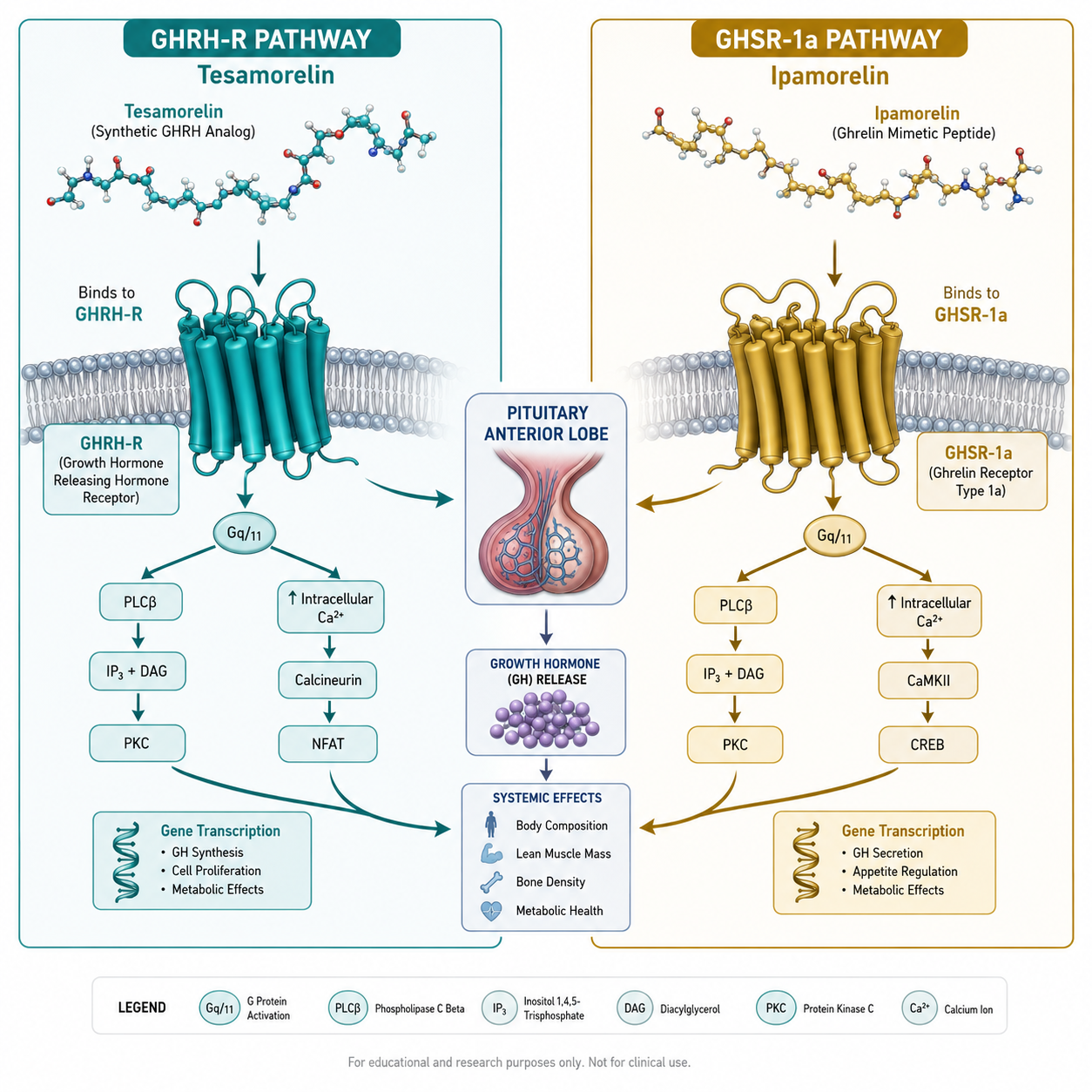
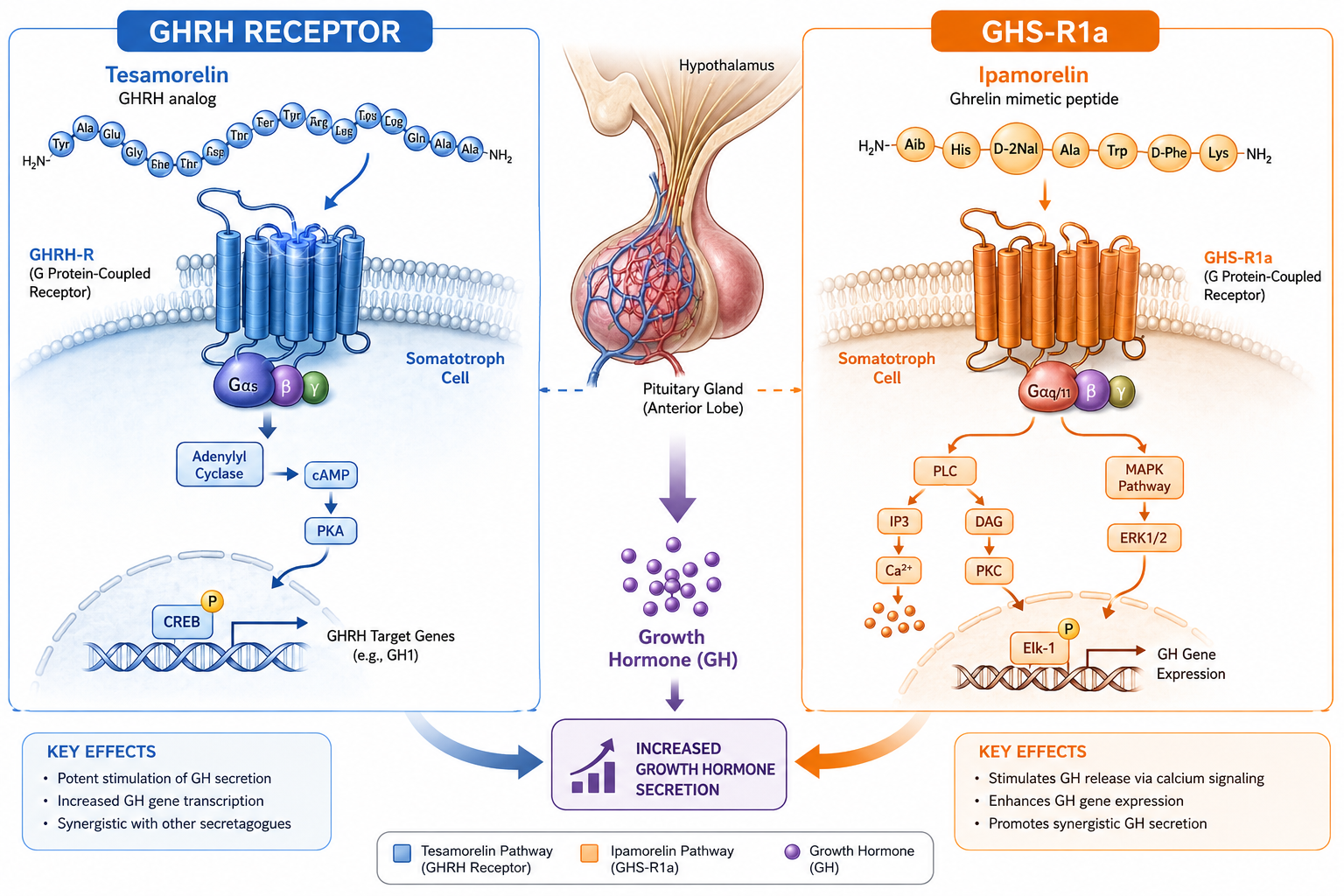
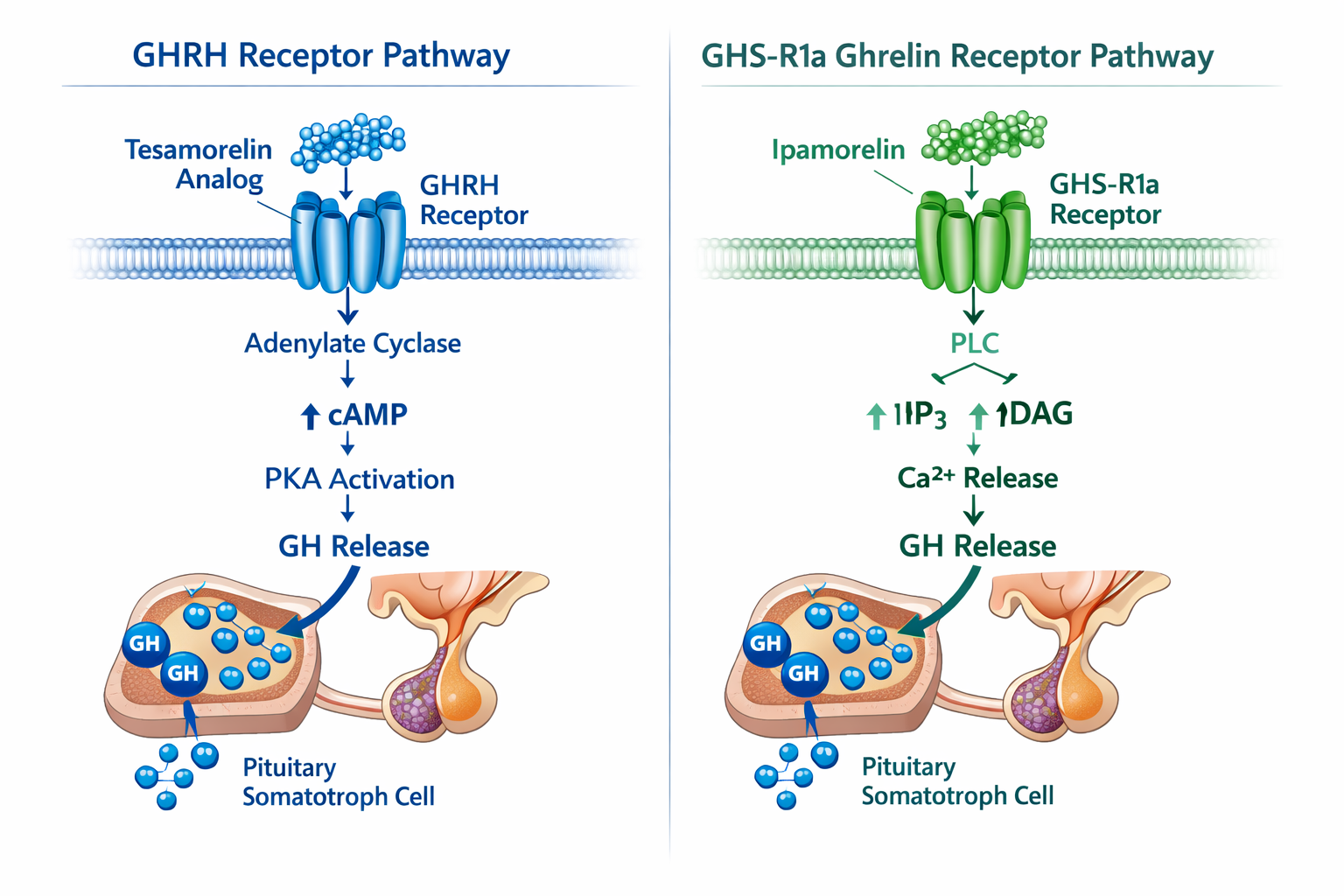
Tesamorelin vs Ipamorelin receptor pathway comparison diagram

Two peptides. Two completely different locks on the same door. Tesamorelin and Ipamorelin are both classified as growth hormone secretagogues, yet they reach the pituitary gland by separate molecular routes, produce distinct GH secretion patterns, and serve different research purposes. Understanding exactly how these two growth hormone secretagogues differ mechanistically is not just academic — it shapes how researchers design protocols and interpret outcomes.

Key Takeaways

  • Tesamorelin is a GHRH analog that binds the GHRH receptor; ipamorelin is a ghrelin mimetic that binds the GHS-R1a receptor — two entirely separate receptor systems.
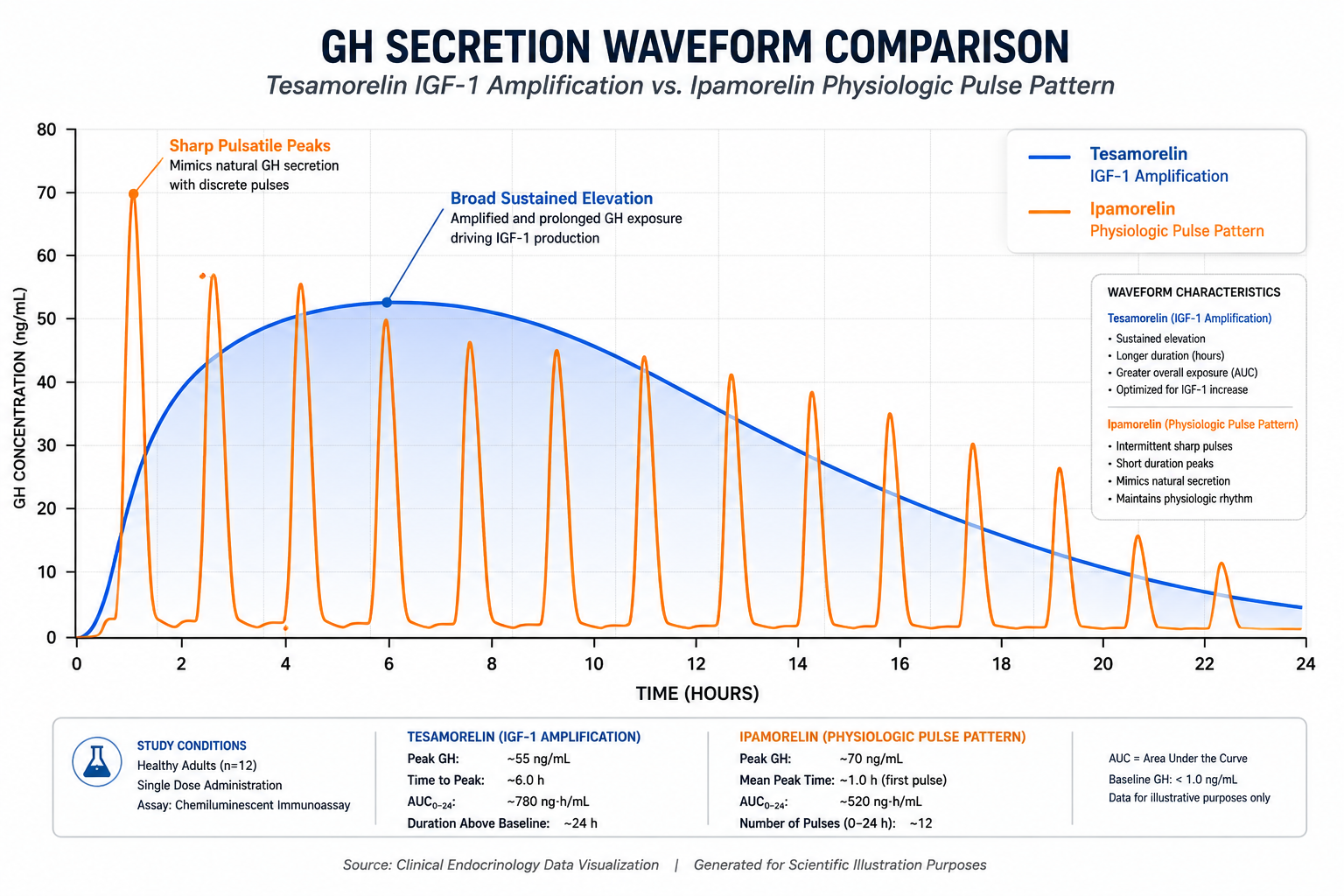
  • Tesamorelin drives a sustained elevation in GH and IGF-1; ipamorelin generates short, pulsatile GH spikes that mirror natural secretory rhythms.
  • Because they target different upstream nodes of the GH axis, the two peptides are complementary rather than redundant.
  • Ipamorelin is noted for high selectivity — it stimulates GH release with minimal effect on cortisol or prolactin.
  • Researchers studying the GH axis benefit from understanding both pathways before designing combination or standalone protocols.

Receptor-Level Differences: Where the Pathways Diverge

Receptor-Level Differences: Where the Pathways Diverge

The clearest way to understand Tesamorelin and Ipamorelin and how the two growth hormone secretagogues differ mechanistically is to start at the receptor.

Tesamorelin is a synthetic analog of endogenous growth hormone-releasing hormone (GHRH). It binds selectively to the GHRH receptor located on pituitary somatotroph cells. By occupying this receptor, tesa amplifies the hypothalamic GHRH signal, prompting somatotrophs to produce and release more growth hormone. Its structure closely mirrors native GHRH(1-44) but includes a trans-3-hexenoic acid modification that extends its stability in plasma — a key reason it outperforms unmodified GHRH in sustained signaling.

Ipamorelin, by contrast, is a selective agonist of the ghrelin receptor, formally called the Growth Hormone Secretagogue Receptor type 1a (GHS-R1a). This receptor is pharmacologically and structurally distinct from the GHRH receptor. Ipamorelin acts as a ghrelin mimetic, meaning it mimics the hunger-signaling peptide ghrelin to unlock GH release through a pathway that operates independently of GHRH. Crucially, ipamorelin achieves this with high receptor selectivity — it does not significantly activate pathways that elevate cortisol or prolactin, which distinguishes it from older, less selective GHS compounds.

Feature Tesamorelin Ipamorelin
Receptor target GHRH receptor GHS-R1a (ghrelin receptor)
Peptide class GHRH analog Ghrelin mimetic
Signaling pathway GHRH axis Ghrelin axis
Cortisol/prolactin effect Minimal Minimal

For a deeper look at tesa's pharmacology, the science behind tesa provides useful foundational context.


GH Secretion Patterns: Sustained Amplification vs Pulsatile Spikes

GH Secretion Patterns: Sustained Amplification vs Pulsatile Spikes

Receptor differences translate directly into different hormonal output profiles — and this is where the practical research implications become most visible.

Tesamorelin produces a more sustained elevation in both GH and insulin-like growth factor 1 (IGF-1). Because it continuously reinforces the GHRH signal, circulating IGF-1 rises measurably over time. Clinical data show this sustained IGF-1 increase drives downstream metabolic effects, particularly visceral fat reduction in HIV-associated lipodystrophy — the only FDA-approved indication for tesa. Researchers often position tesa as the "heavy-lift" GH/IGF-1 amplifier within the GH axis. For those tracking outcomes over time, the tesa before and after data illustrates how this sustained signaling manifests in measurable endpoints.

Ipamorelin generates short-lived, pulsatile GH peaks. These bursts closely mimic the natural GH secretory rhythm the body uses throughout the day and during sleep. Rather than chronically flattening or overriding the pulsatile rhythm, ipamorelin reinforces it. This makes ipamorelin a "pulse-shaping" secretagogue — one that works with the body's existing GH architecture rather than overwriting it.

"Tesamorelin amplifies the signal; ipamorelin restores the rhythm."

This distinction matters for researchers concerned about receptor desensitization or downstream feedback suppression. Sustained GHRH receptor stimulation carries a different long-term receptor dynamics profile than intermittent GHS-R1a activation.

Researchers interested in ipamorelin's standalone profile can explore whether ipamorelin is the most beneficial peptide for a broader discussion of its research applications.


Research Implications: Pairing, Separating, and Protocol Design

Research Implications: Pairing, Separating, and Protocol Design

Understanding Tesamorelin and Ipamorelin and how the two growth hormone secretagogues differ mechanistically has direct implications for protocol design.

Because the two peptides act on separate receptor systems, they are not redundant — they target different upstream control nodes of the GH axis. This is why combination approaches appear in the research literature. When used together, tesa provides sustained IGF-1 elevation through the GHRH pathway while ipamorelin adds pulsatile GH bursts through the ghrelin pathway. The result is a more complete stimulation of GH secretion than either agent alone can produce. Researchers considering this approach can review safety considerations for combining tesa with ipamorelin before designing protocols.

For researchers who prefer standalone use, the choice depends on the research question:

  • Choose tesa when the goal is sustained IGF-1 elevation and metabolic endpoints. See tesa dosage guidance for reference ranges used in research settings.
  • Choose ipamorelin when the goal is pulsatile GH reinforcement with minimal hormonal side effects. The ipamorelin research overview covers its selectivity profile in detail.

Researchers comparing tesa to other GHRH analogs may also find the tesa vs sermorelin comparison useful for situating tesa within the broader GHRH analog class.

One additional consideration: peptide purity directly affects receptor binding fidelity. Impure peptides produce inconsistent receptor activation, making mechanistic conclusions unreliable. Sourcing from suppliers with verified quality testing protocols is a non-negotiable step for credible research.


Conclusion

Tesamorelin and ipamorelin are not interchangeable tools — they are complementary instruments that operate on separate molecular circuits within the GH axis. Tesamorelin amplifies GH and IGF-1 through sustained GHRH receptor engagement; ipamorelin restores physiologic GH pulsatility through selective GHS-R1a activation. Researchers who understand this mechanistic split can design more precise protocols, interpret results more accurately, and avoid the common mistake of treating all growth hormone secretagogues as functionally equivalent.

Actionable next steps for researchers:

  • Map the specific GH axis endpoint under study before selecting a peptide.
  • Review the receptor selectivity and hormonal side-effect profiles of each compound.
  • If combining both agents, study the complementary pathway rationale and available safety data.
  • Verify peptide purity through third-party testing before any research use.
  • Consult dosage reference data and existing clinical literature to anchor protocol design.
https://www.puretestedpeptides.com/wp-content/uploads/2026/06/Tesamorelin-and-Ipamorelin-How-the-Two-Growth-Hormone-Secretagogues-Differ-Mechanistically.png 1024 1536 https://www.puretestedpeptides.com/wp-content/uploads/2026/01/buy-peptides-online.jpg 2026-06-15 13:03:312026-06-15 13:03:31Tesamorelin and Ipamorelin: How the Two Growth Hormone Secretagogues Differ Mechanistically
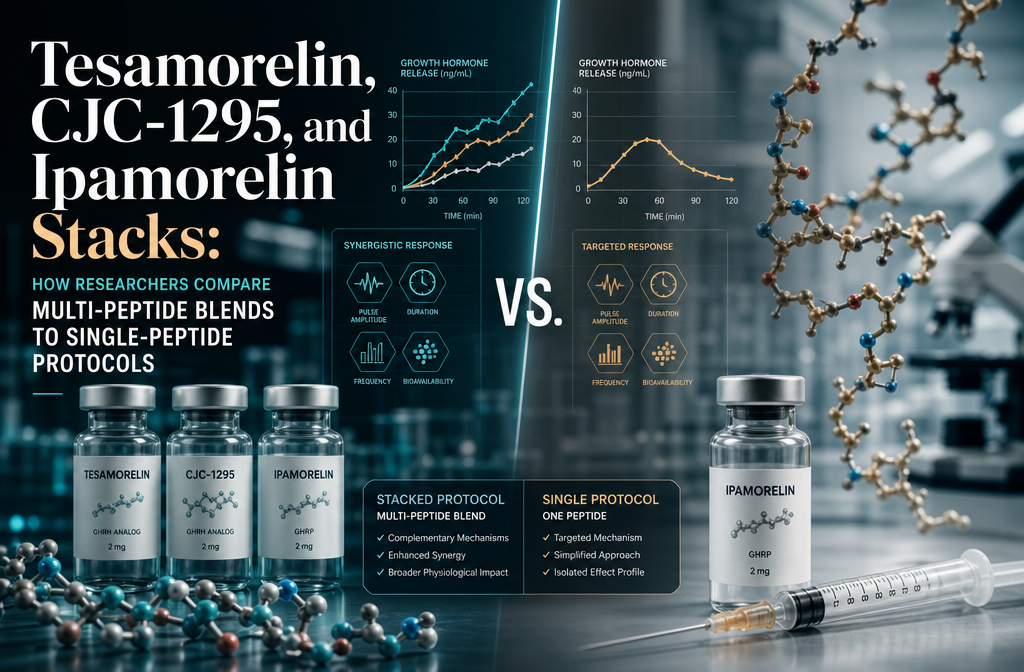
Tesamorelin, CJC‑1295, and Ipamorelin Stacks: How Researchers Compare Multi‑Peptide Blends to Single‑Peptide Protocols

Tesamorelin, CJC‑1295, and Ipamorelin Stacks: How Researchers Compare Multi‑Peptide Blends to Single‑Peptide Protocols

June 9, 2026/0 Comments/in Uncategorized/by

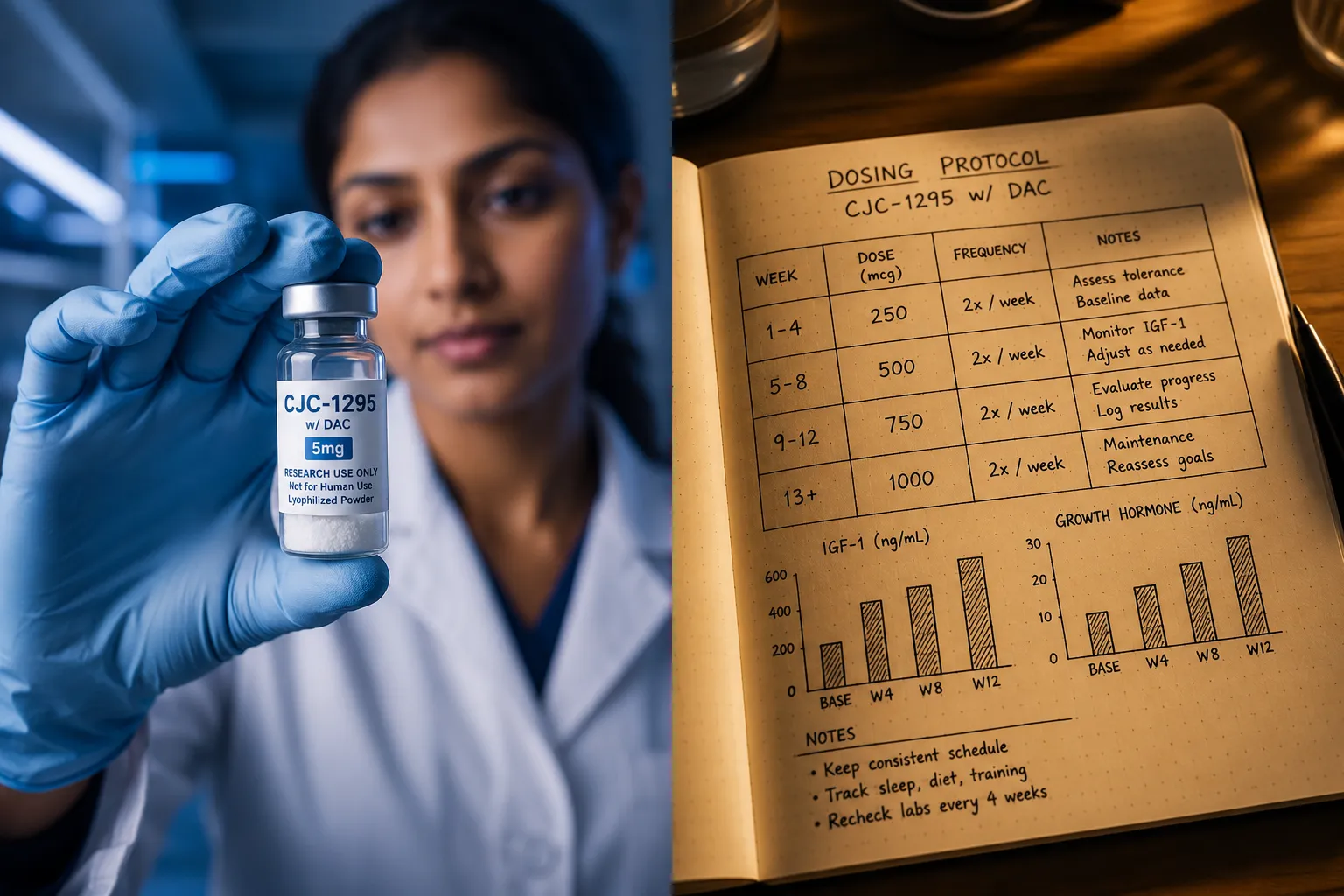
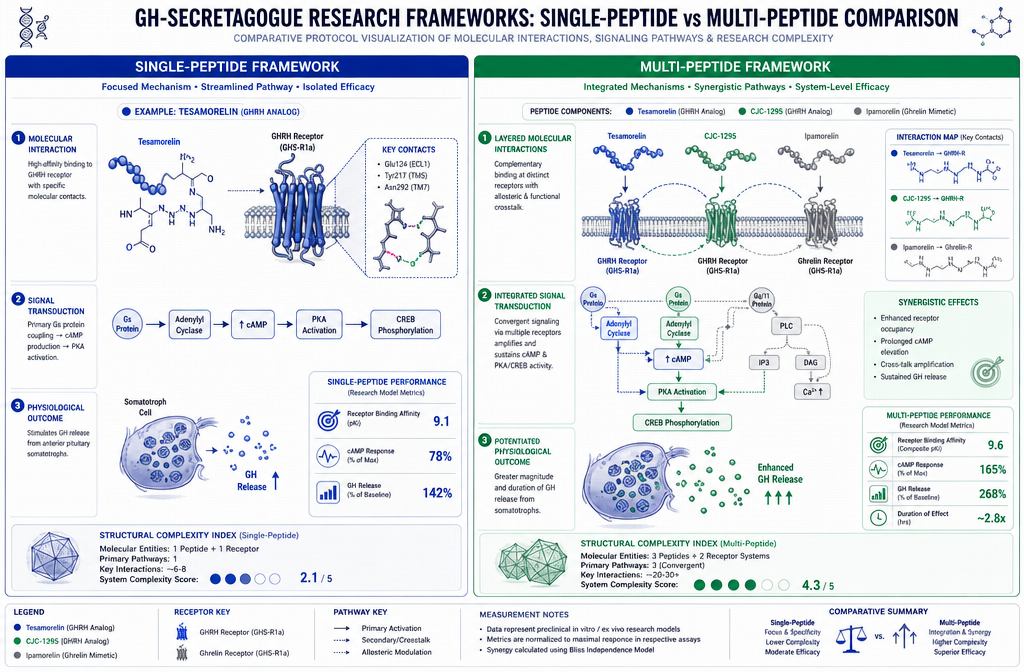
{"cover":"Professional landscape format (1536×1024) hero image with bold text overlay: 'Peptide Stacks vs Single Protocols: Tesamorelin, CJC-1295 & Ipamorelin' in extra large 72pt white bold sans-serif font with dark semi-transparent overlay box, centered upper-third composition. Background shows a high-resolution laboratory research setting with glass vials, molecular structure diagrams, and soft blue lighting with white accents. Color palette: deep navy blue, crisp white, and teal highlights. Magazine cover aesthetic, editorial quality, high contrast.","content":["Detailed landscape format (1536×1024) scientific illustration showing three distinct peptide molecular structures labeled Tesamorelin, CJC-1295, and Ipamorelin arranged side by side with connecting arrows indicating GH-axis pathway activation. Background features a stylized pituitary gland diagram with GH pulse waveforms. Color scheme: clinical white, deep blue, and amber highlights. Infographic style with clean sans-serif annotations, research laboratory aesthetic, high detail.","Aerial top-down view of a researcher's desk showing a comparison chart contrasting single-peptide protocol data versus multi-peptide blend data, with bar graphs showing 17% VAT reduction figures, regulatory status badges (FDA-approved vs research chemical), and dose-sparing calculation notes on a digital tablet. Scattered research papers, a calculator, and peptide vials visible. Color palette: warm white desk surface, navy data graphics, green and red status indicators. Editorial research aesthetic.","Close-up wide-angle shot of a laboratory bench with precisely measured peptide vials arranged in a row showing dose-sparing blend formulations, a digital scale, and a research protocol notebook open to a page titled Multi-Peptide Stack Design Considerations. Soft overhead lighting with clinical blue-white tones. One vial labeled with a triple-blend formulation tag. Background shows blurred centrifuge equipment. Color scheme: sterile white, steel grey, and accent blue. High-resolution editorial quality."]

Professional landscape hero image () with : "Tesamorelin, CJC-1295, and Ipamorelin Stacks: How Researchers Compare

Only one peptide in the GH-secretagogue class has cleared the bar of FDA approval and multiple randomized controlled trials — and it is almost always studied alone. That single fact defines the central tension researchers face when evaluating Tesamorelin, CJC-1295, and Ipamorelin stacks: How researchers compare multi-peptide blends to single-peptide protocols reveals a sharp divide between what is clinically proven and what is mechanistically plausible.

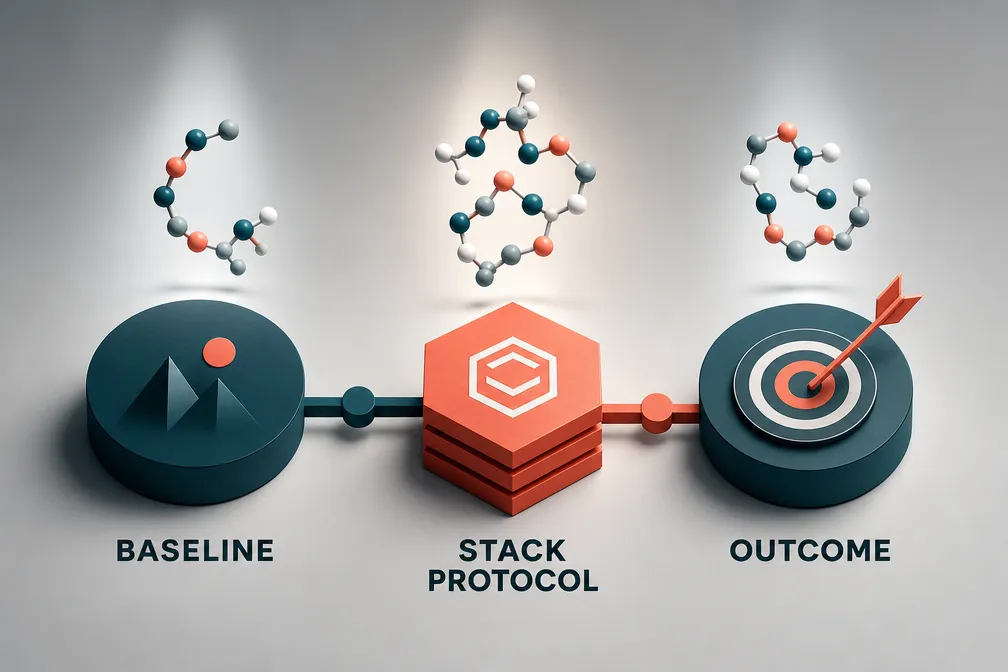
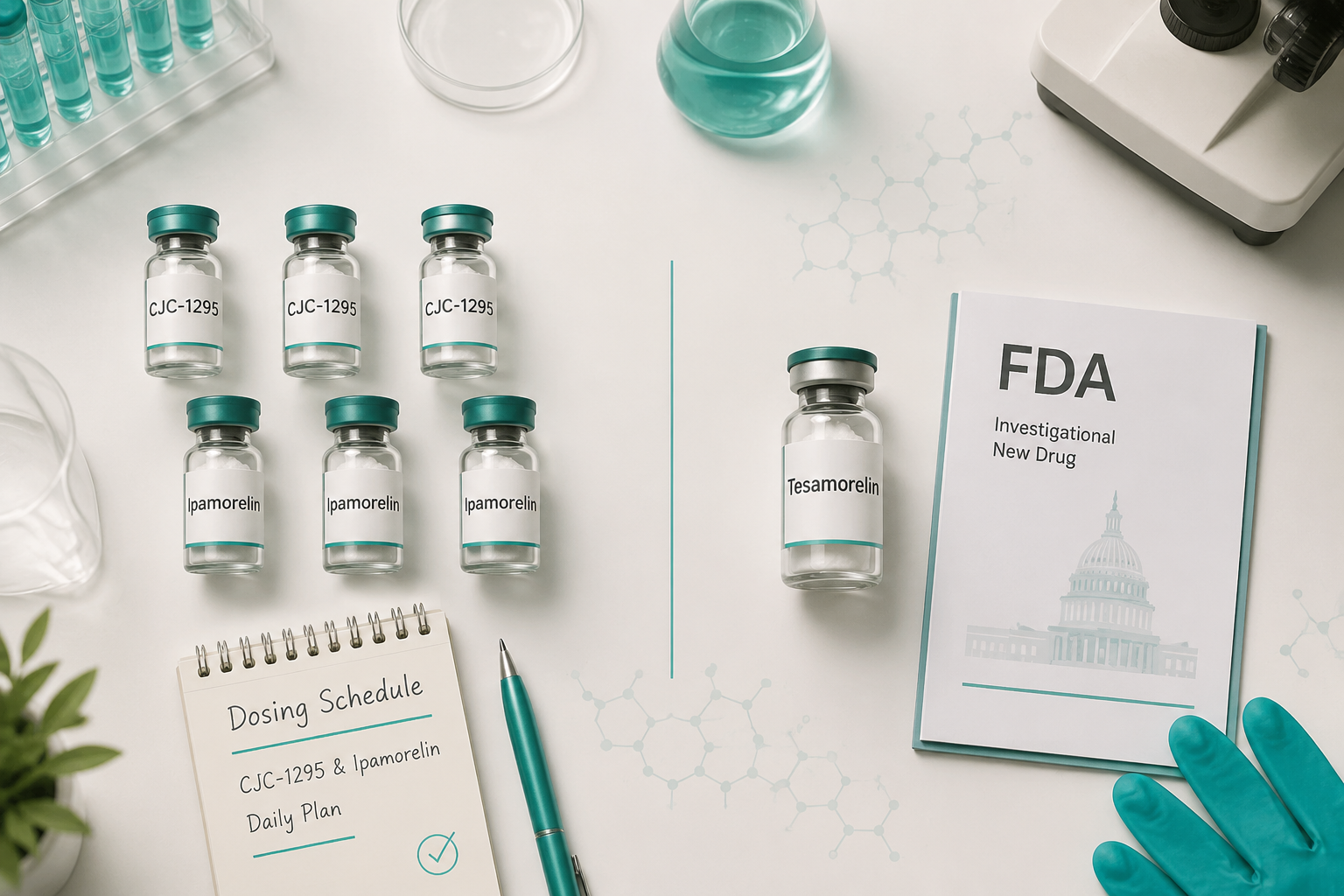
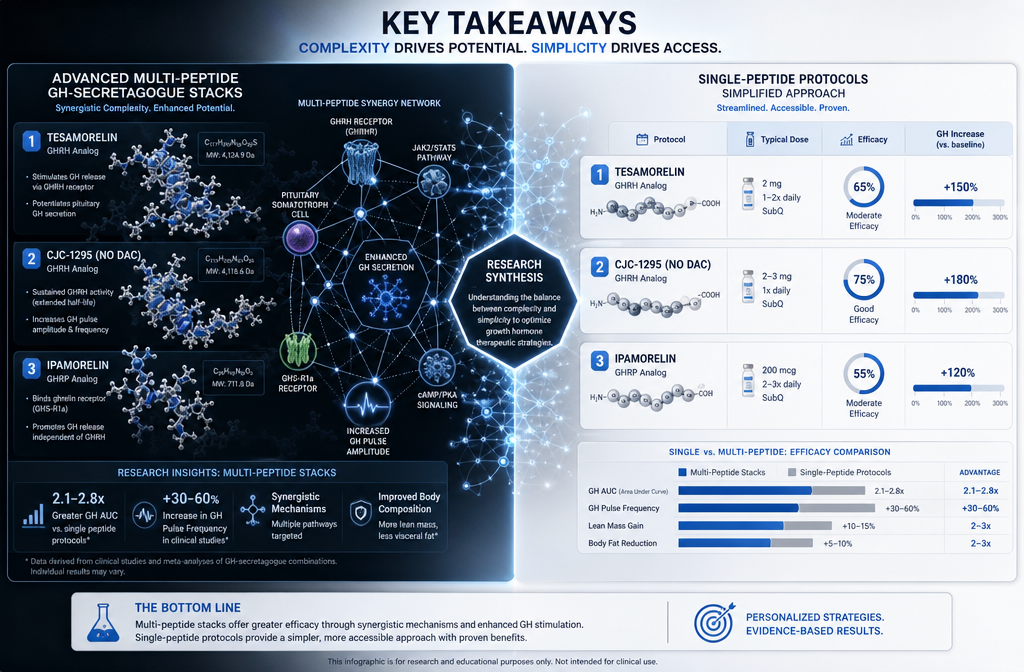
Key Takeaways section infographic: Split-screen scientific visualization comparing multi-peptide GH-secretagogue stacks

Key Takeaways

  • Tesamorelin monotherapy has robust RCT evidence showing roughly 17% visceral adipose tissue (VAT) reduction at six months; no equivalent data exist for CJC-1295 or Ipamorelin stacks.
  • CJC-1295 + Ipamorelin combinations sit in the lowest evidence tier for fat loss, classified as mechanistically plausible but clinically under-proven.
  • Triple-blend stacks typically use lower individual doses than standalone protocols, reflecting a dose-sparing research strategy.
  • Regulatory status differs sharply: tesa is FDA-approved for a specific indication; triple-peptide blends are research chemicals not approved for human use.
  • Researchers choosing between protocols should match the peptide to the research question, not assume that more peptides equal better outcomes.

Understanding the Evidence Gap in GH-Secretagogue Research

The GH axis can be stimulated through two distinct receptor pathways: GHRH receptors (targeted by tesa and CJC-1295) and ghrelin/GHS receptors (targeted by ipamorelin). On paper, combining both pathways makes sense — each amplifies GH pulse amplitude through a different mechanism, and preclinical data support synergistic GH release.

The problem is that synergistic GH release is a surrogate marker, not a clinical outcome. Tesamorelin's evidence base is built on hard endpoints. Pooled data from multiple randomized trials in patients with metabolic syndrome show approximately 17.2% VAT reduction at six months alongside meaningful improvements in HbA1c. These results come from tesa used as a monotherapy, not as part of a stack.

CJC-1295 and ipamorelin have no equivalent VAT-specific RCT data. Their reputation for supporting fat loss, lean mass, recovery, and sleep quality rests largely on:

  • Surrogate biomarkers (IGF-1 elevation, GH pulse data)
  • Small or open-label studies
  • Extrapolation from tesa's mechanism
  • Accumulated clinical experience rather than controlled outcomes

For researchers designing protocols, this distinction is not a minor detail — it determines what conclusions can legitimately be drawn from any experiment.


How Researchers Compare Multi-Peptide Blends to Single-Peptide Protocols: Regulatory and Dosing Frameworks

How Researchers Compare Multi-Peptide Blends to Single-Peptide Protocols: Regulatory and Dosing Frameworks

Regulatory status shapes research design as much as pharmacology does. Tesamorelin carries FDA approval for HIV-associated lipodystrophy, which means its dosing, monitoring parameters, and safety profile are well-characterized in published literature. Researchers using it off-label for visceral fat or metabolic endpoints have a defined framework to work within.

Triple-peptide blends — such as the tesa + CJC-1295 + ipamorelin 12mg blend — are explicitly classified as research chemicals not approved for human use. This status places them in a different methodological category. Researchers working with these compounds in preclinical or experimental models must account for the absence of standardized clinical dosing guidance.

When comparing the two approaches, a useful framework is the evidence tier system:

Protocol Type Evidence Tier Key Data Source
Tesamorelin monotherapy High Multiple RCTs, meta-analyses
CJC-1295 + Ipamorelin stack Low Surrogate markers, case series
Tesamorelin + CJC-1295 + Ipamorelin triple blend Lowest Preclinical, mechanistic only

Researchers exploring tesa vs ipamorelin as separate protocols will find that tesa is the evidence-based choice for visceral fat specifically, while ipamorelin-containing stacks are positioned more toward generalized recovery and lean-mass support — a distinction that should inform how any study is designed and how results are interpreted.


Practical Considerations When Designing Multi-Peptide GH Stack Protocols

Practical Considerations When Designing Multi-Peptide GH Stack Protocols

One consistent feature of triple-blend formulations is dose-sparing. Experimental profiles for the tesa + CJC-1295 + ipamorelin combination typically describe each component dosed below its usual standalone level — for example, tesa at 500–1,000 mcg alongside CJC-1295 and ipamorelin each at 100–200 mcg per administration. The rationale is multi-pathway stimulation without proportionally increasing total peptide load.

Researchers considering peptide blend research should weigh several practical factors:

  • Research question specificity: If the target endpoint is visceral fat reduction, single-peptide tesa protocols have validated measurement tools and outcome benchmarks. Multi-peptide blends lack these reference points.
  • Confounding variables: Stacking multiple peptides makes it harder to attribute any observed effect to a specific compound. Single-peptide protocols offer cleaner data.
  • Dose-response clarity: Established tesa dosage guidance exists in the literature; equivalent guidance for triple blends does not.
  • Purity verification: Any multi-peptide blend used in research should come with third-party testing documentation. Reviewing quality testing protocols before sourcing is a critical step.

For researchers interested in broader GH-axis research design, the GH axis product line overview provides useful context on how different secretagogues fit within a structured research framework. Those exploring adjacent peptide categories may also find value in reviewing BPC-157 core peptides documentation for comparison on how single-peptide evidence builds over time.


Conclusion

The comparison between Tesamorelin, CJC-1295, and Ipamorelin stacks and single-peptide protocols ultimately comes down to matching the tool to the task. Tesamorelin monotherapy remains the gold standard for visceral fat research, backed by rigorous clinical trial data. CJC-1295 and ipamorelin combinations offer mechanistic appeal and broader GH-axis stimulation, but researchers must work with the understanding that combination data are thin and clinical outcomes are largely unproven.

Actionable next steps for researchers in 2026:

  1. Define the primary endpoint before selecting a protocol — visceral fat reduction favors tesa alone; recovery and lean-mass models may justify a stack design.
  2. Use single-peptide runs first to establish baseline response data before introducing multi-peptide complexity.
  3. Source only third-party tested compounds and document purity for every experimental batch.
  4. Treat any triple-blend result as hypothesis-generating, not confirmatory, until controlled studies exist.

The gap between mechanistic plausibility and clinical proof is where most peptide stack research currently lives. Acknowledging that gap is the first step toward designing studies that actually close it.

https://www.puretestedpeptides.com/wp-content/uploads/2026/06/Tesamorelin-CJC‑1295-and-Ipamorelin-Stacks-How-Researchers-Compare-Multi‑Peptide-Blends-to-Single‑Peptide-Protocols.png 672 1024 https://www.puretestedpeptides.com/wp-content/uploads/2026/01/buy-peptides-online.jpg 2026-06-09 13:05:282026-06-09 13:05:28Tesamorelin, CJC‑1295, and Ipamorelin Stacks: How Researchers Compare Multi‑Peptide Blends to Single‑Peptide Protocols
Tesamorelin and Ipamorelin Peptides: Complementary Mechanisms for GH Secretagogue Research

Tesamorelin and Ipamorelin Peptides: Complementary Mechanisms for GH Secretagogue Research

June 5, 2026/0 Comments/in Uncategorized/by

}

Professional () hero image with : 'Tesamorelin & Ipamorelin: Complementary GH Secretagogue Research' in extra large white

Growth hormone secretion is not a single-switch event — it is a finely tuned pulse controlled by at least two distinct receptor systems. Understanding how those systems differ, and how they interact, is precisely why research into Tesamorelin and Ipamorelin Peptides: Complementary Mechanisms for GH Secretagogue Research has attracted sustained scientific interest in 2026.

Key Takeaways

  • Tesamorelin is a GHRH analog acting on the GHRH receptor; Ipamorelin is a ghrelin mimetic acting on GHS-R1a — two separate pathways.
  • Combining both peptides produces a synergistic GH pulse that exceeds what either compound achieves alone.
  • Tesamorelin holds FDA approval for HIV-associated lipodystrophy; Ipamorelin remains a research compound only.
  • Ipamorelin's receptor selectivity means it does not significantly raise cortisol, prolactin, or ACTH — a notable safety distinction.
  • Both compounds are prohibited under WADA's S2 category and are strictly for licensed research use.

Distinct Receptor Targets: The Foundation of Synergy

Distinct Receptor Targets: The Foundation of Synergy

The core science behind Tesamorelin and Ipamorelin Peptides: Complementary Mechanisms for GH Secretagogue Research begins at the receptor level.

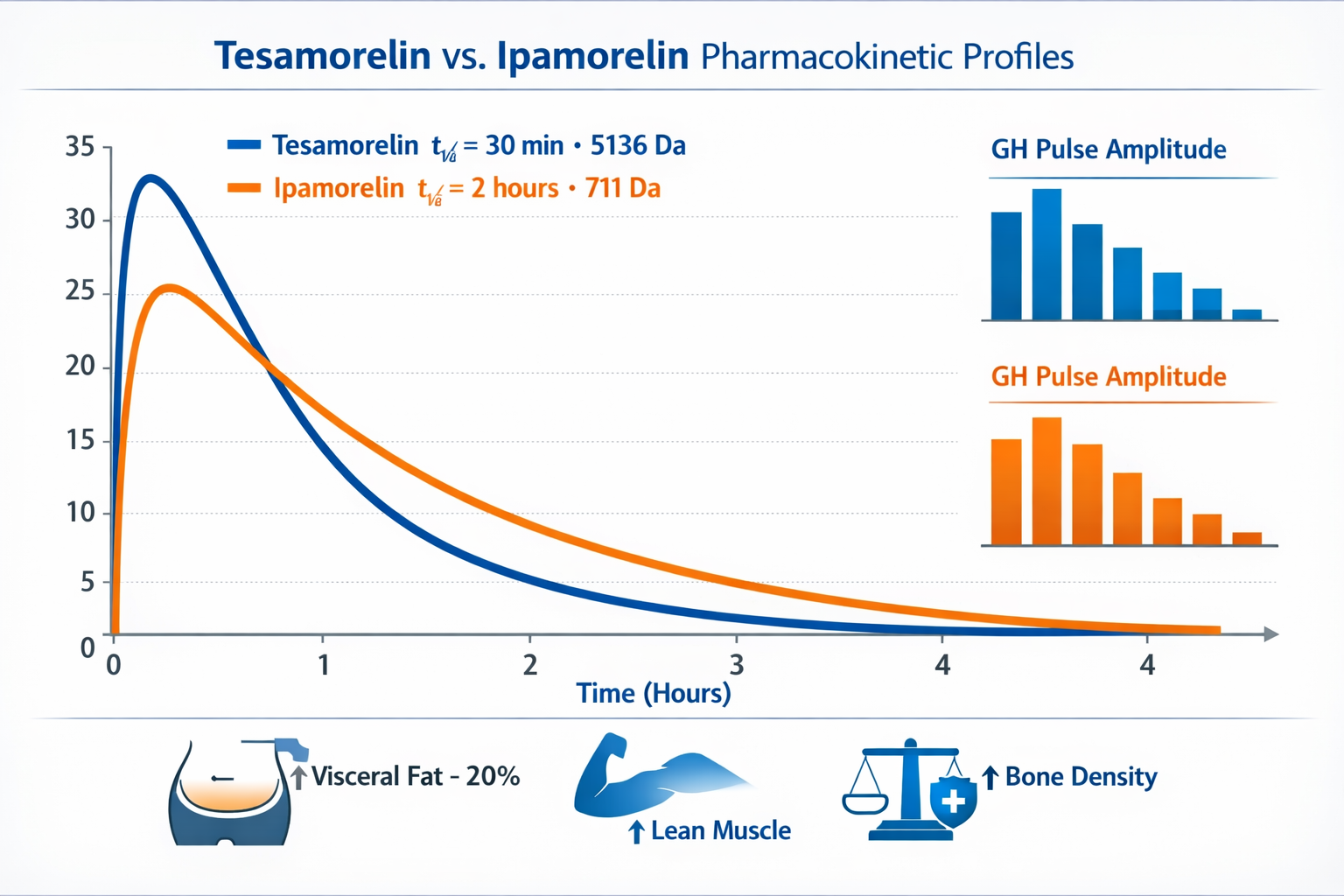
Tesamorelin is a stabilized analog of endogenous growth hormone-releasing hormone (GHRH). It binds the GHRH receptor on pituitary somatotroph cells and activates the cAMP/PKA signaling cascade, triggering GH synthesis and release. Its molecular weight is approximately 5,136 Da and its plasma half-life ranges from 25 to 40 minutes — short enough to preserve natural pulsatility while still delivering a measurable GH signal. Researchers interested in the science behind this compound can review detailed background on where to buy Tesamorelin and the science behind it.

Ipamorelin, by contrast, is a selective ghrelin receptor agonist that targets GHS-R1a. Its downstream signaling runs through the phospholipase C / IP3 / DAG pathway — entirely separate from the cAMP route used by Tesamorelin. At roughly 711 Da with a half-life near two hours, Ipamorelin is structurally compact and pharmacokinetically distinct. Critically, its receptor selectivity means it does not meaningfully elevate cortisol, ACTH, or prolactin, setting it apart from older GH secretagogues. More on Ipamorelin's muscle and fat research applications can be found at Ipamorelin muscle and fat research themes.

"Two separate locks, two separate keys — but both open the same door to GH release."

Because the two peptides operate on non-overlapping intracellular pathways, co-administration produces an additive — and in some models, synergistic — GH secretory response. This is the mechanistic rationale behind multi-peptide research protocols.


Pharmacokinetics, Clinical Evidence, and Regulatory Status

Pharmacokinetics, Clinical Evidence, and Regulatory Status

The regulatory histories of these two compounds diverge sharply.

Tesamorelin is the only FDA-approved GHRH analog, indicated for HIV-associated lipodystrophy. Phase 3 trials demonstrated a 15–18% reduction in visceral adipose tissue over 26 weeks — a clinically meaningful outcome supported by robust human data. Ipamorelin, while it advanced through Phase II trials for post-operative ileus, did not meet its primary endpoints in that indication and remains unapproved for any clinical use.

Feature Tesamorelin Ipamorelin
Receptor target GHRH-R GHS-R1a
Molecular weight ~5,136 Da ~711 Da
Half-life 25–40 min ~2 hours
FDA approval Yes (lipodystrophy) No
Cortisol elevation Minimal Minimal
WADA status Prohibited (S2) Prohibited (S2)

Both compounds are prohibited under WADA's S2 category, which restricts their use in competitive sport. Researchers should also note that CJC-1295 without DAC is another GHRH-family peptide often studied alongside these compounds for comparative GH pulsatility data.


Designing Combination Protocols for GH Pulsatility Research

Designing Combination Protocols for GH Pulsatility Research

The practical application of Tesamorelin and Ipamorelin Peptides: Complementary Mechanisms for GH Secretagogue Research lies in protocol design. Because the two peptides hit different receptors, researchers can time their administration to amplify a single GH pulse or to study how dual-pathway stimulation affects downstream IGF-1 levels and body-composition markers.

Pre-formulated research blends that combine Tesamorelin, CJC-1295, and Ipamorelin — such as the Tesamorelin / CJC-1295 / Ipamorelin 12mg blend — allow investigators to study multi-secretagogue interactions without compounding separate solutions. For protocols that also incorporate AOD-9604, the Tesamorelin / AOD-9604 / CJC-1295 / Ipamorelin blend extends the metabolic research scope further.

Researchers studying the broader peptide landscape often pair GH secretagogue work with complementary compounds. For example, CJC-1295 with DAC research findings provide a useful reference point for understanding how DAC modification changes GH pulse kinetics relative to the shorter-acting analogs.

Key variables in combination protocol design include:

  • Timing offset — administering Ipamorelin 15–30 minutes before or after Tesamorelin to observe pulse shape differences
  • Dose titration — adjusting each compound independently to isolate receptor-specific contributions
  • Biomarker selection — tracking GH, IGF-1, visceral fat volume, and lean mass as primary endpoints
  • Washout periods — accounting for Ipamorelin's longer half-life when designing crossover studies

One important limitation: no direct human clinical trial has yet evaluated the Tesamorelin-Ipamorelin combination as a co-administered protocol. All synergy data to date comes from preclinical or mechanistic modeling work, meaning researchers must interpret findings with appropriate caution.


Conclusion

The mechanistic complementarity of Tesamorelin and Ipamorelin makes them a compelling pairing for GH secretagogue research. Their non-overlapping receptor targets — GHRH-R and GHS-R1a respectively — provide a rational basis for combination protocols aimed at studying GH pulsatility, visceral fat reduction, and body-composition dynamics.

Actionable next steps for researchers:

  1. Review the pharmacokinetic profiles of both compounds before designing dosing windows.
  2. Select validated biomarkers (GH, IGF-1, visceral adipose tissue) as primary endpoints.
  3. Source peptides from suppliers that provide third-party purity verification — see the peptide purity testing guide for sourcing standards.
  4. Consult the Ipamorelin GHRH/GRF research overview for additional mechanistic context before finalizing protocols.
  5. Maintain strict compliance with institutional research regulations and WADA prohibitions.

Rigorous, well-designed preclinical studies remain the essential next step before any broader conclusions about this peptide combination can be drawn.

https://www.puretestedpeptides.com/wp-content/uploads/2026/06/Tesamorelin-and-Ipamorelin-Peptides-Complementary-Mechanisms-for-GH-Secretagogue-Research.jpg 1696 2528 https://www.puretestedpeptides.com/wp-content/uploads/2026/01/buy-peptides-online.jpg 2026-06-05 13:36:412026-06-05 13:36:41Tesamorelin and Ipamorelin Peptides: Complementary Mechanisms for GH Secretagogue Research
×

Helpful Links

  • My account
  • Cart
  • Checkout
  • Refund and Returns Policy
  • Privacy Policy
  • SMS Privacy Policy
  • Login
  • My Account
  • Logout

USA Made Lab Tested Peptides

All products are sold for research, laboratory, or analytical purposes only, and are not for human consumption


Pure Tested Peptides is a chemical supplier. Pure Tested Peptides is not a compounding / chemical compounding facility as defined under 503A of the Federal Food, Drug, and Cosmetic act. Pure Tested Peptides is not an outsourcing facility as defined under 503B of the Federal Food, Drug, and Cosmetic act.

The statements made within this website have not been evaluated by the US Food and Drug Administration. The products we offer are not intended to diagnose, treat, cure or prevent any disease.

Human/Animal Consumption Prohibited. Laboratory/In-Vitro Experimental Use Only

Scroll to top Scroll to top Scroll to top