Call or Text 727-513-9780
  • Shopping Cart Shopping Cart
    0Shopping Cart
Pure Tested Peptides | America's most trusted Peptides for sale online
  • Peptides for sale
    • Oral Peptides for sale
      • Peptide Capsules for sale
      • BPC 157 Capsules 1000mcg
      • SLU-PP-332 Capsules | 1000 mcg
      • 5-Amino-1MQ 50mg Capsules
      • Tesofensine 500mcg
    • All Peptides for sale
    • Peptide Sprays
      • BPC 157 Nasal Spray Kit
      • BPC-157 TB500 Nasal Spray Kit
      • Semax Nasal Spray 10mg
      • Selank – Nasal Spray Kit – 10mg
      • Epithalon 50MG Nasal Spray Kit
      • Ipamorelin 10mg Nasal Spray
      • Klow Nasal Spray (BPC-157 + TB-500 + GHK-Cu + KPV) | 80mg
      • Hulk Nasal Spray Tesa / Ipa Blend 6/3 MG
      • Klow Nasal Spray
      • NAD + 500 mg Nasal Spray
      • PT-141 Nasal Spray Kit
    • GHRH Peptides
      • Ipa Peptides
      • CJC-1295 Peptides
        • CJC-1295 with DAC 5 mg
        • CJC-1295 without DAC 5 mg
        • CJC-1295 Ipa 10mg
      • Tesa Peptides
        • Tesa Peptide
        • Tesa 20 mg
    • GHK-Cu Peptides
      • All GHK-Cu Peptides
      • GHK-Cu 100mg
      • KLOW Peptide Blend – Buy KLOW blend online
    • BPC Peptides
      • All BPC Peptides
      • BPC-157
      • BPC-157 TB-500
      • BPC 157 capsules 1000mcg
    • SLU-PP-332 Peptides
      • All SLU-PP-332 Peptides
      • SLU-PP-332 5mg
    • GLP3 Peptides
    • PT-141 Peptides
      • PT-141 Peptides for sale
      • PT-141 10mg
      • PT-141 Nasal Spray
    • CAG Peptides
      • Lipo-C Peptide Blend
      • CAG 5mg
      • CAG 10mg
    • MOTS-C Peptides
      • MOTS-C Peptides for sale
      • MOTS-c peptide
      • MOTS-c 10mg *6 pack*
    • 5 Amino 1MQ Peptides
      • 5 Amino 1MQ Peptides for sale
      • 5-Amino-1MQ 50mg Capsules
      • 5-Amino-1MQ 5mg
    • Epithalon Peptides
      • Epithalon Peptides for sale
      • Epithalon 10mg
      • Epithalon 50mg
  • Shop
    • GLPs
      • 5-Amino-1MQ 50mg Capsules
      • 5-Amino-1MQ 5mg
      • L-Carnitine 500mg/ml
      • Tesofensine 500mcg
      • SLU-PP-332 5mg
      • MOTS-c 10mg *6 pack*
    • Epithalon & BPC Peptides
      • Epithalon 10mg
      • Epithalon 50mg
      • BPC-157
      • BPC 157 capsules 1000mcg
      • BPC-157 TB-500
      • BPC-157 TB500 Nasal Spray Kit
      • BPC 157 Nasal Spray Kit
    • BPC TB-500 & NAD+ Peptides
      • NAD+ 500 mg
      • KLOW Peptide Blend – Buy KLOW blend online
      • GLOW Peptide Blend
      • TB 500 5mg
      • BPC 157 capsules 1000mcg – Supplement
      • BPC 157 Nasal Spray Kit
      • BPC-157
      • BPC-157 TB500 Nasal Spray Kit
      • BPC-157 TB-500
      • BPC 157 capsules 1000mcg
    • LL-37 Peptide
      • LL-37 10 mg
    • MOTS-C & Selank
      • MOTS-c peptide
      • Selank 10mg
    • GHK Peptides
      • GHK-Cu 100mg
      • GLOW Peptide Blend
      • KLOW Peptide Blend – Buy KLOW blend online
  • COAs
  • Wholesale
    • Wholesale Peptides for sale
  • PTP FAQ
  • Affiliates
    • Selank Peptide: Advanced Pharmacological Mechanisms Underlying Its Anxiolytic and Nootropic Effects in Research
      • 5-Amino-1MQ Peptide: Detailed Mechanisms of NNMT Inhibition and Its Impact on Cellular Metabolism Research
        • MOTS-C Peptide: Unraveling Its Role in Mitochondrial Dynamics and Energy Metabolism Research
          • Epithalon Peptide and Telomerase Regulation: Investigating Its Impact on Cellular Senescence and Lifespan Research Models
            • GLP2-T vs GLP2 Tirz Peptide: Understanding the Naming, Mechanistic Nuances, and Research Implications for Gut Health
      • Peptides and Polypeptides in Modern Pharmacology: What Research on Metoprolol, Prednisone, and Amlodipine Reveals
        • Polypeptide Peptides vs NSAIDs: What Naproxen and Diclofenac Teach Tissue-Repair Researchers About BPC‑157 and TB‑500
          • Peptides and Polypeptides in Endocrine Pharmacology: How GLP-1, GLP-2, and GLP-3 Retatrutide Differ From Classic Drugs Like Prednisone and Amlodipine
          • 5‑Amino‑1MQ Peptide and NNMT Inhibition: How It Compares With Statins Like Atorvastatin in Adipose and Lipid Metabolism Research
      • Enclomiphene, Estrogen Receptor Signaling, and Luteinizing Phase Biology: What Hormone Researchers Should Measure
        • Mesenchymal Stem Cells, BPC‑157, and GHK‑Cu: How Tissue Repair Peptides Compare With Classic NSAIDs Like Naproxen in Injury Models
          • Peptide Calculator Use Cases Beyond Growth Hormone: Working Through GLP‑3 Retatrutide, MOTS‑c, and BPC‑157 Research Dosing
        • Polypeptide Peptides in Endocrine and Metabolic Pharmacology: Lessons From Amlodipine, Prednisone, and Metoprolol
        • Peptides Calculator for Advanced Blends: Worked Examples for Tesamorelin, CJC‑1295, and Ipamorelin Stacks
          • Peptides and Polypeptides in Human Physiology: How Molecular Size Shapes Research Applications
            • Selank Peptide: Advanced Pharmacological Mechanisms Underlying Its Anxiolytic and Nootropic Effects in Research
          • 5-Amino-1MQ Peptide: Detailed Mechanisms of NNMT Inhibition and Its Impact on Cellular Metabolism Research
            • MOTS-C Peptide: Unraveling Its Role in Mitochondrial Dynamics and Energy Metabolism Research
              • Epithalon Peptide and Telomerase Regulation: Investigating Its Impact on Cellular Senescence and Lifespan Research Models
                • GLP2-T vs GLP2 Tirz Peptide: Understanding the Naming, Mechanistic Nuances, and Research Implications for Gut Health
                  • Peptides and Polypeptides in Endocrine Pharmacology: How GLP-1, GLP-2, and GLP-3 Retatrutide Differ From Classic Drugs Like Prednisone and Amlodipine
                    • Polypeptide Peptides vs NSAIDs: What Naproxen and Diclofenac Teach Tissue-Repair Researchers About BPC‑157 and TB‑500
                      • Peptides and Polypeptides in Modern Pharmacology: What Research on Metoprolol, Prednisone, and Amlodipine Reveals
                        • 5‑Amino‑1MQ Peptide and NNMT Inhibition: How It Compares With Statins Like Atorvastatin in Adipose and Lipid Metabolism Research
                        • Enclomiphene, Estrogen Receptor Signaling, and Luteinizing Phase Biology: What Hormone Researchers Should Measure
                        • Mesenchymal Stem Cells, BPC‑157, and GHK‑Cu: How Tissue Repair Peptides Compare With Classic NSAIDs Like Naproxen in Injury Models
                        • Peptide Calculator Use Cases Beyond Growth Hormone: Working Through GLP‑3 Retatrutide, MOTS‑c, and BPC‑157 Research Dosing
                        • Polypeptide Peptides in Endocrine and Metabolic Pharmacology: Lessons From Amlodipine, Prednisone, and Metoprolol
                        • Peptides Calculator for Advanced Blends: Worked Examples for Tesamorelin, CJC‑1295, and Ipamorelin Stacks
                        • Peptides and Polypeptides in Human Physiology: How Molecular Size Shapes Research Applications
                        • Selank Peptide: Advanced Pharmacological Mechanisms Underlying Its Anxiolytic and Nootropic Effects in Research
                        • MOTS-C Peptide: Unraveling Its Role in Mitochondrial Dynamics and Energy Metabolism Research
                        • Peptides and Polypeptides in Modern Pharmacology: What Research on Metoprolol, Prednisone, and Amlodipine Reveals
                        • Peptides and Polypeptides in Endocrine Pharmacology: How GLP-1, GLP-2, and GLP-3 Retatrutide Differ From Classic Drugs Like Prednisone and Amlodipine
                        • 5-Amino-1MQ Peptide: Detailed Mechanisms of NNMT Inhibition and Its Impact on Cellular Metabolism Research
                        • Mesenchymal Stem Cells, BPC‑157, and GHK‑Cu: How Tissue Repair Peptides Compare With Classic NSAIDs Like Naproxen in Injury Models
                        • Peptide Calculator Use Cases Beyond Growth Hormone: Working Through GLP‑3 Retatrutide, MOTS‑c, and BPC‑157 Research Dosing
                        • GLP2-T vs GLP2 Tirz Peptide: Understanding the Naming, Mechanistic Nuances, and Research Implications for Gut Health
                        • Polypeptide Peptides in Endocrine and Metabolic Pharmacology: Lessons From Amlodipine, Prednisone, and Metoprolol
                        • Polypeptide Peptides vs NSAIDs: What Naproxen and Diclofenac Teach Tissue-Repair Researchers About BPC‑157 and TB‑500
                        • Peptides and Polypeptides in Human Physiology: How Molecular Size Shapes Research Applications
                        • Peptides Calculator for Advanced Blends: Worked Examples for Tesamorelin, CJC‑1295, and Ipamorelin Stacks
                        • 5‑Amino‑1MQ Peptide and NNMT Inhibition: How It Compares With Statins Like Atorvastatin in Adipose and Lipid Metabolism Research
                        • Enclomiphene, Estrogen Receptor Signaling, and Luteinizing Phase Biology: What Hormone Researchers Should Measure
                        • Epithalon Peptide and Telomerase Regulation: Investigating Its Impact on Cellular Senescence and Lifespan Research Models
                        • Best research protocol Klow blend
                        • best time to take BPC-157
                        • best time to take DSIP (Delta Sleep Inducing Peptide)
                        • best time to take CJC-1295
                        • best time to take AOD-9604
                        • best time to take Follistatin 344
                        • best time to take Ipamorelin
                        • best time to take MK-677 (Ibutamoren)
                        • best time to take Ligandrol (LGD-4033) — research compound
                        • best time to take Ostarine (MK-2866) — research compound
                        • best time to take GHK-CU
                        • best time to take TB-500
                        • best time to take MOTS-c
                        • best time to take Semax
                        • best time to take RAD-140 (Testolone) — research compound
                        • best time to take Thymosin Alpha-1
                        • best time to take PEG-MGF
                        • Biolife Plasma, Octapharma Plasma, and Research Peptides: How Plasma Donation Labs Differ From Peptide Suppliers
                        • best time to take YK-11 — research compound
                        • best time to take PT-141 (Bremelanotide)
                        • Best research protocol Klow blend
                        • 5-Amino-1MQ and MOTS-C Synergy: Metabolic Signaling, Mitochondria, and Research Design
                        • BPC-157 and TB-500: Investigating Their Combined Effects on Angiogenesis and Cellular Migration in Tissue Repair Models
                        • BPC-157 Peptide: Gut Barrier Function, Inflammation, and Tissue-Recovery Research
                        • 5‑Amino‑1MQ and MOTS‑c Synergy in Metabolic Research: Designing NNMT and Mitochondrial Biogenesis Stacks
                        • CJC-1295 with DAC vs. Without DAC: Half-Life, Release Kinetics, and Research Implications
                        • CJC‑1295 with DAC vs. Without DAC: Expanding on Half‑Life Differences Using Tesamorelin and Ipamorelin Blend Case Studies
                        • Collagen Biology and Copper‑Binding Peptides: How GHK‑Cu, Glow Blend, and Klow Blend Interact with Skin and Connective Tissue
                        • Collagen Biology and Regenerative Peptides: How GHK‑Cu, Glow Blend, and Klow Blend Affect Extracellular Matrix Research
                    • DNA, Telomeres, and Longevity Peptides: Positioning Epithalon and MOTS‑c in Genetic Aging Research
                      • Enclomiphene Citrate: serm Mechanism, Testosterone Research, and Stack Compatibility
                        • Enclomiphene vs Enclomiphene Citrate: Formulation, Bioavailability, and Research Distinctions
                        • Epithalon Peptide Research: Telomerase Activation, Aging, and Pineal Gland Function
                        • Estrogen Receptor Signaling and Enclomiphene: How Selective Modulators Compare with Classic Polypeptide Hormones
                        • GHK-Cu Peptide: Advanced Mechanisms in Extracellular Matrix Remodeling and Wound Healing Research
                        • GHK-Cu Peptide: Collagen Synthesis, Wound Repair, and Skin-Barrier Research Models
                        • GLP-1 vs GLP-3 vs GLP-2: Peptide Classification and Research Applications
                        • GLP-2 Peptide Research Guide: Gut Barrier Function, Nutrient Absorption, and Intestinal Recovery Models
                        • GLP-3 Retatrutide vs. GLP-1 Drugs: What Triple-Agonist Biology Changes in Research Models
                        • Ipamorelin and Tesamorelin Combination: Synergistic GH Secretagogue Research and Dosing Protocols
                        • GLP2 Tirz Peptide: What It Is, Why the Name Exists, and How Researchers Should Interpret It
                        • Klow Blend Peptide Nasal Spray: What the Formulation Is Trying to Do in Cognitive Research
                        • Mitochondria, NNMT Inhibition, and Peptide Modulators: Where MOTS‑c and 5‑Amino‑1MQ Fit in Cellular Energy Research
                        • MOTS-c Peptide: Mitochondrial Function, Energy Metabolism, and What Researchers Measure
                        • MOTS-c vs. 5-Amino-1MQ: Which Metabolic Research Questions Each Compound Actually Answers
                        • Nasal Spray Peptides: Bioavailability, Administration, and Semax/Selank Research Applications
                        • PT-141 Peptide Research: Mechanism of Action and Melanocortin Receptor Signaling
                        • Retatrutide for Research: Mechanism, Structure, and GLP-1/GLP-3 Dual Action
                        • Retatrutide for Obesity and Type 2 Diabetes: What the Latest Trial Data Suggest
                        • Tesofensine Peptide Research: Mechanism, Appetite Suppression, and Neuropeptide Y Pathways
  • Contact
    • Contact Customer Service
    • Text Customer Support
  • About US
  • Shop all peptides
  • Affiliate Program
    • Affiliate Signup
  • Login / Register Login / Register Page Link Login / Register Page Link
  • Click to open the search input field Click to open the search input field Search
  • Menu Menu

Tag Archive for: visceral fat

Tesamorelin vs Ipamorelin in Body Composition Research: How Labs Model GH Pulsatility, Lean Mass, and Recovery With Different Secretagogues

Tesamorelin vs Ipamorelin in Body Composition Research: How Labs Model GH Pulsatility, Lean Mass, and Recovery With Different Secretagogues

September 6, 2026/0 Comments/in Uncategorized/by

Only one growth hormone secretagogue has completed large, randomized, double-blind, placebo-controlled trials enrolling more than 800 subjects and earned FDA approval for a body-composition endpoint. That distinction belongs to tesa. Yet ipamorelin continues to attract significant research interest in 2026 for its clean receptor selectivity and its ability to mimic endogenous GH pulse architecture. Understanding the practical differences between these two peptides requires looking well beyond basic GH secretion, into visceral fat phenotypes, lean mass trajectories, hepatic biomarkers, and recovery kinetics. This article examines Tesamorelin vs Ipamorelin in Body Composition Research: How Labs Model GH Pulsatility, Lean Mass, and Recovery With Different Secretagogues to help researchers select the right tool for the right experimental question.

Key Takeaways

  • Tesamorelin is the only GH secretagogue with robust RCT data showing measurable decreases in visceral fat and increases in lean body mass.
  • Ipamorelin produces sharp, pulsatile GH spikes that closely resemble endogenous nocturnal GH bursts, making it a useful tool for modeling GH pulse architecture.
  • No head-to-head clinical trial comparing tesa and ipamorelin for body-composition endpoints currently exists.
  • Ipamorelin's body-composition evidence is classified as Tier D, zero randomized controlled trials measuring lean mass, fat mass, or strength outcomes.
  • The practical research hierarchy in 2026 positions tesa as the gold standard for visceral fat and recomposition models, while ipamorelin serves primarily as a pulsatility and recovery research tool.

Receptor Mechanisms and GH Pulse Profiles
Receptor Mechanisms and GH Pulse Profiles

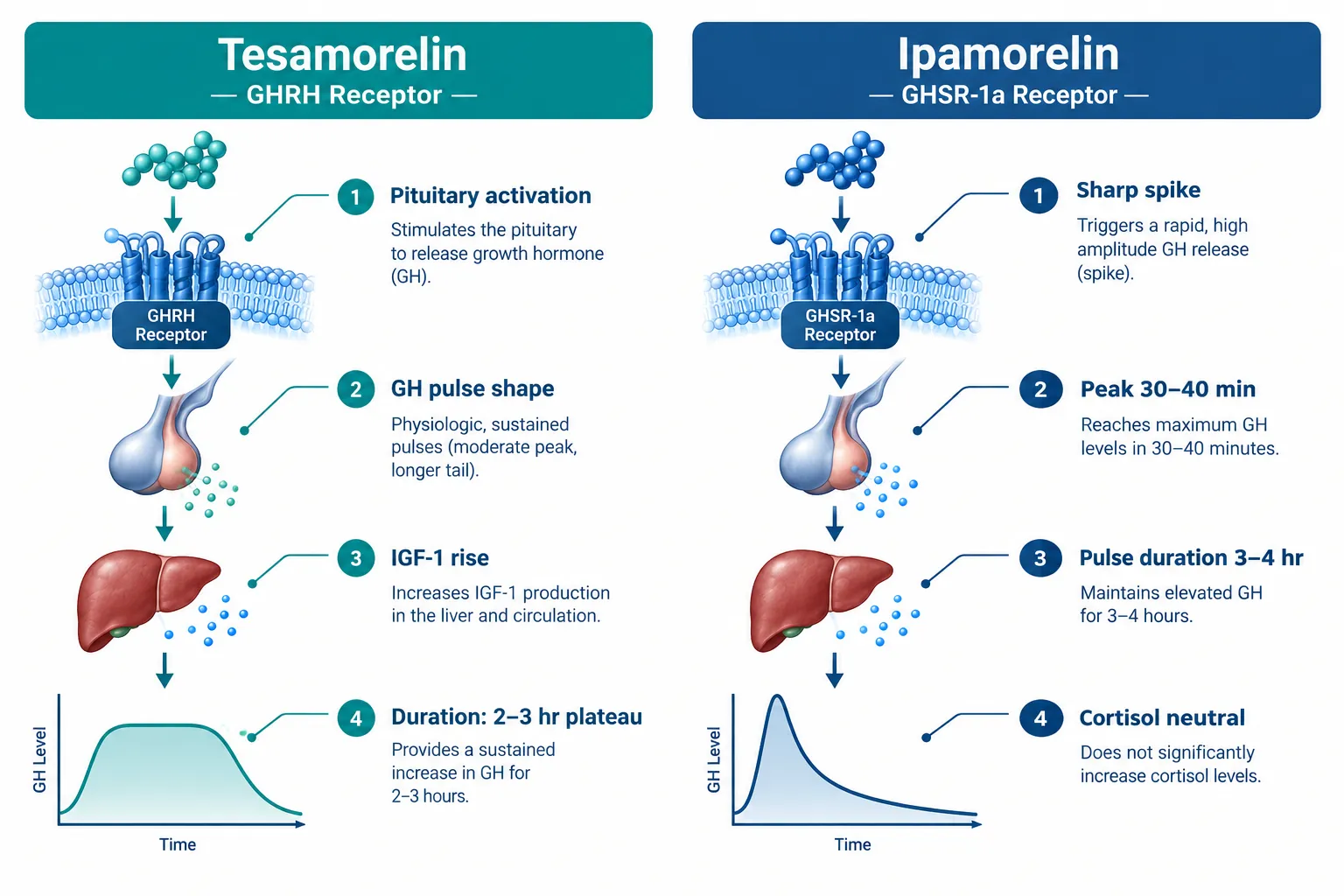
Tesamorelin is a stabilized analogue of endogenous growth hormone-releasing hormone (GHRH). It binds directly to the pituitary GHRH receptor, stimulating a sustained, relatively broad GH release pattern, onset within approximately 30 minutes, followed by a 2-to-3-hour elevated plateau. This profile generates robust IGF-1 elevation and supports the downstream anabolic and lipolytic signaling that underpins its body-composition effects.

Ipamorelin operates through an entirely different receptor. As a selective ghrelin receptor (GHSR-1a) agonist, it produces sharp, spike-like GH pulses with peak concentrations occurring roughly 30 to 40 minutes post-injection and a pulse duration of approximately 3 to 4 hours. These spike-like pulses more closely resemble the nocturnal GH bursts that occur naturally during slow-wave sleep, making ipamorelin particularly attractive for research models focused on physiological GH pulsatility.

The key mechanistic distinction:

Feature Tesamorelin Ipamorelin
Receptor target GHRH receptor GHSR-1a (ghrelin receptor)
GH release pattern Broad plateau, 2-3 hr Sharp spike, 3-4 hr pulse
IGF-1 elevation Robust, well-documented Short-term, less characterized
Cortisol/prolactin impact Minimal Minimal in short-term studies
Regulatory status FDA-approved (Egrifta) Investigational only

For researchers exploring Tesamorelin vs Ipamorelin at the mechanistic level, these receptor differences translate directly into different experimental designs and measurable endpoints.

Tesamorelin vs Ipamorelin in Body Composition Research: Evidence Quality and Endpoint Data
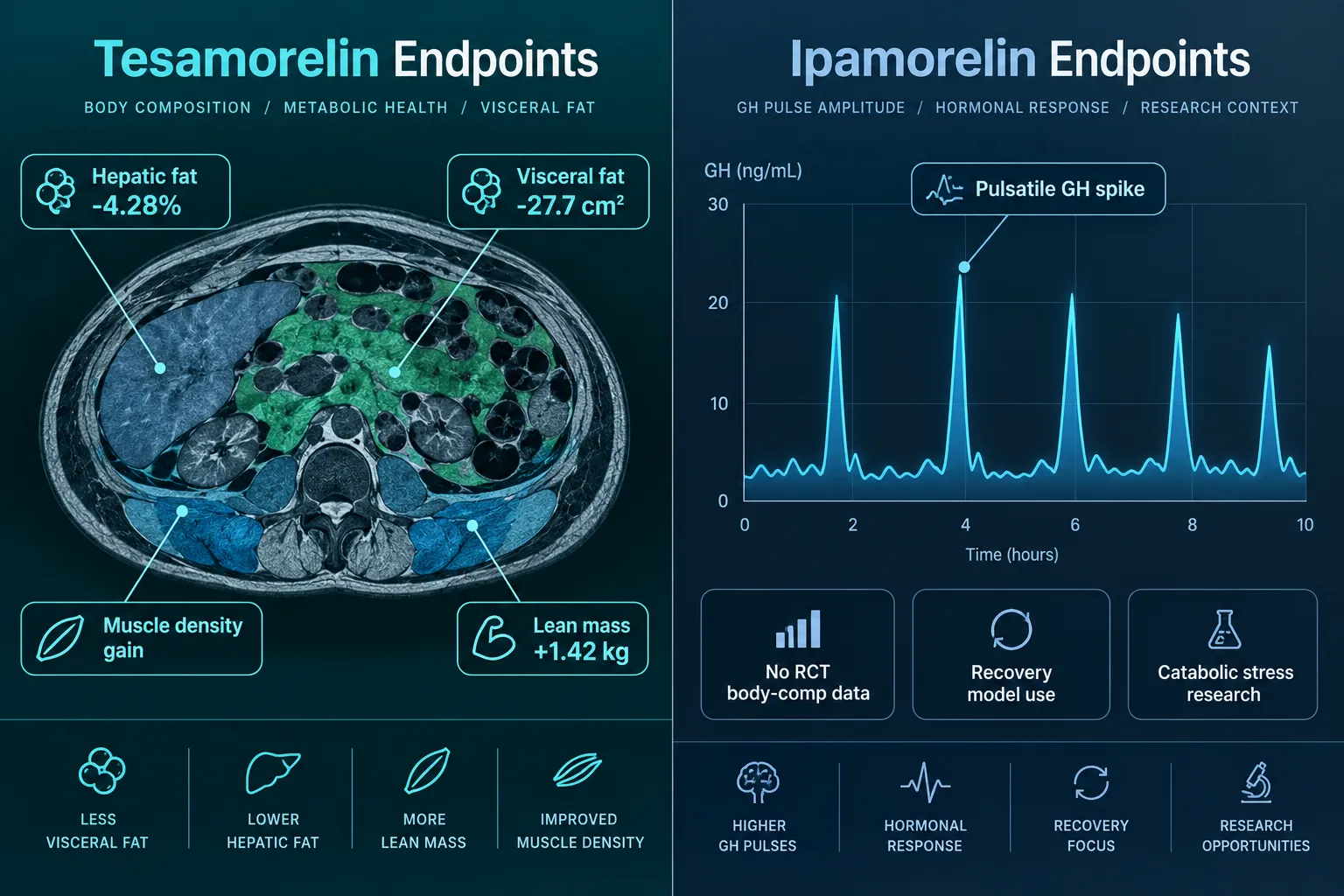
Tesamorelin vs Ipamorelin in Body Composition Research: Evidence Quality and Endpoint Data

The evidence gap between these two peptides is substantial and should anchor every research decision.

Tesamorelin's body-composition dataset is the strongest among all GH secretagogues. A 2026 meta-analysis of randomized controlled trials in HIV-associated lipodystrophy quantified the following mean effects:

  • Visceral adipose tissue: -27.71 cm²
  • Trunk fat: -1.18 kg
  • Lean body mass: +1.42 kg
  • Hepatic fat percentage: -4.28%
  • Waist circumference: -1.61 cm

Phase III trial data further show 15 to 18% reductions in visceral adipose tissue over 6 to 12 months, alongside increases in muscle density of approximately 1.6 to 4.9 Hounsfield units and muscle cross-sectional area gains of 0.4 to 1.1 cm². These findings establish tesa not as a general weight-loss agent, but as a targeted recomposition tool, reducing deep abdominal and hepatic fat while preserving or building lean mass. Researchers interested in the broader tesa benefits profile will find this dataset particularly relevant to experimental design.

Ipamorelin's body-composition dataset is, by contrast, essentially nonexistent at the human trial level. Current research classifications assign it a Tier D evidence rating for body-composition endpoints, meaning zero randomized controlled trials have measured lean mass, fat mass, or strength outcomes. Human data are limited to pharmacokinetic and pharmacodynamic studies and a discontinued Phase II trial for postoperative ileus.

The most recent in-vivo work highlighted in 2026 comes from a ferret chemotherapy model, where ipamorelin at 1 to 3 mg/kg reduced cisplatin-induced body-weight loss by approximately 24% during the delayed phase (48 to 72 hours). While this suggests a potential role in supporting weight maintenance during catabolic stress, these are preclinical findings that have not yet been translated into human recovery protocols.

"The trade-off is essentially clinical validation versus selectivity: tesa offers trial-based improvements in visceral fat and lean mass; ipamorelin offers the cleanest GH-axis selectivity with minimal downstream hormonal disruption."

For labs working with multi-peptide formulations, resources on Tesamorelin CJC-1295 Ipamorelin 12mg blend protocols provide additional context on how these agents are combined in research settings.

Tesamorelin vs Ipamorelin in Body Composition Research: Lab Modeling Strategies for Pulsatility, Lean Mass, and Recovery
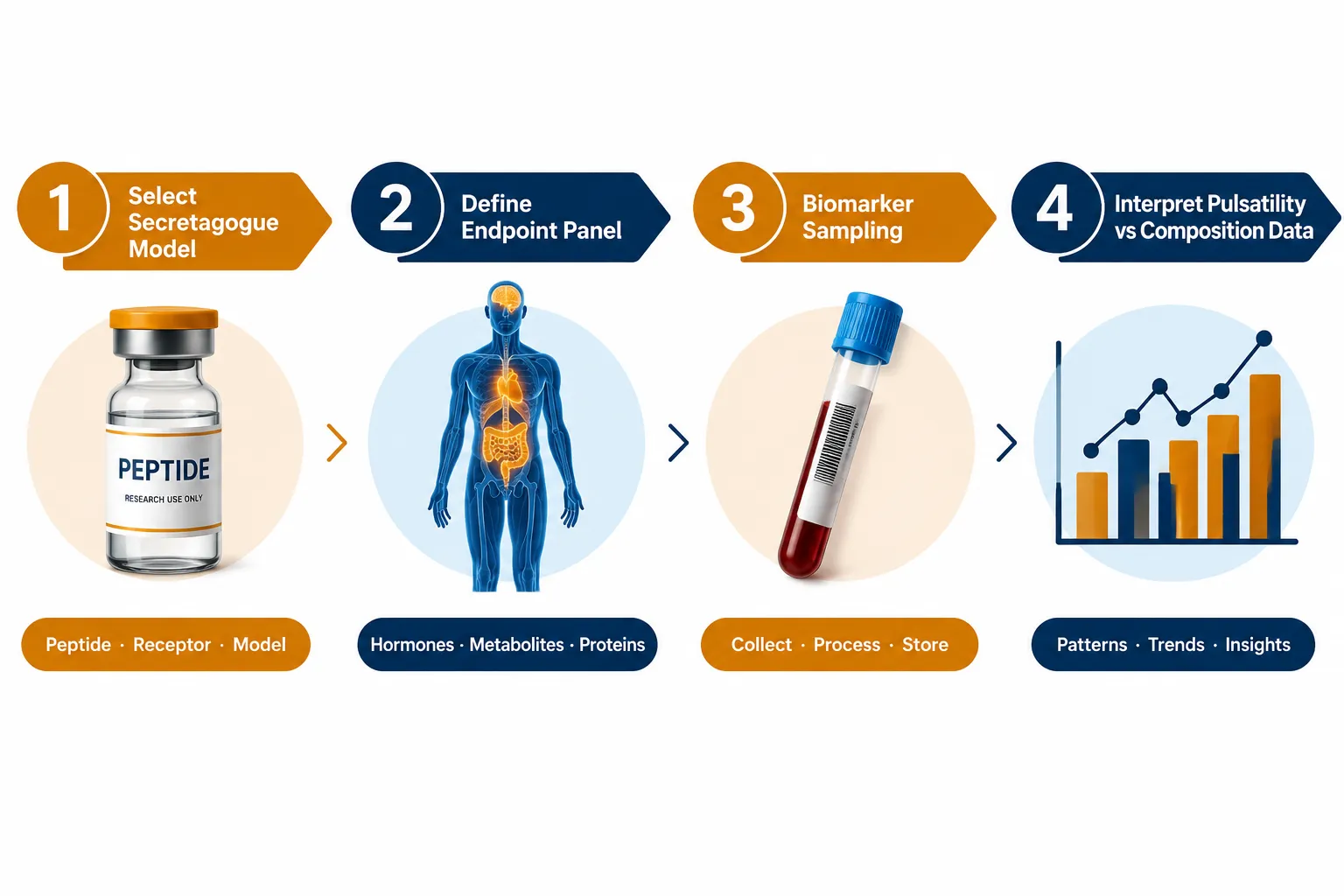
Tesamorelin vs Ipamorelin in Body Composition Research: Lab Modeling Strategies for Pulsatility, Lean Mass, and Recovery

Because no head-to-head clinical trial exists, labs must make deliberate modeling choices based on the endpoint they are investigating.

When to model with tesa:

  • Deep abdominal and visceral fat phenotypes
  • NAFLD-like hepatic steatosis endpoints
  • Recomposition paradigms requiring simultaneous fat loss and lean mass preservation
  • IGF-1 and hepatic fat biomarker panels
  • Studies combining GH secretagogues with GLP-1 analogs to preserve lean body mass during aggressive fat reduction

Researchers can consult the tesa dosage chart for reference ranges used in published protocols, and the tesa side effects profile, predominantly mild injection-site reactions and transient arthralgia, should be incorporated into study safety monitoring plans.

When to model with ipamorelin:

  • GH pulse amplitude and frequency studies
  • Sleep-related GH secretion models
  • Short-window GH-axis activation with minimal cortisol, prolactin, or ACTH interference
  • Post-operative or chemotherapy-induced catabolism models (preclinical)
  • Recovery kinetics after intense training stimuli

For labs exploring combined secretagogue approaches, the IPA Sermorelin stack research page offers relevant protocol context. Additionally, researchers interested in the pharmacokinetic differences between GHRH analogues should review CJC-1295 with and without DAC as a complementary reference for understanding how half-life modifications alter pulse modeling.

Biomarker panel recommendations by agent:

  • Tesamorelin studies: IGF-1, visceral adipose tissue by CT or MRI, hepatic fat fraction, trunk and limb fat by DEXA, muscle cross-sectional area, fasting glucose, lipid panel
  • Ipamorelin studies: GH pulse amplitude and frequency (serial sampling), IGF-1 (short-term), cortisol, prolactin, ACTH (to confirm selectivity), body weight in catabolic models

Conclusion

The research landscape in 2026 is clear on one point: tesa and ipamorelin are not interchangeable tools. Tesamorelin is the evidence leader for body-composition research, the only GHRH-pathway peptide with meta-analytic RCT data demonstrating measurable reductions in visceral fat, hepatic fat, and trunk fat alongside lean mass gains. Ipamorelin's value lies in its receptor selectivity and its ability to model physiological GH pulsatility without significant hormonal crosstalk, but its body-composition effects remain speculative pending controlled human trials.

Actionable next steps for research teams:

  1. Define your primary endpoint first, visceral fat reduction and lean mass require tesa; GH pulse modeling and recovery kinetics favor ipamorelin.
  2. Build biomarker panels that match the mechanism: IGF-1 and imaging endpoints for tesa; serial GH sampling and selectivity markers for ipamorelin.
  3. Review published tesa RCT data as the baseline reference for any GH secretagogue body-composition study.
  4. Treat ipamorelin findings as hypothesis-generating until human efficacy trials are completed.
  5. Ensure peptide purity and documentation before initiating any protocol, certificate-of-analysis verification is non-negotiable for reproducible results.
https://www.puretestedpeptides.com/wp-content/uploads/2026/09/tesa-vs-ipamorelin-in-body-composition-research-how-labs-model-gh-pulsati.webp 1024 1536 https://www.puretestedpeptides.com/wp-content/uploads/2026/01/buy-peptides-online.jpg 2026-09-06 13:03:542026-09-06 13:03:54Tesamorelin vs Ipamorelin in Body Composition Research: How Labs Model GH Pulsatility, Lean Mass, and Recovery With Different Secretagogues

Tag Archive for: visceral fat

Retatrutide and Cardiometabolic Markers: Blood Sugar, Blood Pressure, and Body Composition Changes in Trials

Retatrutide and Cardiometabolic Markers: Blood Sugar, Blood Pressure, and Body Composition Changes in Trials

June 15, 2026/0 Comments/by Pure Tested

{"cover":"Professional landscape format (1536×1024) hero image with bold text overlay: 'Retatrutide & Cardiometabolic Markers: Blood Sugar, Blood Pressure & Body Composition in Trials', modern sans-serif 70pt white text with dark semi-transparent background panel, centered upper-third composition. Background shows a clinical research laboratory with glowing metabolic panel displays, blood glucose monitors, blood pressure cuffs, and molecular structure overlays in deep navy blue and teal. High contrast, editorial magazine cover quality, 2026 research aesthetic.","content":["Detailed landscape format (1536×1024) scientific infographic illustration showing a triple-agonist receptor mechanism diagram with GLP-1, GIP, and glucagon receptor nodes connected by glowing pathways, surrounded by molecular peptide chain structures, set against a dark blue gradient background. Small labeled callouts highlight each receptor type. Clean, modern medical illustration style with teal, white, and gold color accents. No people, purely conceptual receptor biology visualization.","Wide landscape format (1536×1024) clinical data visualization showing side-by-side bar charts comparing HbA1c reduction percentages, systolic blood pressure drops, triglyceride levels, and waist circumference changes between retatrutide 12mg and placebo groups. Charts rendered in a clean white-background medical journal style with teal and navy bars, percentage annotations, and bold axis labels. A small inset shows a body silhouette with fat mass reduction highlighted in orange. Professional, data-rich, research-focused aesthetic.","Landscape format (1536×1024) split-scene image: left side shows a close-up of a gastrointestinal anatomy diagram with mild adverse event callouts (nausea, diarrhea icons in soft amber), right side shows a heart rate monitor waveform graph with a dose-escalation timeline overlay. Background is a soft clinical white with subtle blue grid lines. Bold text label reads 'Safety Profile: TRIUMPH-1 Trial Findings'. Modern medical infographic style, no people, professional editorial quality with high contrast navy and amber color scheme."]

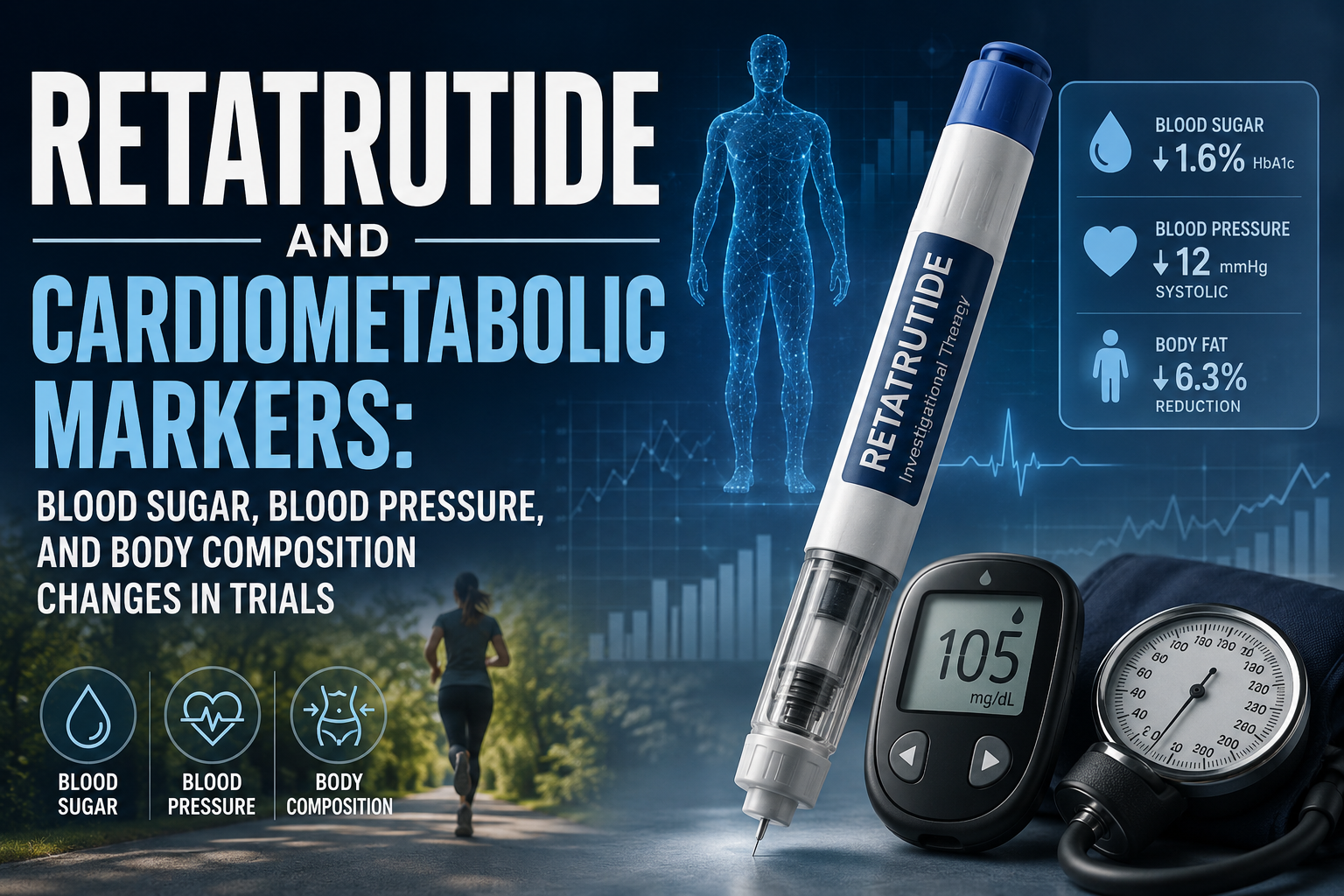
Professional landscape hero image () with : "Retatrutide and Cardiometabolic Markers: Blood Sugar, Blood Pressure, and Body

Most weight-loss headlines focus on the number on the scale. But for researchers and clinicians tracking Retatrutide and Cardiometabolic Markers: Blood Sugar, Blood Pressure, and Body Composition Changes in Trials, the more important story is what happens inside the body — to blood glucose, arterial pressure, fat distribution, and inflammatory markers — as weight falls away.

Retatrutide is Eli Lilly's triple agonist, targeting GLP-1, GIP, and glucagon receptors simultaneously. That triple action sets it apart from earlier single- or dual-receptor agents and helps explain why its cardiometabolic effects reach well beyond simple calorie restriction. For researchers comparing multi-endpoint trial data, the breadth of these metabolic improvements is striking.

Key Takeaways

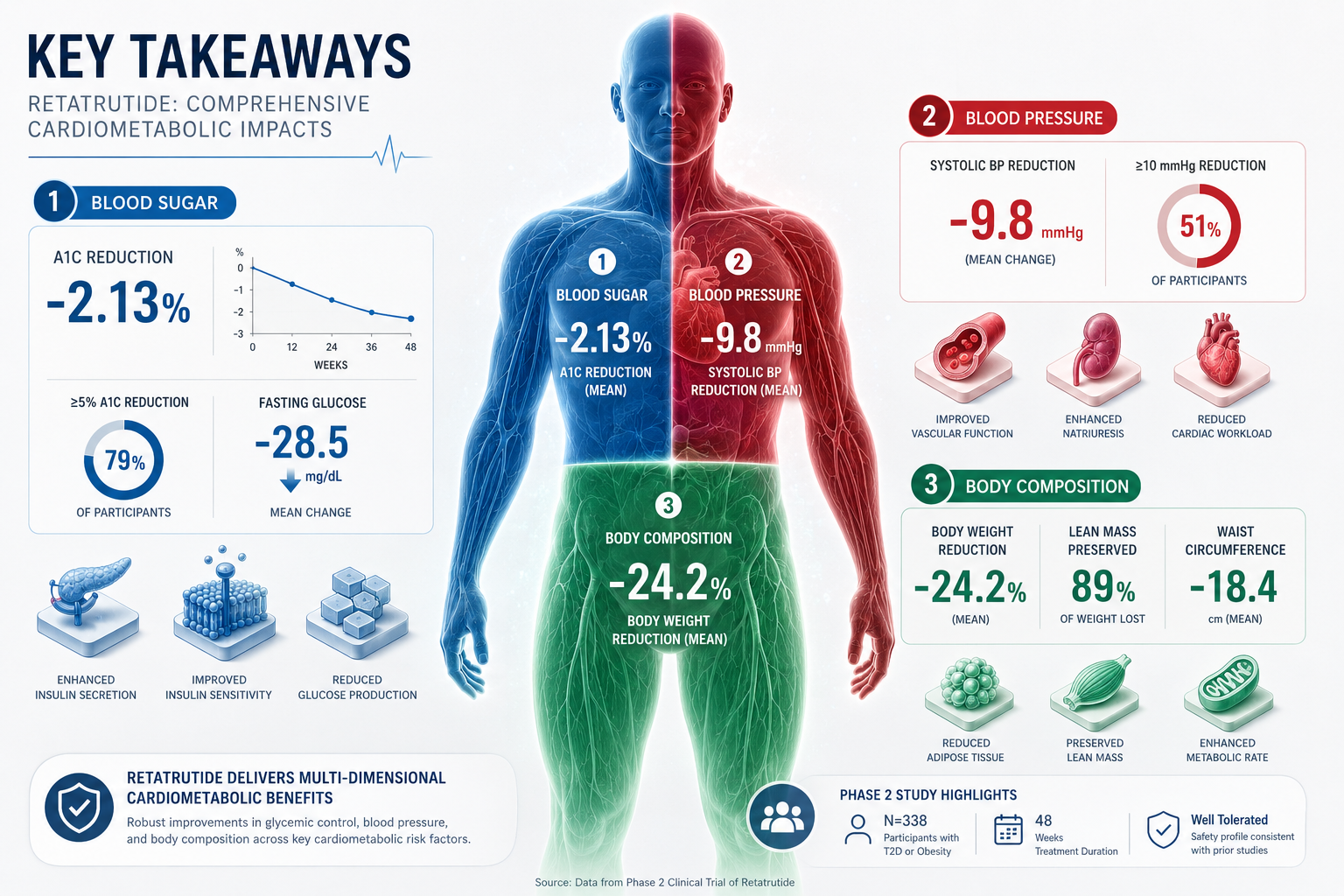
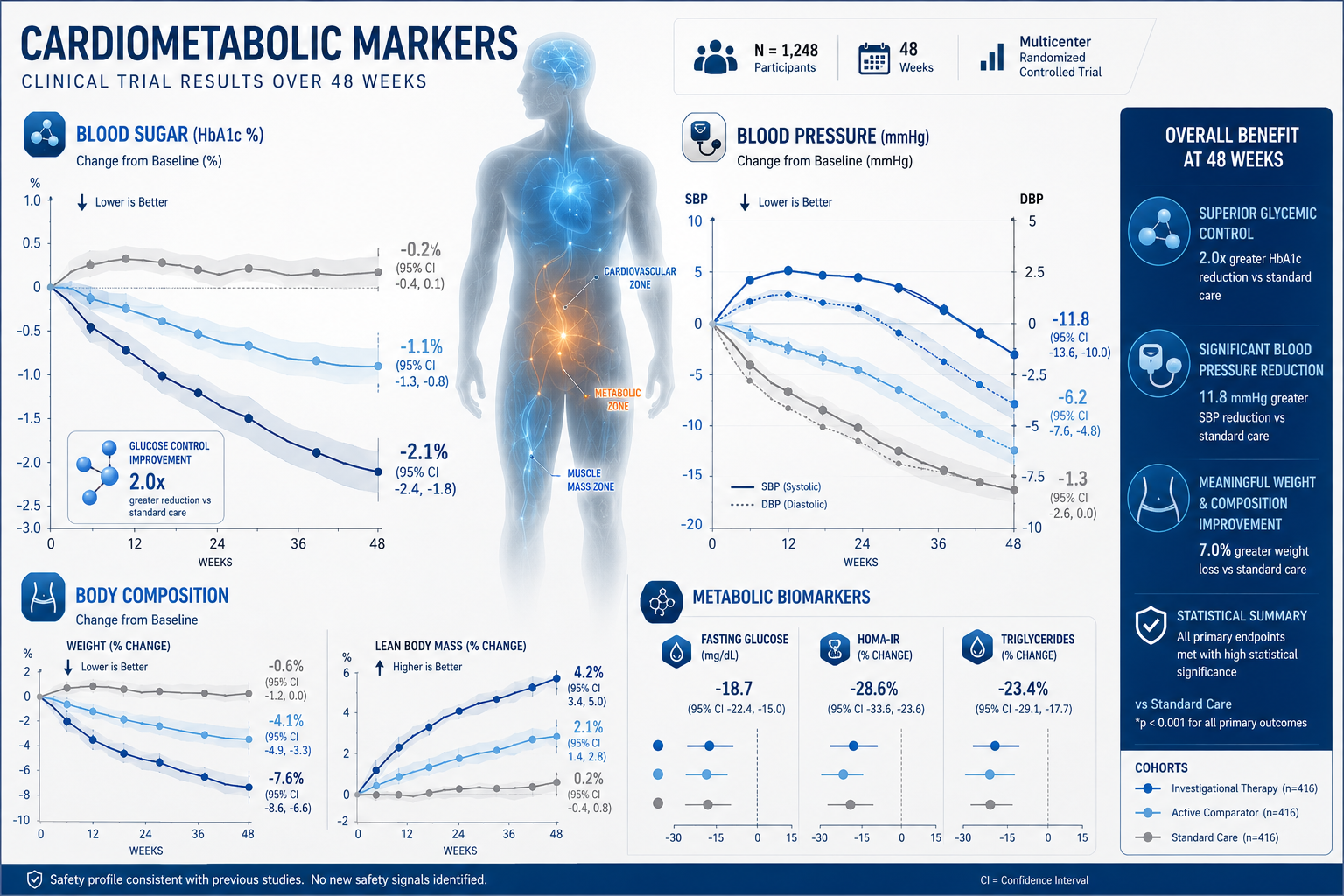
  • Retatrutide 12 mg produced an average weight loss of 28.3% over 80 weeks in the TRIUMPH-1 Phase 3 trial, with 65.3% of participants dropping below a BMI of 30.
  • HbA1c fell by a mean of 1.9 percentage points from a baseline of 7.9% in participants with type 2 diabetes over 40 weeks.
  • Systolic blood pressure, non-HDL cholesterol, triglycerides, and waist circumference all improved significantly.
  • High-sensitivity C-reactive protein (hsCRP) levels declined, pointing to reduced systemic inflammation.
  • Gastrointestinal side effects were the most common adverse events and were primarily mild to moderate.

Key Takeaways

How Retatrutide Works: The Triple-Agonist Mechanism

Understanding the cardiometabolic breadth of retatrutide starts with its receptor targets. GLP-1 receptor agonism slows gastric emptying and reduces appetite. GIP receptor activation enhances insulin secretion and may improve fat metabolism. Glucagon receptor stimulation increases energy expenditure and promotes hepatic fat clearance.

This combination creates a synergistic effect that no single-target agent can fully replicate. Researchers interested in GIP receptor biology and its metabolic importance will recognize why adding glucagon agonism on top of the GLP-1/GIP dual axis produces such wide-ranging metabolic changes. The result is not just weight loss — it is a coordinated shift in how the body manages glucose, lipids, and inflammation.

For context on how other peptide agents approach metabolic health from different angles, the GLP-1 peptide research and sourcing overview provides useful background on the broader GLP-1 class.

Retatrutide and Cardiometabolic Markers: Blood Sugar, Blood Pressure, and Body Composition Changes in Trials — Key Data Points

The Phase 3 TRIUMPH-1 trial and the TRANSCEND-T2D-1 trial together offer the most comprehensive picture of retatrutide's cardiometabolic profile to date.

Blood Sugar Control

In the TRANSCEND-T2D-1 trial, participants with type 2 diabetes receiving retatrutide 12 mg achieved a mean HbA1c reduction of 1.9% from a baseline of 7.9% over 40 weeks. That brings average HbA1c close to the 6.5% diagnostic threshold for diabetes — a clinically meaningful shift. Improvements in insulin resistance markers were also documented in metabolite profiling studies, suggesting the drug addresses glucose dysregulation at multiple levels.

Blood Pressure and Lipid Markers

Cardiometabolic Marker Direction of Change
Systolic blood pressure Decreased
Non-HDL cholesterol Decreased
Triglycerides Decreased
hsCRP (inflammation) Decreased
Waist circumference Decreased

Reductions in systolic blood pressure, non-HDL cholesterol, and triglycerides were all statistically significant. The drop in hsCRP is particularly notable because elevated hsCRP is an independent cardiovascular risk factor. Taken together, these changes suggest retatrutide may reduce cardiovascular risk beyond what weight loss alone would predict.

Body Composition

A substudy published in The Lancet Diabetes & Endocrinology confirmed that retatrutide produced significantly greater reductions in total body fat mass compared to both placebo and dulaglutide. Waist circumference reductions in TRIUMPH-1 reinforced this finding, indicating preferential loss of central adiposity — the fat depot most closely linked to metabolic and cardiovascular disease.

Researchers exploring related body composition peptides may find the AOD-9604 research overview and the tesa benefits research page relevant for comparison, particularly given tesa's established role in visceral fat reduction.

Body Composition

Safety Profile and Monitoring Considerations

No cardiometabolic analysis is complete without a clear-eyed look at safety. In TRIUMPH-1, the most common adverse events were gastrointestinal:

  • Nausea: 16.4% to 26.5% of participants
  • Diarrhea: 18.7% to 26.3%
  • Vomiting: 15.7% to 17.6%

These events were primarily mild to moderate and clustered during dose escalation. Discontinuation rates due to adverse events ranged from 2.2% to 5.1% across dosage groups — relatively low for a drug of this potency.

One monitoring point worth flagging: participants experienced dose-dependent increases in heart rate, peaking at 24 weeks before declining. No major cardiovascular events were attributed to this change, but it warrants ongoing surveillance in cardiovascular-risk populations.

Researchers comparing safety profiles across metabolic peptides may also find value in reviewing tesa side effects research and the SLU-PP-332 oral and subcutaneous evidence for broader context on metabolic agent tolerability.

Safety Profile and Monitoring Considerations

Retatrutide and Cardiometabolic Markers: Blood Sugar, Blood Pressure, and Body Composition Changes in Trials — What the Data Means for Research

The data from 2026 Phase 3 trials positions retatrutide as one of the most comprehensively studied metabolic agents in the current pipeline. Its ability to simultaneously improve glycemic control, lipid profiles, blood pressure, inflammatory markers, and body composition in a single treatment course is rare in clinical pharmacology.

For researchers building comparative datasets, the MOTS-c mitochondrial research themes and NAD scientific evidence pages offer complementary perspectives on metabolic regulation at the cellular level — useful for understanding how systemic agents like retatrutide interact with upstream energy metabolism pathways.

Conclusion

The cardiometabolic case for retatrutide extends well beyond its headline weight-loss numbers. Researchers and clinicians tracking multi-endpoint outcomes should focus on the full picture: meaningful HbA1c reductions, lower systolic blood pressure, improved lipid panels, reduced central adiposity, and declining inflammatory markers. These changes, documented across multiple Phase 3 trials in 2026, suggest retatrutide may reshape how metabolic disease is treated at a systemic level.

Actionable next steps for researchers:

  • Review the full TRIUMPH-1 and TRANSCEND-T2D-1 datasets for endpoint-specific effect sizes relevant to your study population.
  • Compare retatrutide's body composition data against dual-agonist benchmarks and GH-axis peptides to contextualize fat mass changes.
  • Monitor heart rate trends in any cardiovascular-risk subgroup analysis, given the dose-dependent pattern observed in trials.
  • Explore the comprehensive peptide catalog for research-grade agents relevant to metabolic and cardiometabolic study designs.
https://www.puretestedpeptides.com/wp-content/uploads/2026/06/Retatrutide-and-Cardiometabolic-Markers-Blood-Sugar-Blood-Pressure-and-Body-Composition-Changes-in-Trials.png 1024 1536 Pure Tested https://www.puretestedpeptides.com/wp-content/uploads/2026/01/buy-peptides-online.jpg Pure Tested2026-06-15 13:04:242026-07-20 15:03:01Retatrutide and Cardiometabolic Markers: Blood Sugar, Blood Pressure, and Body Composition Changes in Trials
×

Helpful Links

  • My account
  • Cart
  • Checkout
  • Refund and Returns Policy
  • Privacy Policy
  • SMS Privacy Policy
  • Login
  • My Account
  • Logout

USA Made Lab Tested Peptides

All products are sold for research, laboratory, or analytical purposes only, and are not for human consumption


Pure Tested Peptides is a chemical supplier. Pure Tested Peptides is not a compounding / chemical compounding facility as defined under 503A of the Federal Food, Drug, and Cosmetic act. Pure Tested Peptides is not an outsourcing facility as defined under 503B of the Federal Food, Drug, and Cosmetic act.

The statements made within this website have not been evaluated by the US Food and Drug Administration. The products we offer are not intended to diagnose, treat, cure or prevent any disease.

Human/Animal Consumption Prohibited. Laboratory/In-Vitro Experimental Use Only

Scroll to top Scroll to top Scroll to top