
TB-500: The Complete Research Guide to This Promising Regenerative Peptide
Imagine a single molecule that could potentially revolutionize how scientists approach tissue repair and regenerative medicine. TB-500, a synthetic peptide that mimics the naturally occurring protein Thymosin Beta-4, has captured the attention of researchers worldwide for its remarkable ability to promote cellular migration, reduce inflammation, and stimulate new blood vessel formation. This 43-amino acid sequence represents one of the most studied compounds in the field of regenerative research, offering insights into how our bodies naturally heal and recover from injury.
Key Takeaways
• TB-500 is a synthetic peptide that replicates Thymosin Beta-4, a protein naturally found in all human and animal cells that plays a crucial role in wound healing and tissue regeneration
• Research applications focus on tissue repair through mechanisms including cell migration facilitation, inflammation reduction, and angiogenesis stimulation
• Regulatory status remains research-only as TB-500 is not FDA-approved for human use and is prohibited by WADA in competitive sports since 2011
• Scientific studies show promise in animal models for cardiac repair, wound healing, and tissue regeneration, though human clinical data remains limited
• Storage and handling requirements include specific temperature controls and proper reconstitution protocols to maintain peptide stability and research integrity
Understanding TB-500: The Science Behind the Peptide
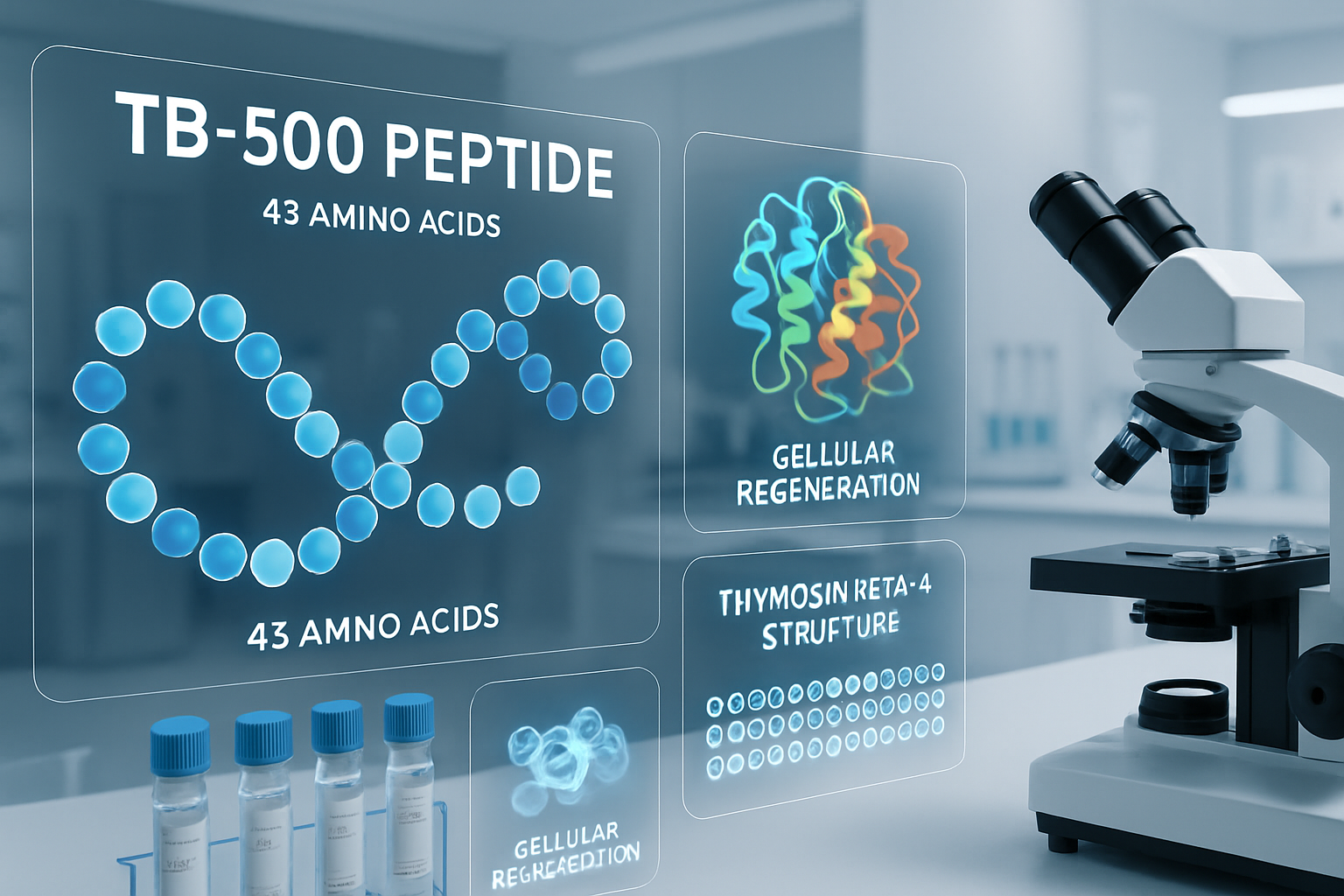
TB-500 represents a fascinating intersection of natural biology and synthetic chemistry. This research peptide consists of a carefully designed sequence of 43 amino acids that mirrors the active region of Thymosin Beta-4, a protein that exists naturally in virtually every cell of the human body. The significance of this molecular mimicry cannot be overstated – it allows researchers to study and potentially harness the body's own healing mechanisms in controlled laboratory settings.
The peptide's primary mechanism revolves around its ability to upregulate actin, a fundamental protein essential for cell structure and movement. This upregulation facilitates the migration of various cell types, including endothelial cells and keratinocytes, to sites where tissue repair is needed. When researchers observe TB-500 in action, they witness a coordinated cellular response that mirrors the body's natural healing cascade.
Molecular Structure and Function
The 43-amino acid structure of TB-500 is not arbitrary – each component serves a specific purpose in the peptide's biological activity. Research has shown that this particular sequence maintains the essential binding domains necessary for actin interaction while providing enhanced stability compared to the full-length Thymosin Beta-4 protein.
Scientists studying TB-500 have identified several key functional domains:
- Actin-binding region: Facilitates cellular cytoskeleton reorganization
- Cell migration sequences: Promotes directed cellular movement
- Anti-inflammatory segments: Contributes to reduced inflammatory responses
- Angiogenic factors: Supports new blood vessel formation
For researchers interested in exploring comprehensive peptide research applications, understanding these molecular interactions provides crucial context for experimental design and outcome interpretation.
TB-500 Research Applications and Mechanisms
Current scientific literature reveals multiple pathways through which TB-500 exerts its effects in laboratory settings. Research teams have documented its influence on cellular behavior, tissue architecture, and healing processes across various model systems. These findings contribute to our growing understanding of regenerative medicine principles and potential therapeutic applications.
Wound Healing and Tissue Repair
Laboratory studies consistently demonstrate TB-500's ability to accelerate wound closure in experimental models. The peptide appears to work through several complementary mechanisms:
Enhanced Cell Migration 🔬
Research shows that TB-500 significantly increases the rate at which repair cells move toward injury sites. This enhanced migration occurs through actin polymerization, which provides cells with the structural framework needed for directed movement.
Reduced Inflammatory Response
Studies indicate that TB-500 can modulate inflammatory cascades, potentially reducing excessive inflammation that might impede healing while preserving beneficial inflammatory signals necessary for proper tissue repair.
Angiogenesis Stimulation
Perhaps most notably, research demonstrates TB-500's ability to promote the formation of new blood vessels. This angiogenic effect ensures adequate nutrient and oxygen delivery to healing tissues, supporting sustained regenerative processes.
Cardiac Research Applications
One of the most promising areas of TB-500 research involves cardiac tissue repair. Animal studies have shown remarkable results when TB-500 is administered following experimentally induced myocardial infarction. Research teams have observed:
- Improved heart function metrics
- Reduced scar tissue formation
- Enhanced cardiac cell survival
- Increased capillary density in affected areas
These findings have significant implications for understanding how regenerative peptides might support cardiovascular health in research settings. For researchers exploring peptide combinations and synergistic effects, these cardiac studies provide valuable insights into potential multi-target approaches.
Comparative Research: TB-500 vs. Other Peptides
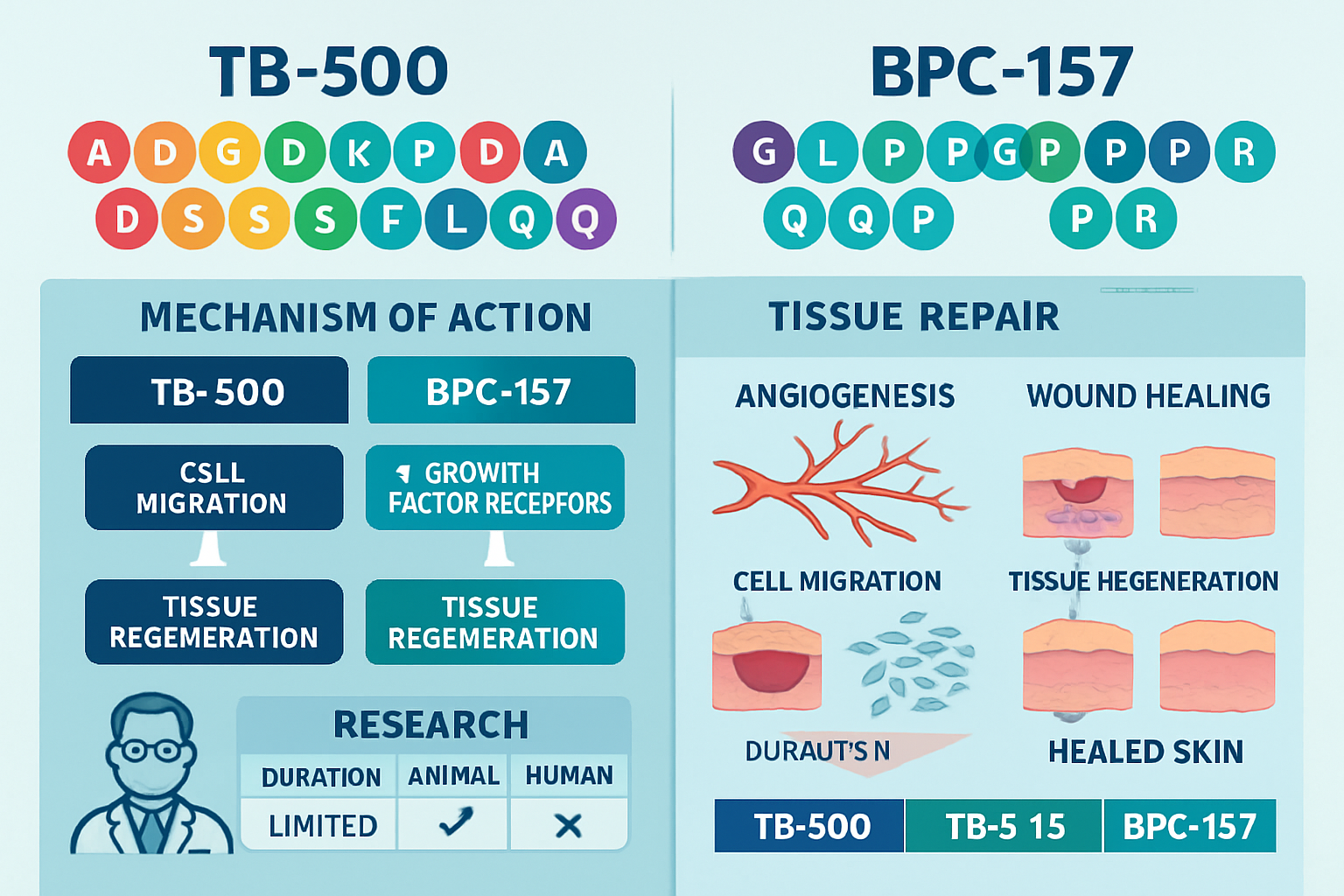
Understanding how TB-500 compares to other research peptides helps scientists make informed decisions about experimental protocols. While TB-500 focuses primarily on actin upregulation and cell migration, other peptides like BPC-157 work through different mechanisms involving growth factor modulation and gastric protective pathways.
| Research Focus | TB-500 | BPC-157 |
|---|---|---|
| Primary Mechanism | Actin upregulation | Growth factor modulation |
| Cell Migration | ✅ Strong | ⚡ Moderate |
| Angiogenesis | ✅ Documented | ✅ Documented |
| Anti-inflammatory | ⚡ Moderate | ✅ Strong |
| Gastric Protection | ❌ Limited | ✅ Specialized |
This comparison highlights why many research protocols incorporate multiple peptide approaches to address different aspects of tissue repair and regeneration.
<!DOCTYPE html>
<html lang="en">
<head>
    <meta charset="UTF-8">
    <meta name="viewport" content="width=device-width, initial-scale=1.0">
    <title>TB-500 Research Dosage Calculator</title>
    <style>
        .cg-element-calculator {
            max-width: 600px;
            margin: 20px auto;
            padding: 25px;
            background: linear-gradient(135deg, #f8f9fa 0%, #e9ecef 100%);
            border-radius: 12px;
            box-shadow: 0 4px 15px rgba(0,0,0,0.1);
            font-family: 'Segoe UI', Tahoma, Geneva, Verdana, sans-serif;
        }
        .cg-element-title {
            text-align: center;
            color: #2c3e50;
            margin-bottom: 25px;
            font-size: 24px;
            font-weight: 600;
        }
        .cg-element-input-group {
            margin-bottom: 20px;
            background: white;
            padding: 15px;
            border-radius: 8px;
            border-left: 4px solid #3498db;
        }
        .cg-element-label {
            display: block;
            margin-bottom: 8px;
            font-weight: 500;
            color: #34495e;
        }
        .cg-element-input {
            width: 100%;
            padding: 10px;
            border: 2px solid #bdc3c7;
            border-radius: 6px;
            font-size: 16px;
            transition: border-color 0.3s;
        }
        .cg-element-input:focus {
            outline: none;
            border-color: #3498db;
        }
        .cg-element-button {
            width: 100%;
            padding: 12px;
            background: linear-gradient(135deg, #3498db 0%, #2980b9 100%);
            color: white;
            border: none;
            border-radius: 6px;
            font-size: 16px;
            font-weight: 600;
            cursor: pointer;
            transition: transform 0.2s;
        }
        .cg-element-button:hover {
            transform: translateY(-2px);
        }
        .cg-element-results {
            margin-top: 20px;
            padding: 20px;
            background: white;
            border-radius: 8px;
            border-left: 4px solid #27ae60;
            display: none;
        }
        .cg-element-result-item {
            margin-bottom: 15px;
            padding: 10px;
            background: #f8f9fa;
            border-radius: 6px;
        }
        .cg-element-disclaimer {
            margin-top: 15px;
            padding: 15px;
            background: #fff3cd;
            border: 1px solid #ffeaa7;
            border-radius: 6px;
            font-size: 14px;
            color: #856404;
        }
        @media (max-width: 768px) {
            .cg-element-calculator {
                margin: 10px;
                padding: 15px;
            }
        }
    </style>
</head>
<body>
    <div class="cg-element-calculator">
        <h3 class="cg-element-title">🧬 TB-500 Research Dosage Calculator</h3>

        <div class="cg-element-input-group">
            <label class="cg-element-label">Peptide Concentration (mg/vial):</label>
            <input type="number" id="concentration" class="cg-element-input" value="10" min="1" max="50">
        </div>

        <div class="cg-element-input-group">
            <label class="cg-element-label">Bacteriostatic Water Volume (mL):</label>
            <input type="number" id="waterVolume" class="cg-element-input" value="2" min="0.5" max="10" step="0.1">
        </div>

        <div class="cg-element-input-group">
            <label class="cg-element-label">Target Research Dose (mg):</label>
            <input type="number" id="targetDose" class="cg-element-input" value="2" min="0.1" max="10" step="0.1">
        </div>

        <button class="cg-element-button" onclick="calculateDosage()">Calculate Research Parameters</button>

        <div id="results" class="cg-element-results">
            <div class="cg-element-result-item">
                <strong>Solution Concentration:</strong> <span id="solutionConc"></span> mg/mL
            </div>
            <div class="cg-element-result-item">
                <strong>Volume Required per Dose:</strong> <span id="volumePerDose"></span> mL
            </div>
            <div class="cg-element-result-item">
                <strong>Total Available Doses:</strong> <span id="totalDoses"></span> doses
            </div>
            <div class="cg-element-result-item">
                <strong>Research Duration (2x/week):</strong> <span id="researchDuration"></span> weeks
            </div>
        </div>

        <div class="cg-element-disclaimer">
            ⚠️ <strong>Research Use Only:</strong> This calculator is designed for laboratory research planning only. TB-500 is not approved for human use. Always follow institutional protocols and safety guidelines.
        </div>
    </div>

    <script>
        function calculateDosage() {
            const concentration = parseFloat(document.getElementById('concentration').value);
            const waterVolume = parseFloat(document.getElementById('waterVolume').value);
            const targetDose = parseFloat(document.getElementById('targetDose').value);

            if (!concentration || !waterVolume || !targetDose) {
                alert('Please fill in all fields with valid numbers.');
                return;
            }

            // Calculate solution concentration (mg/mL)
            const solutionConc = concentration / waterVolume;

            // Calculate volume needed per dose (mL)
            const volumePerDose = targetDose / solutionConc;

            // Calculate total available doses
            const totalDoses = Math.floor(waterVolume / volumePerDose);

            // Calculate research duration (assuming 2x per week)
            const researchDuration = Math.floor(totalDoses / 2);

            // Display results
            document.getElementById('solutionConc').textContent = solutionConc.toFixed(2);
            document.getElementById('volumePerDose').textContent = volumePerDose.toFixed(3);
            document.getElementById('totalDoses').textContent = totalDoses;
            document.getElementById('researchDuration').textContent = researchDuration;

            document.getElementById('results').style.display = 'block';
        }

        // Allow Enter key to trigger calculation
        document.addEventListener('keypress', function(event) {
            if (event.key === 'Enter') {
                calculateDosage();
            }
        });
    </script>
</body>
</html>
Research Protocols and Laboratory Considerations
Conducting meaningful research with TB-500 requires careful attention to experimental design, storage conditions, and handling protocols. Research teams worldwide have developed standardized approaches that maximize the peptide's stability while ensuring reproducible results across different laboratory settings.
Storage and Stability Requirements
Proper storage represents a critical factor in TB-500 research success. The peptide's molecular structure requires specific environmental conditions to maintain its biological activity over extended periods:
Lyophilized Powder Storage ❄️
- Temperature: -20°C to -80°C
- Humidity: <5% relative humidity
- Duration: Up to 24 months when properly stored
- Protection: Light-resistant containers essential
Reconstituted Solution Storage
- Temperature: 2-8°C (refrigerated)
- Duration: 7-14 days maximum
- Containers: Sterile, non-reactive materials
- Aliquoting: Recommended to minimize freeze-thaw cycles
Research teams emphasizing best practices for storing research peptides consistently report better experimental outcomes and more reliable data when following these storage protocols.
Reconstitution Protocols
The process of reconstituting lyophilized TB-500 requires precision and sterile technique. Standard laboratory protocols typically involve:
- Sterile Water Preparation: Use bacteriostatic water for injection or sterile water for research applications
- Volume Calculations: Determine appropriate concentration based on experimental requirements
- Gentle Mixing: Avoid vigorous shaking that could damage peptide structure
- pH Considerations: Monitor solution pH to ensure optimal peptide stability
Many research facilities find that comprehensive peptide preparation guides help standardize protocols across different research teams and projects.
Quality Control and Verification
Ensuring TB-500 quality throughout the research process involves multiple verification steps:
Certificate of Analysis (COA) Review
Every research-grade TB-500 batch should include comprehensive analytical data demonstrating purity, identity, and potency. Key parameters include:
- HPLC purity analysis (typically >98%)
- Mass spectrometry confirmation
- Endotoxin testing results
- Water content analysis
Visual Inspection Protocols
Research teams should establish routine visual inspection procedures for both lyophilized and reconstituted peptides, noting any changes in appearance, color, or clarity that might indicate degradation.
For researchers seeking verified, high-quality TB-500, Pure Tested Peptides TB-500 10mg provides comprehensive COA documentation and quality assurance protocols.
Regulatory Status and Safety Considerations
Understanding the regulatory landscape surrounding TB-500 is essential for any research institution or laboratory considering its use in experimental protocols. The peptide's classification as a research chemical rather than an approved therapeutic agent carries important implications for how it can be legally obtained, stored, and utilized in scientific studies.
Current Regulatory Framework
FDA Classification
TB-500 currently lacks FDA approval for human therapeutic use, placing it firmly in the research chemical category. This classification means:
- ✅ Legal for laboratory research purposes
- ✅ Available for in vitro studies
- ✅ Permitted for animal research models
- ❌ Not approved for human consumption
- ❌ Cannot be marketed as a dietary supplement
WADA Prohibition Status
Since 2011, the World Anti-Doping Agency has classified TB-500 and Thymosin Beta-4 as S0 substances (non-approved substances) on their Prohibited List. This prohibition reflects concerns about:
- Potential performance enhancement effects
- Lack of comprehensive safety data
- Unfair competitive advantages
- Unknown long-term health implications
International Legal Considerations
The legal status of TB-500 varies significantly across different jurisdictions. Research institutions must verify local regulations before importing or using the peptide in their studies:
United States: Legal for research; prohibited for human consumption
European Union: Varies by member state; generally research-only
Canada: Research chemical classification
Australia: Prescription-only medicine classification
United Kingdom: Research use permitted under appropriate licenses
Laboratory Safety Protocols
Research teams working with TB-500 should implement comprehensive safety protocols that address both the peptide's biological activity and its regulatory status. Essential safety considerations include:
Personal Protective Equipment (PPE)
- Laboratory coats and protective clothing
- Safety glasses or face shields
- Nitrile or latex gloves (powder-free)
- Closed-toe shoes with chemical resistance
Handling Procedures
- Work in designated laboratory areas only
- Use appropriate fume hoods for powder handling
- Implement spill response procedures
- Maintain detailed usage logs and documentation
Research facilities exploring comprehensive laboratory safety protocols often find that standardized procedures improve both safety outcomes and research quality.
Future Research Directions and Scientific Potential
The scientific community's interest in TB-500 continues to expand as researchers uncover new potential applications and mechanisms of action. Current trends in peptide research suggest several promising directions that could significantly advance our understanding of regenerative medicine and tissue repair processes.
Emerging Research Areas
Neurological Applications 🧠
Recent studies have begun exploring TB-500's potential effects on neural tissue repair and neuroprotection. Preliminary research suggests the peptide might influence:
- Neuronal migration patterns
- Synaptic plasticity mechanisms
- Blood-brain barrier integrity
- Neuroinflammatory responses
Aging and Longevity Research
Scientists are investigating whether TB-500's regenerative properties might have implications for age-related tissue decline. Research questions include:
- Can TB-500 counteract age-related cellular dysfunction?
- How does the peptide interact with cellular senescence pathways?
- What role might it play in maintaining tissue homeostasis over time?
Combination Therapy Studies
The future of peptide research increasingly focuses on synergistic approaches. Current investigations examine TB-500 in combination with:
- Growth hormone releasing peptides
- Anti-inflammatory compounds
- Stem cell therapies
- Traditional regenerative medicine approaches
Researchers interested in exploring multi-peptide research protocols are finding that combination approaches often yield more comprehensive results than single-agent studies.
Technological Advances in Peptide Research
Delivery System Innovation
Scientists are developing novel delivery methods that could enhance TB-500's effectiveness and reduce administration frequency:
- Sustained-release formulations
- Targeted delivery systems
- Transdermal application methods
- Inhalation-based delivery
Analytical Method Development
Advanced analytical techniques are providing deeper insights into TB-500's mechanisms:
- Real-time cellular imaging
- Proteomics analysis
- Metabolomics studies
- Advanced biomarker identification
Clinical Translation Potential
While TB-500 remains in the research phase, the scientific community recognizes its potential for eventual clinical development. Key milestones for potential therapeutic advancement include:
- Comprehensive Safety Studies: Large-scale animal safety and toxicology studies
- Mechanism Clarification: Detailed understanding of all biological pathways affected
- Dosing Optimization: Identification of optimal therapeutic windows
- Biomarker Development: Reliable methods for monitoring treatment effects
- Regulatory Pathway Planning: Strategic approaches for eventual FDA review
For research institutions planning long-term studies, understanding adaptive capacity and peptide research mapping provides valuable insights into sustainable research program development.
"The future of regenerative medicine lies not just in understanding individual compounds like TB-500, but in comprehensively mapping how these peptides interact with our body's natural healing systems." – Leading Peptide Research Consortium
Conclusion
TB-500 represents a compelling frontier in regenerative medicine research, offering scientists a powerful tool for investigating the fundamental mechanisms of tissue repair and cellular regeneration. Through its unique ability to upregulate actin and facilitate cellular migration, this 43-amino acid peptide has demonstrated remarkable potential across diverse research applications, from wound healing acceleration to cardiac tissue repair.
The scientific evidence supporting TB-500's regenerative properties continues to grow, with studies consistently demonstrating its ability to reduce inflammation, stimulate angiogenesis, and promote coordinated cellular responses that mirror the body's natural healing processes. However, researchers must navigate the important regulatory considerations that classify TB-500 as a research chemical, ensuring all studies comply with appropriate safety protocols and legal frameworks.
For research institutions considering TB-500 studies, success depends on implementing proper storage protocols, maintaining rigorous quality control standards, and designing experiments that account for the peptide's specific mechanisms of action. The future of TB-500 research appears particularly promising in combination therapy approaches and novel delivery system development.
Next Steps for Researchers:
✅ Review institutional protocols for peptide research compliance and safety requirements
✅ Establish proper storage facilities with appropriate temperature and humidity controls
✅ Develop quality control procedures including COA verification and visual inspection protocols
✅ Consider combination approaches with other research peptides for synergistic studies
✅ Plan long-term research programs that account for evolving regulatory landscapes
As the field of regenerative medicine continues to advance, TB-500 research will likely play an increasingly important role in developing our understanding of how peptide-based interventions can support natural healing processes and tissue regeneration.
References
[1] Goldstein, A. L., et al. (2005). Thymosin beta4: a multi-functional regenerative peptide. Basic properties and clinical applications. Expert Opinion on Biological Therapy, 5(1), 37-53.
[2] Smart, N., et al. (2007). Thymosin beta4 induces adult epicardial progenitor mobilization and neovascularization. Nature, 445(7124), 177-182.
[3] Sosne, G., et al. (2010). Thymosin beta 4 promotes corneal wound healing and decreases inflammation in vivo following alkali injury. Experimental Eye Research, 90(4), 478-485.
[4] World Anti-Doping Agency. (2025). Prohibited List International Standard. Montreal: WADA.
[5] Crockford, D., et al. (2010). Thymosin beta4: structure, function, and biological properties supporting current and future clinical applications. Annals of the New York Academy of Sciences, 1194, 179-189.
[6] Philp, D., et al. (2003). Thymosin beta4 increases hair growth by activation of hair follicle stem cells. FASEB Journal, 18(2), 385-387.
SEO Meta Title: TB-500 Research Guide: Complete 2025 Scientific Overview
SEO Meta Description: Comprehensive TB-500 research guide covering mechanisms, applications, protocols, and regulatory status. Essential information for peptide researchers in 2025.