
The Importance of Purity Analysis in Peptide Science: How to Choose Your Core Peptide Supplier Online
Imagine investing your time and resources into a powerful new health regimen, only to find out the key ingredient you're relying on is contaminated or ineffective. This scenario is a real concern in the world of peptide science, where the purity of your core peptides is not just a preference, but an absolute necessity. In the rapidly evolving landscape of health and wellness, peptides have emerged as powerful tools for various applications, from research to personal well-being. However, their efficacy and safety are directly tied to their purity. This article will delve deep into why purity testing is paramount, focusing on essential methods like HPLC peptide testing and the crucial role of COA testing peptides. We will also provide an expert guide on how to confidently choose your core peptide supplier online in 2025, ensuring you always receive high-quality, verified products through rigorous peptide testing.
Key Takeaways
- Purity is Paramount: The effectiveness and safety of peptides are entirely dependent on their purity, as even minor contaminants can significantly alter their biological activity or introduce adverse effects.
- Understanding COAs: Always demand and carefully review a Certificate of Analysis (COA) for any peptide purchase. This document should detail the purity testing results, including HPLC peptide testing data, verifying the product's identity and purity.
- Risks of Impurities: Impure peptides can lead to unreliable research results, unexpected side effects, and wasted investment, undermining the potential benefits of peptide science.
- Choosing a Reputable Supplier: Select online suppliers who openly provide third-party verified COA testing peptides, demonstrate transparency in their sourcing and manufacturing, and have a strong reputation for consistent quality in their peptide testing protocols.
- Beyond Purity: While purity is critical, also consider factors like solubility, stability, and proper storage, which contribute to a peptide's overall quality and effectiveness.
The Foundation of Efficacy: Why Purity in Peptides Matters More Than Ever
[[PLACEHOLDER_FOR_CONTENT_IMAGE_1]]
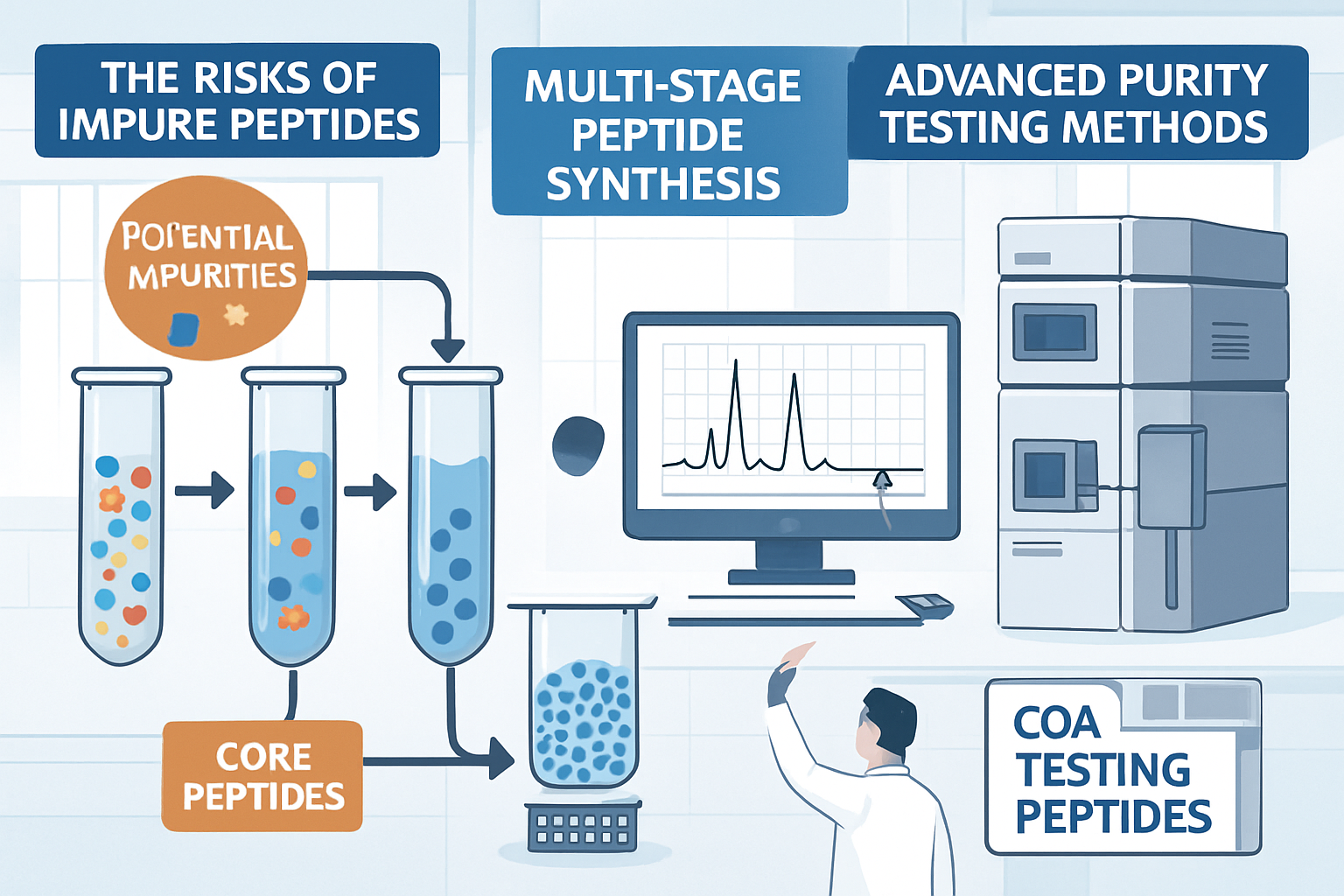
In the exciting realm of peptide science, these short chains of amino acids are revolutionizing approaches to health, fitness, and even anti-aging. From targeted therapies to performance enhancement, peptides offer a world of possibilities. Yet, the remarkable specificity of peptides, which allows them to bind to particular receptors and modulate biological processes, also makes them incredibly sensitive to impurities. When we talk about peptide testing, specifically purity testing, we're discussing the very foundation upon which a peptide's intended action is built. An impure peptide can be likened to a key that doesn't quite fit its lock—it might look similar, but it won't perform its function correctly, or worse, it could jam the mechanism entirely. This fundamental truth underscores why consumers, researchers, and practitioners must prioritize suppliers who commit to stringent COA testing peptides and robust quality control.
The Dangers of Impure Peptides
What exactly happens when peptides are not pure? The consequences can range from mild inconveniences to significant health risks and invalid scientific findings. Here's a breakdown:
- Altered Biological Activity: Even trace amounts of truncated sequences, side products, or residual starting materials can compete with the desired peptide for receptor binding, leading to reduced efficacy or unexpected, off-target effects. This means the peptide simply won't work as expected, leading to disappointment and wasted resources. For instance, if a peptide designed to aid muscle recovery contains impurities that interfere with its primary mechanism, the user might not experience the intended benefits.
- Toxicity and Adverse Reactions: Some impurities can be toxic or allergenic. Manufacturing byproducts, heavy metals, or residual solvents used during synthesis are serious concerns. In 2025, with increasing awareness of supplement safety, the risk of adverse reactions from unverified products is unacceptable. Ensuring rigorous peptide testing protocols are in place helps mitigate these dangers.
- Inconsistent Results in Research: For researchers, impure peptides are a nightmare. They can lead to irreproducible data, skewed experimental outcomes, and ultimately, wasted time and funding. The integrity of scientific discovery hinges on the purity of its reagents. This is why reliable HPLC peptide testing is non-negotiable for any serious scientific endeavor.
- Financial Waste: Investing in an expensive peptide only to find it's impure and ineffective is a significant financial loss. This is particularly true for individuals seeking specific health benefits or researchers conducting long-term studies. Choosing a supplier who prioritizes purity testing ensures your investment is well-placed. You can always verify these claims by examining their certificate of analysis at https://www.puretestedpeptides.com/coa/.
What Constitutes "Purity" in Peptides?
When discussing purity testing in peptide science, it's important to understand what we're looking for. A peptide is considered "pure" when the vast majority of its sample consists of the intended peptide sequence, correctly folded and free from:
- Deletion Sequences: Peptides where one or more amino acids are missing from the intended sequence.
- Truncated Sequences: Peptides that are shorter than the desired length, often due to incomplete synthesis.
- Byproducts and Isomers: Unwanted side reactions during synthesis can create structurally similar but functionally different molecules.
- Residual Solvents: Chemicals used in the synthesis and purification process that were not fully removed.
- Heavy Metals: Contaminants from reagents or equipment.
- Endotoxins: Bacterial components that can cause inflammatory responses.
The Role of Analytical Techniques: HPLC and Mass Spectrometry
To ensure the highest standards, peptide testing employs sophisticated analytical techniques. The gold standard for assessing peptide purity is HPLC peptide testing, often complemented by Mass Spectrometry (MS).
High-Performance Liquid Chromatography (HPLC)
HPLC peptide testing separates compounds based on their chemical properties as they pass through a specialized column. For peptides, reversed-phase HPLC (RP-HPLC) is typically used.
- How it Works: A sample is injected into the HPLC system, where it's pushed through a column packed with a stationary phase. Different components in the sample interact differently with the stationary phase and the mobile phase (solvent), causing them to elute (come off the column) at different times.
- What it Shows: The output is a chromatogram, a graph showing peaks corresponding to different compounds. A single, sharp, symmetrical peak at the expected retention time indicates high purity. Multiple peaks or broad peaks suggest impurities. The area under the main peak provides a quantitative measure of the target peptide's percentage purity. When examining a COA testing peptides document, the HPLC chromatogram is one of the first things to look for.
Mass Spectrometry (MS)
Mass Spectrometry is another critical tool in peptide testing. While HPLC tells you how pure a sample is, MS tells you what compounds are present and confirms the identity of the main peak observed in the HPLC.
- How it Works: MS measures the mass-to-charge ratio of ions in a sample. Each peptide has a unique molecular weight, and MS can precisely determine this, even identifying subtle variations.
- What it Shows: For peptides, MS confirms the correct molecular weight, ensuring the amino acid sequence is as intended. It can detect deletions, truncations, and modifications that might not be fully resolved by HPLC alone. Combined with HPLC peptide testing, MS provides a comprehensive picture of a peptide's identity and purity. Reliable suppliers will always include MS data alongside their HPLC results on their COA testing peptides. Always check their documentation, like the examples found at https://www.puretestedpeptides.com/coa/.
Choosing Your Core Peptide Supplier Online in 2025: A Guide to Trust and Transparency
[[PLACEHOLDER_FOR_CONTENT_IMAGE_2]]
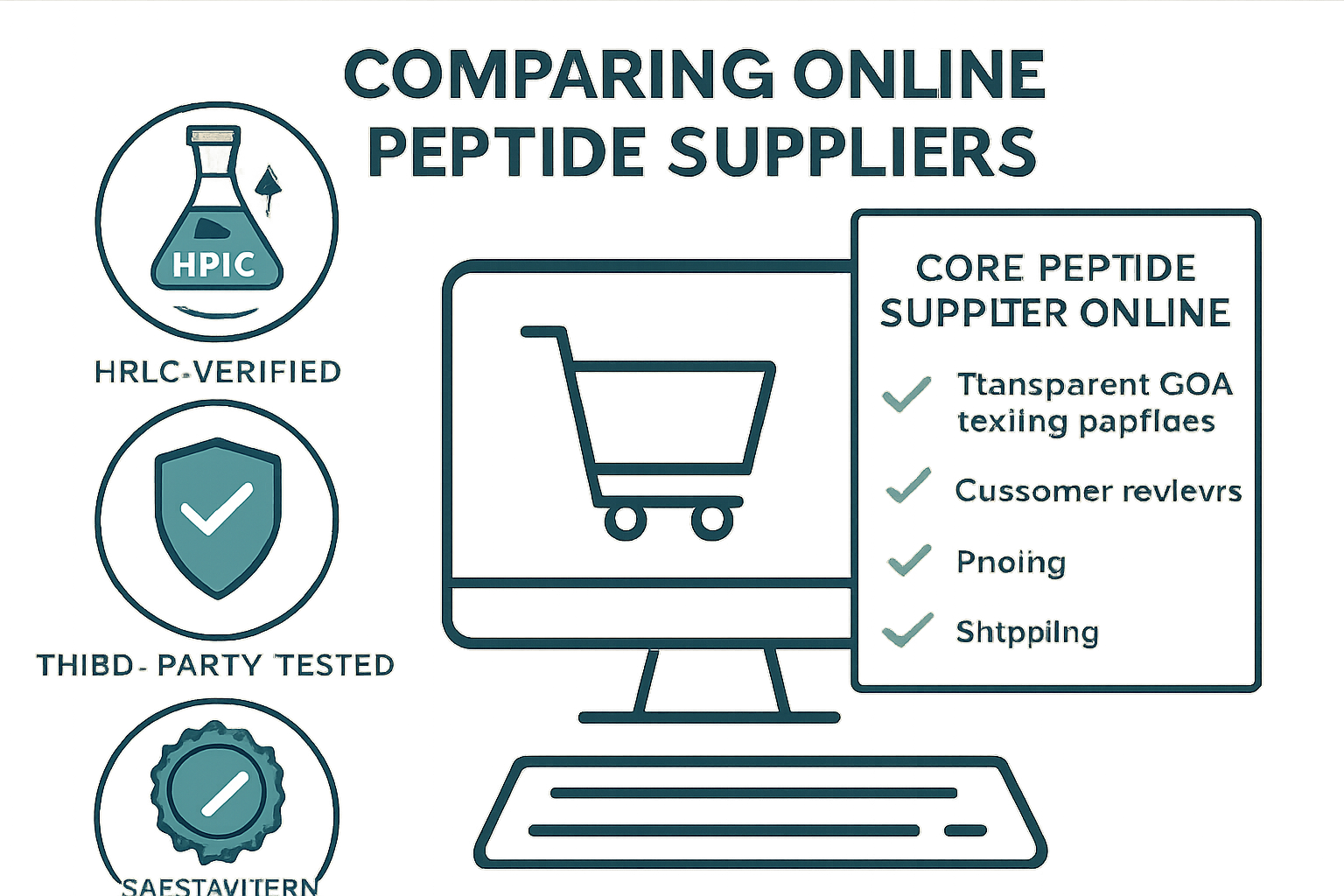
The internet has democratized access to specialized compounds, including peptides, but it has also created a landscape where quality can vary wildly. For anyone serious about peptide science and ensuring the effectiveness and safety of their chosen compounds, knowing how to select a reputable core peptide supplier online in 2025 is paramount. This decision goes beyond price; it's about trust, transparency, and verifiable quality. The ultimate goal is to find a supplier who consistently delivers core peptides that have undergone rigorous peptide testing, including HPLC peptide testing and comprehensive COA testing peptides.
The Non-Negotiables: What to Look For
When evaluating potential online peptide suppliers, prioritize transparency and verifiable quality checks. Here's a checklist of non-negotiable attributes:
-
Availability of Third-Party COAs (Certificate of Analysis): This is the single most important factor. A COA is a document from an independent, accredited laboratory that verifies the purity and identity of a peptide batch.
- What to Look For: The COA should clearly state the peptide's name, batch number, date of analysis, method used (e.g., RP-HPLC, MS), and most importantly, the purity percentage. It should also include an HPLC chromatogram and MS data.
- Red Flags: Suppliers who don't provide COAs, provide only in-house COAs (which lack independent verification), or provide outdated/generic COAs are to be avoided. Always ensure the batch number on the COA matches the product you receive. You can review examples of transparent COAs at https://www.puretestedpeptides.com/coa/.
-
Third-Party Lab Verification: This builds on the COA point. It's not enough to just have a COA; it must come from an independent, third-party laboratory. In-house testing, while valuable, can introduce bias. Third-party testing ensures an unbiased assessment of purity, confirming the supplier's commitment to quality peptide testing.
-
Transparency in Sourcing and Manufacturing: A reputable supplier will be open about where their peptides are synthesized and their quality control processes. While proprietary details might be kept secret, they should be able to articulate their commitment to cGMP (current Good Manufacturing Practices) or similar quality standards, especially for their core peptides.
-
Established Reputation and Reviews: Look for suppliers with a strong track record. Search for independent reviews on forums, social media, and trusted review sites. Pay attention to comments regarding product quality, customer service, and consistency of purity testing claims. While not foolproof, a consistent pattern of positive feedback is a good sign.
-
Clear Communication and Customer Support: A reliable supplier will have responsive customer service that can answer your questions about peptide testing, COAs, storage, and usage. Their website should be informative and easy to navigate.
-
Secure and Professional Website: A legitimate business will invest in a professional, secure website (look for HTTPS in the URL). This indicates a level of seriousness and commitment to their operation.
-
Proper Storage and Packaging: Peptides are sensitive to heat, light, and moisture. A good supplier will ship products in appropriate packaging (e.g., insulated, with cold packs if necessary) and provide clear storage instructions. This ensures the integrity of the core peptides from their lab to your door, preserving the efficacy verified by HPLC peptide testing.
The Due Diligence Process: Your Step-by-Step Guide
Here’s a practical guide to performing due diligence when selecting an online peptide supplier in 2025:
-
Start with Research:
- Use search engines to find suppliers specializing in core peptides.
- Read reviews and testimonials from various sources, not just those on the supplier's website.
- Look for mentions of peptide testing, purity testing, and COA testing peptides.
-
Examine Their Website Closely:
- Can you easily find information about their quality control?
- Do they explain their peptide testing methods, particularly HPLC peptide testing?
- Are COAs readily available for viewing, ideally linked directly to product pages? (Check out https://www.puretestedpeptides.com/coa/ for an example of good practice).
-
Request COAs for Specific Products/Batches:
- If COAs aren't immediately visible, contact customer support and request them for the specific peptide and batch number you are interested in.
- Verify that the COA is recent (within 6-12 months), from a third-party lab, and matches the product description.
- Scrutinize the purity percentage—aim for 98% or higher for most research-grade peptides.
-
Cross-Reference Information:
- Compare the purity claims and prices across several reputable suppliers. Be wary of prices that seem too good to be true, as this often indicates lower purity or lack of proper peptide testing.
- Check if the third-party lab mentioned on the COA is legitimate and accredited.
-
Consider Their Return Policy:
- A confident supplier will offer a reasonable return policy for products that do not meet their advertised purity or are damaged during shipping.
-
Start Small (If Possible):
- If you're unsure about a new supplier, consider making a smaller initial purchase to evaluate their product quality, shipping, and customer service before committing to larger orders of core peptides.
Beyond Purity: Other Considerations for Peptide Quality
While purity testing is paramount, other factors contribute to the overall quality and effectiveness of peptides:
- Solubility: Some peptides can be difficult to dissolve. Reputable suppliers often provide reconstitution guidelines or pre-formulated solutions.
- Stability: Peptides are fragile molecules. Proper storage (e.g., lyophilized powder, refrigerated) is crucial for maintaining their integrity. A good supplier will educate you on this.
- Contaminant Testing: Beyond just the peptide itself, testing for endotoxins, heavy metals, and residual solvents is important, especially for peptides intended for in vivo research or direct human application (though most online suppliers cater to research use only). This goes hand-in-hand with robust COA testing peptides.
- Batch Consistency: A reliable supplier will demonstrate consistent purity across different batches of the same peptide. This indicates a well-controlled synthesis and peptide testing process.
By diligently following these guidelines, individuals can navigate the complex online marketplace with confidence in 2025, ensuring they procure high-quality, verified core peptides that meet the stringent demands of peptide science and personal well-being. Always remember that due diligence on your part, especially reviewing COA testing peptides and understanding HPLC peptide testing, is the best defense against substandard products.
Conclusion
The power and promise of peptide science are undeniable, but unlocking their full potential absolutely hinges on the purity of the compounds used. As we move further into 2025, the importance of robust purity testing, including meticulous HPLC peptide testing and transparent COA testing peptides, cannot be overstated. From ensuring the validity of scientific research to safeguarding personal health, the quality of core peptides is the foundational pillar.
Choosing your core peptide supplier online requires a proactive and informed approach. Do not settle for anything less than complete transparency and verifiable quality. Always demand third-party Certificates of Analysis that detail the purity and identity of the product batch. Educate yourself on what these documents mean, scrutinize the data, and align yourself with suppliers who demonstrate an unwavering commitment to these gold standards of peptide testing. By prioritizing purity, you are not just making a purchase; you are making an investment in reliability, efficacy, and ultimately, success in your endeavors with peptides.
Actionable Next Steps:
- Always Request a COA: Before any purchase, ask for and thoroughly review the Certificate of Analysis for the specific batch of peptide you intend to buy. Ensure it's from a third-party lab.
- Verify Purity: Look for a purity percentage of 98% or higher as demonstrated by HPLC peptide testing on the COA.
- Confirm Identity: Check the Mass Spectrometry data on the COA to confirm the peptide's molecular weight matches its intended identity.
- Choose Reputable Suppliers: Prioritize companies with a strong reputation for quality control, transparent practices, and excellent customer service in the peptide science community.
- Bookmark Resources: Keep valuable resources like https://www.puretestedpeptides.com/coa/ handy for comparing and understanding what a comprehensive COA should look like.
SEO Meta Requirements:
Meta Title: Peptide Purity: Choosing Your Core Supplier Online in 2025
Meta Description: Master peptide testing & purity analysis. Learn how to choose a core peptide supplier online in 2025, understand COA testing peptides, and HPLC peptide testing for superior results.