
Unlocking the Potential: Exploring Vesilute Peptide Benefits in 2026 Research

Have you ever wondered about the cutting-edge compounds that scientists are investigating for cellular health and systemic regulation? In the dynamic world of peptide research, a fascinating compound drawing significant attention is the vesilute peptide. As an expert SEO content strategist and senior editor, I'm here to guide you through the exciting landscape of vesilute peptide benefits, delving into its proposed mechanisms and the areas of research where it holds immense promise. In 2026, the scientific community continues to uncover the intricate roles of bioregulator peptides, and vesilute stands out as a subject of intense study, particularly concerning its potential influence on various physiological processes.
Key Takeaways
- Vesilute Peptide as a Bioregulator: Vesilute is a synthetic peptide bioregulator derived from natural sources, primarily associated with prostatic function research.
- Targeted Action: Research suggests vesilute peptide may exert a selective, regulatory effect on specific cell types, aiming to restore balance.
- Potential Research Areas: Studies are exploring its influence on inflammation, cellular regeneration, and overall tissue health, particularly in the male reproductive system.
- Part of a Broader Field: Vesilute is one of many bioregulator peptides being studied for their potential to support various organ systems.
- Focus on Scientific Investigation: Current understanding is based on laboratory science and preclinical findings, emphasizing its role as a research compound.
Understanding Vesilute Peptide: A Deeper Dive into Bioregulation
The term "peptide bioregulator" might sound complex, but at its core, it refers to small chains of amino acids that can influence gene expression and protein synthesis, thereby regulating cellular function. Vesilute peptide falls into this category, acting as a synthetic peptide designed to mimic the natural regulatory processes within the body. Specifically, vesilute has been researched for its potential role in the male genitourinary system, primarily focusing on the prostate gland. The study of these specialized peptides offers a glimpse into how targeted molecular interventions might support cellular health.
Bioregulator peptides like vesilute are thought to work by binding to specific receptors on target cells, influencing their activity without causing overstimulation. This precise, homeostatic action is what makes them subjects of intense scientific interest. Researchers are keenly observing how vesilute peptide benefits might extend to maintaining cellular balance and fostering optimal function in relevant tissues. For those engaged in advanced biological research, understanding the intricacies of these compounds is paramount.
The development and study of compounds such as vesilute represent a significant area within peptide science. Researchers are continuously exploring new avenues to understand how these molecules interact with biological systems. To delve deeper into the broader world of peptide research, I recommend exploring resources on Pure Tested Peptides, a valuable platform for insights into various research-grade peptides.
The Science Behind Vesilute: How It (Potentially) Works
The proposed mechanism of action for vesilute peptide revolves around its ability to interact with cells of the prostate gland. In preclinical studies, vesilute has been observed to influence cellular processes that are crucial for maintaining tissue health. This includes modulating inflammatory responses and potentially supporting the regenerative capacities of cells. The idea is that the vesilute bioregulator can help restore a more youthful or optimal state of cellular function, especially in conditions where cellular communication or activity might be compromised.
Imagine your body's cells as a finely tuned orchestra. Sometimes, certain sections might go out of tune or play too loudly, leading to dysfunction. Peptide bioregulators are like a subtle conductor, gently guiding specific sections back into harmony. In the case of vesilute, the focus is on supporting the cellular "orchestra" within the prostate. This precise action is what sets bioregulator peptides apart from more broad-spectrum compounds.
Scientific investigations often involve detailed studies of cellular cultures and animal models to observe these effects. For those conducting such research, ensuring the purity and quality of your compounds is critical. For high-quality research peptides, consider sources like Pure Tested Peptides, which emphasizes rigorous testing standards for their offerings.
Investigating Vesilute Peptide Benefits in Research
The vesilute peptide benefits under investigation are multifaceted, primarily centered around its potential to support the health and function of the prostate gland. Let's break down some of the key areas where research is being conducted:
- Cellular Regeneration and Repair: Preclinical studies suggest that vesilute may play a role in promoting the natural repair mechanisms of prostate cells. This could involve influencing cell turnover and maintaining tissue integrity.
- Modulation of Inflammatory Processes: Inflammation is a common factor in many cellular dysfunctions. Research indicates that vesilute might help to regulate inflammatory pathways within the prostate, contributing to a healthier cellular environment.
- Support for Normal Tissue Function: By influencing cellular signaling, vesilute peptide is hypothesized to help maintain the normal physiological functions of the prostate gland, which are vital for overall male health.
- Antioxidant Activity: Some studies imply that vesilute could possess antioxidant properties, helping to protect cells from oxidative stress, a known contributor to cellular aging and damage.
It's important to reiterate that these are areas of ongoing scientific inquiry, and the findings are primarily from laboratory settings and preclinical models. For those interested in the wider array of peptides being studied for cellular maintenance, exploring concepts such as cellular maintenance with peptide tools can provide further context.
Table 1: Potential Research Focus Areas for Vesilute Peptide
| Research Area | Proposed Mechanism | Why it's Important |
|---|---|---|
| Cellular Regeneration | Influences cell division and repair processes. | Critical for maintaining tissue integrity and replacing damaged cells. |
| Inflammation Modulation | Regulates inflammatory cytokines and pathways. | Chronic inflammation can lead to cellular damage and dysfunction. |
| Normal Tissue Function | Supports optimal cellular communication and metabolic activity. | Essential for the prostate to perform its physiological roles efficiently. |
| Oxidative Stress Reduction | Acts as an antioxidant, neutralizing free radicals. | Oxidative stress contributes to cellular aging and various health challenges. |
For researchers looking to buy vesilute or other research peptides, it is crucial to select suppliers that adhere to strict quality control measures. Understanding the purity and handling of these compounds is vital for accurate research outcomes.
Vesilute in the Context of Other Bioregulators
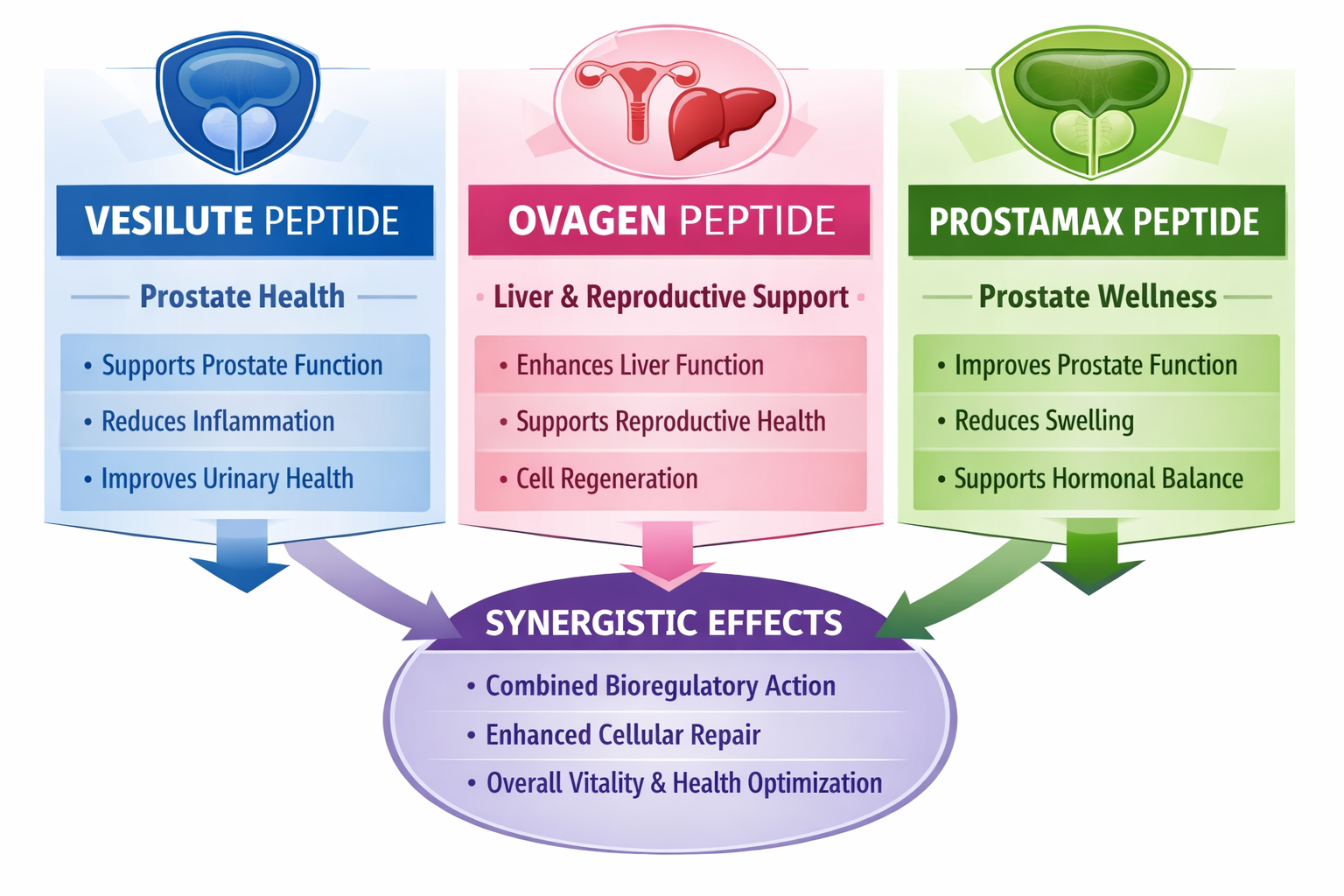
Vesilute is not an isolated compound; it belongs to a larger family of peptide bioregulators. While vesilute specifically targets the prostate, other bioregulators are designed to influence different organs or systems. For instance, researchers also investigate peptides like ovagen, which focuses on the reproductive system, or prostamax, which also targets the prostate but may have distinct mechanisms or applications. Each bioregulator is unique in its sequence and its intended biological target.
The scientific community recognizes the specificity of these peptides as one of their most intriguing features. This targeted action reduces the likelihood of widespread systemic effects, allowing for more precise research into their potential benefits. The collective body of work on bioregulators helps us understand the intricate network of molecular signals that govern our biology.
For those interested in exploring a wider range of such compounds, you can find a comprehensive list of all peptides for sale on various research-focused platforms. Understanding the specific applications of each peptide is a cornerstone of effective research design. When considering vesilute peptide dosage in research, careful calibration is essential to observe its subtle bioregulatory effects without unintended outcomes.
Investigating Vesilute Peptide Benefits: Research Methodology and Findings
In 2026, the scientific methodology for studying peptides like vesilute has become increasingly sophisticated. Researchers employ a combination of in vitro (cell culture) and in vivo (animal model) studies to elucidate the vesilute peptide benefits. These studies typically involve administering the peptide and then observing changes at the cellular, tissue, and systemic levels. Key biomarkers, gene expression profiles, and histological examinations are common tools used to assess the peptide's impact.
For instance, in vitro studies might involve exposing prostate cell lines to varying concentrations of vesilute peptide to observe its effects on cell proliferation, apoptosis (programmed cell death), or the production of inflammatory mediators. In vivo studies, often using rodent models, allow researchers to study the peptide's effects within a living organism, observing changes in tissue structure, function, and overall health parameters. This dual approach provides a comprehensive understanding of how the vesilute peptide bioregulator might function.
It's important to remember that findings from preclinical studies do not directly translate to human applications. However, they provide the foundational knowledge necessary to determine if a compound warrants further investigation in clinical trials. For those exploring research peptides, it's crucial to understand the best practices for storing research peptides to ensure the integrity and efficacy of your samples. Proper handling directly impacts the reliability of your experimental results.
Preclinical Findings on Vesilute and Prostate Health
Several preclinical studies have explored the impact of vesilute on prostate health. These investigations often focus on models simulating conditions that affect the prostate, such as inflammation or age-related cellular changes. The observed vesilute peptide benefits in these studies include:
- Reduction in Inflammatory Markers: Some studies have shown a decrease in markers associated with inflammation within prostate tissue after vesilute administration. This suggests a potential anti-inflammatory effect, which could be beneficial for maintaining cellular health.
- Improvement in Cellular Morphology: Researchers have noted improvements in the structural integrity and organization of prostate cells in treated models, indicating a restorative or protective effect.
- Modulation of Cell Cycle: There's evidence that vesilute may help regulate the cell cycle, promoting a healthy balance between cell growth and cell death, which is vital for preventing abnormal tissue development.
- Enhanced Antioxidant Defense: As mentioned earlier, some research points to vesilute's ability to boost the body's natural antioxidant defenses within the prostate, protecting against damage from free radicals.
These findings, while promising, are still part of an evolving body of knowledge. The scientific community is actively working to unravel the precise molecular pathways through which vesilute exerts these effects. When discussing compounds like vesilute peptide dosage in research settings, it's always tailored to the specific experimental model and desired outcomes.
Comparative Research: Vesilute vs. Other Peptides
To fully appreciate the specific vesilute peptide benefits, it's helpful to compare its research profile with other bioregulator peptides.
-
Vesilute vs. Ovagen: While vesilute primarily targets the prostate, ovagen peptide is a bioregulator derived from the ovaries and is studied for its potential effects on female reproductive system health. Research on ovagen peptide benefits often focuses on ovarian function, hormone balance, and cellular regeneration within the female reproductive organs. Understanding the distinct target organs and mechanisms helps researchers select the most appropriate peptide for their studies. For more information on this, explore topics related to ovagen peptide benefits.
-
Vesilute vs. Prostamax: Prostamax peptide is another bioregulator peptide specifically designed for prostate health. While both vesilute and prostamax target the prostate, their exact amino acid sequences and proposed mechanisms of action may differ. Comparative studies are essential to fully understand the unique advantages of each. Researchers often explore prostamax peptide benefits in the context of different prostate-related research models, looking for distinct effects on inflammation, cellular proliferation, or tissue repair.
This comparative approach allows scientists to build a more nuanced understanding of peptide bioregulators and their specific roles. Each peptide offers a unique tool in the research toolkit for investigating cellular and organ system regulation. The subtle differences in their structures can lead to very distinct biological outcomes, making precision in research paramount.
“The specificity of peptide bioregulators like vesilute is a marvel of biological engineering. Their ability to subtly influence cellular behavior without broad systemic disruption offers a promising avenue for understanding and supporting targeted organ health in advanced research.”
Klow Blend: A Synergistic Approach in Peptide Research
While individual peptides like vesilute are studied for their specific benefits, researchers are also exploring the power of peptide blends. These blends combine several peptides, often with complementary mechanisms, to achieve a more comprehensive or synergistic effect. One such example is the Klow Blend, which typically includes BPC-157, TB-500, KPV, and GHK-Cu. This blend is researched for its potential in broad-spectrum cellular support, including anti-inflammatory, regenerative, and skin health benefits.
The philosophy behind such blends is that the combined action of multiple peptides might be greater than the sum of their individual parts. For instance, while you might be investigating vesilute peptide benefits for prostate health, a blend could be researched for more general wellness or recovery. These blends represent an exciting frontier in peptide research, offering diverse avenues for exploration.
For those interested in exploring the research behind combined peptide approaches, the Klow Blend (BPC-157, TB-500, KPV, GHK-Cu Blend) is a prime example of a compound attracting considerable scientific interest. Understanding how different peptides interact and potentially amplify each other's effects is a key area of ongoing investigation in 2026. This includes considerations of how individual peptides like vesilute might be integrated into broader research protocols focused on systemic health.
Looking Ahead: The Future of Vesilute Peptide Research
The field of peptide bioregulators is constantly evolving. In 2026, research into vesilute peptide benefits is expected to continue expanding, with a focus on several key areas:
- Elucidating Deeper Mechanisms: Scientists will continue to use advanced molecular techniques to pinpoint the exact cellular pathways and genetic expressions influenced by vesilute. This will lead to a more profound understanding of how this peptide works at a fundamental level.
- Exploring Synergistic Effects: Research may increasingly investigate how vesilute interacts with other peptides or compounds. Could combining vesilute with other bioregulators or established therapies enhance its effects or broaden its applications in research models?
- Developing New Delivery Methods: While current research often involves specific administration routes, future studies might explore novel delivery systems to optimize the peptide's bioavailability and targeted action.
- Long-Term Observational Studies: As with any research compound, understanding the long-term effects of vesilute in preclinical models is crucial. Extended observational studies will provide valuable data on its sustained impact on cellular health and function.
The journey of any research compound from initial discovery to a comprehensive understanding is a long and meticulous one. Vesilute peptide is currently traversing this path, with each new study adding another piece to the puzzle of its potential. Researchers and those interested in cutting-edge science should stay updated on the latest findings. When you buy vesilute for research, you're contributing to this vital exploration.
Quality and Purity in Peptide Research
For any researcher, the integrity of the compounds used is paramount. When investigating vesilute peptide benefits or any other peptide, the purity, potency, and correct sequencing of the peptide are non-negotiable. Contaminated or incorrectly synthesized peptides can lead to unreliable or misleading research results, wasting valuable time and resources.
This is why selecting a reputable supplier for research-grade peptides is so critical. A trustworthy supplier will provide:
- Third-Party Lab Testing: Independent verification of purity and identity.
- Clear Product Specifications: Detailed information on the peptide's composition.
- Proper Storage and Handling Instructions: Ensuring the stability of the compound.
Companies like Pure Tested Peptides prioritize these standards, offering a range of peptides that meet rigorous quality controls. This commitment to quality ensures that researchers can confidently pursue their investigations into vesilute, ovagen, prostamax, and other fascinating peptides. The careful consideration of quality also extends to understanding specific nuances, such as vesilut for sale versus other forms of the peptide, and verifying its scientific pedigree.
Conclusion
The exploration of vesilute peptide benefits represents a compelling frontier in peptide science as we move through 2026. As a synthetic peptide bioregulator, vesilute holds significant promise in research for its targeted potential to support prostate health, modulate inflammation, and aid in cellular regeneration within preclinical models. While the findings are primarily rooted in laboratory and animal studies, they paint a picture of a compound with specific, regulatory actions that could offer a nuanced approach to understanding cellular and tissue wellness.
It's clear that peptides like vesilute, ovagen, and prostamax each offer unique avenues for scientific inquiry, with specific target organs and proposed mechanisms. The continued investigation into these bioregulators, both individually and in synergistic blends like the Klow Blend, is crucial for advancing our knowledge of molecular biology and potential therapeutic strategies. For peptide shoppers and health enthusiasts keen on staying at the forefront of scientific discovery, following the ongoing research into vesilute peptide and its counterparts is an exciting endeavor.
As the scientific community delves deeper, emphasizing rigorous research methodology and the highest standards of peptide purity, we can expect to uncover even more about the intricate ways these remarkable molecules influence biological systems. Remember, the journey from laboratory observation to comprehensive understanding is long and depends on continuous, high-quality research.
Actionable Next Steps:
- Stay Informed: Follow reputable scientific journals and research platforms for the latest updates on vesilute peptide and other bioregulators.
- Explore Related Research: Delve into studies on other organ-specific peptides like ovagen peptide or prostamax peptide to broaden your understanding of peptide bioregulation.
- Prioritize Quality for Research: If you are conducting research, always source your peptides from suppliers committed to third-party testing and transparent quality control, such as Pure Tested Peptides.
- Understand Research Limitations: Always remember that preclinical findings are foundational and do not directly equate to human clinical outcomes without further extensive research.
SEO Meta Title: Vesilute Peptide Benefits: 2026 Research Insights
SEO Meta Description: Explore vesilute peptide benefits in 2026 research. Learn about this bioregulator's potential for prostate health, cellular regulation, and its role in peptide science.