

Fewer than 5% of peptide combination studies include a proper single-agent control arm — a gap that makes interpreting stack results far harder than most researchers acknowledge. The question of BPC-157 vs BPC-157 and TB-500: when does a single-peptide model make more sense than a stack? is not simply a dosing preference. It is a fundamental study design choice that shapes what conclusions can and cannot be drawn from any given experiment.
Key Takeaways
- BPC-157 acts locally through angiogenesis and nitric oxide signaling; TB-500 acts systemically via actin regulation and cell migration.
- Single-peptide BPC-157 models are preferred when the research goal is to isolate a specific mechanism or treat a localized injury.
- Stacking adds complexity that can obscure which agent is driving an observed effect.
- Endpoint selection must match the peptide's mechanism — localized markers for BPC-157, systemic markers for TB-500.
- Combination protocols are justified when evidence already supports each agent independently and the injury profile is multi-system.
How Each Peptide Works — and Why That Distinction Matters
BPC-157 is a 15-amino-acid peptide derived from human gastric juice. Its primary mechanisms include stimulating angiogenesis, modulating VEGF expression, and activating nitric oxide signaling pathways. These actions are largely localized, making BPC-157 especially effective for tendon, ligament, and gastrointestinal injuries. It has been studied in over 100 preclinical models and at least three small human pilot studies.
TB-500, a synthetic fragment of thymosin beta-4, works through a different axis entirely. It regulates actin polymerization and promotes cell migration, which supports systemic healing across muscle tissue and connective structures. TB-500 evidence also includes Phase 2 and 3 clinical trial data on thymosin beta-4 formulations, giving it a broader systemic evidence base.
Understanding this mechanistic split is the first step in deciding whether to use a single simple peptide protocol or a combination stack.
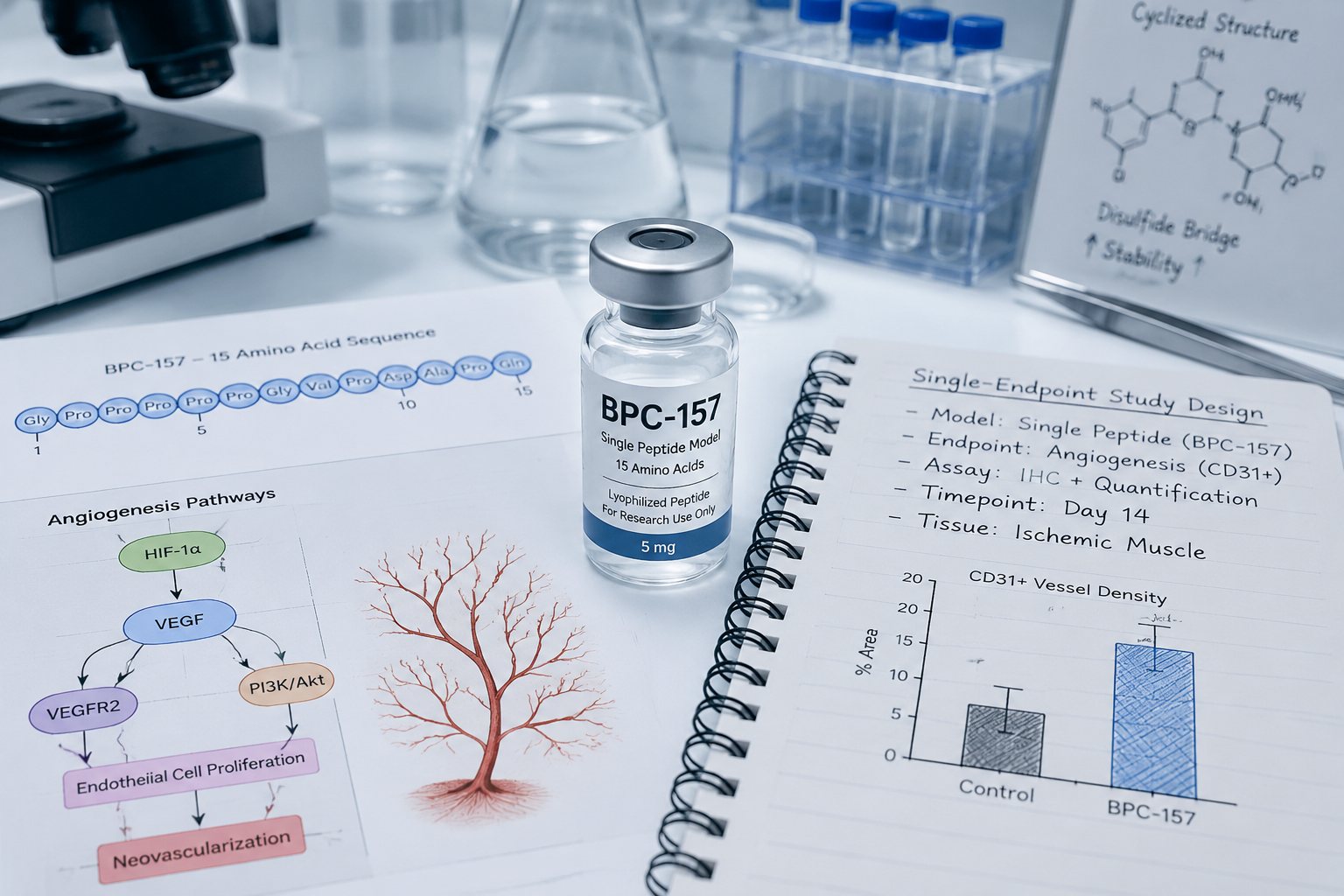
"When two agents share overlapping endpoints, combining them before establishing individual baselines creates an attribution problem that no post-hoc analysis can fully resolve."
BPC-157 vs BPC-157 and TB-500: Choosing the Right Study Design for Your Endpoint
The core tension in BPC-157 vs BPC-157 and TB-500: when does a single-peptide model make more sense than a stack? comes down to endpoint clarity.
When a Single-Peptide BPC-157 Model Is the Right Choice
Use BPC-157 alone when:
- The injury is localized — tendon rupture, ligament strain, gastric ulceration, or intestinal permeability issues.
- The research goal is mechanistic — isolating VEGF modulation or nitric oxide pathway activity requires a clean single-agent design.
- Confounding variables must be minimized — adding TB-500 introduces actin-pathway effects that overlap with some BPC-157 downstream markers, making attribution difficult.
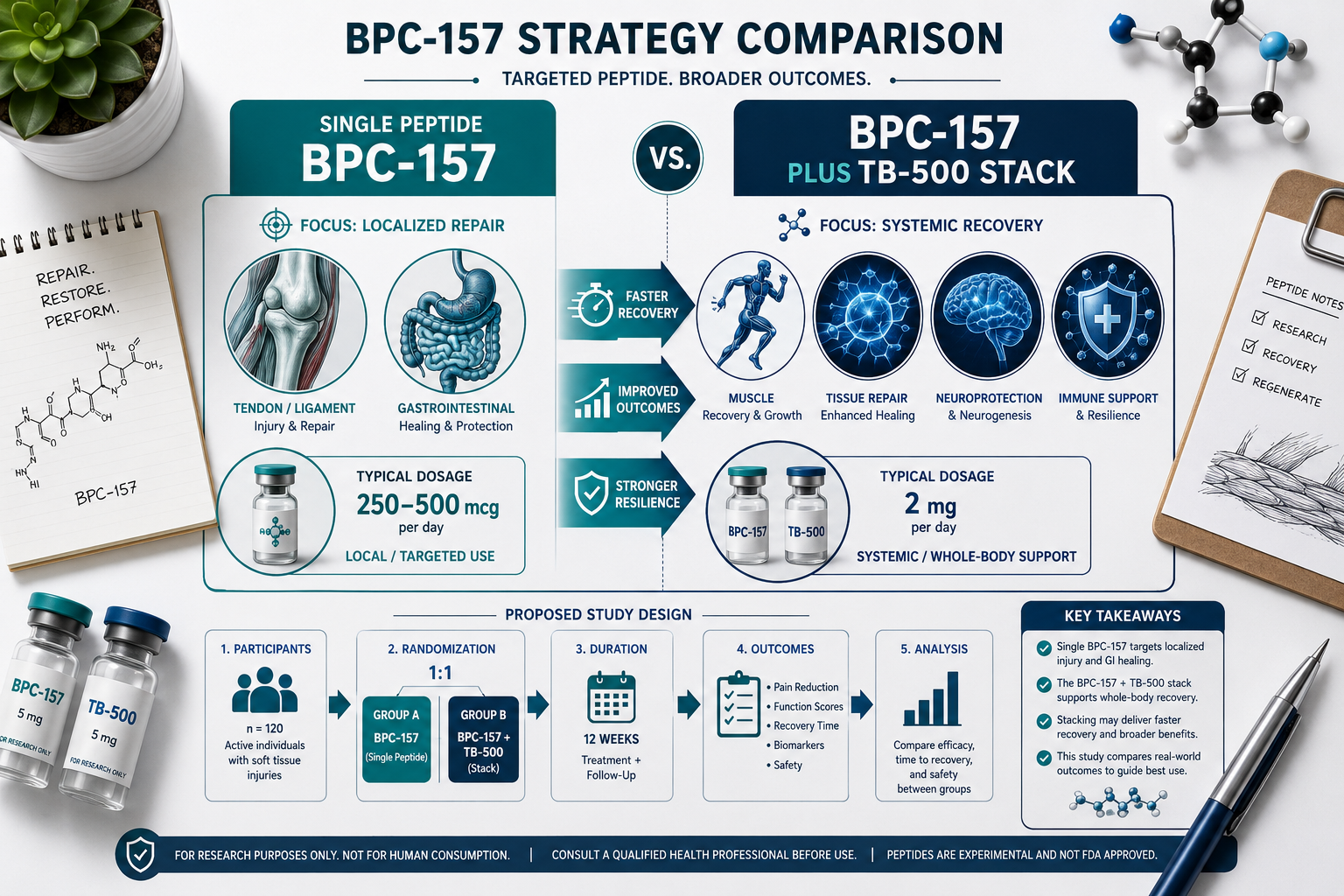
- Dosing is straightforward — BPC-157 at 250–500 mcg per day, administered subcutaneously near the injury site or orally for GI applications, is a well-characterized protocol.
This approach aligns with how researchers working on recovery and tissue biology typically structure early-phase experiments: one variable, one primary endpoint.
When the Stack Becomes Justified
A BPC-157 plus TB-500 combination is defensible when:
- Both agents have been tested independently and each shows individual efficacy for the injury type in question.
- The injury profile is multi-system — for example, a complex musculoskeletal tear with both localized tendon damage and broader inflammatory involvement.
- The study is designed to detect additive or synergistic effects, with separate biomarker panels for each mechanism.
TB-500 is typically dosed at 2–2.5 mg twice weekly during a loading phase, then 2 mg weekly for maintenance. Combining this with BPC-157's daily subcutaneous protocol means managing two distinct administration schedules. Researchers should also review TB-500 product specifications before finalizing a combination protocol.
Interpretation Limits: What Stacking Obscures
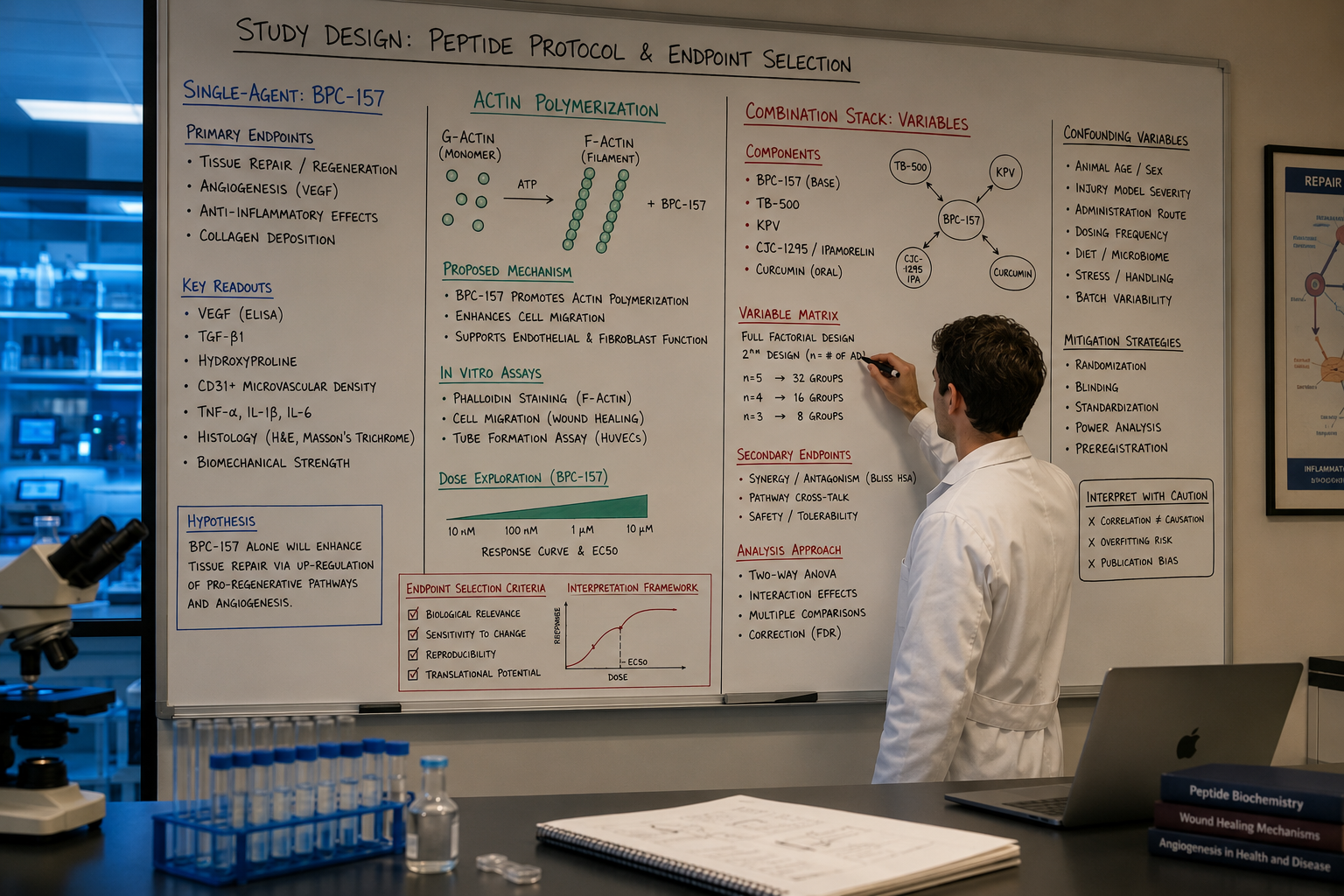
The most underappreciated problem in combination peptide research is attribution failure. When a stack produces a positive result, the researcher cannot determine:
- Which peptide drove the primary effect.
- Whether the interaction was additive, synergistic, or antagonistic.
- Whether reducing one agent would have produced the same outcome at lower cost and risk.
This is not a hypothetical concern. It mirrors well-documented issues in polypharmacy research, where combination therapies frequently show benefit but leave mechanism questions unanswered.
For those exploring other peptide combinations with similar design challenges, the Selank and Semax combination overview and the CJC-1295 plus Ipamorelin stack offer instructive parallels in how to frame multi-agent endpoints.
Researchers should also consider delivery method as a variable. Nasal spray peptide delivery changes bioavailability profiles and can interact with stack timing in ways that subcutaneous administration does not.
Conclusion
The debate over BPC-157 vs BPC-157 and TB-500: when does a single-peptide model make more sense than a stack? resolves most cleanly by returning to first principles of study design. If the goal is mechanistic clarity, localized endpoint measurement, or early-phase dose-finding, a single-peptide BPC-157 model is the stronger choice. If the goal is to replicate a real-world multi-system injury scenario where both local and systemic healing pathways are relevant, a stack with independent control arms is justifiable — but only after each agent has been validated separately.
Actionable next steps for researchers:
- Define the primary endpoint before selecting a single or combination protocol.
- Always include a single-agent BPC-157 arm in any combination study design.
- Select biomarkers that map specifically to each peptide's known mechanism.
- Review the evidence-based insights on peptide serums for additional context on endpoint selection in peptide research.
Leave a Reply
Want to join the discussion?Feel free to contribute!