

Fewer than 50 amino acids linked together can trigger cascading biological events that influence everything from immune defense to metabolic regulation, a fact that underscores just how powerful polypeptide peptides truly are. This article delivers a comprehensive understanding of polypeptide peptides, detailing their complex structures, diverse biological functions, and advanced applications in cutting-edge research as of 2026.
Key Takeaways
- Polypeptides are chains of amino acids linked by peptide bonds, and their three-dimensional shape determines their biological role.
- Structural classes, including alpha-helices, beta-sheets, and cyclic forms, each carry distinct functional advantages.
- Polypeptides serve critical roles in signaling, immune defense, enzymatic activity, and cellular regulation.
- Advanced tools such as AlphaFold and molecular dynamics simulations are transforming how researchers design and predict peptide behavior.
- Research-grade polypeptides are at the forefront of longevity science, metabolic research, and targeted therapeutic development.
The Architecture Behind Polypeptide Peptides: Structure, Function, and Advanced Research Applications
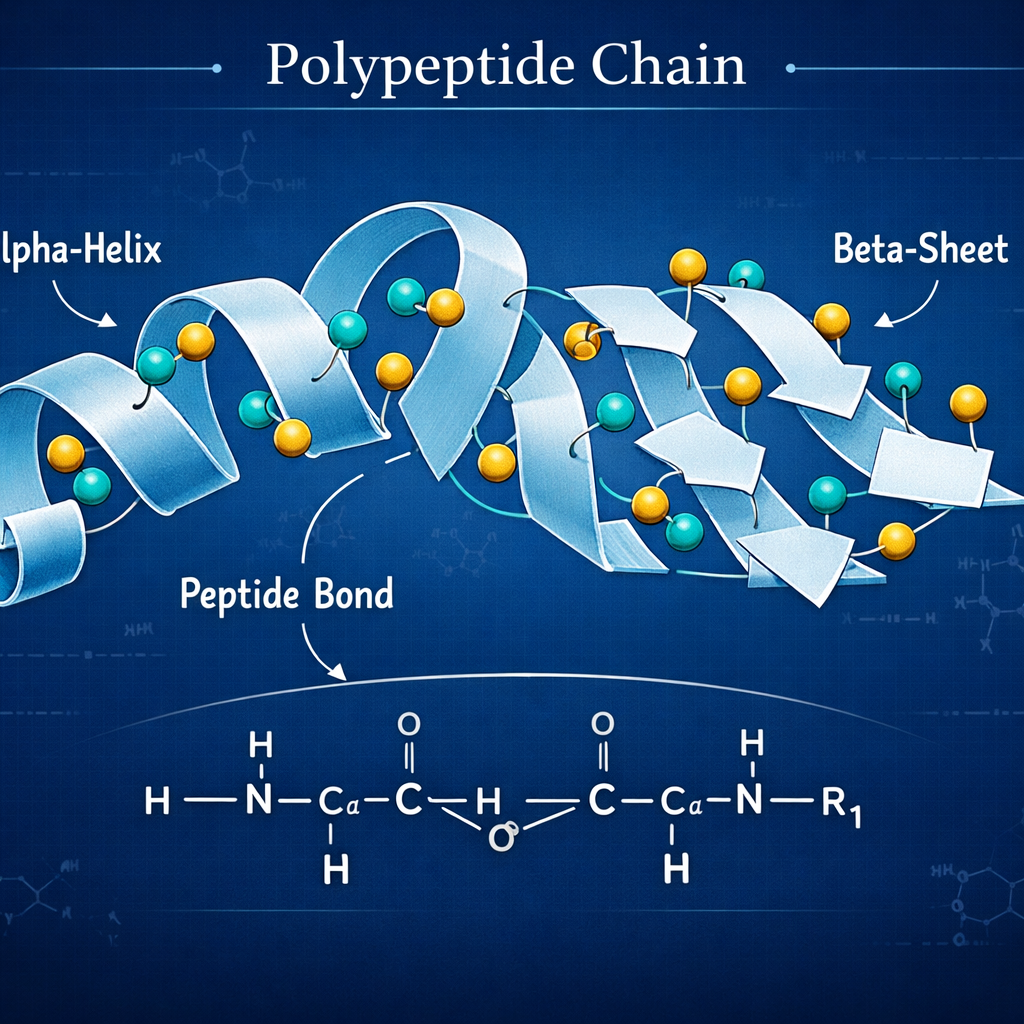
At the most basic level, a polypeptide is a linear chain of amino acids joined by covalent peptide bonds. The sequence of these amino acids, called the primary structure, dictates how the chain will fold into higher-order shapes.
Four levels of protein and polypeptide structure:
| Level | Description |
|---|---|
| Primary | Linear amino acid sequence |
| Secondary | Local folding into alpha-helices or beta-sheets |
| Tertiary | Overall 3D shape of a single chain |
| Quaternary | Assembly of multiple polypeptide chains |
Alpha-helical polypeptides have received significant research attention for their helix-specific properties, including membrane permeability and receptor binding precision. Beta-sheets, by contrast, offer structural rigidity and are common in fibrous proteins. A third class, lasso peptides, features unique knot-like macrocyclic structures that confer remarkable stability and diverse bioactivities, including antimicrobial properties.
Constrained peptides, engineered to mimic protein secondary structures, have opened new doors for therapeutic design. By locking a peptide into a defined conformation, researchers improve target selectivity and resistance to enzymatic degradation. For a closer look at how simple peptide forms compare to complex ones, the overview of simple peptides offers useful foundational context.
Biological Functions: What Polypeptides Actually Do
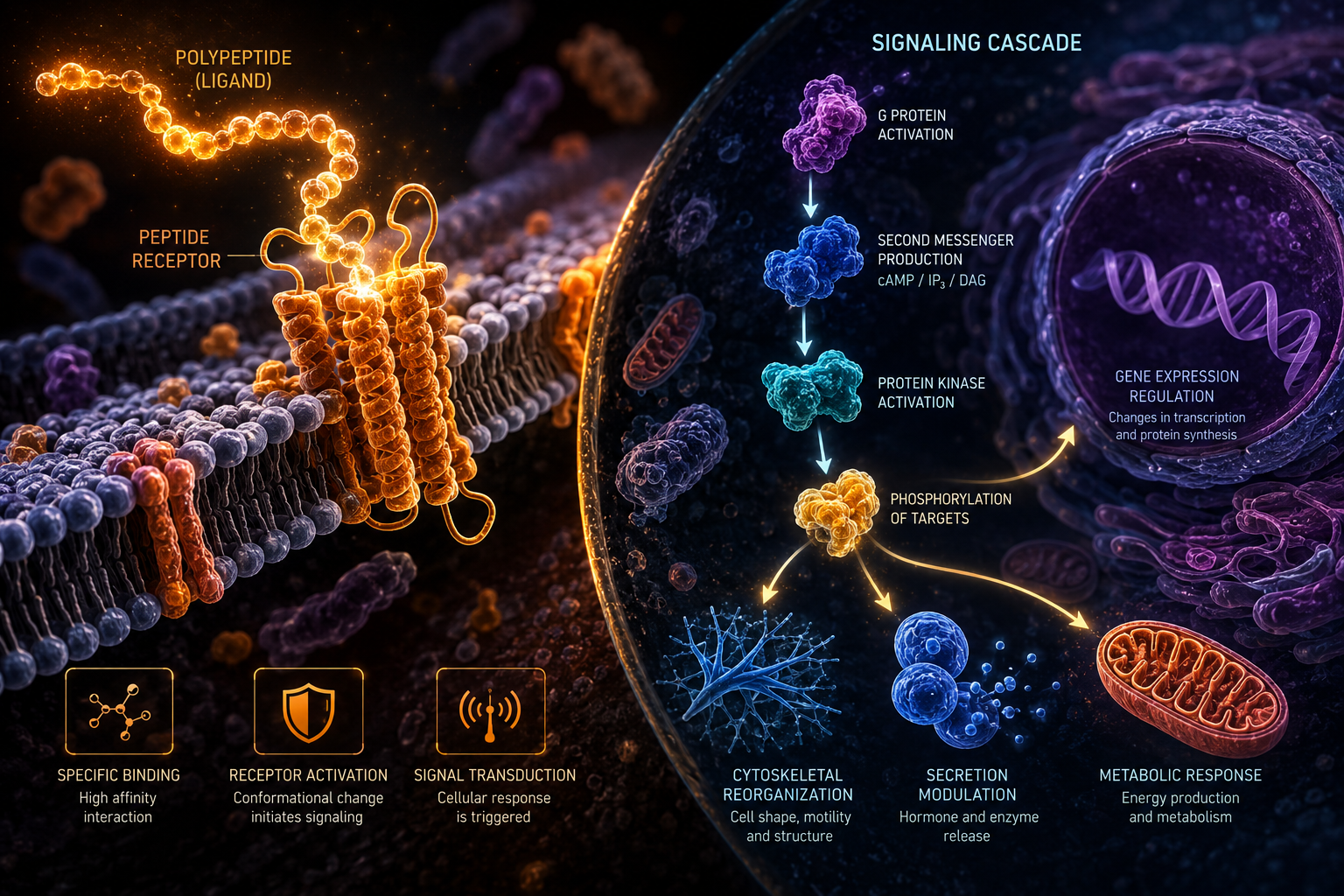
Polypeptides are not passive molecules. They act as hormones, enzymes, signaling agents, and structural components across virtually every tissue system.
Core biological roles include:
- Hormonal signaling, peptides like growth hormone-releasing hormones regulate metabolism and tissue repair
- Immune modulation, antimicrobial peptides defend against pathogens at epithelial barriers
- Enzymatic catalysis, short polypeptide sequences can accelerate biochemical reactions
- Cell-to-cell communication, neuropeptides and cytokines coordinate systemic responses
"Therapeutic peptides are gaining traction because of their cost-effectiveness, reduced immunogenicity, and ability to engage large protein-protein interaction surfaces that small molecules cannot reach."
Research into peptides like LL-37 illustrates how a single antimicrobial polypeptide can modulate immune responses, disrupt bacterial membranes, and influence wound healing simultaneously. Similarly, research on KPV and epithelial barrier function demonstrates how short tripeptide sequences exert targeted anti-inflammatory effects at mucosal surfaces.
The comparison of LL-37 versus SS-31 benefits further highlights how structural differences between polypeptides translate directly into divergent functional profiles.
Advanced Research Applications in 2026
Understanding polypeptide peptides, their structure, function, and advanced research applications, has never been more relevant than it is today, as computational and laboratory tools converge to accelerate discovery.
Key research frontiers include:
- AI-driven structure prediction, Tools like AlphaFold now enable precision design of cyclic peptides, including candidates targeting complex viral structures such as the HIV gp120 trimer.
- Molecular dynamics simulations, These computational models predict how peptides fold and interact with receptors under physiological conditions.
- Molecular fingerprints, Emerging research shows these are computationally efficient tools for predicting peptide function without requiring deep learning infrastructure.
- Self-assembling peptides, Active learning-directed simulations have identified pi-conjugated peptides capable of self-assembly, with applications in bioelectronics and energy materials.

Longevity research represents one of the most active application areas. Peptides such as SS-31 (elamipretide) are being studied for mitochondrial protection, as explored in the MOTS-c and elamipretide research overview. Growth hormone axis peptides, including tesa and CJC-1295, are central to body composition and metabolic research, detailed further in the GH axis product line overview.
For researchers tracking the latest developments, the what is new in peptide research resource provides regularly updated coverage of emerging findings.
Peptide-based biopolymers also continue to expand into drug delivery, tissue engineering, and biosurface engineering, reflecting the broad translational potential of polypeptide science.
Conclusion
Polypeptide peptides sit at the intersection of structural biology, biochemistry, and translational medicine. Their diverse conformations, from alpha-helices to lasso structures, directly shape their functional roles, while advances in computational design and laboratory synthesis are making precision peptide engineering increasingly achievable.
Actionable next steps for researchers and professionals:
- Explore the structural class most relevant to your research target (helical, cyclic, or linear)
- Use molecular dynamics tools to model conformational behavior before synthesis
- Review current longevity and metabolic peptide research through dedicated resources such as longevity peptide research
- Source research-grade compounds from verified suppliers by browsing the full catalog of peptides for sale
As structural data becomes more integrated into peptide design workflows, the gap between laboratory discovery and real-world application will continue to narrow, making 2026 a pivotal year for polypeptide research.
Leave a Reply
Want to join the discussion?Feel free to contribute!