

Roughly 28% average body weight loss in 18 months, a figure once reserved for bariatric surgery, is now being reported in Phase 3 trials for a single injectable peptide. That number signals something larger than one drug's success. It marks a turning point in how researchers understand the difference between peptide-based endocrine agents and the small-molecule drugs that defined pharmacology for decades.
Understanding peptides and polypeptides in endocrine pharmacology: how GLP-1, GLP-2, and GLP-3 retatrutide differ from classic drugs like prednisone and amlodipine is no longer a niche academic exercise. It is central to modern metabolic and hormonal research.
Key Takeaways
- Peptide drugs like GLP-1, GLP-2, and retatrutide (GLP-3 class) act on specific receptor pathways, while classic drugs like prednisone and amlodipine use broad or channel-level mechanisms.
- Retatrutide is a triple-agonist that activates GLP-1, GIP, and glucagon receptors simultaneously, producing surgical-level weight loss outcomes in trials.
- Small molecules such as amlodipine block ion channels; corticosteroids like prednisone alter gene expression, both differ fundamentally from incretin peptide signaling.
- Peptide drugs carry distinct tolerability profiles, including gastrointestinal side effects not always captured in early clinical trials.
- As of 2026, retatrutide remains investigational and is not FDA-approved, with a potential NDA submission planned for late 2026.
What Makes Peptide Drugs Structurally Different
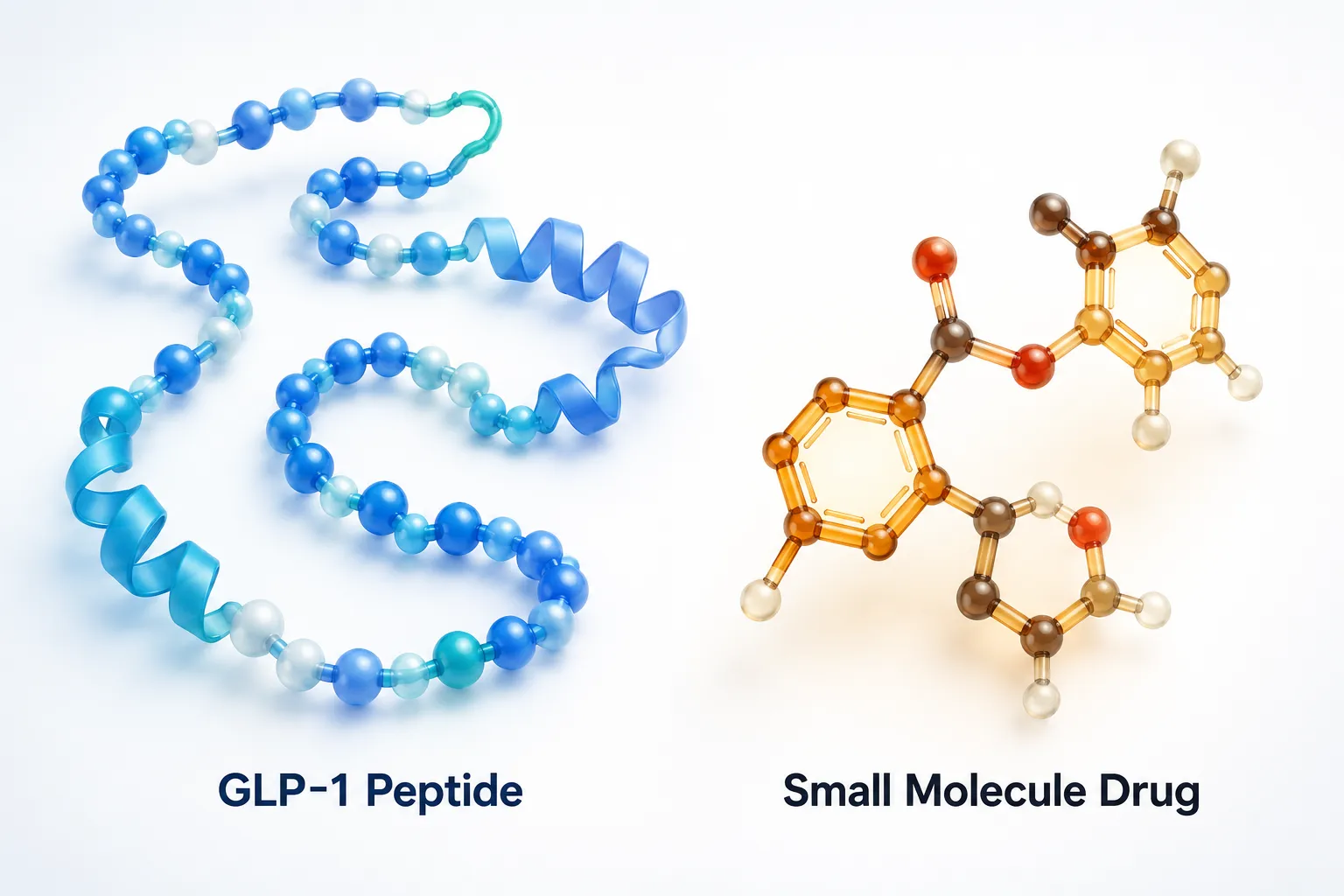
At the most basic level, the distinction comes down to molecular size and biological origin. Classic drugs like prednisone and amlodipine are small molecules, compact, chemically synthesized compounds that can often be taken orally because they survive digestion and cross cell membranes easily.
Peptides, by contrast, are chains of amino acids. Short chains are called peptides; longer chains are polypeptides. GLP-1 (glucagon-like peptide-1), GLP-2, and the newer triple-agonist retatrutide all belong to this class. Because they are protein-based, they are typically administered by injection to avoid degradation in the gut.
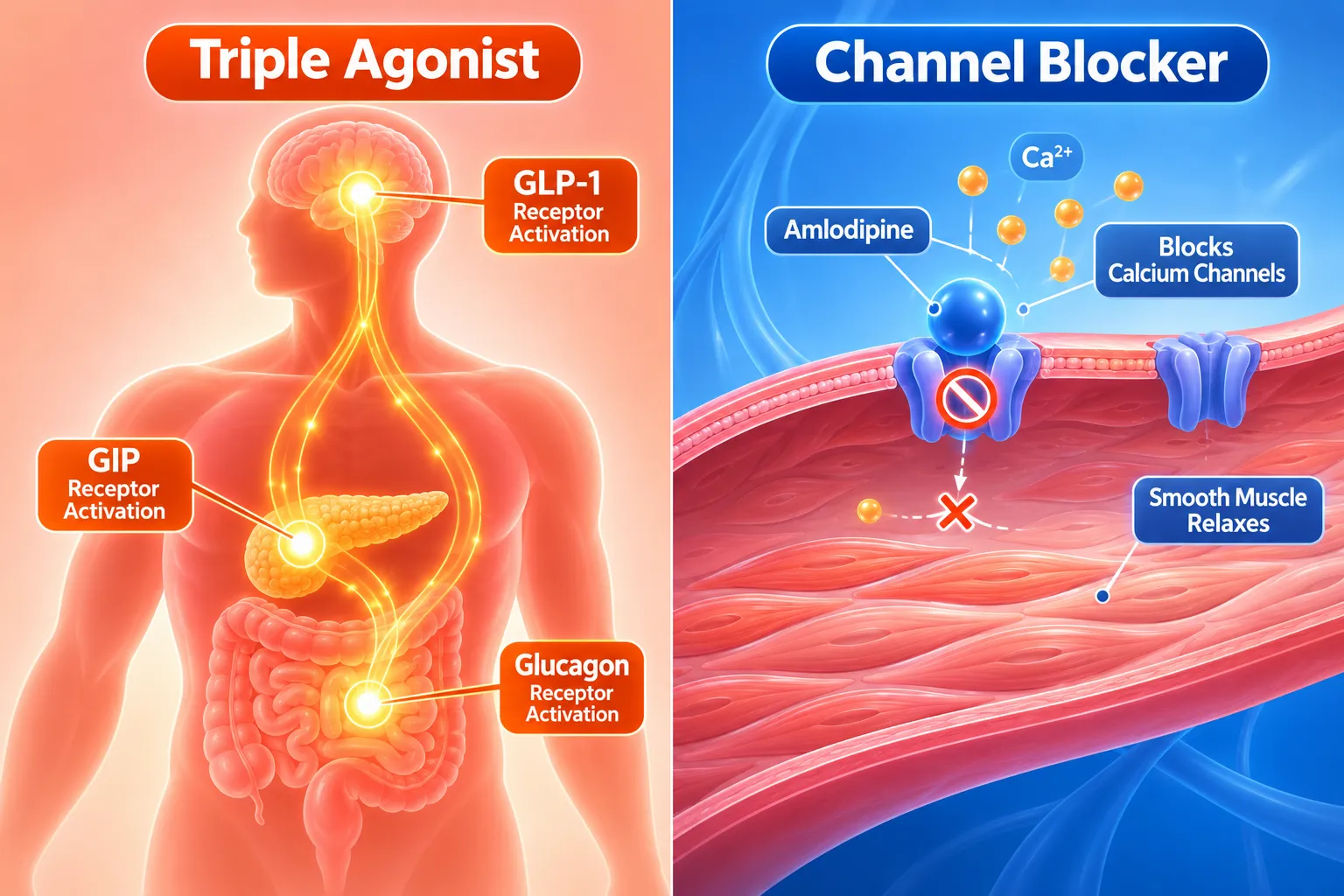
Amlodipine works by blocking calcium channels in vascular smooth muscle. When calcium cannot enter the cell, the muscle relaxes, blood vessels widen, and blood pressure drops. The mechanism is direct and localized. Prednisone operates differently, it enters cells and binds to glucocorticoid receptors, then travels to the cell nucleus and alters gene expression. This produces wide-ranging anti-inflammatory effects but also broad systemic consequences.
Neither mechanism resembles how incretin peptides work.
Researchers exploring simple peptides and their biological roles will recognize that even short amino acid sequences can trigger highly specific receptor cascades, a precision that small molecules rarely achieve.
GLP-1, GLP-2, and GLP-3 Retatrutide: Mechanisms in Endocrine Pharmacology
The incretin peptides represent a fundamentally different pharmacological strategy. Rather than blocking a channel or altering gene transcription broadly, they mimic or amplify endogenous hormonal signals already present in the body.
GLP-1 (glucagon-like peptide-1) is released from intestinal L-cells after eating. It stimulates insulin secretion in a glucose-dependent manner, suppresses glucagon, slows gastric emptying, and reduces appetite. GLP-1 receptor agonists like semaglutide replicate this signal pharmacologically.
GLP-2 acts primarily on the intestinal epithelium, promoting gut mucosal growth and nutrient absorption. Its research applications differ from GLP-1, focusing more on intestinal health than metabolic weight regulation.
Retatrutide, sometimes referred to in the GLP-3 research context, is a triple-agonist developed by Eli Lilly. It activates GLP-1, GIP (glucose-dependent insulinotropic polypeptide), and glucagon receptors simultaneously. This multi-receptor engagement is what separates it from earlier single-agonist drugs. For a deeper look at how these generations evolved, see this overview of generations of GLP-1 differences.
The Phase 3 TRIUMPH program data show retatrutide achieving approximately 28% average weight loss over 18 months, outcomes comparable to bariatric surgery. Eli Lilly plans to submit a New Drug Application to the FDA in late 2026, with potential approval anticipated in 2027-2028.

For researchers following the latest developments, the GLP-3 retatrutide product page and the newest GLP-1 triple agonist overview provide current sourcing and research context.
Side Effect Profiles: A Meaningful Contrast
The tolerability differences between peptide drugs and classic small molecules are clinically significant. Prednisone's broad gene-expression effects produce well-known systemic issues: elevated blood glucose, bone density loss, immune suppression. Amlodipine's side effects, peripheral edema, flushing, are largely mechanical, tied to vasodilation.
GLP-1 receptor agonists produce a different profile. Analyses of real-world user reports show:
| Side Effect | Approximate Reported Rate |
|---|---|
| Nausea | 36.9% |
| Fatigue | 16.7% |
| Vomiting | 16.3% |
| Constipation | 15.3% |
| Diarrhea | 12.6% |
Reproductive and temperature-related symptoms have also been reported, effects not always captured in formal clinical trials, highlighting the importance of ongoing post-market surveillance.
Why the Mechanistic Distinction Matters for Research Models
Understanding peptides and polypeptides in endocrine pharmacology is not just about comparing drug classes academically. For researchers designing metabolic or hormonal study models, the choice between a peptide agent and a small molecule carries direct implications for experimental design, dosing intervals, receptor selectivity, and downstream signaling interpretation.
"Multi-agonist peptides target multiple hormonal pathways simultaneously, a contrast to the singular mechanisms of classic drugs that defined pharmacology for half a century."
Small molecules like amlodipine act quickly and wash out relatively fast. Peptide drugs often require consideration of half-life extension strategies, receptor downregulation over time, and the interplay between multiple activated pathways. Retatrutide's simultaneous engagement of three receptors, for example, creates a metabolic effect that no single-receptor drug can replicate.
Researchers interested in related peptide mechanisms may also find value in exploring GHK-Cu peptide research and sourcing and SS-31 peptide benefits as examples of how structurally distinct peptides produce highly targeted biological effects.
For those working in metabolic research, tesa benefits offer another example of a growth-hormone-releasing peptide with specific endocrine applications that differ sharply from corticosteroid or calcium channel blocker mechanisms.
The obesity drug landscape in 2026 is also shifting beyond efficacy toward long-term patient retention. Companies are exploring delivery innovations and combination therapies to improve tolerability, a challenge that does not arise in the same way with once-daily oral small molecules like amlodipine.
Ensuring peptide purity in research settings is equally critical. Researchers sourcing peptide compounds should review peptide purity testing standards to ensure experimental validity.
Conclusion
The contrast between peptides and polypeptides in endocrine pharmacology, how GLP-1, GLP-2, and GLP-3 retatrutide differ from classic drugs like prednisone and amlodipine, reflects a broader shift in how pharmacology approaches complex metabolic disease. Small molecules act through channel blockade or gene expression changes. Incretin peptides mimic endogenous hormonal signals with receptor-level precision, and multi-agonists like retatrutide amplify that approach across three pathways at once.
Actionable next steps for researchers:
- Review current GLP-1 generation comparisons to contextualize where retatrutide sits in the incretin drug timeline.
- Evaluate peptide purity standards before incorporating any peptide compound into a research model.
- Monitor the FDA NDA timeline for retatrutide, expected in late 2026, for regulatory updates.
- Explore related endocrine peptides, including GHK-Cu, tesa, and SS-31, to build a fuller picture of peptide mechanism diversity.
- Distinguish clearly in study design between small-molecule controls (prednisone, amlodipine) and peptide interventions to avoid conflating mechanistically distinct pharmacological classes.
Leave a Reply
Want to join the discussion?Feel free to contribute!