

Copper is essential to nearly every stage of connective tissue repair, and a tripeptide discovered in human plasma decades ago turns out to be one of the most efficient carriers of copper into that process. Research into GHK-Cu Peptide: Collagen Synthesis, Wound Repair, and Skin-Barrier Research Models has expanded steadily since the compound was first isolated, revealing a mechanistic profile that makes it a compelling subject for extracellular matrix (ECM) and dermal regeneration studies.
Key Takeaways
- GHK-Cu is a naturally occurring tripeptide-copper complex that upregulates collagen and ECM gene expression in preclinical models.
- Preclinical wound studies show accelerated closure, increased connective tissue accumulation, and improved tensile strength at injury sites.
- Dimeric GHK hydrogel formulations improve copper coordination stability and represent an active area of delivery research.
- Human clinical evidence remains limited; one older diabetic ulcer trial showed positive signals, but large randomized controlled trials are absent.
- Researchers sourcing peptides for lab work should prioritize lab-tested peptides with verified purity documentation.
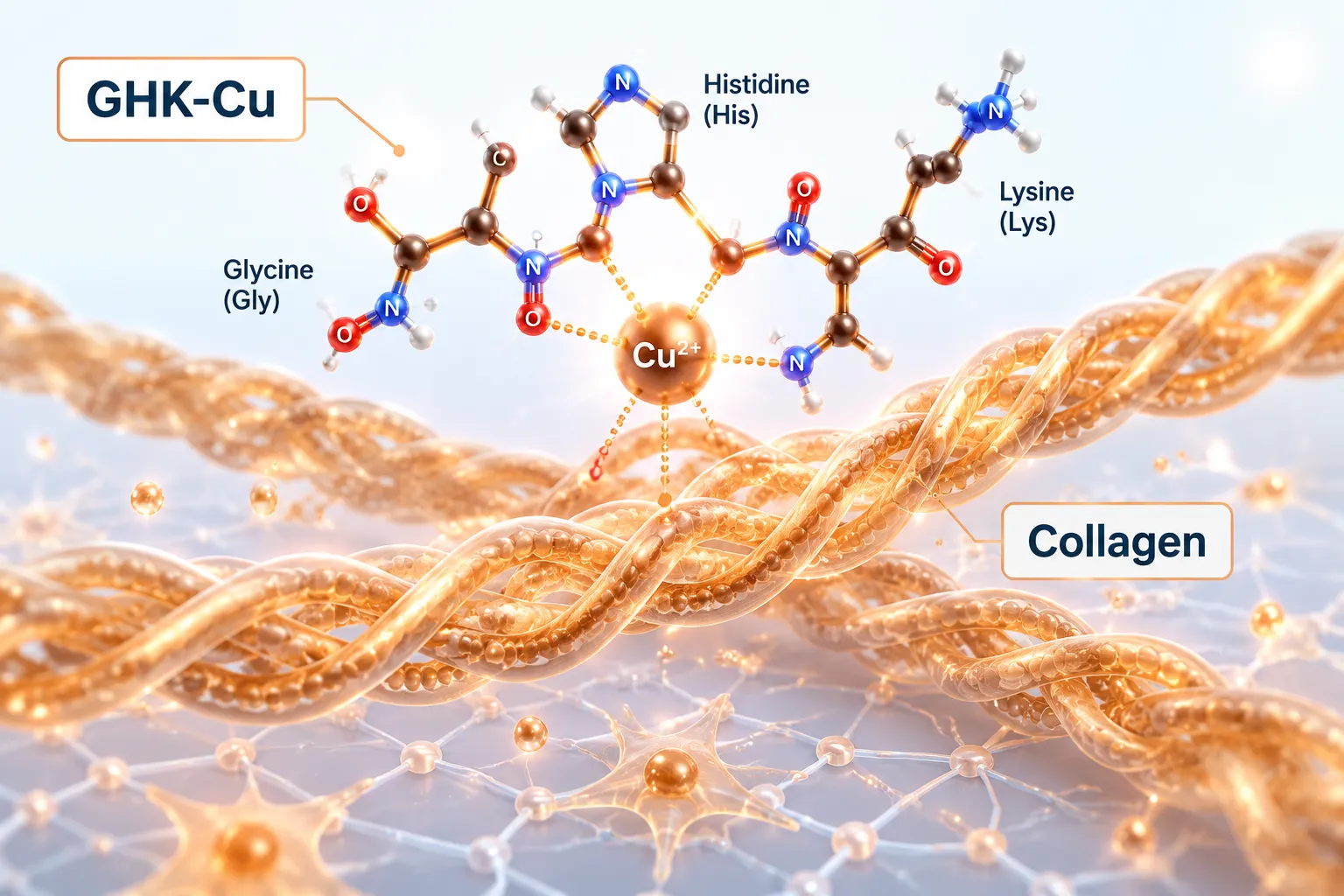
Mechanistic Profile: How GHK-Cu Drives Collagen Synthesis and ECM Remodeling
The tripeptide glycyl-L-histidyl-L-lysine (GHK) was first identified in human albumin fractions. When complexed with a copper (II) ion, it becomes GHK-Cu, a bioactive compound with a well-documented ability to modulate gene expression in fibroblasts and keratinocytes.
Collagen Gene Upregulation
At the molecular level, GHK-Cu activates transcription factors that drive production of:
- Collagen types I and III, the primary structural proteins of dermal ECM
- Elastin, responsible for skin elasticity and recoil
- Fibronectin, a glycoprotein critical for cell adhesion and migration during wound repair
- Decorin and versican, proteoglycans that organize collagen fibril architecture
This upregulation is not simply additive. Research in fibroblast culture models shows GHK-Cu simultaneously suppresses matrix metalloproteinases (MMPs), enzymes that degrade collagen, while increasing tissue inhibitors of metalloproteinases (TIMPs). The net result is a shift in ECM balance toward synthesis and deposition rather than breakdown.
Copper Coordination and Antioxidant Activity
The copper ion in GHK-Cu is not passive. It participates directly in lysyl oxidase activation, the enzyme responsible for cross-linking collagen and elastin fibers into mechanically stable structures. Additionally, the complex modulates superoxide dismutase activity, reducing oxidative stress at wound sites, a factor that often delays healing in chronic injury models.
"The dual role of GHK-Cu as both a gene-expression modulator and a copper delivery vehicle makes it mechanistically distinct from most synthetic wound-repair compounds under investigation."
Researchers exploring related peptides with mitochondrial or tissue-repair orientations may find useful context in studies on BPC-157 and TB-500 peptides, which target overlapping regenerative pathways through different mechanisms.
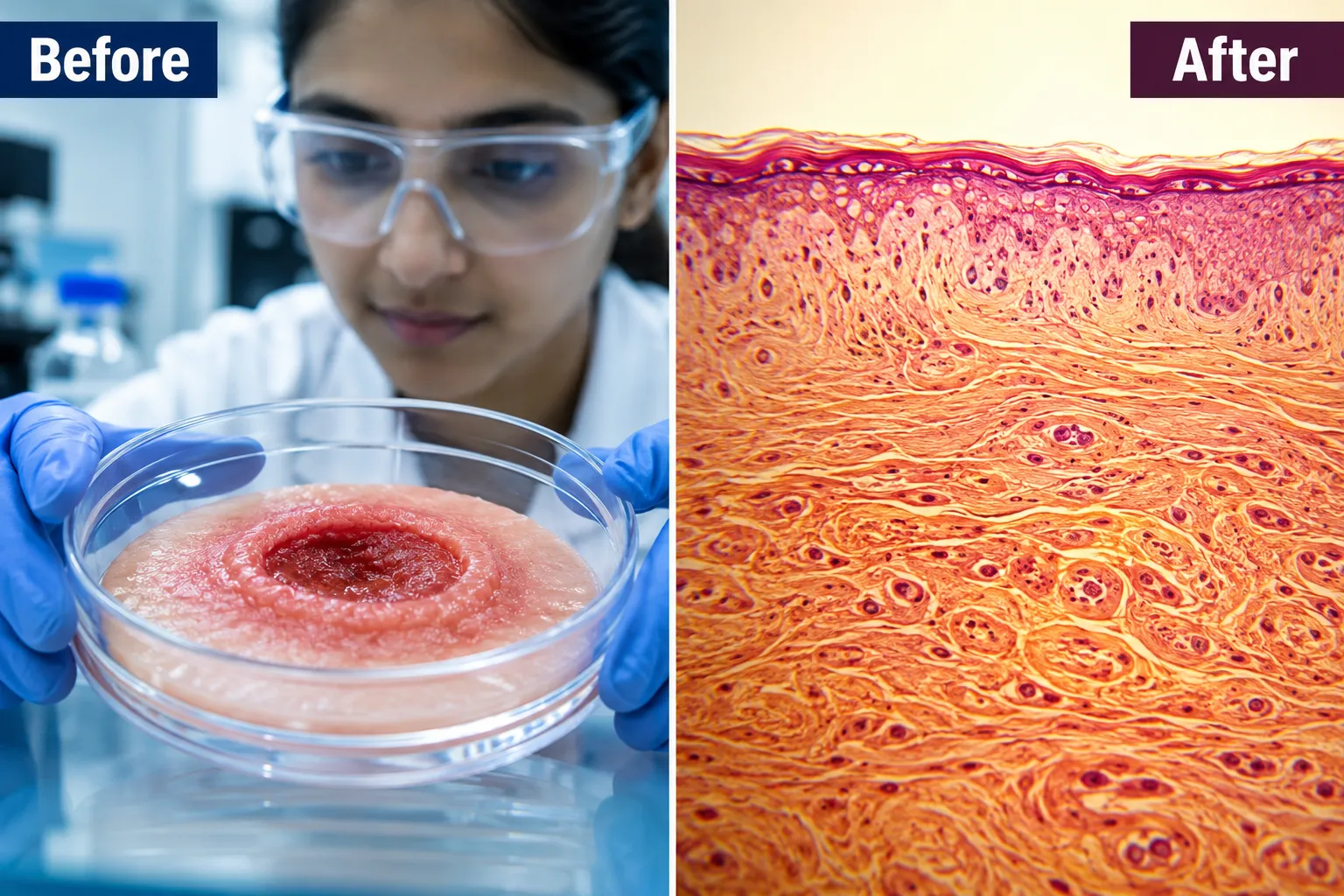
Preclinical Wound Repair and Skin-Barrier Research Models
The bulk of controlled evidence for GHK-Cu Peptide: Collagen Synthesis, Wound Repair, and Skin-Barrier Research Models comes from animal studies using standardized dermal injury protocols.
In Vivo Wound Closure Data
In rodent excisional and incisional wound models, topical or injected GHK-Cu consistently produces:
| Endpoint | Observed Effect in Preclinical Models |
|---|---|
| Wound closure rate | Accelerated re-epithelialization vs. vehicle control |
| Collagen content | Increased hydroxyproline levels in wound tissue |
| Tensile strength | Higher breaking strength at healed incision sites |
| Inflammatory markers | Reduced pro-inflammatory cytokine expression |
| Angiogenesis | Increased capillary density in granulation tissue |
These findings hold across multiple species and wound types, strengthening the translational argument for further study.
Dimeric GHK Hydrogel Dressings
A more recent research direction involves dimeric GHK constructs embedded in hydrogel matrices. Standard GHK-Cu can dissociate in aqueous environments, releasing copper prematurely. Dimeric formulations improve copper coordination stability, extend release kinetics, and maintain bioactivity over longer application windows, a meaningful advantage for chronic wound models where sustained signaling is needed.
Skin-Barrier Endpoints
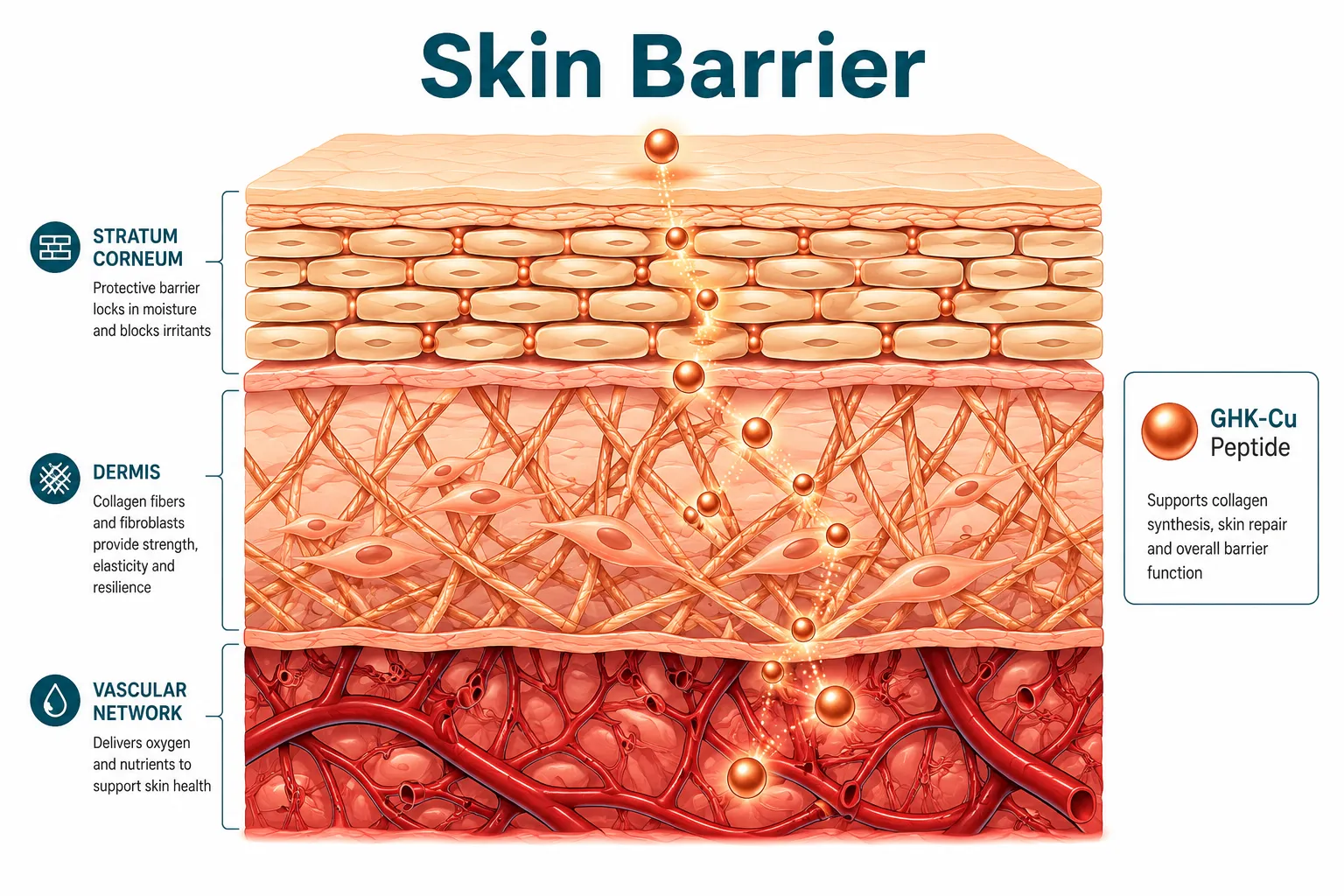
Beyond wound closure, GHK-Cu research models have examined barrier function. Studies using transepidermal water loss (TEWL) measurements and tight-junction protein expression show that GHK-Cu supports keratinocyte differentiation and barrier competence. This positions the compound as relevant not only for acute wound research but also for models of impaired barrier function such as atopic dermatitis and aged skin.
Researchers working with other regenerative compounds may also want to review TB-500 benefits and research considerations for comparative context on tissue repair peptides.
Human Clinical Evidence and Research Gaps
What the Clinical Record Shows
Human data for GHK-Cu Peptide: Collagen Synthesis, Wound Repair, and Skin-Barrier Research Models is sparse but not absent. One controlled trial in diabetic patients with chronic lower-leg ulcers reported significantly improved wound closure rates compared to standard care. The study used a topical GHK-Cu formulation and tracked outcomes over several weeks, with histological confirmation of increased collagen deposition.
However, this trial is older, relatively small, and has not been replicated in a large modern randomized controlled trial (RCT). The absence of Phase II or Phase III human data means the compound remains firmly in the research domain.
Key Research Gaps in 2026
- No large-scale RCTs in non-diabetic wound populations
- Limited pharmacokinetic data on systemic absorption from topical models
- Insufficient comparative data against standard-of-care wound treatments
- Minimal data on optimal dosing windows and concentration thresholds
Researchers designing new protocols should consult resources on research-only peptides to understand sourcing standards and documentation requirements before initiating studies.
For those building broader peptide research panels, reviewing compounds like Epithalon and Motsc peptide may provide useful mechanistic comparisons in aging and cellular repair models.
Conclusion
GHK-Cu occupies a well-defined and mechanistically credible position in ECM remodeling and wound-repair research. Its ability to upregulate collagen gene expression, suppress MMPs, activate lysyl oxidase, and support skin-barrier integrity gives it a multifactorial profile that few single compounds match. Preclinical evidence across multiple wound models is consistent and reproducible. The primary gap is human clinical scale, a gap that makes rigorous, well-documented preclinical work all the more important right now.
Actionable next steps for researchers:
- Prioritize purity-verified, third-party tested GHK-Cu from documented suppliers, explore peptide stores with verified sourcing before procurement.
- Design wound models that include both collagen quantification (hydroxyproline assay) and barrier function endpoints (TEWL, tight-junction markers) to capture the full mechanistic range.
- Consider dimeric hydrogel delivery formats for chronic wound models where sustained copper release is a variable.
- Document all experimental parameters thoroughly to support future translational work as clinical interest in this compound grows.
Leave a Reply
Want to join the discussion?Feel free to contribute!