Call or Text 727-513-9780
  • Shopping Cart Shopping Cart
    0Shopping Cart
Pure Tested Peptides | America's most trusted Peptides for sale online
  • Peptides for sale
    • Oral Peptides for sale
      • Peptide Capsules for sale
      • BPC 157 Capsules 1000mcg
      • SLU-PP-332 Capsules | 1000 mcg
      • 5-Amino-1MQ 50mg Capsules
      • Tesofensine 500mcg
    • All Peptides for sale
    • Peptide Sprays
      • BPC 157 Nasal Spray Kit
      • BPC-157 TB500 Nasal Spray Kit
      • Semax Nasal Spray 10mg
      • Selank – Nasal Spray Kit – 10mg
      • Epithalon 50MG Nasal Spray Kit
      • Ipamorelin 10mg Nasal Spray
      • Klow Nasal Spray (BPC-157 + TB-500 + GHK-Cu + KPV) | 80mg
      • Hulk Nasal Spray Tesa / Ipa Blend 6/3 MG
      • Klow Nasal Spray
      • NAD + 500 mg Nasal Spray
      • PT-141 Nasal Spray Kit
    • GHRH Peptides
      • Ipa Peptides
      • CJC-1295 Peptides
        • CJC-1295 with DAC 5 mg
        • CJC-1295 without DAC 5 mg
        • CJC-1295 Ipa 10mg
      • Tesa Peptides
        • Tesa Peptide
        • Tesa 20 mg
    • GHK-Cu Peptides
      • All GHK-Cu Peptides
      • GHK-Cu 100mg
      • KLOW Peptide Blend – Buy KLOW blend online
    • BPC Peptides
      • All BPC Peptides
      • BPC-157
      • BPC-157 TB-500
      • BPC 157 capsules 1000mcg
    • SLU-PP-332 Peptides
      • All SLU-PP-332 Peptides
      • SLU-PP-332 5mg
    • GLP3 Peptides
    • PT-141 Peptides
      • PT-141 Peptides for sale
      • PT-141 10mg
      • PT-141 Nasal Spray
    • CAG Peptides
      • Lipo-C Peptide Blend
      • CAG 5mg
      • CAG 10mg
    • MOTS-C Peptides
      • MOTS-C Peptides for sale
      • MOTS-c peptide
      • MOTS-c 10mg *6 pack*
    • 5 Amino 1MQ Peptides
      • 5 Amino 1MQ Peptides for sale
      • 5-Amino-1MQ 50mg Capsules
      • 5-Amino-1MQ 5mg
    • Epithalon Peptides
      • Epithalon Peptides for sale
      • Epithalon 10mg
      • Epithalon 50mg
  • Shop
    • GLPs
      • 5-Amino-1MQ 50mg Capsules
      • 5-Amino-1MQ 5mg
      • L-Carnitine 500mg/ml
      • Tesofensine 500mcg
      • SLU-PP-332 5mg
      • MOTS-c 10mg *6 pack*
    • Epithalon & BPC Peptides
      • Epithalon 10mg
      • Epithalon 50mg
      • BPC-157
      • BPC 157 capsules 1000mcg
      • BPC-157 TB-500
      • BPC-157 TB500 Nasal Spray Kit
      • BPC 157 Nasal Spray Kit
    • BPC TB-500 & NAD+ Peptides
      • NAD+ 500 mg
      • KLOW Peptide Blend – Buy KLOW blend online
      • GLOW Peptide Blend
      • TB 500 5mg
      • BPC 157 capsules 1000mcg – Supplement
      • BPC 157 Nasal Spray Kit
      • BPC-157
      • BPC-157 TB500 Nasal Spray Kit
      • BPC-157 TB-500
      • BPC 157 capsules 1000mcg
    • LL-37 Peptide
      • LL-37 10 mg
    • MOTS-C & Selank
      • MOTS-c peptide
      • Selank 10mg
    • GHK Peptides
      • GHK-Cu 100mg
      • GLOW Peptide Blend
      • KLOW Peptide Blend – Buy KLOW blend online
  • COAs
  • Wholesale
    • Wholesale Peptides for sale
  • PTP FAQ
  • Affiliates
    • Selank Peptide: Advanced Pharmacological Mechanisms Underlying Its Anxiolytic and Nootropic Effects in Research
      • 5-Amino-1MQ Peptide: Detailed Mechanisms of NNMT Inhibition and Its Impact on Cellular Metabolism Research
        • MOTS-C Peptide: Unraveling Its Role in Mitochondrial Dynamics and Energy Metabolism Research
          • Epithalon Peptide and Telomerase Regulation: Investigating Its Impact on Cellular Senescence and Lifespan Research Models
            • GLP2-T vs GLP2 Tirz Peptide: Understanding the Naming, Mechanistic Nuances, and Research Implications for Gut Health
      • Peptides and Polypeptides in Modern Pharmacology: What Research on Metoprolol, Prednisone, and Amlodipine Reveals
        • Polypeptide Peptides vs NSAIDs: What Naproxen and Diclofenac Teach Tissue-Repair Researchers About BPC‑157 and TB‑500
          • Peptides and Polypeptides in Endocrine Pharmacology: How GLP-1, GLP-2, and GLP-3 Retatrutide Differ From Classic Drugs Like Prednisone and Amlodipine
          • 5‑Amino‑1MQ Peptide and NNMT Inhibition: How It Compares With Statins Like Atorvastatin in Adipose and Lipid Metabolism Research
      • Enclomiphene, Estrogen Receptor Signaling, and Luteinizing Phase Biology: What Hormone Researchers Should Measure
        • Mesenchymal Stem Cells, BPC‑157, and GHK‑Cu: How Tissue Repair Peptides Compare With Classic NSAIDs Like Naproxen in Injury Models
          • Peptide Calculator Use Cases Beyond Growth Hormone: Working Through GLP‑3 Retatrutide, MOTS‑c, and BPC‑157 Research Dosing
        • Polypeptide Peptides in Endocrine and Metabolic Pharmacology: Lessons From Amlodipine, Prednisone, and Metoprolol
        • Peptides Calculator for Advanced Blends: Worked Examples for Tesamorelin, CJC‑1295, and Ipamorelin Stacks
          • Peptides and Polypeptides in Human Physiology: How Molecular Size Shapes Research Applications
            • Selank Peptide: Advanced Pharmacological Mechanisms Underlying Its Anxiolytic and Nootropic Effects in Research
          • 5-Amino-1MQ Peptide: Detailed Mechanisms of NNMT Inhibition and Its Impact on Cellular Metabolism Research
            • MOTS-C Peptide: Unraveling Its Role in Mitochondrial Dynamics and Energy Metabolism Research
              • Epithalon Peptide and Telomerase Regulation: Investigating Its Impact on Cellular Senescence and Lifespan Research Models
                • GLP2-T vs GLP2 Tirz Peptide: Understanding the Naming, Mechanistic Nuances, and Research Implications for Gut Health
                  • Peptides and Polypeptides in Endocrine Pharmacology: How GLP-1, GLP-2, and GLP-3 Retatrutide Differ From Classic Drugs Like Prednisone and Amlodipine
                    • Polypeptide Peptides vs NSAIDs: What Naproxen and Diclofenac Teach Tissue-Repair Researchers About BPC‑157 and TB‑500
                      • Peptides and Polypeptides in Modern Pharmacology: What Research on Metoprolol, Prednisone, and Amlodipine Reveals
                        • 5‑Amino‑1MQ Peptide and NNMT Inhibition: How It Compares With Statins Like Atorvastatin in Adipose and Lipid Metabolism Research
                        • Enclomiphene, Estrogen Receptor Signaling, and Luteinizing Phase Biology: What Hormone Researchers Should Measure
                        • Mesenchymal Stem Cells, BPC‑157, and GHK‑Cu: How Tissue Repair Peptides Compare With Classic NSAIDs Like Naproxen in Injury Models
                        • Peptide Calculator Use Cases Beyond Growth Hormone: Working Through GLP‑3 Retatrutide, MOTS‑c, and BPC‑157 Research Dosing
                        • Polypeptide Peptides in Endocrine and Metabolic Pharmacology: Lessons From Amlodipine, Prednisone, and Metoprolol
                        • Peptides Calculator for Advanced Blends: Worked Examples for Tesamorelin, CJC‑1295, and Ipamorelin Stacks
                        • Peptides and Polypeptides in Human Physiology: How Molecular Size Shapes Research Applications
                        • Selank Peptide: Advanced Pharmacological Mechanisms Underlying Its Anxiolytic and Nootropic Effects in Research
                        • MOTS-C Peptide: Unraveling Its Role in Mitochondrial Dynamics and Energy Metabolism Research
                        • Peptides and Polypeptides in Modern Pharmacology: What Research on Metoprolol, Prednisone, and Amlodipine Reveals
                        • Peptides and Polypeptides in Endocrine Pharmacology: How GLP-1, GLP-2, and GLP-3 Retatrutide Differ From Classic Drugs Like Prednisone and Amlodipine
                        • 5-Amino-1MQ Peptide: Detailed Mechanisms of NNMT Inhibition and Its Impact on Cellular Metabolism Research
                        • Mesenchymal Stem Cells, BPC‑157, and GHK‑Cu: How Tissue Repair Peptides Compare With Classic NSAIDs Like Naproxen in Injury Models
                        • Peptide Calculator Use Cases Beyond Growth Hormone: Working Through GLP‑3 Retatrutide, MOTS‑c, and BPC‑157 Research Dosing
                        • GLP2-T vs GLP2 Tirz Peptide: Understanding the Naming, Mechanistic Nuances, and Research Implications for Gut Health
                        • Polypeptide Peptides in Endocrine and Metabolic Pharmacology: Lessons From Amlodipine, Prednisone, and Metoprolol
                        • Polypeptide Peptides vs NSAIDs: What Naproxen and Diclofenac Teach Tissue-Repair Researchers About BPC‑157 and TB‑500
                        • Peptides and Polypeptides in Human Physiology: How Molecular Size Shapes Research Applications
                        • Peptides Calculator for Advanced Blends: Worked Examples for Tesamorelin, CJC‑1295, and Ipamorelin Stacks
                        • 5‑Amino‑1MQ Peptide and NNMT Inhibition: How It Compares With Statins Like Atorvastatin in Adipose and Lipid Metabolism Research
                        • Enclomiphene, Estrogen Receptor Signaling, and Luteinizing Phase Biology: What Hormone Researchers Should Measure
                        • Epithalon Peptide and Telomerase Regulation: Investigating Its Impact on Cellular Senescence and Lifespan Research Models
                        • Best research protocol Klow blend
                        • best time to take BPC-157
                        • best time to take DSIP (Delta Sleep Inducing Peptide)
                        • best time to take CJC-1295
                        • best time to take AOD-9604
                        • best time to take Follistatin 344
                        • best time to take Ipamorelin
                        • best time to take MK-677 (Ibutamoren)
                        • best time to take Ligandrol (LGD-4033) — research compound
                        • best time to take Ostarine (MK-2866) — research compound
                        • best time to take GHK-CU
                        • best time to take TB-500
                        • best time to take MOTS-c
                        • best time to take Semax
                        • best time to take RAD-140 (Testolone) — research compound
                        • best time to take Thymosin Alpha-1
                        • best time to take PEG-MGF
                        • Biolife Plasma, Octapharma Plasma, and Research Peptides: How Plasma Donation Labs Differ From Peptide Suppliers
                        • best time to take YK-11 — research compound
                        • best time to take PT-141 (Bremelanotide)
                        • Best research protocol Klow blend
                        • 5-Amino-1MQ and MOTS-C Synergy: Metabolic Signaling, Mitochondria, and Research Design
                        • BPC-157 and TB-500: Investigating Their Combined Effects on Angiogenesis and Cellular Migration in Tissue Repair Models
                        • BPC-157 Peptide: Gut Barrier Function, Inflammation, and Tissue-Recovery Research
                        • 5‑Amino‑1MQ and MOTS‑c Synergy in Metabolic Research: Designing NNMT and Mitochondrial Biogenesis Stacks
                        • CJC-1295 with DAC vs. Without DAC: Half-Life, Release Kinetics, and Research Implications
                        • CJC‑1295 with DAC vs. Without DAC: Expanding on Half‑Life Differences Using Tesamorelin and Ipamorelin Blend Case Studies
                        • Collagen Biology and Copper‑Binding Peptides: How GHK‑Cu, Glow Blend, and Klow Blend Interact with Skin and Connective Tissue
                        • Collagen Biology and Regenerative Peptides: How GHK‑Cu, Glow Blend, and Klow Blend Affect Extracellular Matrix Research
                    • DNA, Telomeres, and Longevity Peptides: Positioning Epithalon and MOTS‑c in Genetic Aging Research
                      • Enclomiphene Citrate: serm Mechanism, Testosterone Research, and Stack Compatibility
                        • Enclomiphene vs Enclomiphene Citrate: Formulation, Bioavailability, and Research Distinctions
                        • Epithalon Peptide Research: Telomerase Activation, Aging, and Pineal Gland Function
                        • Estrogen Receptor Signaling and Enclomiphene: How Selective Modulators Compare with Classic Polypeptide Hormones
                        • GHK-Cu Peptide: Advanced Mechanisms in Extracellular Matrix Remodeling and Wound Healing Research
                        • GHK-Cu Peptide: Collagen Synthesis, Wound Repair, and Skin-Barrier Research Models
                        • GLP-1 vs GLP-3 vs GLP-2: Peptide Classification and Research Applications
                        • GLP-2 Peptide Research Guide: Gut Barrier Function, Nutrient Absorption, and Intestinal Recovery Models
                        • GLP-3 Retatrutide vs. GLP-1 Drugs: What Triple-Agonist Biology Changes in Research Models
                        • Ipamorelin and Tesamorelin Combination: Synergistic GH Secretagogue Research and Dosing Protocols
                        • GLP2 Tirz Peptide: What It Is, Why the Name Exists, and How Researchers Should Interpret It
                        • Klow Blend Peptide Nasal Spray: What the Formulation Is Trying to Do in Cognitive Research
                        • Mitochondria, NNMT Inhibition, and Peptide Modulators: Where MOTS‑c and 5‑Amino‑1MQ Fit in Cellular Energy Research
                        • MOTS-c Peptide: Mitochondrial Function, Energy Metabolism, and What Researchers Measure
                        • MOTS-c vs. 5-Amino-1MQ: Which Metabolic Research Questions Each Compound Actually Answers
                        • Nasal Spray Peptides: Bioavailability, Administration, and Semax/Selank Research Applications
                        • PT-141 Peptide Research: Mechanism of Action and Melanocortin Receptor Signaling
                        • Retatrutide for Research: Mechanism, Structure, and GLP-1/GLP-3 Dual Action
                        • Retatrutide for Obesity and Type 2 Diabetes: What the Latest Trial Data Suggest
                        • Tesofensine Peptide Research: Mechanism, Appetite Suppression, and Neuropeptide Y Pathways
  • Contact
    • Contact Customer Service
    • Text Customer Support
  • About US
  • Shop all peptides
  • Affiliate Program
    • Affiliate Signup
  • Login / Register Login / Register Page Link Login / Register Page Link
  • Click to open the search input field Click to open the search input field Search
  • Menu Menu
How to Interpret Amlodipine, Metoprolol, Losartan, and Lisinopril Together in Peptide Blood-Pressure Studies

How to Interpret Amlodipine, Metoprolol, Losartan, and Lisinopril Together in Peptide Blood-Pressure Studies

November 5, 2026/0 Comments/in Uncategorized/by

Roughly 70% of hypertension patients in clinical trials arrive already taking more than one antihypertensive drug, a fact that makes clean peptide biomarker readouts genuinely difficult to achieve. Knowing how to interpret amlodipine, metoprolol, losartan, and lisinopril together in peptide blood-pressure studies is not a minor methodological footnote; it determines whether a study's peptide endpoints are trustworthy or systematically distorted. Each drug acts through a different pathway, and those pathways intersect with renin-angiotensin-aldosterone system (RAAS) peptides, natriuretic peptides, and vascular biomarkers in distinct, often opposing ways.

Key Takeaways

  • Amlodipine and metoprolol are non-RAAS comparators; losartan and lisinopril are RAAS-active agents that directly distort peptide readouts.
  • Lisinopril and losartan each produce unique RAAS peptide signatures that must not be conflated in study analysis.
  • Combining lisinopril with losartan (dual RAAS blockade) amplifies renin and aldosterone shifts and creates specific safety concerns for peptide endpoints.
  • Washout periods and baseline stratification differ by drug class and must be pre-specified before peptide data are collected.
  • Non-RAAS drugs serve as the most reliable reference arms when studying investigational peptides in blood-pressure research.

The Drug-Mechanism Matrix: Four Agents, Four Distinct Profiles
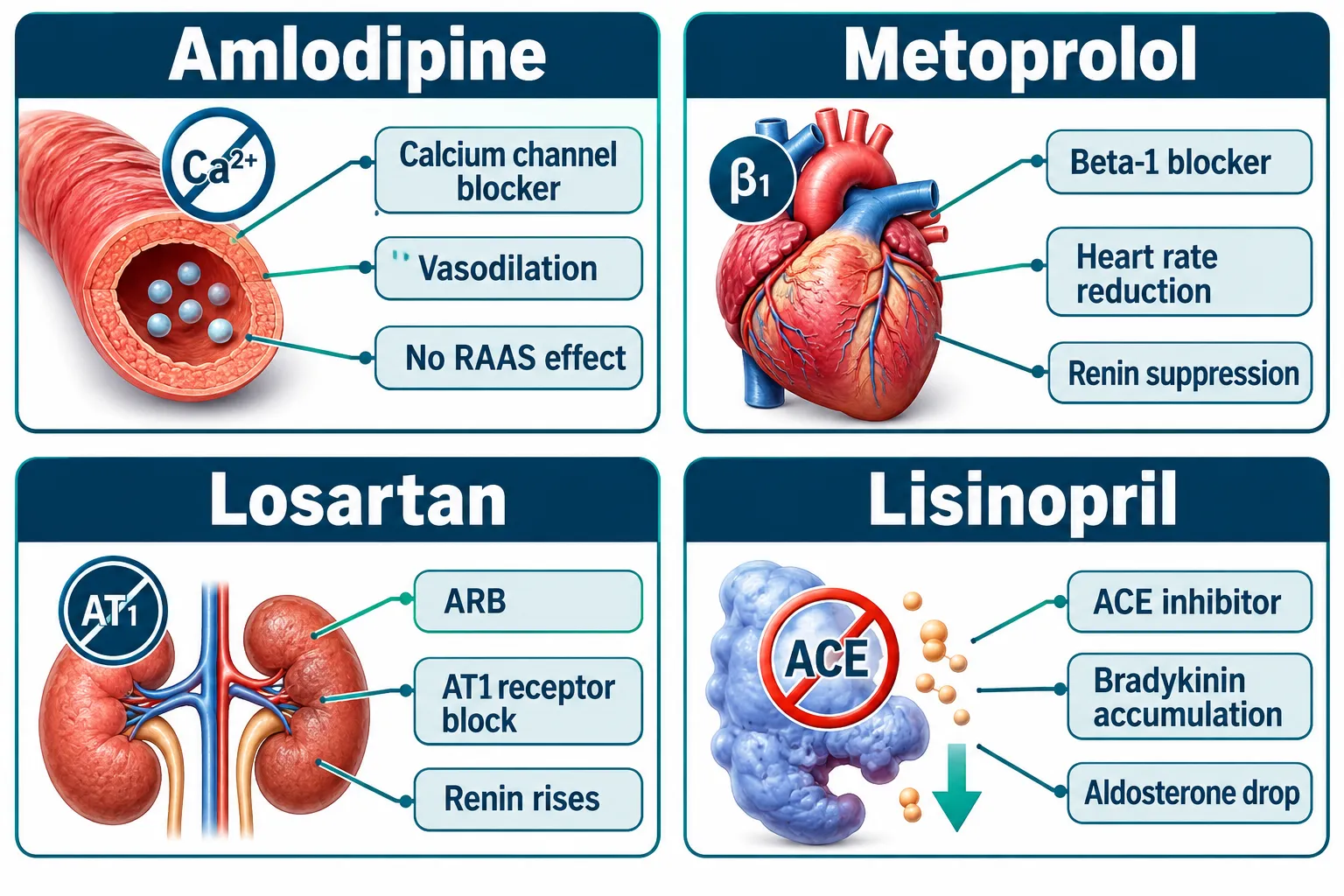
The Drug-Mechanism Matrix: Four Agents, Four Distinct Profiles

The starting point for interpreting any multi-drug peptide study is a clear mechanism matrix. These four agents divide into two groups: RAAS-active drugs (losartan and lisinopril) and non-RAAS comparators (amlodipine and metoprolol).

Drug Class Primary Mechanism RAAS Interference
Amlodipine Calcium channel blocker Peripheral vasodilation Minimal
Metoprolol Selective beta-1 blocker Heart rate and contractility reduction Low (mild renin suppression)
Losartan Angiotensin II receptor blocker (ARB) Blocks AT1 receptor High, raises renin, lowers aldosterone
Lisinopril ACE inhibitor Blocks angiotensin-converting enzyme High, raises bradykinin, lowers aldosterone

Amlodipine reduces peripheral vascular resistance by blocking L-type calcium channels in smooth muscle. It does not interfere with renin or angiotensin peptides, making it a relatively clean backdrop for measuring circulating peptide levels.

Metoprolol lowers heart rate and reduces cardiac output via beta-1 blockade. It mildly suppresses renin release from the kidney, but the effect is modest compared to full RAAS-active agents. It is a useful comparator when cardiac peptides such as BNP or NT-proBNP are primary endpoints.

Losartan blocks the AT1 receptor, preventing angiotensin II from binding. Because negative feedback on renin release is removed, plasma renin activity rises substantially. This reactive renin surge is a defining feature that must be accounted for in any peptide assay panel. Aldosterone falls due to reduced AT1 stimulation of the adrenal gland.

Lisinopril inhibits ACE, preventing conversion of angiotensin I to angiotensin II. It produces a different RAAS peptide signature: angiotensin I accumulates, bradykinin is not degraded (leading to elevated bradykinin levels), and aldosterone drops. These are not interchangeable with losartan's effects, treating them as equivalent in a dataset is a common and consequential analytical error.

"The RAAS peptide signatures of lisinopril and losartan are mechanistically distinct. Pooling them as a single 'RAAS-blocking' category erases information that is central to interpreting peptide biomarker shifts."

Researchers studying mitochondria-targeted peptides like those in the SS-31 peptide category may find amlodipine or metoprolol arms the most interpretively stable co-medication context, precisely because they leave RAAS peptide levels less disturbed.


How RAAS-Active Drugs Distort Peptide Biomarker Readouts
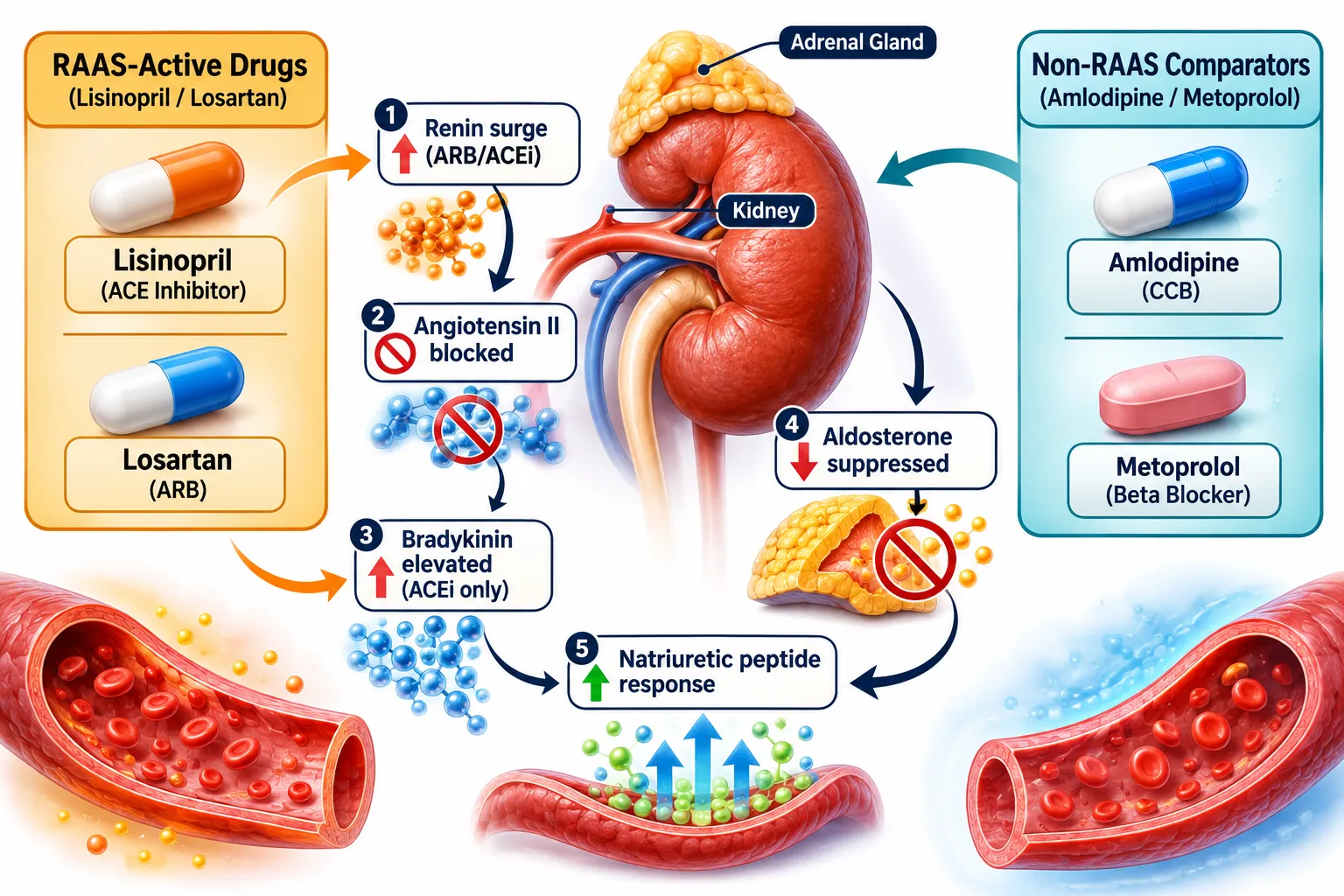
How RAAS-Active Drugs Distort Peptide Biomarker Readouts

Understanding peptide distortion is the core interpretive challenge when studying how to interpret amlodipine, metoprolol, losartan, and lisinopril together in peptide blood-pressure studies.

Renin and Aldosterone as Confounded Endpoints

Both losartan and lisinopril suppress aldosterone, but through different upstream events. If a study uses plasma aldosterone as a secondary peptide endpoint, results from an ARB arm and an ACE inhibitor arm cannot be directly compared without accounting for the different upstream mechanisms driving the shared output.

Renin behaves differently. Losartan markedly raises plasma renin activity (reactive rise from AT1 blockade). Lisinopril raises angiotensin I and also raises renin, but the magnitude and the accompanying peptide pattern differ. Metoprolol, by contrast, may modestly lower renin. Amlodipine has near-neutral renin effects.

Natriuretic Peptides and Cardiac Troponins

BNP and NT-proBNP are sensitive to changes in cardiac wall stress. Metoprolol, by reducing heart rate and workload, can lower BNP independent of any investigational peptide's effect. Amlodipine's vasodilatory action may also reduce wall stress. Neither drug activates or suppresses RAAS peptide synthesis directly, which preserves the signal-to-noise ratio for natriuretic peptide endpoints.

Lisinopril's bradykinin accumulation is associated with vasodilation and may independently influence cardiac filling pressures. This creates a confounder for natriuretic peptide endpoints that is entirely separate from any investigational peptide being tested.

Dual RAAS Blockade: The High-Risk Combination

Studies that include patients taking both lisinopril and losartan simultaneously (dual RAAS blockade) face amplified biomarker distortion. Renin rises substantially. Aldosterone suppression deepens. The risk of hyperkalemia increases. Peptide assays run in this context will reflect a heavily modified RAAS environment, making it very difficult to attribute peptide changes to the investigational agent.

Practical rule: flag all dual RAAS blockade subjects as a separate analytical stratum at the protocol design stage, not post-hoc.

For researchers interested in peptides with vascular or renal cytoprotective profiles, reviewing options like SS-31 peptide benefits alongside background medication data can help contextualize why RAAS status at baseline matters so much. Similarly, researchers exploring RETA peptide compounds in cardiovascular models need to pre-specify whether subjects are on RAAS-active agents before drawing mechanistic conclusions.


Practical Interpretive Rules for Peptide-Oriented Blood-Pressure Studies
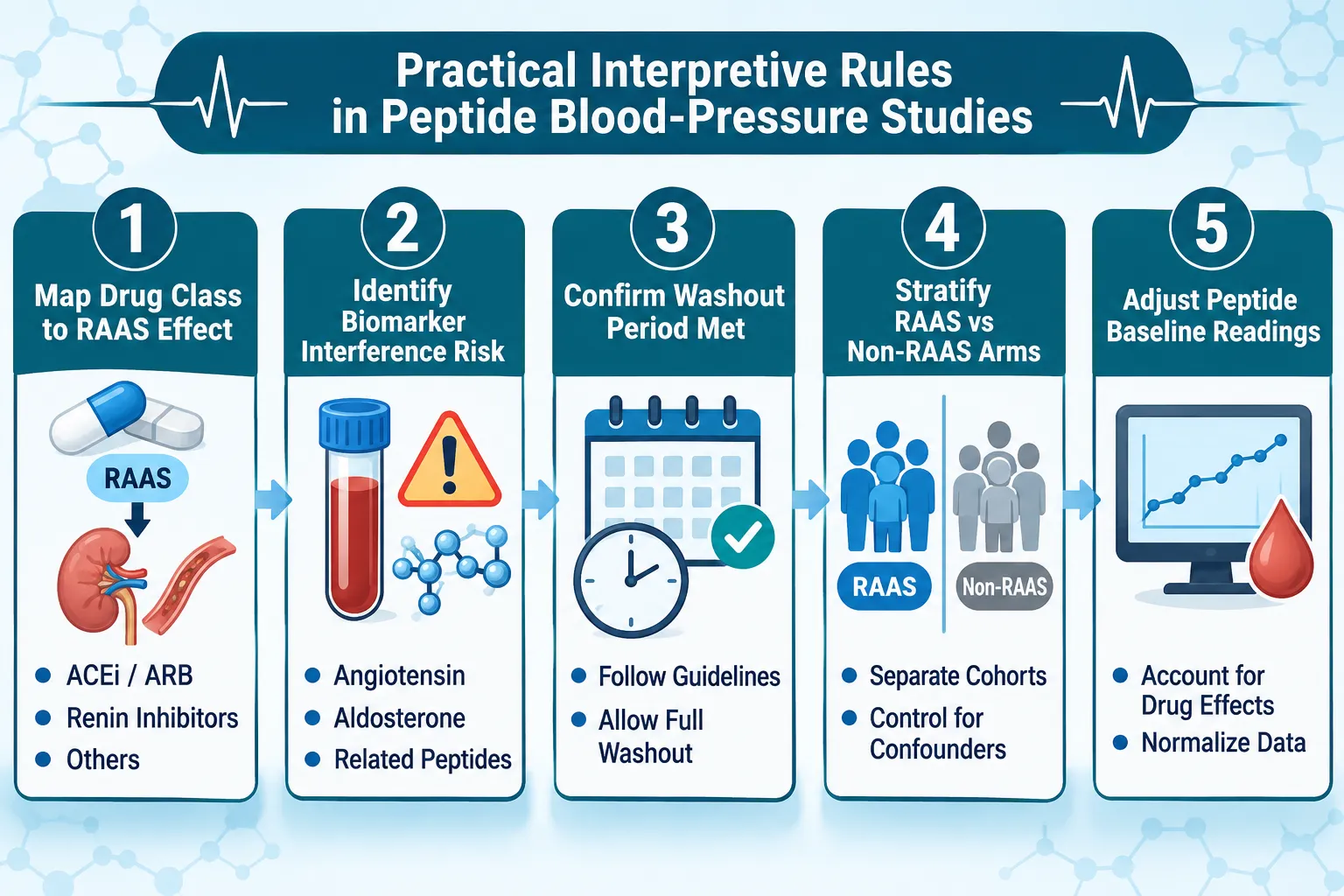
Practical Interpretive Rules for Peptide-Oriented Blood-Pressure Studies

Applying the right framework is what separates a defensible analysis from a compromised one. The following rules apply directly to how to interpret amlodipine, metoprolol, losartan, and lisinopril together in peptide blood-pressure studies.

Rule 1: Stratify by RAAS Status Before Analysis

Always separate subjects into RAAS-active (losartan, lisinopril, or both) and non-RAAS (amlodipine, metoprolol) strata before running peptide endpoint analyses. Pooling these groups masks differential biomarker interference.

Rule 2: Use Amlodipine or Metoprolol Arms as Peptide-Reference Arms

Because amlodipine and metoprolol produce minimal direct RAAS peptide interference, they function as the best available within-study reference for a stable peptide background. When an investigational peptide is tested against one of these agents, the signal from the peptide is easier to isolate.

Rule 3: Specify Washout Periods by Drug Class

Washout requirements differ:

  • Amlodipine has a half-life of 30 to 50 hours; allow at least 7 days for full washout in crossover designs.
  • Metoprolol (immediate release) clears within 24 to 48 hours; extended release requires longer.
  • Losartan has a shorter half-life (~2 hours) but active metabolite EXP3174 persists longer; allow 4 to 5 days.
  • Lisinopril has a half-life of approximately 12 hours for accumulation-phase clearance; allow 3 to 5 days.

Rule 4: Account for Fixed-Dose Combination Products

Many patients in real-world trials take fixed-dose combinations (e.g., amlodipine plus lisinopril, or amlodipine plus losartan). When a single pill contains two agents from different mechanism classes, it may appear as one drug in a medication list but actually creates a mixed RAAS/non-RAAS background. Verify the full composition of combination products during enrollment screening.

Rule 5: Treat Renin-Aldosterone Pairs as a Linked Panel

Never interpret renin in isolation in a study that includes losartan or lisinopril. Always report the renin-to-aldosterone ratio as a linked pair. A rising renin with normally suppressed aldosterone indicates AT1 blockade; a rising renin with elevated bradykinin indicates ACE inhibition. These are interpretively distinct situations that point to different underlying RAAS peptide environments.

Researchers exploring how peptide combinations interact may also find guidance in resources like can you take ipamorelin and CJC-1295 together relevant when designing multi-peptide co-administration protocols, the same principle of mechanism overlap applies. Those sourcing compounds for vascular peptide research should also consult where to buy SS-31 peptide resources to ensure research-grade purity when interpreting results against antihypertensive backgrounds.


Conclusion

Correctly interpreting how amlodipine, metoprolol, losartan, and lisinopril interact with peptide endpoints in blood-pressure studies requires a structured, mechanism-first approach. The critical action steps for 2026 research protocols are:

  1. Build a drug-mechanism matrix at the protocol design stage, not retrospectively.
  2. Stratify RAAS-active versus non-RAAS patients before any peptide endpoint analysis.
  3. Define washout periods per drug class in the protocol, not as a universal blanket period.
  4. Flag dual RAAS blockade subjects as a separate stratum and handle them in sensitivity analyses.
  5. Report renin and aldosterone as a linked biomarker pair whenever losartan or lisinopril is present.

Treating these four drugs as interchangeable antihypertensive background medications is one of the most common and avoidable errors in peptide cardiovascular research. Applying a disciplined interpretive framework at the design stage protects the integrity of every peptide endpoint collected downstream.

Tags: ace inhibitor arb comparison, amlodipine metoprolol losartan lisinopril, antihypertensive drug mechanisms, dual raas blockade, natriuretic peptides, peptide blood pressure studies, raas biomarker interference, renin aldosterone endpoints
https://www.puretestedpeptides.com/wp-content/uploads/2026/11/how-to-interpret-amlodipine-metoprolol-losartan-and-lisinopril-together-in-pepti.webp 1024 1536 https://www.puretestedpeptides.com/wp-content/uploads/2026/01/buy-peptides-online.jpg 2026-11-05 14:03:402026-11-05 14:03:40How to Interpret Amlodipine, Metoprolol, Losartan, and Lisinopril Together in Peptide Blood-Pressure Studies
You might also like
Spironolactone, Furosemide, and Hydrochlorothiazide: Fluid-Balance Controls in Peptide Studies Spironolactone, Furosemide, and Hydrochlorothiazide: Fluid-Balance Controls in Peptide Studies
Spironolactone and Peptide Research: Interpreting Potassium, Renal, Hormonal, and Fluid-Balance Variables Spironolactone and Peptide Research: Interpreting Potassium, Renal, Hormonal, and Fluid-Balance Variables
0 replies

Leave a Reply

Want to join the discussion?
Feel free to contribute!

Leave a Reply Cancel reply

Your email address will not be published. Required fields are marked *

×

Helpful Links

  • My account
  • Cart
  • Checkout
  • Refund and Returns Policy
  • Privacy Policy
  • SMS Privacy Policy
  • Login
  • My Account
  • Logout

USA Made Lab Tested Peptides

All products are sold for research, laboratory, or analytical purposes only, and are not for human consumption


Pure Tested Peptides is a chemical supplier. Pure Tested Peptides is not a compounding / chemical compounding facility as defined under 503A of the Federal Food, Drug, and Cosmetic act. Pure Tested Peptides is not an outsourcing facility as defined under 503B of the Federal Food, Drug, and Cosmetic act.

The statements made within this website have not been evaluated by the US Food and Drug Administration. The products we offer are not intended to diagnose, treat, cure or prevent any disease.

Human/Animal Consumption Prohibited. Laboratory/In-Vitro Experimental Use Only

Link to: PT-141 in Receptor-Mechanism Studies: Separating Melanocortin Signaling From Vascular and Behavioral Readouts Link to: PT-141 in Receptor-Mechanism Studies: Separating Melanocortin Signaling From Vascular and Behavioral Readouts PT-141 in Receptor-Mechanism Studies: Separating Melanocortin Signaling From...PT-141 in Receptor-Mechanism Studies: Separating Melanocortin Signaling From Vascular and Behavioral Readouts Link to: Electrolytes, Diuretics, and Growth-Hormone Peptides: Interpreting Fluid Retention Without Misreading Body Composition Link to: Electrolytes, Diuretics, and Growth-Hormone Peptides: Interpreting Fluid Retention Without Misreading Body Composition Electrolytes, Diuretics, and Growth-Hormone Peptides: Interpreting Fluid Retention Without Misreading Body CompositionElectrolytes, Diuretics, and Growth-Hormone Peptides: Interpreting Fluid Retention...
Scroll to top Scroll to top Scroll to top