

Electrolytes, Diuretics, and Growth-Hormone Peptides: Interpreting Fluid Retention Without Misreading Body Composition
A single dose of furosemide can drop the scale by two to four pounds overnight, none of it fat. Yet that number routinely gets recorded as "progress." Understanding electrolytes, diuretics, and growth-hormone peptides: interpreting fluid retention without misreading body composition is one of the most clinically important skills anyone tracking physique or health metrics needs to develop in 2026.
Sodium, potassium, hydration status, thiazide diuretics like hydrochlorothiazide (HCTZ), loop diuretics like furosemide, and growth-hormone-releasing peptides all move water in and out of tissues. When those shifts go unaccounted for, lean-mass and weight endpoints become meaningless noise.
Key Takeaways
- Fluid retained or lost because of electrolytes, diuretics, or GH peptides is not fat gained or lost.
- Bioelectrical impedance analysis (BIA) is highly sensitive to hydration status and electrolyte balance, often producing wildly inaccurate lean-mass readings.
- Growth-hormone peptides cause dose-dependent, reversible water retention by altering sodium handling rather than increasing fat mass.
- Diuretics deplete electrolytes alongside water, compounding measurement error and adding real cardiovascular risk.
- Body composition should only be assessed after fluid status, medications, and measurement timing are standardized.
How Growth-Hormone Peptides Drive Fluid Retention
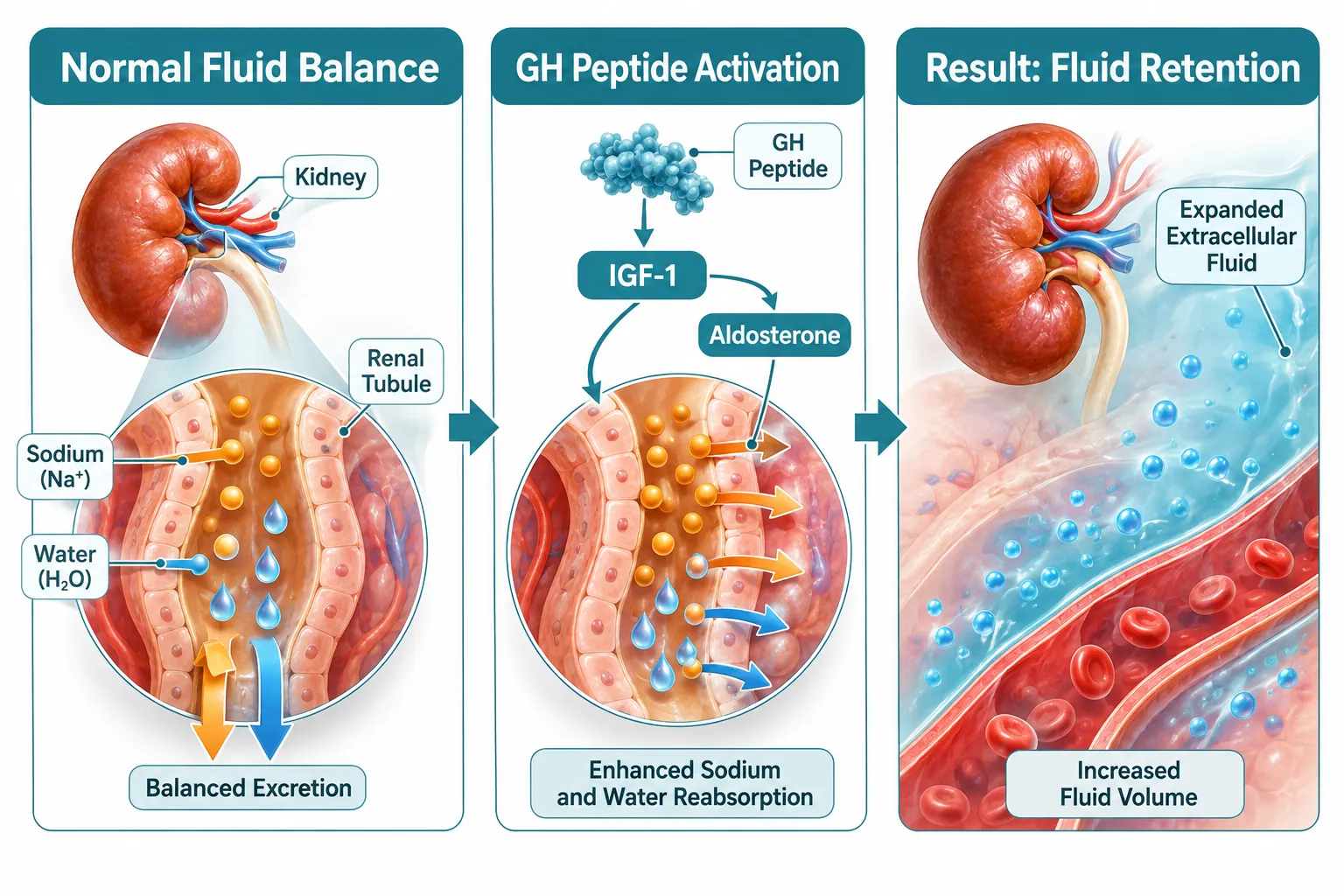
Growth-hormone secretagogues and GHRH analogs, the class of compounds that includes tesa-based protocols, stimulate endogenous GH release. That GH pulse triggers an IGF-1 response that, in turn, promotes sodium and water reabsorption in the renal tubules. The result is an expansion of extracellular fluid volume that shows up almost immediately on the scale.
This mechanism is well-established. GH and GH-related peptides shift sodium-water handling rather than directly increasing adipose tissue. The water retention is dose-dependent: larger or more frequent administrations produce more pronounced fluid accumulation. Critically, the effect is reversible, fluid redistributes back toward baseline when dosing is reduced or discontinued.
"The scale going up during a GH peptide protocol almost always reflects water, not fat. Treating it as fat gain is a measurement error, not a physiology lesson."
For anyone following a tesa dosage for bodybuilding protocol, understanding this distinction prevents unnecessary caloric restriction that undermines the goal of the compound entirely.
Regulatory labeling updated in 2025-2026 now consistently highlights fluid retention as a primary monitoring parameter for GH-class products, reinforcing that practitioners must track it separately from true composition changes.
Why Diuretics Distort the Picture Further
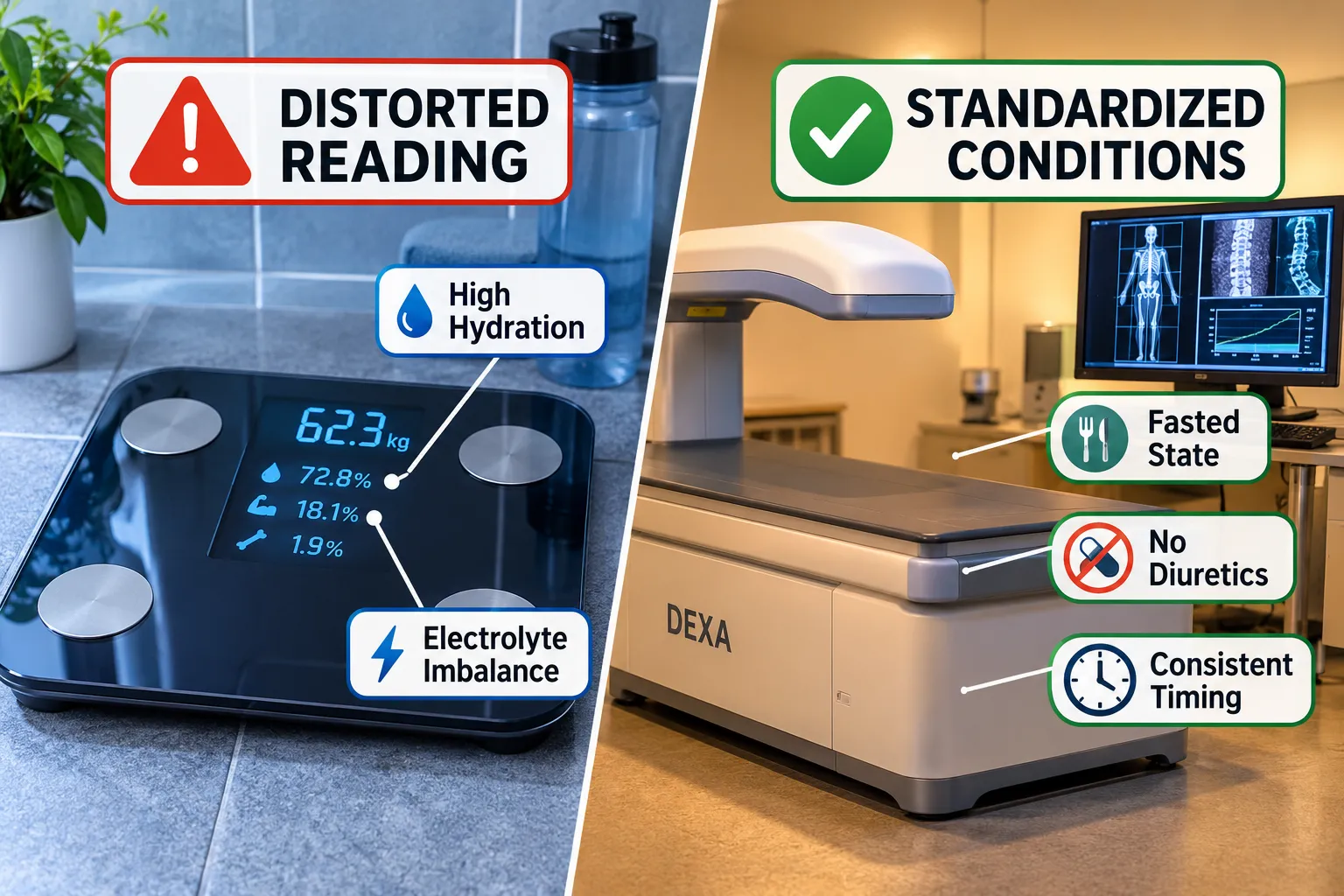
Diuretics operate through completely different mechanisms, yet they produce a mirror-image problem. HCTZ works on the distal tubule to block sodium-chloride co-transport, pulling water out through the kidneys. Furosemide, a loop diuretic, blocks a broader sodium-potassium-chloride transporter in the loop of Henle, producing faster and more dramatic fluid loss, along with significant potassium and magnesium depletion.
The clinical danger here is twofold:
- Measurement distortion: Rapid water loss makes the scale drop and BIA devices report falsely elevated lean-mass percentages, since the device interprets lower total body water as proportionally more muscle.
- Electrolyte depletion + exercise risk: Diuretic-driven hypokalemia combined with intense physical activity magnifies cardiac arrhythmia risk. This is not theoretical, it is a documented interaction that has ended athletic careers.
Combining diuretics with GH peptide protocols creates competing fluid signals. The peptide retains water; the diuretic flushes it. The body composition reading at any single point reflects whichever force is currently dominant, not actual tissue changes.
| Compound | Primary Fluid Action | Electrolyte Effect | BIA Impact |
|---|---|---|---|
| GH Peptides | Increases extracellular water | Mild sodium retention | Falsely lower lean-mass % |
| HCTZ | Reduces total body water | Potassium/magnesium loss | Falsely higher lean-mass % |
| Furosemide | Rapid total body water loss | Significant K+/Mg2+ depletion | Severely distorted readings |
Standardizing Assessment to Get Accurate Body Composition Data
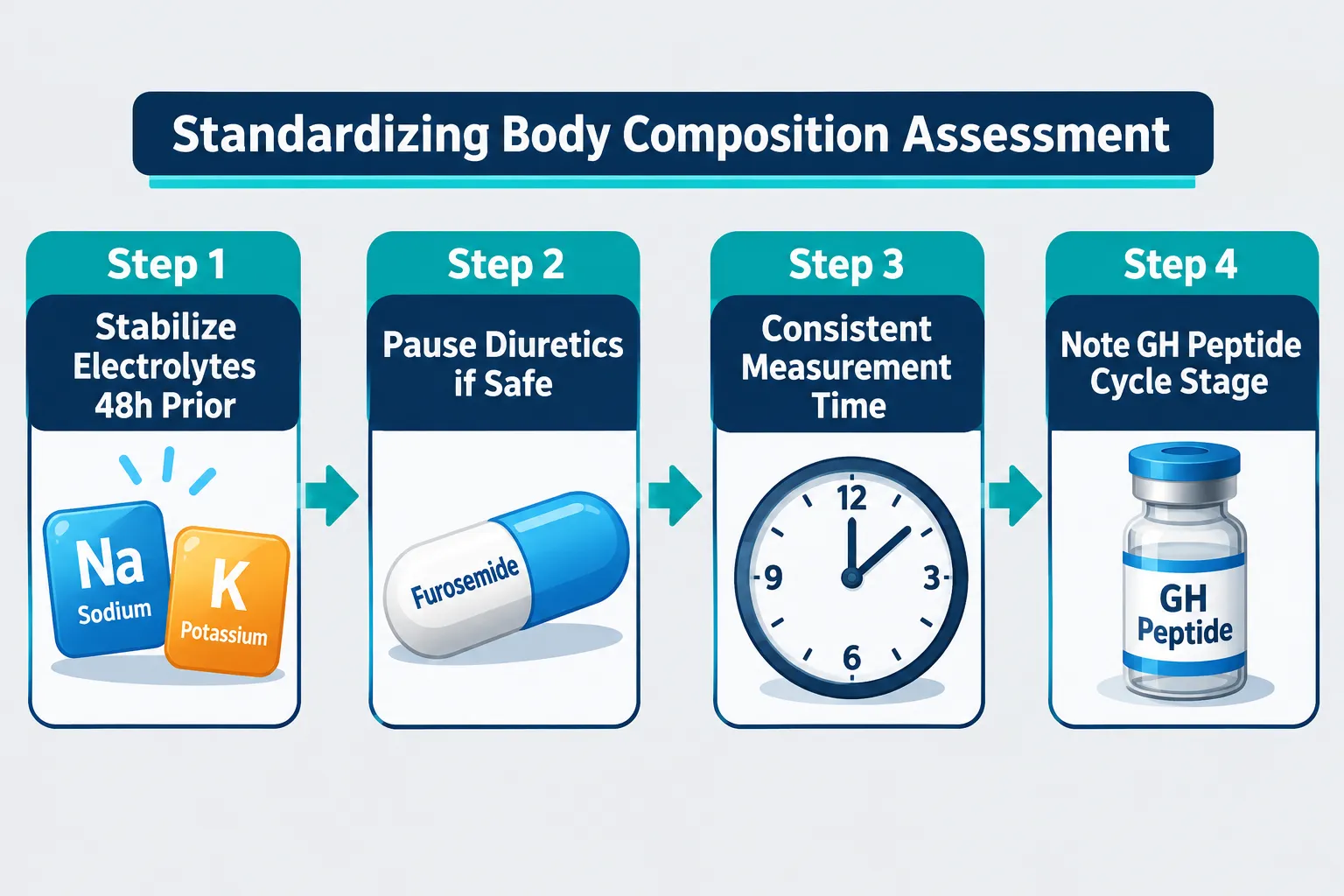
The expert consensus in 2026 is clear: body composition should only be interpreted when fluid status, medications, and timing have been standardized. Without that foundation, even imaging-based methods like DEXA are affected, though less so than BIA.
BIA scales are the worst performers under variable hydration conditions. A person who drank an extra liter of water or took a diuretic the previous evening can see lean-mass readings shift by three to five pounds from one morning to the next with zero actual tissue change. For anyone researching peptide compounds and their effect on weight endpoints, this point cannot be overstated. Resources like what is the strongest peptide for weight loss often focus on fat oxidation mechanisms, but those mechanisms are invisible if the measurement tool is compromised by fluid noise.
A practical standardization protocol:
- 48 hours before assessment: stabilize sodium and potassium intake; avoid high-sodium processed foods.
- Morning of assessment: fasted state, consistent time (within 30 minutes of prior tests), post first void.
- Medication pause: if clinically safe, pause diuretics for 48 hours before measurement; document GH peptide cycle stage.
- Hydration: maintain consistent water intake; avoid heavy exercise the prior day.
- Record confounders: note menstrual cycle phase, recent illness, travel, or unusual stress.
This protocol applies whether using BIA, DEXA, or hydrostatic weighing. The goal is to hold the fluid variable constant so that any change in the number genuinely reflects tissue change.
For those researching peptide mechanisms more broadly, the GLP-3 peptide signaling pathway article provides useful context on how peptide classes interact with metabolic endpoints differently, and how GLP-1 peptides affect body composition through appetite and metabolic routes rather than direct fluid retention pathways.
Looking ahead, body-composition tool manufacturers are expected to integrate hydration and medication flags directly into consumer and clinical devices, a development that would automatically alert users when a reading is likely compromised by fluid status.
Conclusion
Fluid retention from electrolyte shifts, diuretic use, or growth-hormone peptide protocols is one of the most common and least-corrected sources of body-composition measurement error. Recognizing that a rising scale during a GH peptide cycle reflects reversible water retention, not fat gain, and that furosemide or HCTZ "weight loss" reflects electrolyte depletion rather than fat reduction, is foundational to any honest tracking practice.
Actionable next steps:
- Standardize measurement conditions before drawing any conclusion from a body composition reading.
- Document current medications, including diuretics and peptide cycle stage, alongside every assessment.
- Use BIA readings only as directional trend data, not absolute values, whenever hydration or electrolyte status is in flux.
- If managing both diuretic and GH peptide protocols, consider imaging-based assessments at standardized intervals rather than relying on daily scale data.
- Consult a qualified clinician before pausing any prescribed diuretic for measurement purposes.
Accurate composition data is only possible when the fluid variable is controlled. Everything else is measuring water.


Leave a Reply
Want to join the discussion?Feel free to contribute!