Call or Text 727-513-9780
  • Shopping Cart Shopping Cart
    0Shopping Cart
Pure Tested Peptides | America's most trusted Peptides for sale online
  • Peptides for sale
    • Oral Peptides for sale
      • Peptide Capsules for sale
      • BPC 157 Capsules 1000mcg
      • SLU-PP-332 Capsules | 1000 mcg
      • 5-Amino-1MQ 50mg Capsules
      • Tesofensine 500mcg
    • All Peptides for sale
    • Peptide Sprays
      • BPC 157 Nasal Spray Kit
      • BPC-157 TB500 Nasal Spray Kit
      • Semax Nasal Spray 10mg
      • Selank – Nasal Spray Kit – 10mg
      • Epithalon 50MG Nasal Spray Kit
      • Ipamorelin 10mg Nasal Spray
      • Klow Nasal Spray (BPC-157 + TB-500 + GHK-Cu + KPV) | 80mg
      • Hulk Nasal Spray Tesa / Ipa Blend 6/3 MG
      • Klow Nasal Spray
      • NAD + 500 mg Nasal Spray
      • PT-141 Nasal Spray Kit
    • GHRH Peptides
      • Ipa Peptides
      • CJC-1295 Peptides
        • CJC-1295 with DAC 5 mg
        • CJC-1295 without DAC 5 mg
        • CJC-1295 Ipa 10mg
      • Tesa Peptides
        • Tesa Peptide
        • Tesa 20 mg
    • GHK-Cu Peptides
      • All GHK-Cu Peptides
      • GHK-Cu 100mg
      • KLOW Peptide Blend – Buy KLOW blend online
    • BPC Peptides
      • All BPC Peptides
      • BPC-157
      • BPC-157 TB-500
      • BPC 157 capsules 1000mcg
    • SLU-PP-332 Peptides
      • All SLU-PP-332 Peptides
      • SLU-PP-332 5mg
    • GLP3 Peptides
      • GLP3-R
      • GLP3-R CAG 10mg
      • GLP3-R 20mg
    • PT-141 Peptides
      • PT-141 Peptides for sale
      • PT-141 10mg
      • PT-141 Nasal Spray
    • CAG Peptides
      • Lipo-C Peptide Blend
      • CAG 5mg
      • CAG 10mg
    • MOTS-C Peptides
      • MOTS-C Peptides for sale
      • MOTS-c peptide
      • MOTS-c 10mg *6 pack*
    • 5 Amino 1MQ Peptides
      • 5 Amino 1MQ Peptides for sale
      • 5-Amino-1MQ 50mg Capsules
      • 5-Amino-1MQ 5mg
    • Epithalon Peptides
      • Epithalon Peptides for sale
      • Epithalon 10mg
      • Epithalon 50mg
  • Shop
    • GLPs
      • 5-Amino-1MQ 50mg Capsules
      • 5-Amino-1MQ 5mg
      • GLP3-Reta
      • L-Carnitine 500mg/ml
      • Tesofensine 500mcg
      • SLU-PP-332 5mg
      • MOTS-c 10mg *6 pack*
    • Epithalon & BPC Peptides
      • Epithalon 10mg
      • Epithalon 50mg
      • BPC-157
      • BPC 157 capsules 1000mcg
      • BPC-157 TB-500
      • BPC-157 TB500 Nasal Spray Kit
      • BPC 157 Nasal Spray Kit
    • BPC TB-500 & NAD+ Peptides
      • NAD+ 500 mg
      • KLOW Peptide Blend – Buy KLOW blend online
      • GLOW Peptide Blend
      • TB 500 5mg
      • BPC 157 capsules 1000mcg – Supplement
      • BPC 157 Nasal Spray Kit
      • BPC-157
      • BPC-157 TB500 Nasal Spray Kit
      • BPC-157 TB-500
      • BPC 157 capsules 1000mcg
    • LL-37 Peptide
      • LL-37 10 mg
    • MOTS-C & Selank
      • MOTS-c peptide
      • Selank 10mg
    • GHK Peptides
      • GHK-Cu 100mg
      • GLOW Peptide Blend
      • KLOW Peptide Blend – Buy KLOW blend online
  • COAs
  • Wholesale
    • Wholesale Peptides for sale
  • PTP FAQ
  • Affiliates
    • Affiliate Program
    • Affiliate Signup
  • Contact
    • Contact Customer Service
    • Text Customer Support
  • About US
  • Shop all peptides
  • Login / Register Login / Register Page Link Login / Register Page Link
  • Click to open the search input field Click to open the search input field Search
  • Menu Menu
Carbohydrate Antigens, GLP Peptides, and Gut Hormone Biology: How GLP‑2‑T and GLP‑3 Retatrutide Are Used in Laboratory Metabolic Models

Carbohydrate Antigens, GLP Peptides, and Gut Hormone Biology: How GLP‑2‑T and GLP‑3 Retatrutide Are Used in Laboratory Metabolic Models

June 8, 2026/0 Comments/in Uncategorized/by

Researchers searching for carbohydrate antigens often arrive at a broader and more complex story than they expected — one that connects gut-surface glycoproteins, enteroendocrine signaling, and next-generation incretin peptides into a single field of immunometabolic inquiry. Understanding Carbohydrate Antigens, GLP Peptides, and Gut Hormone Biology: How GLP‑2‑T and GLP‑3 Retatrutide Are Used in Laboratory Metabolic Models requires tracing how the intestinal epithelium functions simultaneously as an immune interface and a hormone-secreting organ.

Key Takeaways

  • Carbohydrate antigens on gut epithelial surfaces are structurally linked to the same L cells that secrete GLP-1 and GLP-2 peptides
  • GLP-2 (sometimes labeled GLP-2-T in research contexts) is a short-lived postprandial hormone with a half-life of roughly seven minutes, primarily driving intestinal growth
  • Retatrutide, informally called GLP-3 in research communities, is a triple agonist targeting GLP-1, GIP, and glucagon receptors simultaneously
  • The gut microbiome modulates incretin secretion through short-chain fatty acid (SCFA) production, linking microbial ecology to metabolic peptide biology
  • Laboratory metabolic models use these peptides to study obesity, glucose homeostasis, liver fat, and intestinal barrier function
Key Takeaways

The Gut Epithelium as Both Antigen Display and Hormone Factory

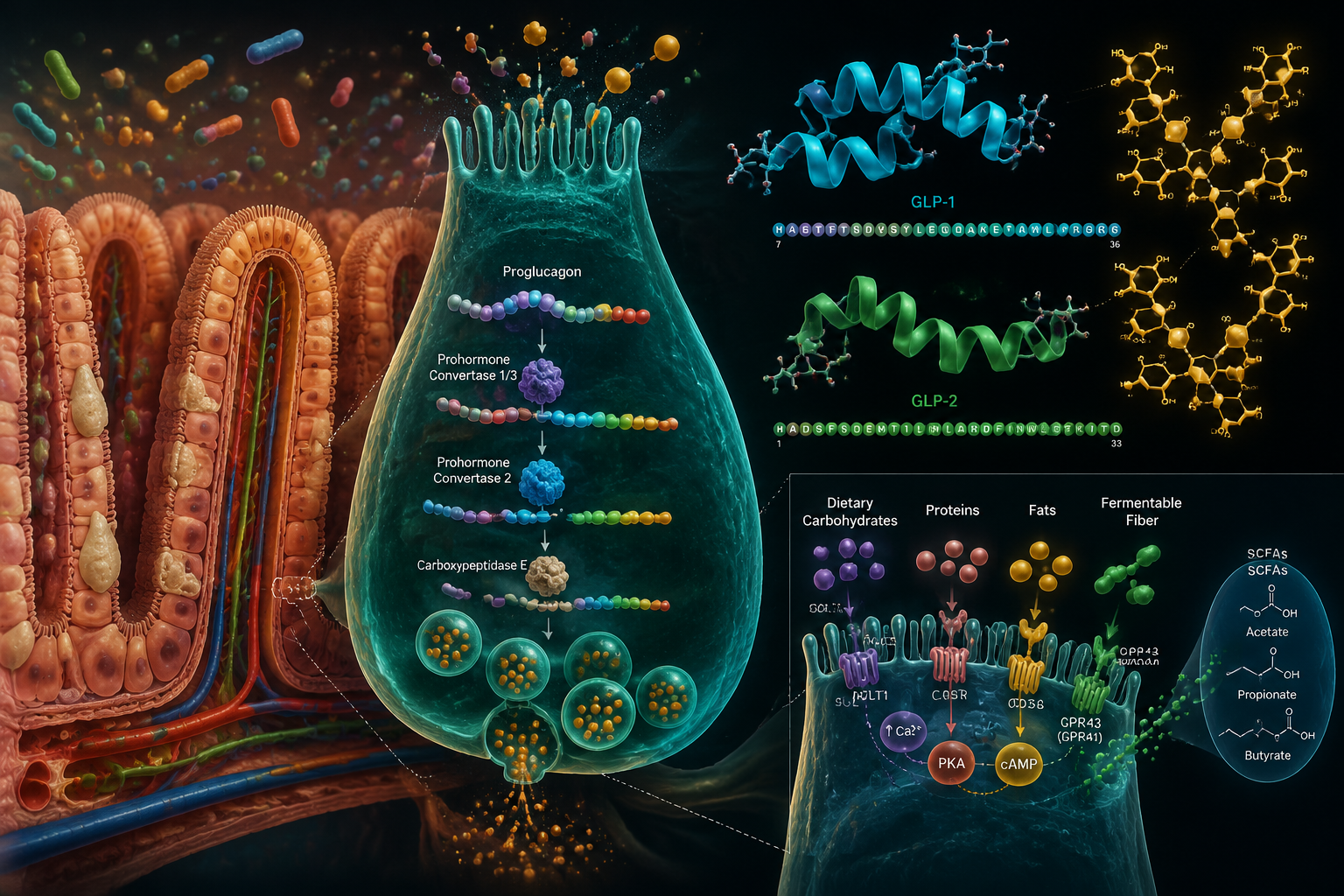
The intestinal lining does two jobs at once. Its surface is decorated with carbohydrate antigens — complex sugar chains attached to glycoproteins and glycolipids — that interact with immune cells, pathogens, and the gut microbiome. At the same time, specialized enteroendocrine L cells embedded in that same epithelium sense luminal nutrients and release proglucagon-derived peptides (PGDPs), including GLP-1 and GLP-2.

This dual role is not coincidental. The same nutrient-sensing machinery that triggers incretin release also modulates surface antigen expression. Short-chain fatty acids produced by gut bacteria bind to free fatty acid receptors on L cells, stimulating GLP-1 and peptide YY (PYY) secretion. Disruptions in this axis — whether from dysbiosis, inflammation, or altered glycan expression — impair glucose homeostasis at a fundamental level.

GLP-2, released alongside GLP-1 from the same L cells, has a distinct role: it promotes intestinal mucosal growth, enhances barrier integrity, and reduces gut permeability. Its half-life is approximately seven minutes in native form, which is why research models use stabilized analogs (sometimes designated GLP-2-T) to study its effects over longer windows. For researchers exploring generations of GLP-1 analogs and their differences, understanding GLP-2's parallel biology adds important context.

"The intestinal epithelium is not a passive barrier — it is an active endocrine and immunological organ whose carbohydrate surface determines how both pathogens and peptide hormones interact with the host."

GLP‑2‑T and GLP‑3 Retatrutide in Laboratory Metabolic Models
GLP‑2‑T and GLP‑3 Retatrutide in Laboratory Metabolic Models

This is where Carbohydrate Antigens, GLP Peptides, and Gut Hormone Biology: How GLP‑2‑T and GLP‑3 Retatrutide Are Used in Laboratory Metabolic Models becomes directly actionable for research design.

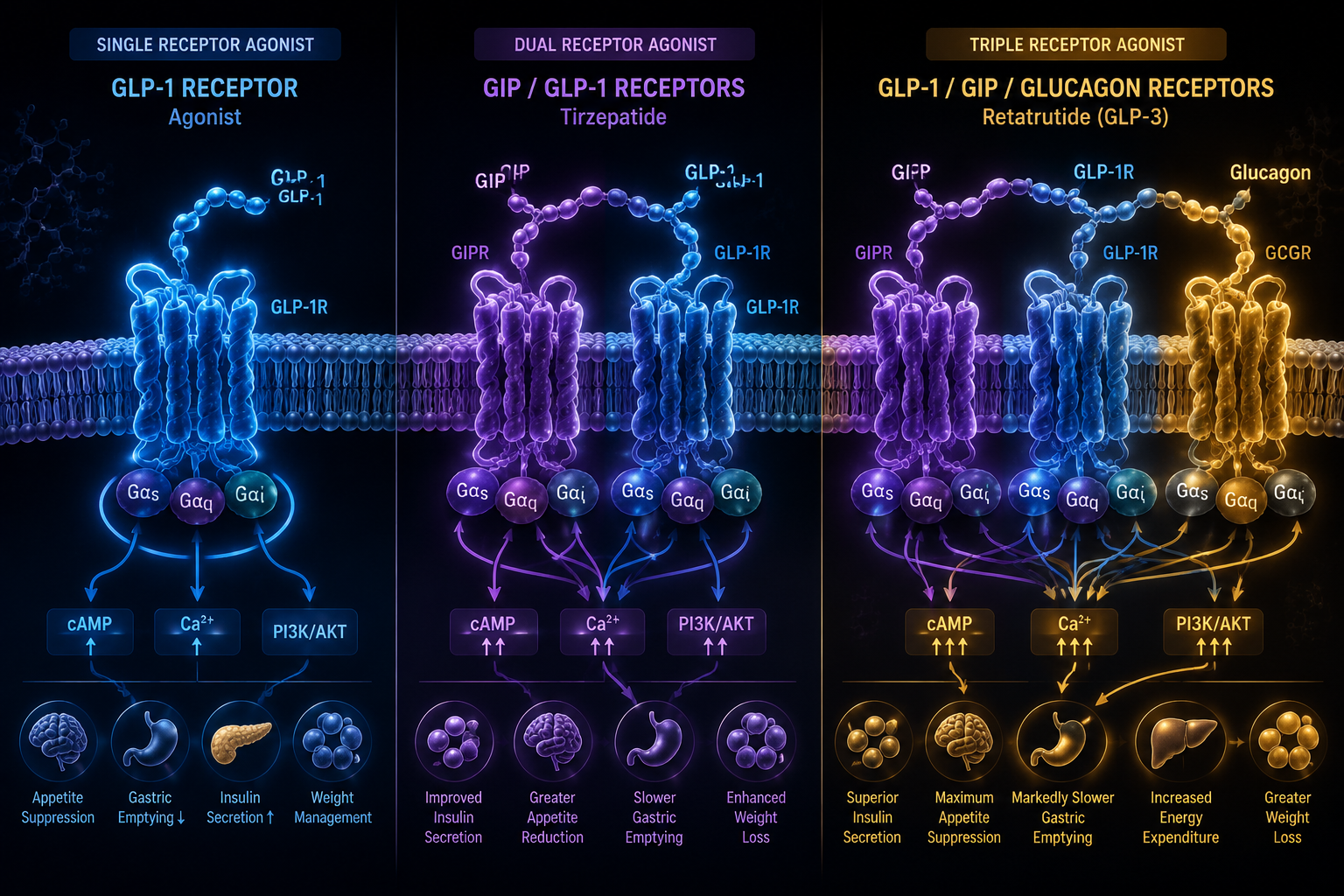
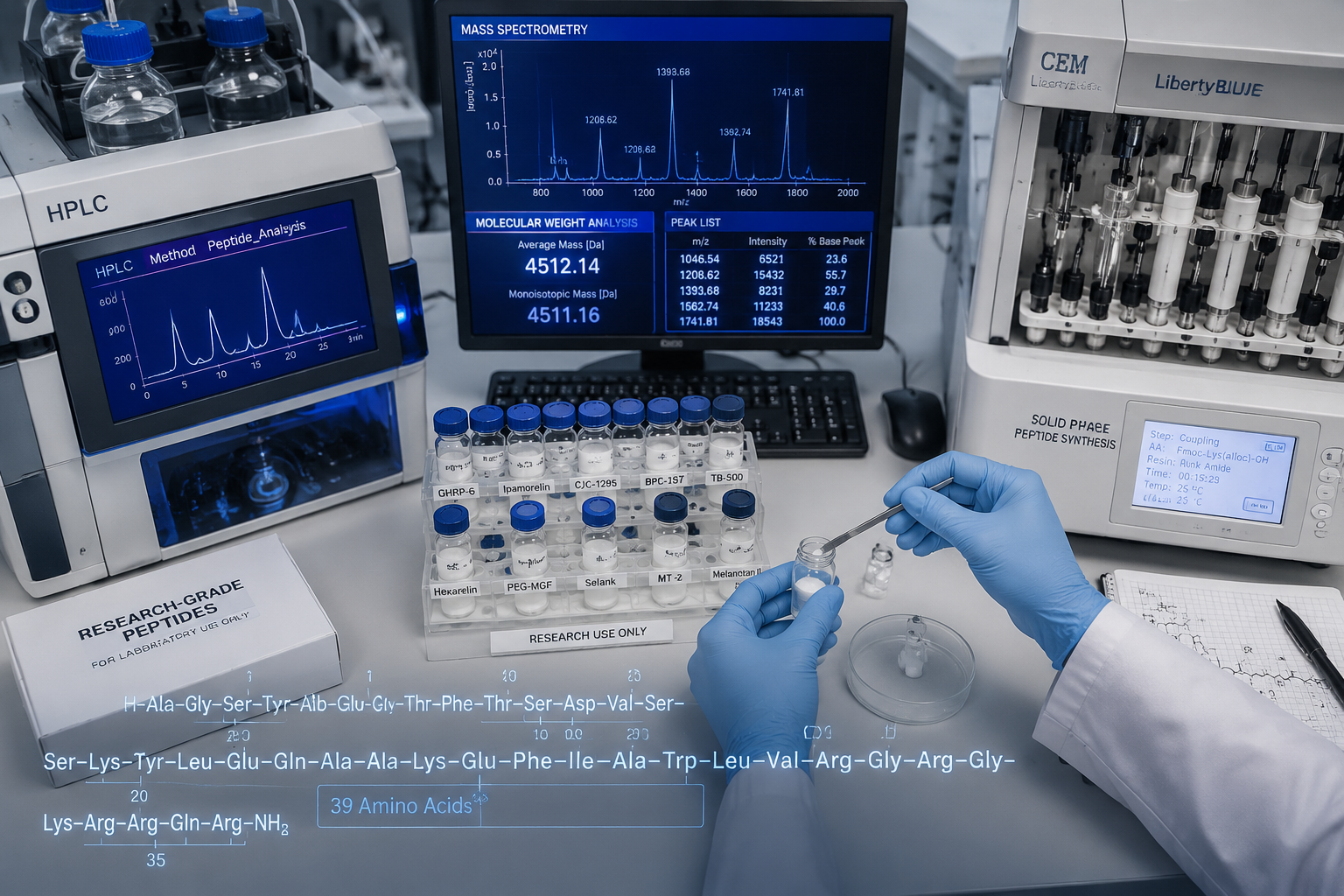
Retatrutide (LY3437943), informally called GLP-3 to emphasize its triple mechanism, is a 39-amino-acid synthetic peptide. It simultaneously activates GLP-1, GIP, and glucagon receptors — a profile that distinguishes it sharply from semaglutide (GLP-1 only) and tirzepatide (GLP-1 plus GIP). Its structure includes 2-aminoisobutyric acid (Aib) substitutions and a C20 fatty-diacid moiety, synthesized via solid-phase peptide synthesis for research-grade precision.

Phase 2 data showed dose-dependent reductions in body weight, liver fat content, and fasting glucose, alongside improvements in body composition. The glucagon receptor component adds a metabolic dimension absent in earlier incretin therapies — driving hepatic glucose output modulation and energy expenditure in ways that pure GLP-1 agonism cannot replicate. Researchers can explore the GLP-3 triple agonist research overview for deeper mechanistic detail.

Comparing Key Metabolic Peptides Used in Research Models

Peptide Receptor Targets Primary Research Focus
GLP-2 / GLP-2-T GLP-2R Intestinal growth, barrier integrity
Tirzepatide GLP-1R + GIPR Glycemic control, weight loss
Retatrutide (GLP-3) GLP-1R + GIPR + GCGR Weight, liver fat, energy expenditure
MOTS-C AMPK via AICAR Mitochondrial metabolism

For researchers also studying mitochondrial metabolic pathways, MOTS-C as a mitochondrial-derived peptide represents a complementary but mechanistically distinct tool. Similarly, the cagrilintide and GLP-1 synergy research illustrates how combination approaches are reshaping metabolic model design in 2026.

Applying This Framework to Advanced Immunometabolic Research
Applying This Framework to Advanced Immunometabolic Research

The convergence of Carbohydrate Antigens, GLP Peptides, and Gut Hormone Biology: How GLP‑2‑T and GLP‑3 Retatrutide Are Used in Laboratory Metabolic Models opens specific experimental opportunities.

First, carbohydrate antigen panels (such as CA 19-9 or Lewis antigen variants) are increasingly used alongside incretin assays to characterize gut epithelial status in metabolic disease models. Altered glycan expression correlates with L-cell density changes, which directly affects GLP-1 and GLP-2 output.

Second, receptor distribution matters. GLP-1R, GLP-2R, and GIPR are expressed in distinct cell populations within the gastrointestinal tract, each with unique downstream signaling circuits. Designing a model that conflates these receptors produces unreliable data. Researchers using lab-tested peptides for metabolic studies should verify receptor specificity before drawing mechanistic conclusions.

Third, the gut microbiome variable cannot be ignored. SCFA-driven incretin secretion means that germ-free versus colonized animal models will produce meaningfully different GLP peptide profiles, even when the same compound is administered.

For researchers sourcing compounds, reviewing peptide supplier comparisons and ensuring purity documentation is essential before beginning any gut hormone biology protocol.

Conclusion

The bridge between carbohydrate antigen biology and GLP peptide research is not theoretical — it is structural. The same intestinal epithelium that displays immunologically active glycan antigens is the tissue that secretes GLP-1, GLP-2, and the hormones that next-generation compounds like Retatrutide are designed to engage. For researchers building metabolic models in 2026, the actionable steps are clear: characterize epithelial antigen status alongside incretin output, distinguish receptor targets precisely when selecting GLP-2-T versus GLP-3 analogs, and account for microbiome-driven SCFA variability in experimental design. Sourcing research-grade peptides with verified purity and cross-referencing mechanistic data from the GLP-1 dual receptor agonism research breakdown will strengthen the validity of any gut hormone biology protocol.

Tags: carbohydrate antigens, enteroendocrine signaling, glp peptides, glp-2 research, gut hormone biology, immunometabolic research, incretin biology, lab tested peptides, metabolic peptide models, proglucagon-derived peptides, retatrutide glp-3, triple agonist peptide
https://www.puretestedpeptides.com/wp-content/uploads/2026/06/Carbohydrate-Antigens-GLP-Peptides-and-Gut-Hormone-Biology-How-GLP‑2‑T-and-GLP‑3-Retatrutide-Are-Used-in-Laboratory-Metabolic-Models.png 1024 1536 https://www.puretestedpeptides.com/wp-content/uploads/2026/01/buy-peptides-online.jpg 2026-06-08 13:03:242026-06-08 13:03:24Carbohydrate Antigens, GLP Peptides, and Gut Hormone Biology: How GLP‑2‑T and GLP‑3 Retatrutide Are Used in Laboratory Metabolic Models
You might also like
Retatrutide Clinical Trial Landscape: How GLP-3 Obesity Studies Are Designed and Where Research Peptides Fit Retatrutide Clinical Trial Landscape: How GLP-3 Obesity Studies Are Designed and Where Research Peptides Fit
Retatrutide and GLP-3 Biology: What Makes This Triple-Agonist Different From GLP-1 and GLP-2 Research Peptides Retatrutide and GLP-3 Biology: What Makes This Triple-Agonist Different From GLP-1 and GLP-2 Research Peptides
How Retatrutide Compares With GLP-1 and GLP-2 Research Peptides in Obesity Models How Retatrutide Compares With GLP-1 and GLP-2 Research Peptides in Obesity Models
What Is the GLP3 Peptide? Research Distinctions, Naming Confusion, and How It Relates to Retatrutide What Is the GLP3 Peptide? Research Distinctions, Naming Confusion, and How It Relates to Retatrutide
GLP-3 Retatrutide vs. GLP-1 and GLP-2: Understanding Receptor Specificity and Research Models GLP-3 Retatrutide vs. GLP-1 and GLP-2: Understanding Receptor Specificity and Research Models
How Retatrutide Compares With GLP-1 and GLP-2 Research Peptides in Obesity Models How Retatrutide Compares With GLP-1 and GLP-2 Research Peptides in Obesity Models
Top Research Peptides for 2026: How GLP-3 Retatrutide, MOTS-c, GHK-Cu, and CJC-1295 Fit Into Current Lab Interest Top Research Peptides for 2026: How GLP-3 Retatrutide, MOTS-c, GHK-Cu, and CJC-1295 Fit Into Current Lab Interest
Polypeptide Peptides in Modern Lab Research: From Structure to Synthesis Workflows Polypeptide Peptides in Modern Lab Research: From Structure to Synthesis Workflows
0 replies

Leave a Reply

Want to join the discussion?
Feel free to contribute!

Leave a Reply Cancel reply

Your email address will not be published. Required fields are marked *

×

Helpful Links

  • My account
  • Cart
  • Checkout
  • Refund and Returns Policy
  • Privacy Policy
  • SMS Privacy Policy
  • Login
  • My Account
  • Logout

USA Made Lab Tested Peptides

All products are sold for research, laboratory, or analytical purposes only, and are not for human consumption


Pure Tested Peptides is a chemical supplier. Pure Tested Peptides is not a compounding / chemical compounding facility as defined under 503A of the Federal Food, Drug, and Cosmetic act. Pure Tested Peptides is not an outsourcing facility as defined under 503B of the Federal Food, Drug, and Cosmetic act.

The statements made within this website have not been evaluated by the US Food and Drug Administration. The products we offer are not intended to diagnose, treat, cure or prevent any disease.

Human/Animal Consumption Prohibited. Laboratory/In-Vitro Experimental Use Only

Link to: What Is GLP2-T Peptide? Research Use, Gut Barrier Biology, and Experimental Applications Link to: What Is GLP2-T Peptide? Research Use, Gut Barrier Biology, and Experimental Applications What Is GLP2-T Peptide? Research Use, Gut Barrier Biology, and Experimental...What Is GLP2-T Peptide? Research Use, Gut Barrier Biology, and Experimental Applications Link to: GHK-Cu Peptide Mechanism: Copper Binding, Extracellular Matrix Signaling, and Tissue-Repair Research Link to: GHK-Cu Peptide Mechanism: Copper Binding, Extracellular Matrix Signaling, and Tissue-Repair Research GHK-Cu Peptide Mechanism: Copper Binding, Extracellular Matrix Signaling, and Tissue-Repair ResearchGHK-Cu Peptide Mechanism: Copper Binding, Extracellular Matrix Signaling, and...
Scroll to top Scroll to top Scroll to top